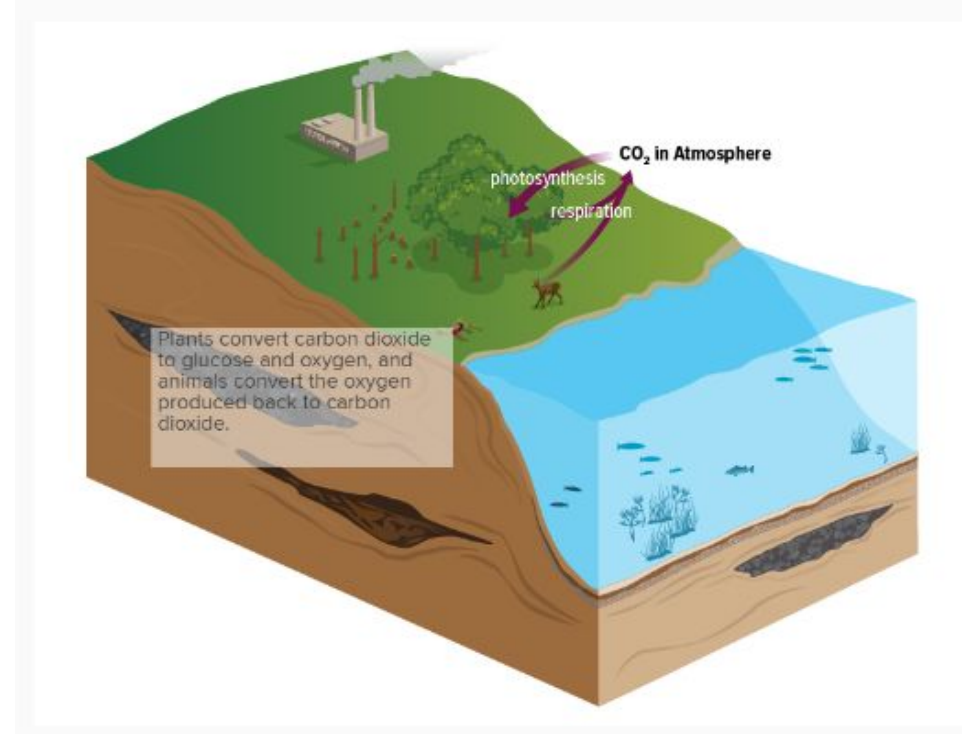
During a process called photosynthesis, green plants and algae convert carbon dioxide and water into carbohydrates and release oxygen back into the air. These carbohydrates are used as a source of energy for all organisms in the food web. Carbon dioxide is recycled when autotrophs and heterotrophs release it back into the air during cellular respiration. Carbon and oxygen recycle relatively quickly through living organisms.
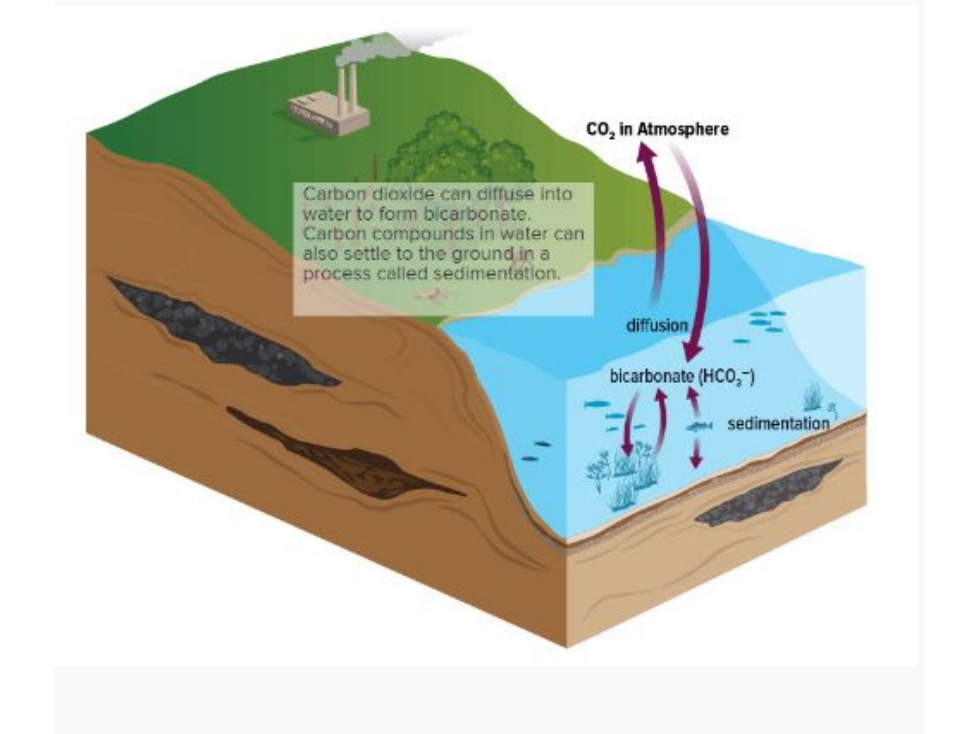
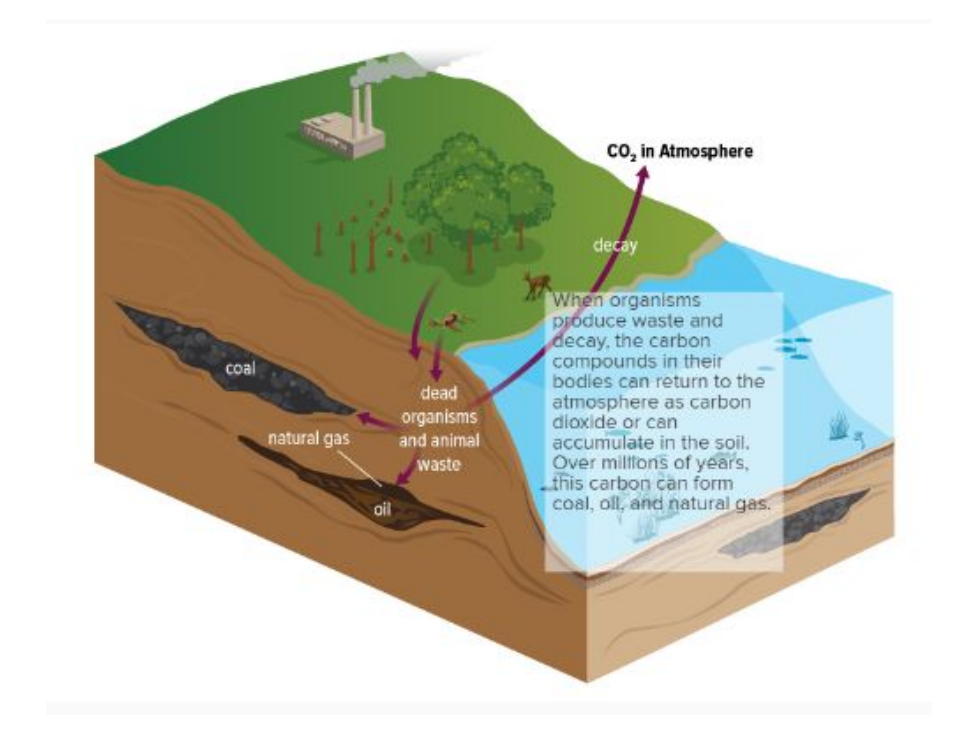
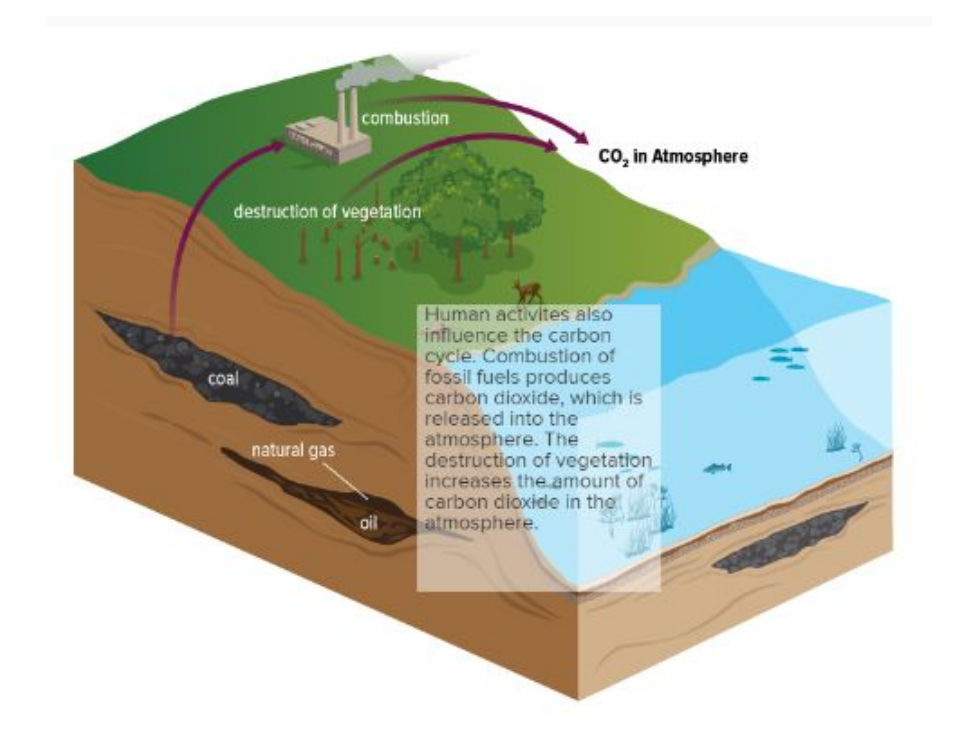
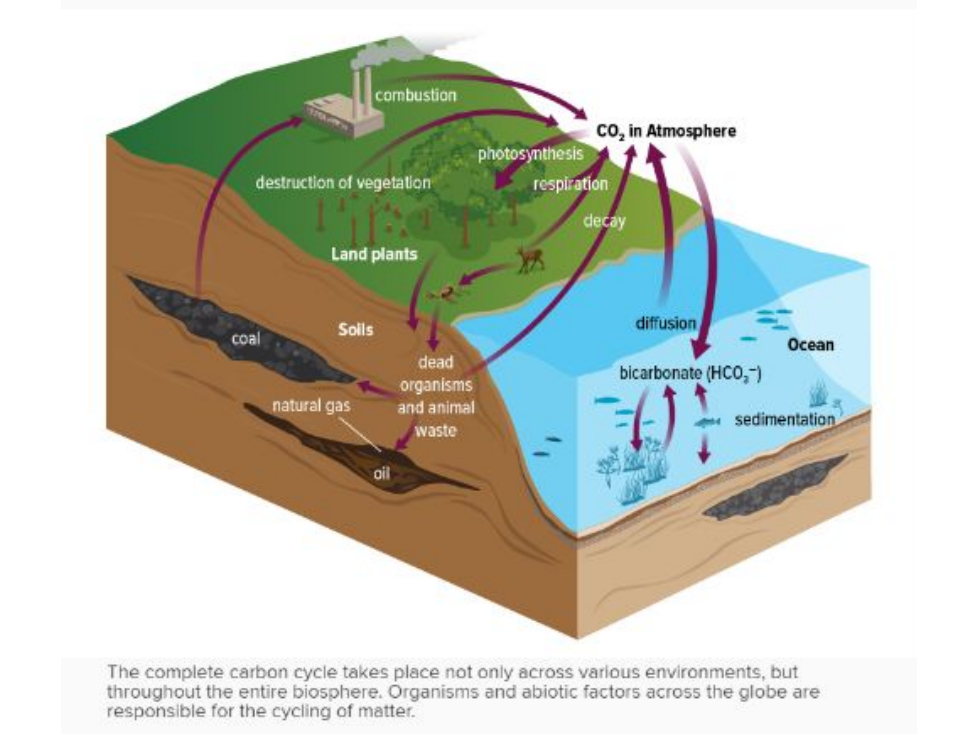
Carbon enters a long-term cycle when organic matter is buried underground and converted to peat, coal, oil, or gas deposits. The carbon might remain as fossil fuel for millions of years. Carbon is released from fossil fuels when they are burned, which adds carbon dioxide to the atmosphere.
In addition to combining to form fossil fuels, carbon and oxygen can combine and create calcium carbonate (CaCO3). Calcium carbonate is found in the shells of plankton and animals such as coral, clams, and oysters. The shells of these organisms fall to the ocean floor when they die, creating vast deposits of limestone rock. Carbon and oxygen remain trapped in these deposits until the rocks are exposed to weathering and erosion and carbon and oxygen are released.
Name 2 ways in which human activities impact the carbon and oxygen cycle.
Identify 2 processes in the carbon and oxygen cycle that occur in aquatic environments.
How do carbon and oxygen cycle through subterranean environments?
How do living organisms impact the carbon and oxygen cycle?
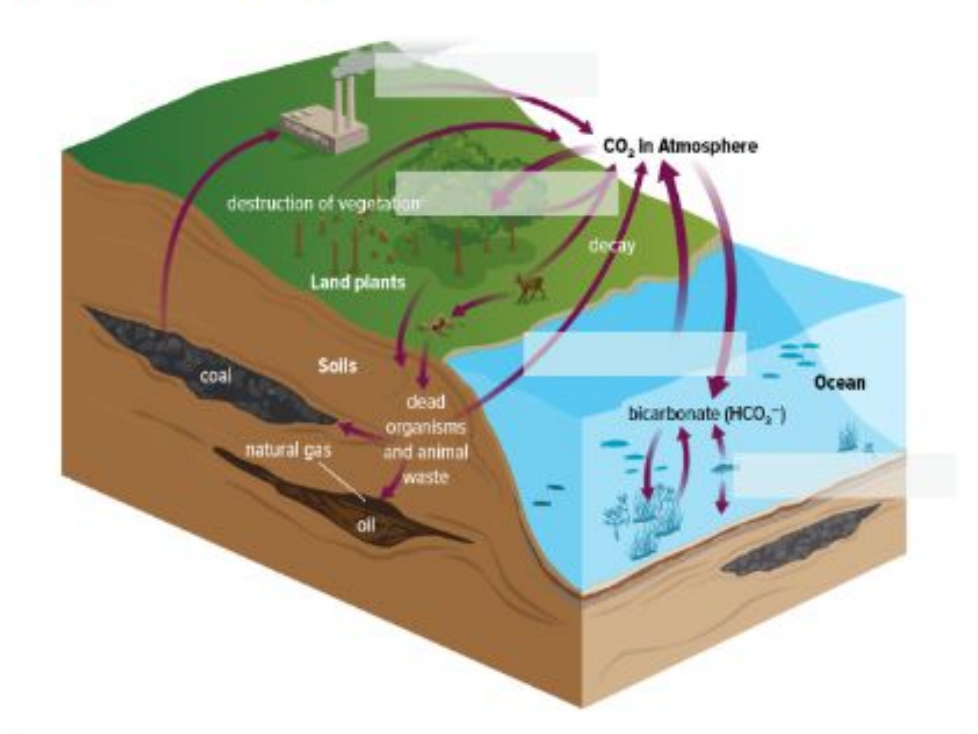
Using your knowledge of the carbon cycle. Hypothesize something we could do to remove or lessen the amount of carbon dioxide in our atmosphere.