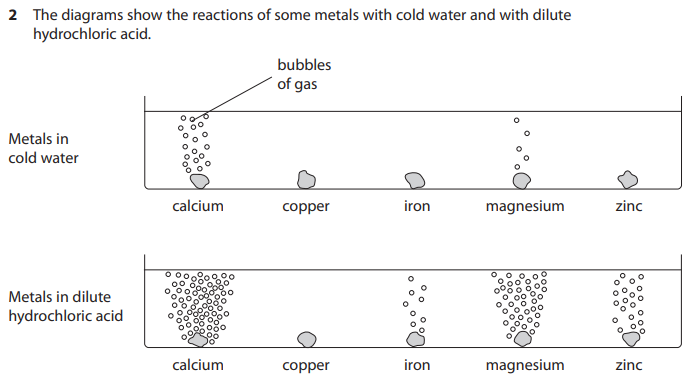
Place the metals in order of reactivity from most reactive at the top to least reactive at the bottom
Place the metals in order of reactivity from most reactive at the top to least reactive at the bottom
Zn
Fe
Mg
Cu
Ca
Place the metals in order of reactivity from most reactive at the top to least reactive at the bottom
Zn
Fe
Mg
Cu
Ca
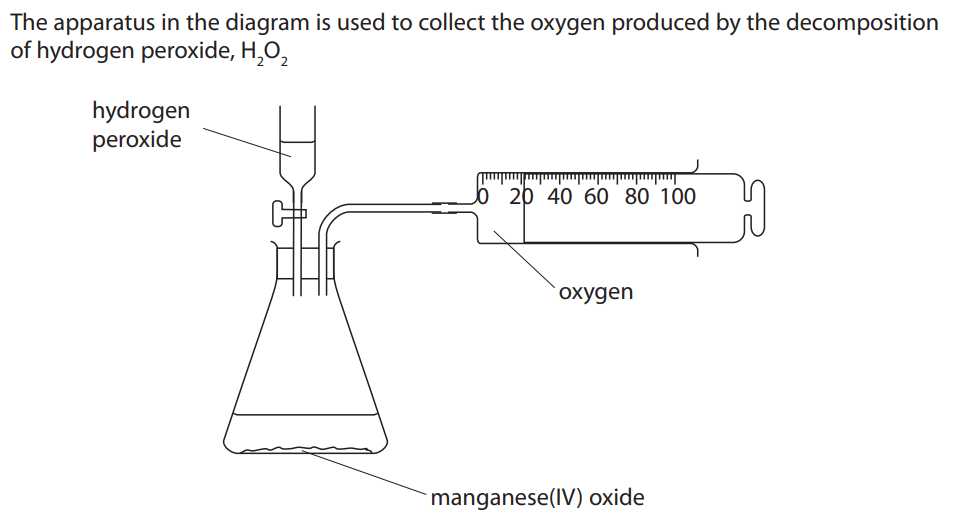
The manganese oxide increases the rate of reaction as it is a that provides an alternative reaction pathway of lower .
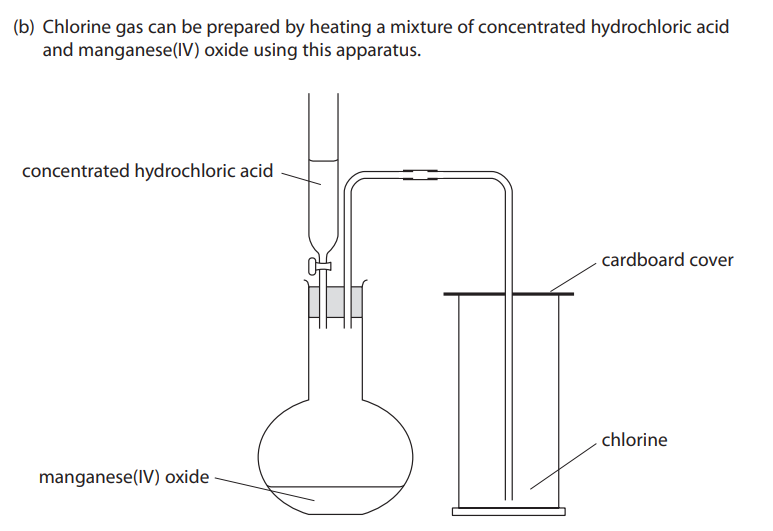
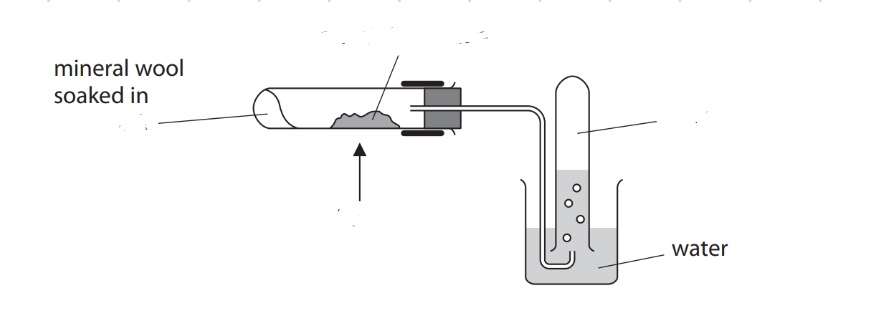
The gas is being collected in a .
Another way to collect the gas would be by using a inverted in a water bath.
The gas could be tested using .
The positive results would be
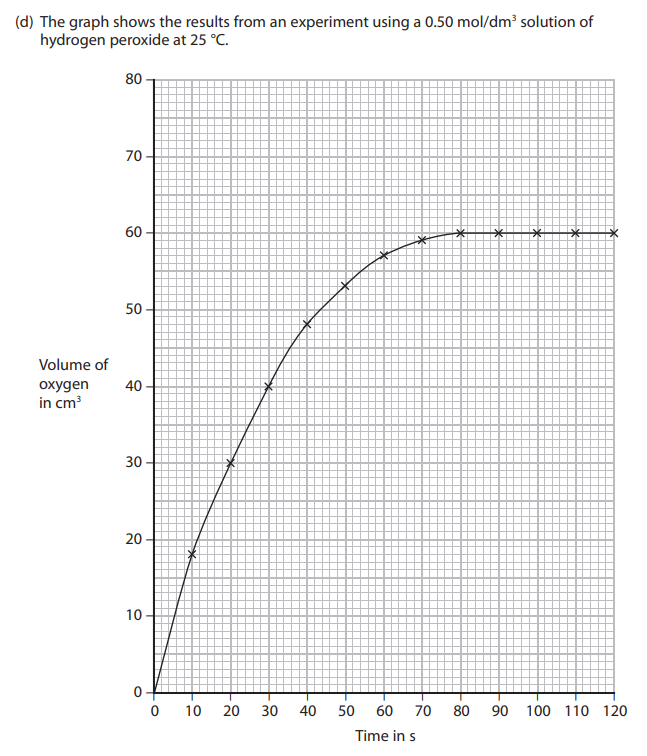
To measure the average rate of reaction over the first 30 seconds we would divide the by the time (from 0-30s) To find the rate at 30s we would draw a tangent at 30s and work out the gradient of the tangent)
Average rate = /
Average rate = .
1.3 cm3/s
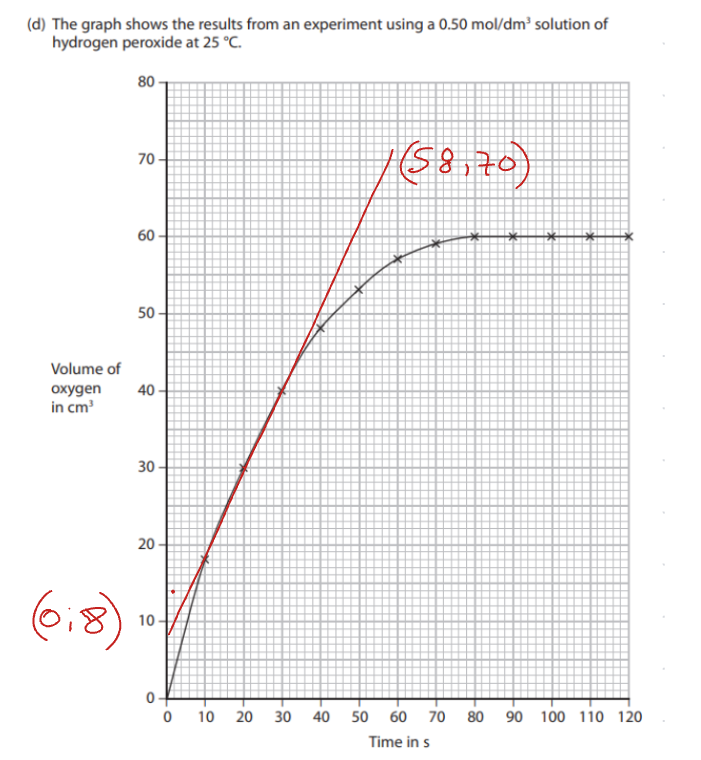
To calculate the rate of reaction at 30s.
We would draw a tangent at and then calculate the slope of the tangent using the formula: rate = /
Rate = /
Rate = /
Rate =
1.1 cm3/s
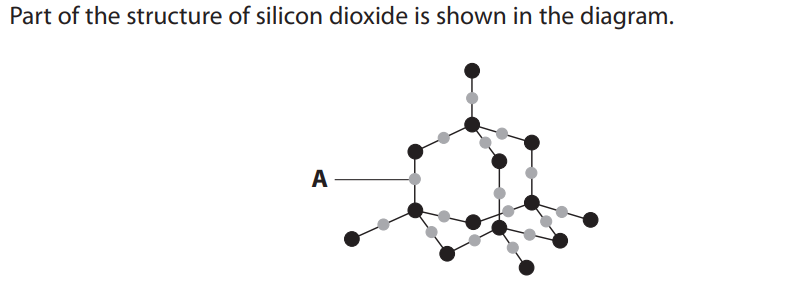
Silicon dioxide has a structure.
Silicon dioxide has a high melting point because many strong bonds need to be broken and a lot of energy is needed.
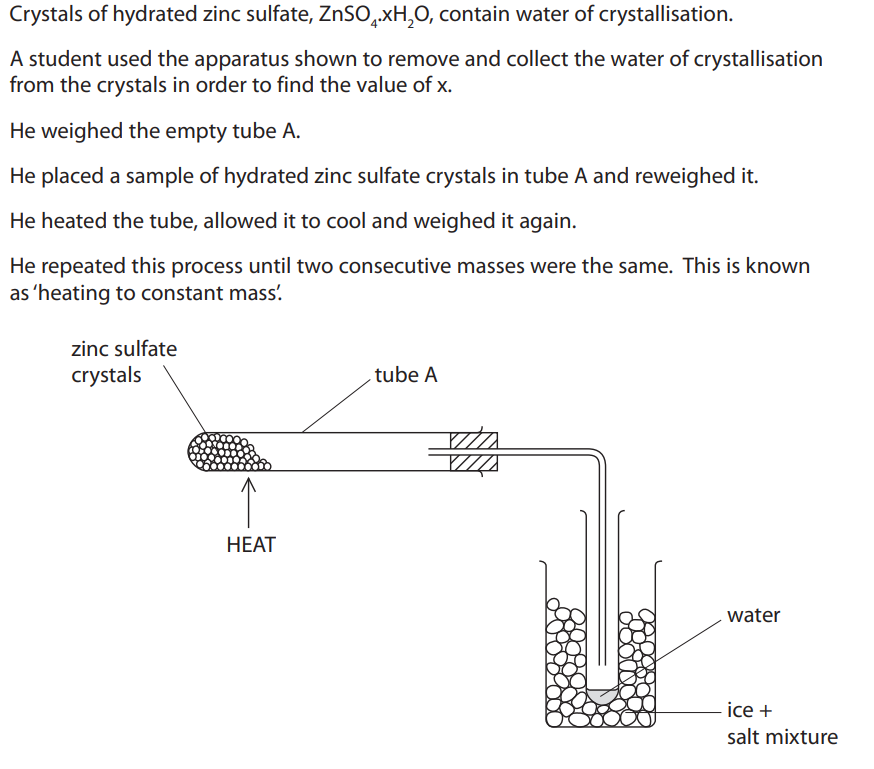
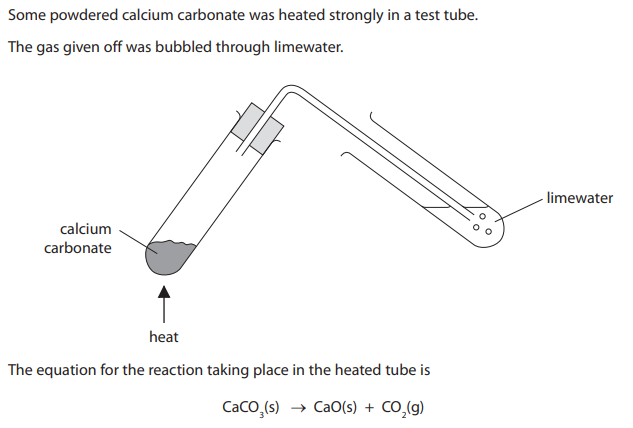
Continuous heating is needed to thermally decompose the hydrated zinc sulfate crystals.
This shows that the reaction is
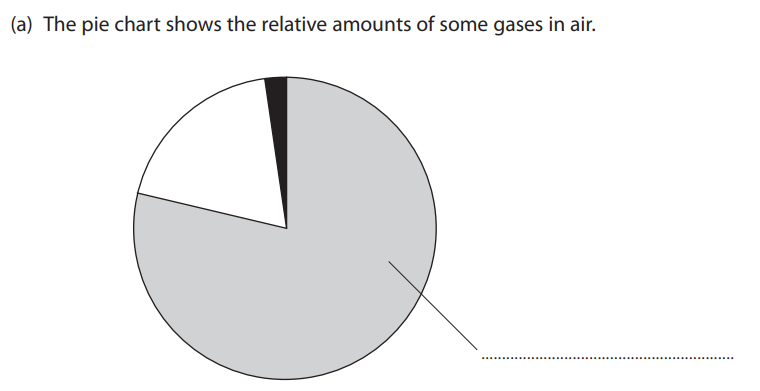
N2
O2
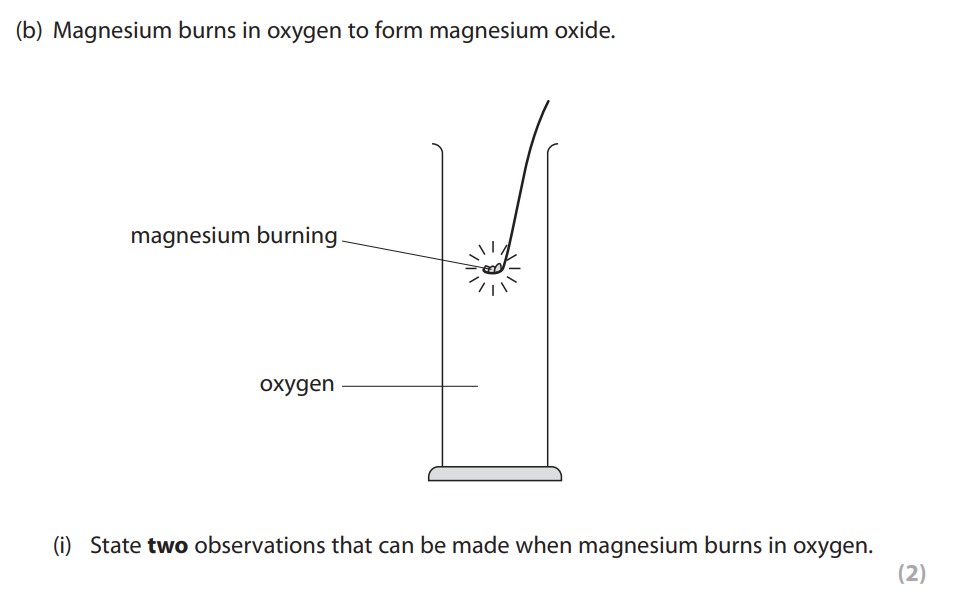
A bright flame
The magnesium reacts to form magnesium oxide.
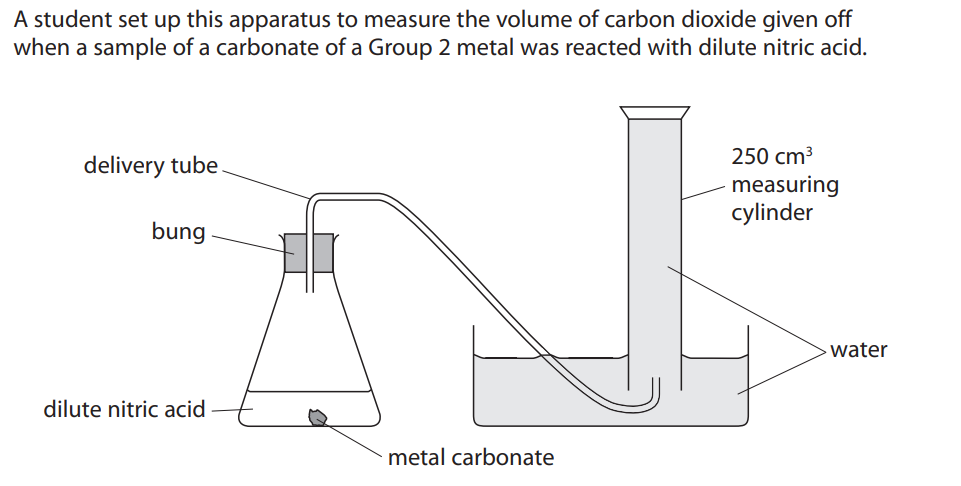
Classify the variable If this experimental technique was used to investigate different group 2 metal carbonates reactivates
Group II carbonate used
Volume of gas produced in 30s
time when volume was measured
amount of group 2 carbonate
Form of carbonate (powder / granule)
concentration of acid
Temperature of acid
Independent variable
dependent variable
Control variable
The positive result for the test is that .
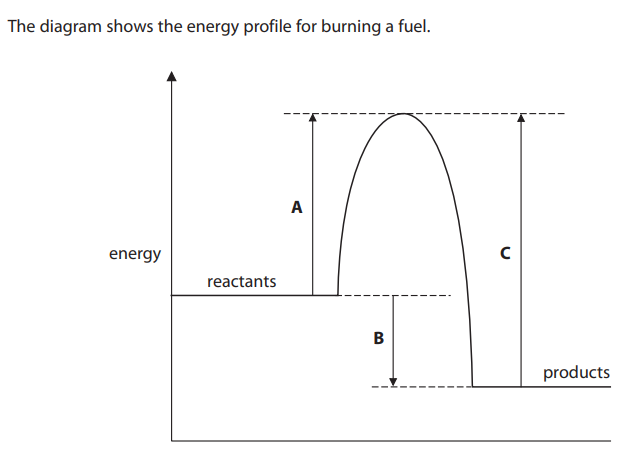
The reaction requires continued heating to occur so the reaction is
The test for chlorine is that litmus is bleached to .
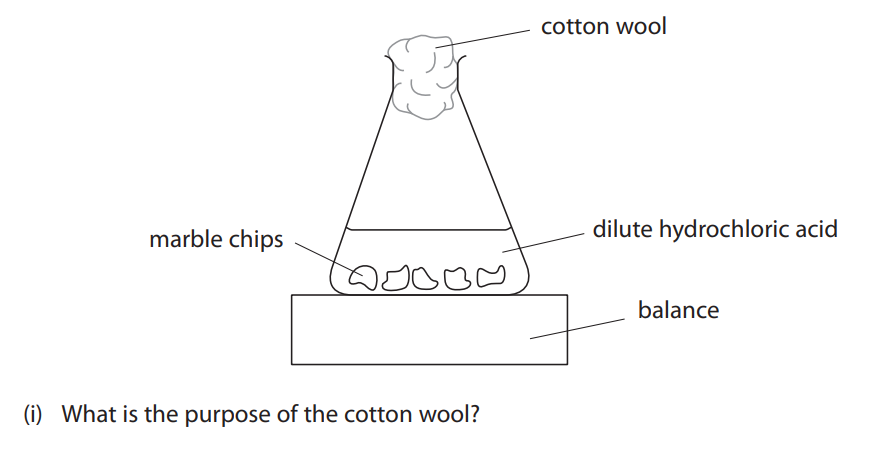
To stop escaping so that all of the mass loss is due to the loss of
CO2
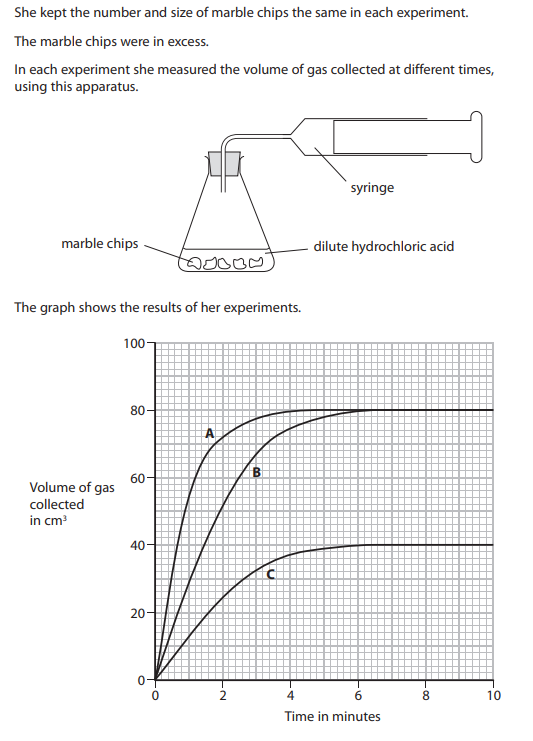
In which experiment was a lower concentration and an lower volume of gas used .
In which experiment was the most concentrated acid used?
In which two experiments was the total amount of acid used the same? A and .
What is the independent variable?
What is the independent variable?
What is a control variable?
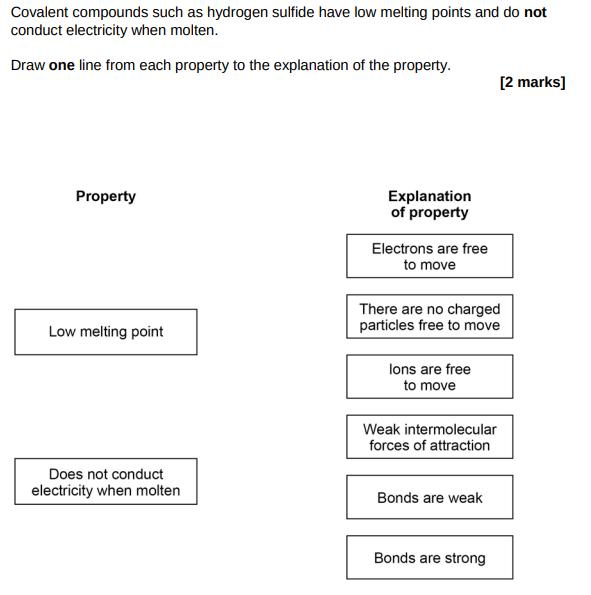
What is the reason that ionic compounds have high boiling points?
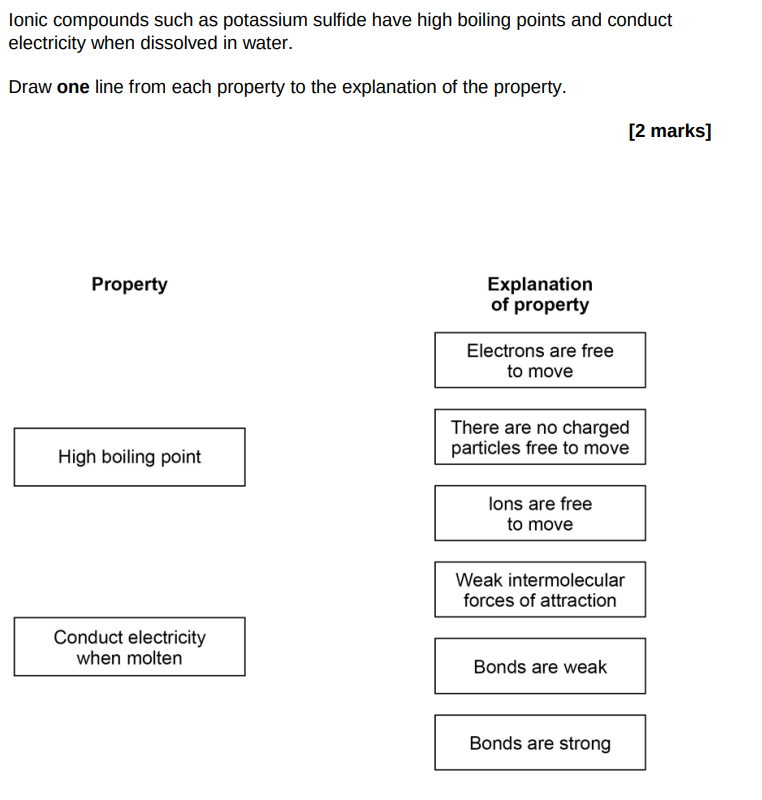
What is the reason that ionic compounds can conduct electricity when molten?