1
Why is the ocean level rising?
Why is the ocean level rising?
This Formative is OPTIONAL unless Ms. Brunett tells you that you must complete it. It has 4 assignments. Each assignment you complete will improve your grade on one missing or incomplete class assignment, or it will count as one assignment for a day when you were absent. If you have no missing or incomplete class assignments, and if you were not absent, each assignment will be worth 10% extra credit. This Formative is due Wednesday, May 14th.
Este Formativo es OPCIONAL a menos que la Sra. Brunett le indique que debe completarlo. Tiene 4 asignaciones. Cada tarea que complete mejorará su calificación en una tarea de clase faltante o incompleta, o contará como una tarea por un día en el que estuvo ausente. Si no tiene tareas de clase faltantes o incompletas, y si no estuvo ausente, cada tarea valdrá un 10 % de crédito adicional. Este Formativo vence el miércoles 14 de mayo.
هذا النموذج التكويني اختياري ما لم تُخبركم الأستاذة برونيت بوجوب إكماله. يتكون النموذج من أربعة واجبات. كل واجب تُكملونه سيُحسّن درجتكم في واجب واحد مفقود أو ناقص، أو سيُحتسب كواجب واحد ليوم غيابكم. إذا لم يكن لديكم واجبات مفقودة أو ناقصة، وإذا لم تكونوا غائبين، فسيُضاف ١٠٪ من رصيدكم إلى كل واجب. موعد تسليم هذا النموذج التكويني هو الأربعاء ١٤ مايو.
Ntugomba gukora iyi Formative keretse Madamu Brunett akubwiye ko ugomba kurangiza. Ifite inshingano 4. Buri mukoro urangije uzamura amanota yawe kumurongo umwe wabuze cyangwa utuzuye, cyangwa bizabarwa nkinshingano imwe kumunsi mugihe udahari. Niba udafite umukoro wabuze cyangwa utuzuye, kandi niba udahari, buri mukoro uzaba ufite agaciro ka 10% byinguzanyo. Iri shyirahamwe riteganijwe kuwa gatatu, 14 Gicurasi.
Why is the ocean level rising?
What has been happening to the world since the late 1800s?
Read these sentences from the last paragraph of the text.
"For example, the country of Bangladesh could lose 17 percent of its land by 2050 due to rising sea water caused by climate change. This means 20 million people in Bangladesh could lose their homes."
Why might the author have included this information about Bangladesh?
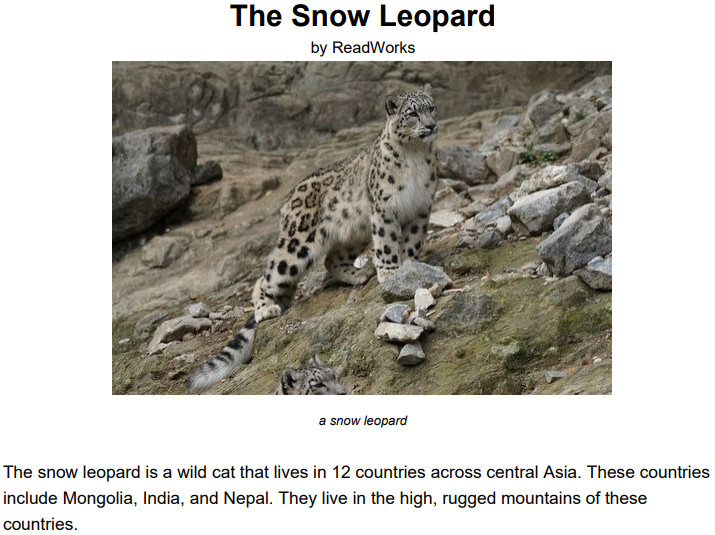
Where do snow leopards live?
What are two traits that snow leopards have?
The text says there are just under 7,000 snow leopards in the wild. What is one cause of this low number of snow leopards in the wild?
Read this sentence from the text.
"Snow leopards can only thrive in a certain climate and environment."
What evidence from the text supports this conclusion?
Why is climate change a problem for snow leopards?
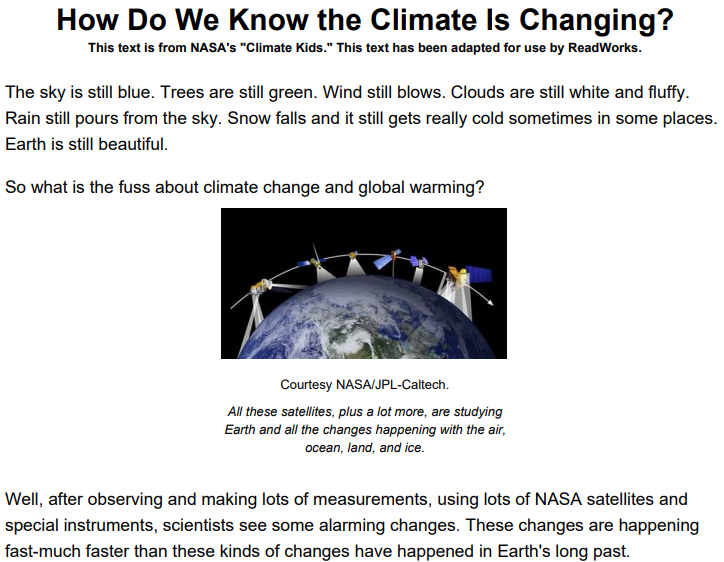
What is true about the changes scientists are seeing?
About how much have global air temperatures near Earth's surface risen in the past century?
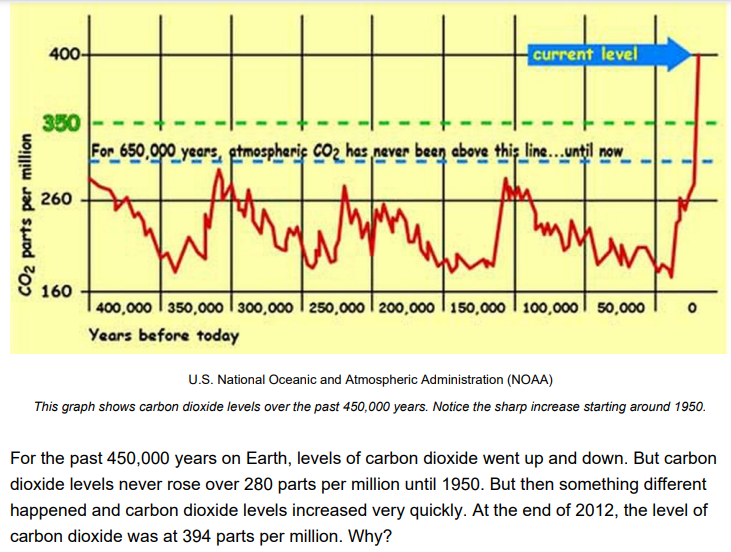
What is happening to the levels of carbon dioxide now?
When we burn fossil fuels, we release carbon dioxide into the air. Carbon dioxide traps heat in Earth's atmosphere, raising the temperature of Earth overall.
What can you conclude based on this information?
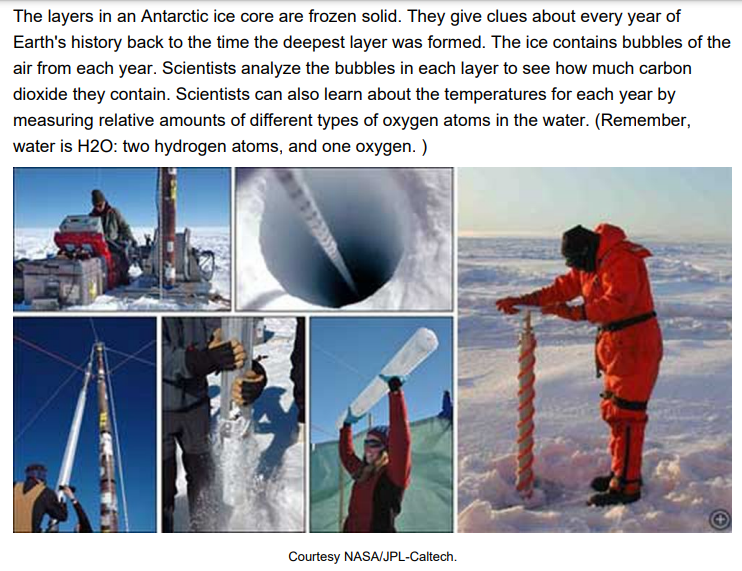
What do scientists analyze in ice cores?
What do other scientists study?
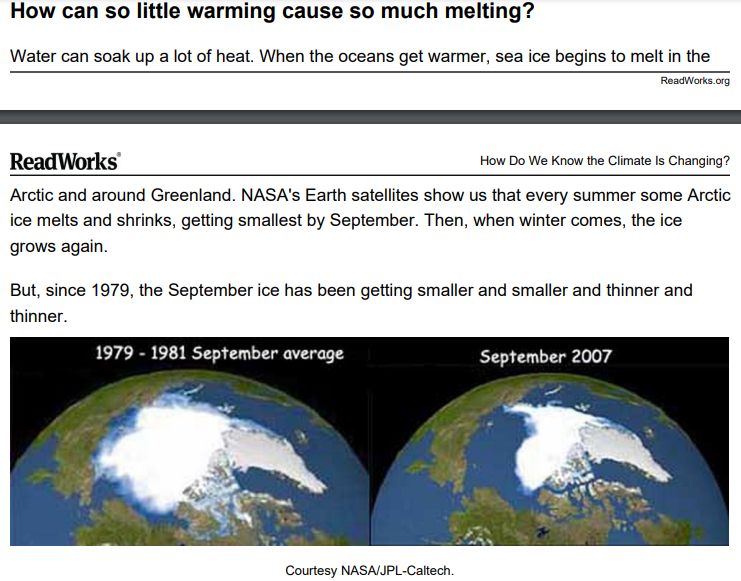
What is happening to the ice in the Arctic and around Greenland?

What is happening to glaciers?
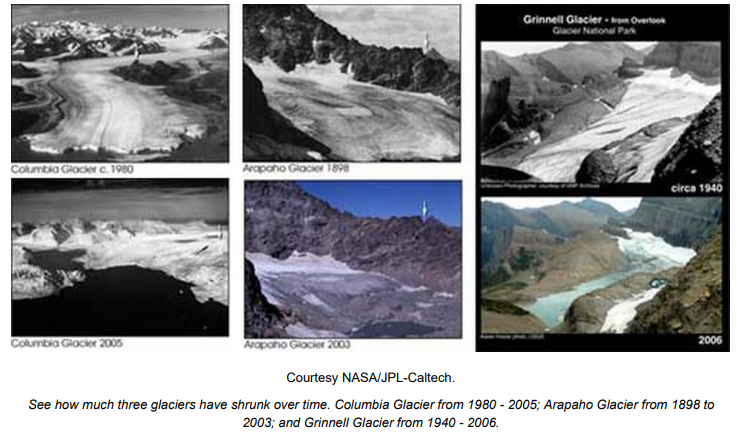
How are glaciers changing?
Why might someone living on a beach be more aware of climate change than someone living on a mountain?
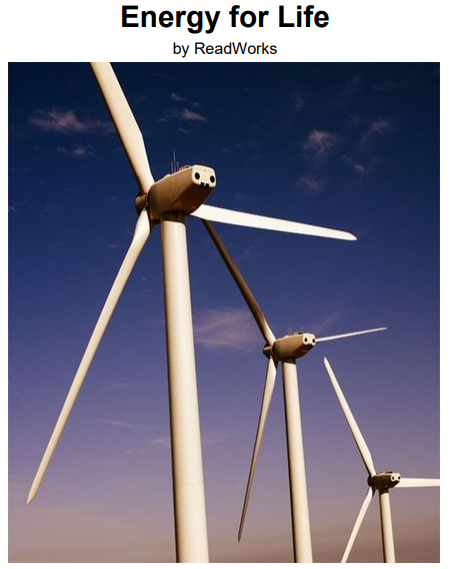
What kind of energy do you see in the picture?
What do people use energy for?
What does the passage compare and contrast with fossil fuels?
What is a problem with hydropower (water) plants?
What is true of all types of energy discussed in the passage?
The passage states that it is "important to understand where our energy comes from, how it is produced and what effect each type has on our environment."
Why is it important to understand these things?
What is one major effect of the world's climate getting warmer?
Read these sentences from the text.
"[Human] activity includes burning fossil fuels such as coal and oil, which releases gases like carbon dioxide into the air. Gases like carbon dioxide trap heat in the earth's atmosphere, making the earth hotter."
What conclusion can be drawn from this evidence?
What is happening to sea levels because of climate change?
What is the main idea of this text?
How might climate change affect snow leopards?
What is the effect of rising carbon dioxide levels on Earth's temperature?
What is the main idea of this passage?
Humans use energy from several different sources.
What evidence from the passage supports this statement?
Read the following sentences: "Fortunately, there are forms of renewable energy out there. They also come from nature and don't harm the environment as much as fossil fuels. Furthermore, they aren't consumed to produce energy, so we can use them again and again."
What does the word renewable mean?
How is hydropower energy created?
What is this passage mainly about?