4.06 Your Credit Report & Score

Last updated 2 months ago
27 questions
Note from the author:

QUESTION OF THE DAY: What percentage of young people (18-24) know their credit score? 📷5 min

Answer the question on the first slide in the space below. Then, compare your answer to the answer on the second slide. Finally, follow your teacher’s directions on how to answer the follow-up questions on the last slide.
1
What percentage of young people (18-24) know their credit score?_______
EDPUZZLE: Understanding Your Credit Report 📷6 min Your credit report provides others with a snapshot of your credit history. So, what exactly goes into a credit report? Watch this video and follow your teacher's directions to answer the questions either in your student activity packet or within the EdPuzzle itself.
1

Why do lenders look at credit reports?
  1. To determine the size of your household
  2. To provide them with details about your savings account
  3. To decide whether you are a qualified or risky candidate for credit
  4. To edit your credit score

1

The following options are all included in your credit report trade lines except…
  1. Amount of money in your checking account
  2. Payment history
  3. Current balances on your loans
  4. When you opened your credit accounts

2

Why should you review your credit report regularly? Choose two correct answers.
  1. To monitor how different factors are impacting your FICO score
  2. To increase your credit views, which automatically increases your credit score
  3. To check your credit report for accuracy
  4. To open additional loans and lines of credi

ARTICLE: 8 Types of Companies That Are Looking at Your Credit Report It is likely that your credit report will be viewed by multiple organizations throughout your lifetime. Read the article to learn about what types of companies view your credit report and their reasons why. Then, answer the question.

8 Types of Companies That Are Looking at Your Credit Report

Federal law lets these entities peek at your credit — regardless of whether you're borrowing money.

1. Credit card companies

A credit card company can look at your credit report when you apply for a card. However, if you’re a customer, that company also can look at your credit report anytime, according to the Consumer Financial Protection Bureau (CFPB).
Additionally, prospective creditors can access certain information in your credit file to determine whether to make you what’s known as a “prescreened” offer for a new credit card.
Prescreening is allowed under the federal Fair Credit Reporting Act, but you can opt out of it. We break down the process in “The Secret to Stopping Unwanted Credit Card Mail for Good.”

2. Insurance companies

The Fair Credit Reporting Act also allows credit reporting companies to release your credit report in association with “offering insurance coverage or setting insurance premium charges,” the CFPB says.
While federal law allows insurers to prescreen you for offers, it also gives you the ability to opt out of this prescreening too.

3. Employers

As part of a background check, employers can request a copy of your credit report. The Fair Credit Reporting Act allows credit reporting companies to release your report for employment purposes.
However, the employer must get your written permission to pull your credit report beforehand. You can refuse, but that could be grounds for the employer to reject your application, according to the Federal Trade Commission.

4. Telecommunications companies

When you sign up for phone, TV or internet service, the service provider might check your credit.
It’s not exactly a loan, but some companies want to make sure you’re likely to pay your bill, says James Garvey, the founder of credit-building site Self Financial.
“The telecom provider wants to check if the customer owes money to the provider itself or to another telecom provider,” Garvey tells Money Talks News.
📷
Think Like Grant Cardone: 33 Savage Tips to Explode Your IncomeSee Also:

5. Public utilities

Signing up for water, gas or electricity? You might need to submit to a credit check, says Logan Allec, a certified public accountant and the founder of financial education website Money Done Right.
“Utility bills are generally paid in arrears, meaning you’re billed for usage after the fact,” Allec tells Money Talks News. “In a sense, these companies are making you a short-term loan. They let you use $50 of water last month, and you have until a certain date to pay them for it.”
If you have a low credit score, Allec points out, the utility might not have confidence in your ability to pay bills on time and might charge you an upfront deposit.

6. Government agencies and courts

“You may think that the government should have no business requesting your credit,” says Allec, “but sometimes they actually have a good reason to.”
Allec points out that when you apply for government assistance, you might be subject to a credit check to see if you truly qualify.
Additionally, the Fair Credit Reporting Act permits credit reporting companies to release your credit report:
  • In response to court orders
  • In response to subpoenas
  • For certain child support awards and enforcement purposes

7. Landlords

Looking for new digs? Your landlord-to-be might want a peek at your credit report, says Leslie Tayne, a New York City-based lawyer specializing in consumer finance and debt.
She points out that renting an apartment is a long-term agreement, and many landlords want to be sure you won’t cause trouble.
“While rent is not typically reported to the credit bureaus, your credit report can give an indication of your overall likelihood to pay bills on time and your financial responsibility,” Tayne tells Money Talks News.
In some cases, she says, if you have a poor score, you might have to provide a larger security deposit.

8. Assisted living facilities and nursing homes

Expect to be subject to a credit check when applying to live in an assisted-living facility or nursing home.
“These facilities treat applications like applying for an apartment, especially since costs are typically high,” Tayne says. “Having good credit shows the facility that you’re responsible with your payments and that you’ll use whatever funds you have to pay for the stay.”
1

When you sign up for phone, TV, or internet service, the provider is likely to check your credit report. Why would they do this even though you’re not borrowing money from them?

1

Imagine you’re renting an apartment with a friend after high school. Your friend wants to get satellite TV but can’t because they have bad credit due to a history of late payments. They ask if you’ll sign up for it and assure you they’ll take care of the payments. How would you respond?

TEACHER TIP: Free credit reports available through other sites like Credit Karma or Credit Sesame but AnnualCreditReport.com is the official platform mandated by federal law to provide consumers with free annual credit reports from the three major credit bureaus. These other sites earn revenue through advertising, affiliate marketing or selling other financial products to you.

VIDEO: Get Your Free Credit Report 5 min

A common misconception is that using a free online credit report service will lower your credit score. Fortunately, that’s not true! Review this video to learn how to gain access to your credit report. Then, answer the questions.
1

True or False: Gaining access to your credit report will also let you know what your credit score is.

4
What information do you need to have ready to request your credit report?_______ _______ _______ _______


1

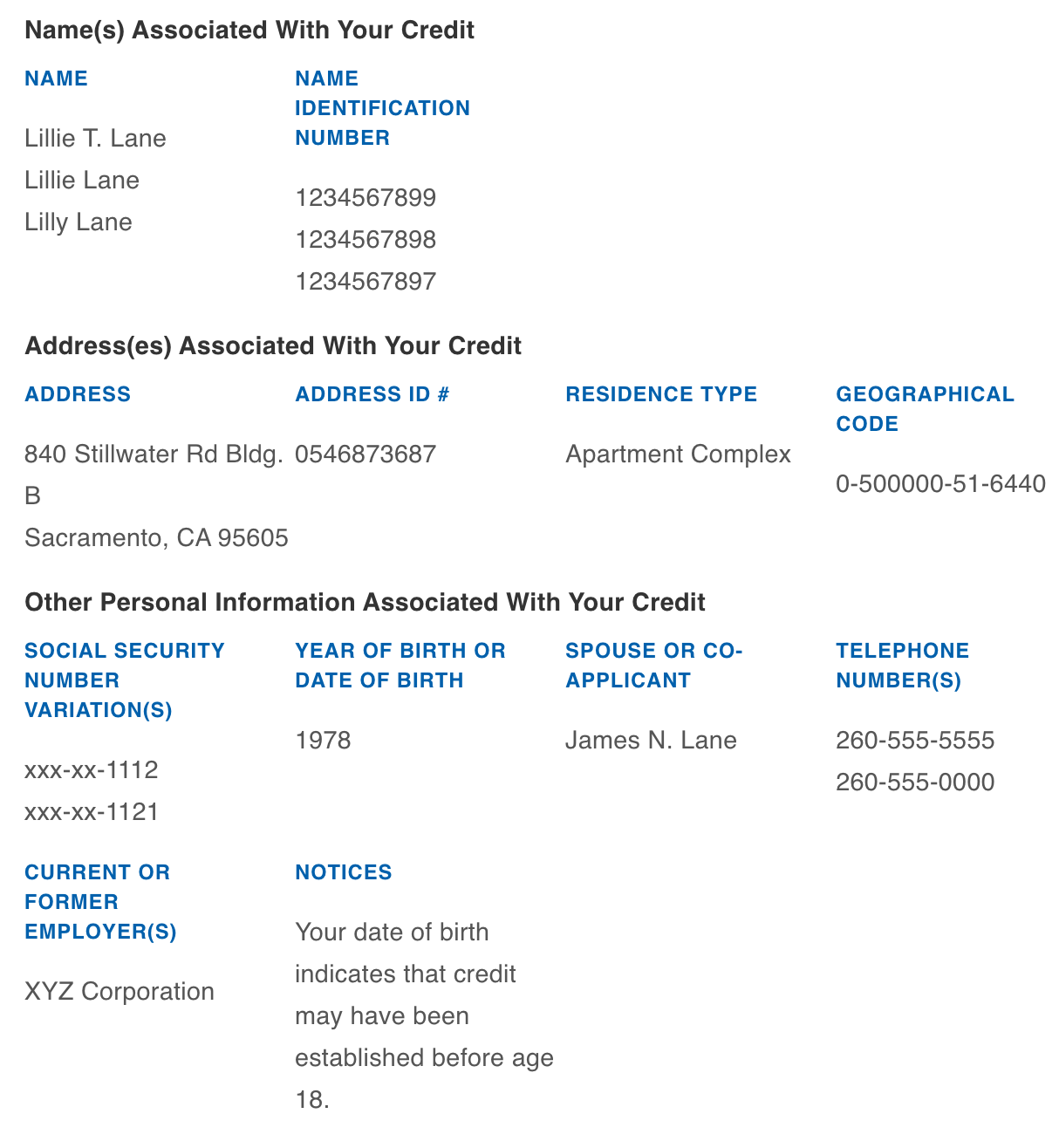
1. This is the credit report for how many people?

1

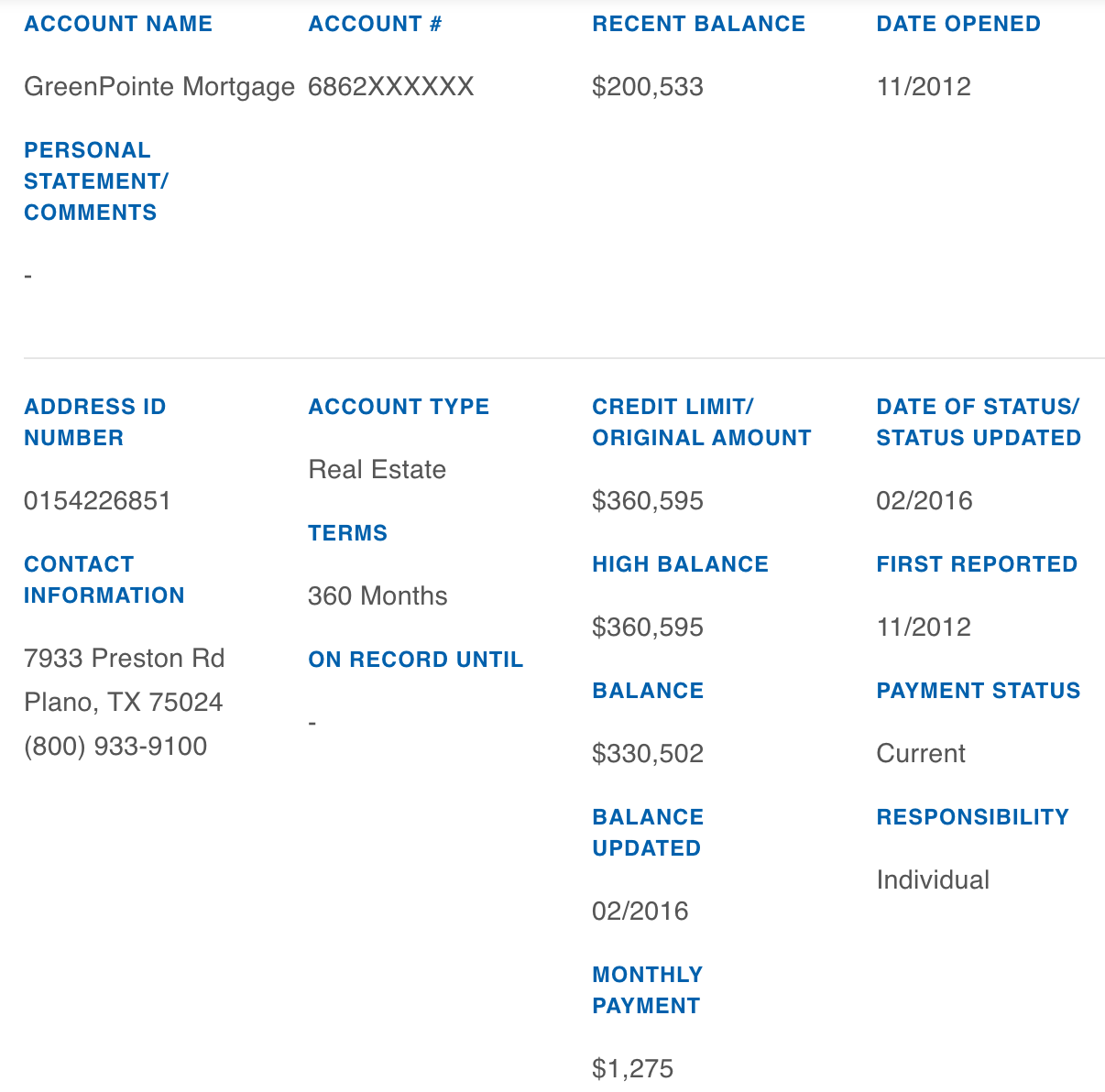
2. How long of a mortgage did Lillie take out?

1

3. Which statement about Lillie’s mortgage is FALSE?

1

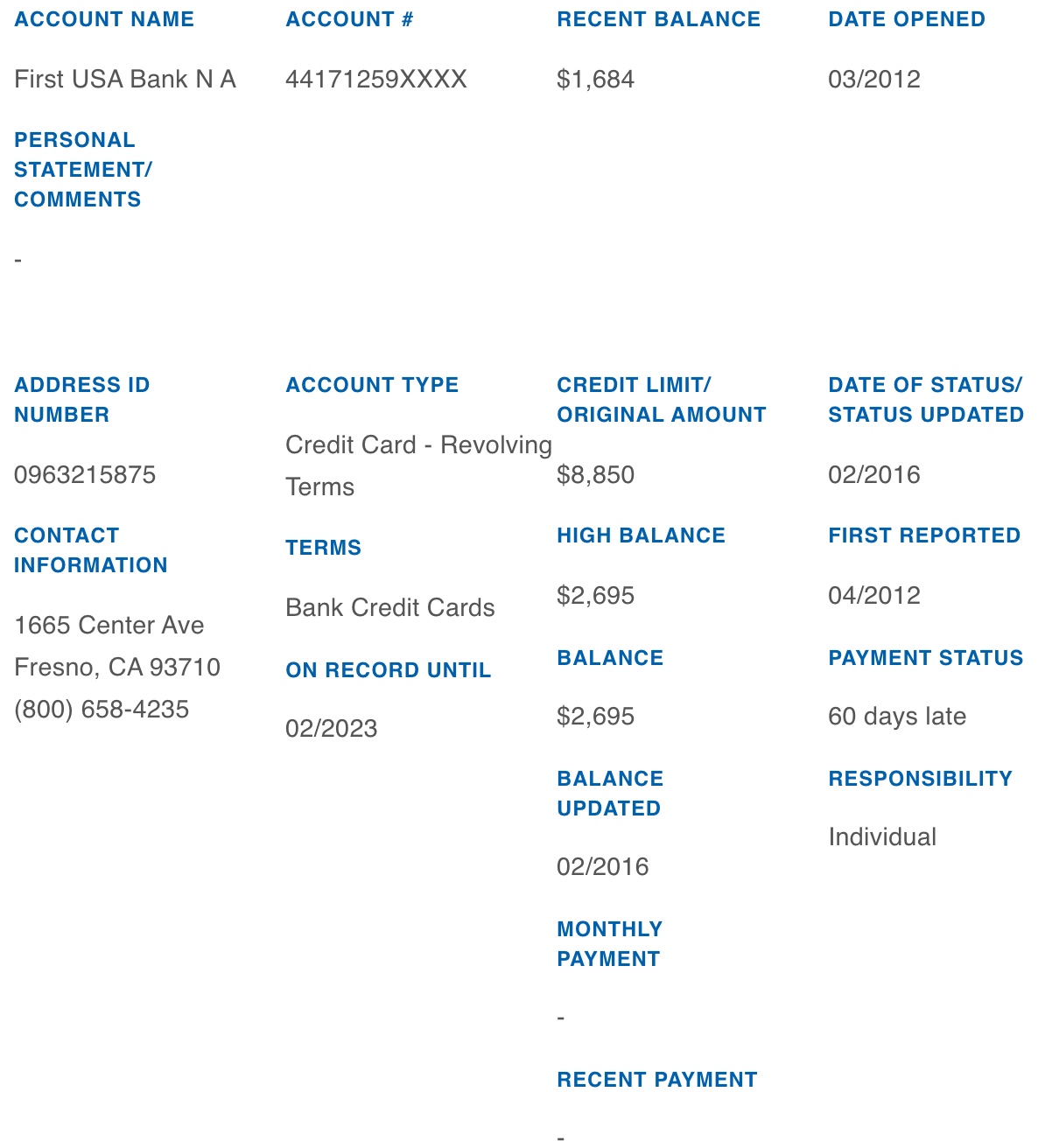
4. What accounts does Lillie T. Lane have open at this time?

1

What is the credit limit on Lillie’s First USA Bank credit card?

1

Which statement is true about Lillie’s past due account(s)?

1

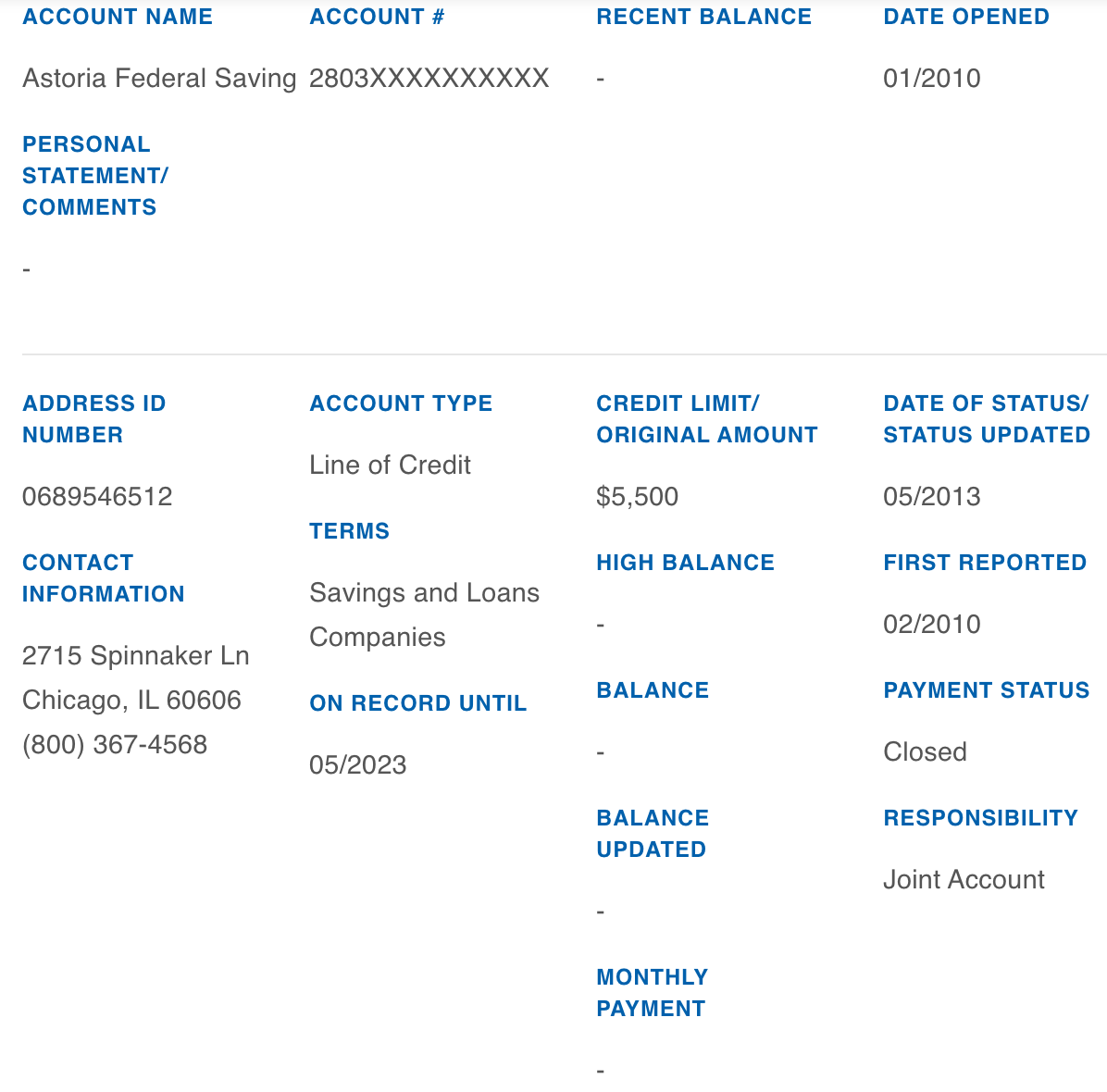
How many months did Lillie make on-time payments for her line of credit at Astoria Federal Savings?

1

According to this credit report, how many accounts has Lillie had sent to collections?

1

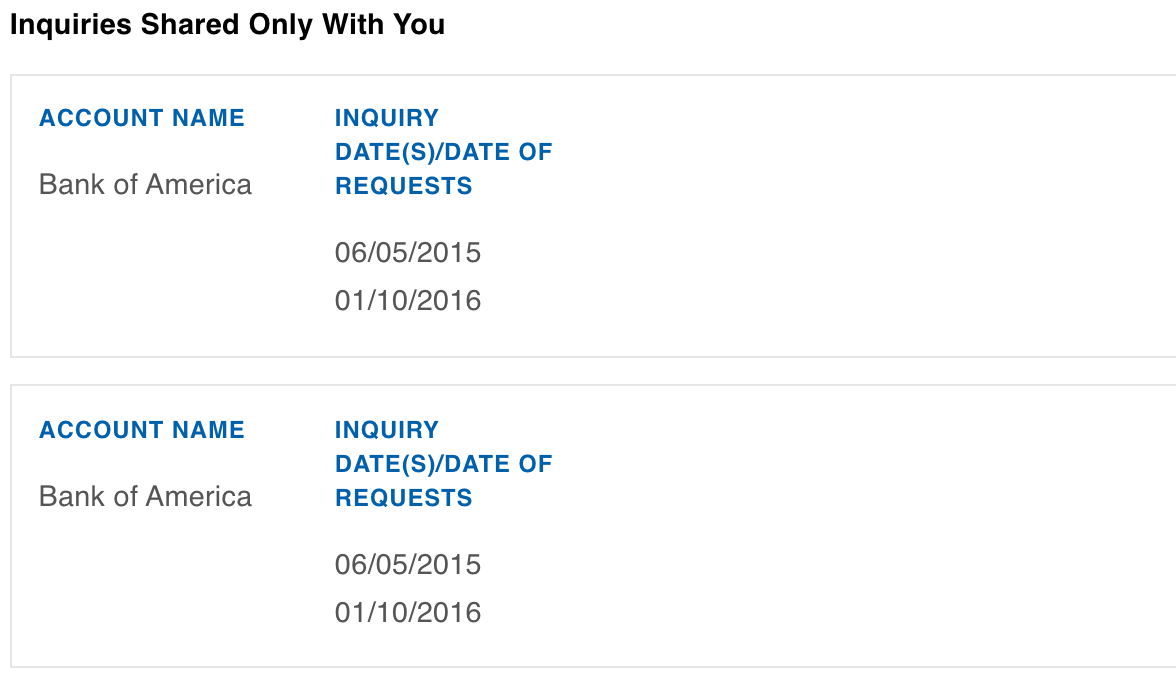
When did Lillie allow an external company access to her credit report specifically for an auto loan?

3
Part II: What Did You Learn?
Use what you learned from analyzing the credit report to answer this question.
A friend of yours is graduating college next month. He has had a credit card and student loans for the past few years, but he’s never bothered to check his credit report.
  1. Why is it vital that your friend reviews his credit report? _______ How soon would you recommend he does so and why?_______
  2. Which sections of  information in his credit report should he pay particular attention to given his situation?_______
DATA CRUNCH: What Is The Most Common Credit Score By Age? 📷10 min

2
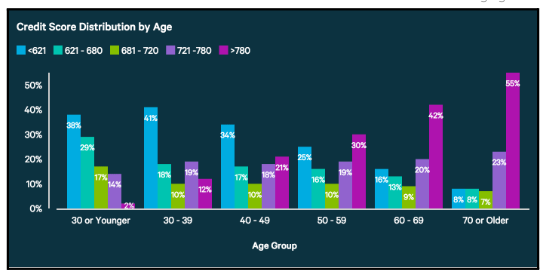
Which group has the highest percentage with a credit score of 620 or less?__________
At what age do credit scores above 780 outnumber those below 621?__________
1

How do credit scores change as people get older? What could explain why scores rise or fall with age?

1

From the 30 or Younger group to the 30-39 group is the only place you see a rise in the percentage of people with scores of 620 or less. Why might that be?

1

Use the graph to develop an argument that people from all age groups have room for improvement when it comes to credit management.

VIDEO: What Is A Credit Score? 📷7 min It’s important to know what information impacts your credit score. Watch the video on how FICO scores are calculated. Then, answer the questions.
1
What is the scale for minimum to maximum possible credit score?_______
1

Why is it better to have a high credit score than a low one?

1

Explain how your payment history is used as a measure of your creditworthiness.

1

Does the method for calculating credit scores seem fair to you? Why or why not?

VIDEO: What is Credit Utilization? 📷5 min

The previous video showed that credit history has the largest impact on your credit score and late payments should be avoided whenever possible. Just behind credit history in terms of impact on your credit score is your credit utilization. Watch the video to learn more. Then answer the questions.

3
Imagine your only available credit is a credit card with a limit of $2,000. If you have a balance of $750, what is your credit utilization percentage?_______
What value does the video recommend keeping your credit utilization percentage below?_______
Imagine you’ve just paid a credit card bill in full and don’t plan on using that credit card again. You remember learning that closing a credit card account means that card’s spending limit will be subtracted from your available credit. If your goal is to improve your credit utilization percentage, why might it be a good idea to keep that account open, even though you don’t plan on using it?_______
ACTIVITY: INTERACTIVE: FICO Credit Scores Now that you know about what goes into calculating a credit score and where you can find yours, let’s take a look at a few hypothetical scenarios to see how a person’s financial decisions can positively or negatively impact their credit score. Follow the directions on the PRINTED worksheet to complete this activity.

Interactive: myFICO Credit Score Estimator


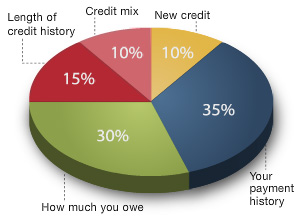
As a reminder, this pie chart describes how your credit score is calculated using 5 different components of your credit history.
You’ve been assigned to be the credit counselor for Sam, Jessica, and Danielle, whose profiles follow. For each person, follow the directions to understand the impact of certain financial decisions on their credit scores.