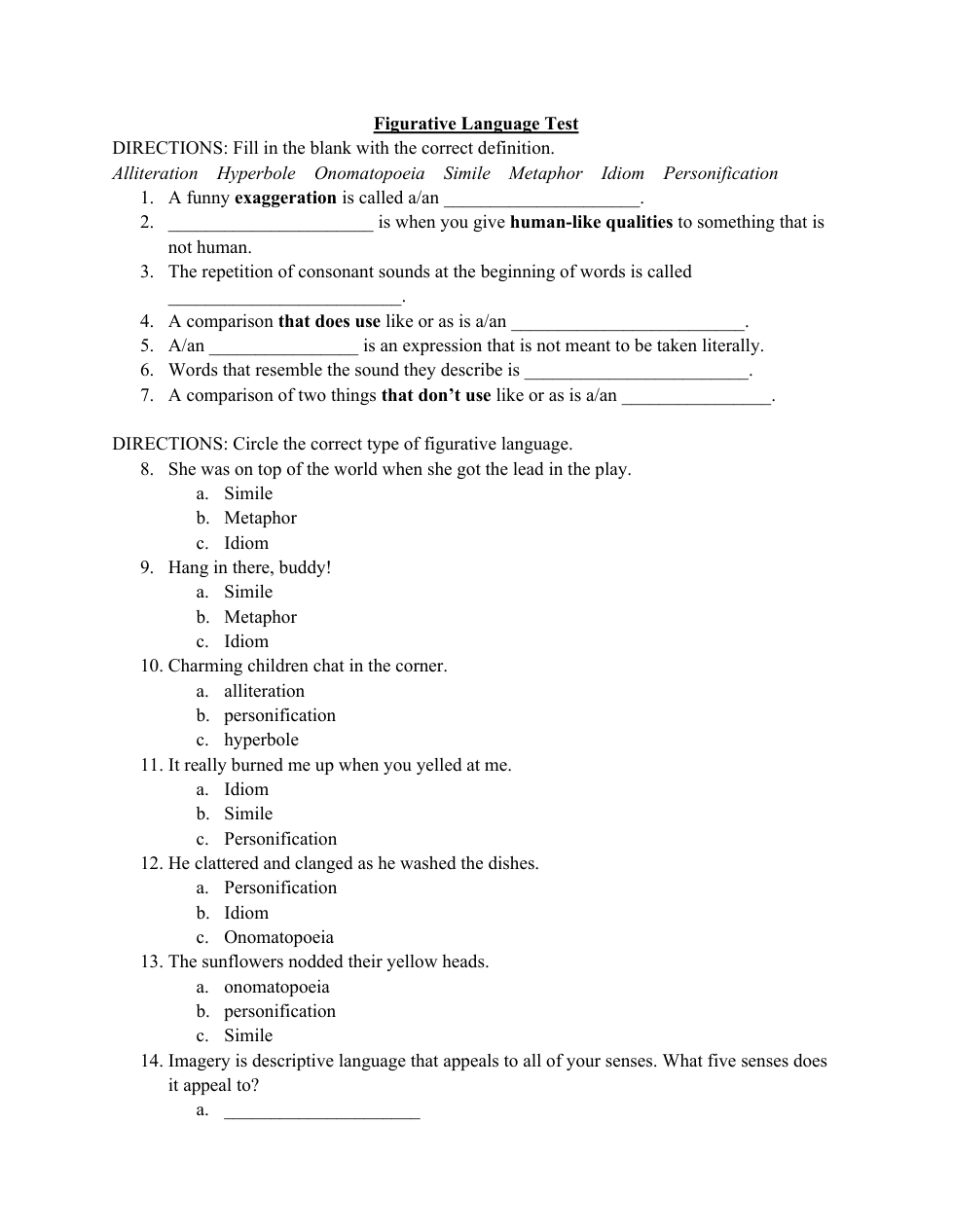
Mmuae Afoforo a Wobɛpaw:
taste
Simile
Smell
touch
Idiom
Personification
Hyperbole
Idiom
hear
Alliteration
Onomatopoeia
see
Idiom
Alliteration
Personification
Metaphor
Onomatopoeia
Assessment
The highlighted selection of the lyrics "Firework" is an example of what?
Book Rhymes with
Go Rhymes With
Rhyme is a
Rhythm is the
What are the steps we take when we study and read a poem
| Draggable item | arrow_right_alt | Corresponding Item |
|---|---|---|
Shift | arrow_right_alt | We make a prediction |
Theme | arrow_right_alt | We put the poem in our own words to better understand |
Attitude | arrow_right_alt | We identify all the creative language that the author is using |
Title | arrow_right_alt | What is the author's tone/attitude in the poem |
Paraphrase | arrow_right_alt | Is there a change in the attitude |
Figurative Language | arrow_right_alt | We go back to the title to see if our predictions have changed |
Title (2nd time) | arrow_right_alt | What is the message or lesson we learned from the poem |
Literary Devices are
Literal Language is a fact or
Figurative Language used when readers know
Symbolism is
How would you describe Mr. Cratzbarg from the poem "But I Have Mr. Cratzbarg"
How does the author feel about Mr. Cratzbarg?
What is a theme that we can learn from the Poem "But I Have Mr. Cratzbard"?
Groups of sentences in a poem are called
There are many different kinds of poetry
All Poems must rhyme
Music is poetry
Figurative language is used in both poetry and stories
We read poems to enjoy them and understand their deeper meaning