Which of the following statements is true about the molecule shown below?
Which of the following statements is true about the molecule shown below?
Which of the following statements is true about the molecule shown below?

What types of bonds are shown?

The image above shows a pure substance that contains one type of molecule. What type of intermolecular force is represented by the dashed yellow line?
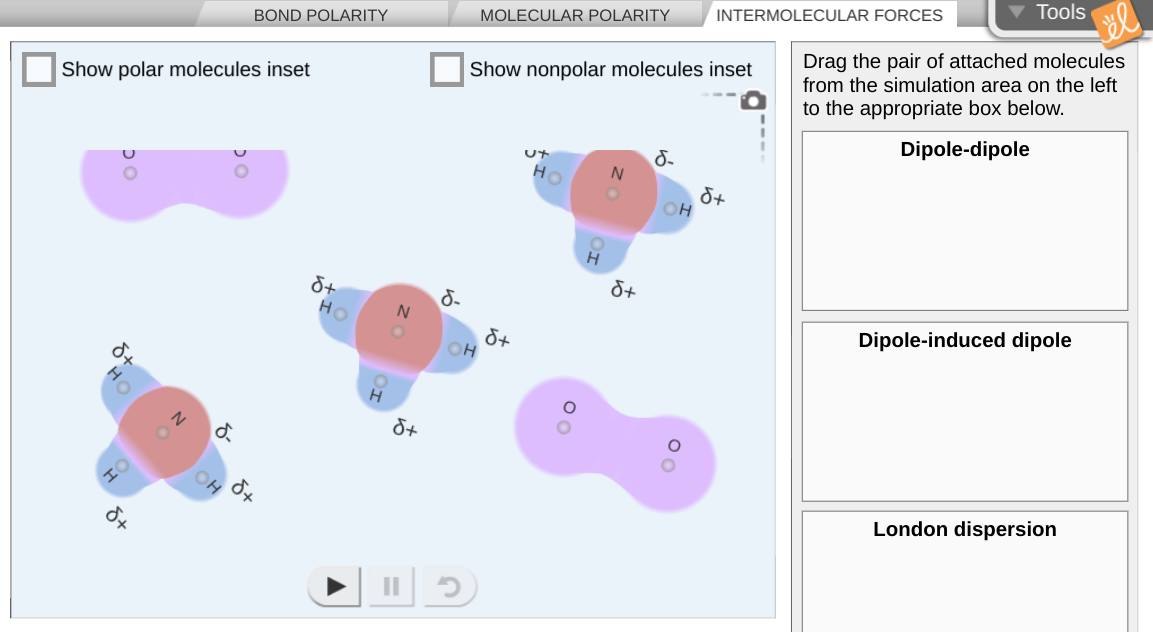
The image shows a mixture of polar and nonpolar molecules.

What type of intermolecular force is shown by the dashed yellow line?
Which substance has stronger intermolecular attractions?
Nonpolar molecules _________ contain polar bonds.
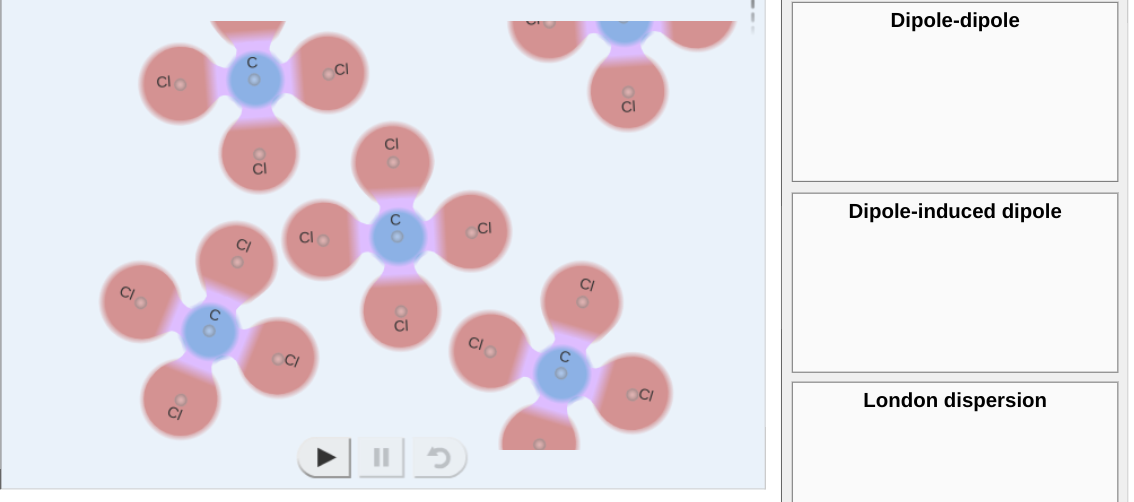
If you were working in the Intermolecular Forces section of the Gizmo, and you had the molecules shown in the image, which "bucket" would you drag the molecules to in order to represent their forces of attraction?
If you were working in the Intermolecular Forces section of the Gizmo, and you had the molecules shown in the image, which "bucket" would you drag the molecules to in order to represent their forces of attraction?