Which best explains why the rock in the middle is younger? DOK 2
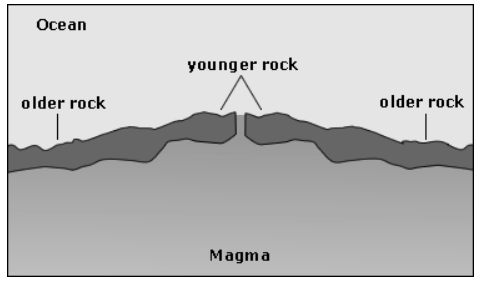
Which best explains why the rock in the middle is younger? DOK 2
Which best explains why the rock in the middle is younger? DOK 2
The human population has increased from 1 billion in the year 1800 to 7.8 billion in the year 2020. No population of large vertebrates has ever grown so much so rapidly. At the same time, populations of other organisms, and biodiversity as a whole on Earth, is greatly decreasing. A global report on biodiversity in 2019 indicated that around 1 million animal and plant species are currently threatened with extinction, significantly more than at any other time in human history. DOK 2
Human population growth this decrease in biodiversity. As the human population increases, the natural resources available on Earth
"Friction"
The first diagram models the particles in two pieces of cardboard as one piece is held slightly above the second piece. The second diagram models the particles in the pieces of cardboard as the pieces are pressed together and rubbed back and forth.
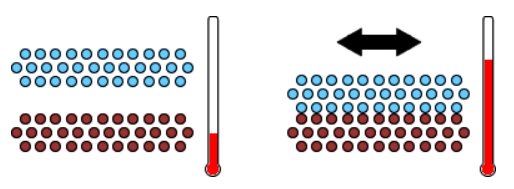
from "Friction" What happens to the top cardboard piece as it is set down on the bottom cardboard piece? DOK 2
from "Gene Editing and Super Kids" Choose a phrase in each drop-down list to complete the sentence. DOK 2 A potential medical benefit of gene editing is that it may allow doctors to by within a sick individual.
from "Gene Editing and Super Kids" Choose a word or phrase from each drop-down list to complete the sentence. DOK 2
intervention is generally considered to be ethical because it affects .
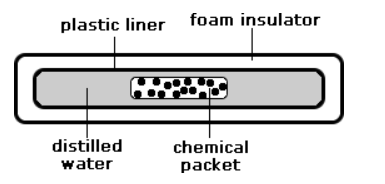
A design for a first-aid cold pack is shown below. When needed, the chemical packet gets broken so that the chemicals can mix with water. The resulting reaction makes the pack cold. However, the packet does not get cold enough to reduce swelling. Which design modification would best address this problem? DOK 2
Hydrogen atoms and oxygen atoms combine to form water. DOK 1 Which statement is true?
A student poured a mixture of sand and salt into a beaker of lukewarm water. The mixture quickly settled on the bottom of the beaker. After a few minutes, he observed no salt crystals in the beaker. DOK 2 Which of the following best describes what happened?
How is a wave's speed calculated? DOK 1
"Vertebrate Evolution"
The spindle diagram shows the evolution of the vertebrates over time. The vertical axis represents geological time over about 540 million years. The horizontal axis represents diversity among the different groups of vertebrates over time (the thickness of the black band is proportional to the number of families in each group).
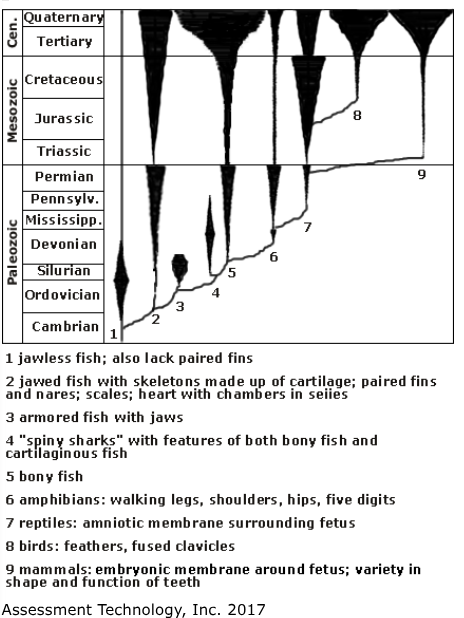
From "Vertebrate Evolution"
During which period was biodiversity the greatest? DOK 2
"Cooler Design"
When an ice cube is placed under a heat lamp, the ice cube melts in about 1:30 (minutes:seconds). Students have been asked to design a box that can keep an ice cube from completely melting under the heat lamp for at least 10 minutes. The students may use any materials they wish for their designs. The box should have a volume of 1000 cm3 or less (10 cm long x 10 cm wide x 10 cm high) and should cost no more than $5.00 to construct. One student sketched out a potential design, shown below.
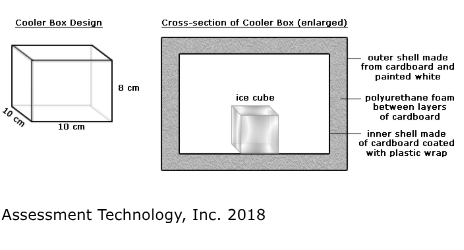
from "Cooler Design" DOK 2 Which is a constraint on the cooler design?
"Rock Layers in a Canyon"
The graphic shows the different rock layers in a canyon, along with fossils a scientist found in each layer.
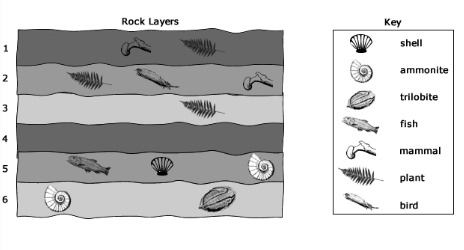
from "Rock Layers in a Canyon" DOK 2 Choose a word or phrase in each drop-down list to complete the sentence.
The shell fossil is older than the , but it's the same age as the fossil.
A solid base was dropped into a beaker containing a clear liquid acid. DOK 1 What evidence suggests that a chemical reaction occurred?
"Climate Change Indicators"
(excerpted and adapted)
Earth's climate is changing. Temperatures are rising, snow and rainfall patterns are shifting, and more extreme climate events, such as heavy rainstorms and record high temperatures, are already happening. Many of these observed changes are linked to the rising levels of carbon dioxide and other greenhouse gases in our atmosphere, caused by human activities. The Environmental Protection Agency (EPA) partners with more than 50 data contributors from various government agencies, academic institutions, and other organizations to compile a key set of indicators related to the causes and effects of climate change. Indicators represent the state or trend of certain environmental or societal conditions over a given area and a specified period of time. EPA's indicators are designed to help readers understand observed long-term trends related to the causes and effects of climate change. In other words, they provide important evidence of "what climate change looks like.""Climate Change Indicators"(excerpted and adapted)
United States. Environmental Protection Agency. "Climate Change Indicators in the United States." Updated July 2021. Web. 10 Dec. 2021
Choose a word or phrase from each drop-down list to complete the sentences. DOK 2 The data shows that as the amount of dissolved carbon dioxide in the ocean, the water becomes acidic. If these trends continue, one of the first consequences scientists will likely observe will be in the waters around Hawaii.
Assume that a wave has an amplitude of 1 unit and transports 2 units of energy. DOK 2 How much energy will the wave transport if its amplitude increases to 4 units? (Use only the numeral keys to submit your answer. Do not include units.)
"Corn Seedling Investigation"
A student wanted to better understand how seeds are able to germinate and grow into seedlings. She studied the directions on a packet of sweet corn seeds (below). She hypothesized that if corn seeds grow by conducting photosynthesis, then even if given moisture and rich soil, corn seeds kept in a dark closet would not germinate.
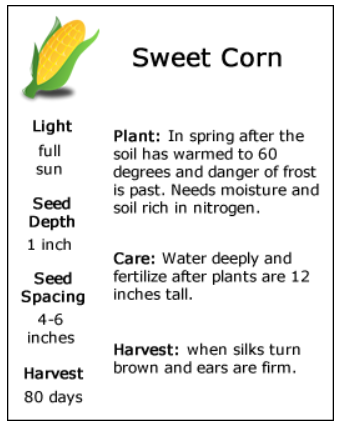
The student placed moist, nutrient-rich soil in two plastic cups, and she planted two corn seeds 1-inch deep in both cups. She placed one cup in a dark closet and the other cup next to a sunny window. She observed the cups daily, making sure to keep the soil slightly moist. She recorded observable changes by keeping notes (below) and photographing the cups on days 5 and 6 (below).
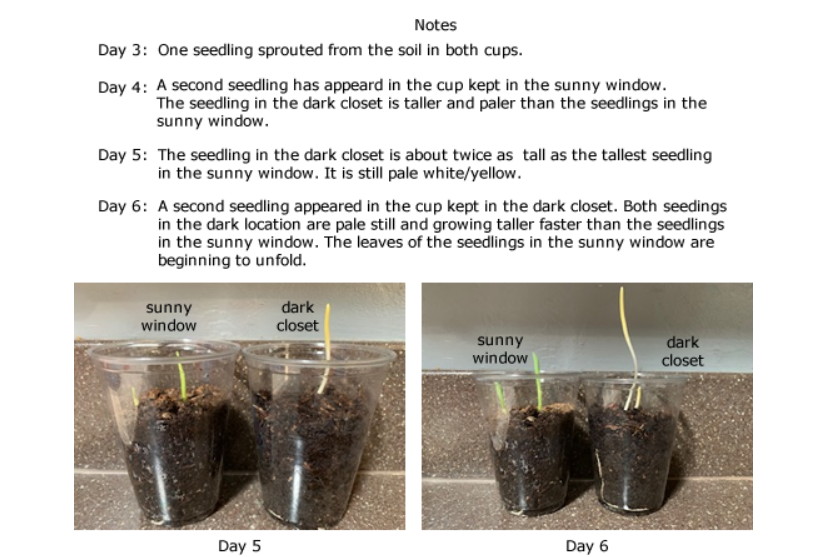
from "Corn Seedling Investigation" Choose a word or phrase from each drop-down list to complete the sentence. If the seedlings' soil is not kept moist, the seedlings won't for photosynthesis and so will .
from "Corn Seedling Investigation"
Choose a word or phrase from each drop-down list to complete the sentence. DOK 2
The seedlings in the sunny window are green because they have begun to .
"Parts of a Corn Seed"
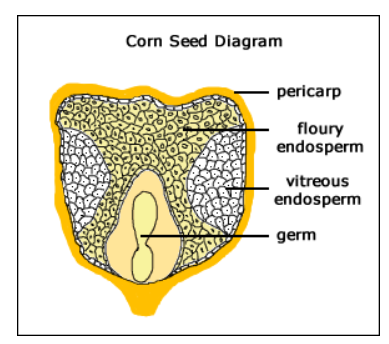
Germ: Also known as the embryo, the germ is the young plant that will develop from the seed. At its base is the radicle, which will become the plant's root. At its top is the epicotyl, which will become the shoot that pushes through the soil. It contains several tiny leaves. Also, the germ contains cotyledons, which store food for the tiny plant. At the seed stage of development, the plant cannot conduct photosynthesis. endosperm: The bulk of the seed is made up of the endosperm, which is the main energy reserve for the tiny seedling as it germinates and shoots up out of the soil. There are two types of endosperm: floury and vitreous. Both are composed mostly of starch. pericarp: Also called the seed coat, the pericarp shields the endosperm and germ from the external environment. When moistened, however, the pericarp absorbs water and swells briefly, triggering the germination process.
from "Parts of a Corn Seed"
Choose a word or phrase from each drop-down list to complete the sentence.
The is that helps protect the seed until environmental conditions are right for germination.
from "The Apparent Size of the Moon" and "Orbital Path of Earth's Moon" DOK 2 Choose a word or phrase from each drop-down list to complete the sentence. Full moons are able to occur at both the apogee and perigee because the orientation of these two points to the change over time as .
"Building and Testing an Electromagnet"
A student built a simple electromagnet for a science class project using copper wire, a metal bolt, and batteries. For his first experiment, he wrapped the wire around the bolt 25 times and connected the electromagnet to a single battery (as shown in Figure 1).
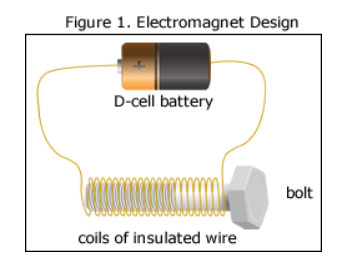
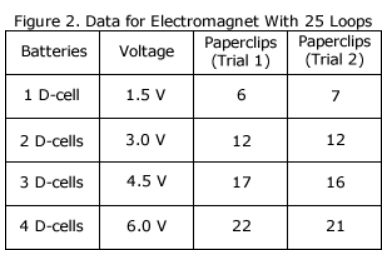
He held the bolt near a pile of paperclips and counted how many paperclips the electromagnet could hold. Then, he removed all the paperclips and conducted a second trial with the same setup. Next, he added a second battery to the electromagnet. Again, he conducted two trials testing how many paperclips the electromagnet held. He repeated his procedure, adding a third battery and then a fourth battery. He calculated the circuit's voltage each time he added a battery. His results are shown in Figure 2.
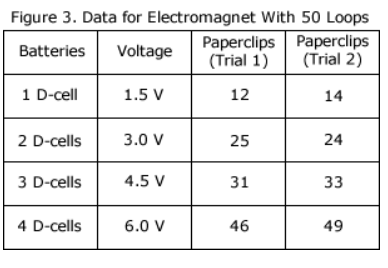
For his second experiment, he wrapped the wire around the bolt 50 times. He followed the same steps as in the first experiment and collected the same type of data. His results are shown in Figure 3.
"Sun's Path Through Sky On Winter Solstice and Summer Solstice"
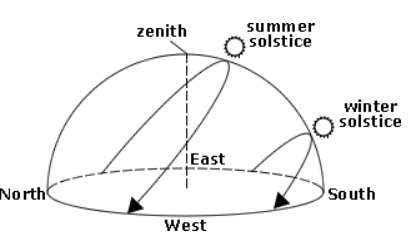
The model indicates the sun's path through Earth's sky during the Northern Hemisphere's summer solstice and the winter solstice.
from "Sun's Path Through Sky on Winter Solstice and Summer Solstice" DOK 2
Choose a phrase from each drop-down list to complete the sentence. The model helps show that in summer than in winter. Thus, the Northern Hemisphere is warmer in summer because it .
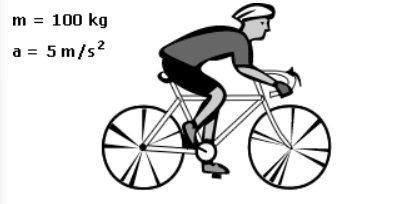
According to Newton's second law of motion, what force is needed to cause this acceleration? DOK 2
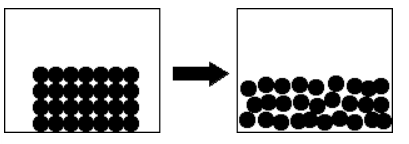
The picture below shows a change in a substance's particles. DOK 2 What best describes how this substance has changed?
"Cardboard Astronomy"
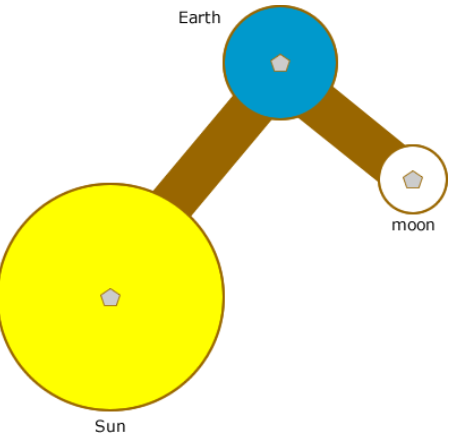
A student cut circles out of cardboard and colored them to represent the sun, Earth, and moon. She used two strips of cardboard and small nuts and bolts to attach the three circles into the model shown below. The bolts allow each body to rotate around its axis and the cardboard strips allow bodies to revolve around one another.
from "Cardboard Astronomy"
The student rotated the Earth-moon system around the sun as shown by the arrow. DOK 2
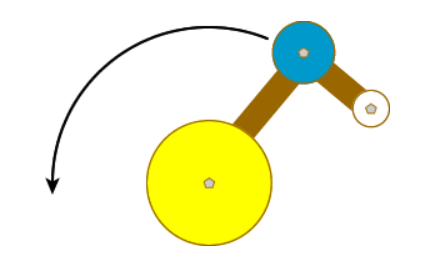
Which observation could best be explained by moving the model this way?
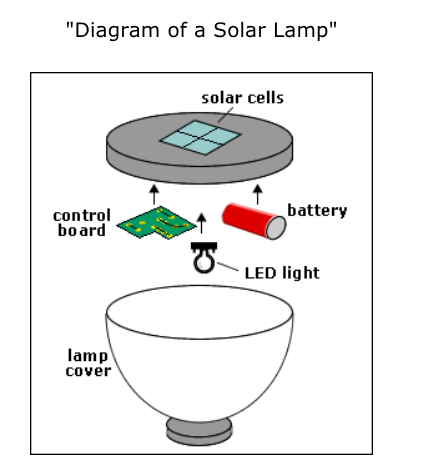
from "Diagram of a Solar Lamp" DOK 2 Choose a word from each drop-down list to complete the sentence about the diagram. During the day, the solar cells capture energy from the sun that then gets stored as energy in the battery. At night, that energy becomes again when it is used to light the bulb.
"Cat Fur Color Genetics Investigation"
A student hypothesized that if the alleles for orange fur and black fur in cats are codominant, then when a cat with orange fur mated with a cat with black fur, fifty percent of the offspring would have orange fur and fifty percent would have black fur. He tested this by examining the fur colors in two litters of kittens produced by one parent with orange fur and one parent with black fur. The table below shows the results.
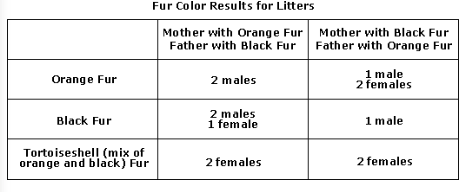
from "Cat Fur Color Genetics Investigation" DOK 2 Choose a word or phrase from each drop-down list to complete the sentence. The kittens with the tortoiseshell fur received their fur-color genes from their father and their fur-color genes from their mother.
The dominant allele for a widow's peak is W, while the recessive allele is w. Determine whether the allele pairings below will result in the dominant or recessive trait being expressed in offspring. Click and drag each allele pairing into the appropriate box. DOK 2
W from the father and w from the mother
W from the mother and w from the father
w from the mother and w from the father
W from the father and W from the mother
Dominant Trait Expressed
Recessive Trait Expressed
"Genetically Modified Corn and the Western Corn Rootworm"
Genetic engineering is the process of using technology to change the genetic material in living organisms. Organisms that have had their genes intentionally changed are called genetically-modified organisms (GMOs). When many people hear the term "GMO," they think of genetically-modified crops. There is a good reason for this — scientists have developed technologies to produce desired traits in many different crops. One such crop is Bt corn. Bt corn was genetically engineered to carry genes from the bacterium Bacillus thuringiensis, which is where the abbreviation "Bt" comes from. Bacillus thuringiensis is found in soils around the world, and it naturally makes a toxin that kills some insect species. Scientists inserted some of the bacteria's genes into corn plants so that the plants could produce the Bt toxin themselves. When insects tried to eat the Bt corn, they would be killed by the toxin in the plants. Farmers were excited about planting Bt corn because it meant that they could reduce the amount of chemical pesticides sprayed on their fields. It is more cost efficient to plant an insect-resistant crop than to apply pesticides multiple times during the growing season. Although Bt corn was engineered to produce an insect-killing toxin, Bt corn crops are being ruined by the western corn rootworm. Western corn rootworms are beetles that lay their eggs in cornfields. When the larvae hatch, they eat the roots of corn plants. When Bt corn was first planted, the toxin killed all of the rootworm larvae that tried to eat the plants. Then a larva acquired a genetic mutation that made it resistant to the toxin. The larva was able to eat the Bt corn without being killed. This gene quickly spread throughout the rootworm population. More and more fields planted with Bt corn showed signs of rootworm damage. One of the best methods for controlling toxin-resistant rootworms is the practice of crop rotation — changing the crops in a given field each year. This age-old practice disrupts the rootworms' life cycle. If a field is planted with corn one year, but a different crop the next, then the rootworm larvae that hatch will starve to death because they cannot survive on plants other than corn.
from "Genetically Modified Corn and the Western Corn Rootworm" DOK 2 Choose a phrase from each drop-down list to complete the sentences. As more fields were planted with Bt corn, rootworm larvae with the resistance gene other rootworm larvae, which helps explain why the gene spread so quickly. This process is known as .
from from "Genetically Modified Corn and the Western Corn Rootworm" DOK 2 Choose a word or phrase from each drop-down list to complete the sentence. The mutation that made the larva resistant to the Bt toxin made the larva likely to survive and reproduce, thus .
from "Friction" Choose a word or phrase from each drop-down list to complete the sentence. DOK 2
The temperature increases because the cardboard particles as the cardboard pieces are rubbed against each other. Friction is converting motion energy into energy.
"Gene Editing and Super Kids"
(excerpted and adapted)
Tinkering with Life What if scientists could edit DNA? As in, literally remove a strand of DNA and add a new section to it, or cut out a gene and paste a different one in its place? Imagine what such a technology would be able to do. Got a genetic disease? No problem: your doctor will give you a drug that removes the malfunctioning gene and replaces it with a new one. (Scientists are working hard on this one.) Want to make camels that produce the ingredients for medicine in their milk? Scientists are already on it. Manipulating DNA isn’t really a new trick. Scientists have been experimenting with different techniques since the 1960s. In 2012, though, a new method of editing DNA emerged. This method, called CRISPR, is quicker and less expensive than other methods. It has spread quickly and is already being used around the world for a huge variety of research projects. Because the CRISPR system is also more accurate (and getting better all the time), it has potential for use in editing human DNA—and not just to cure genetic diseases. Better Genes, Better People? Two different applications for genetic editing exist. One is generally accepted as ethically OK. The other is not as widely accepted. “In thinking about how human gene editing might be used, you have to make some really important distinctions,” says Marcy Darnovsky, Director of the Center for Genetics and Society. She is a bioethics expert, and her job is to help educate the public, as well as people who make laws, on the ethical issues surrounding human genetics. It’s one thing to try to treat or cure people who are currently sick using gene editing, she explains. “The technical term for that is ‘somatic genetic intervention.’ You would target particular cells, particular tissues of the human body.” A more controversial approach is called “germline intervention,” which alters the DNA of a family line. That would mean making changes to human eggs, sperm, or early embryos—changes that would be passed on to future generations. The prospect of editing DNA to truly cure people affected by genetic diseases (which are caused by a defect in one or more genes) is downright thrilling for both patients and doctors. “Helping sick people is a very worthy goal and we would support it,” Darnovsky says. She’d want to be sure any genetic modifications are tested thoroughly to make sure they’re safe and that treatment is easily accessible to all people who need it. Germline intervention is different from somatic intervention. Changes in the DNA of eggs, sperm, or even human embryos become a permanent part of the human germline, at least for any descendant. Some scientists believe editing the human germline could benefit humanity. Humans could be enhanced to have stronger bones, to be resistant to diseases, or even to be less smelly. Parents could create “super-kids” with high IQs and fantastic athletic ability. Theoretically, this may someday be possible. Even if we could do it, should we “design” a human being, for any reason at all? Now that’s a complicated question. Why All the Fuss? Possibly the most important reason to hesitate in modifying the human germline is that no one knows for sure what the long-term effects of altering DNA will be. What if scientists change one gene, introduce it into the germline, and find out a generation later that it somehow causes a different disease? Perhaps they’d be able to undo the change with no problem, perhaps not. Fortunately, parents concerned about passing a genetic disease along to their children already have other options that don’t involve editing the germline. Is the risk of experimenting worth it? Until now, every human ever born was created with an element of chance. No one checked boxes to select our height, our musical abilities or other talents. If some of us were given our traits on purpose, how would our society change? Maybe genetically enhanced people would have an unfair advantage over everyone else in the job market, on the sports field, or in the dating scene. If you were a genetically modified kid, would your parents have higher expectations of you? Would you like being an engineered kid, or would you resent that someone decided your strengths for you before you were born? These are difficult issues that affect our entire society. It’s not just a question of individual opinions, Darnovsky says. “The question is, what are the likely social consequences of going down this road, toward a society in which some people are genetically enhanced and other people are not?”"Gene Editing and Super Kids"(excerpted and adapted)
Dankanich, Merry, "Dino Chickens and Super Kids," Muse, February 2016. © Carus Publishing Company. Reproduced with permission.
from "Gene Editing and Super Kids" In what three ways has the CRISPR method contributed to gene editing research? DOK 2
from "Gene Editing and Super Kids"
Choose a word or phrase form each drop-down list to complete the sentence. DOK 2
A potential negative effect of using intervention to is that those individuals May have unfair advantages over others that contribute to inequality among humans in many areas of life.
From "Vertebrate Evolution"
Which best explains the correct answer to the previous question?
from "Cooler Design" DOK 2
Choose a word from each drop-down list to complete the sentence.
The outside of the box is painted white because white objects more light than other colors, resulting in thermal energy being transferred to the box.
from "Corn Seedling Investigation" and "Parts of a Corn Seed" DOK 2
Choose a word or phrase from each drop-down list to complete the sentence. The seedlings in the dark closet grew taller than the seedlings in the light because they needed to before .
"The Apparent Size of the Moon"
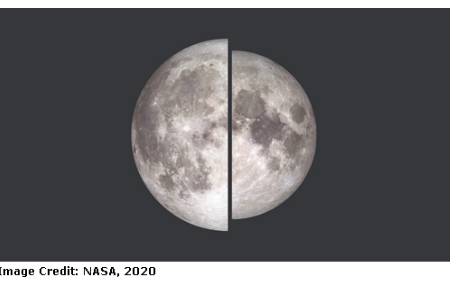
Approximately once every fourteen months, a phenomenon people call a supermoon occurs. A supermoon is a full moon that occurs within about a day of the moon's perigee, the point at which the moon is the closest it will be to Earth during that particular revolution. Thus, the full moon appears slightly larger and brighter than other full moons. Full moons that occur within a day or so of the moon's apogee, the point at which the moon is farthest from Earth in its revolution, appear slightly smaller and less bright. These full moons are sometimes called micromoons. The image below, captured by NASA's Lunar Reconnaissance Orbiter, shows the difference in apparent size of a supermoon (on the left) and a micromoon (on the right). On average, a supermoon appears about 30 percent brighter than a micromoon.
The table below shows dates for the full moons for 2020, as well as dates for and the distance of the moon from Earth during each lunar apogee and perigee for 2020. For reference, the moon's average distance from Earth is approximately 384,400 kilometers.
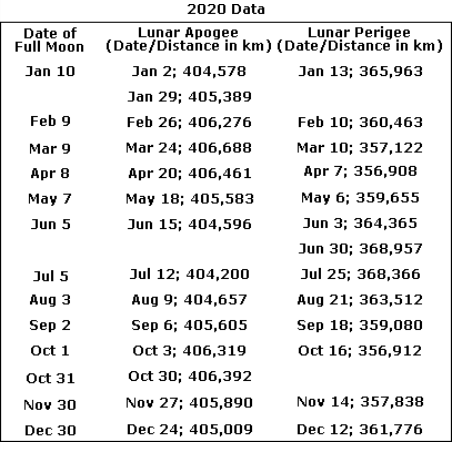
from "The Apparent Size of the Moon" DOK 2 In which month in 2020 will the full moon appear smallest and dimmest?
from "The Apparent Size of the Moon" DOK 2 What is the closest distance the moon gets to Earth in 2020?
from "Orbital Path of Earth's Moon" DOK 2 Choose a word or letter from each drop-down list to complete the sentences.
The moon will cause Earth to experience a higher tide at position in its orbit than at any other position. That's because the moon's gravitational pull is at that position.
from "Building and Testing an Electromagnet" DOK 2 What is the best prediction for the number of paperclips the electromagnet will hold if there are 100 loops of wire around the bolt and 2 D-cell batteries in the circuit?
from "Building and Testing an Electromagnet" DOK 2 Choose a word or phrase from each drop-down list to complete the sentence. The data shows that increasing the and will the strength of the electromagnet.
from "Building and Testing an Electromagnet" DOK 2 Choose a word or phrase from each drop-down list to complete the sentence. The data suggests that when the number of batteries in the circuit is , the approximate strength of the electromagnet increases by a factor of .
from "Building and Testing an Electromagnet" DOK 2 Which is the dependent variable in the experiments?