1
1
1
1
1
1
1
1
1
1
1
What is growth?
What is homeostasis?
What is thermoregulation?
What are found on chromosomes?
Only one parent cell required - organism doesn’t have to spend time/energy to find a mate find a mate
Population of a species can increase rapidly when the conditions are favourable
Genetic variation is present within the offspring, therefore the species is likely to be able to survive changes to the environment
What is it when a cell reproduces itself by splitting to form two cells with identical sets of chromosomes. It is used for growth and repair of tissues
A human nucleus contains how many chromosomes?
Meiosis produces how many daughter cells?
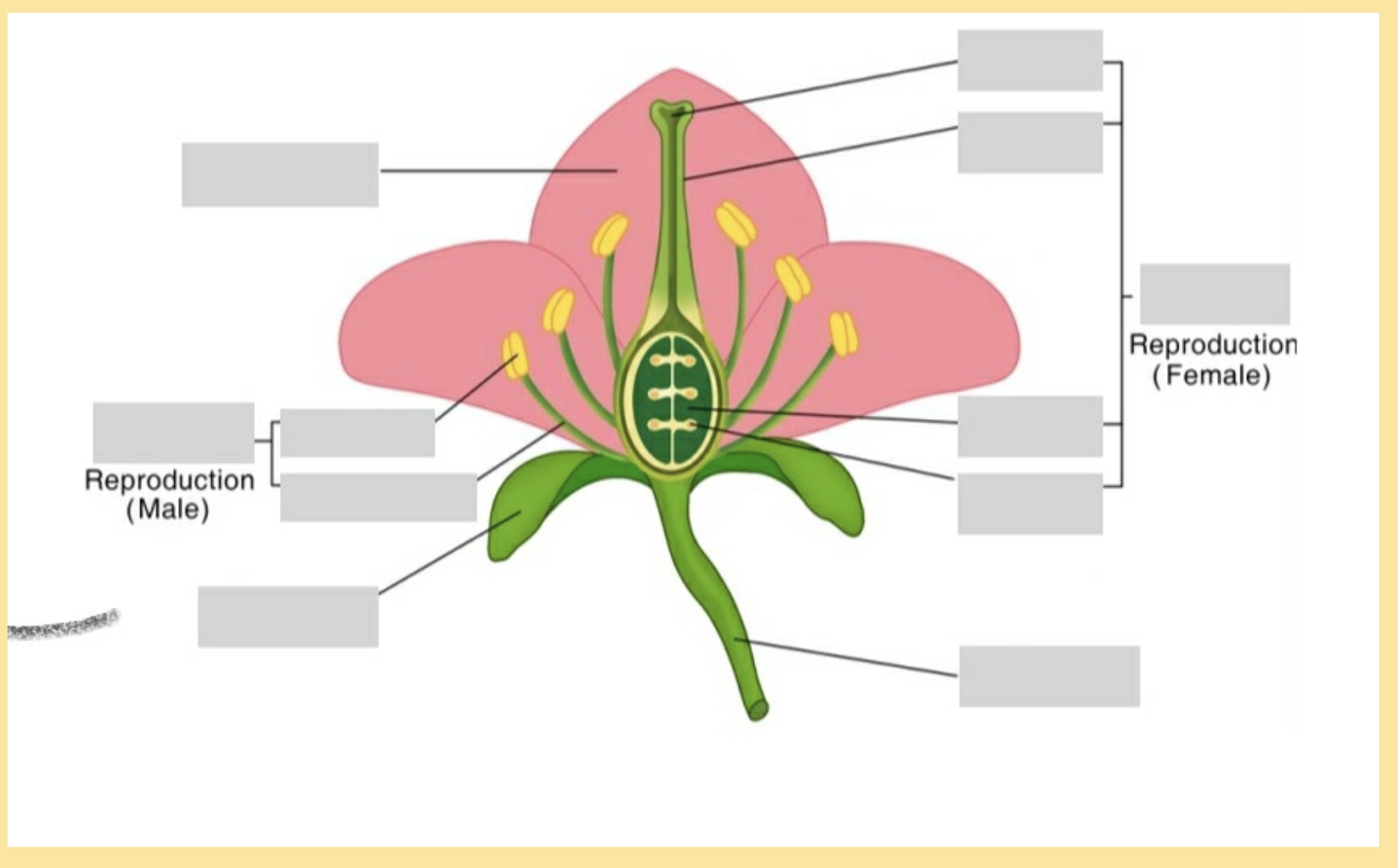
The what consists of the ovary, style and stigma?
What does the pollen attach to?
What supports the stigma?
The ovary contains the female gametes (eggs) inside what?
What does a seed require for germination?
Put these stages of fertilisation and dispertion in the correct order
1 - The nucleus of the pollen grain travels down the pollen tube to and enters the ovary via the micropyle
2- Pollen lands on a stigma and grows into a pollen tube.
The tube grows down the style using digestive enzymes.
3 - The seeds are dispersed from the plant.
The seeds can then germinate away from the plant.
This means they are not competing for resources.
4 - The ovule becomes fertilised develops into an embryo. The ovule becomes the seed. The ovary becomes the fruit.
Label
Label
Label
Labal
Label
Label
Label
Label
Label
Label