15
Why is this new age of thinking a threat to the old system?
Why is this new age of thinking a threat to the old system?
Do now-Explain the relationship between the English Parliament and the Monarch in a constitutional monarchy, and how has this relationship evolved over time.
Why is this new age of thinking a threat to the old system?
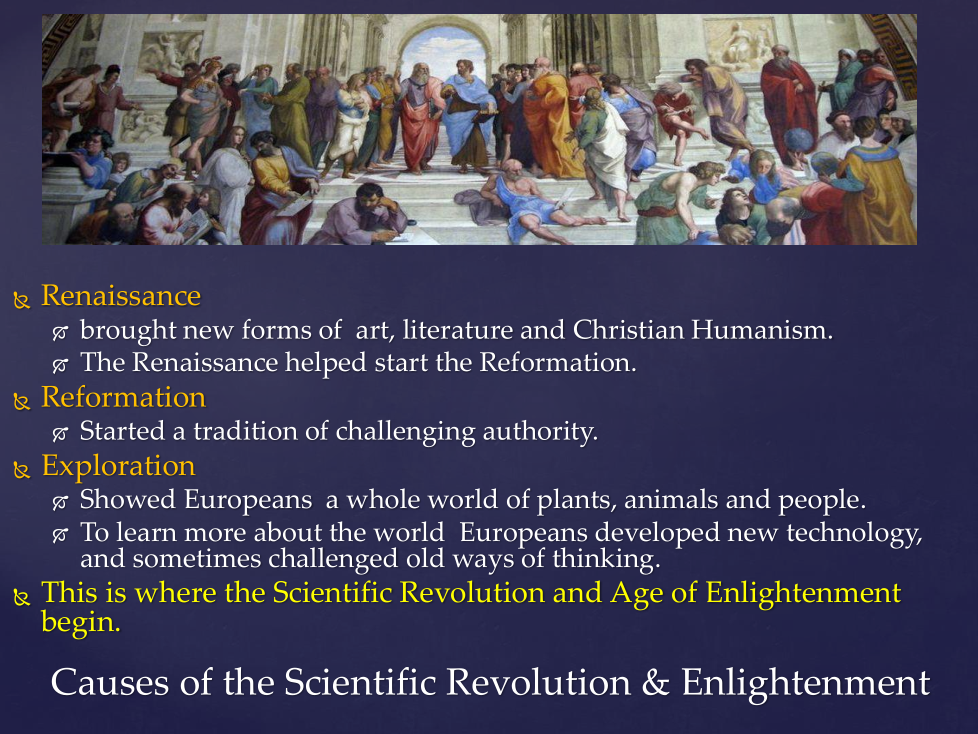
Match term to their description
| Draggable item | arrow_right_alt | Corresponding Item |
|---|---|---|
Exploration | arrow_right_alt | encouraged new ways of thinking and looking at the world |
Renaissance | arrow_right_alt | encouraged people to challenge authority |
Reformation | arrow_right_alt | introduced people to new plants, animals and people and made them wonder about the world |
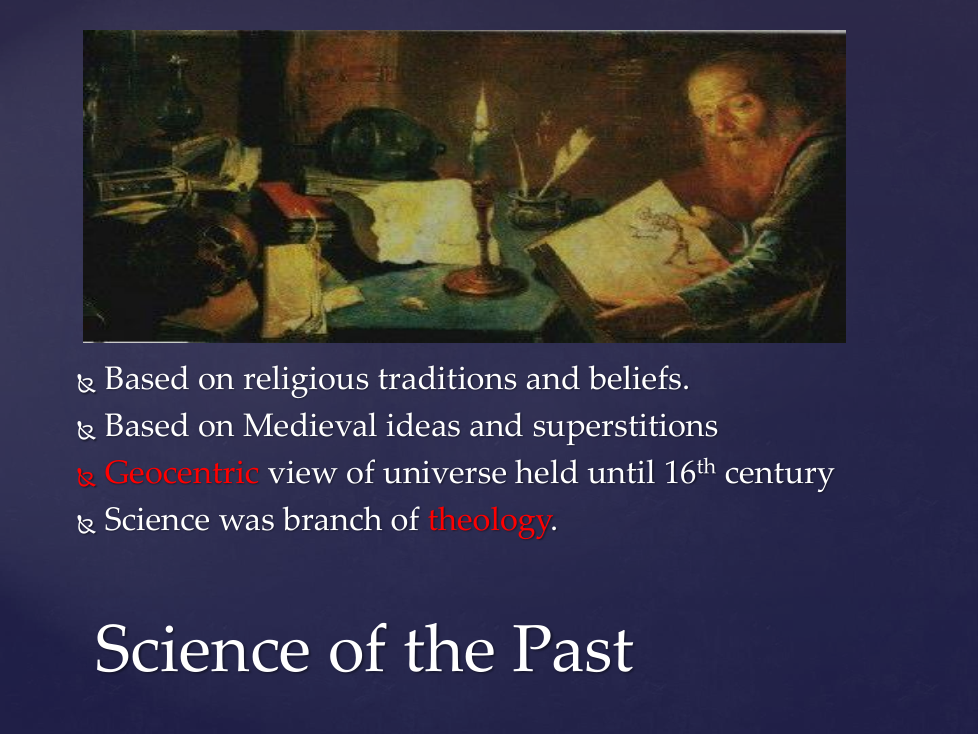
Why was medieval science based on superstition and religious ideas?
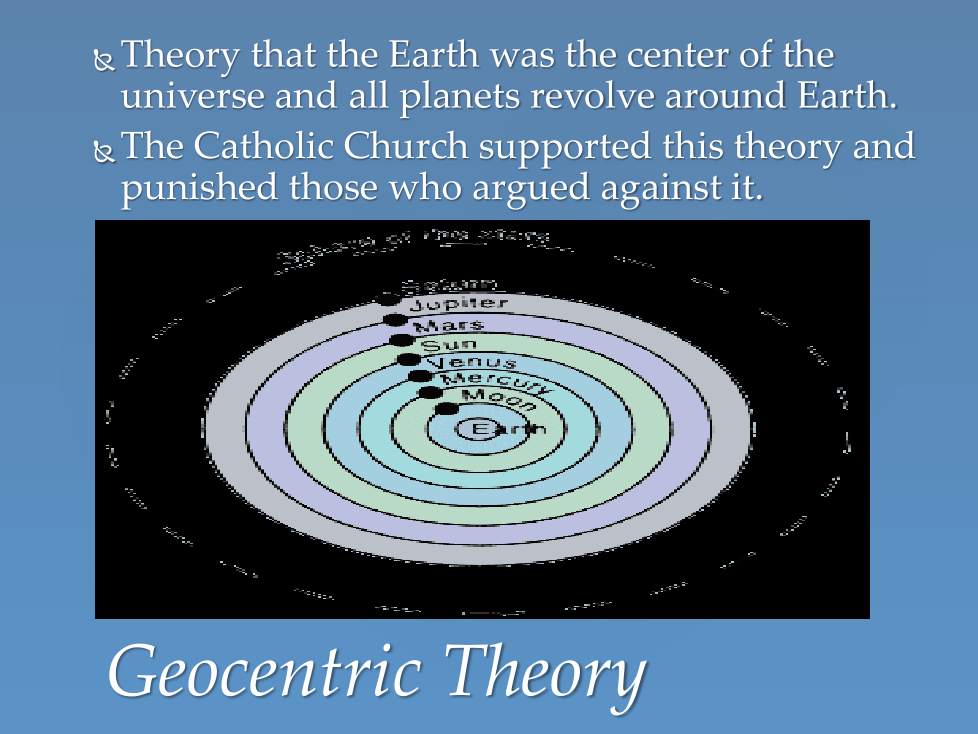
Explain the geocentric theory.
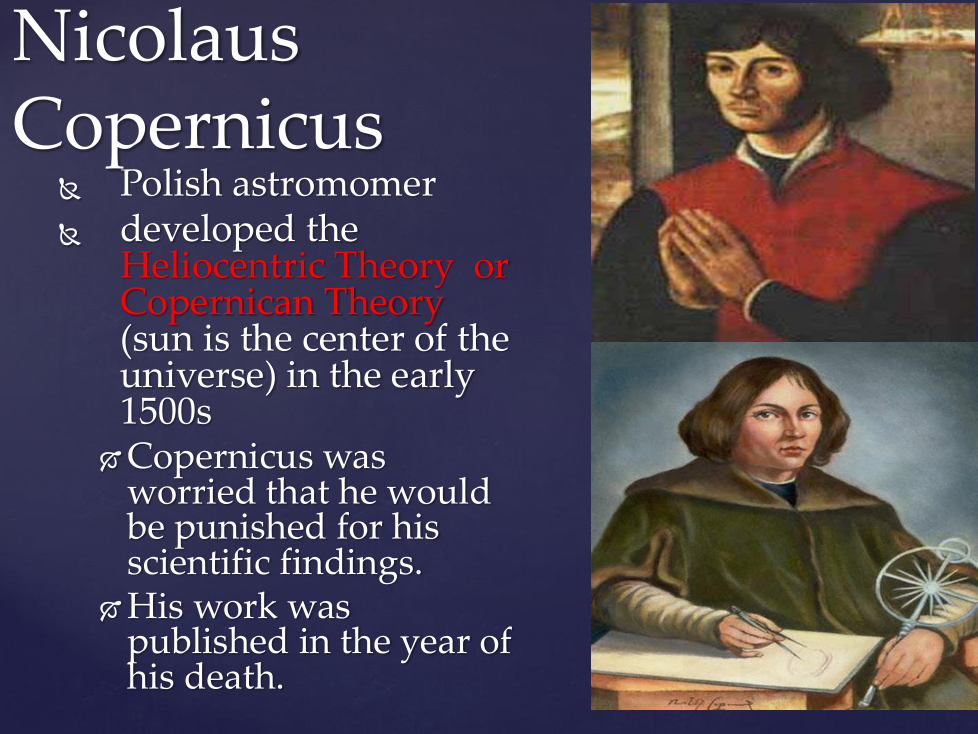
Why would the Church have punished Copernicus for his writings?
All of these terms refer to the idea that the sun is the center of the universe.
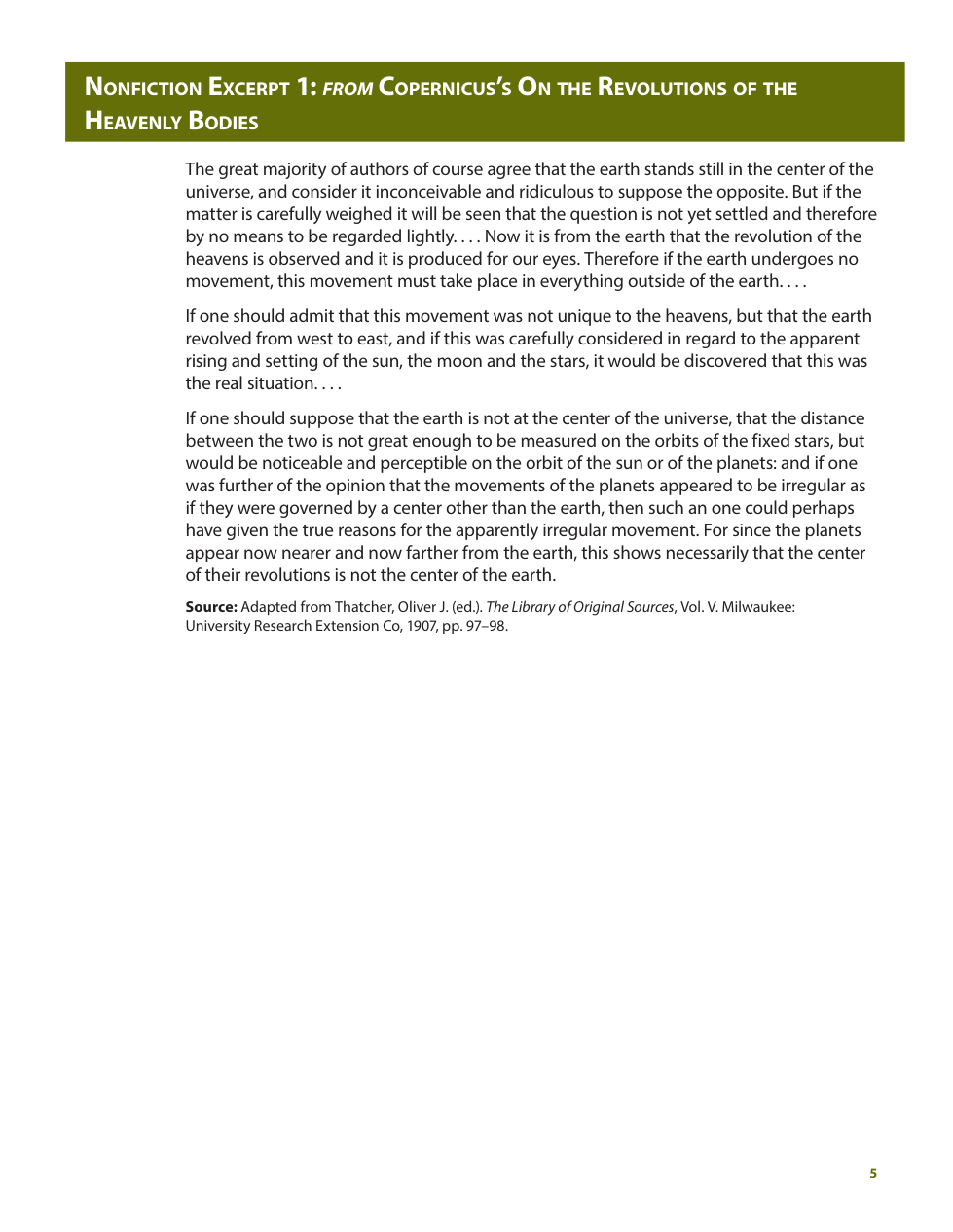
In what ways does Copernicus's argument challenge long-standing beliefs about the Earth's position in the cosmos, according to his excerpt?
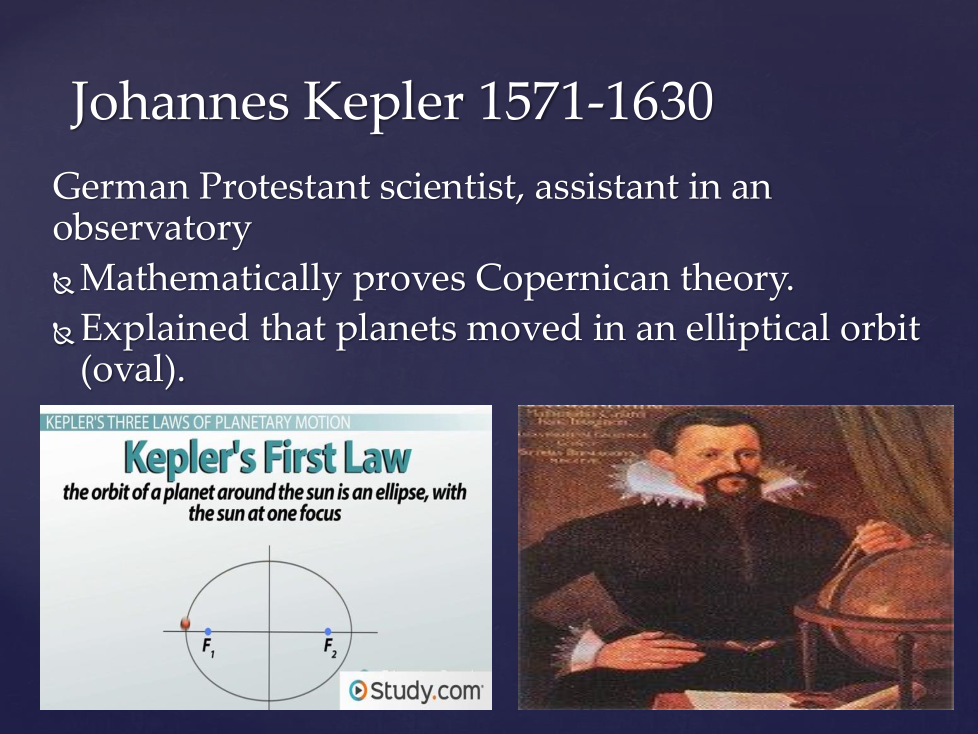
Why is Kepler's religion important in this time period?
Kepler proved that planets move in a circle.
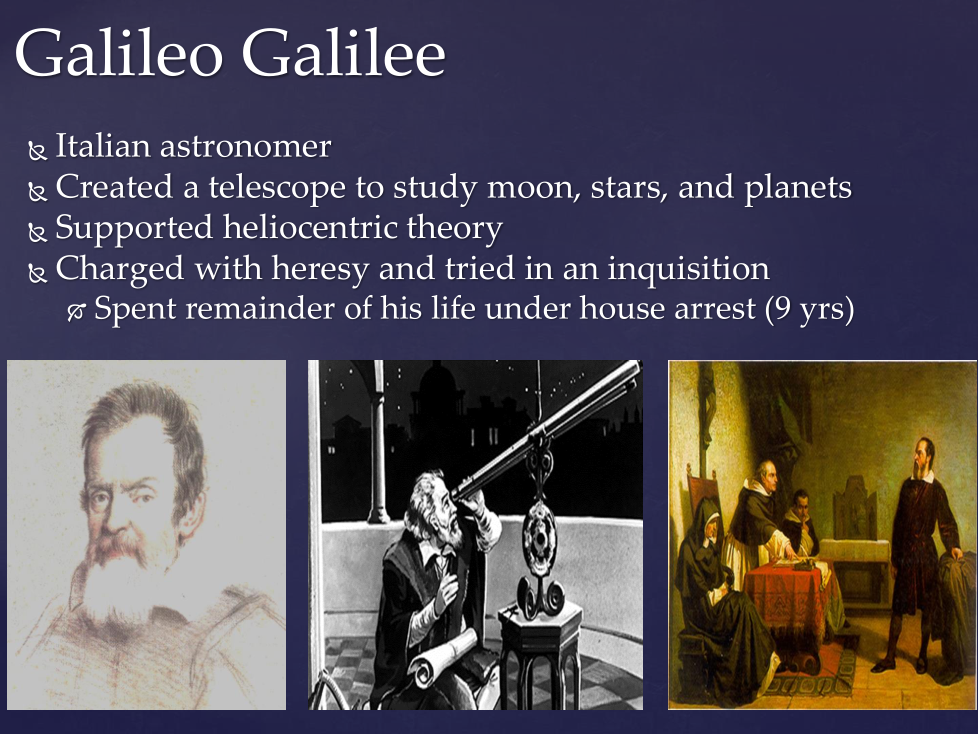
Why was Galileo put under house arrest?
Remember that Galileo supported Copernicus’s idea of a heliocentric universe. Galileo received a lot of criticism for this view. Galileo defended himself in a number of different writings, including Dialogue Concerning the Two Chief World Systems. In this fictional dialogue, Galileo created two friends who debate geocentrism and heliocentrism. Read the excerpt and answer the following questions that are attached the the reading
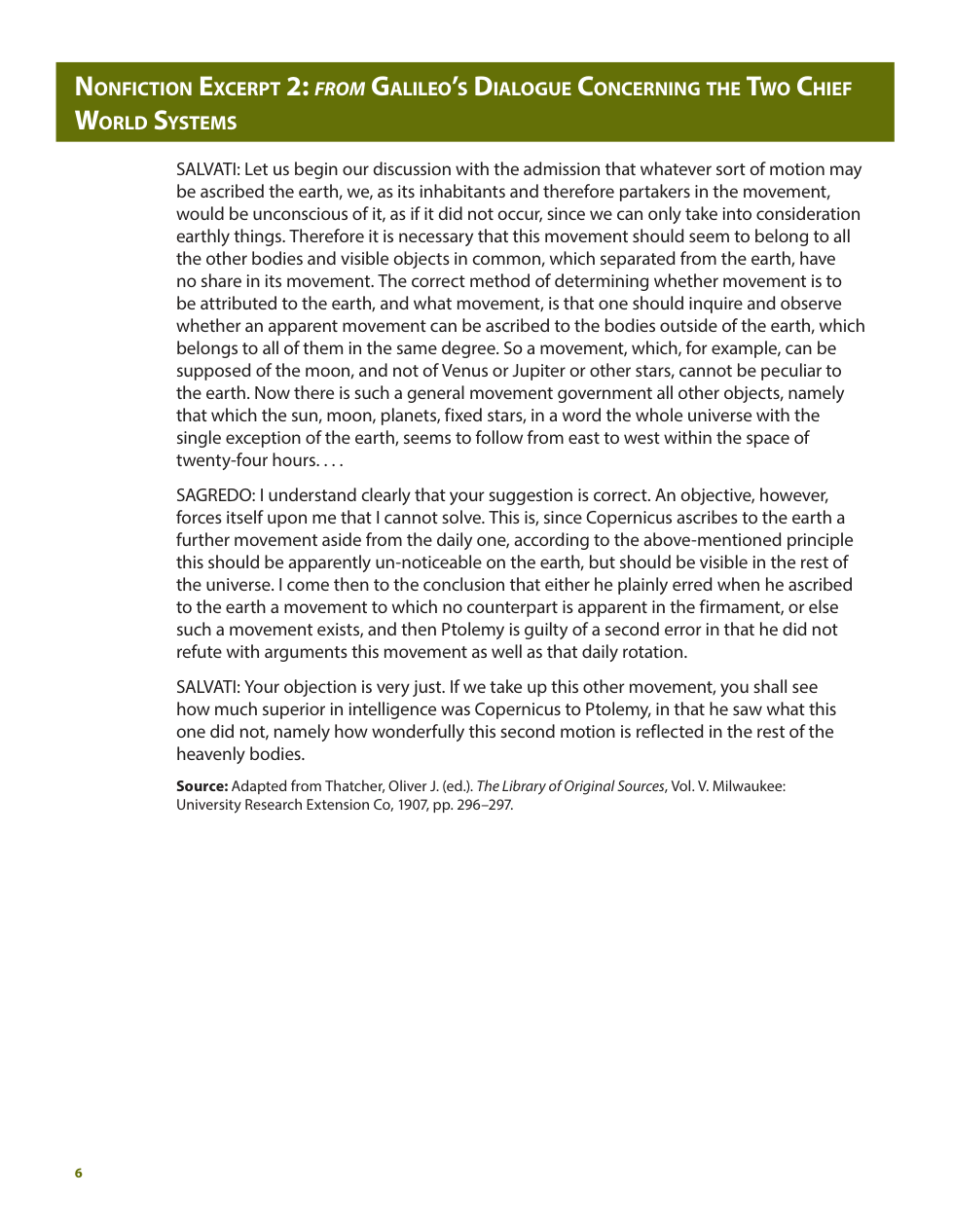
In your own words, what is Salvati’s argument? What method does he propose for understanding the heliocentric universe?
What error or omission does Sagredo point out in Salvati’s argument?
How does Salvati address that error or omission?
Which character do you think represents Galileo? Why do you think that?
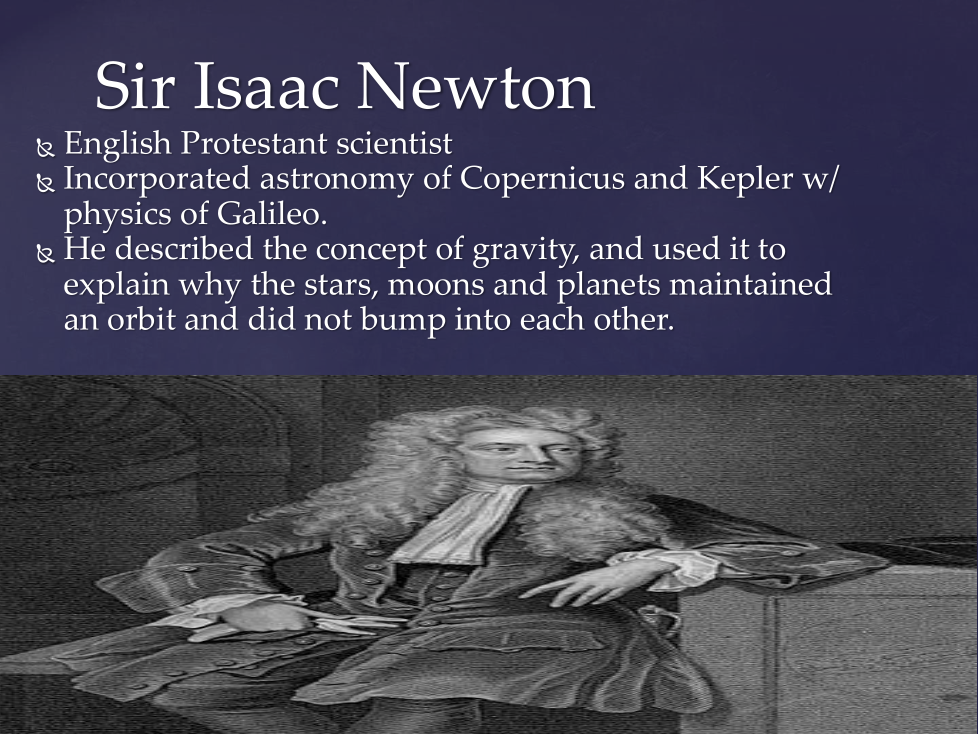
Which astronomers' work did Newton incorporate in his studies?
What concept was Newton able to describe?
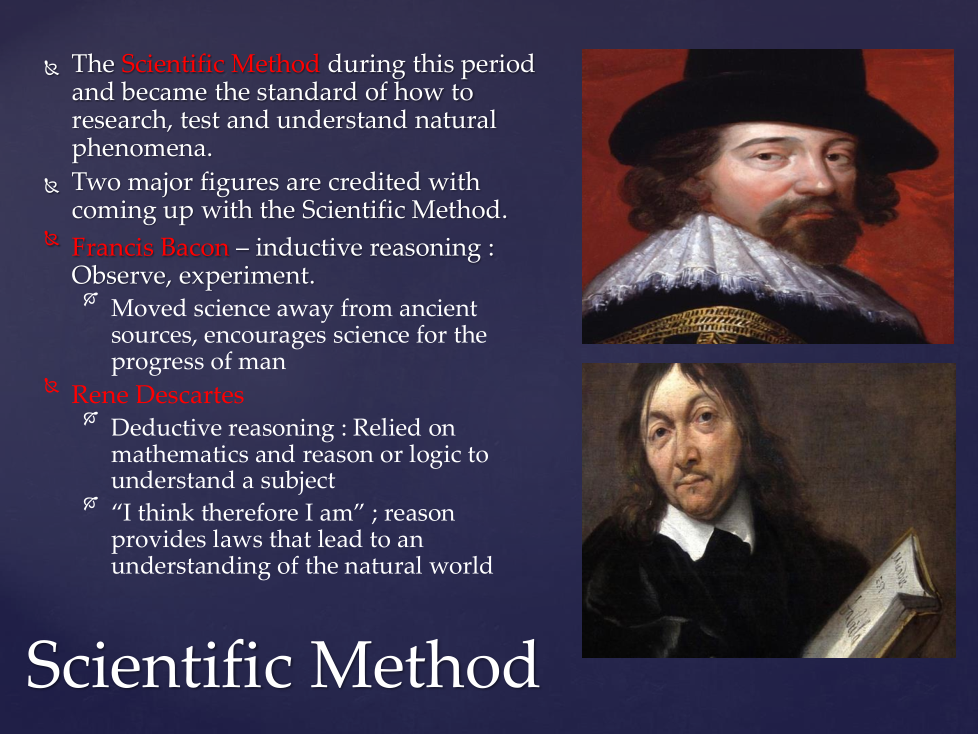
What is the scientific method used for?
Match person to their description
| Draggable item | arrow_right_alt | Corresponding Item |
|---|---|---|
Rene Descartes | arrow_right_alt | Said you can learn by observing and experimenting |
Francis Bacon | arrow_right_alt | Said you learn through reason and logic |
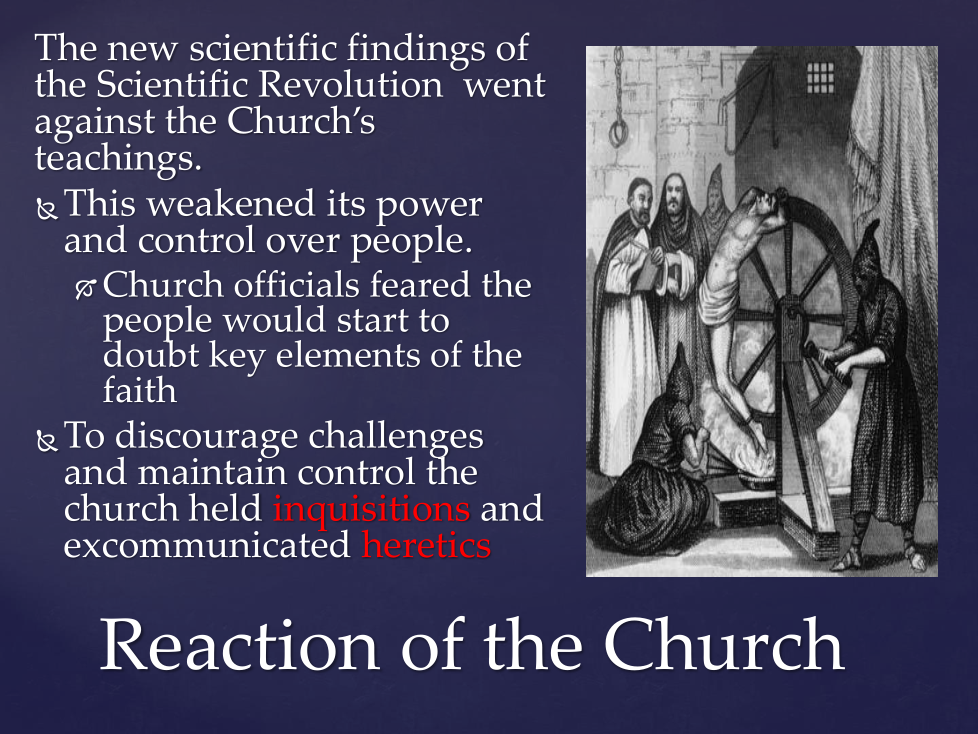
Why did the Church fear they would lose control over their people?
Match term to description
| Draggable item | arrow_right_alt | Corresponding Item |
|---|---|---|
Heretics | arrow_right_alt | Church trial to determine if someone is guilty of going against the teachings of the Church. |
Inquisition | arrow_right_alt | People who go against the teachings of the Church |
Create a poster supporting the Scientific Revolution. Reference at least 3 people/ideas in your poster.
Explain what might classify someone as a Witch. Why would that make them a Witch? When else have you heard people being put on trial for Witch Craft?
EXIT TICKET-Overall how did the Scientific Revolution alter how people thought about society, government and culture? Think about how did the Enlightenment took the scientific method and apply it to society and government? In addition, what innovations occurred in art, music, and literature during the eighteenth century?
What major field of study initiated the Scientific Revolution?
What theory did astronomers begin to question?
How did technology impact astronomy during this period?
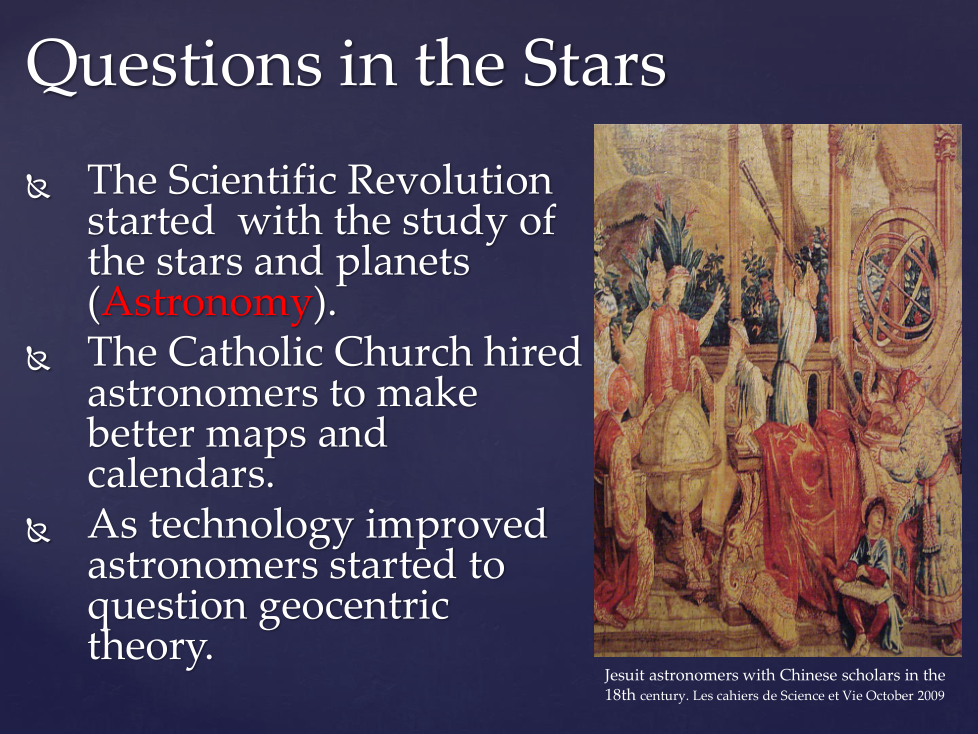
Why did the Catholic Church hire astronomers in the Middle Ages?
General knowledge throughout the Middle Ages came from which two sources?
Which astronomer first came up with the heliocentric theory?
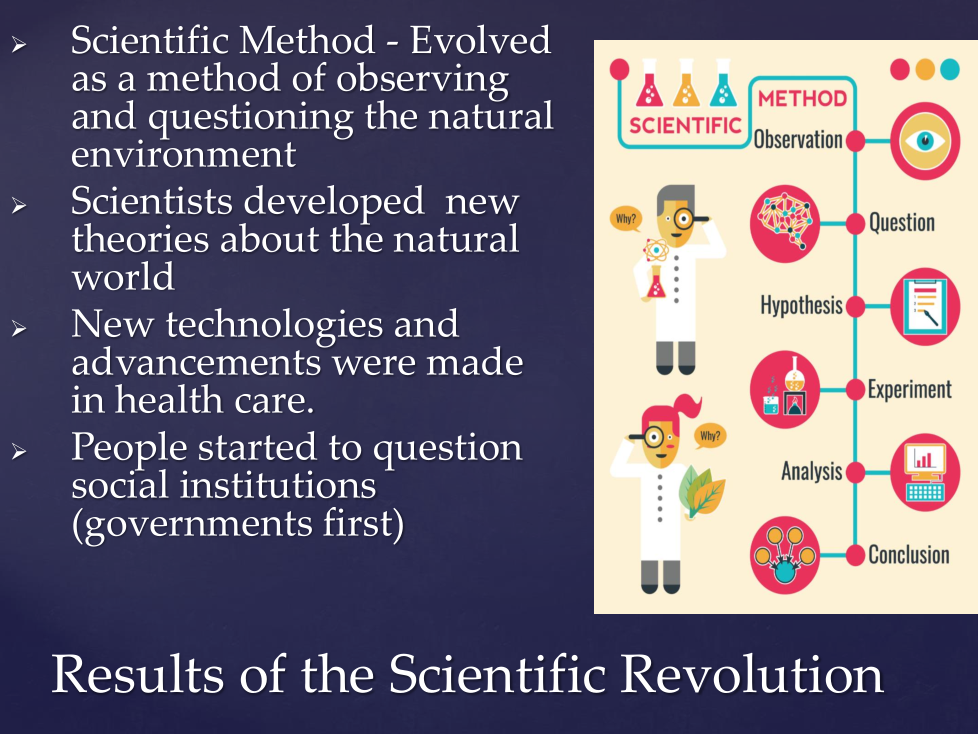
What are the steps to the scientific method?
Edward Jenner is credited as the first man to do what?
Why did the discovery of new plants and animals lead to new courses of study in universities?
What three discoveries did Galileo make that undercut ancient ideas and church teachings?
What force affects the motion of planets and bodies on Earth? Who first described this law?
Why were technological advancements so important during the scientific revolution?
A scientist challenged the ancient idea of 4 elements. What were these elements and how did he prove there were more elements?
New scientific ideas were generally supported by what other area of study?