Log in
Sign up for FREE
arrow_back
Library

Unit 2 Test

star
star
star
star
star
Last updated 11 months ago
62 questions
1
1
1
1
1
1
1
1
1
1
1
1
1
1
1
1
1
1
1
1
1
1
1
1
1
1
1
1
1
1
1
1
1
1
1
1
1
1
1
1
1
1
Question 1
1.

Question 2
2.

Draggable itemarrow_right_altCorresponding Item
arrow_right_alt
arrow_right_alt
arrow_right_alt
arrow_right_alt
Question 3
3.

Question 4
4.

Question 5
5.

Question 6
6.

Question 7
7.

Question 8
8.

Question 9
9.

Question 10
10.

Question 11
11.

Question 12
12.

Question 13
13.

Question 14
14.

Question 15
15.

Question 16
16.

Question 17
17.

Question 18
18.

Question 19
19.

Question 20
20.

Question 21
21.

Question 22
22.

Question 23
23.

Question 24
24.

Question 25
25.

Question 26
26.

Question 27
27.

Question 28
28.

Question 29
29.

Question 30
30.

Question 31
31.

Question 32
32.

Question 33
33.

Question 34
34.

Question 35
35.

Question 36
36.

Question 37
37.

Question 38
38.

Question 39
39.

Question 40
40.

Question 41
41.

1
1
Declaration of the Rights of Man and the Citizen—1789
Approved by the National Assembly of France, August 26, 1789
Articles:
1. Men are born and remain free and equal in rights. Social distinctions may be founded only upon the general good.
2. The aim of all political association is the preservation of the natural and imprescriptible [inalienable] rights of man. These rights are liberty, property, security, and resistance to oppression. . . .
1
1
1
Question 47
47.
Draggable itemarrow_right_altCorresponding Item
arrow_right_alt
arrow_right_alt
arrow_right_alt
arrow_right_alt
arrow_right_alt
1
1
August 29, 1793
Brothers and friends.
I am Toussaint L’Ouverture, my name is perhaps known to you. I have undertaken vengeance. I want Liberty and Equality to reign in San Domingo. I work to bring them into existence. Unite yourselves to us, brothers, and fight with us for the same cause, etc. . . .
1
1
1
1
1
1
1
1
1
1
1
1
20
Question 62
62.

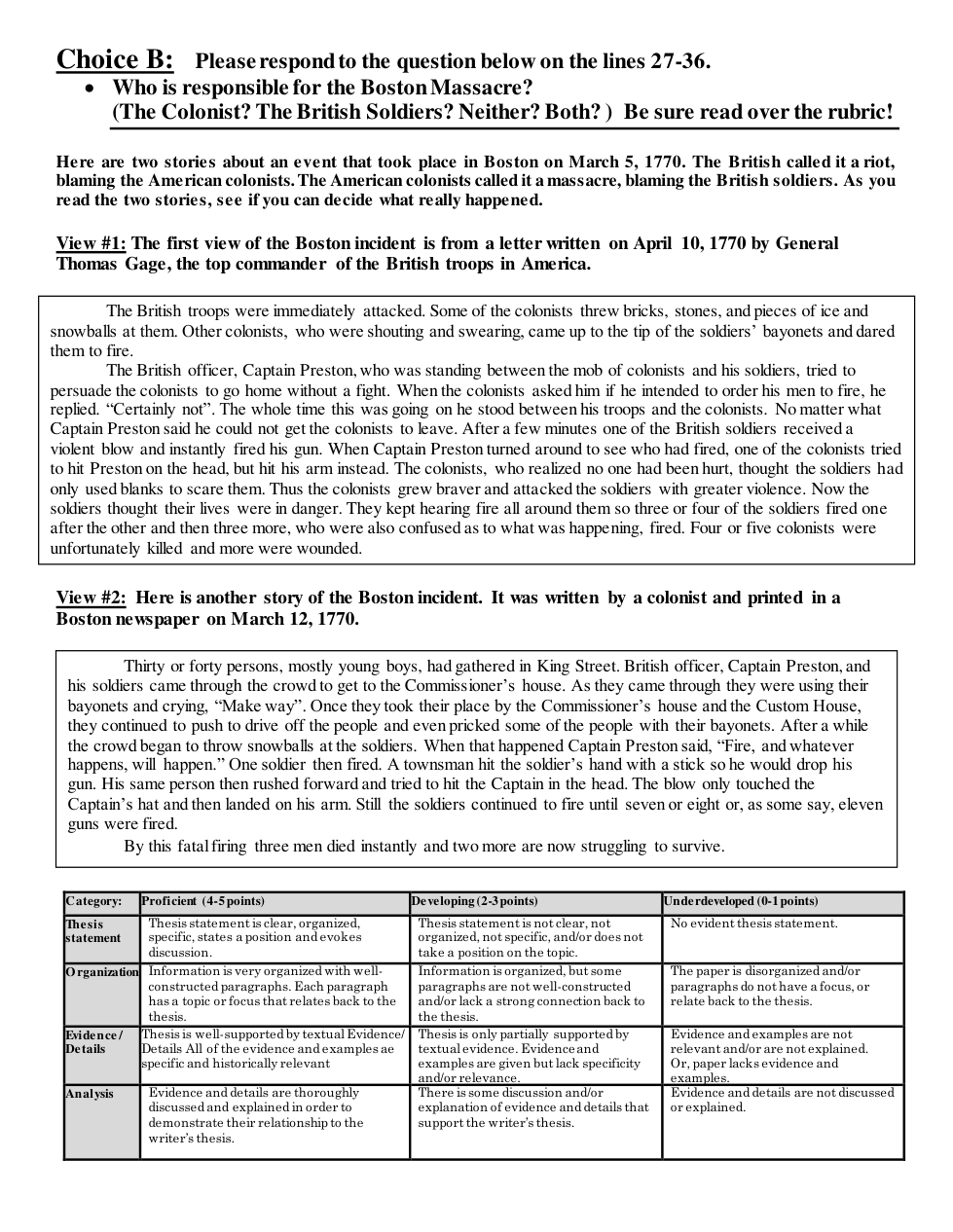
Who is responsible for the Boston Massacre? (The Colonist? The British Soldiers? Neither? Both?) Be sure to read over the rubric!

This is a ruler with complete authority over the government and lives of the people.
Supreme Monarch
Monarch
Absolute Monarch
Queen
Match Each Ruler to their corresponding country
King of England
King Phillip II
King of Spain
King Louis XIV
King of France
Peter the Great
Czar of Russia
King Henry VIII
Who was the last of Henry VIII's children to rule England?
Mary
Edward
Elizabeth
Jane
Phillip II of Spain believed it was his duty to defend this branch of Christianity.
Calvinism
Catholicism
Protestantism
Baptism
What were some of Phillip II's accomplishments as king of Spain?
Defeating the English Armada
Keeping the Netherlands as part of Hapsburg Empire
Centralizing Royal Power and leading Spain in a Golden Age
Defeating Napoleon
Louis XIV built this palace as a symbol of Frances wealth and power.
Taj Mahal
Buckingham Palace
Huguennots
Versailles
King Louis XIV was also know as what?
The Sun King
THe Chosen One
King of Kings
The last great Monarch
What is Divine Right?
A set of rules used by the greeks
The god given right to rule
Hitler's reason to exterminate Jewish people
Machiavelli's theory on power
Who modernized Russia bringing better shipbuilding, gov't, manufacturing, city planning, music, and fashion
Louis XIV
Catherine the Great
Peter the Great
Ivan III
Who was the monarch of England when Phillip II went to war with his Spanish Armada and lost?
Mary of Scots
Elizabeth I
James I
Charles I
Peter the Great moved the capital city of Russia from Moscow to St. Petersburg to:
Be closer to Western Europe in order to open up trade through the Baltic Sea
Move away from invading Mongols and other east Asian Invaders
Move away from the famine and plague that killed thousands
Be closer to the great iron reserves of northern Russia
Peter the Great implemented this to make Russia stronger
Mercantilism
Westernization
Balance of Power
Trickle down economics
This absolute monarch weakened his nobles by forcing them to live with him and occupied them with ridiculous tasks.
Phillip II
Louis XIV
Frederick the Great
James II
Who responded to Elizabeth I's support of protestant uprisings (Balance of Power) by sending his armada to invade England?
Louis XIV
Frederick The Great
Phillip II
Cardinal Mazarin
Extreme spending on his estate and wars led to debt for this monarch's country and they lost power in Europe.
Phillip II
James II
Frederick the Great
Lousi XIV
What did Peter the Great place a tax on after his tour through Europe.
Beards
Farms
Weapons
Chocolate
Which country provided financial support and recognition for the United States during the American Revolution?
Netherlands
Spain
France
Germany
What was a major reason for the growing estrangement between the British crown and its North American colonies?
British interference in colonial affairs
Colonies' demand for independence
Economic issues
Was not the same religion
What event on December 16, 1773, escalated tensions between American colonies and Britain?
The Battle of Lexington
The Boston Tea Party
The signing of the Declaration of Independence
Boston Massacre
Identify the Intolerable Acts under which the colonists were required to house British soldiers.
Boston Port Act
Quartering Act
Administration of Justice Act
Red Coat Act
What was the famous phrase to come out of the Battle of Lexington
"Let the revolution begin"
"The British are coming"
"All for one and One for all"
"The shot heard 'round the world"
How many British colonies formed the USA?
12
13
14
15
What was the name given to American colonists who supported Great Britain during the American Revolution?
Anti-royalists
Loyalisits
Anglicans
Sallywags
According to the Theory of Mercantilism the
Mother country goal is to export more good than they import
Colonies were free to do as they wished
colonies were considered unimportant
Mother country goal is to import more goods than they export
The American Revolution and French Revolution were similar in that both
were encouraged by Enlightenment Ideas
sought to limit the power of the people
supported the theory of divine right of kings
increased the influence of religious institutions
This philosopher separated the government into three branches of government and argued for separation of powers.
Montesquieu
Hobbes
Locke
Rousseau
Enlightenment thinkers contributed to changes in relationships between citizens and governments through their belief that
Most changes in government are dangerous
Governments are instituted to protect citizens rights (social contract theory)
Absolute monarchy is the best form of government
Not every man is created equal
The Declaration of the Rights of Man and of the Citizen includes several Enlightenment ideas. Which of the following is not one of the Enlightenment ideas incorporated into the document?
People are incapable of ruling themselves
Citizens have a voice in government
Government should be limited
All citizens possess basic human rights
Who makes up the Third Estate?
Nobility
Clergy
Bourgeoisie, artisans and peasants
Children of Royal family
Why did members of the Third Estate take revolutionary action?
Had no rights or voice in government, paid more taxes than the other two estates
disagreed with the ideas in the Declaration of Rights of Man and the Citizen
Believed a king should rule the people
were suspicious of Enlightenment ideas
John Locke believed that the government had an obligation to the people it governed to protect their natural rights. If the government failed to do this, then the people had the right to
Continue to be persecuted
refuse to vote in the next election
move to another country
overthrow the government
Which of the following is not an idea from the Enlightenment?
People have natural rights
Kings rule through divine right
People have the freedom of speech and religion
Government should serve the people
The philosopher who believed that all people are born free and equal, with the rights to life, liberty, and property was
Rousseau
Locke
Hobbes
Montesquieu
This was the period under Maximilian Robespierre when revolutionary courts were set up to prosecute enemies of the French Revolution.
The Directory
The Enlightenment
Reign of Terror
The National Assembly
Enlightenment philosophes such as John Locke and Jean Jacques Rousseau challenged the idea of the divine right of kings. They wrote about a government’s obligations to uphold people’s rights and how the government should be based on the consent of the governed. These new ideas encouraged people to:
Engage in revolutions to establish democratic government
Call for church leaders to create theocracies and replace the monarchies
Look for leaders who would excercise dictatorial powers
Remain firm in their support of absolute monarchs
Intellectual movement that stressed reason and the power of individuals. It challenged modern forms of government and asked what the ultimate purpose of a government should be.
Reformation
Enlightenment
Government Revolution
Scientific Revolution
Who made up the Second Estate?
nobility
clergy
peasants
Doctors & Lawyers
What is the significance of the Tennis Court Oath?
Promised each other to fight for an absolute Monarchy
anointed a new king, Maximilian Robespierre
First step in the Third Estate forming an organized protest against the French Government
Peasants decided to leave France for good
This man was the leader of The Committee of Public Safety who believed in active citizenship and turning in “enemies of the Revolution.” He led during the infamous Reign of Terror, finally losing his own head to the guillotine.
Danton
Robespierre
Necker
Marat
This individual become a national hero for his role in the defeat of Austria. He constructed a coup d ’tat to take over the French government.
Robespierre
Napoleon Bonaparte
Marat
Danton
Who made up the First Estate?
Nobility
Peasants
clergy
bourgeoisie
Question 42
42.

Question 43
43.

Question 44
44.

Question 45
45.

Question 46
46.

Native Americans/Slaves
People born in Spain who could hold the highest offices in the New World.
Mulattos
Spanish people who were born in the New World. Along with the Peninsulares, they controlled most of the wealth.
Peninsulares
People born of European and Native American Ancestry
Mestizos
People of African and European ancestry.
Creoles
Most numerous, and contained the least amount of rights.
Question 48
48.

Question 49
49.

Question 50
50.

Question 51
51.

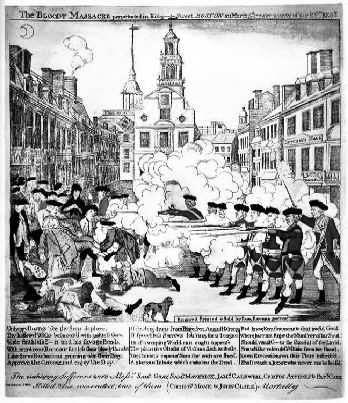
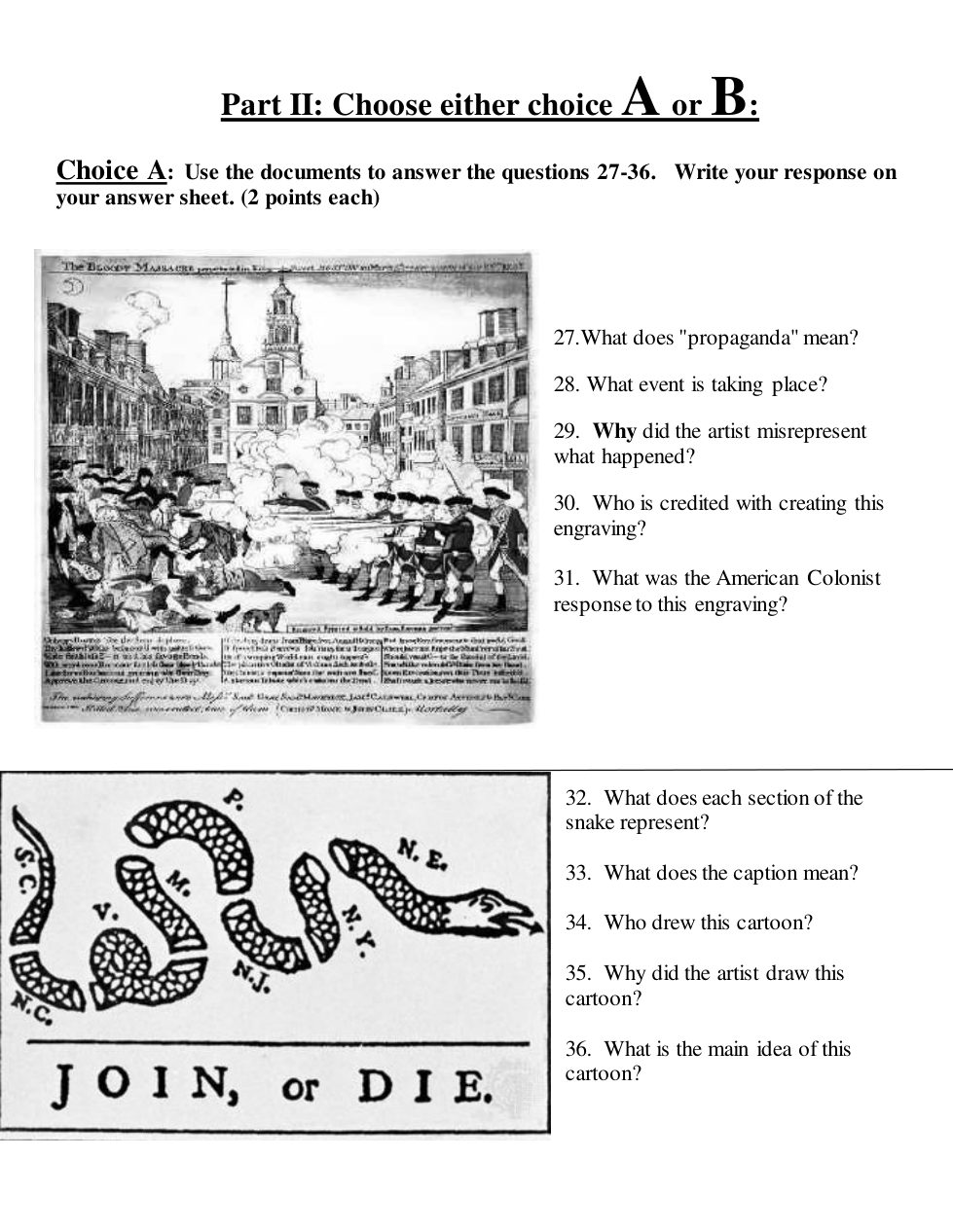
Use the documents to answer the questions 27-36. Write your response on your answer sheet. (2 points each)


  1. What does "propaganda" mean?
  2. What event is taking place?
  3. Why did the artist misrepresent what happened?
  4. Who is credited with creating this engraving?
  5. What was the American Colonist response to this engraving?
Question 52
52.

What does "propaganda" mean?

Question 53
53.

What event is taking place?

Question 54
54.

Why did the artist misrepresent what happened?

Question 55
55.

Who is credited with creating this engraving?

Question 56
56.

What was the American Colonist response to this engraving?

Question 57
57.

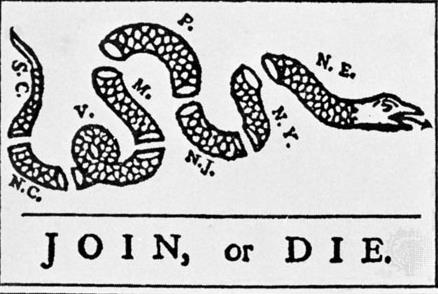
What does each section of the snake represent?

Question 58
58.

What does the caption mean?

Question 59
59.

Who drew this cartoon?

Question 60
60.

Why did the artist draw this cartoon?

Question 61
61.

What is the main idea of this cartoon?

Here are two stories about an event that took place in Boston on March 5, 1770. The British called it a riot, blaming the American colonists. The American colonists called it a massacre, blaming the British soldiers. As you read the two stories, see if you can decide what really happened.
The first view of the Boston incident is from a letter written on April 10, 1770 by General Thomas Gage, the top commander of the British troops in America.
The British troops were immediately attacked. Some of the colonists threw bricks, stones, and pieces of ice and snowballs at them. Other colonists, who were shouting and swearing, came up to the tip of the soldiers’ bayonets and dared them to fire.
The British officer, Captain Preston, who was standing between the mob of colonists and his soldiers, tried to persuade the colonists to go home without a fight. When the colonists asked him if he intended to order his men to fire, he replied. “Certainly not”. The whole time this was going on he stood between his troops and the colonists. No matter what Captain Preston said he could not get the colonists to leave. After a few minutes one of the British soldiers received a violent blow and instantly fired his gun. When Captain Preston turned around to see who had fired, one of the colonists tried to hit Preston on the head, but hit his arm instead. The colonists, who realized no one had been hurt, thought the soldiers had only used blanks to scare them. Thus the colonists grew braver and attacked the soldiers with greater violence. Now the soldiers thought their lives were in danger. They kept hearing fire all around them so three or four of the soldiers fired one after the other and then three more, who were also confused as to what was happening, fired. Four or five colonists were unfortunately killed and more were wounded.
Here is another story of the Boston incident. It was written by a colonist and printed in a Boston newspaper on March 12, 1770.
Thirty or forty persons, mostly young boys, had gathered in King Street. British officer, Captain Preston, and his soldiers came through the crowd to get to the Commissioner's house. As they came through they were using their bayonets and crying, “Make way”. Once they took their place by the Commissioner’s house and the Custom House, they continued to push to drive off the people and even pricked some of the people with their bayonets. After a while the crowd began to throw snowballs at the soldiers. When that happened Captain Preston said, “Fire, and whatever happens, will happen.” One soldier then fired. A townsman hit the soldier’s hand with a stick so he would drop his gun. His same person then rushed forward and tried to hit the Captain in the head. The blow only touched the Captain’s hat and then landed on his arm. Still the soldiers continued to fire until seven or eight or, as some say, eleven guns were fired.
By this fatal firing three men died instantly and two more are now struggling to survive.
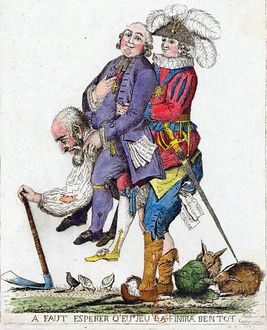
This drawing illustrates conditions that contributed primarily to the beginning of the
Protestant Reformation
Napoleonic Wars
Unification of Germany
French Revolution
What the point of view of the author of this drawing?
One group paid heavy taxes that supported the other two groups
Hard work, prayer, and a good example allowed for a stable government in France
Peasants and professionals in this society were gaining political and economic power
French society emphasized the importance of natural law and social equality
Which of the following individuals most strongly influenced the ideas in the excerpt of the Declaration of the Rights of Man and the Citizen above?
Louis XIV
Montesquieu
John Locke
Thomas Hobbes
Which of the following states the point of view of the authors of the Declaration of the Rights of Man and the Citizen?
A government should make laws to protect the natural rights of its citizen
Property is a more vaulable natural right than security
Absolute monarchy is a form of government that guarantees the rights of citizens
A government should oppresses its people to ensure that they are safe
Identify the best use of this document for a historian.
To determine the actions taken by Louis XVI during his rule of France
TO study how Louis XVI granted Natural rights to French Citizens
TO Evaluate how free and equal the people of France were after the French Revolution
To understand the hopes of representatives in the National Assembly of France
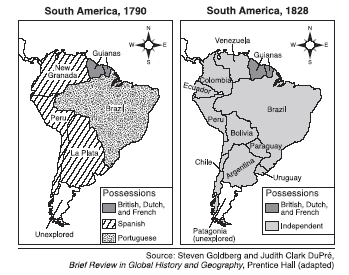
Based on a comparison of these maps of South America, which conclusion is accurate?
All of south America was independent by 1828
Many regions of South America gained their independence between 1790 and 1828
Spain continued to gain South AMerican Colonies in the 19th century
Between 1790 and 1828, South AMerican political boundaries remained unchanged expect for Brazil
Which individual is most closely associated with the changes indicated on these maps?
Emiliano Zapata
Simon Bolivar
Porfirio Diaz
Pancho Villa
Which statement describes the author’s purpose for writing this letter?
To propose peace term to the French
To inspire a rebellion
To document his thoughts for personal reflection
To gather support for the French
Identify one effect of Toussaint L’Ouverture’s letter.
The establishment of the independent nation of Haiti
Indepenence from Spain
Simon Bolivar was made president of the country
San Domino became the most profitable French colony
Proficient (4-5 points)
  • Thesis statement: Thesis statement is clear, organized, specific, states a position and evokes discussion.
  • Organization: Information is very organized with well-constructed paragraphs. Each paragraph has a topic or focus that relates back to the thesis.
  • Evidence / Details: Thesis is well-supported by textual Evidence/Details All of the evidence and examples are specific and historically relevant
  • Analysis: Evidence and details are thoroughly discussed and explained in order to demonstrate their relationship to the writer's thesis.
Developing (2-3 points)
  • Thesis statement: Thesis statement is not clear, not organized, not specific, and/or does not take a position on the topic.
  • Organization: Information is organized, but some paragraphs are not well-constructed and/or lack a strong connection back to the thesis.
  • Evidence / Details: Thesis is only partially supported by textual evidence. Evidence and examples are given but lack specificity and/or relevance.
  • Analysis: There is some discussion and/or explanation of evidence and details that support the writer's thesis.
Undeveloped (0-1 points)
  • Thesis statement: No evident thesis statement.
  • Organization: The paper is disorganized and/or paragraphs do not have a focus, or relate back to the thesis.
  • Evidence / Details: Evidence and examples are not relevant and/or are not explained. Or, paper lacks evidence and examples.
  • Analysis: Evidence and details are not discussed or explained.