Log in
Sign up for FREE
arrow_back
Library

Parliament and the English Monarchy Lesson 5

star
star
star
star
star
Last updated 8 months ago
48 questions
15
15
Question 1
1.

Do Now-How did Enlightenment thinkers challenge the traditional ways of thinking and understanding the world, and what were the key ideas they promoted?

1
1
1
1
1
…
1
1
1
1
1
1
1
1
Use the video and the readings to answer the questions on the relationship between the Parliament and Monarcy
Trim End | 08:26
Question 15 | 00:53
Question 16 | 01:13
Question 17 | 02:07
Question 18 | 02:27
Question 19 | 02:55
Question 20 | 06:17
00:00/00:00
Question 15
00:53
Question 16
01:13
Question 17
02:07
Question 18
02:27
Question 19
02:55
Question 20
06:17
Review the set of Sources to answer the following questions, as well as, identify and analyze the reasons for and various reactions to the Glorious Revolution of 1688.
1
1
1
1
Question 24
24.

What significant act was established regarding parliament sessions in 1694?

1
Question 25
25.

Who was addressed in the Assemblies' letter from December 1688?

1
Question 26
26.

Which religious group was excluded from the crown by the 1701 Act?

1
1
1
1
1
Question 31
31.

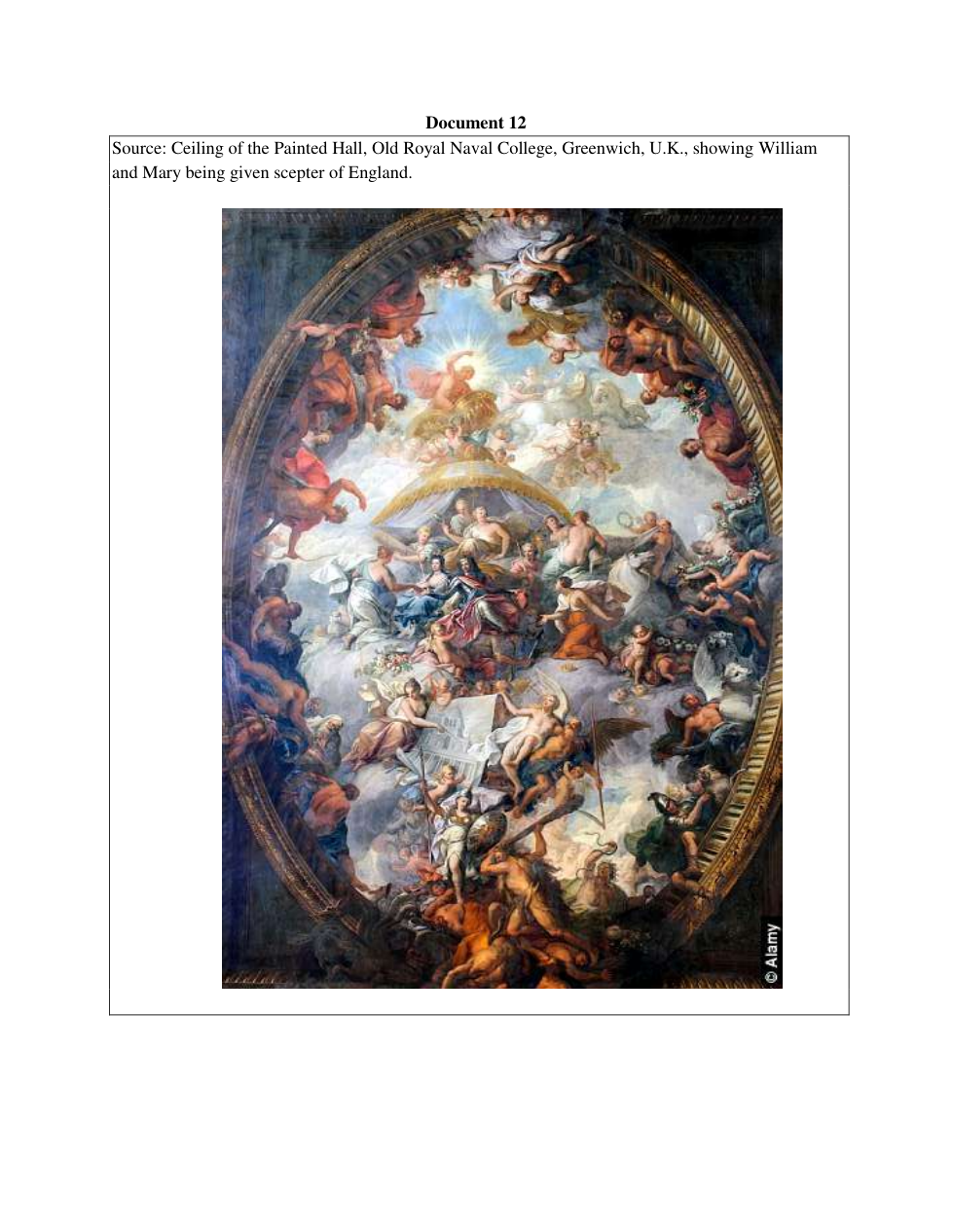
Analyze the role of symbolism in the painting. What do the figures and objects represent?

1
Question 32
32.

How does this painting reflect the relationship between monarchy and religion in early modern England?

15
Question 33
33.

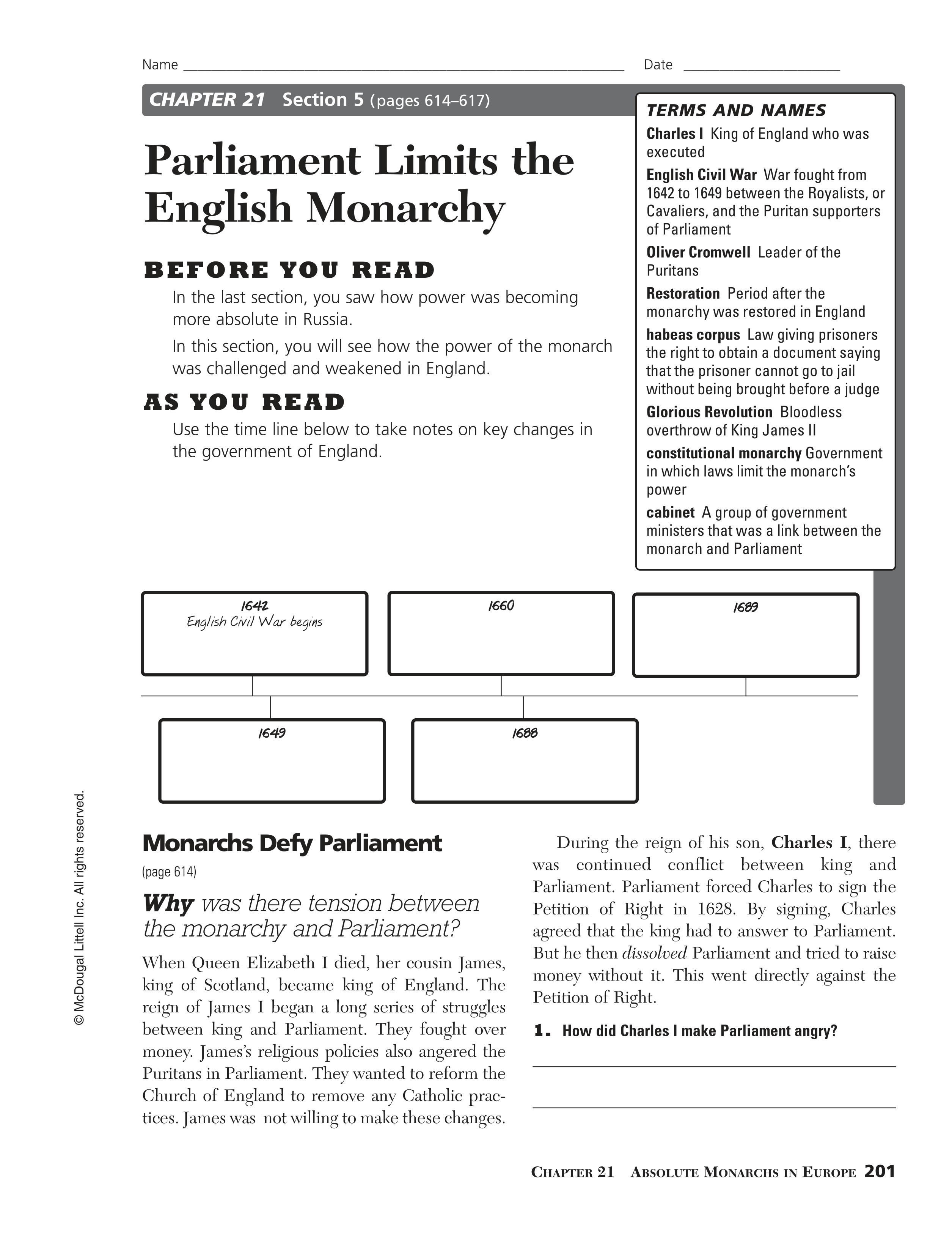
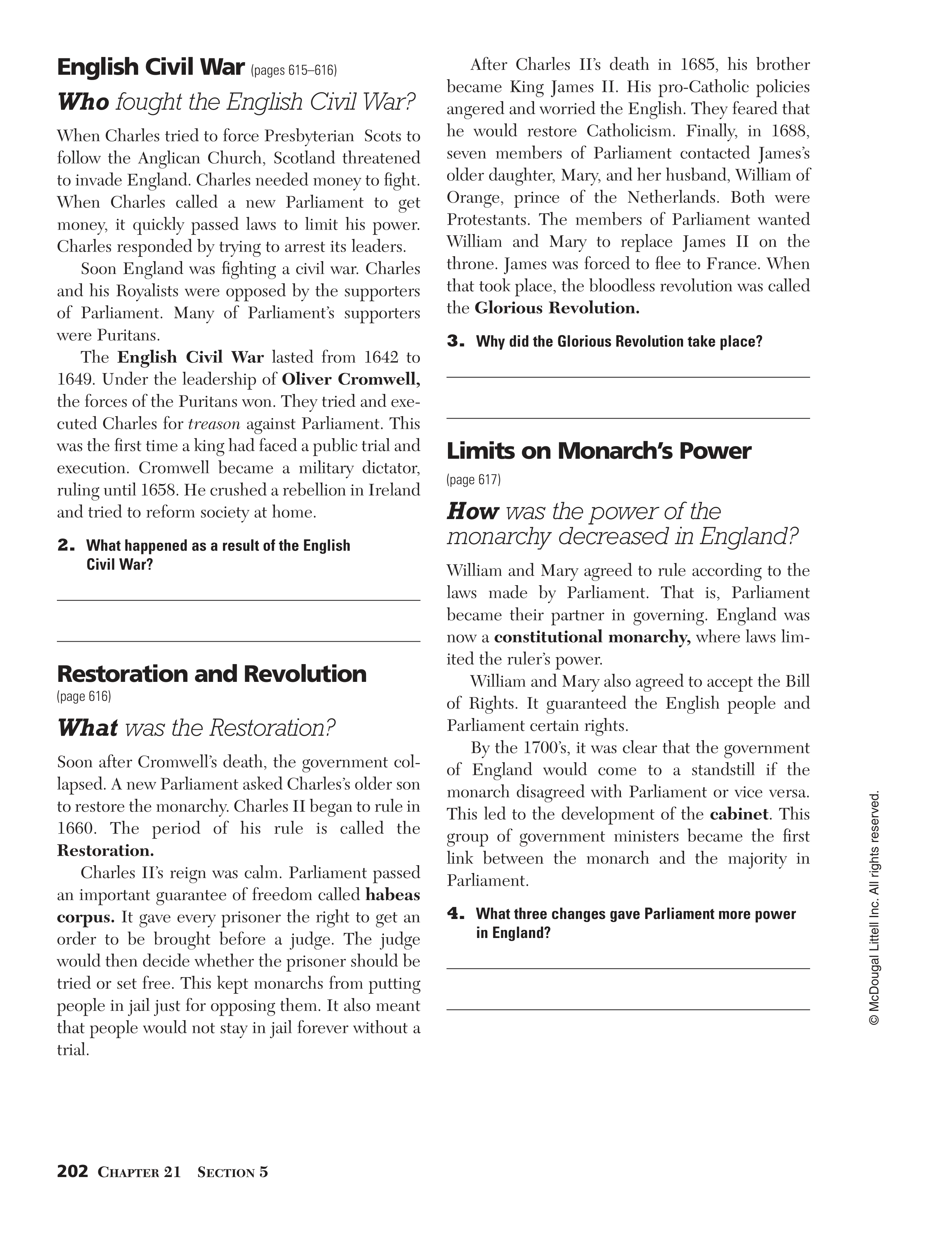
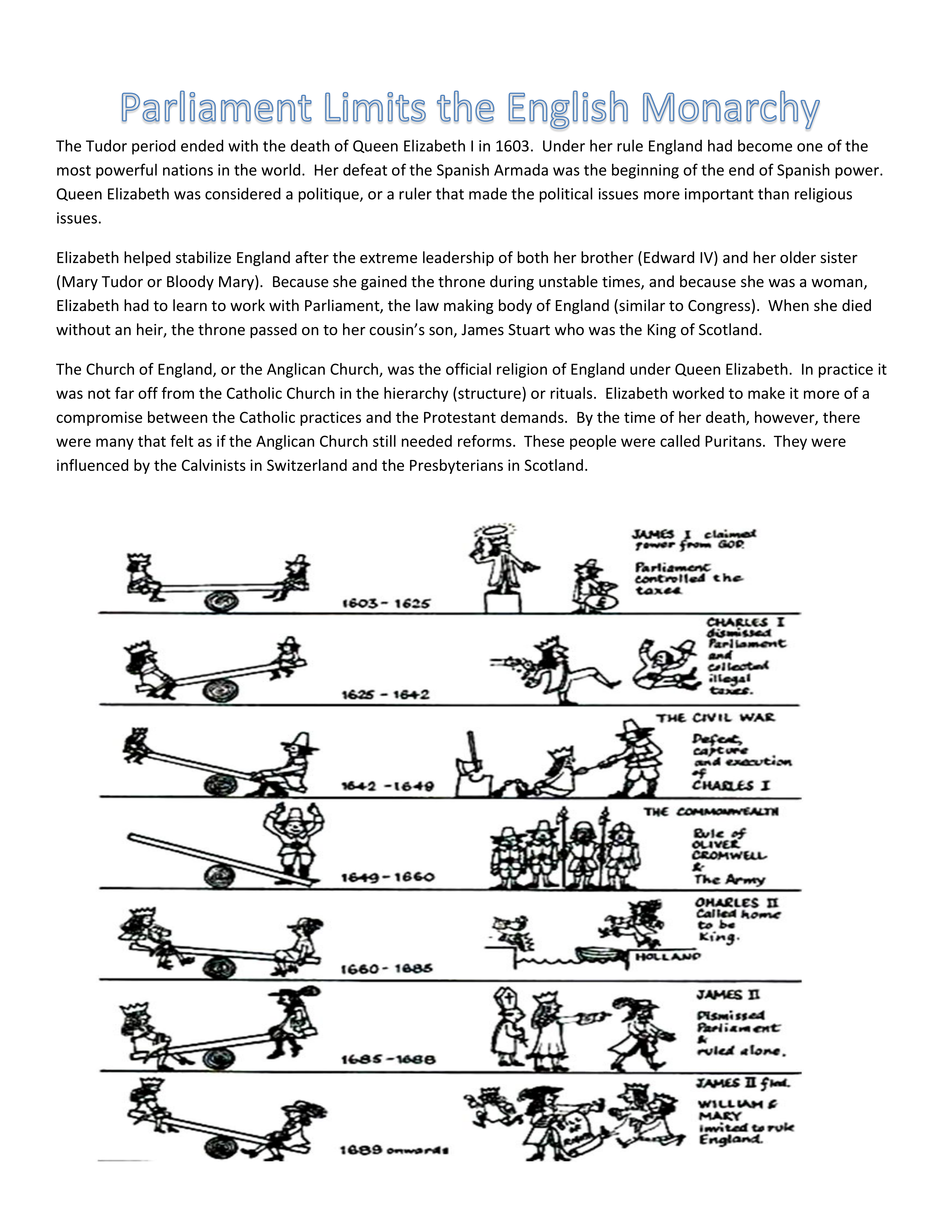
How did Charles I make Parliament angry?

15
Question 34
34.

WHat happened as a result of the English Civil War?

15
Question 35
35.

Why did the Glorious Revolution take place?

…
15
Question 36
36.

What three changes gave Parliament more Power in England?

…
1
1
1
1
1
1
Question 42
42.

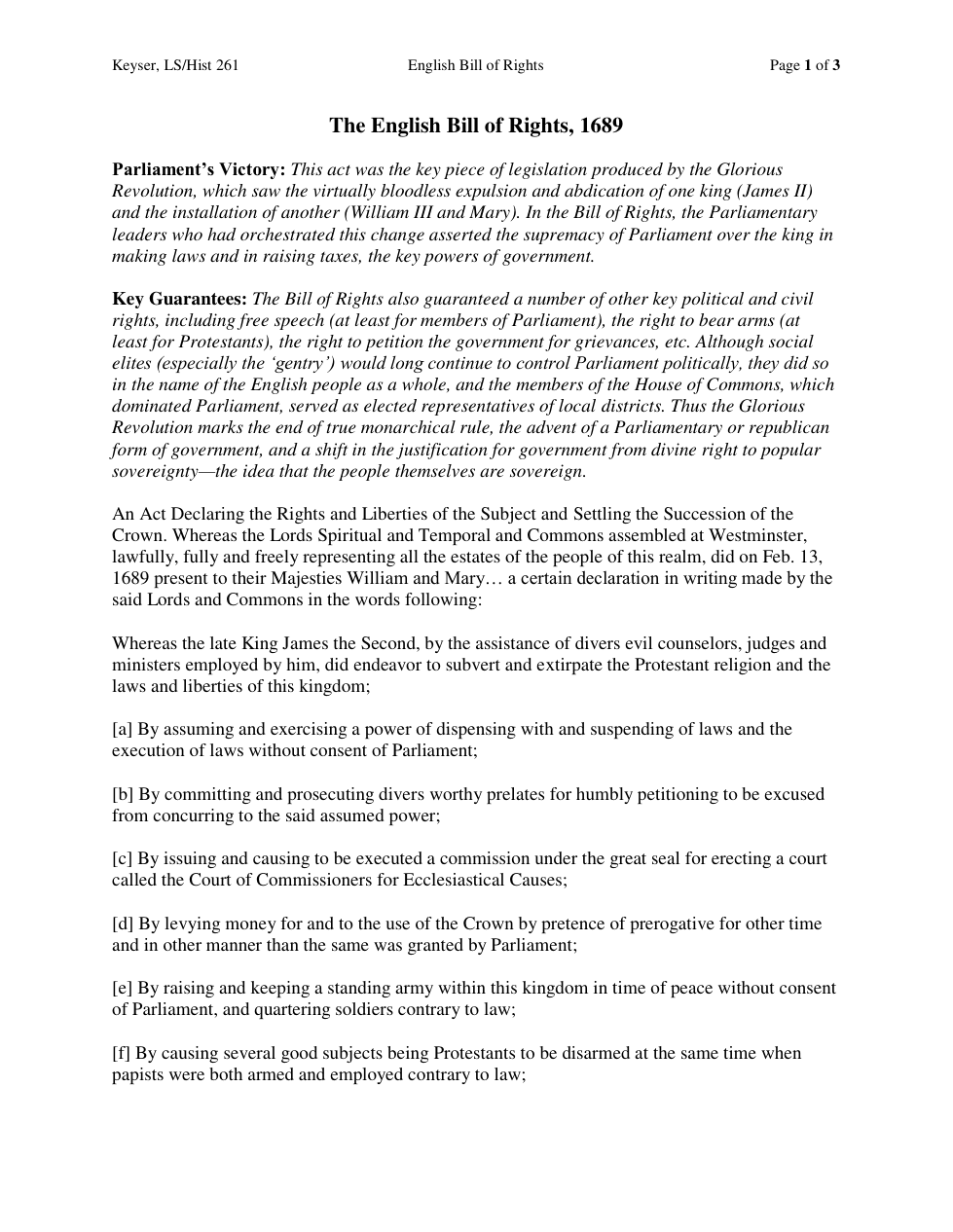
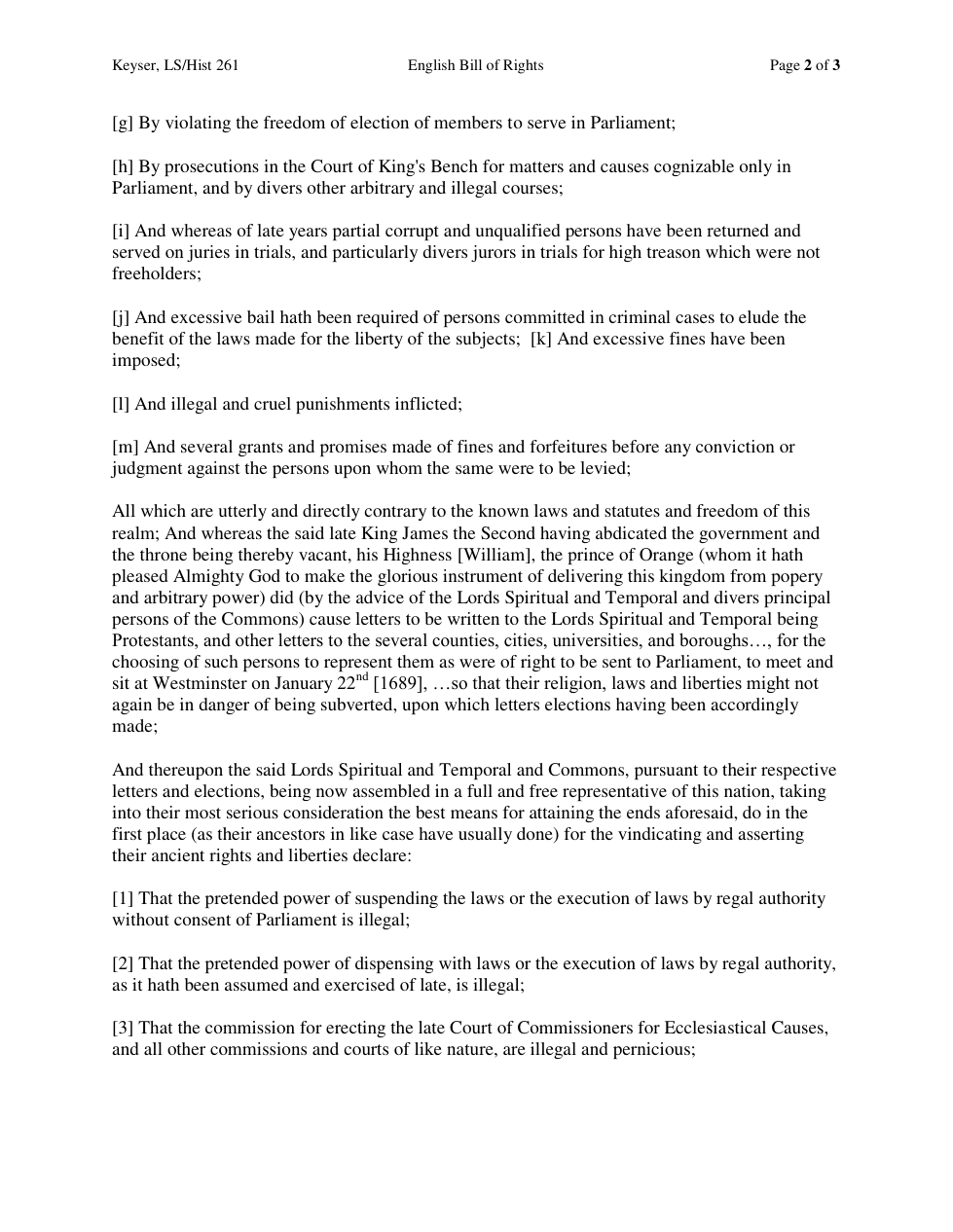
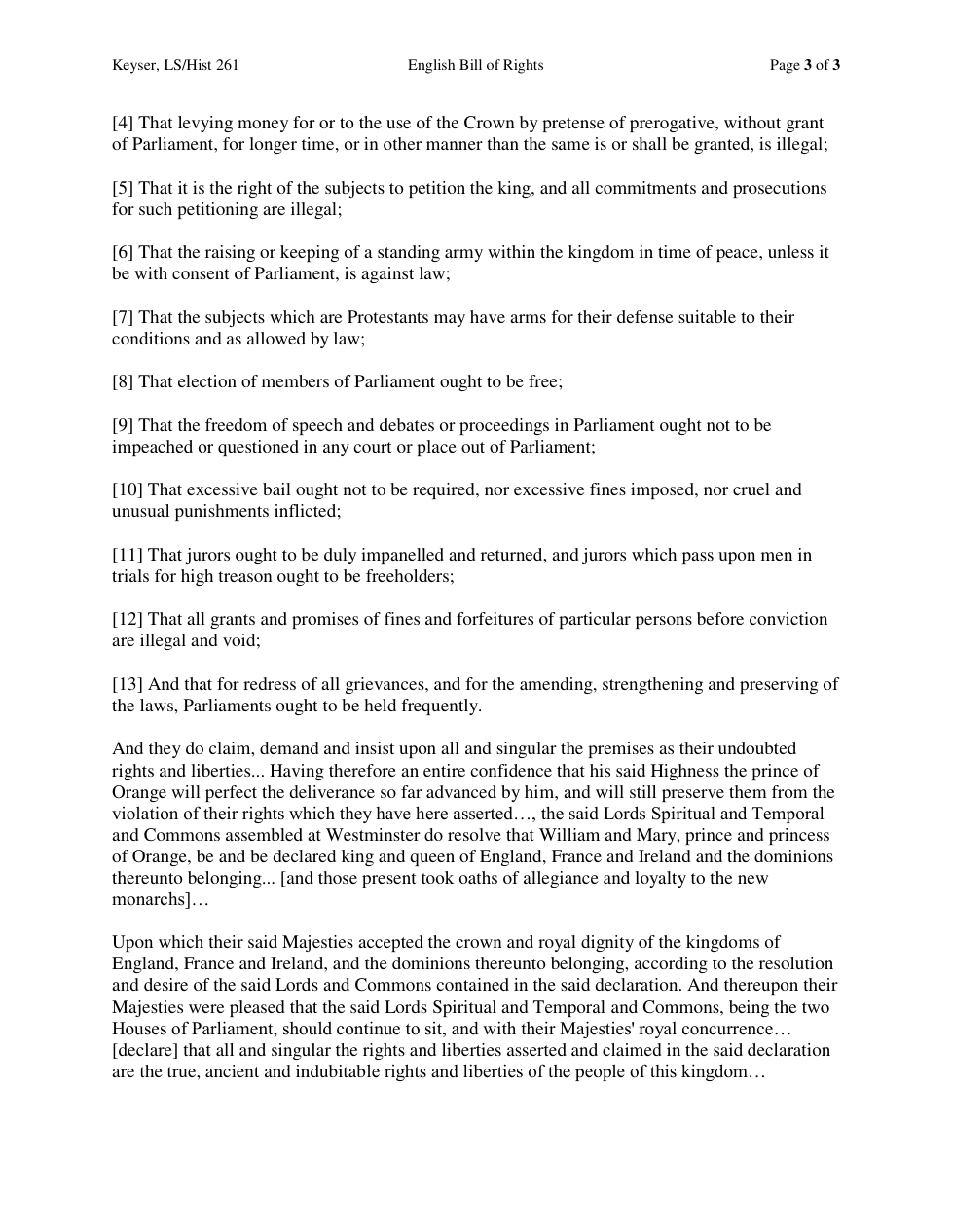
The English Bill of Rights states that excessive bail may be required for those arrested. Is this statement true?

1
1
1
Question 45
45.

How did the English Bill of Rights change the balance of power between the monarchy and Parliament?

1
Question 46
46.

Why is it important in a democracy to have written documents that limit the powers of leaders?

1
Question 47
47.

Would the English Bill of Rights still be considered a progressive document today? Why or why not?

Question 48
48.

Exit Ticket- How did Enlightenment ideas challenge the traditional power structures of absolute monarchy, and what impact will this have on European societies?

Question 2
2.

What significant event ended the Tudor period in 1603?

Question 3
3.

Who gained the English throne after Elizabeth I's death?

Question 4
4.

What was Queen Elizabeth I's approach to governance?

Question 5
5.

Which church was the official religion under Elizabeth I?

Question 6
6.

What did Elizabeth aim to reform in the Church of England?

Question 7
7.

Who were the Puritans influenced by?

Question 8
8.

What characterized the leadership of Mary Tudor?

Question 9
9.

What challenge did Elizabeth face when she became queen?

Question 10
10.

What happened to Charles I in 1649?

Question 11
11.

What dynasty ruled England after the Tudors?

Question 12
12.

What is Parliament?

Question 13
13.

How did James I become king of England?

Question 14
14.

What group of people wanted to change that church?

Question 21
21.

How did Parliament view the Sovereign's authority?

Question 22
22.

What role did William of Orange play?

Question 23
23.

What concern did the Lambeth Declaration address?

Question 27
27.

What does the nursery rhyme in Document 9 symbolize about James II's son?

Question 28
28.

What did the Treaty of Limerick guarantee for Roman Catholics in 1691?

Question 29
29.

What was the main concern of the Declaration by the Lords in 1688?

Question 30
30.

How did James II's reign impact public perception of monarchy and religion?

Question 37
37.

What was the main result of the Glorious Revolution?

Question 38
38.

Which right was guaranteed by the English Bill of Rights?

Question 39
39.

Who were the main figures installed by the Bill of Rights?

Question 40
40.

What did the Bill of Rights shift justification to?

Question 41
41.

Which group was primarily represented in Parliament?

Question 43
43.

According to the English Bill of Rights, the monarchy must not suspend laws without Parliament's consent. Is this true?

Question 44
44.

The English Bill of Rights affirms the right to free elections for Parliament members. Is this statement true?