Log in
Sign up for FREE
arrow_back
Library

Force & Newton's Laws of Motion Test

star
star
star
star
star
Last updated 12 months ago
64 questions
1
1
1
1
1
Required
1
Required
0.5
Required
1
Required
3
Required
1
Required
3
Required
1
Required
2
Required
1
Required
1
Required
1
Required
1
Required
1
Required
1
Required
2
Required
8
Required
1
1
1
1
Required
1
Required
1
1
Required
1
Required
1
Required
1
1
1
1
1
0
0
0
1
1
1
1
1
1
1
1
1
1
1
1
1
1
1
1
1
1
Question 19
19.

Question 20
20.

Question 21
21.

Question 22
22.

Question 23
23.

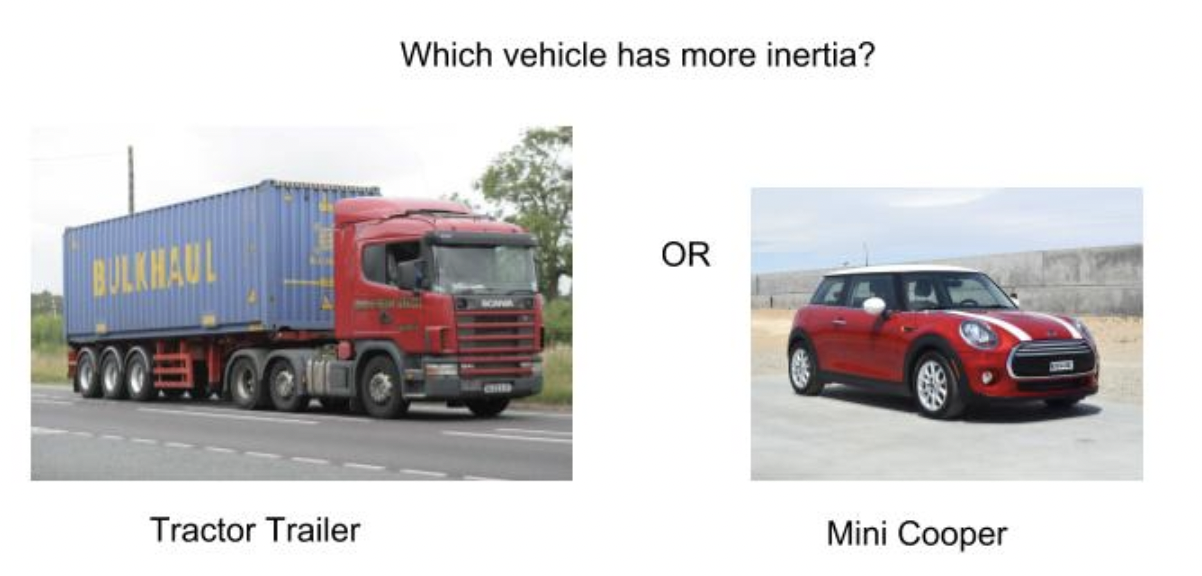
A BIG 18 wheeler tractor-trailer and a SMALL Mini Cooper are both driving alongside each other on a highway, and both have to come to a stop because of an accident up ahead.
Required
1
Required
1
Required
0.5
Question 27
27.

Question 28
28.

Question 29
29.

Newton's 1st Law of Motion is also called "The Law of _________"

Question 30
30.
Other Answer Choices:
stays (2)
same
acted
upon
motion (2)
stays (1)
unbalanced/outisde
rest (2)
rest (1)
force
motion (1)
velocity
Question 31
31.

Newton's Second Law of Motion is known as "The Law of ________________"

Question 32
32.
Other Answer Choices:
force (1)
acceleration
mass (2)
rate
force (3)
applied
direction
force (2)
accelerate (1)
more
Accelerate (2)
amount
mass (1)
Question 33
33.

Newton's THIRD law is also known as "The Law of ____________ ______ _____________"

Question 34
34.
Drag the terms to the correct area to complete Newton's third law.

For Every ___________ there is a _____________ that is __________ in __________ and _____________ in______________
Other Answer Choices:
direction
opposite
force
action
reaction
equal
Question 35
35.

Question 36
36.

Question 37
37.

Question 38
38.

Question 39
39.

Question 40
40.

Question 41
41.

Question 42
42.

Draggable itemarrow_right_altCorresponding Item
arrow_right_alt
arrow_right_alt
arrow_right_alt
arrow_right_alt
arrow_right_alt
arrow_right_alt
arrow_right_alt
arrow_right_alt
Question 43
43.

Question 44
44.

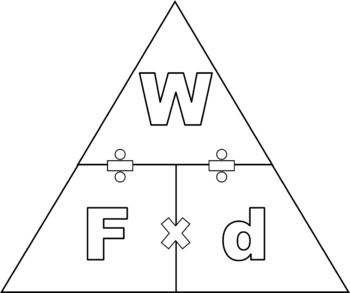
210 joules of work were needed and a force of 30 Newton's was applied in order to lift a paint can, by rope, to a roof. How many meters in the air did they lift the paint can??

Question 45
45.

How many Joules of work is done by a person that pushes a shopping cart 4 meters with a force of 52 Newtons?

Question 46
46.

How much force is required to move a couch 1.2 meters, using 228 Joules?

Question 47
47.

Question 48
48.

Question 49
49.

Question 50
50.

Question 51
51.

Required
1
Required
1
Question 54
54.

Question 55
55.

Question 56
56.

During the turtle race, Myrtle the turtle was traveling at a speed of 10 ft/min at 8:05, and by 8:12 she was traveling at a rate of 52 ft/min. What was her acceleration rate during this time?

Question 57
57.

Every summer Susan drives 3,900 km to Michigan. If the trip takes her 60 hours, what is her average speed for the trip?

Question 58
58.

Belinda walks 50 meters down the hall (East) before realizing she dropped her pen somewhere along the way. She travels 24 meters back down the hallway (West) to where her pencil lays on the ground. The whole trip took her 2 minutes. What is her velocity?

1
Question 59
59.

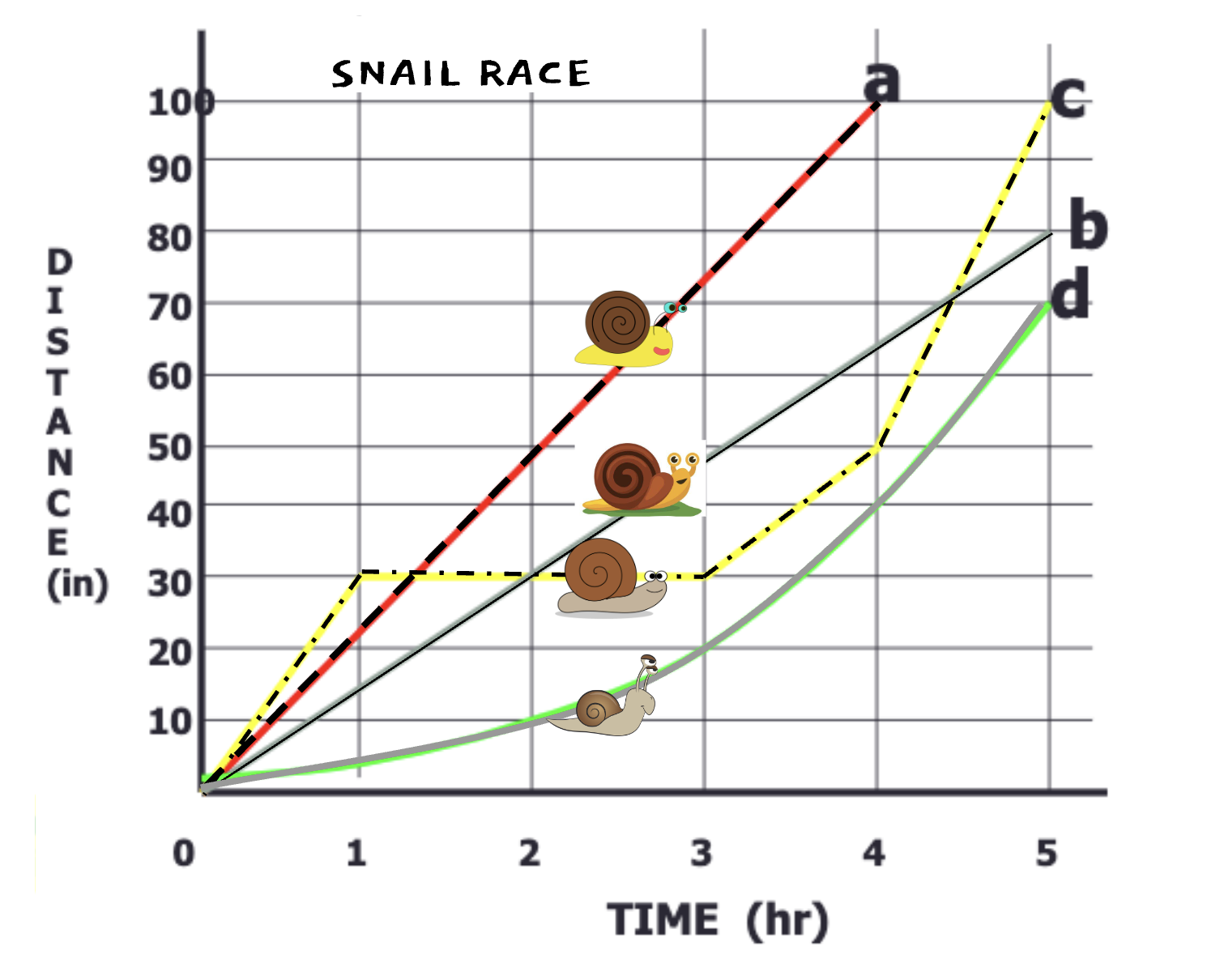
What is the average speed of Snail A?

Just list the number followed by the units. DO NOT INCLUDE A SPACE
Example. - "0in/hr"

1
5
Question 62
62.

How much did Snail C's break impact his average speed?

Question 63
63.

What is the other name for Newton's 3rd Law?

Question 64
64.

Share one good thing with Ms. Pipkin about her class this year.

YOU WILL NOT USE EVERY TERM. NO TERM WILL BE USED TWICE.
Question 1
1.

Question 2
2.

Question 3
3.

Question 4
4.

Question 5
5.

Question 6
6.

Question 7
7.

Question 8
8.

Question 9
9.

Question 10
10.

Question 11
11.

Question 12
12.

Question 13
13.

Question 14
14.

Question 15
15.

Question 16
16.

Question 17
17.

Question 18
18.

It provides a single piece of information about a quantity. These can be positive, negative, or zero.
Some examples are time, mass, temperature, speed, volume, density
Scalar Quantity
Motion
Vector Quantity
Rate
The study of how things move. It seeks to measure things like position (displacement), speed, velocity, and acceleration.
Motion
Kinematics
Acceleration
Physics
Stationary objects that help the observer to determine whether or not motion is occurring.
Coordinate
Frame of Reference
Point of Reference
Coordinate Axis
The geometric setting or space containing the points of reference which help to determine how motion will be described
Coordinate
Frame of Reference
Point of Reference
Coordinate Axis
In which example is velocity not equal to zero? (Due to displacement).
Climbing 8 flights of stairs to your class
Walking to the kitchen and back at a constant speed of 3 ft/s
Throwing a ball to yourself (tossing it in the air and catching it)
Jump roping at an average pace of 65 jumps per minute.
Question 24
24.
The __________ has more inertia.
Question 25
25.

Question 26
26.

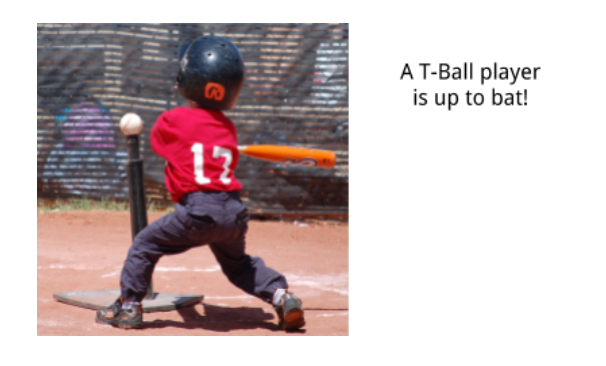
Which of Newton's laws explains why the ball is sitting on the tee?
Law of Inertia
Law of Acceleration
Law of Action/Reaction
Which of Newton's laws explains how the ball will move based on the way the bat contacts it once the batter swings?
Law 1
Law 2
Law 3
Drag and drop the words below to complete Newton's First Law of Motion.

PLEASE NOTE: Any multiples of the same word are numbered, you need to drag them into the statement in number order. (EXAMPLE: drag "rest (1) into the statement before rest (2)")

"An object at _____________ ______________ at _____________ and an object in _______________ ______________ in _______________ at the _________ _____________ unless __________ _________ by an _______________________ __________ ."
Drag & Drop the terms below to complete Newton's Second Law of Motion.

PLEASE NOTE: Any multiples of the same word are numbered, you need to drag them into the statement in number order. (EXAMPLE: force is used 3 times, you need to use "force (1)" first, "force (2)" next, and "force (3)" last in the statement.)

Objects will ___________________ in the ______________ of the ____________ ______________ . The _________ of their _________________ is dependent upon the ___________ of ______________ applied to an object’s _____________ . The more _____________ an object has, the _________ ______________ required to___________________ it.
A grizzly bear is chasing you, its enormous mass would be most threatening. But if you zigzagged, its large mass would be to your advantage. Which of Newton's laws tells us this?
1st Law
2nd Law
3rd Law
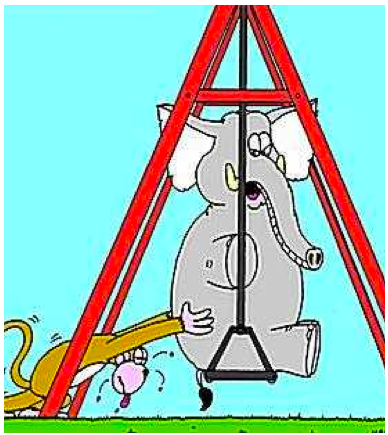
The monkey cannot move the elephant due to it's mass. This is an example of Newton's _____ law of motion.
First
Second
Third
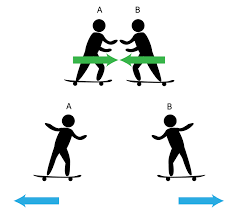
The skateboarders push off one another's hands and roll apart. This picture is an example of Newton's ____ law of motion
1st
2nd
3rd
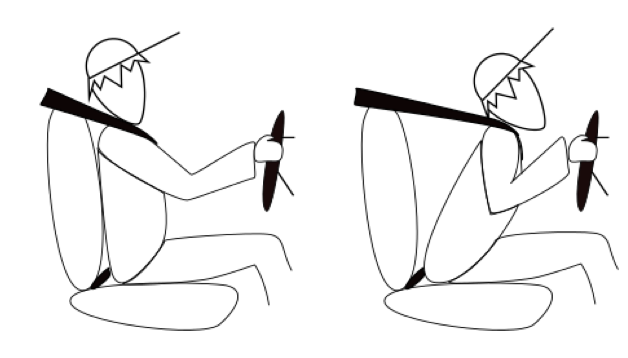
The man slams on his breaks and moves forward against his seatbelt. This is an example of Newton's ____ law of motion.
1st
2nd
3rd
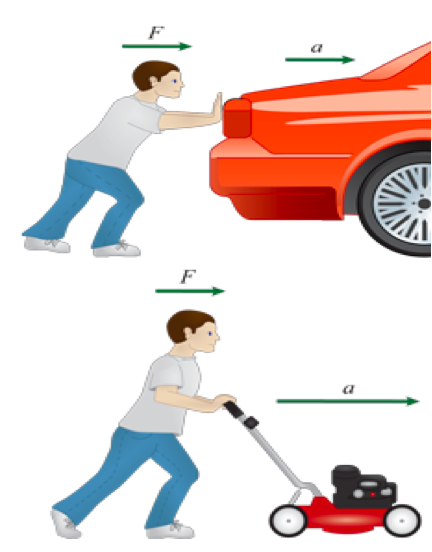
A man is able to push a lawnmower further than a car. This is an example of Newton's ____ law.
1st
2nd
3rd
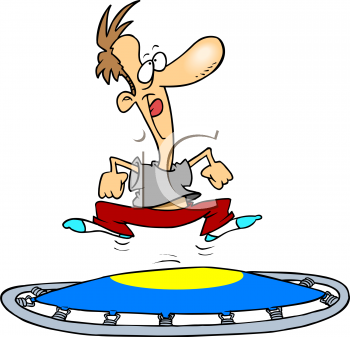
Which of Newton's Laws is the child bouncing on the trampoline an example of?
1st Law
2nd Law
3rd Law
Select ALL 4 of the forces that are at work in this picture
Magnetic Force
Spring Force
Tension Force
Normal Force
Applied Force
Gravitational Force
Air Resistance
Electrical Force
Match the picture to the MAIN type of force it is illustrating
The force that holds an atom together is
Spring Force
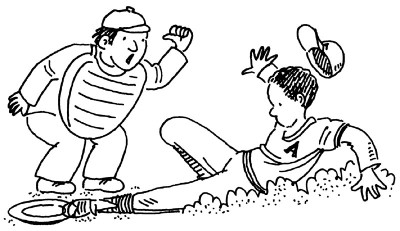
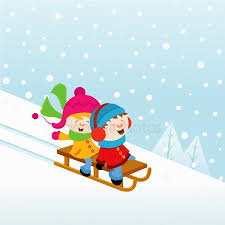
Sledding or sliding into first are examples of ______


Tension Force
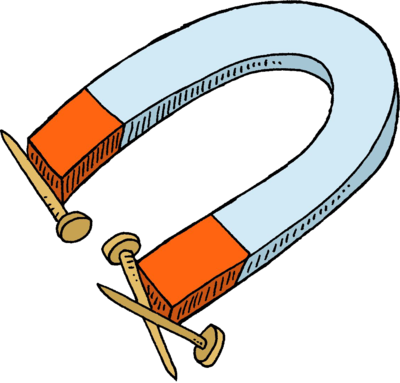
The force that causes the nails to stick to the magnet is _________
Applied Mechanical Force
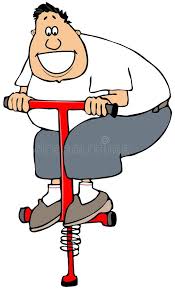
The man moves up and down because of the ___________ in the pogo stick
Normal Force
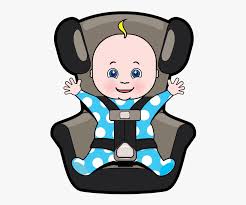
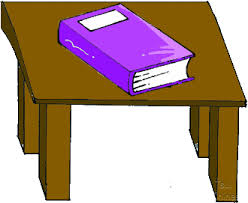
The baby, sitting inside the car seat (resting/not moving) and the book, sitting on the table are both examples of ______

Frictional Force
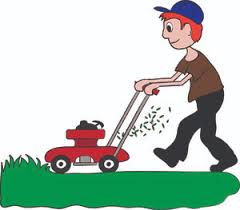
The lawnmower is exerting ____ on the grass
Electromagnetic Force
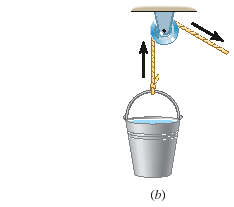
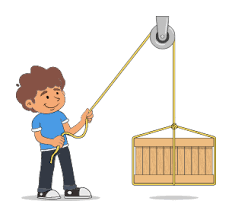
The bucket is being moved by ____
Gravitational Force
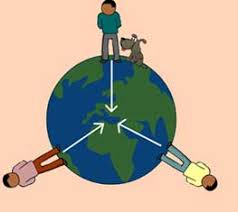
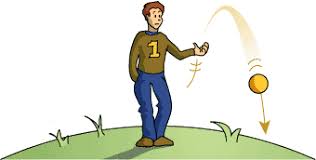
The force that pulls us to the earth and causes a ball to fall to the ground when it's thrown is _____

Magnetic Force
Net Force is a scalar quantity
True
False
What are the MAIN two contact forces involved in lifting the box?
Frictional Force
Tension Force
Spring Force
Applied Muscular Force
Bouyant Force
Normal Force
Air Resistance
In order for an object to accelerate at a rate of 12.0 m/s2 when a force of 6.0 newtons is applied, what would the object's mass (in kilograms) need to be?

- Select the formula you used, followed by the correct answer
M = F X A
M = A ÷ F
M = F ÷ A
2 kg
72 kg
0.5 kg
0.2 kg
The force required to accelerate a 2.5 kg mass at 10.0 m/s2 is _______ .
- Select the formula you used, followed by the correct answer
F = M X A
F = A ÷ M
F = M ÷ A
25 N
4 N
0.25 N

The tendency of an object to resist any change to its current state of motion is called
Inertia
Negative Acceleration
Friction Force
Slowing Force
Work
All the following are true of unbalanced forces except for ____
Only contact forces can create unbalanced force
It's always results in a positive net force value
It always causes motion
It's required to overcome inertia
Question 52
52.

Question 53
53.

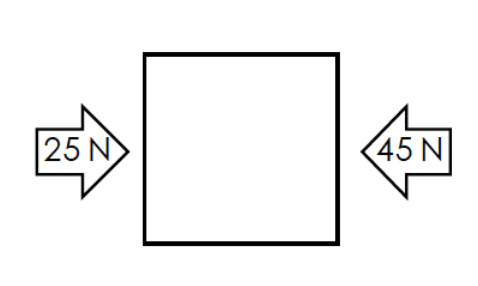
Calculate The Total Net Force
70 N ⬅️
20 N ➡️
70 N ➡️
20 N ⬅️
If a chicken travels at an average speed of 13.2 ft/sec and it took him 45 seconds to cross the road, how long is the road?
3.4 ft
594 ft
3 ft
31.8 ft
None of these
Question 60
60.

How long was Snail C stopped?

Question 61
61.
Snail C had a speed of _______ on leg 1, a speed of _______ on leg 2, a speed of _______ on leg 3, and a speed of _______ on leg 4. This led to Snail C having a total average speed of _______
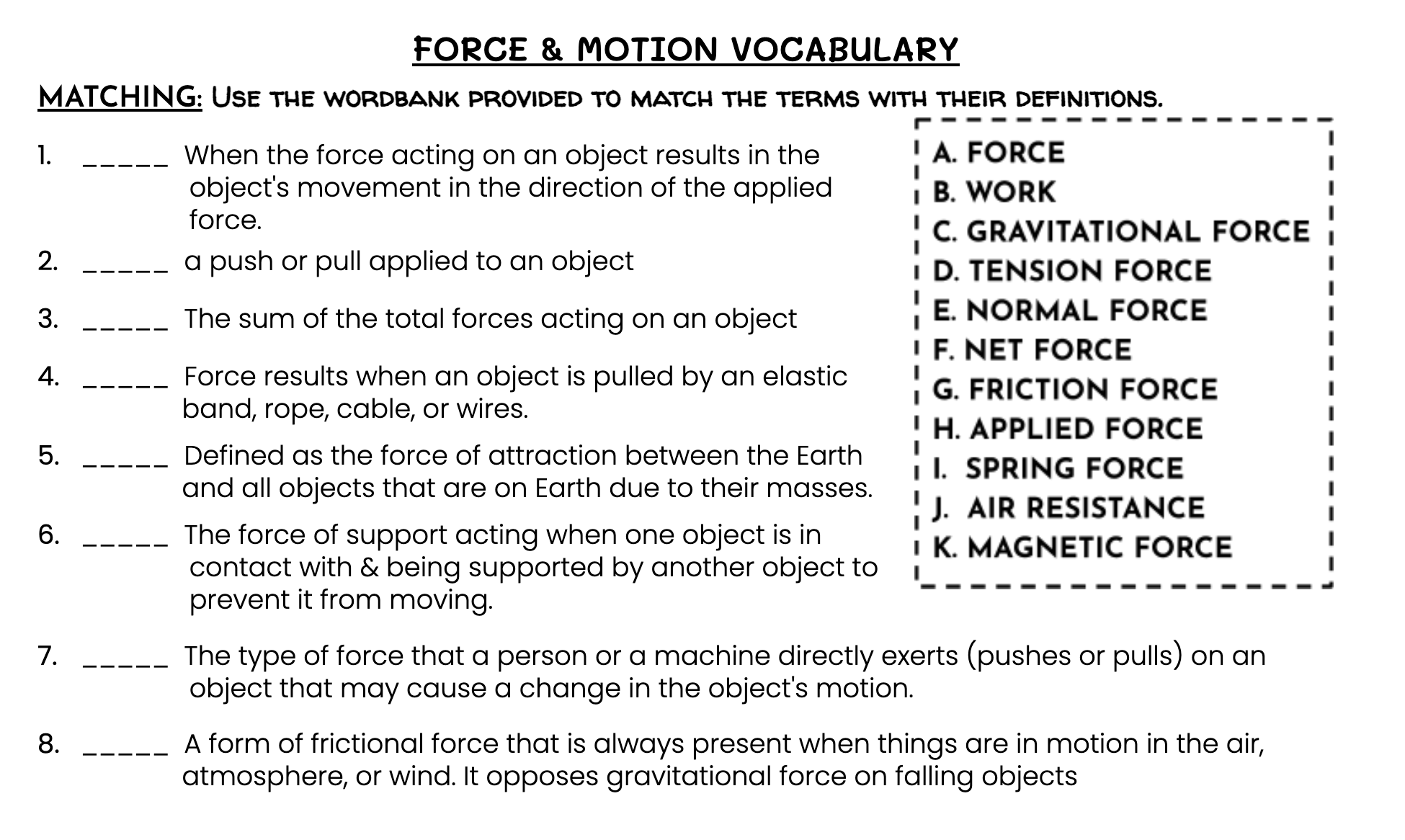
When the force acting on an object results in the object's motion in the direction of the applied force.
A. Force
B. Work
C. Gravitational Force
D. Tension Force
E. Normal Force
F. Net Force
G. Frictional Force
H. Applied Force
I. Spring Force
J. Air Resistance (Drag Force)
K. Magnetic Force
A push or pull applied to an object
A. Force
B. Work
C. Gravitational Force
D. Tension Force
E. Normal Force
F. Net Force
G. Frictional Force
H. Applied Force
I. Spring Force
J. Air Resistance (Drag Force)
K. Magnetic Force
The sum of the total forces acting upon an object
A. Force
B. Work
C. Gravitational Force
D. Tension Force
E. Normal Force
F. Net Force
G. Frictional Force
H. Applied Force
I. Spring Force
J. Air Resistance (Drag Force)
K. Magnetic Force
This force is present when an object is pulled on by an elastic band, rope, cable, or wires.
A. Force
B. Work
C. Gravitational Force
D. Tension Force
E. Normal Force
F. Net Force
G. Frictional Force
H. Applied Force
I. Spring Force
J. Air Resistance (Drag Force)
K. Magnetic Force
Defined as the force of attraction between the Earth and all objects that are on Earth due to their masses.
A. Force
B. Work
C. Gravitational Force
D. Tension Force
E. Normal Force
F. Net Force
G. Frictional Force
H. Applied Force
I. Spring Force
J. Air Resistance (Drag Force)
K. Magnetic Force
A supporting force; occurs when one object is in contact with & being supported by another object, holding it in a stationary position.
A. Force
B. Work
C. Gravitational Force
D. Tension Force
E. Normal Force
F. Net Force
G. Frictional Force
H. Applied Force
I. Spring Force
J. Air Resistance (Drag Force)
K. Magnetic Force
The type of force that a person or a machine directly exerts on an object
A. Force
B. Work
C. Gravitational Force
D. Tension Force
E. Normal Force
F. Net Force
G. Frictional Force
H. Applied Force
I. Spring Force
J. Air Resistance (Drag Force)
K. Magnetic Force
A form of frictional force that is always present when things are in motion in the air, atmosphere, or with wind. It opposes gravitational force on falling objects.
A. Force
B. Work
C. Gravitational Force
D. Tension Force
E. Normal Force
F. Net Force
G. Frictional Force
H. Applied Force
I. Spring Force
J. Air Resistance (Drag Force)
K. Magnetic Force
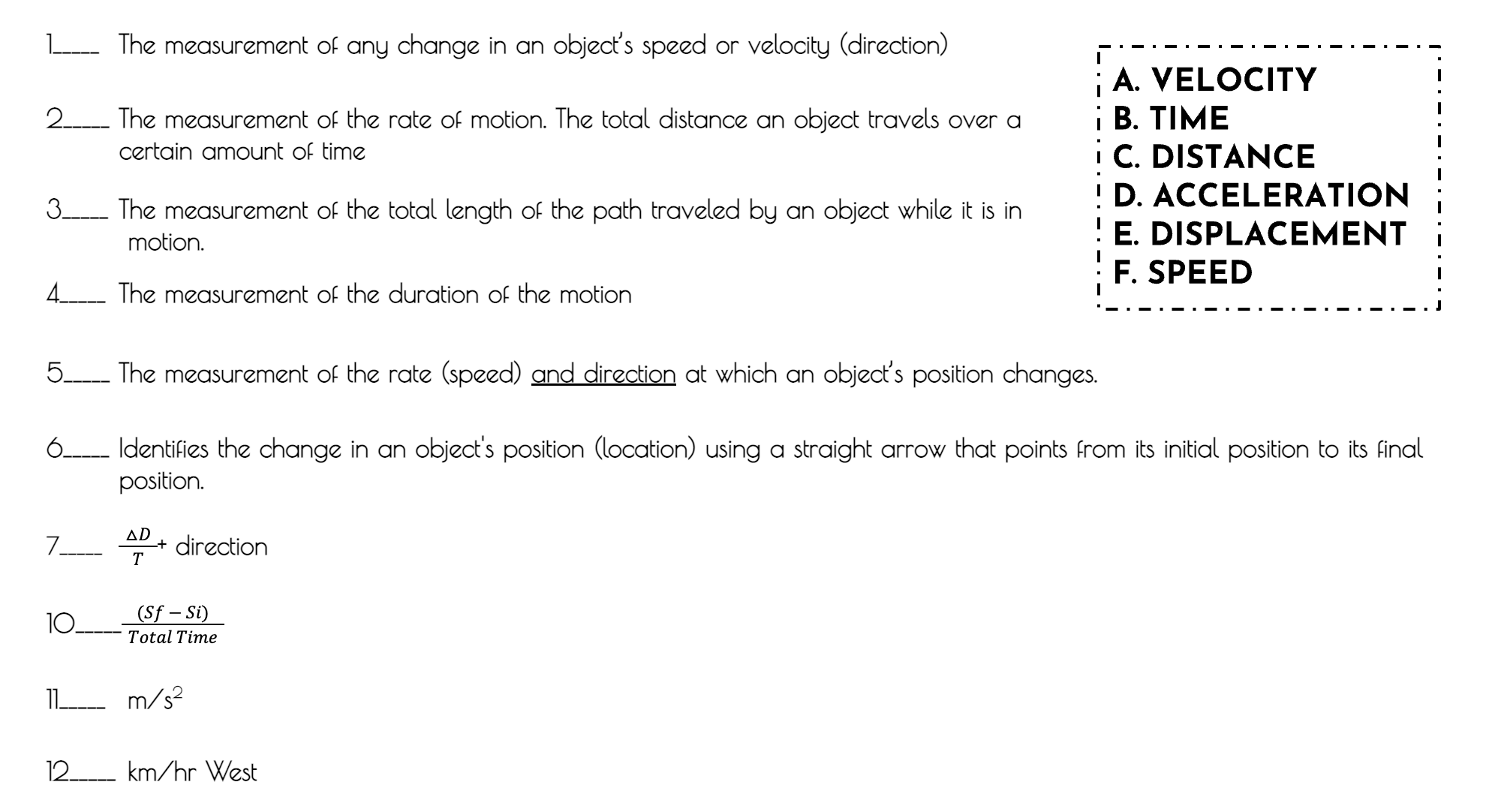
Measurement of any change in an object's speed or velocity (direction)
A. Velocity
B. Time
C. Distance
D. Acceleration
E. Displacement
F. Speed
The measurement of the rate of motion. The total distance an object travels over a certain amount of time
A. Velocity
B. Time
C. Distance
D. Acceleration
E. Displacement
F. Speed
The measurement of the total length of the path traveled by an object while it is in motion
A. Velocity
B. Time
C. Distance
D. Acceleration
E. Displacement
F. Speed
The measurement of the duration of the motion
A. Velocity
B. Time
C. Distance
D. Acceleration
E. Displacement
F. Speed
The measurement of the rate (speed) and direction at which an object's position changes; it is a vector quantity
A. Velocity
B. Time
C. Distance
D. Acceleration
E. Displacement
F. Speed
Identifies the change in an object's position (location) using a straight arrow that points from its initial position to its final position.
Velocity
Time
Distance
Acceleration
Displacement
Speed
Match the formula provided to the dimension below. Look at your paper if you need a closer look!
A. Velocity
B. Time
C. Distance
D. Acceleration
E. Diplacement
F. Speed
Match the formula provided to the dimension below. Look at your paper if you need a closer look!
A. Velocity
B. Time
C. Distance
D. Acceleration
E. Diplacement
F. Speed
Match the units m/s2 with the correct dimension below
A. Velocity
B. Time
C. Distance
D. Acceleration
E. Displacement
F. Speed
Match the units km/hr West with the correct dimension below
A. Velocity
B. Time
C. Distance
D. Acceleration
E. Displacement
F. Speed
Which vehicle will come to a stop faster when the outside force of the breaks acts on it?
Tractor Trailer
Mini Cooper
They will stop at the same rate of acceleration
Which of Newton's laws determined your answer to #2 (Which car will stop faster?)
Law 1
Law 2
Law 3
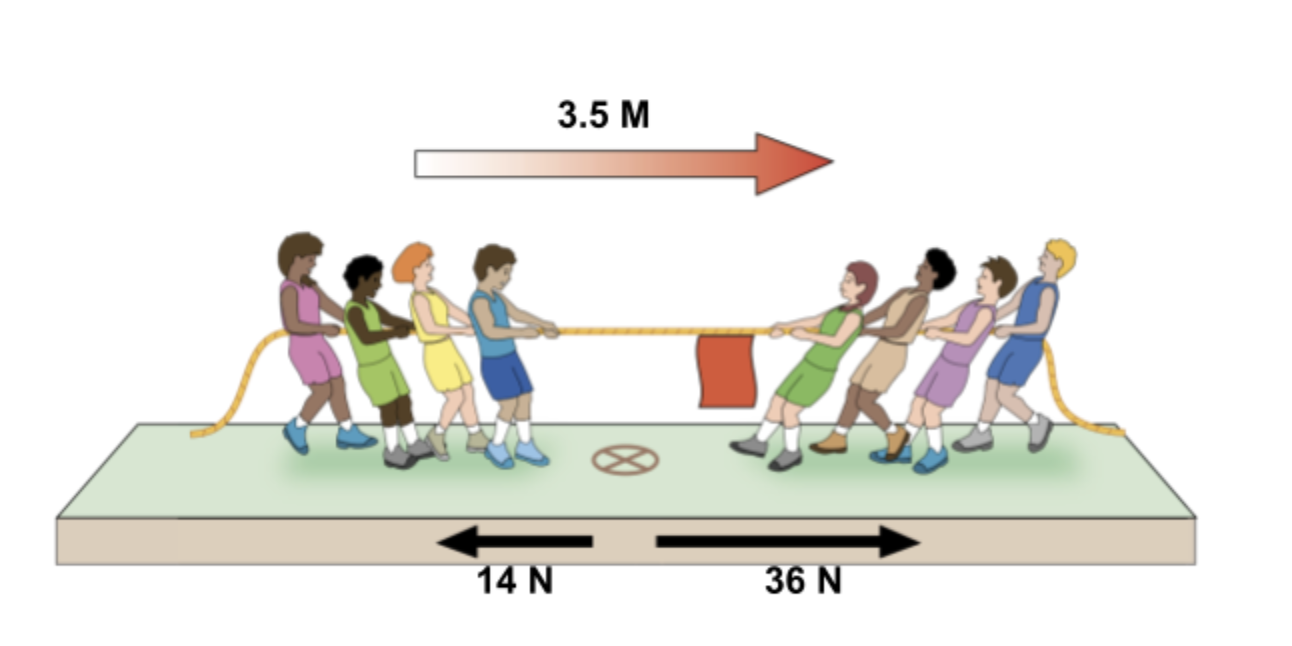
What is the total net force?
22 N ⬅️
12 N ➡️
50 N ⬅️
50 J
22 N ➡️
22 J
50 N ➡️
Calculate the amount of work being done.

hint: use the net force you calculated above in your equation.
42 J
175 J
77 N
6.3 J
14.3 J
3.4 J
42 N
77 J
175 N