American Rev Lesson 7
star
star
star
star
star
Last updated 6 months ago
59 questions
1
Do Now-What is the Scientific Revolution and what were some of the key changes it brought to the way people understood the world?

1
Do Now-What do you notice about the people in this image?Who do you recognize? Why might they be important in American history?
Do Now-What do you notice about the people in this image?
Who do you recognize? Why might they be important in American history?

1
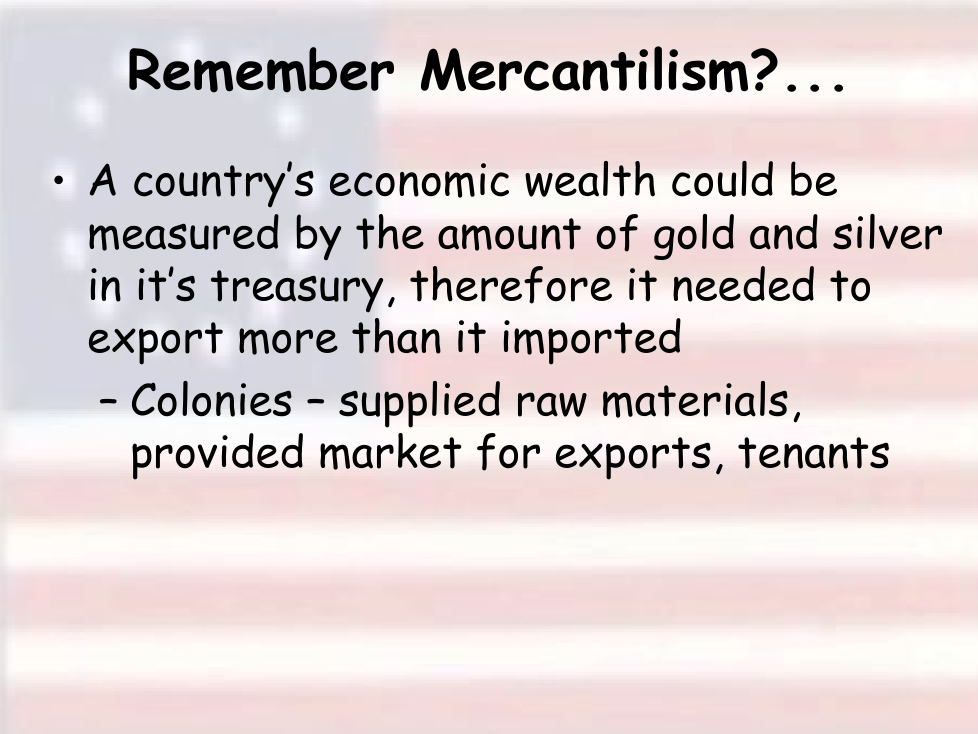
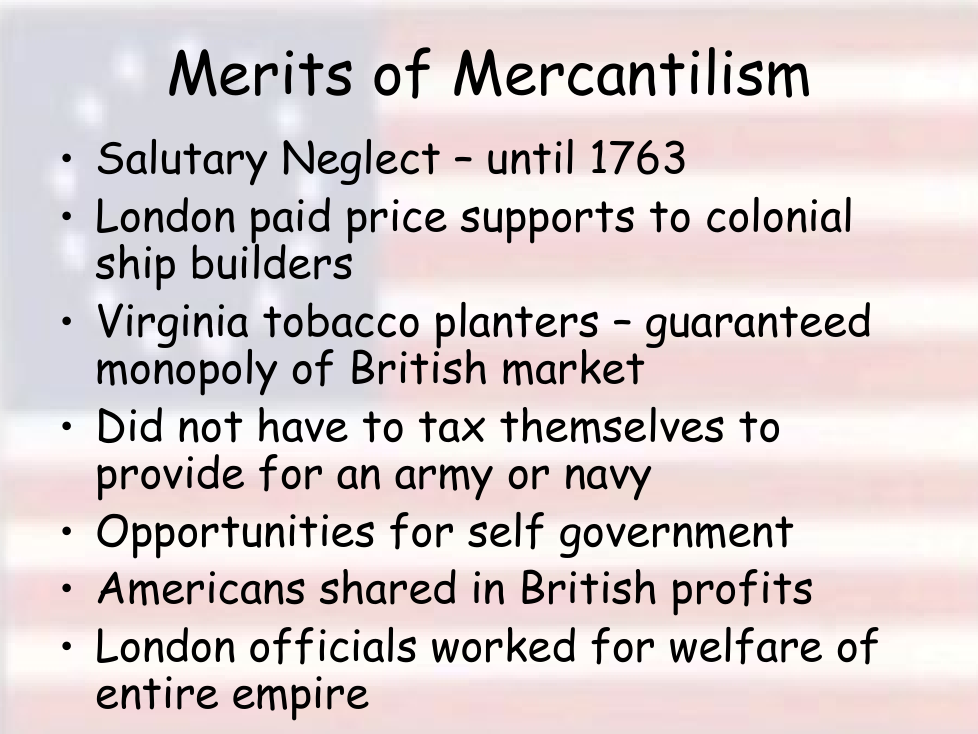
What is the main goal of Mercantilism?

1
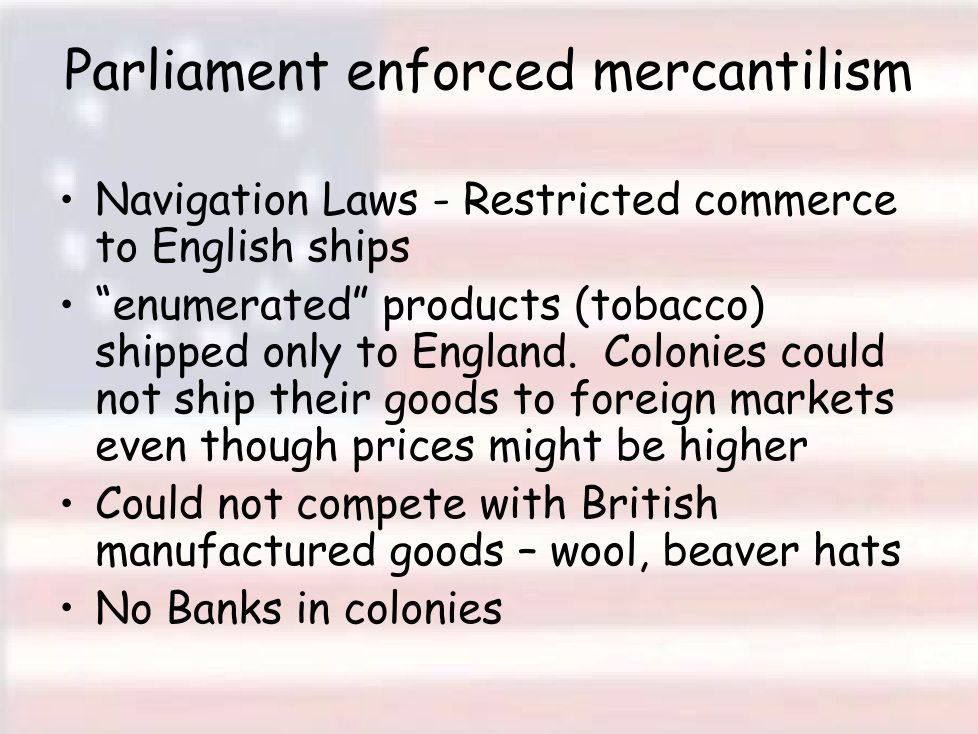
What was the primary purpose of the Navigation Laws?
1
Why couldn't colonies sell enumerated products abroad?
1
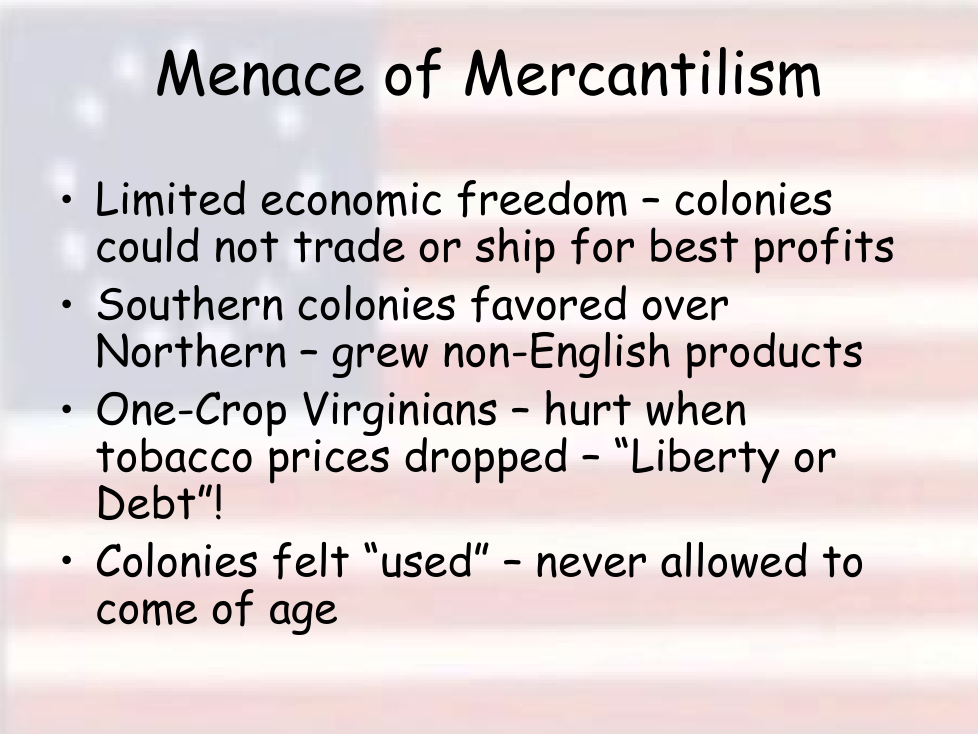
What challenge did American colonies face under mercantilism?

1
Discuss how the system of mercantilism benefited Virginia tobacco planters specifically.

1
What impact did mercantilism have on the Southern colonies compared to the Northern colonies?

1
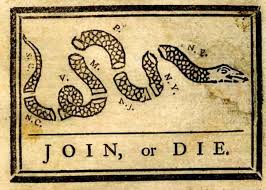
What does the broken up parts of the snake represent?

6
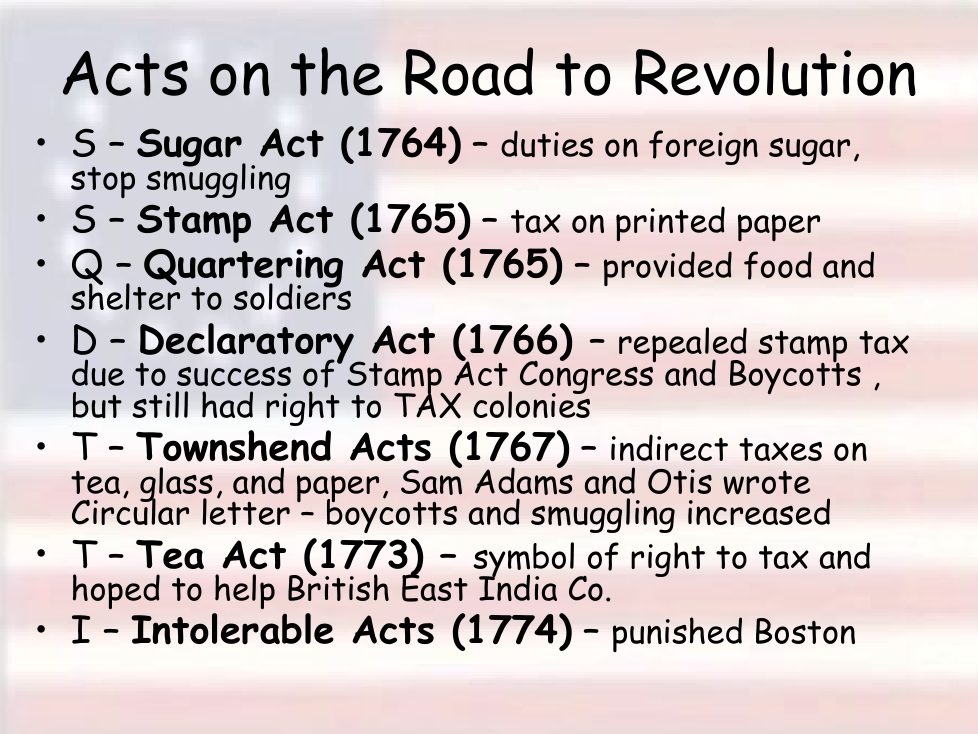
Match the Acts with their descriptions.
| Draggable item | arrow_right_alt | Corresponding Item |
|---|---|---|
Sugar Act (1764) | arrow_right_alt | Duties on foreign sugar, stop smuggling |
Tea Act (1773) | arrow_right_alt | Tax on printed paper |
Declaratory Act (1766) | arrow_right_alt | Provided food and shelter to soldiers |
Stamp Act (1765) | arrow_right_alt | Indirect taxes on tea and glass |
Townshend Acts (1767) | arrow_right_alt | Stated Parliament's right to tax colonies |
Quartering Act (1765) | arrow_right_alt | Helped British East India Company financially |

1
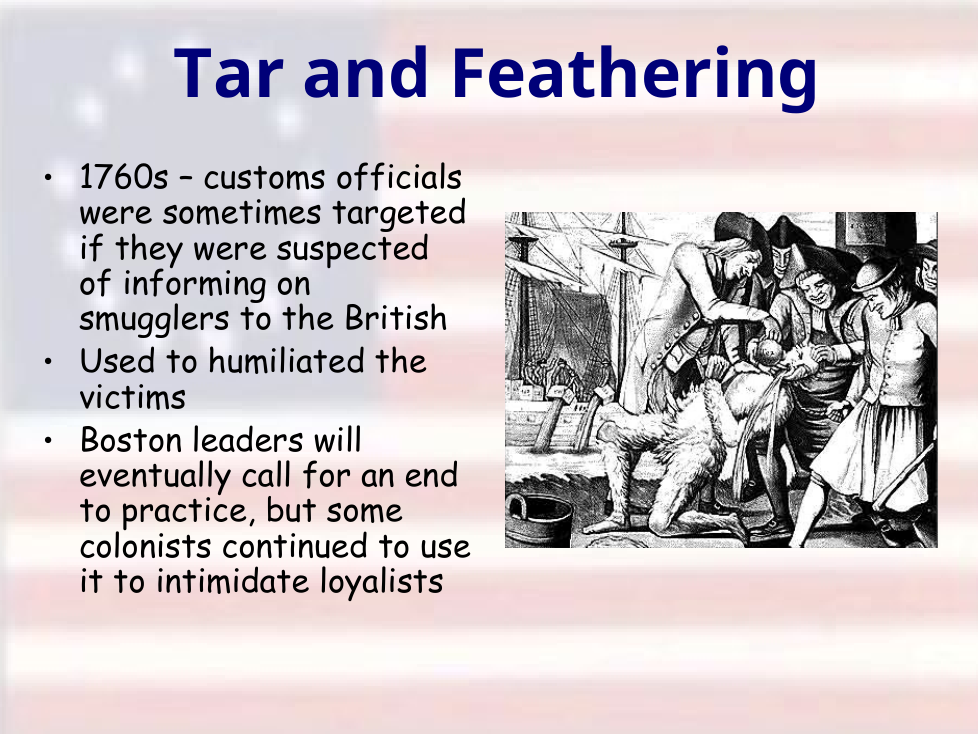
What have been other forms of punishment we have learned about that people of power used on their people?

1
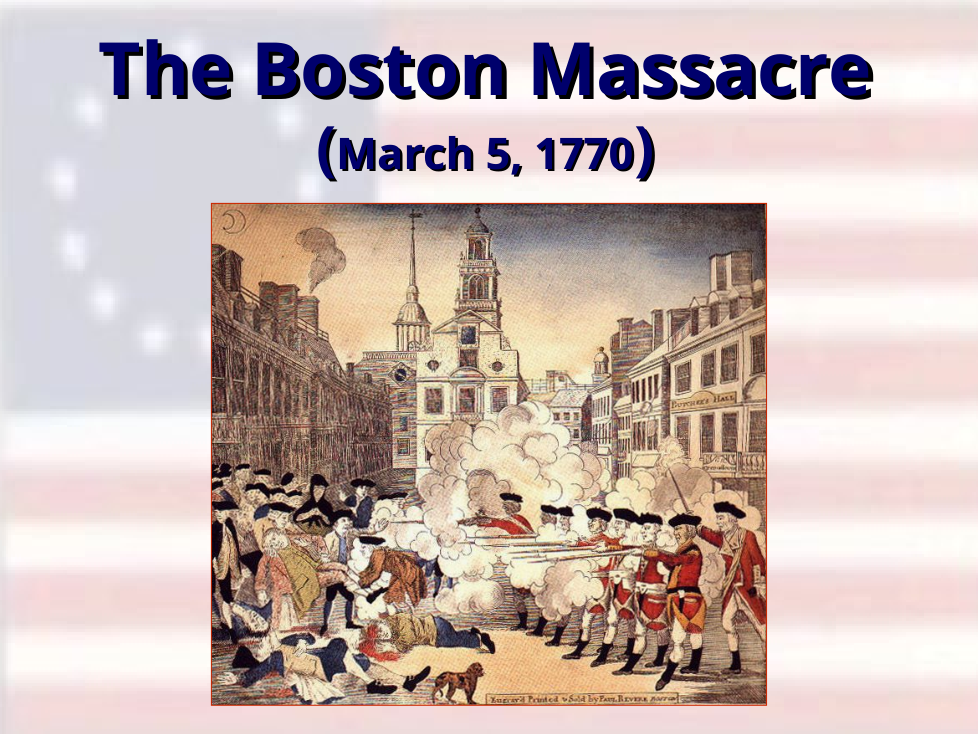
In Paul Revere portrait of the Boston Massacre how would you describe how the event happened from his point of view?

1
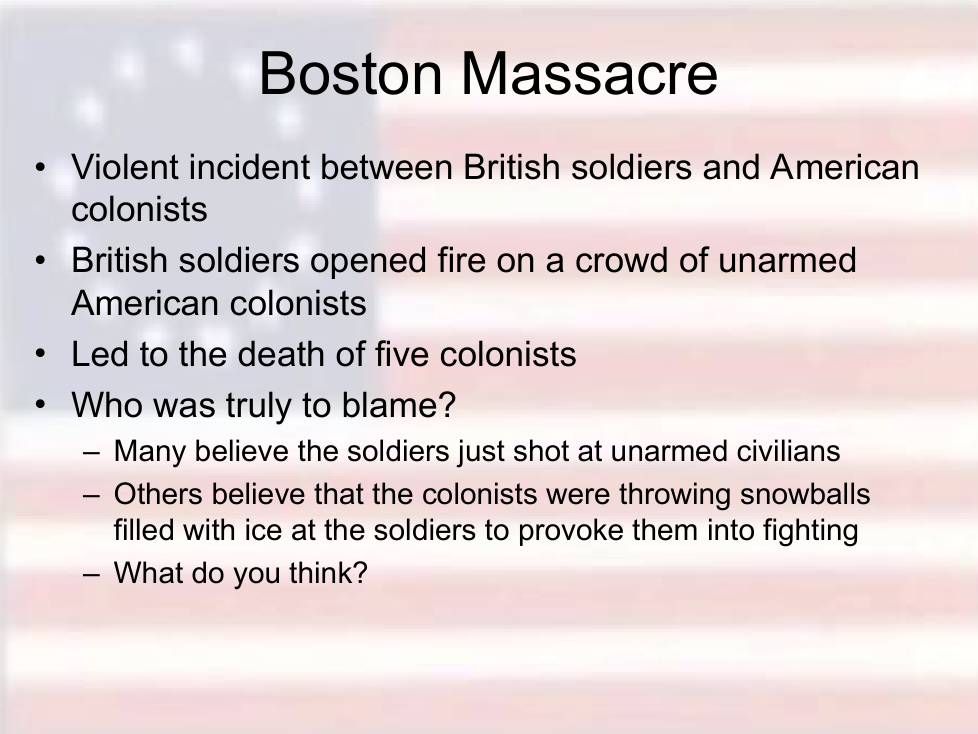
What triggered the Boston Massacre in 1770?
1
How many colonists died during the Boston Massacre?
1
Who is often blamed for the Boston Massacre?
1
Who was the first person to die at the boston massacre? Look it up the name and background of the person

1
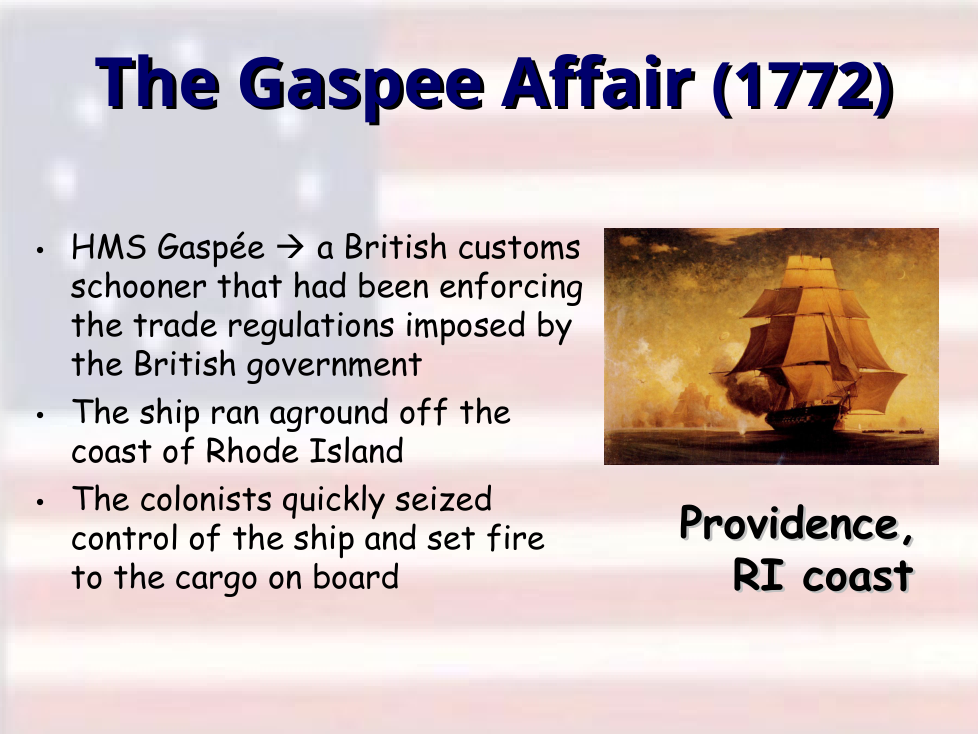
Why did the colonist set fire to the ship? Why might that bother the British?

1
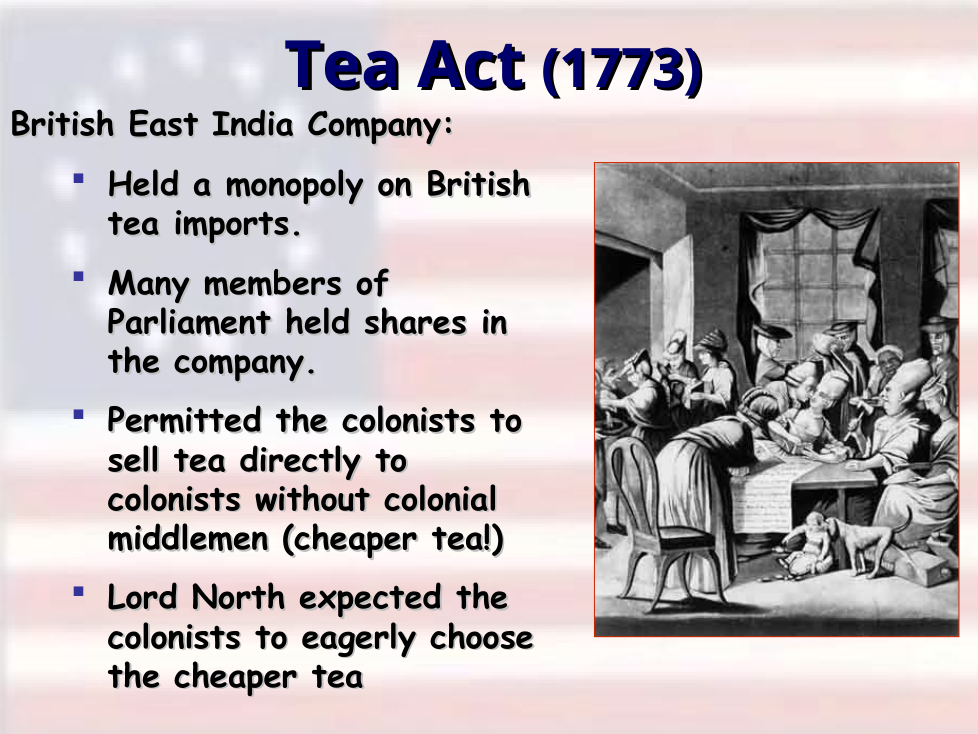
What was the main goal of the Tea Act of 1773?
1
Why did many members of Parliament support the Tea Act?
1
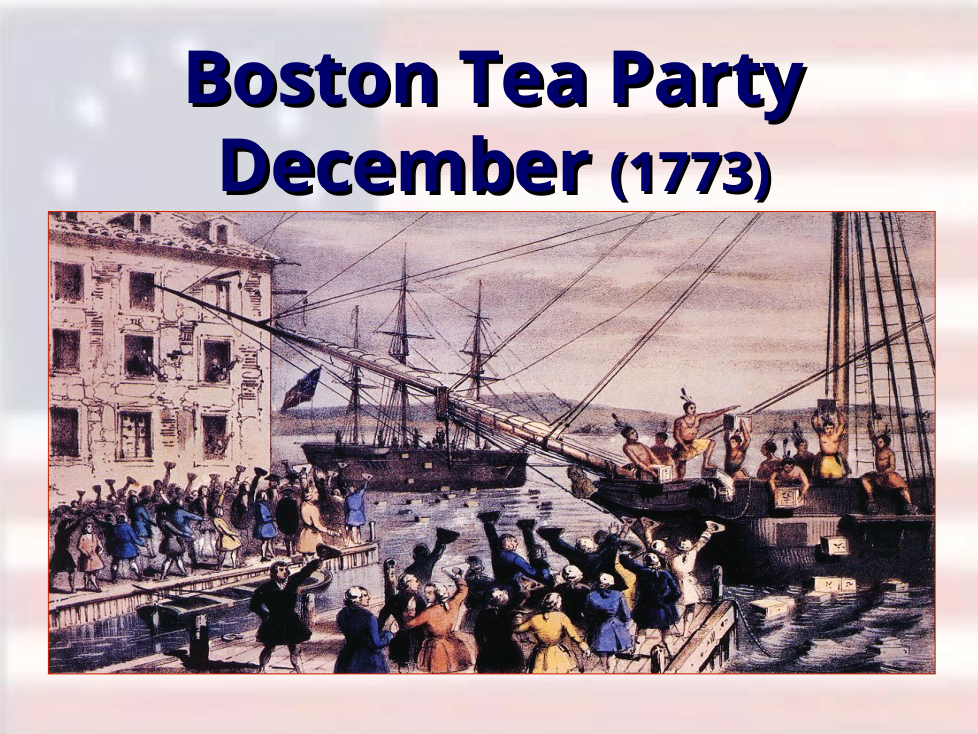
How many chests of tea were dumped into Boston Harbor during the Boston Tea Party?
1
After which war did Britain begin taxing the colonies to recoup expenses?
1
What did the Tea Act do for the East India Tea Company?
1
What disguises did the Sons of Liberty wear during the Boston Tea Party?
1
What was the estimated modern value of the tea destroyed?
1
How did John Adams describe the Boston Tea Party in his diary?

20
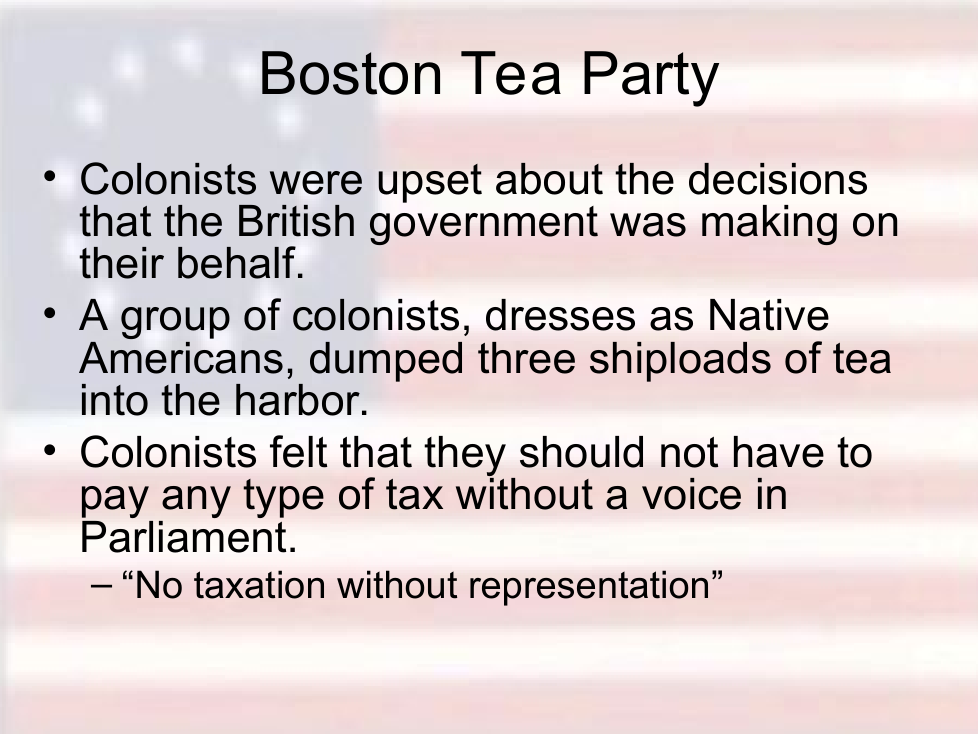
What were the main reasons behind the Boston Tea Party, and how did it reflect colonial attitudes toward British governance?
1
Describe the significance of the phrase "No taxation without representation" in the context of the Boston Tea Party.

1
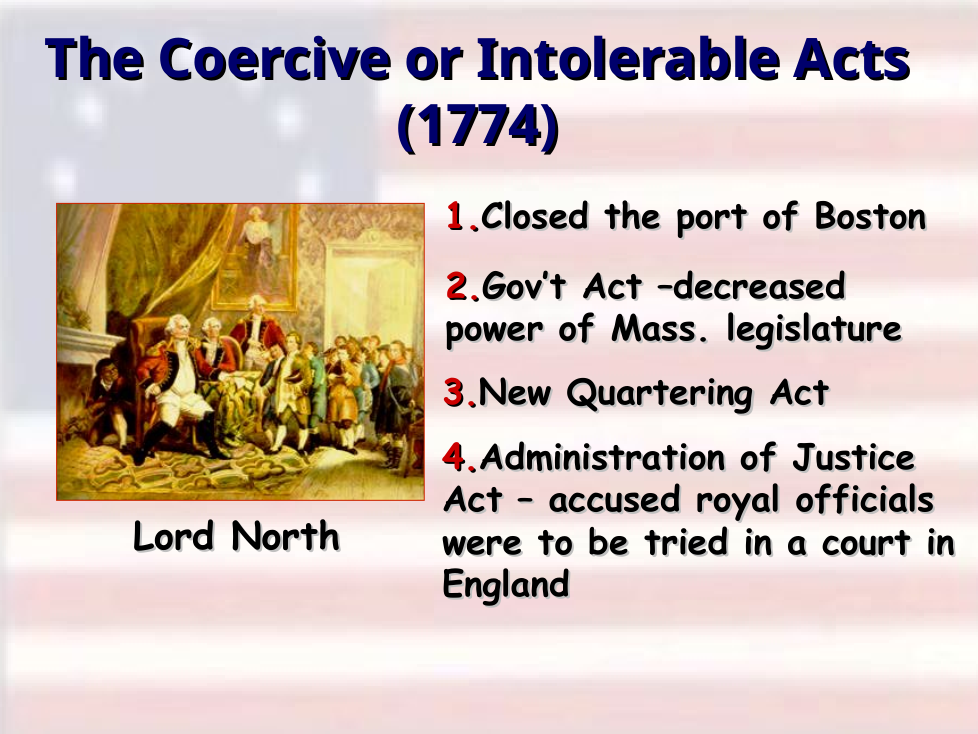
Which act aimed to reduce Massachusetts legislative power?
1
What did the new Quartering Act require from colonists?

1
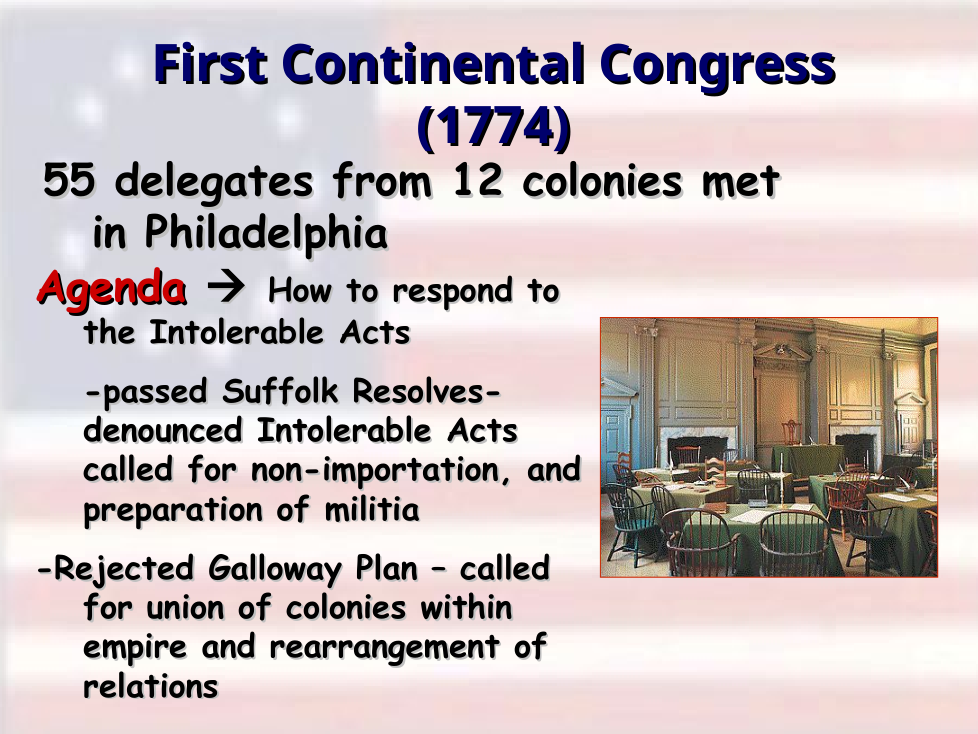
How many colonies were represented at the First Continental Congress?
1
The Suffolk Resolves were passed to address the Intolerable Acts.
1
The Galloway Plan was approved at the First Continental Congress.

1
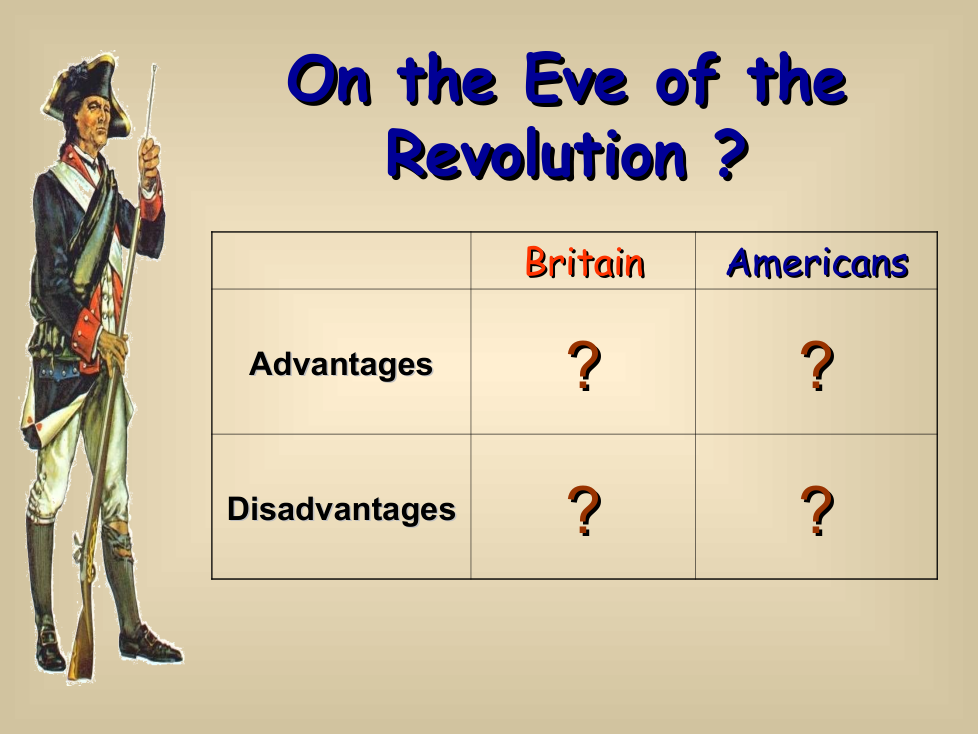
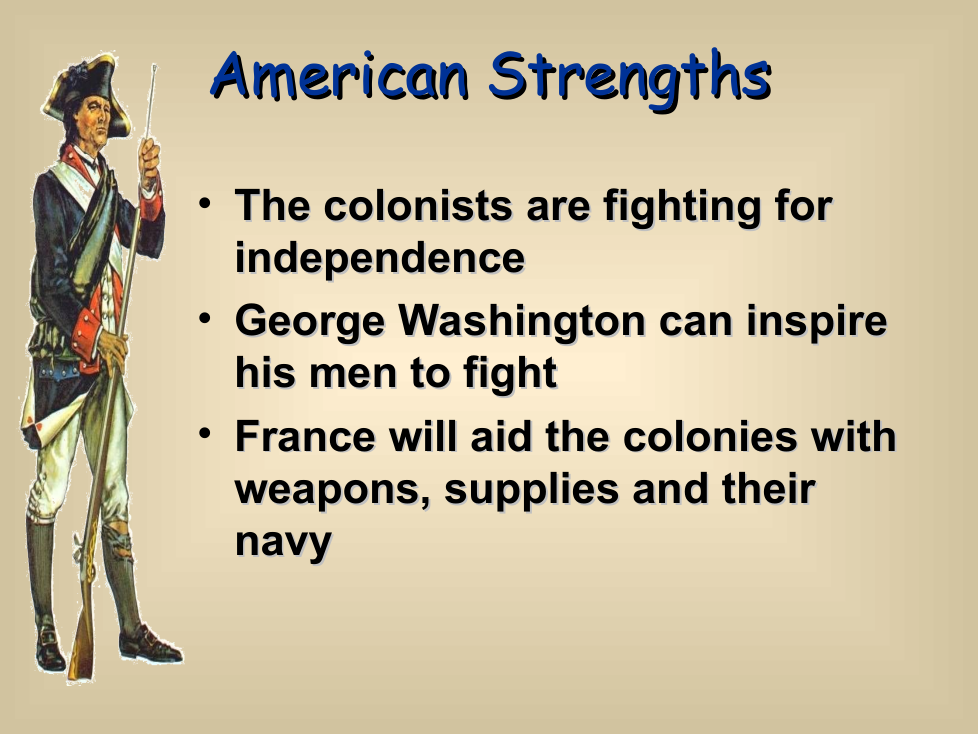
With Britain being a World power going against the colonist of young America, list 2 advantages and disadvantages for both American and Britain in regards to this War.

1
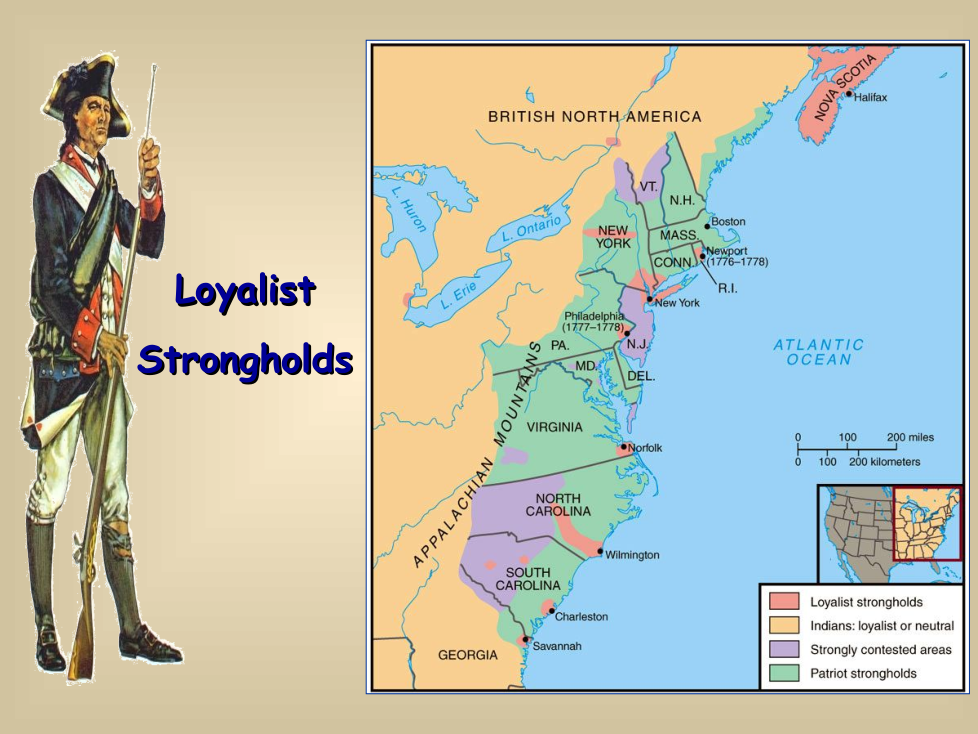
What would be another strength America has? Think geographically

1
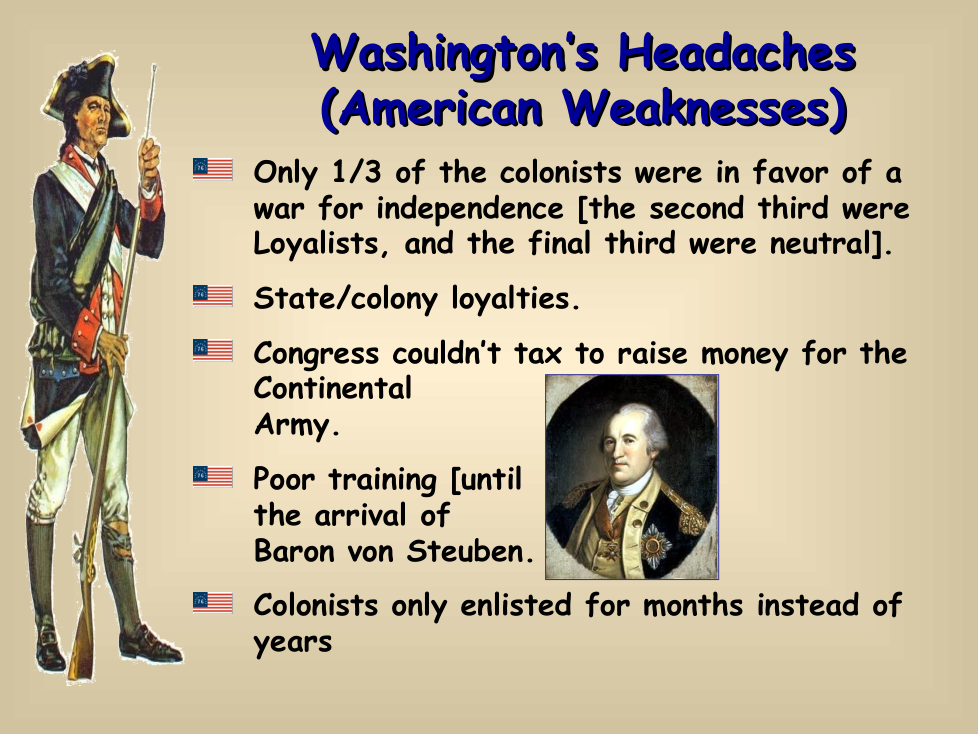
Why couldn't congress tax states to raise money for Army?
1
Discuss the implications of having only a third of colonists favoring independence. How did this division affect the Revolutionary War?

1
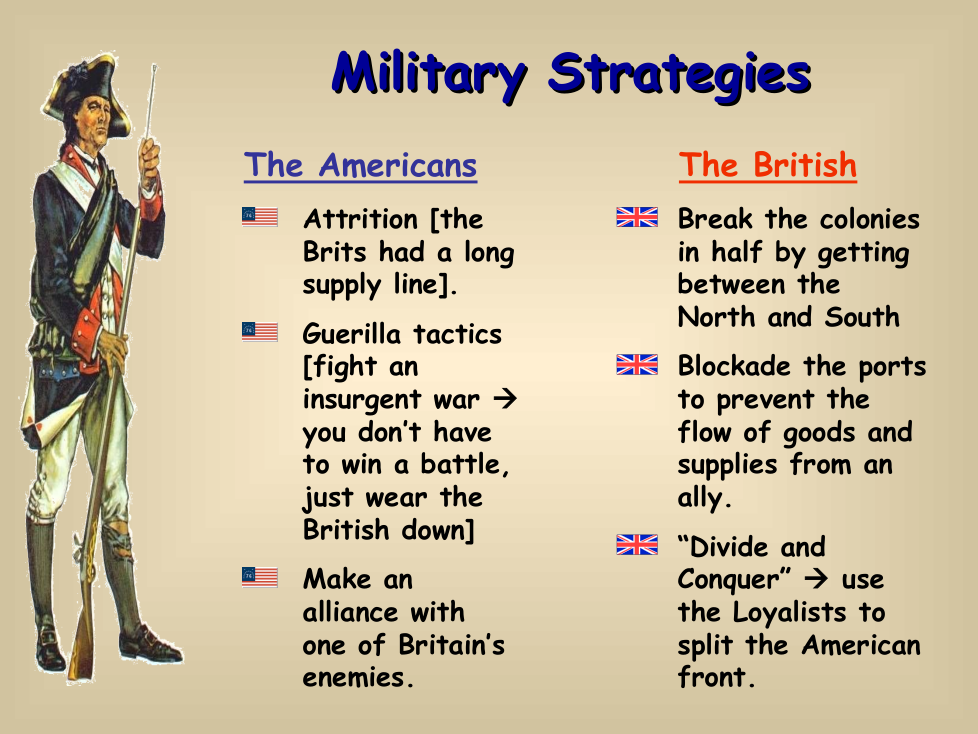
Which tactic involved fighting without winning direct battles?
1
What British strategy aimed to split the colonies geographically?
1
To limit British supply lines, Americans relied on which strategy?
1
How did the British plan to use Loyalists during the war?
1
Which Strategy do you feel is the best and why?

1
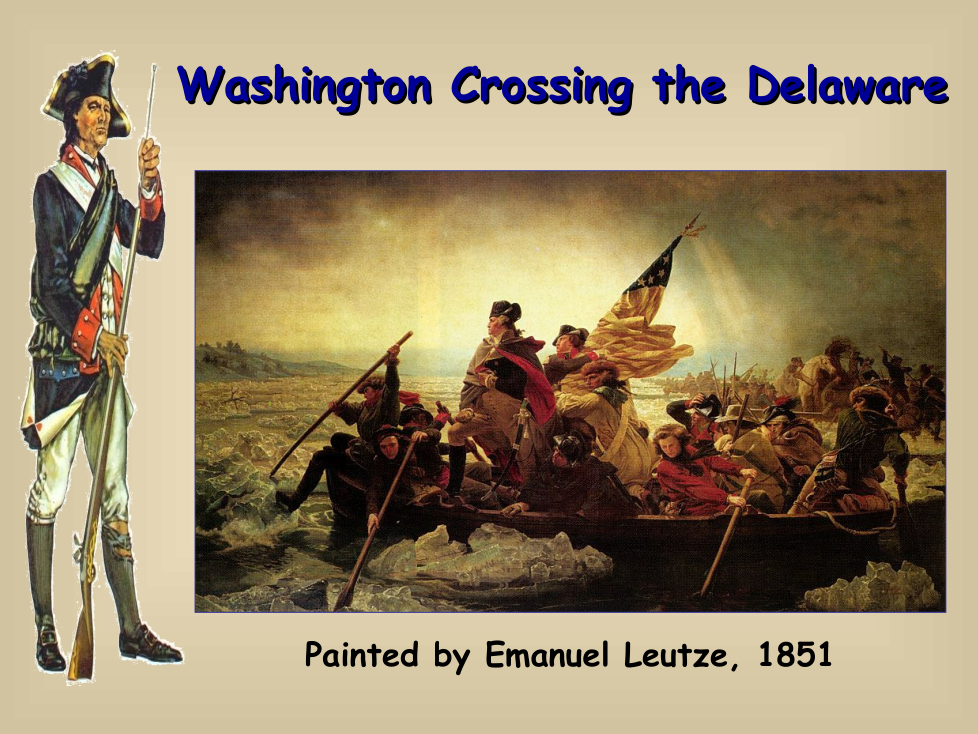
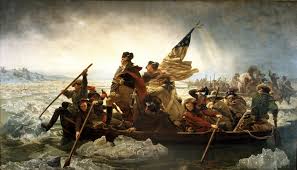
Analyze how Leutze's painting reflects the themes of leadership and perseverance during the Revolutionary War.

20
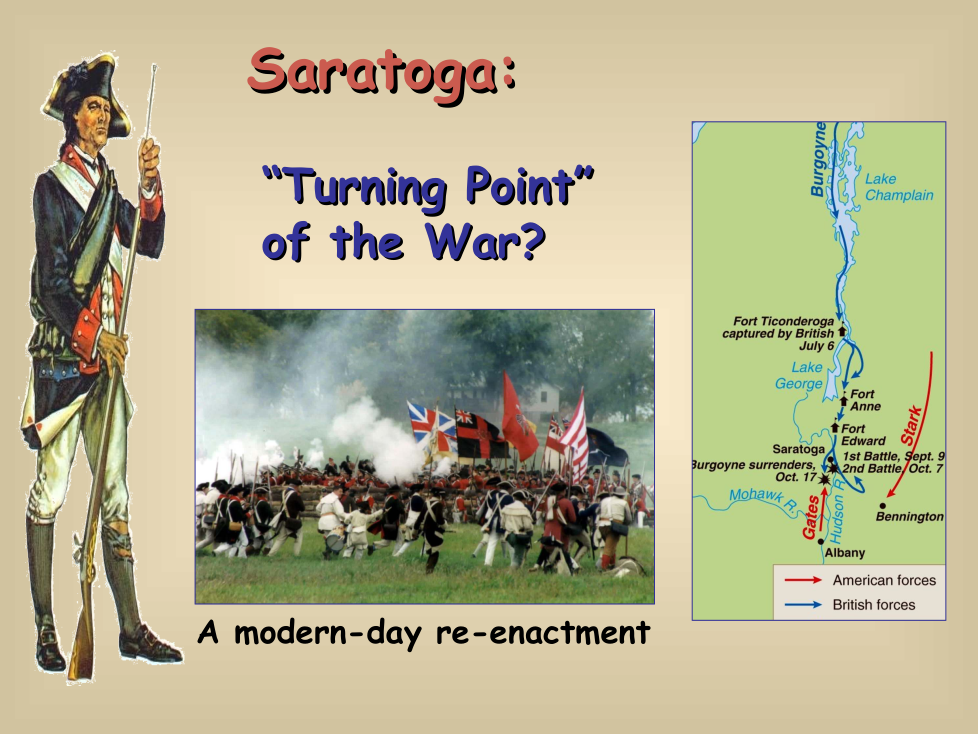
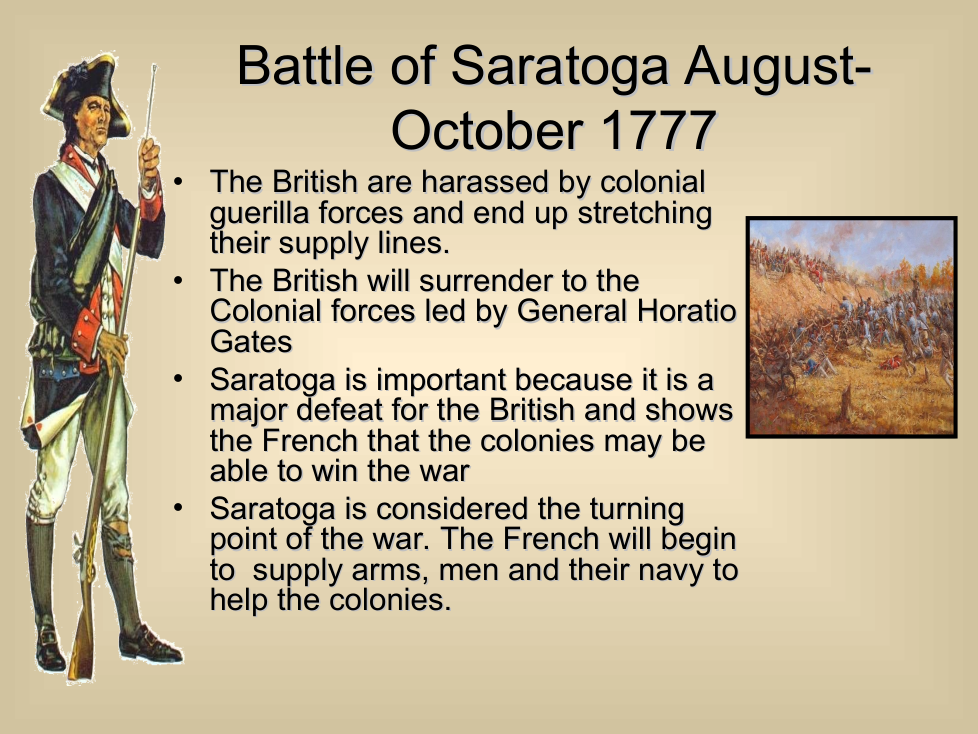
Explain the significance of the British surrender at Saratoga in terms of international support for the colonies.
1
What role did guerrilla forces play in the Battle of Saratoga?
1
Who led the colonial forces at the Battle of Saratoga?
1
What was a significant outcome of the British surrender at Saratoga?

1
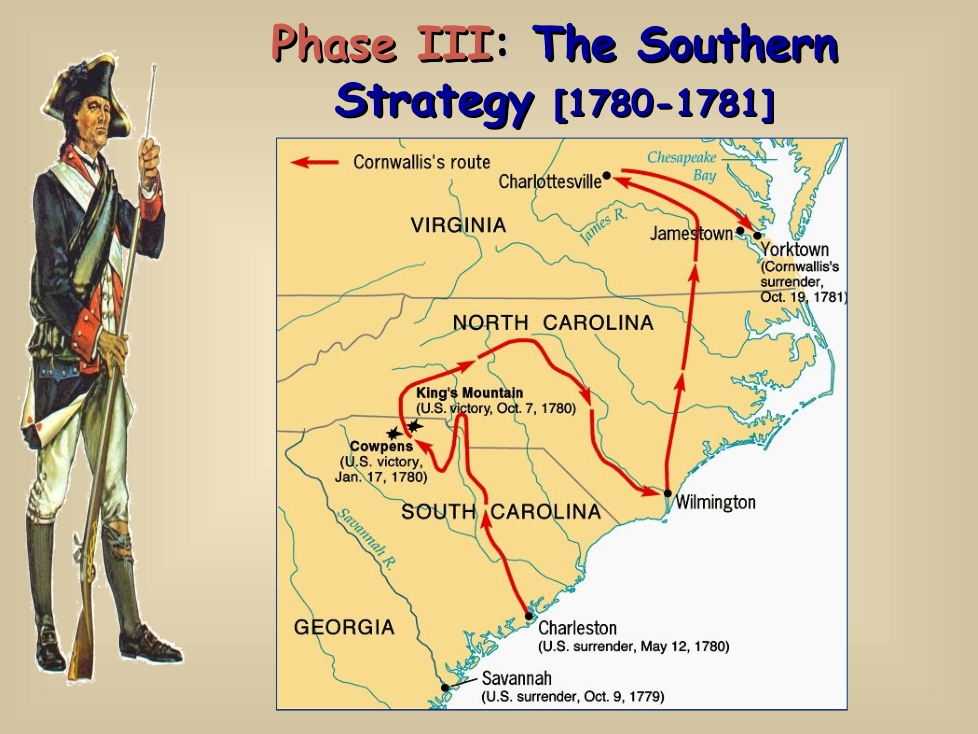
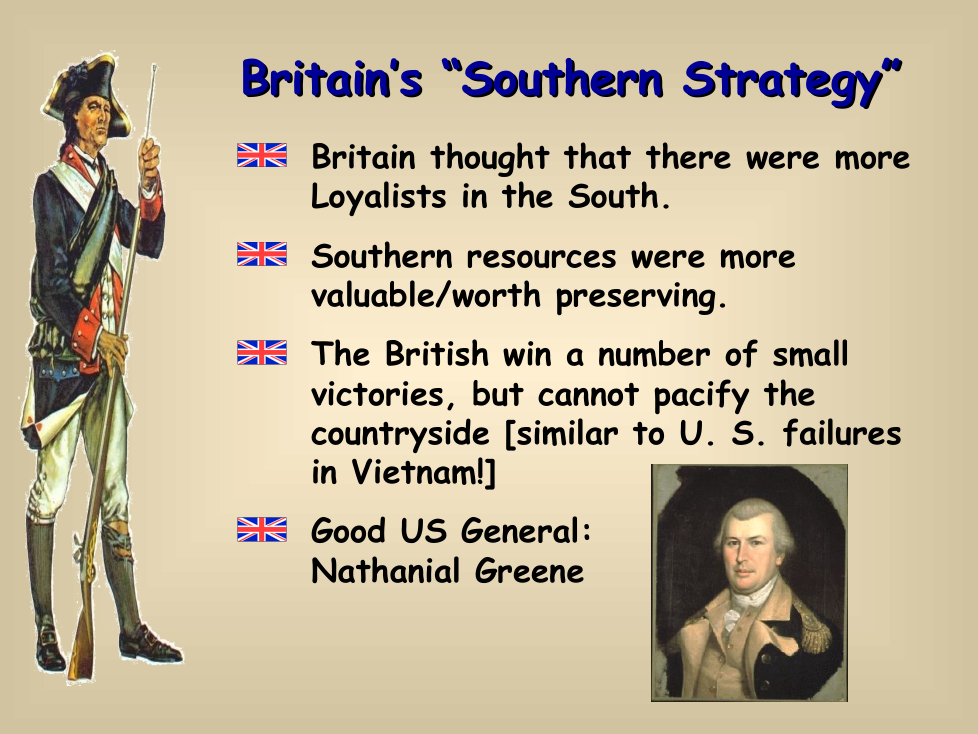
What were the primary goals of Britain's Southern Strategy during the American Revolutionary War?
1
What were the consequences of Britain's underestimation of the American resolve in the South?

1
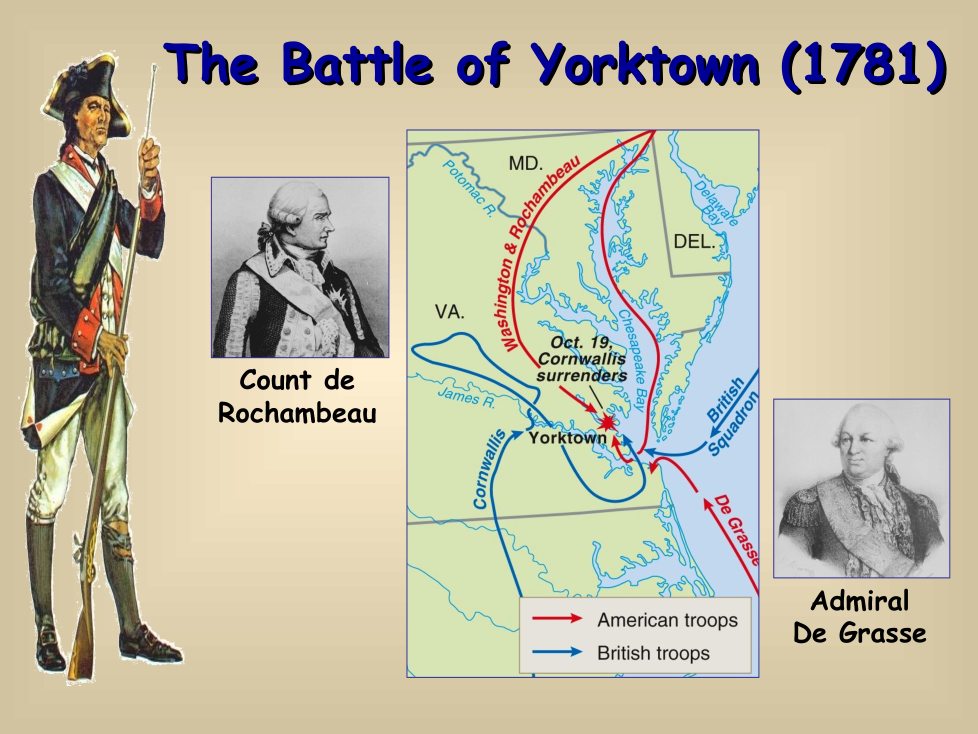
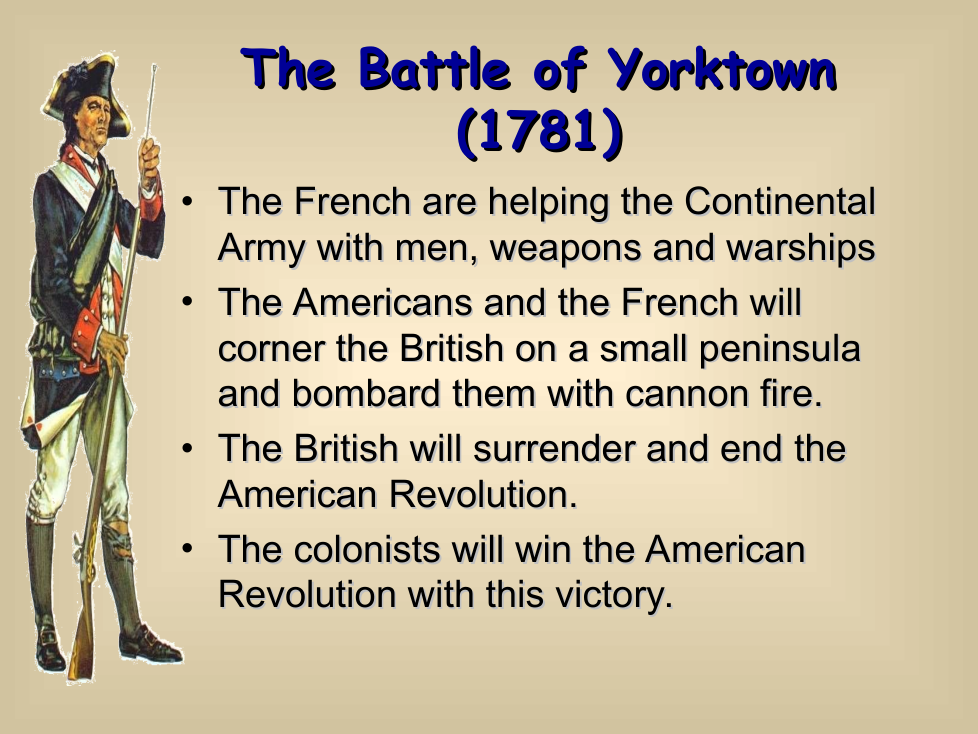
Why are the French aiding the US?
1
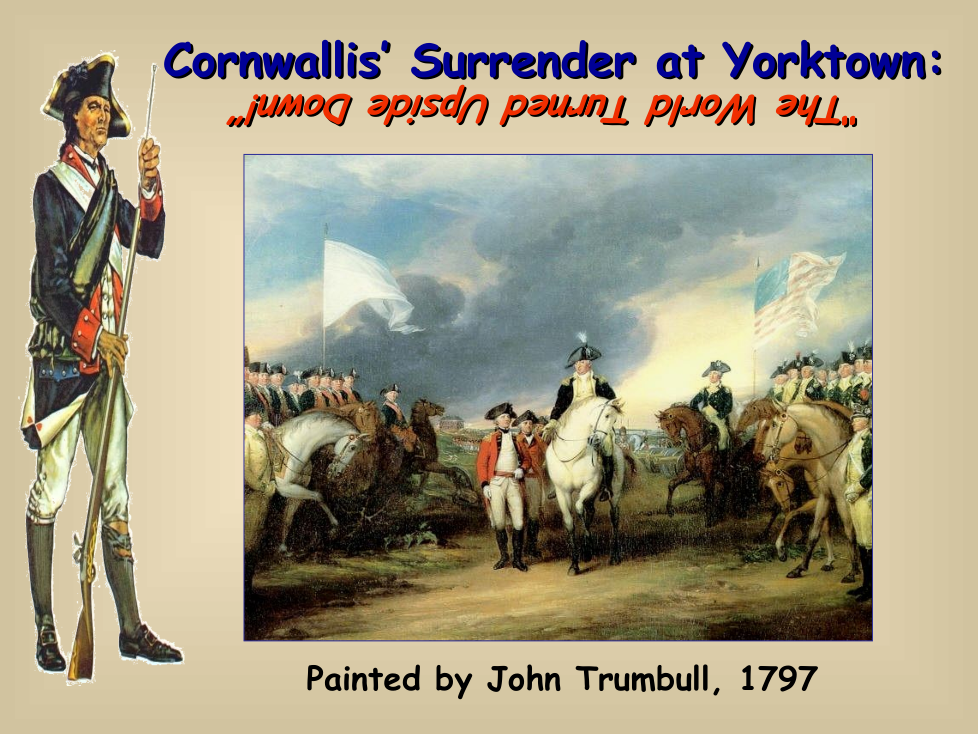
How did the geography of Yorktown influence the outcome of the battle?
1
What strategies did the American and French forces use during the bombardment of British troops?

1
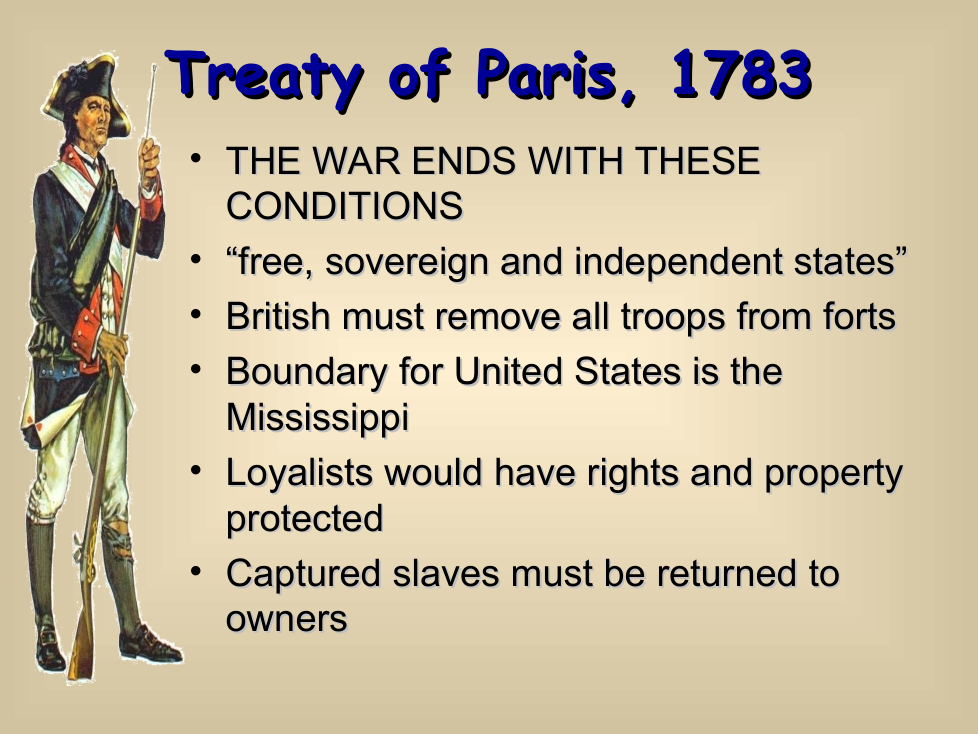
What were the key provisions of the Treaty of Paris, 1783, that ended the American Revolutionary War?
1
Discuss the impact of the provision regarding captured slaves in the Treaty of Paris.
1
In what ways did the Treaty of Paris contribute to the concept of sovereignty for the newly independent states?

1
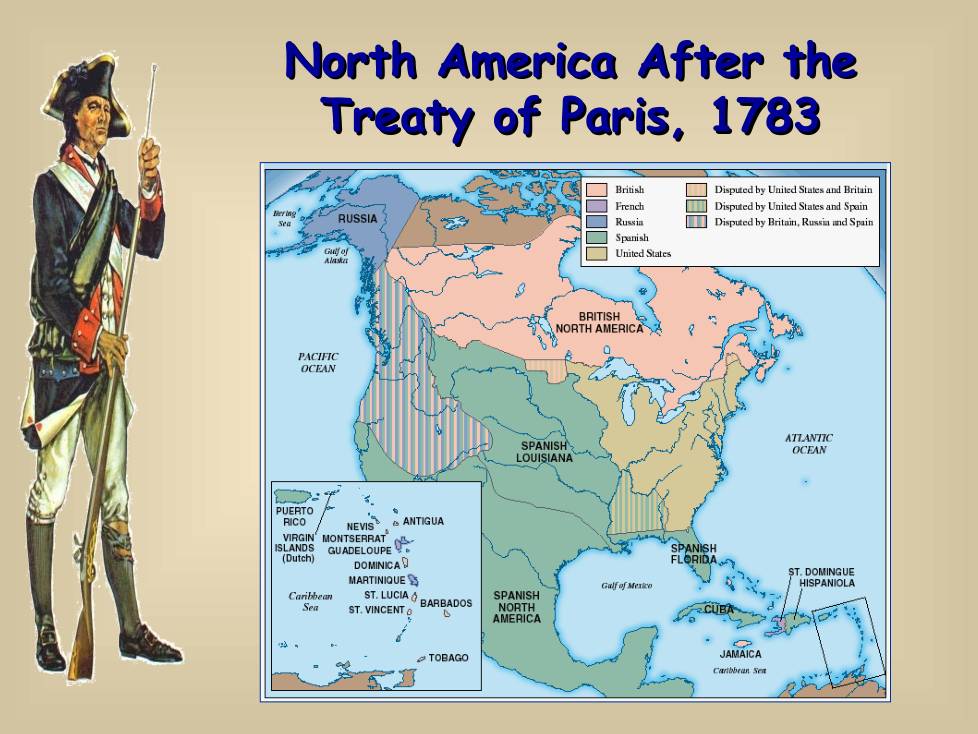
Analyze the role of foreign powers in shaping North America's political landscape post-1783.
1
Evaluate the impact of the Treaty of Paris 1783 on indigenous populations in North America.
Guiding Question: What were the philosophical bases and practical purposes of the Declaration of Independence?
- I can explain the major events that led the American colonists to question British rule.
- I can explain how the concepts of natural rights and self-government influenced the Founders and the drafting of the Declaration of Independence.
Directions: As you read the essay, think about how each of these events led the American colonists further down the road to declaring independence. Highlight the impacts of those events.
In 1825, Thomas Jefferson reflected on the meaning and principles of the Declaration of Independence. In a letter to a friend, Jefferson explained that the document was an “expression of the American mind.” He meant that it reflected the common sentiments shared by American colonists during the resistance against British taxes in the 1760s and 1770s The Road to Independence
After the conclusion of the French and Indian War, the British sought to increase taxes on their American colonies and passed the Stamp Act (1765) and Townshend Acts (1767). American colonists viewed the acts as British oppression that violated their traditional rights as English subjects as well as their inalienable natural rights. The colonists mostly complained of “taxation without representation,” meaning that Parliament taxed them without their consent. During this period, most colonists simply wanted to restore their rights and liberties within the British Empire. They wanted reconciliation, not independence. But they were also developing an American identity as a distinctive people, which added to the anger over their lack of representation in Parliament and self-government.
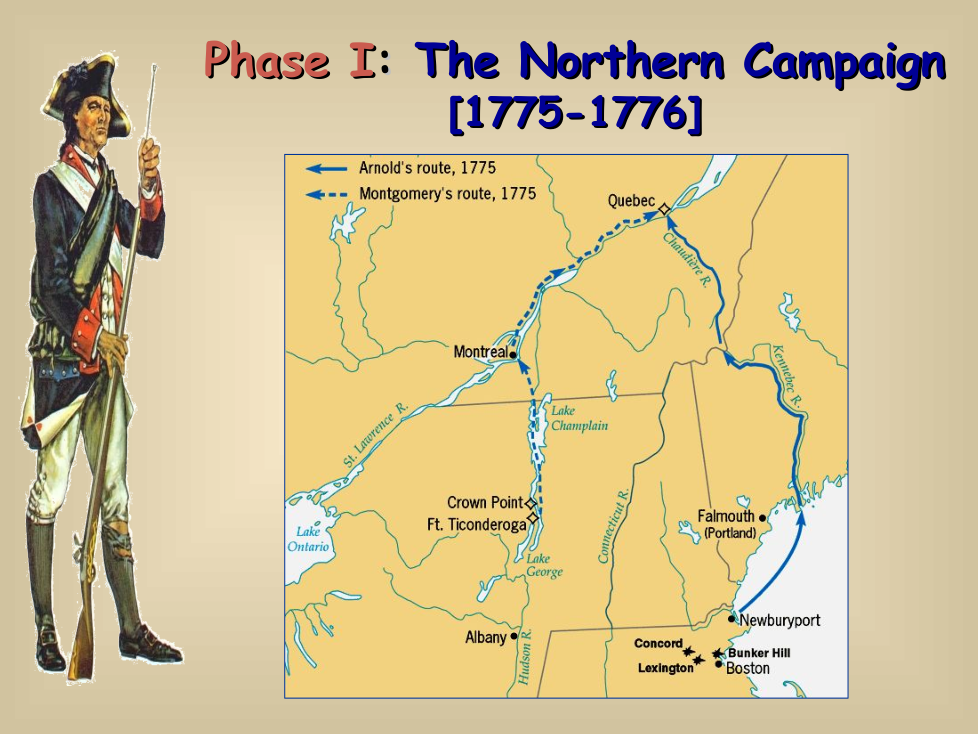
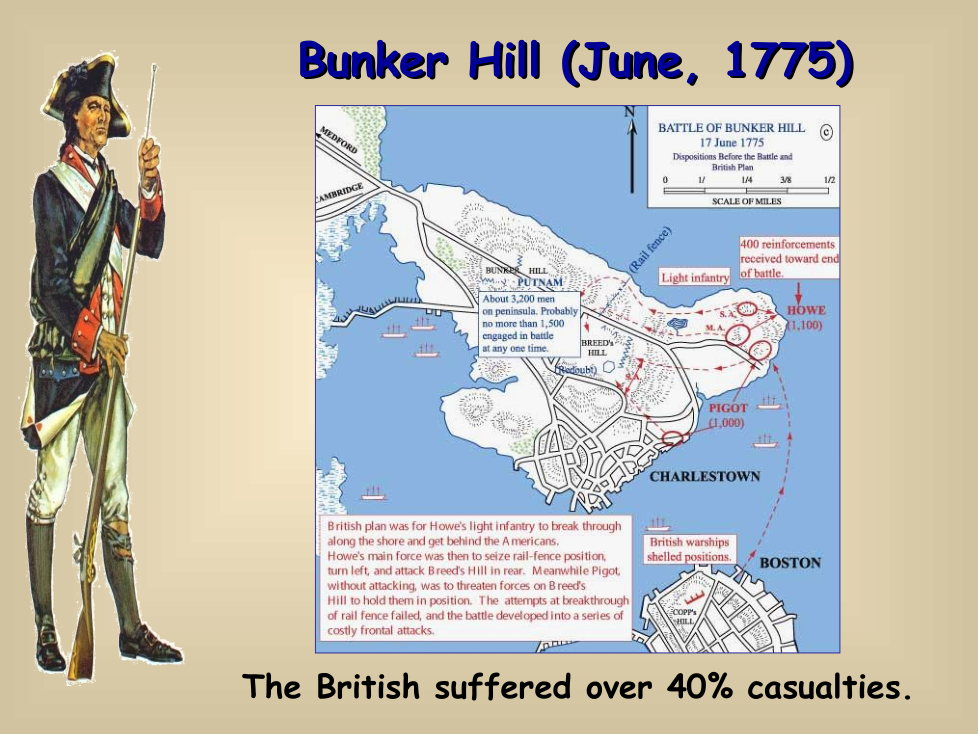
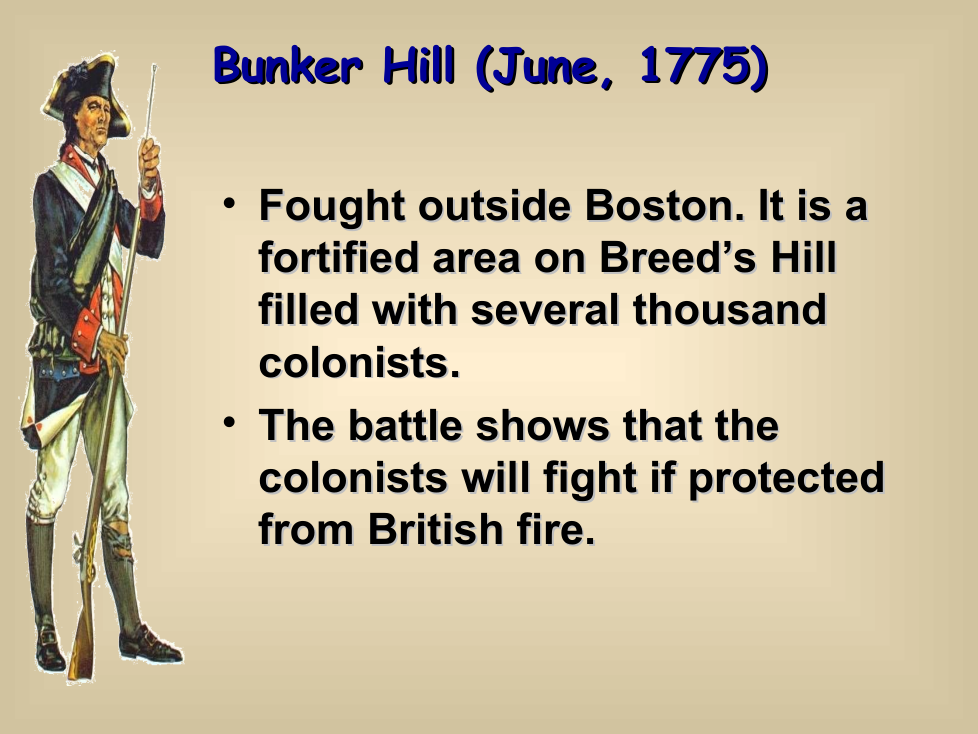
After the Boston Tea Party (1773), Parliament passed the Coercive Acts (1774), punishing Massachusetts by closing Boston Harbor and stripping away the right to self-government. As a result, the Continental Congress met in 1774 to consider a unified colonial response. The Congress issued a declaration of rights stating, “That they are entitled to life, liberty, & property, and they have never ceded [given] to any sovereign power whatever, a right to dispose of either without their consent.” Military clashes with British forces at Lexington, Concord, and Bunker Hill in Massachusetts showed that American colonists were willing to resort to force to vindicate their claim to their rights and liberties.
In January 1776, Thomas Paine wrote the best-selling pamphlet Common Sense which was a forceful expression of the growing desire of many colonists for independence. Paine wrote that a republican government that followed the rule of law would protect liberties better than a monarchy. The rule of law means that government and citizens all abide by the same laws regardless of political power.
The Second Continental Congress debated the question of independence that spring. On May 10, it adopted a resolution that seemed to support independence. It called on colonial assemblies and popular conventions to “adopt such government as shall, in the opinion of the representatives of the people, best conduce [lead] to the happiness and safety of their constituents in particular and America in general.”
Five days later, John Adams added his own even more radical preamble calling for independence: “It is necessary that the exercise of every kind of authority under the said Crown should be totally suppressed [brought to an end].” This bold declaration was essentially a break from the British.
“Free and Independent States”
On June 7, Richard Henry Lee rose in Congress and offered a formal resolution for independence: “That these United Colonies are, and of right ought to be, free and independent States, that they are absolved [set free] from all allegiance to the British Crown, and that all political connection between them and the State of Great Britain is, and ought to be, totally dissolved.” Congress appointed a committee to draft a Declaration of Independence, while states wrote constitutions and declarations of rights with similar republican and natural rights principles.
On June 12, for example, the Virginia Convention issued the Virginia Declaration of Rights, a document drafted in 1776 to proclaim the natural rights that all people are entitled to. The document was based upon the ideas of Enlightenment thinker John Locke about natural rights and republican government. It read: “That all men are by nature equally free and independent and have certain inherent rights … they cannot by any compact, deprive or divest [take away] their posterity [future generations]; namely, the enjoyment of life and liberty, with the means of acquiring and possessing property, and pursuing and obtaining happiness and safety.”
The Continental Congress’s drafting committee selected Thomas Jefferson to draft the Declaration of Independence because he was well-known for his writing ability. He knew the ideas of John Locke well and had a copy of the Virginia Declaration of Rights when he wrote the Declaration. Benjamin Franklin and John Adams were also members of the committee and edited the document before sending it to Congress.
Still, the desire for independence was not unanimous. John Dickinson and others still wished for reconciliation. On July 1, Dickinson and Adams and their respective allies debated whether America should declare independence. The next day, Congress voted for independence by passing Lee’s resolution. Over the next two days, Congress made several edits to the document, making it a collective effort of the Congress. It adopted the Declaration of Independence on July 4. The document expressed the natural rights principles of the independent American republic.
The Declaration opened by stating that the Americans were explaining the causes for separating from Great Britain and becoming an independent nation. It stated that they were entitled to the rights of the “Laws of Nature and of Nature’s God.”
The Declaration then asserted its universal ideals, which were closely related to the ideas of John Locke. It claimed that all human beings were created equal as a self-evident truth. They were equally “endowed by their Creator with certain unalienable Rights, that among these are Life, Liberty and the pursuit of Happiness.” So whatever inequality that might exist in society (such as wealth, power, or status) does not justify one person or group getting more natural rights than anyone else. One way in which humans are equal is in possession of certain natural rights.
The equality of human beings also meant that they were equal in giving consent to their representatives to govern under a republican form of government. All authority flowed from the sovereign people equally. The purpose of that government was to protect the rights of the people. “That to secure these rights, Governments are instituted among Men, deriving their just powers from the consent of the governed.” The people had the right to overthrow a government that violated their rights in a long series of abuses.
The Declaration claimed the reign of King George III had been a “history of repeated injuries and usurpations” [illegal taking] of the colonists’ rights. The king exercised political tyranny against the American colonies. For example, he taxed them without their consent and dissolved [closed down] colonial legislatures and charters. Acts of economic tyranny included cutting off colonial trade. The colonists were denied equal justice when they lost their traditional right to a trial by jury in special courts. Acts of military tyranny included quartering, or forcing citizens to house, troops without consent; keeping standing armies in the colonies; waging war against the colonists; and hiring mercenaries, or paid foreign soldiers, to fight them. Repeated attempts by the colonists to petition king and Parliament to address their grievances were ignored or treated with disdain, so the time had come for independence.
In the final paragraph, the representatives appealed to the authority given to them by the people to declare that the united colonies were now free and independent. The new nation had the powers of a sovereign nation and could levy war, make treaties and alliances, and engage in foreign trade. The Declaration ends with the promise that “we mutually pledge to each other our Lives, our Fortunes and our sacred Honor.”
Americans had asserted their natural rights, right to self-government, and reasons for splitting from Great Britain. They now faced a long and difficult fight against the most powerful empire in the world to preserve that liberty and independence.
1
What was the significance of Thomas Paine's pamphlet, Common Sense, to the movement for independence?
20
What were the philosophical bases and practical purposes of the Declaration of Independence?
20
Exit Ticket-Prompt: “We hold these truths to be self-evident, that all men are created equal...” – Declaration of Independence, 1776
Explain how this statement reflects both the ideals and contradictions of the American Revolution. How did Enlightenment thinking shape these ideals?
Exit Ticket-
Prompt: “We hold these truths to be self-evident, that all men are created equal...” – Declaration of Independence, 1776
Explain how this statement reflects both the ideals and contradictions of the American Revolution. How did Enlightenment thinking shape these ideals?