AltA 2.06 Reading check

Last updated 6 months ago
12 questions
Unit 2 Summary:
Remember how we talked about one cell being smaller than a period? It’s mind-blowing to think that something so small has so much control over all of our body systems. There are over 200 different types of cells in the body that make up a total of 100 TRILLION cells in one person.
Let’s take a look at how cells are designed to make sure the human body stays healthy and balanced. Understanding cell design and reproduction is key to understanding how each body system works and how they interact to sustain life.

After studying this unit, you will be able to:

  1. Summarize the relationships among homeostasis, control systems, and feedback loops
  2. Explain the structure and function of typical cells
  3. Explain mitosis and meiosis: their similarities and differences

Here is a link to our class recording (from last year) where we went over all of the topics in this assignment. Feel free to watch as you answer the questions. I will update with this year's recording once we cover the topic in class.
2.01 Introduction
4

Our bodies have control systems that help to maintain the condition of Homeostasis. Select the 4 parts that are common to all control systems.

1

Which feedback system is considered inhibitory, meaning it works to stop changes.

1

Increasing contractions during childbirth to stimulate or amplify change (in the uterus) is an example of which type of feedback?

2.02 What's in a Cell? Cell Structures
3

Modern cell theory has evolved to include three key points:
Which of the following are the parts of the Cell Theory? (there is more than one correct choice - select all 3 correct answers to earn full credit)

1

What is the main component of our cell membranes?

2.03 What do cells really do?
1

Cellular respiration is the group of processes our cells use to create ATP energy molecules by breaking down glucose.

1

Passive transport includes processes like Diffusion and Osmosis that do not require the cell to use ATP energy.

2.04 A day in the life of a cell: The cell cycle
Part 2: What is a Fever?
Watch the video clip on what a fever response by the body is, then answer questions 1, 2 and 3 that follow.
2

What sets your body temperature?

2

How does stress affect your body temperature?

2

How might a fever help your body fight off an infection?

Part 3: Body Control Center
  1. Go to the interactive: Body Control Center Interactive PBS
  2. Click Launch
  3. In this activity, it’s up to you, not the body, to maintain homeostasis in a virtual person. Monitor the displays and use the controls to keep the indicators centered. But don‘t become complacent when you achieve a balance. Our subject will randomly change states—from standing, to running, to resting—and throw off your settings
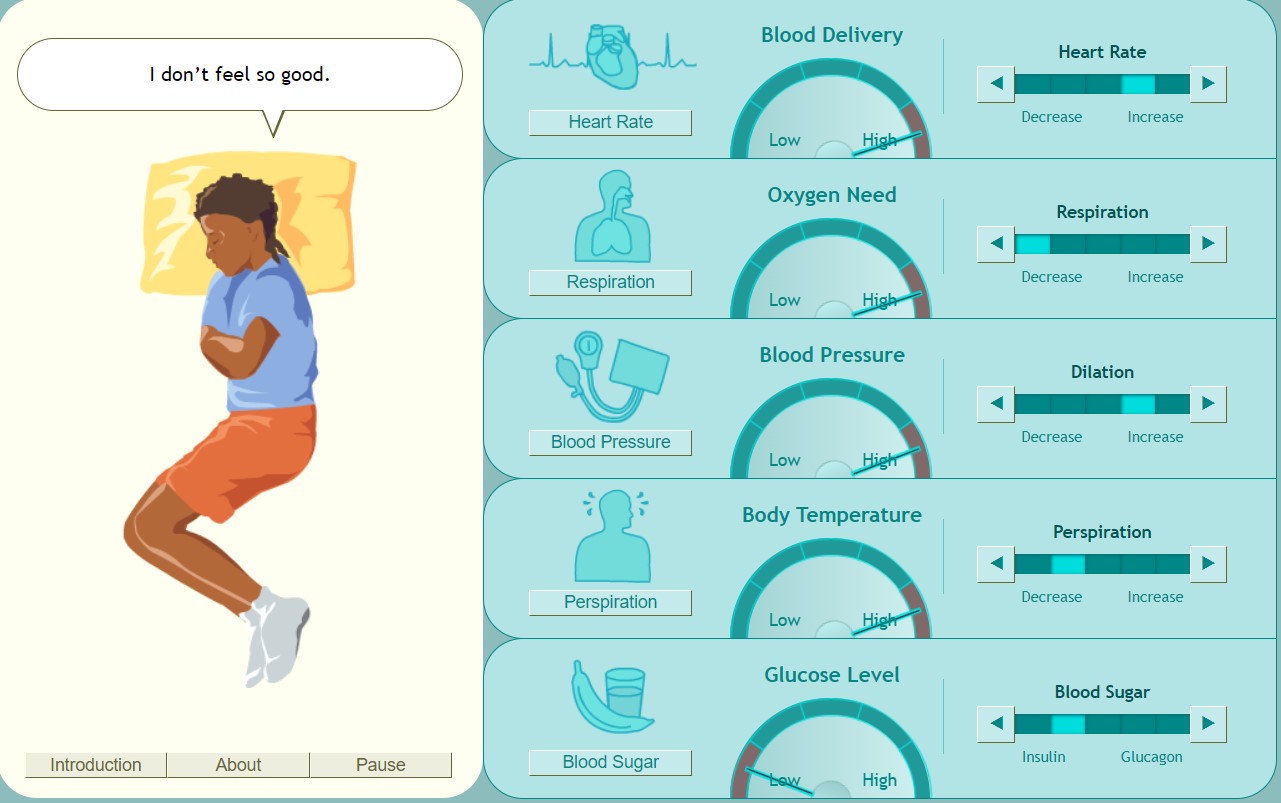

4. After you have launced the interactive, click on each of the 5 body functions to learn more about how these work.
10

What did you think about trying to keep the person in normal range for each of their functions? Was it difficult or easy to make adjustments?

What are some ways your body adjusts to keep your internal systems in balance?

2

This is the only assignment for Unit 2. We'll begin learning about the Skeletal system next. I know this unit is fast and it is meant to be a brief overview of things you learn in detail in Biology.

How are you feeling about Anatomy & Physiology so far? Are you learning new information or is this mostly a review of material you've learned before?

Do you need help going back through any Unit 1 assignments to make corrections?