Use the Graph to answer the question
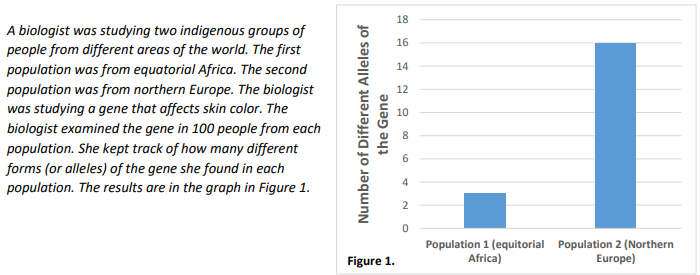
Which Population has the most genetic variation? Population 1? or Population 2?
Use the Graph to answer the question
Which Population has the most genetic variation? Population 1? or Population 2?
In this assignment we will watch The Biology of Skin Color video and answer questions related to the functions of the Integumentary system.
We will watch the video together during class time so that I can pause and explain some of the topics but I have also included the same video below in this assignment. All of the information needed to answer the questions correctly is found in the video but feel free to watch the class recording for additional clarification and discussion with classmates.
Here is a link to the class recording for this lesson- it includes an explanation for each of the following questions- I will update with this year's recording link after we go through this lesson together in class.
Here is a link to the class recording from 10/27/23
If you travel north from the equator, what happens to the intensity of the ultraviolet light?
Rickets is a disease caused by vitamin D deficiency. Humans make vitamin D from exposure to the sun.
Which population would you expect to be most at risk for developing rickets?
What is a potential risk associated with light skinned people living in areas near the equator?
What is a potential risk associated with dark skinned people living in areas far north of the equator?
Use the Graph to answer the question
Which Population has the most genetic variation? Population 1? or Population 2?
Below are two videos that address handwashing procedures for those who work in a surgical setting.
The first video looks at the use of hand sanitizer while the second is a traditional soap and water wash using a surgical scrub sponge.
Watch both videos in order to respond to the questions that follow.
You can visit this link to explore different careers that involve work inside of an operating room and see the education required to get there. This link explains job duties and shows average salaries for each job.
Based on the information you saw in the handwashing videos and our discussion during class time:
Why is it important for every member of a surgical team to follow such strict scrub procedures?
Does knowing this make you more or less interested in a career in a surgical setting? Why or why not?
According to the Nursing Skills textbook Appendix A, linked here, what is the correct order of steps for using Hand Sanitizer.
Rub your fingertips against the palm of the opposite hand
Rub hands together, covering all surfaces of hands and fingers with antiseptic until alcohol is dry (a minimum of 30 seconds):
Back of right and left hand (fingers interlaced)
Rub hands palm to palm
Palm to palm with fingers interlaced
Rotational rubbing of left and right thumbs
Apply enough product into the palm of one hand to cover hands thoroughly.
Rub your wrists
Remove rings/watches and push sleeves above wrists
Based on the film, which of the following statements best describes the pigments in a red tomato?