Log in
Sign up for FREE
arrow_back
Library
4 NOTAS / NOTES - 1.1 ESTAR con adjetivos y condiciones
By Nancy Castro
star
star
star
star
star
Share
share
Last updated about 1 hour ago
13 questions
Add this activity
Note from the author:
Instructions
zoom_in
Required
1
Required
1
Question 2
2.
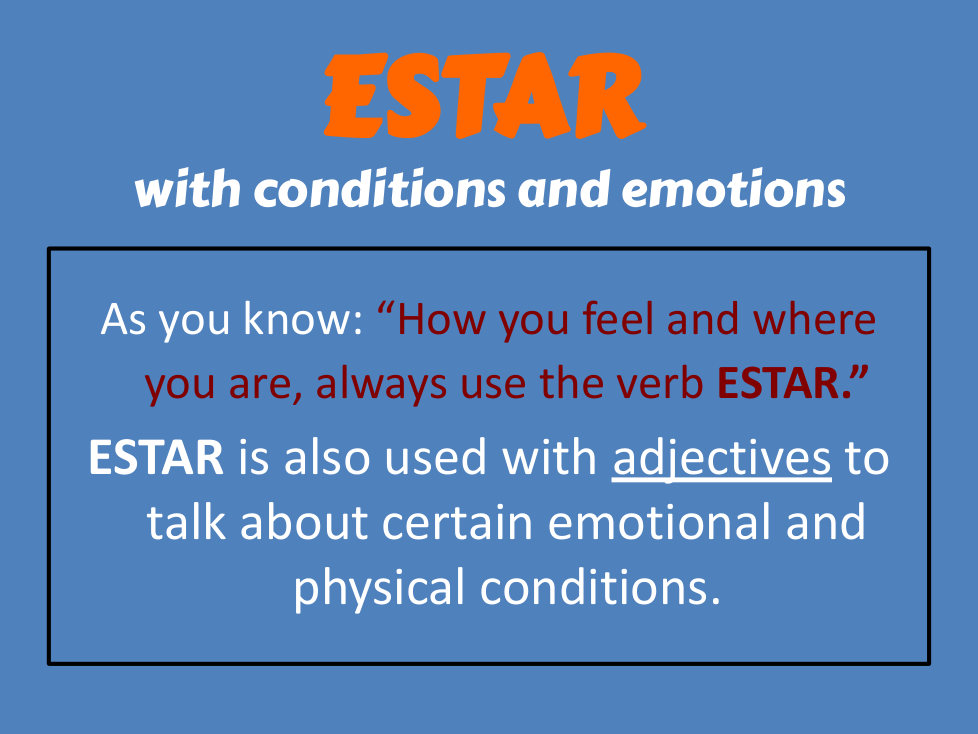
“How you _______ and where you _______ , always use the verb ESTAR.”
zoom_in
Required
1
Required
1
Question 4
4.
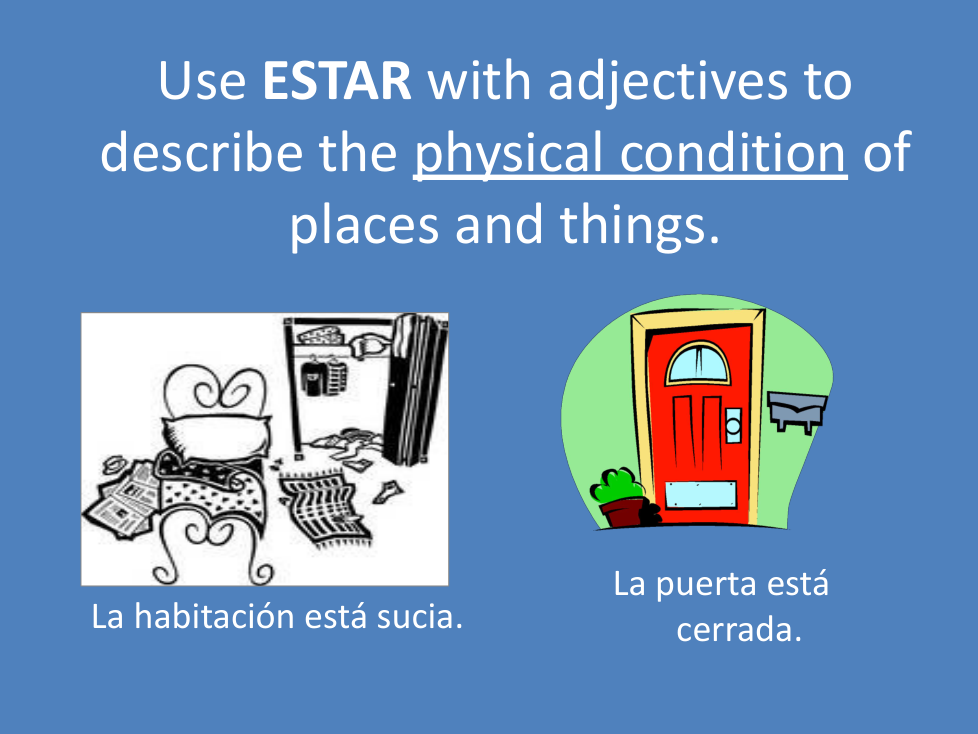
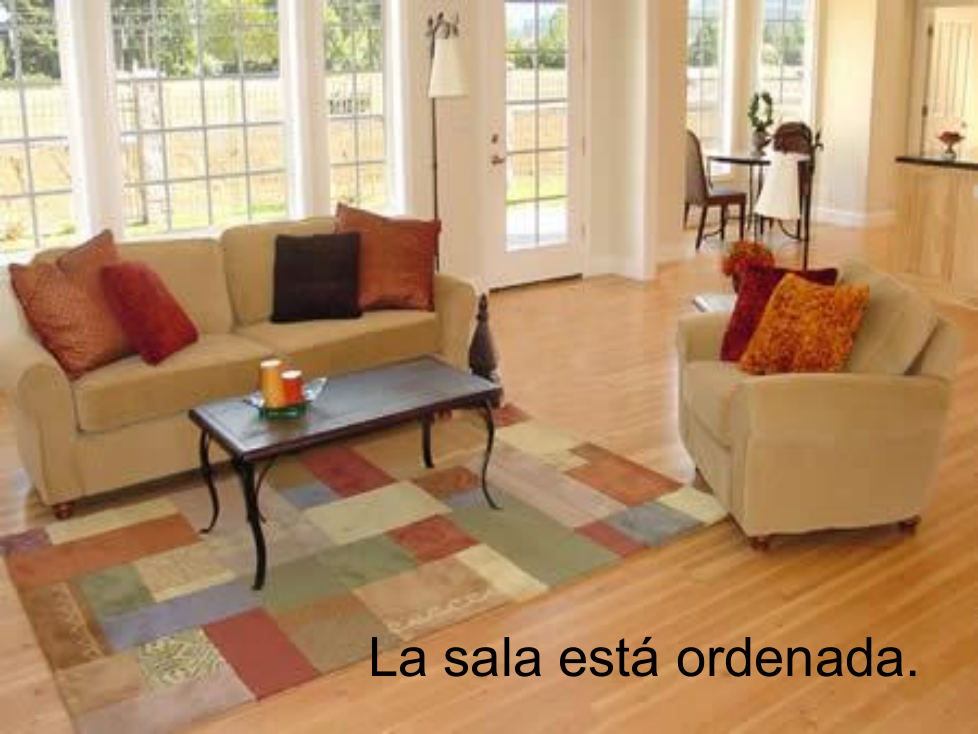
Give an example from the slide where a place is described using
estar
. (ó, á)
zoom_in
Required
1
Required
1
Question 6
6.
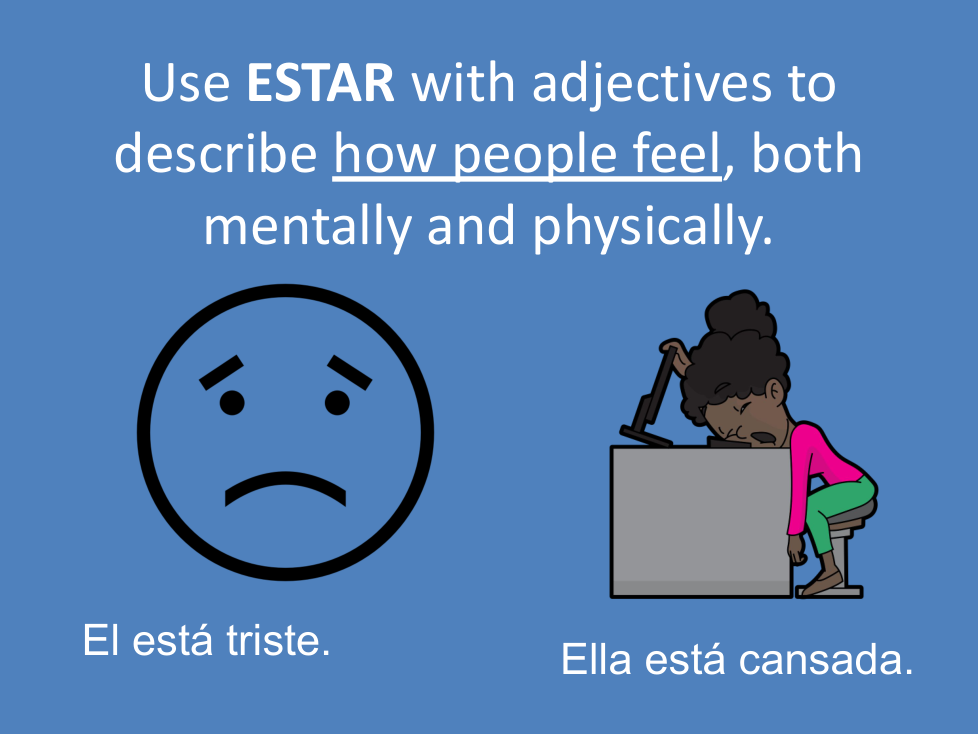
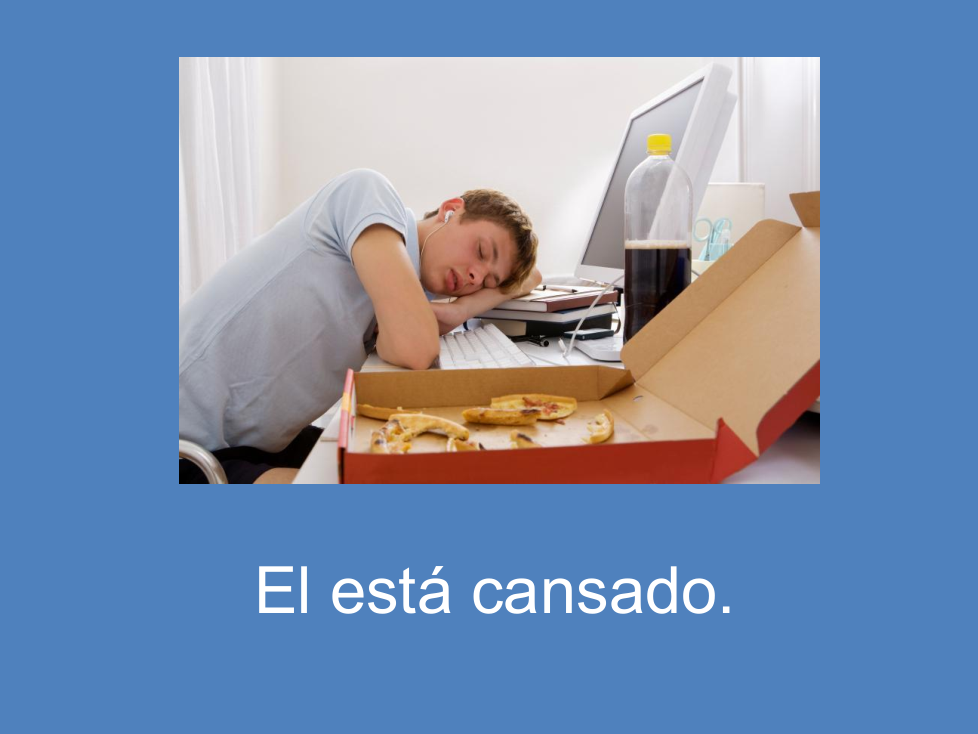
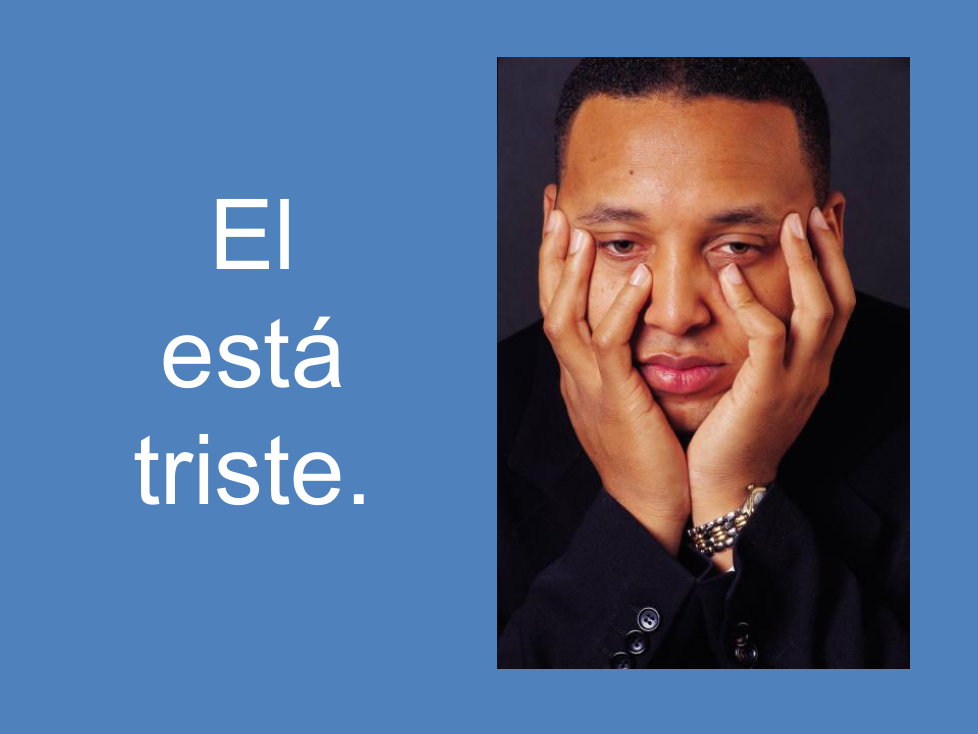
Write one example from the slide showing how a person feels. (É,á)
zoom_in
Required
1
Required
1
Question 8
8.
Translate:
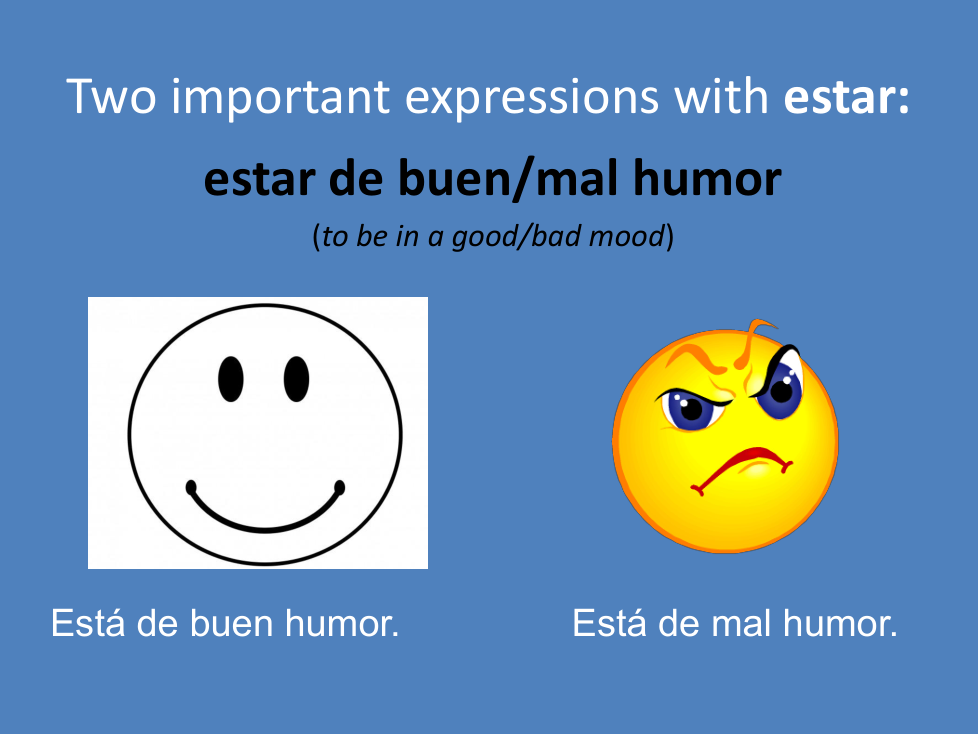
“Está de buen humor”
into English.
Required
1
zoom_in
zoom_in
zoom_in
Required
1
Question 10
10.
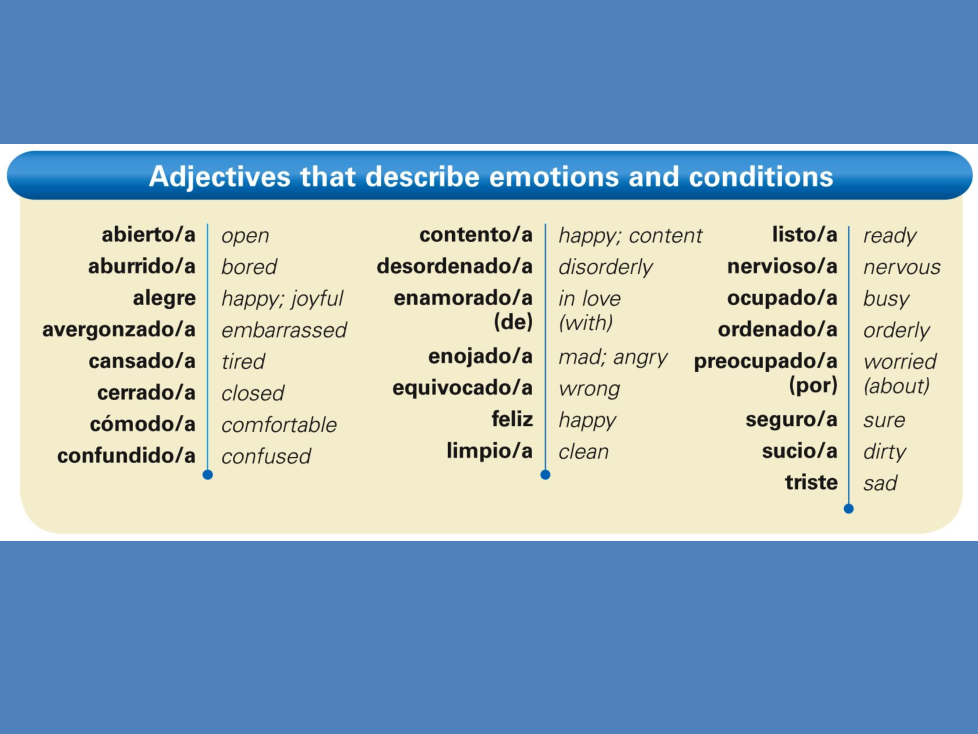
How do you say bored in Spanish?
zoom_in
zoom_in
Required
1
Question 11
11.
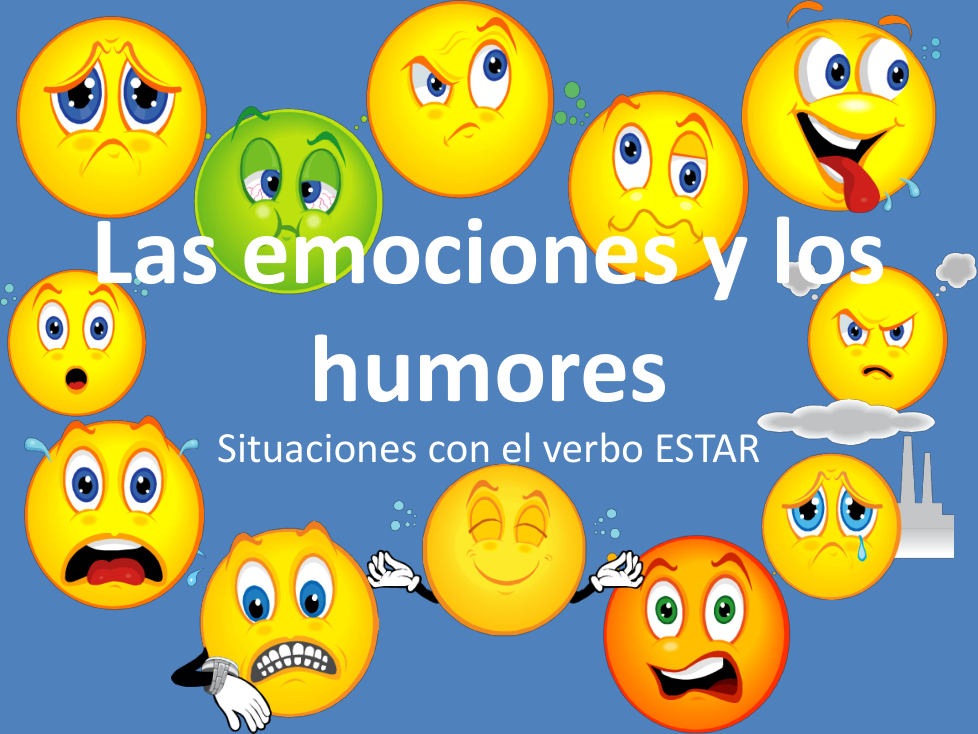
How is Donald Duck feeling in the slide? Answer in Spanish.
zoom_in
zoom_in
zoom_in
Required
1
Question 12
12.
How do we describe Garfield’s room using
estar
? Answer in Spanish. (á)
zoom_in
zoom_in
zoom_in
zoom_in
Required
1
Question 13
13.
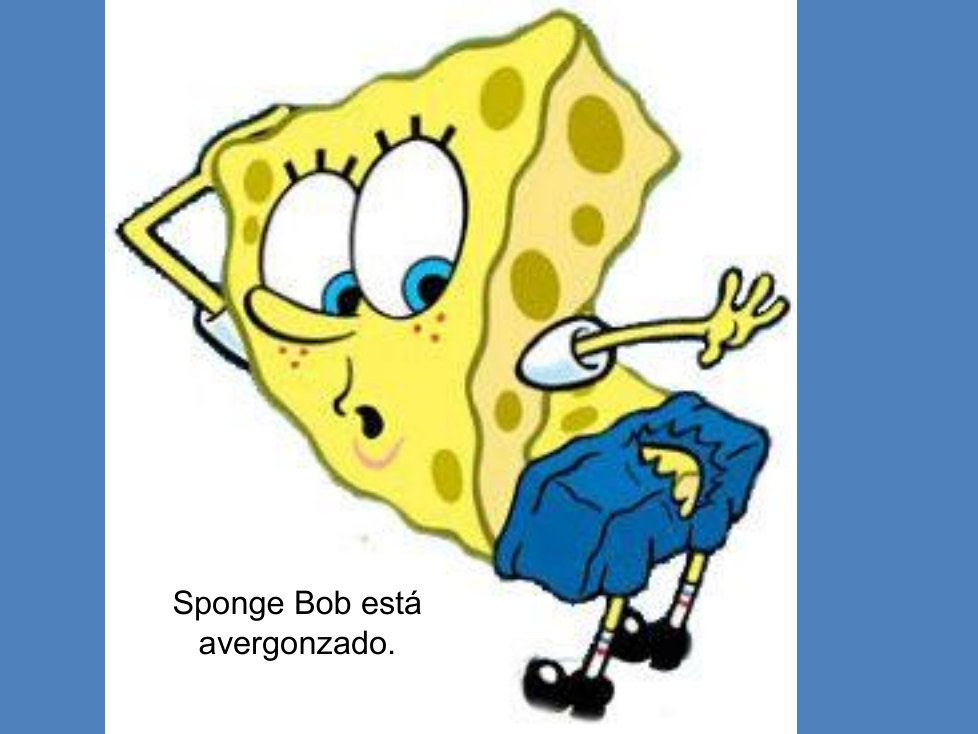
Which word is used to describe SpongeBob’s emotion? Answer in Spanish.
zoom_in
zoom_in
zoom_in
zoom_in
zoom_in
zoom_in
zoom_in
zoom_in
zoom_in
zoom_in
zoom_in
zoom_in
Question 1
1.
Question 3
3.
Question 5
5.
Question 7
7.
Question 9
9.
Translate:
“Está de mal humor”
into English.
What situations do we use the verb
estar
for?
a) To describe permanent traits and characteristics
b) To express time, origin, and identity
c) To express how you feel and where you are
d) To describe professions and nationalities
How do we use
estar
with adjectives to describe places and things?
a) To show permanent characteristics of places and things
b) To describe the physical condition of places and things
c) To identify ownership of places and things
d) To state the nationality of places and things
How do we use
estar
with adjectives to describe people?
a) To describe their permanent personality traits
b) To describe their occupations and origins
c) To describe how people feel mentally and physically
d) To describe their physical appearance permanently
What are the two important expressions with
estar
introduced on this slide?
a) Estar cansado / estar feliz
b) Estar de buen humor / estar de mal humor
c) Estar en casa / estar en la escuela
d) Estar alto / estar bajo