Unit # 8 Test on Evolution

Last updated 6 months ago
43 questions
Required
1

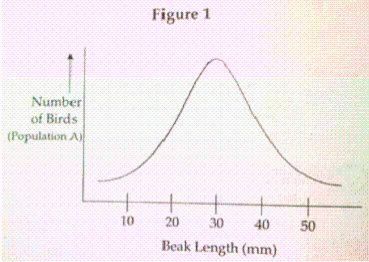
A population of birds (Population A) on a remote, isolated island is studied to determine beak length. The resulting data are plotted in Figure 1.

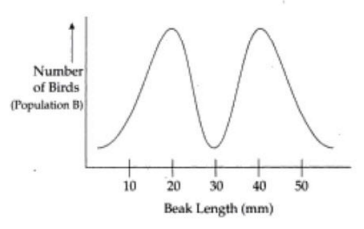
Suppose that 200 years later, the beaks of the birds on the island were again measured (Population B). The data, when plotted, yielded a graph as in Figure 2.


What is the most likely reason for the difference in distribution of beak lengths between the data plotted in Figure 1 and the data plotted in Figure 2?

Required
1

A population of birds (Population A) on a remote, isolated island is studied to determine beak length. The resulting data are plotted in Figure 1.


Suppose that 200 years later, the beaks of the birds on the island were again measured (Population B). The data, when plotted, yielded a graph as in Figure 2.


What is the average beak length (in cm) of the birds in Figure 1?

Required
1

In which of the following types of societies would genetic drift have the least likelihood of causing rapid evolution?

Required
1

Which group would most likely have the greatest survival success during a long period of environmental changes?

Required
1

A flock of one species of birds arrives on a group of sparsely populated islands. With little or no competition, different species of birds evolve from the original species. Each species is adapted to a different available niche. This is an example of

Required
1

According to most scientists, which sequence best represents the order of biological evolution on Earth?

Required
1

What situation might develop in a population having some plants whose flowers open at midday and other plants whose flowers open late in the day?

Required
1

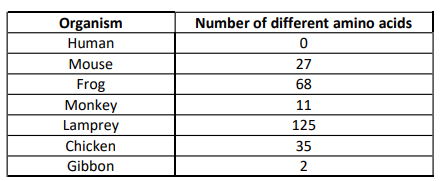
The following data table shows the number of different amino acids in the beta hemoglobin chain of various organisms compared to the human beta chain.


To which of the following organisms are humans most closely related, based on hemoglobin amino acid sequence?

Required
1

Human hemoglobin and gorilla hemoglobin is even more closely related than the organisms shown above; they differ by only a single amino acid. Yet humans and gorillas are considered to be separate species. This is because

Required
1

The Giant Anteater of South America, the Giant Armadillo of North America, the Giant Pangolin of Africa, and the Spiny Anteater of Oceania share many characteristics. They all eat ants, have long narrow snouts, few teeth, and large salivary glands, yet they do not share a common ancestor. This is an example of which of the following?

Required
1

Modern sea star larvae resemble some primitive vertebrate larvae. This similarity may suggest that primitive vertebrates

Required
1

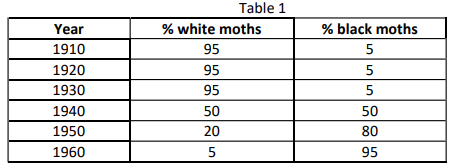
In 1910, a small town on the East Coast of the United States relied primarily on agriculture to support its economy. In the mid-1930s, a steel mill was built, and the economy shifted from being agriculturally supported to being industrially supported. The steel mill released a lot of smog and soot into the air, which collected on the bark of trees in a wooded area near the outskirts of town. Over a period of 10 years the bark gradually darkened, then maintained a constant dark color.

A variety of animals and insects lived in the wooded area. In particular, a certain species of moth served as the primary food source for a population of birds. The moths lay their eggs in the bark of the trees and, thus, must spend a fair amount of time sitting on the tree trunks. Table 1 presents data on the moth population.


If a seed from one of the trees was planted in an area far from the steel mill, what color would the bark of the tree be?

Required
1

The wings of the moths and the wings of the birds are both used for flight; however, their underlying structures are very different. Moth wings and bird wings are thus classified as

Required
1

Birds track their prey visually, while bats rely on sonar to locate their food. If the bird population were replaced with a bat population in 1940, what would be the ratio of white moths to black moths?

Required
1

What is the most likely explanation for the shift in the percentage of black moths in the population?

Required
1

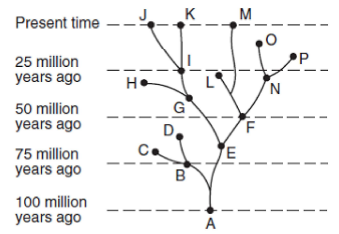
Which species is most closely related to species L? Base your answer using the diagram.

Required
1

According to the Hardy-Weinberg principle, genetic equilibrium would be more likely in a population of mice if

Required
1

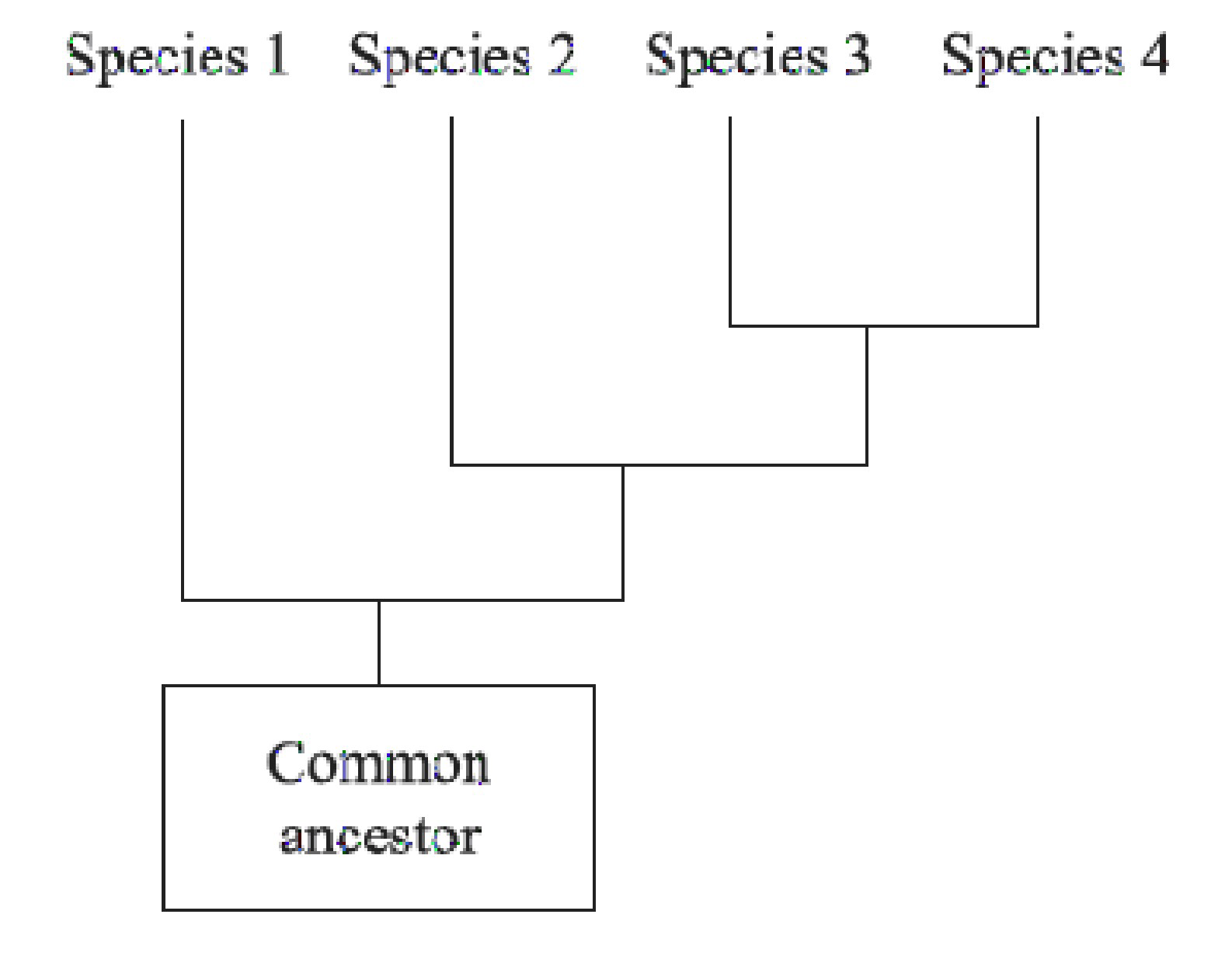
Based on the cladogram below, which statement must be true?

Required
1

Situation 1: A species of moth is preyed on by bats. Over hundreds and hundreds of years, the moths develop a sophisticated pattern of flying when they hear the screech of a bat. This helps them escape danger. Other changes occur as well, and when an attempt is made to mate the current moth with its ancestor moth, no viable eggs are produced.

Situation 2: A species of frogs is living in a pond near an earthquake fault line. A sizable earthquake separates the frog population into two separate populations. After hundreds and hundreds of years, the two groups are unable to mate.

Another term used to describe what happened in Situation 2 is

Required
1

Situation 1: A species of moth is preyed on by bats. Over hundreds and hundreds of years, the moths develop a sophisticated pattern of flying when they hear the screech of a bat. This helps them escape danger. Other changes occur as well, and when an attempt is made to mate the current moth with its ancestor moth, no viable eggs are produced.

Situation 2: A species of frogs is living in a pond near an earthquake fault line. A sizable earthquake separates the frog population into two separate populations. After hundreds and hundreds of years, the two groups are unable to mate.

A similarity between Situation 1 and Situation 2 is

Required
1

Situation 1: A species of moth is preyed on by bats. Over hundreds and hundreds of years, the moths develop a sophisticated pattern of flying when they hear the screech of a bat. This helps them escape danger. Other changes occur as well, and when an attempt is made to mate the current moth with its ancestor moth, no viable eggs are produced.

Situation 2: A species of frogs is living in a pond near an earthquake fault line. A sizable earthquake separates the frog population into two separate populations. After hundreds and hundreds of years, the two groups are unable to mate.

Another term used to describe what happened in Situation 1 is

Required
1

Situation 1: A species of moth is preyed on by bats. Over hundreds and hundreds of years, the moths develop a sophisticated pattern of flying when they hear the screech of a bat. This helps them escape danger. Other changes occur as well, and when an attempt is made to mate the current moth with its ancestor moth, no viable eggs are produced.

Situation 2: A species of frogs is living in a pond near an earthquake fault line. A sizable earthquake separates the frog population into two separate populations. After hundreds and hundreds of years, the two groups are unable to mate.

Consider Situation 2. Because the two groups of frogs are unable to mate, they are now considered to be different

Required
1

A tree frog population lives in the canopy of a tropical rain forest. In this tree frog population, a mutation occurs that results in a new allele for skin coloration causing stripes on their legs. Which of the following factors has the greatest effect on whether leg stripes will become more common in the tree frog population?

Required
1

A silkworm farmer’s entire population of silkworm larvae was infected with a deadly strain of bacteria. He treats the silkworms with an antibiotic spray that kills 99% of the bacteria. A month later, the silkworm farm is once again infected with the bacteria. The farmer treats the larvae with the antibiotic spray once more. This time only 50% of the bacteria are killed. Which statement best describes why the antibiotic is not as effective the second time?

Required
1

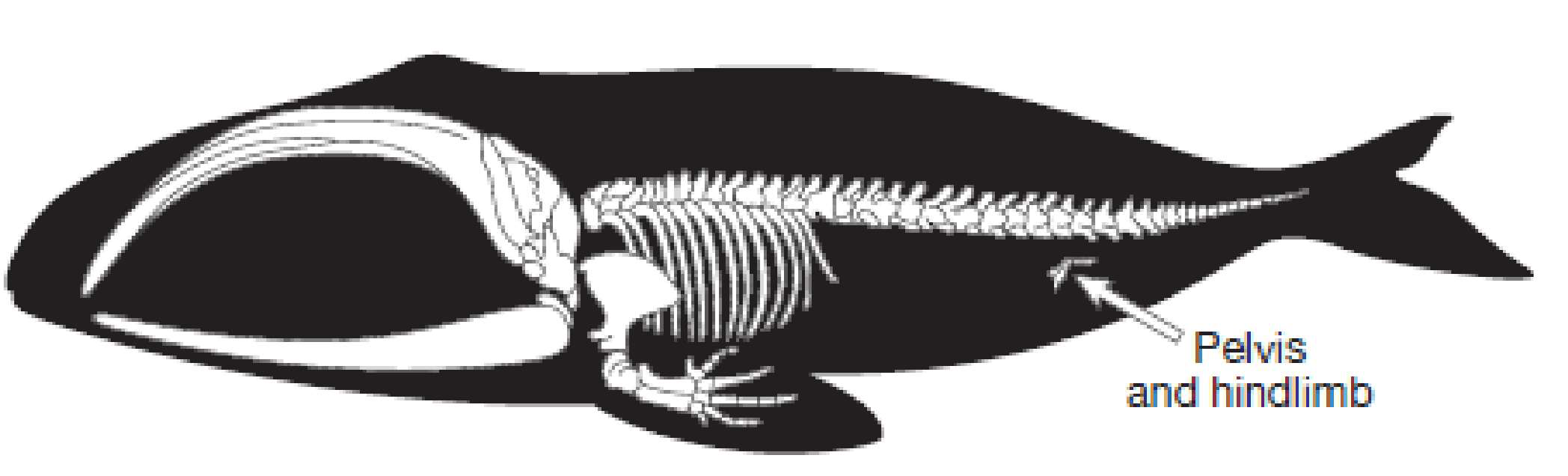
Some whale species have pelvic and upper and lower limb bones as shown in the illustration below.


These bones are greatly reduced in size and do not appear to play a role in the whale’s motion. What is the most likely explanation for the presence of these bones in modern-day whales?

Required
1

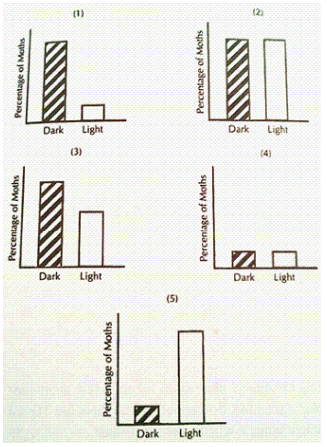
There are two forms of the peppered moth ( Biston betularia), one dark in color and one light. Scientists observed that in the industrial area of Manchester, England, the originally prominent light form was replaced by the dark form between the years 1848 and 1895. At first, there were only light forms; later, the dark form comprised 98 percent of the total population.

A scientist explained this evolutionary change as follows: The moths rest on tree trunks during the day, and through their protective coloration avoid being seen and eaten by insectivorous birds. In the earlier years, before 1848, any dark form were conspicuous on the light-colored tree trunks and were easily found by birds. With the coming of many factories after 1848, tree trunks became blackened by the soot given off in chimney smoke. Then the dark forms of moths resembled the background more closely, while the light forms stood out and were easily seen, and eaten, by the birds.

Use the graphs shown to answer the following questions.


Which graph represents the moth population after the coming of the factories?

Required
1

There are two forms of the peppered moth ( Biston betularia), one dark in color and one light. Scientists observed that in the industrial area of Manchester, England, the originally prominent light form was replaced by the dark form between the years 1848 and 1895. At first, there were only light forms; later, the dark form comprised 98 percent of the total population.

A scientist explained this evolutionary change as follows: The moths rest on tree trunks during the day, and through their protective coloration avoid being seen and eaten by insectivorous birds. In the earlier years, before 1848, any dark form were conspicuous on the light-colored tree trunks and were easily found by birds. With the coming of many factories after 1848, tree trunks became blackened by the soot given off in chimney smoke. Then the dark forms of moths resembled the background more closely, while the light forms stood out and were easily seen, and eaten, by the birds.

Use the graphs shown to answer the following questions.

Which graph represents the original populations of the peppered moth?

Required
1

There are two forms of the peppered moth ( Biston betularia), one dark in color and one light. Scientists observed that in the industrial area of Manchester, England, the originally prominent light form was replaced by the dark form between the years 1848 and 1895. At first, there were only light forms; later, the dark form comprised 98 percent of the total population.

A scientist explained this evolutionary change as follows: The moths rest on tree trunks during the day, and through their protective coloration avoid being seen and eaten by insectivorous birds. In the earlier years, before 1848, any dark form were conspicuous on the light-colored tree trunks and were easily found by birds. With the coming of many factories after 1848, tree trunks became blackened by the soot given off in chimney smoke. Then the dark forms of moths resembled the background more closely, while the light forms stood out and were easily seen, and eaten, by the birds.

Use the graphs shown to answer the following questions.


What question would scientists need to answer in order to determine whether the two forms, light and dark, of the moth have become different species?

Required
1

There are two forms of the peppered moth ( Biston betularia), one dark in color and one light. Scientists observed that in the industrial area of Manchester, England, the originally prominent light form was replaced by the dark form between the years 1848 and 1895. At first, there were only light forms; later, the dark form comprised 98 percent of the total population.

A scientist explained this evolutionary change as follows: The moths rest on tree trunks during the day, and through their protective coloration avoid being seen and eaten by insectivorous birds. In the earlier years, before 1848, any dark form were conspicuous on the light-colored tree trunks and were easily found by birds. With the coming of many factories after 1848, tree trunks became blackened by the soot given off in chimney smoke. Then the dark forms of moths resembled the background more closely, while the light forms stood out and were easily seen, and eaten, by the birds.

Use the graphs shown to answer the following questions.


The rural area of Dorset, England, has no factories, and the tree trunks are light in color. In a scientific study, equal numbers of the dark and light forms of the moth were released into the area. Which graph represents the percentages of the surviving moths?

Required
1

Common baboons live on the savanna in breeding groups called troops. While females tend to stay with the troop, younger or less dominant males may leave to join a neighboring troop. Which of these is a likely outcome of movement by young males?

Required
1

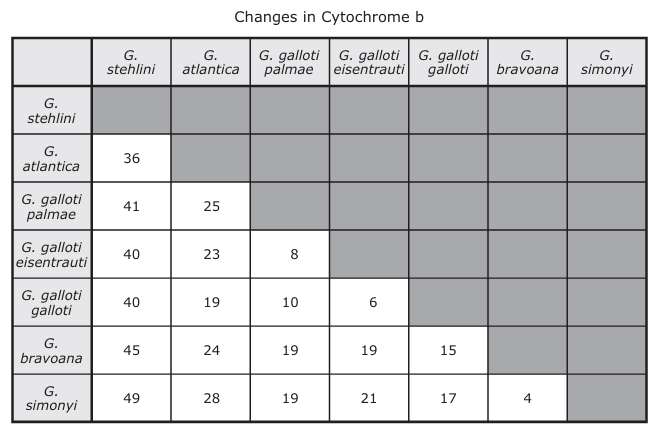
Researchers studying populations of lizards from the genus Gallotia on the Canary Islands compared the protein cytochrome b in different populations. The table shows the number of differences in the cytochrome b protein between different populations.


Which conclusion about the relatedness of the lizards do these data support?

Required
1

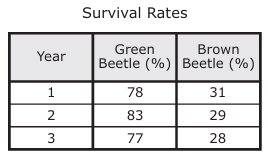
The table shows the survival rate of two types of beetles in the same environment over a period of three years.


Which statement about the beetles in this environment is best supported by the data?

Required
1

Photosynthesis and cellular respiration both involve the use and release of gases. Which statement correctly identifies the role of gases in the two processes?

Required
1

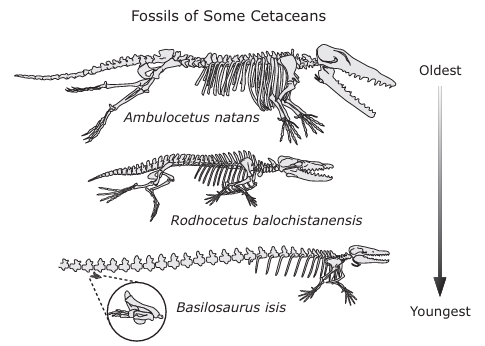
Cetaceans are whales and their relatives. The diagram shows some fossils of cetaceans.


Which statement provides the best evidence that Ambulocetus natans is an ancestor of Basilosaurus isis?

Required
1

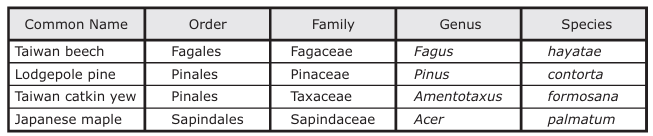
The classifications of four trees are shown in the table.


Which two trees are the most closely related?

Required
1

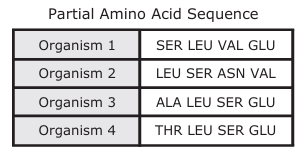
Scientists can determine relatedness among organisms by comparing partial amino acid sequences. The table shows four partial amino acid sequences from four organisms.


Which organism is the LEAST related to the other three organisms?

Required
1

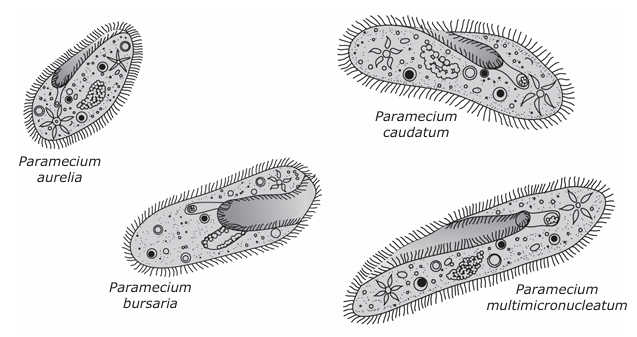
A student used a microscope to study four members of the phylum Ciliophora. Members of this phylum move when propelled by hundreds of tiny cilia.


Although these organisms belong to the same phylum, they are classified as different —

Required
1

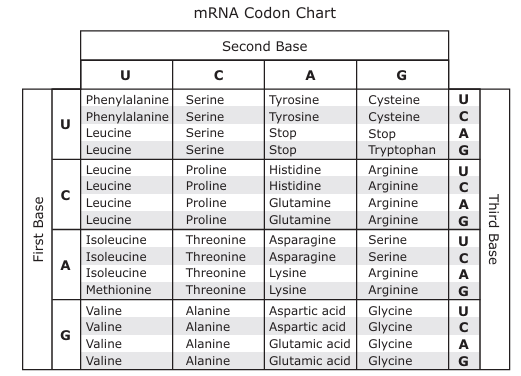
A sequence of a DNA template strand is shown.

3’ TCC AAT GGC TTA TTT GCA 5’


Which of these is the correct amino acid chain produced from the DNA template strand?

Required
1

Which list correctly identifies characteristics that protists share with animals?

Required
1

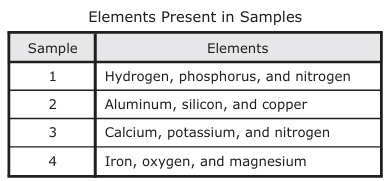
Students are given data from an investigation that identified some of the chemical elements present in four different samples.


Which sample was most likely DNA?

Required
1

Adaptations that result from natural selection are expected to increase the fitness of an organism. In terms of natural selection, which of the following best describes fitness?

Required
1

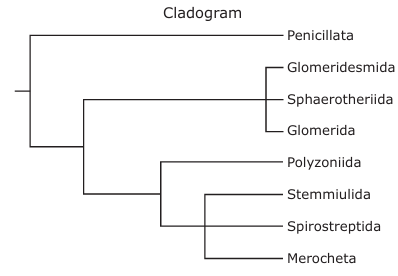
The relationships among different orders of millipedes are shown in the cladogram.


Based on this cladogram, which statement best describes relationships among millipede orders?

Required
1

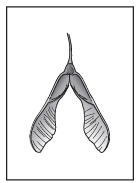
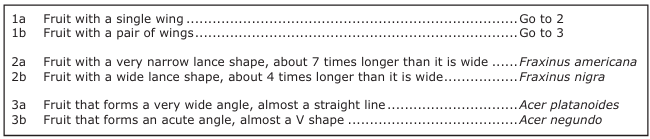
The diagram shows a dichotomous key and a picture of a fruit.


According to the key, the fruit comes from which species of tree?