Copy of Copy of Yellow Death 2 (6/23/2025)
star
star
star
star
star
Last updated about 1 year ago
17 Nsɛmmisa
Analyzing Crime Scene Details
Analyzing Informative Writing
Using Details to Elaborate
1
1
Deciding to Face the Monster
Homework
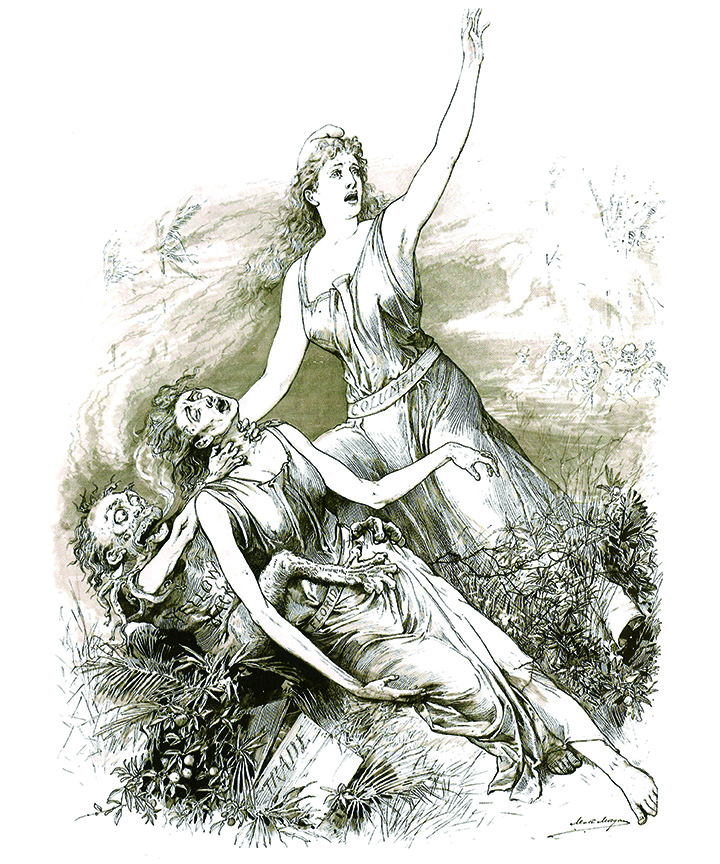
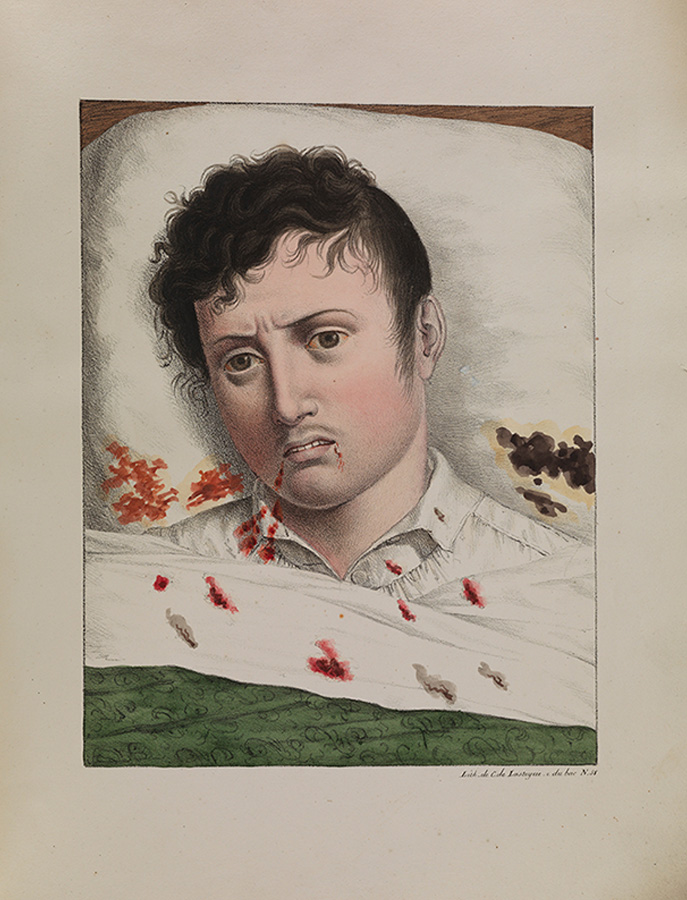
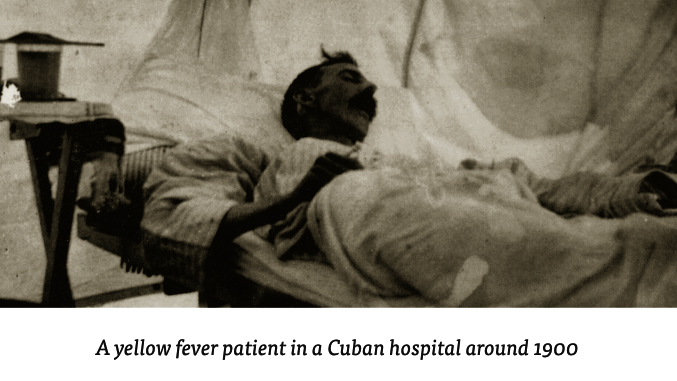
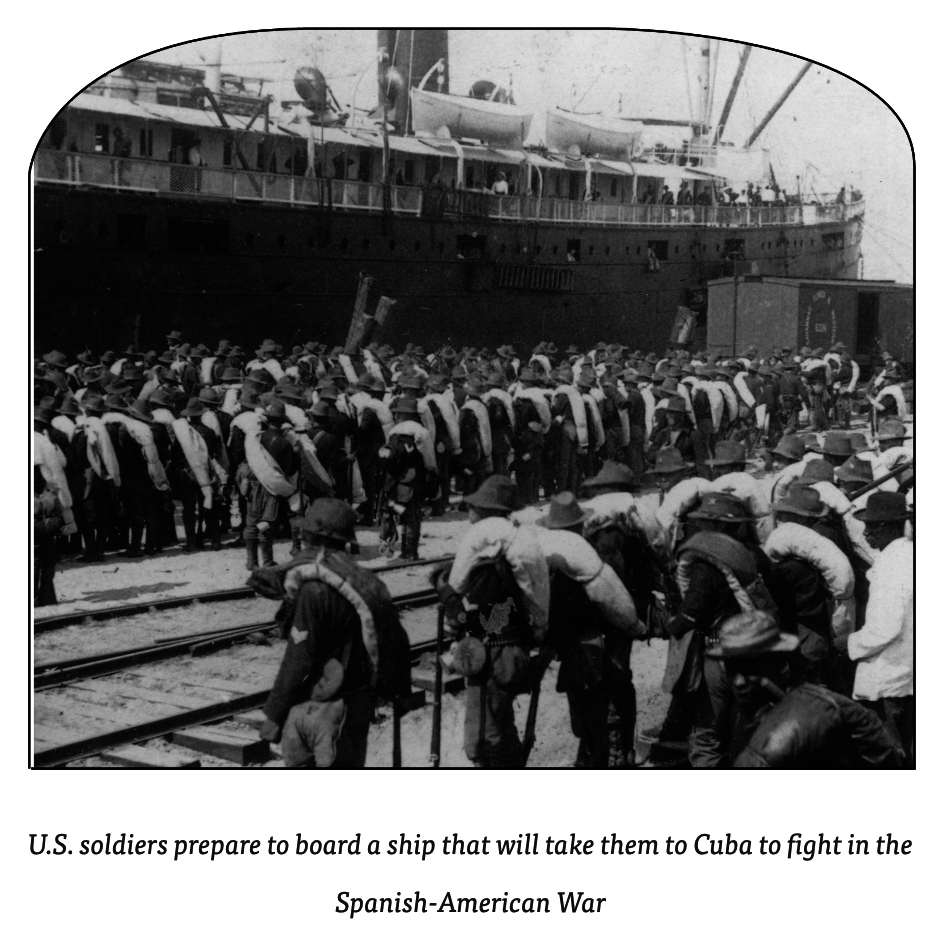
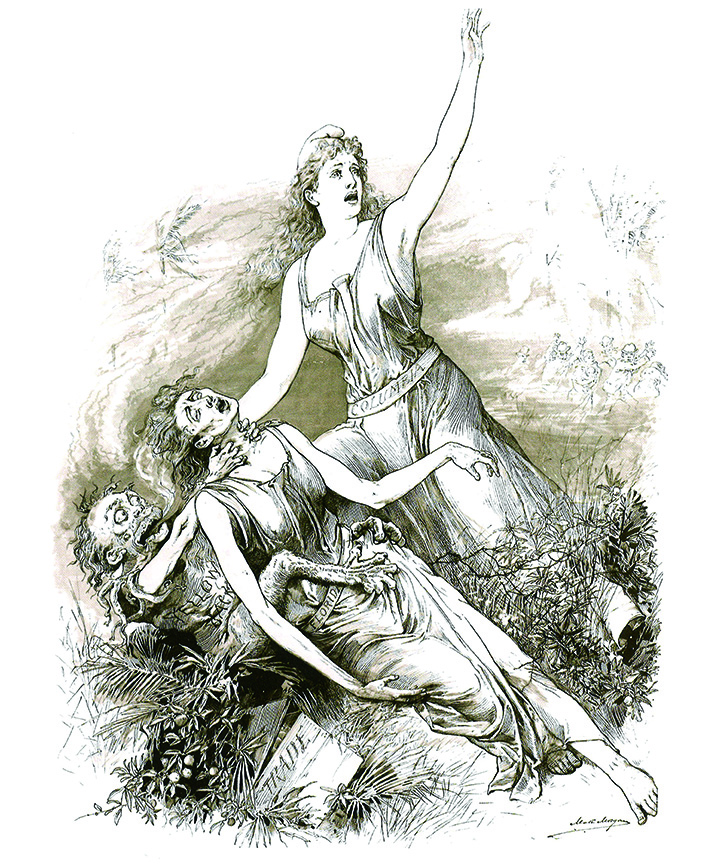
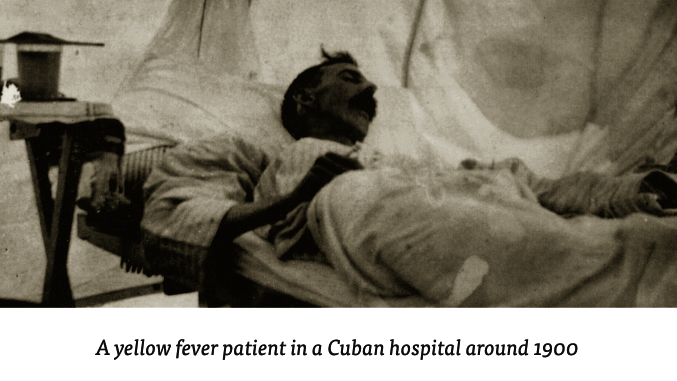
Write 1-2 sentences to describe what is going on in each image.
Describe two details that capture your attention or stand out to you in each image.
What idea or impression about yellow fever do these details give you?
Excerpt from Chapter 1 in The Secret of the Yellow Death by Suzanne Jurmain
1 Summer 1899 2 The young man didn’t feel well. First, there was the chill: an icy, bone-freezing chill in the middle of a warm summer evening. Then there was the terrible crushing headache. His back hurt. His stomach twisted with pain. And then he was hot, boiling hot, with a fever that hovered around 104 degrees. His skin turned yellow. The whites of his eyes looked like lemons. Nauseated, he gagged and threw up again and again, spewing streams of vomit black with digested clots of blood across the pillow. Sometimes he cried out or babbled in delirium. Violent spasms jolted his body. It took two grown men to hold him in his bed as a nurse wiped away the drops of blood that trickled from his nose and mouth. Nights and mornings passed. Then, five days after that first freezing chill, the young man died: another victim of a terrible disease called yellow fever. 3 Doctors didn’t know what caused it. They couldn’t cure it. But they knew that yellow fever was a killer. For centuries the disease had swept through parts of the Americas and Africa, leaving behind a trail of loss and misery. It turned cities into ghost towns and left the local graveyards filled with corpses. In New Orleans, Dr. Kennedy took sick and collapsed while he was tending patients. In Philadelphia, Dr. Hodge’s little girl caught the fever, turned yellow, and died in two short days. And when the sickness killed the Memphis snack shop woman Kate Bionda, she left behind her husband and two small children. The fever struck the rich. It struck the poor. It killed the humble, and it humbled the important. Jefferson Davis, president of the Confederate States of America during the U.S. Civil War, lost his son to yellow fever. George Clymer, who’d signed the Declaration of Independence, watched helplessly as the sickness struck his wife and family. And every single year the illness took its toll. In 1793, 4,044 people in Philadelphia died during a plague of yellow fever. New Orleans counted 8,101 yellow fever deaths in 1853. And when the disease hit Memphis, Tennessee, in 1878, 17,000 citizens sickened in a single month. Stores closed. Work stopped. Thousands fled, and those who remained wandered through a nightmare city—where sick children huddled next to dying parents and hungry dogs roamed the silent streets searching for their lost dead masters. 4 “Yellow fever [is] . . . an enemy which imperils life and cripples commerce and industry,” Surgeon General John Woodworth told the U.S. Congress in 1879. And he was right. In one single century—between 1800 and 1900—the disease sickened approximately 500,000 U.S. citizens and killed about 100,000.
Copy and paste a place that grabbed your attention.
Excerpt from Chapter 1 in The Secret of the Yellow Death by Suzanne Jurmain
1 Summer 1899 2 The young man didn’t feel well. First, there was the chill: an icy, bone-freezing chill in the middle of a warm summer evening. Then there was the terrible crushing headache. His back hurt. His stomach twisted with pain. And then he was hot, boiling hot, with a fever that hovered around 104 degrees. His skin turned yellow. The whites of his eyes looked like lemons. Nauseated, he gagged and threw up again and again, spewing streams of vomit black with digested clots of blood across the pillow. Sometimes he cried out or babbled in delirium. Violent spasms jolted his body. It took two grown men to hold him in his bed as a nurse wiped away the drops of blood that trickled from his nose and mouth. Nights and mornings passed. Then, five days after that first freezing chill, the young man died: another victim of a terrible disease called yellow fever. 3 Doctors didn’t know what caused it. They couldn’t cure it. But they knew that yellow fever was a killer. For centuries the disease had swept through parts of the Americas and Africa, leaving behind a trail of loss and misery. It turned cities into ghost towns and left the local graveyards filled with corpses. In New Orleans, Dr. Kennedy took sick and collapsed while he was tending patients. In Philadelphia, Dr. Hodge’s little girl caught the fever, turned yellow, and died in two short days. And when the sickness killed the Memphis snack shop woman Kate Bionda, she left behind her husband and two small children. The fever struck the rich. It struck the poor. It killed the humble, and it humbled the important. Jefferson Davis, president of the Confederate States of America during the U.S. Civil War, lost his son to yellow fever. George Clymer, who’d signed the Declaration of Independence, watched helplessly as the sickness struck his wife and family. And every single year the illness took its toll. In 1793, 4,044 people in Philadelphia died during a plague of yellow fever. New Orleans counted 8,101 yellow fever deaths in 1853. And when the disease hit Memphis, Tennessee, in 1878, 17,000 citizens sickened in a single month. Stores closed. Work stopped. Thousands fled, and those who remained wandered through a nightmare city—where sick children huddled next to dying parents and hungry dogs roamed the silent streets searching for their lost dead masters. 4 “Yellow fever [is] . . . an enemy which imperils life and cripples commerce and industry,” Surgeon General John Woodworth told the U.S. Congress in 1879. And he was right. In one single century—between 1800 and 1900—the disease sickened approximately 500,000 U.S. citizens and killed about 100,000.
What are two details that illustrate how yellow fever is presented to the reader.
What are the techniques the author uses to introduce yellow fever to the reader?
Which detail from chapter 1 best illustrates the depiction of yellow fever as “an enemy which imperils life and cripples commerce and industry” (4)?
Raise your hand if...
you have ever felt really sick before.
the description of the man with yellow fever sounded awful.
you think that yellow fever sounds dangerous.
you think it’s important to find a cure for yellow fever.
you think investigating yellow fever would be risky.
Excerpt from Chapter 1 in The Secret of the Yellow Death by Suzanne Jurmain
1 Summer 1899
2 The young man didn’t feel well. First, there was the chill: an icy, bone-freezing chill in the middle of a warm summer evening. Then there was the terrible crushing headache. His back hurt. His stomach twisted with pain. And then he was hot, boiling hot, with a fever that hovered around 104 degrees. His skin turned yellow. The whites of his eyes looked like lemons. Nauseated, he gagged and threw up again and again, spewing streams of vomit black with digested clots of blood across the pillow. Sometimes he cried out or babbled in delirium. Violent spasms jolted his body. It took two grown men to hold him in his bed as a nurse wiped away the drops of blood that trickled from his nose and mouth. Nights and mornings passed. Then, five days after that first freezing chill, the young man died: another victim of a terrible disease called yellow fever.
3 Doctors didn’t know what caused it. They couldn’t cure it. But they knew that yellow fever was a killer. For centuries the disease had swept through parts of the Americas and Africa, leaving behind a trail of loss and misery. It turned cities into ghost towns and left the local graveyards filled with corpses. In New Orleans, Dr. Kennedy took sick and collapsed while he was tending patients. In Philadelphia, Dr. Hodge’s little girl caught the fever, turned yellow, and died in two short days. And when the sickness killed the Memphis snack shop woman Kate Bionda, she left behind her husband and two small children. The fever struck the rich. It struck the poor. It killed the humble, and it humbled the important. Jefferson Davis, president of the Confederate States of America during the U.S. Civil War, lost his son to yellow fever. George Clymer, who’d signed the Declaration of Independence, watched helplessly as the sickness struck his wife and family. And every single year the illness took its toll. In 1793, 4,044 people in Philadelphia died during a plague of yellow fever. New Orleans counted 8,101 yellow fever deaths in 1853. And when the disease hit Memphis, Tennessee, in 1878, 17,000 citizens sickened in a single month. Stores closed. Work stopped. Thousands fled, and those who remained wandered through a nightmare city—where sick children huddled next to dying parents and hungry dogs roamed the silent streets searching for their lost dead masters.
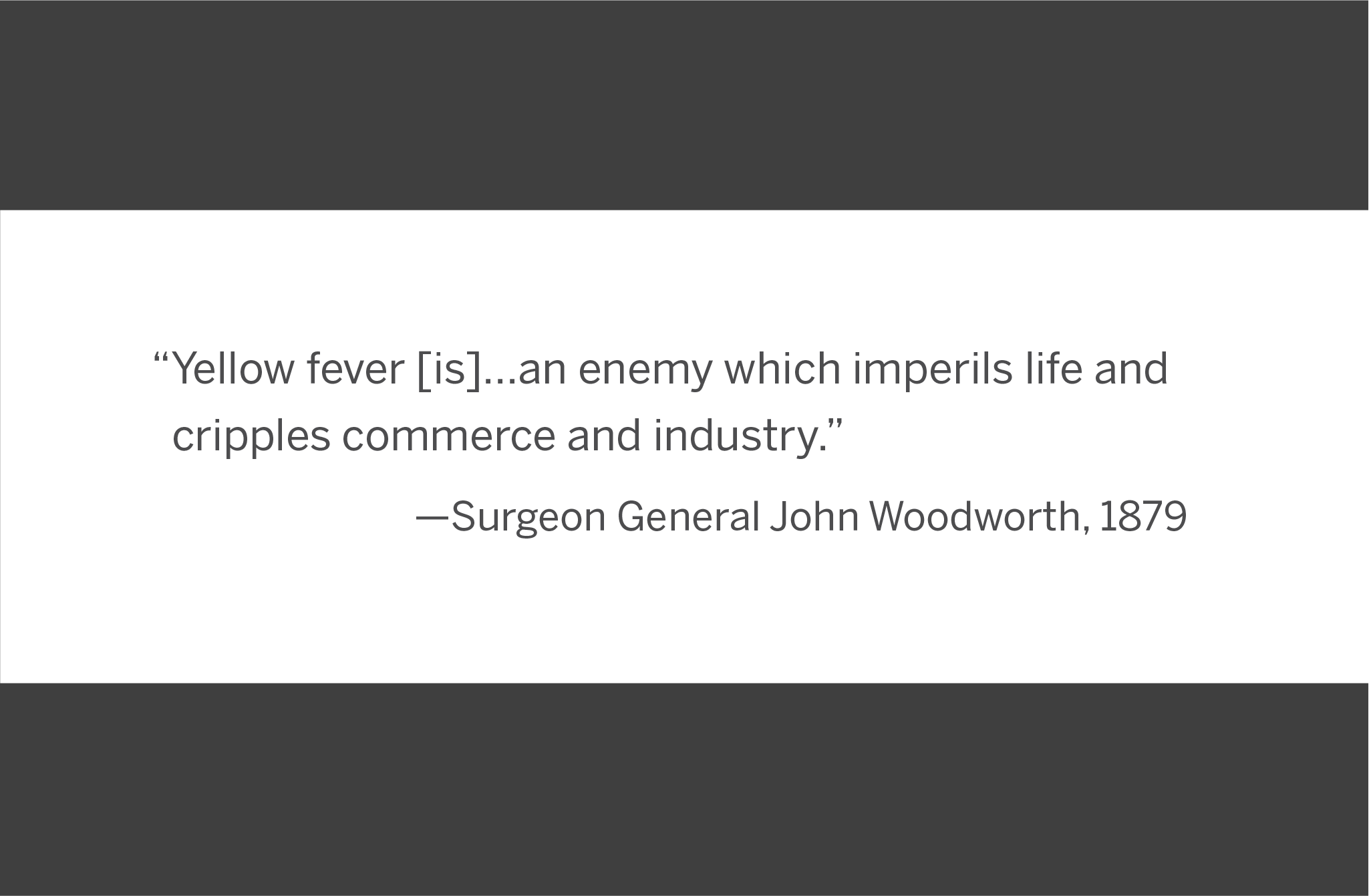
4 “Yellow fever [is] . . . an enemy which imperils life and cripples commerce and industry,” Surgeon General John Woodworth told the U.S. Congress in 1879. And he was right. In one single century—between 1800 and 1900—the disease sickened approximately 500,000 U.S. citizens and killed about 100,000.
Would you volunteer to travel to a place with yellow fever to investigate the cause of the disease? Describe two details from the text that impact your decision to go or not go.
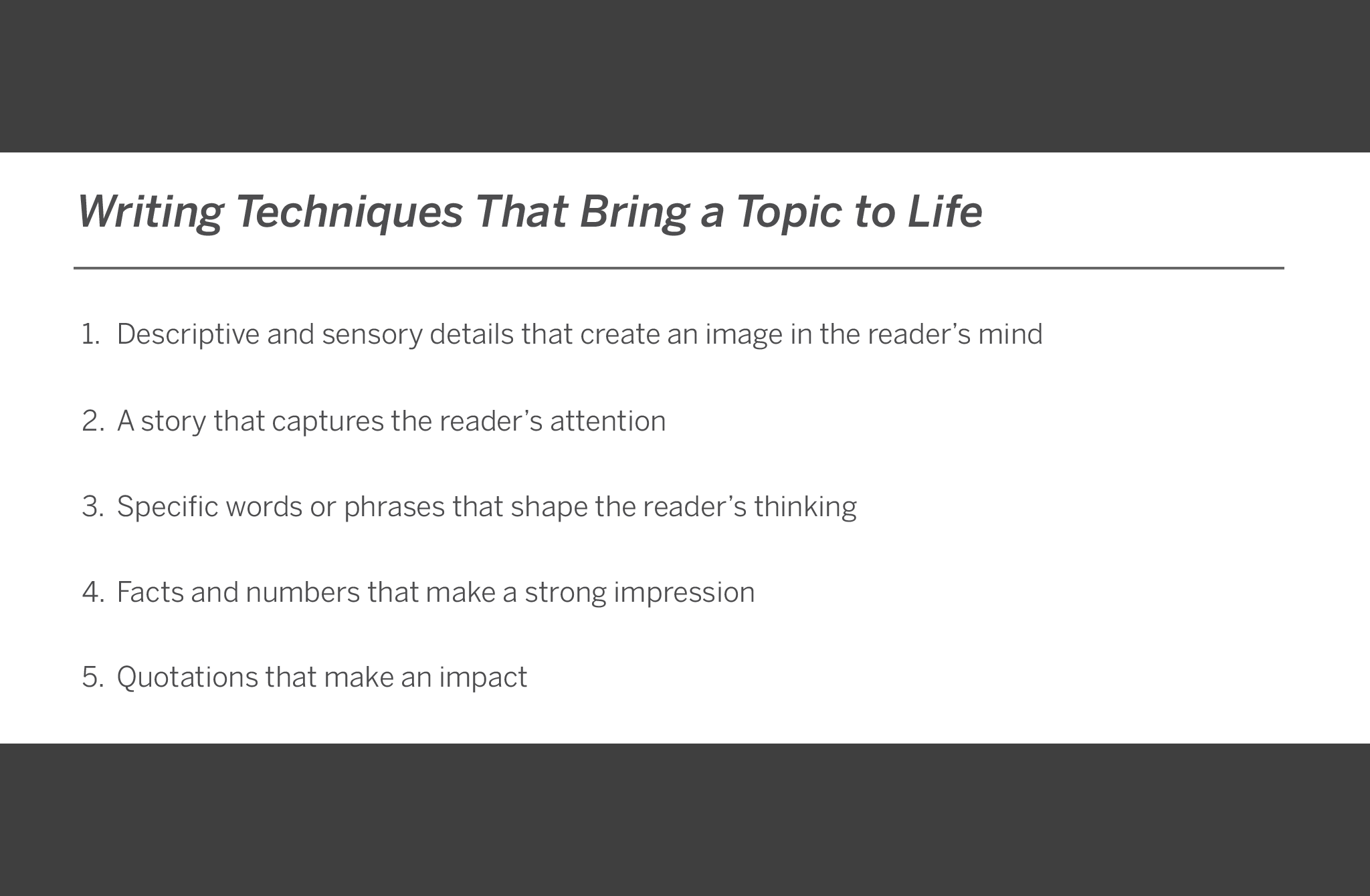
Read the types of writing techniques in the left column. Match each writing technique in the left column with an example from the text from Chapter 1, paragraphs 1–4, in the right column.
1. Descriptive and sensory details that create an image in the reader’s mind
2. A story that captures the reader’s attention
3. Facts and numbers that make a strong impression
4. Quotations that make an impact
What technique is the author using here to bring the topic to life?
What idea or impression do you get about yellow fever from the text you highlighted?
Excerpt from Chapter 1 in The Secret of the Yellow Death by Suzanne Jurmain
1 Summer 1899
2 The young man didn’t feel well. First, there was the chill: an icy, bone-freezing chill in the middle of a warm summer evening. Then there was the terrible crushing headache. His back hurt. His stomach twisted with pain. And then he was hot, boiling hot, with a fever that hovered around 104 degrees. His skin turned yellow. The whites of his eyes looked like lemons. Nauseated, he gagged and threw up again and again, spewing streams of vomit black with digested clots of blood across the pillow. Sometimes he cried out or babbled in delirium. Violent spasms jolted his body. It took two grown men to hold him in his bed as a nurse wiped away the drops of blood that trickled from his nose and mouth. Nights and mornings passed. Then, five days after that first freezing chill, the young man died: another victim of a terrible disease called yellow fever.
3 Doctors didn’t know what caused it. They couldn’t cure it. But they knew that yellow fever was a killer. For centuries the disease had swept through parts of the Americas and Africa, leaving behind a trail of loss and misery. It turned cities into ghost towns and left the local graveyards filled with corpses. In New Orleans, Dr. Kennedy took sick and collapsed while he was tending patients. In Philadelphia, Dr. Hodge’s little girl caught the fever, turned yellow, and died in two short days. And when the sickness killed the Memphis snack shop woman Kate Bionda, she left behind her husband and two small children. The fever struck the rich. It struck the poor. It killed the humble, and it humbled the important. Jefferson Davis, president of the Confederate States of America during the U.S. Civil War, lost his son to yellow fever. George Clymer, who’d signed the Declaration of Independence, watched helplessly as the sickness struck his wife and family. And every single year the illness took its toll. In 1793, 4,044 people in Philadelphia died during a plague of yellow fever. New Orleans counted 8,101 yellow fever deaths in 1853. And when the disease hit Memphis, Tennessee, in 1878, 17,000 citizens sickened in a single month. Stores closed. Work stopped. Thousands fled, and those who remained wandered through a nightmare city—where sick children huddled next to dying parents and hungry dogs roamed the silent streets searching for their lost dead masters.
4 “Yellow fever [is] . . . an enemy which imperils life and cripples commerce and industry,” Surgeon General John Woodworth told the U.S. Congress in 1879. And he was right. In one single century—between 1800 and 1900—the disease sickened approximately 500,000 U.S. citizens and killed about 100,000.
5 The question was, what could be done about it? 6 By the 1890s doctors had found that many illnesses are caused by one-celled microscopic organisms called bacteria. With the help of this new knowledge, they taught the public how to kill these dangerous bacterial “germs” with things like heat and disinfectant. They also learned how to use dead or weakened germs to make vaccines—special types of medicine that prevent illness by forcing a living body to produce its own disease-fighting substances. Slowly, physicians began to conquer deadly sicknesses like cholera, typhoid, anthrax, and diphtheria. But yellow fever still raged. Researchers studied the disease. Doctors argued about the cause. Scientists peered through their microscopes, looking for the yellow fever germ. But there was no progress. Each year the hot summer weather brought on yellow fever epidemics. Each year desperate people burned clothing, bedding, and even buildings that had housed yellow fever victims in hopes of stopping the disease. Frantic doctors bled the sick, stuck them in mustard baths, dosed them with opium, or gave them drugs that might make them vomit out the germ—but nothing helped. Each year thousands of people caught the disease. Thousands died of it. And then, suddenly, something happened—something that at first didn’t seem to have anything to do with yellow fever or with medical science. 7 On February 9, 1898, the U.S. battleship Maine blew up in the harbor of Havana, Cuba. Two hundred and sixty-eight American servicemen were killed. U.S. officials told a shocked nation that Spanish government agents had deliberately caused the explosion. And by the end of April the United States had decided to go to war with Spain.
8 In the next four months American soldiers beat the Spanish army in Cuba. They beat the Spanish navy in the Pacific. And when the Spanish-American War ended in July, the victorious U.S. forces had won the right to govern Cuba and Puerto Rico (two islands off the southern coast of Florida), as well as the Pacific Ocean islands of Guam and the Philippines. Unfortunately, the war had also brought the United States face-to-face with another deadly enemy: yellow fever. 9 Because of the disease, the newly conquered Cuban territory was a deathtrap. Yellow fever epidemics swept the country. Visitors often contracted the illness soon after landing on the island’s shores. Some U.S. troops had already died of the disease in Cuba, and Washington officials were alarmed.
10 What would happen to American soldiers in Cuba if a full-scale epidemic broke out on the island? Or, worse, what would happen if homecoming U.S. troops carried yellow fever back to North America? That was the kind of thinking that gave United States officials nightmares. 11 Something had to be done. 12 Somehow the country had to find a way to prevent more attacks of yellow fever. 13 But before U.S. scientists could stop or cure the disease, they had to understand it. They had to know what caused the sickness. They had to know what spread it. And it was important that they find out soon.
14 On May 24, 1900, the U.S. government sent orders to four American army doctors. Their mission was to go to Cuba and find the cause of yellow fever.
Drag the phrase that best completes the statement.
Jurmain describes the yellow fever patients’ symptoms in the first paragraph of her book in order to help readers
Consider the following quote from paragraph 2: “His skin turned yellow. The whites of his eyes looked like lemons.”
To present the topic of yellow fever, in this quote the author uses
What is the controlling idea of paragraph 4?
Scientists use to make vaccines.
Read the following sentences from paragraph 6: “Slowly physicians began to conquer deadly sicknesses like cholera, typhoid, anthrax, and diphtheria. But yellow fever still raged.”
In the passage, the term raged most likely means:
Order the list of events that led to the United States being in control of Cuba in 1898.
The United States beats the Spanish navy.
The USS battleship Maine is destroyed.
Spain controls Puerto Rico and Cuba.
The United States declares war on Spain.
What danger did the U.S. risk by having troops stationed in Cuba?