Copy of Copy of Yellow Death 5 (6/23/2025)

Last updated 6 months ago
21 questions
There's No "I" in Team
1
A good teammate can make a team stronger. Rate the qualities of a good teammate:
Least important ______________________
Somewhat important ______________________
Very important ______________________
Most Important ______________________
Other Answer Choices:
Easy to work with
Skillful
Hardworking
Trustworthy
Other
1
If you chose “other,” write the character trait here: _______
Dr. Reed
Excerpt from Chapter 2 in The Secret of the Yellow Death by Suzanne Jurmain

3 For roughly twenty years, Reed had dreamed of being able to do something big, something important, something that he hoped would “alleviate human suffering.” It was a dream he’d had when he was a young army doctor tending settlers, soldiers, and Apaches on lonely frontier outposts. It was something he’d thought about when he went back to school at age thirty-nine to study bacteriology—a brand-new branch of medical science that dealt with the disease-causing germs that researchers called bacteria. For ten more years Reed had hoped to make a major contribution while he did research and taught students at the U.S. Army Medical School in Washington, D.C. And now, finally, at age forty-nine, he had a chance to take on the most exciting and important project of his whole career. Just a few weeks earlier, the U.S. Army had ordered Dr. Walter Reed to go to Cuba, head a team of three other doctors, and find the cause of yellow fever.
1

Reread Chapter 2, paragraph 3 below. What do we learn about Dr. Reed’s character traits? Read each quote and then check the character trait that it reveals.

Skillful
Easy to work with
Hardworking
Trustworthy
Other
“...he was a young army doctor tending settlers, soldiers, and Apaches on lonely frontier outposts.”
“...he went back to school at age thirty-nine to study bacteriology—a brand new branch of medical science…”
“For ten more years Reed had hoped to make a major contribution while he did research and taught students at the U.S. Army Medical School…”
"...Reed had dreamed of being able to do something big, something important, something that he hoped would 'alleviate human suffering.'"
1

Select one quote, copy and paste it, and explain which trait this reveals and why.

Excerpt from Chapter 3 in The Secret of the Yellow Death by Suzanne Jurmain

3 When the ship docked at around eleven, Reed was ready to move. An epidemic of yellow fever had recently broken out in the Cuban town of Quemados. Some people in Havana were also sick with the disease. Even the chief U.S. medical officer for Western Cuba, Reed’s good friend Major Jefferson Kean, had come down with the illness several days earlier. There was no time to waste.

4 Reed quickly loaded his bags into a carriage and drove through the bustling city streets of Havana and across eight miles of country roads until he reached the U.S. Army post at Camp Columbia. After dropping his bags at the Officers’ Quarters, he was off again, dashing across the grounds to visit Major Kean in the camp’s yellow fever hospital just outside the base.

5 There the news was good. Kean’s case was fairly mild. He was expected to live. At the bedside Reed probably chatted like any other visitor, but he must have also assessed the patient with a scientific eye. Was Kean’s skin yellow? Was his temperature high? Were his gums bleeding? What had he been doing in the days before he got sick? Had he been near mosquitoes? Infected clothing? Reed had read descriptions of yellow fever, but this was the first live case he’d ever seen. He was hungry for information. He wanted clues. But he couldn’t spend the rest of the day at Kean’s bedside. If Reed was going to get the research started, he had to organize his team.
1
Part 1: “When the ship docked at around eleven, Reed was ready to move” is an example of __________
1

Part 2: What do you learn about Reed's character from this detail?

1
Part 1: “After dropping his bags at the Officer’s Headquarters, he was off again, dashing across the grounds to visit Major Kean in the camp’s yellow fever hospital just outside of the base” is an example of __________
1

Part 2: What do you learn about Reed's character from this detail?

1
Part 1: “Reed had read descriptions of yellow fever, but this was the first live case he’d ever seen. He was hungry for information” is an example of __________
1

Part 2: What does it mean when Jurmain says Dr. Reed “was hungry for information”?

1

With a partner, find five details that describe Dr. Reed. Below, not each details- identifying the character and the trait the detail describes. (This will help you when annotating text- you can do hashtags. Example: #character name #character trait)

Ask yourself, “What does the detail reveal about who this person is?”

The Team
Excerpt from Chapter 3 in The Secret of the Yellow Death by Suzanne Jurmain

6 The first meeting had already been called, and late in the afternoon Reed walked onto the garden patio outside Camp Columbia’s Officers’ Quarters to greet the three men he’d be working with.

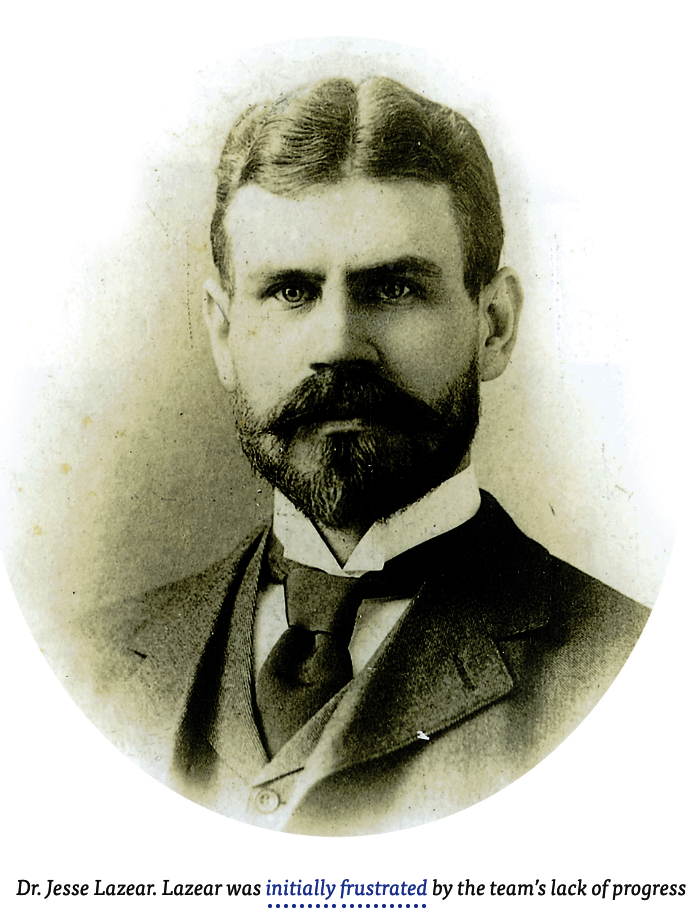
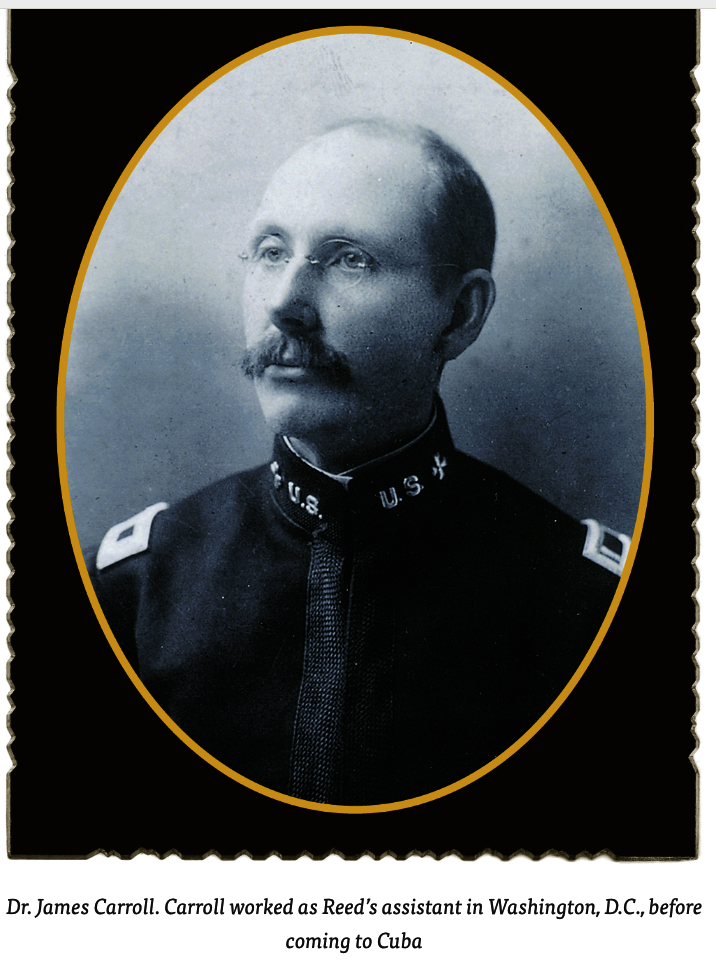
7 They were all there, formally dressed in their crisp white tropical army uniforms. On one side was the tall, thin, balding Dr. James Carroll, a blunt, outwardly charmless man who seemed to be more comfortable looking through a microscope than making conversation. Near Carroll was the chatty Cuban-born, U.S.-educated Dr. Aristides Agramonte, looking like a dandy with his pointed, curled mustache. And rounding out the group was the quiet, bearded, darkly handsome Dr. Jesse W. Lazear.

8 All of the men had graduated from medical school. All had studied bacteriology, and together they brought a wealth of talent to the project. Carroll had a real passion for lab work. Agramonte, an honors graduate of Columbia University Medical School, had already spent time investigating yellow fever. And Lazear, a former college football player who’d studied medicine in both the United States and Europe, had headed one of the clinical labs at America’s prestigious Johns Hopkins University. All three men had worked with Reed in the past, and they listened intently as the chief scientist outlined his program.

9 The first job, Reed told his colleagues, was to prove that Bacillus icteroides was—or was not—the cause of yellow fever.

10 That would take a lot of lab work, and each scientist would have his own specific job.

11 Agramonte would do autopsies. He’d surgically open the bodies of dead yellow fever victims and take out samples of blood, stomach, heart, kidney, and other organ tissues.

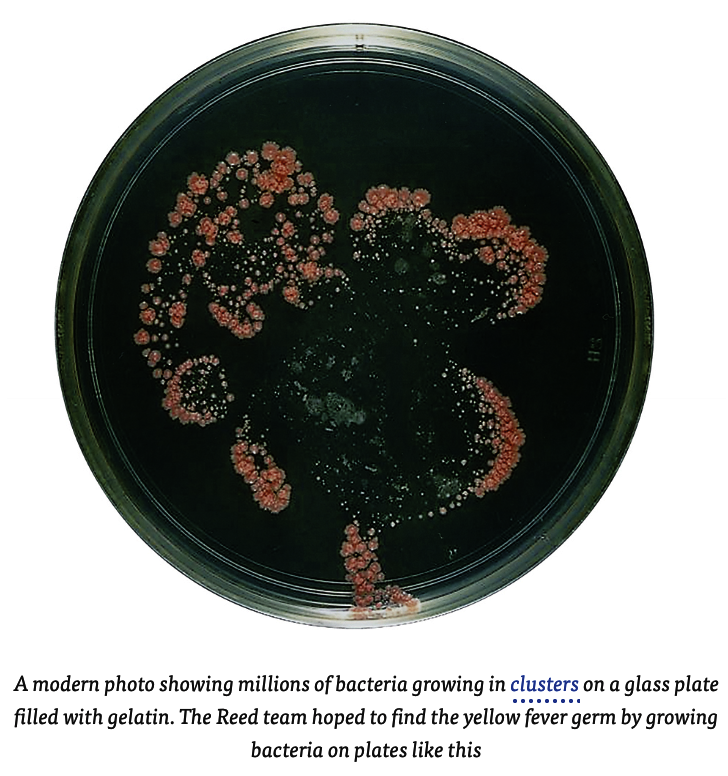
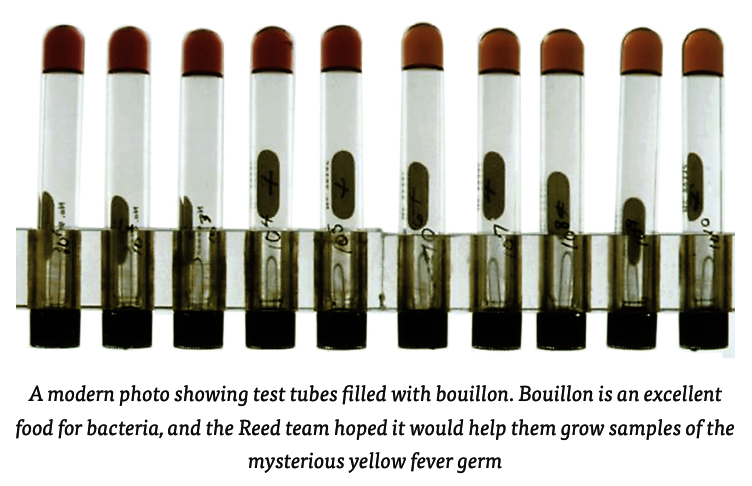
12 Carroll, the best bacteriologist, would take those samples to the lab. He would place tiny amounts of the tissue Agramonte harvested in tubes or dishes filled with a food substance like gelatin or bouillon. Then he would watch to see if any of the tissue samples grew Bacillus icteroides or any other bacteria that might prove to be the cause of yellow fever.

13 Lazear would help examine the bacteria and tissues under a microscope.

14 Reed would coordinate the work and help out wherever he could. That covered the important points. But there was one thing more. As he looked around at his assistants, Reed said that he hoped the group would stick closely to his plan. Finding the cause of yellow fever was a tremendous challenge, and he wanted the men to combine their efforts and attack the problem as a team.

15 Everyone agreed. Work was scheduled to start the following morning. And, as they left the meeting, the four men must have known they were about to start a very dangerous project. People who had had yellow fever were immune. They couldn’t possibly get the disease again. But none of the men on Reed’s team had ever had a full-blown attack of yellow fever. Reed had certainly never had the disease. Neither had Lazear or Carroll. Though there was a chance that the Cuban-born Agramonte might have had a very mild case as a small child, he was not definitely immune. And all four doctors knew that by being on the fever-stricken island of Cuba, by coming close to sick patients, and by studying bacteria in the lab, they were running a serious risk of getting yellow fever.
Now that we have looked at how the text shows us Dr. Reed’s character traits, it’s time for you to turn your attention to these new members of the task force: Dr. Carroll, Dr. Lazear, and Dr. Agramonte. Choose one researcher to profile, then share your findings with your group members. (You will only have to write in the box of your researcher)

Ask yourself, “What does the detail reveal about who this person is?”
1

With a partner, find five details that describe Dr. Lazear. Below, not each details- identifying the character and the trait the detail describes. (This will help you when annotating text- you can do hashtags. Example: #character name #character trait)

1

With a partner, find five details that describe Dr. Agramonte. Below, not each details- identifying the character and the trait the detail describes. (This will help you when annotating text- you can do hashtags. Example: #character name #character trait)

1

With a partner, find five details that describe Dr. Carroll. Below, not each details- identifying the character and the trait the detail describes. (This will help you when annotating text- you can do hashtags. Example: #character name #character trait)

Homework
Excerpt from Chapter 3 in The Secret of the Yellow Death by Suzanne Jurmain

15 Everyone agreed. Work was scheduled to start the following morning. And, as they left the meeting, the four men must have known they were about to start a very dangerous project. People who had had yellow fever were immune. They couldn’t possibly get the disease again. But none of the men on Reed’s team had ever had a full-blown attack of yellow fever. Reed had certainly never had the disease. Neither had Lazear or Carroll. Though there was a chance that the Cuban-born Agramonte might have had a very mild case as a small child, he was not definitely immune. And all four doctors knew that by being on the fever-stricken island of Cuba, by coming close to sick patients, and by studying bacteria in the lab, they were running a serious risk of getting yellow fever.
Required
1

Part 1: What is the common characteristic that the author conveys about all of the team members?

Required
1

Part 2: Click on the sentence from the passage that best supports your answer to Part 1.

Everyone agreed. Work was scheduled to start the following morning. And, as they left the meeting, the four men must have known they were about to start a very dangerous project. People who had had yellow fever were immune. They couldn’t possibly get the disease again. But none of the men on Reed’s team had ever had a full-blown attack of yellow fever. Reed had certainly never had the disease. Neither had Lazear or Carroll. Though there was a chance that the Cuban-born Agramonte might have had a very mild case as a small child, he was not definitely immune. And all four doctors knew that by being on the fever-stricken island of Cuba, by coming close to sick patients, and by studying bacteria in the lab, they were running a serious risk of getting yellow fever.
Read the excerpts from chapters four and five of The Secret of the Yellow Death: A True Story of Medical Sleuthing and answer the corresponding questions.
Excerpt from Chapter 4 in The Secret of the Yellow Death by Suzanne Jurmain

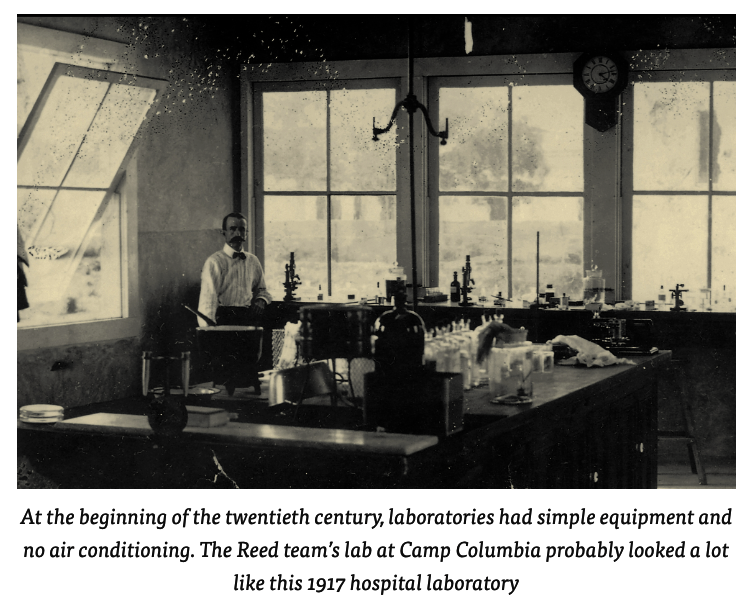
1 Early July 1900 2 The lab didn’t look like much. It was an old wooden shack at Camp Columbia, stuffed with wooden tables, shelves, jars, flasks, test tubes, a hot oven for sterilizing, an incubator to provide the warmth needed for growing bacteria, and a couple of microscopes. From morning until lunch, from lunch until dinner, Reed and Carroll worked side by side, juggling tubes and peering through microscope lenses. Lazear came and went, taking his turn at studying the steady stream of tissue specimens Agramonte sent from his autopsy lab in Havana. 3 The problem seemed simple. If Bacillus icteroides caused yellow fever, it ought to be found in the bodies of yellow fever victims. All Reed and his colleagues had to do was look. So, as the warm July days sped past, the four doctors searched for Bacillus icteroides in blood samples that had been taken from live yellow fever patients. They also tried to find the bacteria in blood and bits of tissue that had been taken from the dead. With delicate loops made of platinum wire they streaked infected blood onto gelatin-filled plates and popped these cultures in the incubator to see if warmth and the gelatin food would make Dr. Giuseppe Sanarelli’s mysterious bacteria grow. They tried to grow the bacteria by placing tiny samples of the livers, spleens, kidneys, intestines, and hearts of yellow fever victims in test tubes filled with bouillon that bacteria liked to eat. But nothing much grew in the tubes or on the plates. And no matter how carefully the men looked through their microscopes, they couldn’t find a single sample of Bacillus icteroides. 4 Yet yellow fever was all around the team that summer. Men and women in Havana were dying of the disease. American officers were coming down with yellow fever, even though Walter Reed never mentioned that in personal letters.

5 Almost every day, he sat down at the long wooden table in his quarters and wrote a cheerful, chatty letter to his “precious wife,” Emilie. He told her that he’d bought himself “a large Cork [sic] helmet for wearing in the sun” and that he’d eaten cake and watermelon for dinner. He asked her to tell him all about the strawberry patch, the flower garden, and the relatives at home. But when Emilie sent a letter that asked about Reed’s chance of getting yellow fever while in Cuba, her husband answered, “I have said nothing about yellow fever because I didn’t want to give you any worry, especially as I wasn’t taking any risks whatever.” 6 No risks whatever? 7 The truth was, all of Reed’s activities were risky.

8 But, apparently, Reed didn’t want his wife to know it. When he wrote his letters home, Reed didn’t tell Emilie that yellow fever was sweeping across Cuba. He didn’t say that he might get the illness from handling infected tissue specimens. And he also didn’t mention one other troubling fact: the team was making very little progress. 9 By the middle of July, Reed and his colleagues had produced dozens of gelatin cultures and bouillon preparations. They had spent hours looking at organ tissue under the microscope. But they couldn’t find Bacillus icteroides—or any other type of germ that might possibly be the cause of yellow fever. 10 That bothered Dr. Jesse Lazear. 11 At work the former football player always did his job. To team members, he was always “pleasant” and “polite.” In his spare time, he wrote cheery letters home, telling his pregnant wife about the tropical rain and the funny way that the charmless Dr. Carroll’s ears stuck out. But sometimes, when he sat alone, writing to his family, Lazear couldn’t hold his feelings back. The laboratory work wasn’t going well, he reported. The project was getting nowhere. And as for his teammates . . . Well, it wasn’t Carroll’s ears he was concerned about. It was Carroll. The tall, balding bacteriologist had a “dull” expression. He didn’t seem imaginative. All he seemed to care about was studying “germs for their own sake.” And Reed? Reed seemed to be stuck. All he seemed to care about, Lazear wrote, was hunting for Bacillus icteroides. But Lazear thought that looking for the strange bacillus was a waste of time. A dead end. To make progress, the team needed a new direction. And Jesse Lazear had ideas—good ideas—about what that direction ought to be. Unfortunately, the rest of the team didn’t seem to be taking those ideas very seriously. “I . . . want to do work which may lead to the discovery of the real organism,” Lazear told his wife.

12 But how could he? Reed gave the orders. Lazear had to obey. Nothing seemed likely to change. 13 And then, quite suddenly, something happened.
Required
1

What is the most likely reason that the author wrote paragraph 2?

Required
1

In paragraph 2, what does the term “juggling” mean?

Required
1

What is the main purpose of paragraph 3?

Required
1

Which statement is best supported by the text?

Excerpt from Chapter 5 in The Secret of the Yellow Death by Suzanne Jurmain

1 Mid–Late July 1900 2 On one hot summer day, the team got word that American soldiers were dying of an illness at the Pinar del Rio army post, located about one hundred miles from Camp Columbia in Cuba. But was the sickness yellow fever? No one seemed to know, and army officials ordered Dr. Agramonte to investigate. 3 It was a good choice. Agramonte, a charming and sophisticated man, was also a very smart, well-qualified physician. He’d examined plenty of living yellow fever patients. He’d autopsied the bodies of those who’d died of the disease. He knew all the symptoms of the illness, and he headed to Pinar del Rio right away. 4 One of the sick soldiers had died just hours before Agramonte reached the camp. The body was waiting, and Agramonte promptly did an autopsy.
5 As he worked, the doctor looked for the usual signs of yellow fever: the yellow eyes, the yellowish liver, the yellow skin, all of which were caused by serious damage to the liver. Since liver injury can prevent the blood from clotting and because yellow fever can also make the body’s veins and arteries “leak,” Agramonte thoroughly checked the corpse for signs of bleeding. Was there liquid blood in parts of the digestive tract? Partially digested blood that looked like coffee grounds inside the stomach? One by one, the doctor noted down his findings, and by the time he put his scalpel down, Agramonte knew one thing for certain. The soldier on the table had died of yellow fever.

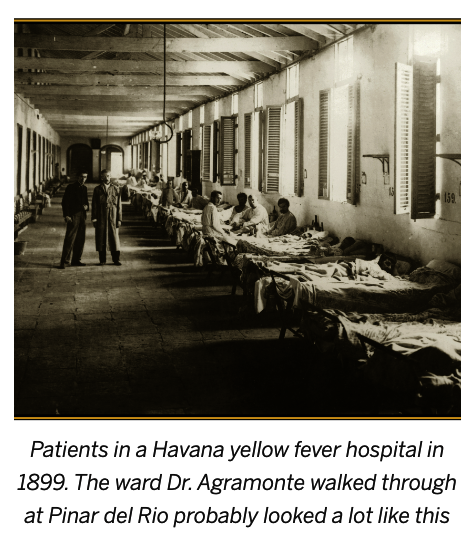
6 After leaving the autopsy room, the doctor walked through the camp’s hospital ward, moving carefully from bed to bed. To his horror, there were more patients showing telltale signs of yellow fever. There was no mistaking the yellow skin and eyes, the bleeding gums, the high temperatures, and the slow pulse rates. Somehow the doctors at Pinar del Rio had failed to recognize a yellow fever outbreak. 7 Agramonte immediately telegraphed the news to headquarters. Reed jumped on a train the following morning. By July 21 he had joined his colleague at the camp, and the two men began to search for the cause of the disease. 8 The statistics were clear. Thirty-five soldiers at the army post had come down with yellow fever. Eleven had been killed by the vicious illness. How had all those young Americans become infected?

9 One man, a prisoner who’d been locked up in the guardhouse, had died of the disease. But he hadn’t been near any yellow fever patients before or during his imprisonment. He hadn’t ever touched clothes or sheets that had been used by other yellow fever victims. How could he possibly have gotten sick? 10 And what about the eight other men who shared his cell? They had breathed the same air the sick man had breathed. They had touched his clothes, brushed against his blankets, and handled his dishes. But those eight men had stayed completely well. 11 So what had caused the dead prisoner’s attack of yellow fever? 12 Reed and Agramonte examined the possibilities. 13 It wasn’t Bacillus icteroides. That much was clear. After weeks of work, the team had found no evidence that Sanarelli’s bacteria had anything to do with yellow fever. That eliminated one theory. 14 Contact with infected clothing and bedding didn’t seem to have spread the disease to the dead prisoner’s cellmates. That discredited the idea that yellow fever was somehow spread by touch. 15 So where had the disease come from? And how had it managed to strike only one soldier in a locked guardhouse? 16 That was a mystery, but wrapped inside that mystery was a clue.
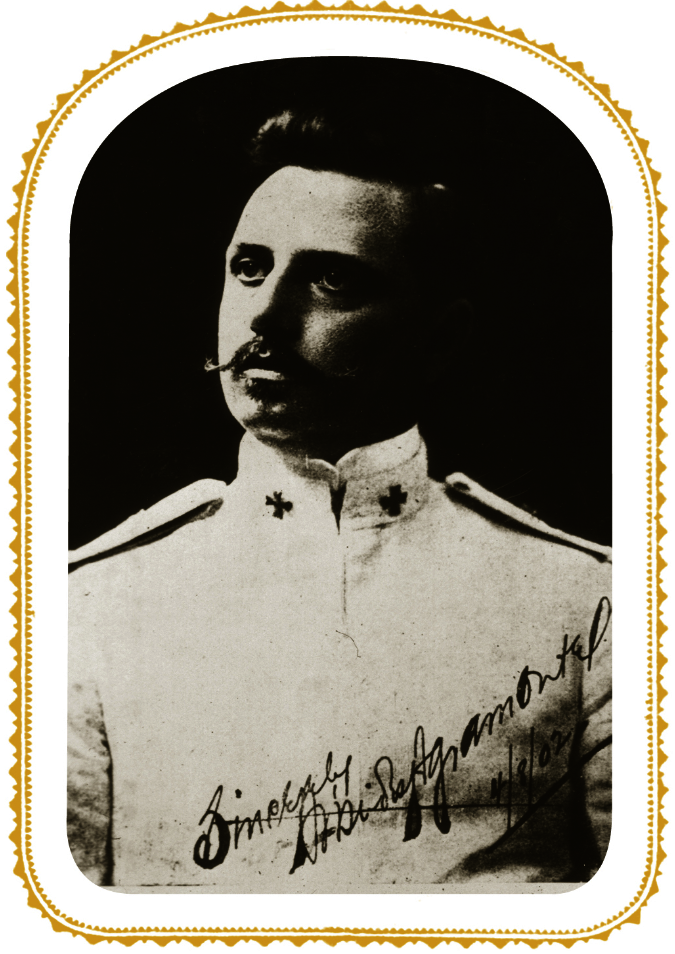
Dr. Aristides Agramonte, the only member of the Reed team born in Cuba, was the son of a Cuban general who died fighting against the Spanish for Cuban independence
Required
4

Put the following events into the order in which they occurred. Put the first event at the top of the list.

  1. Dr. Agramonte performs an autopsy on a recently deceased U.S. soldier who died of an unknown disease.
  2. Dr. Agramonte examines several soldiers at the outpost and discovers that he was in the middle of a yellow fever outbreak.
  3. The team is told about an outbreak of an unidentified disease at the Pinar Del Rio army outpost.
  4. Dr. Agramonte and Dr. Reed investigate a mysterious death of a prisoner who was locked in a guardhouse and who had never been exposed to other yellow fever patients.