Copy of Copy of Yellow Death 1 (6/23/2025)

Last updated 6 months ago
20 questions
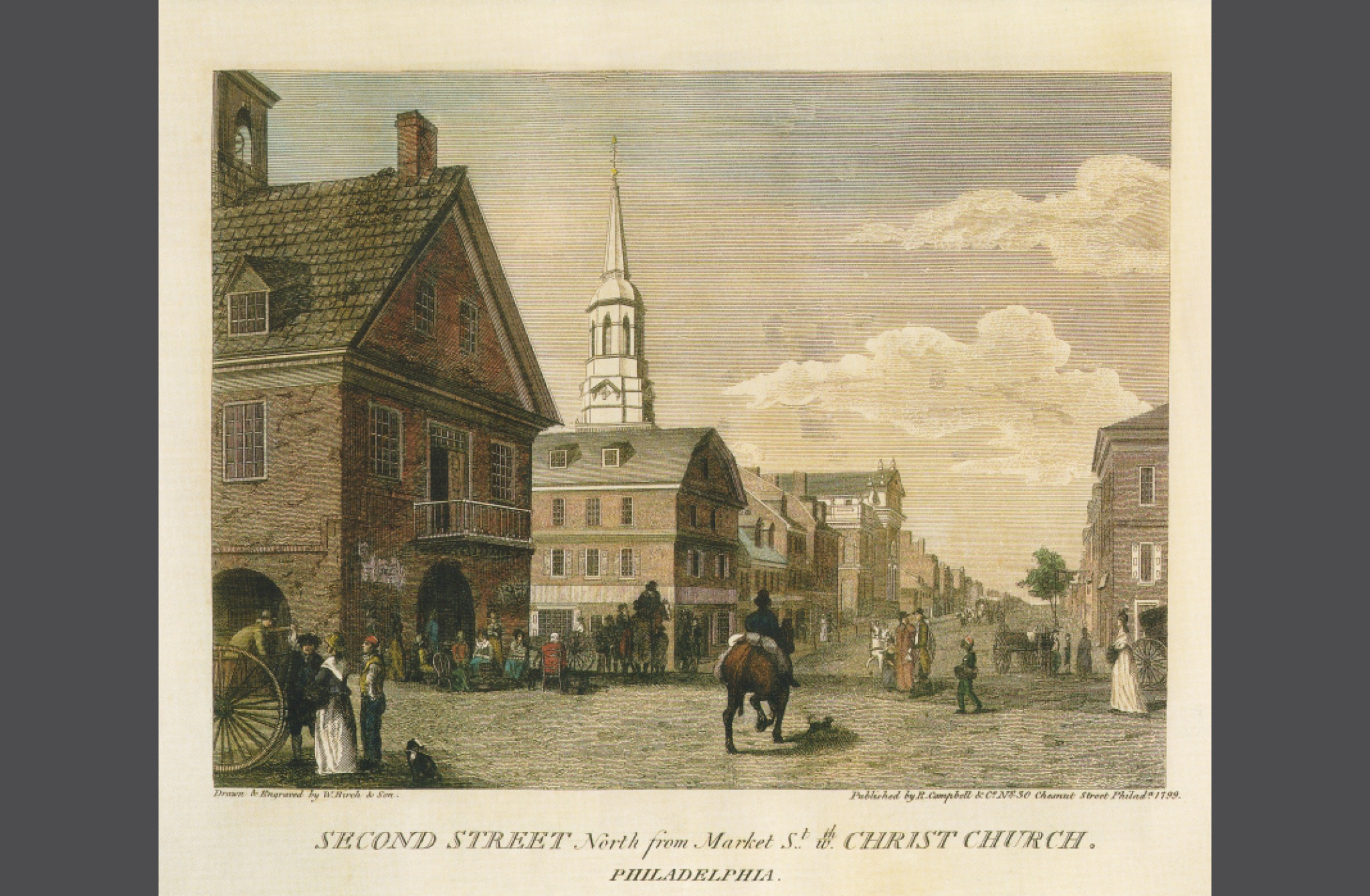
Philadelphia 1792
1

Look at the image of the city of Philadelphia from the 1790s. In five words or less, describe what you see.

1

Does the sense of community (how people interact with each other) seem strong or weak? Describe a detail from the image that supports your answer.

1

Look at how cared for the buildings and streets look. Does the sense of civic responsibility seem strong or weak? Describe a detail from the image that supports your answer.

1

Does the economic life (whether people seem to have what they need) seem strong or weak? Describe a detail from the image that supports your answer.

1

What do you infer life would be like in Philadelphia in the 1790s? Describe one detail that you observed in the engraving to support your answer.

A Dying City
Fever 1793 21 The wagon had reached the part of the city where new houses and businesses were under construction. Where there should have been an army of carpenters, masons, glaziers, plasterers, and painters, I saw only empty shells of buildings, already falling into disrepair after a few-weeks of neglect. 22 “Grandfather would not allow it,” I said with confidence. “If Mother is still out in the country, then we two shall care for each other. He doesn’t know the first thing about shopping at the market or cooking, and I need him to chop wood and, and…he will make sure I am well.”

23 “It is good you have each other,” said Mrs. Bowles in the same placid voice. “But you should not leave your house once you arrive. The streets of Philadelphia are more dangerous than your darkest nightmare. Fever vic­tims lay in the gutters, thieves and wild men lurk on every corner. The markets have little food. You can’t wander. If you are determined to return home with your grandfather, then you must stay there until the fever abates.” 24 Grandfather turned to address us. “We may end up at the Ludingtons’ farm after all,” he said. “Josiah here tells me there’s not much food to be found anywhere, Mattie. I’ll write to them again as soon as we arrive home.”

25 ”Won’t do you no good,” the driver interrupted. “The post office just closed down. It could take until Christmas before they can deliver letters.” 26 Mrs. Bowles patted my arm. “Don’t fret, Matilda. If you like, you may choose to take employment at the orphanage. I’m sure the trustees would approve a small wage if you helped with the cleaning or minding the children. They have for Susannah. She’ll help with the laundry.” 27 Susannah didn’t look strong enough to wash a teaspoon,­ much less a tub full of clothing. “What will happen to her when the fever is over?” I whispered. 28 Mrs. Bowles lowered her voice. “She is at a difficult age. She’s too old to be treated as a child, but not old enough to be released on her own. Her parents owned a small house. The trustees will sell that and use the money for her dowry. We will hire her out to work as a servant or scullery maid. She’s attractive enough. I’m sure she’ll find a husband.”

29 A fly bit the ear of the child on Mrs. Bowles’s lap, and his howl cut off the conversation. 30 Scullery maid, that was one thing I would never be. I imagined Mother’s face when she arrived home and found what a splendid job I had done running the coffee house. I could just picture it—I would be seeing the last customers out the door when Mother would come up the steps. She would exclaim how clean and well-run the coffeehouse was. Grandfather would point out the fancy dry goods store I was building next door. I would blush, looking quite attractive in my new dress—French, of course. Perhaps I could hire Susannah to do the washing up. That would be a way of helping. 31 I broke off my daydream to take in our surroundings. Grandfather and the driver had stopped swapping stories. He turned to look back at me anxiously. We were in the center of a dying city.

32 It was night in the middle of the day. Heat from the brick houses filled the street like a bake oven. Clouds’ shielded the sun, colors were overshot with gray. No one was about; businesses were closed and houses shuttered. I could hear a woman weeping. Some houses were barred against intruders. Yellow rags fluttered from rail­ings and door knockers—pus yellow, fear yellow—to mark the homes of the sick and the dying. I caught sight of a few men walking, but they fled down alleys at the sound of the wagon. 33 “What’s that?” I asked, pointing to something on the marble steps of a three-story house. 34 “Don’t look, Matilda” said Grandfather. “Turn your head and say a prayer.” 35 I looked. It appeared to, be a bundle of bed linens that had been cast out of an upper window, but then I saw a leg and an arm. 36 “It’s a man. Stop the wagon, we must help him!”

37 ”He is past helping, Miss,” the driver said as he urged on the horses. “I checked him on the way out to fetch you this morning. He were too far gone to go to the hospital. His family tossed him out so as they wouldn’t catch the fever. The death cart will get him soon for burying. 38 I couldn’t help but stare as the wagon rolled by the stoop. He looked about seventeen and wore well-tailored clothes stained with the effects of the fever. Only his polished boots remained clean. His yellow eyes stared lifelessly at the clouds, and flies collected on his open mouth. 39 “Won’t there be a burial, a church service?” I asked as the driver turned east onto Walnut Street. 40 “Most preachers are sick or too exhausted to rise from their beds. A few stay in the square during the day, that takes care of the praying.” 41 How could the city have changed so much? Yellow fever was wrestling the life out of Philadelphia, infecting the cobblestones, the trees, the nature of the people. Was I living through another nightmare?

42 “What date is this?” I asked Mrs. Bowles. 43 “Today is September the twenty-fourth,” she answered. 44 “The twenty-fourth? That’s not possible.” I counted on my fingers. We fled on the eighth: “When we left, there were reports of a thousand dead. Do you know what the total is now?” 45 “It’s double that at least,” she said. “It slowed down those few cool days, but as soon as the temperature rose again, so did the number of corpses.” 46 The driver pulled on his reins to stop the horses. The road was blocked by a line of slow-moving carts, each pushed by a man with a rag tied over his face, each holding a corpse. 47 “The Potter’s Field is ahead,” Mrs. Bowles said as she pointed to the front of the line. “That’s where they’re burying most of the dead. The preachers say a prayer, and someone throws a layer of dirt on top.”

48 Along one side of the square stretched a long row of mounded earth. The grave diggers had dug trenches as deeply as they could, then planted layer after layer fever victims. Some of the dead were decently sewn into their winding sheets, but most were buried in the clothes they died in. 49 “A field plowed by the devil,” I murmured. “They’re not even using coffins.”
This reading is from Fever 1793, a novel by Laurie Halse Anderson. In the novel, yellow fever hits Philadelphia in 1793, and the novel’s main character, 13-year-old Matilda (Mattie), flees the city with her grandfather. In this passage, Matilda and her grandfather are returning to Philadelphia, where they hope to find her mother and resume their lives.

Following along as I read aloud. Listen for details that help you understand the changes Matties sees in her city.
1

Reread this quote: “Where there should have been an army of carpenters, masons, glaziers, plasterers, and painters, I saw only empty shells of buildings, already falling into disrepair after a few weeks of neglect.” (21)

What does the phrase “there should have been an army of carpenters, masons, glaziers, plasterers, and painters” suggest?

1

Copy and paste three details that show the impact of yellow fever on the daily life of Philadelphians.

1

Based upon the information from this passage, what is the biggest impact that yellow fever has had on the people of Philadelphia?

Think about how the people in Philadelphia have changed because of yellow fever. Answer the questions.

Reread paragraph 37–39.
1

They find a man in the street. What happened to him?

1

What are three details that give you a picture of who the man is and what happened to him?

1

What do these details show you about the impact of yellow fever on people’s behavior?

1

What does Mattie mean when she says that yellow fever is infecting “the nature of the people” (41)?

1

What idea does the passage give you about the effect yellow fever had on Philadelphia and its citizens in 1793?

1
Matilda __________ of the treatment of the bodies of yellow fever victims.
1

Select the detail from her description of the scene that best supports your answer.

46 The driver pulled on his reins to stop the horses. The road was blocked by a line of slow-moving carts, each pushed by a man with a rag tied over his face, each holding a corpse. 47 “The Potter’s Field is ahead,” Mrs. Bowles said as she pointed to the front of the line. “That’s where they’re burying most of the dead. The preachers say a prayer, and someone throws a layer of dirt on top.”
48 Along one side of the square stretched a long row of mounded earth. The grave diggers had dug trenches as deeply as they could, then planted layer after layer fever victims. Some of the dead were decently sewn into their winding sheets, but most were buried in the clothes they died in. 49 “A field plowed by the devil,” I murmured. “They’re not even using coffins.”
Postcard from a Nightmare
Raise your hand if…
  • you think that the citizens of Philadelphia are in danger.
  • you think that Matilda’s mother should come to Philadelphia to help them.
  • you think it’s better that Matilda’s mother stay away from Philadelphia.
Fever 1793 21 The wagon had reached the part of the city where new houses and businesses were under construction. Where there should have been an army of carpenters, masons, glaziers, plasterers, and painters, I saw only empty shells of buildings, already falling into disrepair after a few-weeks of neglect. 22 “Grandfather would not allow it,” I said with confidence. “If Mother is still out in the country, then we two shall care for each other. He doesn’t know the first thing about shopping at the market or cooking, and I need him to chop wood and, and…he will make sure I am well.”

23 “It is good you have each other,” said Mrs. Bowles in the same placid voice. “But you should not leave your house once you arrive. The streets of Philadelphia are more dangerous than your darkest nightmare. Fever vic­tims lay in the gutters, thieves and wild men lurk on every corner. The markets have little food. You can’t wander. If you are determined to return home with your grandfather, then you must stay there until the fever abates.” 24 Grandfather turned to address us. “We may end up at the Ludingtons’ farm after all,” he said. “Josiah here tells me there’s not much food to be found anywhere, Mattie. I’ll write to them again as soon as we arrive home.”

25 ”Won’t do you no good,” the driver interrupted. “The post office just closed down. It could take until Christmas before they can deliver letters.” 26 Mrs. Bowles patted my arm. “Don’t fret, Matilda. If you like, you may choose to take employment at the orphanage. I’m sure the trustees would approve a small wage if you helped with the cleaning or minding the children. They have for Susannah. She’ll help with the laundry.” 27 Susannah didn’t look strong enough to wash a teaspoon,­ much less a tub full of clothing. “What will happen to her when the fever is over?” I whispered. 28 Mrs. Bowles lowered her voice. “She is at a difficult age. She’s too old to be treated as a child, but not old enough to be released on her own. Her parents owned a small house. The trustees will sell that and use the money for her dowry. We will hire her out to work as a servant or scullery maid. She’s attractive enough. I’m sure she’ll find a husband.”

29 A fly bit the ear of the child on Mrs. Bowles’s lap, and his howl cut off the conversation. 30 Scullery maid, that was one thing I would never be. I imagined Mother’s face when she arrived home and found what a splendid job I had done running the coffee house. I could just picture it—I would be seeing the last customers out the door when Mother would come up the steps. She would exclaim how clean and well-run the coffeehouse was. Grandfather would point out the fancy dry goods store I was building next door. I would blush, looking quite attractive in my new dress—French, of course. Perhaps I could hire Susannah to do the washing up. That would be a way of helping. 31 I broke off my daydream to take in our surroundings. Grandfather and the driver had stopped swapping stories. He turned to look back at me anxiously. We were in the center of a dying city.

32 It was night in the middle of the day. Heat from the brick houses filled the street like a bake oven. Clouds’ shielded the sun, colors were overshot with gray. No one was about; businesses were closed and houses shuttered. I could hear a woman weeping. Some houses were barred against intruders. Yellow rags fluttered from rail­ings and door knockers—pus yellow, fear yellow—to mark the homes of the sick and the dying. I caught sight of a few men walking, but they fled down alleys at the sound of the wagon. 33 “What’s that?” I asked, pointing to something on the marble steps of a three-story house. 34 “Don’t look, Matilda” said Grandfather. “Turn your head and say a prayer.” 35 I looked. It appeared to, be a bundle of bed linens that had been cast out of an upper window, but then I saw a leg and an arm. 36 “It’s a man. Stop the wagon, we must help him!”

37 ”He is past helping, Miss,” the driver said as he urged on the horses. “I checked him on the way out to fetch you this morning. He were too far gone to go to the hospital. His family tossed him out so as they wouldn’t catch the fever. The death cart will get him soon for burying. 38 I couldn’t help but stare as the wagon rolled by the stoop. He looked about seventeen and wore well-tailored clothes stained with the effects of the fever. Only his polished boots remained clean. His yellow eyes stared lifelessly at the clouds, and flies collected on his open mouth. 39 “Won’t there be a burial, a church service?” I asked as the driver turned east onto Walnut Street. 40 “Most preachers are sick or too exhausted to rise from their beds. A few stay in the square during the day, that takes care of the praying.” 41 How could the city have changed so much? Yellow fever was wrestling the life out of Philadelphia, infecting the cobblestones, the trees, the nature of the people. Was I living through another nightmare?

42 “What date is this?” I asked Mrs. Bowles. 43 “Today is September the twenty-fourth,” she answered. 44 “The twenty-fourth? That’s not possible.” I counted on my fingers. We fled on the eighth: “When we left, there were reports of a thousand dead. Do you know what the total is now?” 45 “It’s double that at least,” she said. “It slowed down those few cool days, but as soon as the temperature rose again, so did the number of corpses.” 46 The driver pulled on his reins to stop the horses. The road was blocked by a line of slow-moving carts, each pushed by a man with a rag tied over his face, each holding a corpse. 47 “The Potter’s Field is ahead,” Mrs. Bowles said as she pointed to the front of the line. “That’s where they’re burying most of the dead. The preachers say a prayer, and someone throws a layer of dirt on top.”

48 Along one side of the square stretched a long row of mounded earth. The grave diggers had dug trenches as deeply as they could, then planted layer after layer fever victims. Some of the dead were decently sewn into their winding sheets, but most were buried in the clothes they died in. 49 “A field plowed by the devil,” I murmured. “They’re not even using coffins.”
Required
5

Write a postcard from the perspective of Matilda to her mother.
  • Choose to either write to convince her mother to come back to Philadelphia or to warn her mother to stay away from Philadelphia.
  • Write in Matilda’s voice. Use “I” and “my” as if you are Matilda.
  • Use two details from the text that support your position.

Homework
A Note to the Reader
Just over one hundred years ago a band of scientists and volunteers from two countries decided to fight against one of the world’s deadliest diseases. Some members of this group came from Cuba; some, from the United States. Unfortunately, today relatively little is known about the Cubans who took part in this important battle, while libraries contain many rich sources of information about the American team. For this reason, I have concentrated on the extremely well documented American part of the story. But readers should remember that without the great Cuban scientific contribution, there might have been no story to tell.
Required
1

Read this sentence from "A Note to the Reader": “Just over one hundred years ago a band of scientists and volunteers from two countries decided to fight against one of the world’s deadliest diseases.”

What did the author mean by the underlined word?

Required
1

According to the text, what two nations worked together to fight against this disease? Select two.

Required
1

What is the most likely reason the author included this note?

Required
1

With which sentence would the author most likely agree?