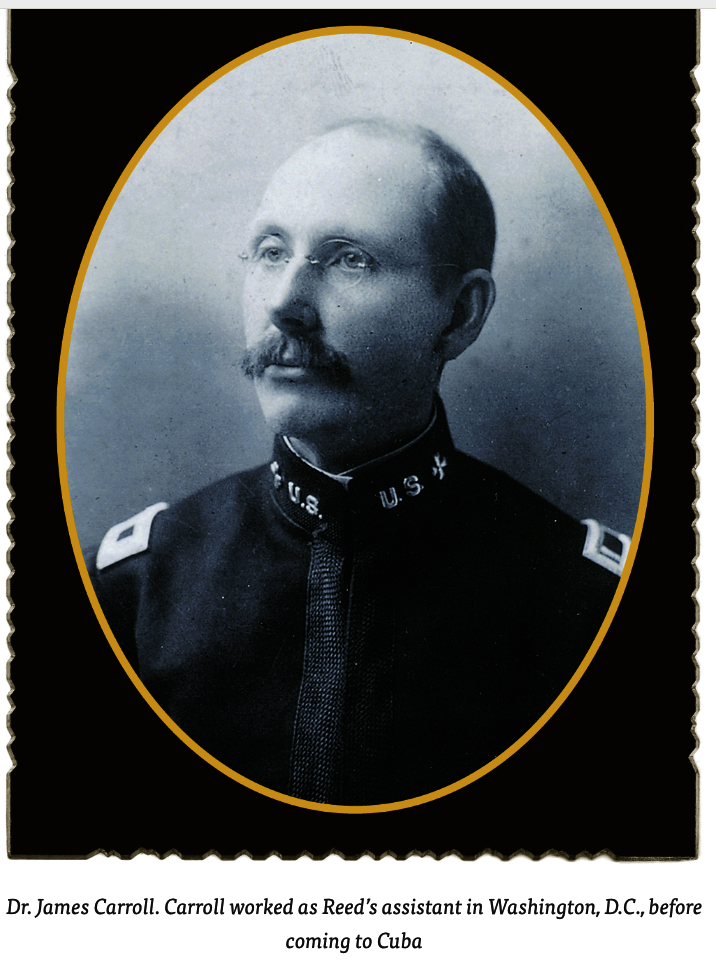
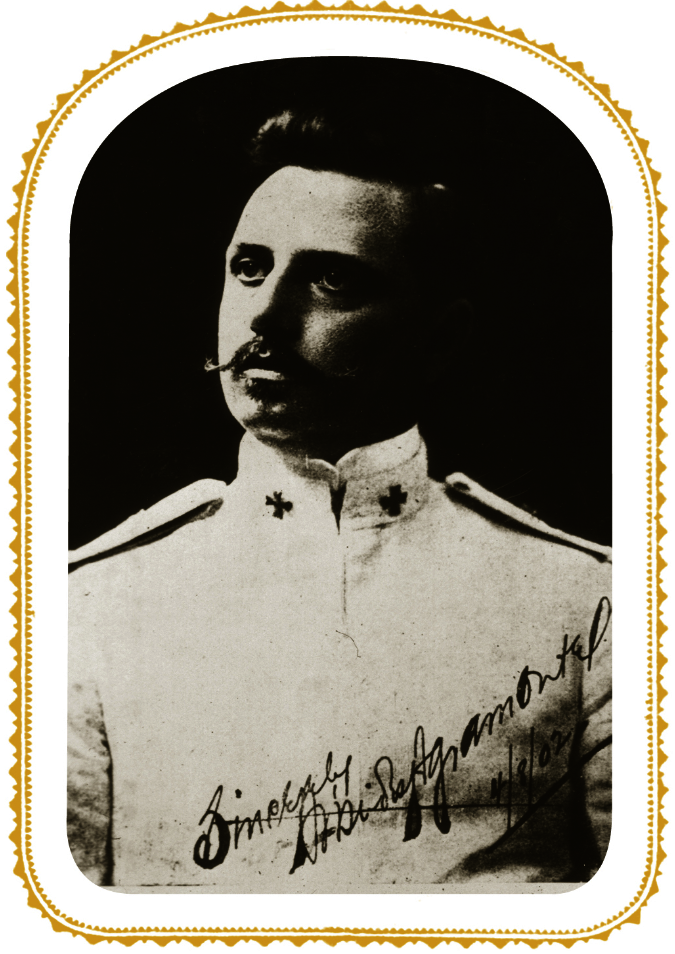
Excerpt from Chapter 3 in The Secret of the Yellow Death by Suzanne Jurmain
3 When the ship docked at around eleven, Reed was ready to move. An epidemic of yellow fever had recently broken out in the Cuban town of Quemados. Some people in Havana were also sick with the disease. Even the chief U.S. medical officer for Western Cuba, Reed’s good friend Major Jefferson Kean, had come down with the illness several days earlier. There was no time to waste.
4 Reed quickly loaded his bags into a carriage and drove through the bustling city streets of Havana and across eight miles of country roads until he reached the U.S. Army post at Camp Columbia. After dropping his bags at the Officers’ Quarters, he was off again, dashing across the grounds to visit Major Kean in the camp’s yellow fever hospital just outside the base.
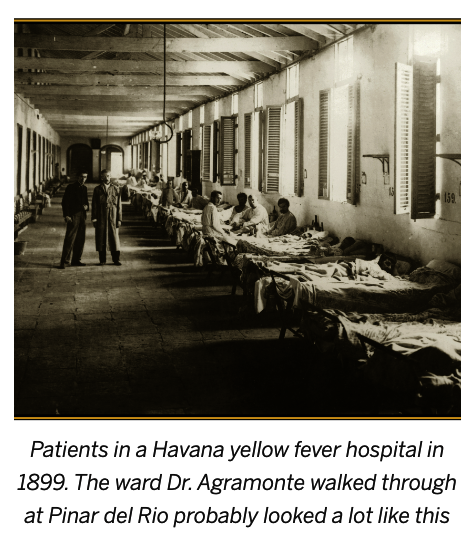
5 There the news was good. Kean’s case was fairly mild. He was expected to live. At the bedside Reed probably chatted like any other visitor, but he must have also assessed the patient with a scientific eye. Was Kean’s skin yellow? Was his temperature high? Were his gums bleeding? What had he been doing in the days before he got sick? Had he been near mosquitoes? Infected clothing? Reed had read descriptions of yellow fever, but this was the first live case he’d ever seen. He was hungry for information. He wanted clues. But he couldn’t spend the rest of the day at Kean’s bedside. If Reed was going to get the research started, he had to organize his team.
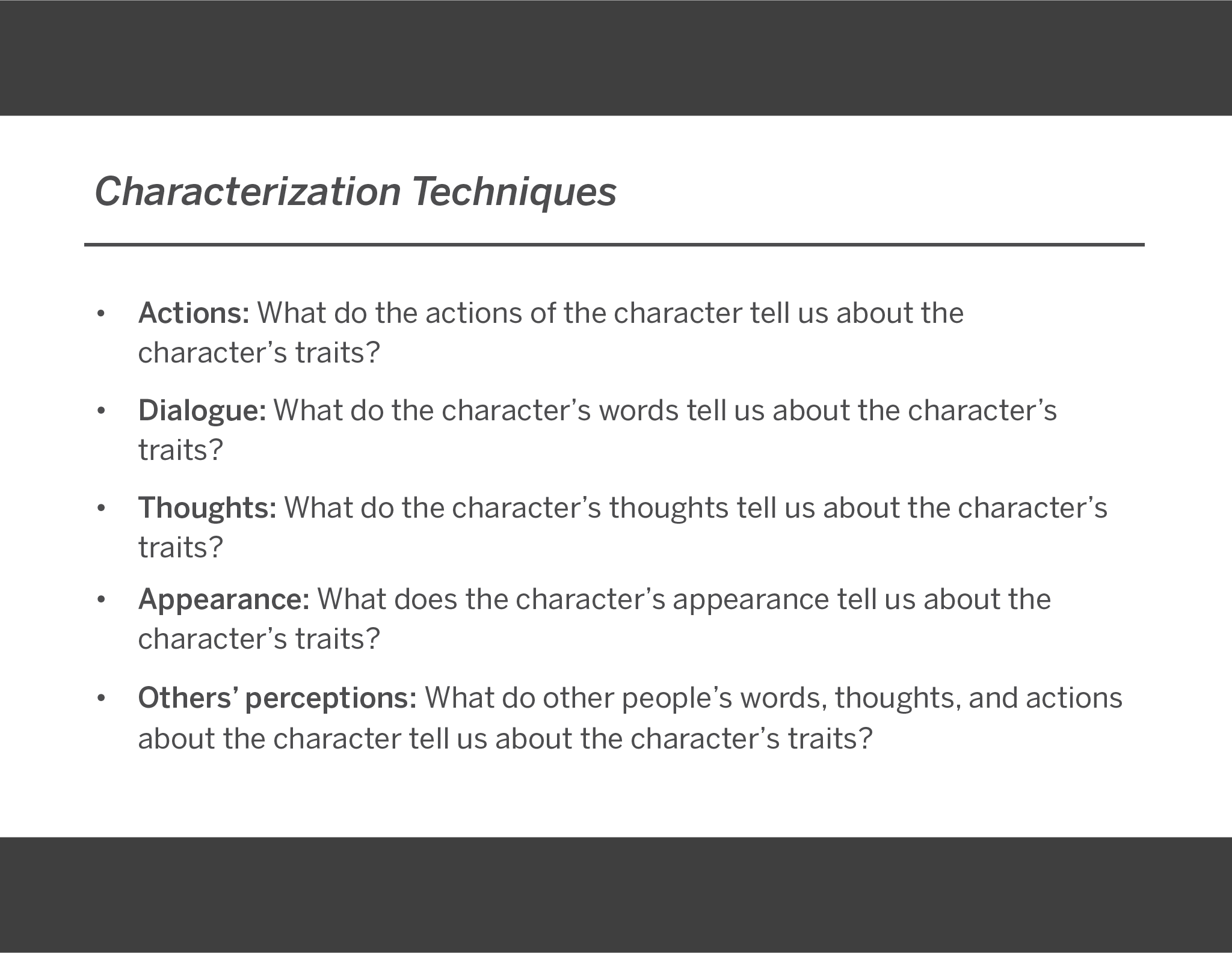
Part 1: “When the ship docked at around eleven, Reed was ready to move” is an example of
Part 1: “After dropping his bags at the Officer’s Headquarters, he was off again, dashing across the grounds to visit Major Kean in the camp’s yellow fever hospital just outside of the base” is an example of