Preskoči na glavni sadržaj
Prijava
Sign up for FREE
arrow_back
Biblioteka

Copy of Titanic- Scavenger Hunt 2 (6/23/2025)

star
star
star
star
star
Posljednje ažuriranje about 1 year ago
46
Curiousity
Obavezno
1
Scavenger Hunt Part I
Obavezno
2
Scavenger Hunt Part II
Obavezno
1
Obavezno
1
Pitanje 1
1.

Since you’ve started looking through texts and images about the Titanic, what is one thing you are curious to learn more about or to understand better?

Welcome to the Titanic scavenger hunt! You will find the answer to the scavenger hunt question by exploring images in The Titanic Collection.

Scavenger Hunt Question:

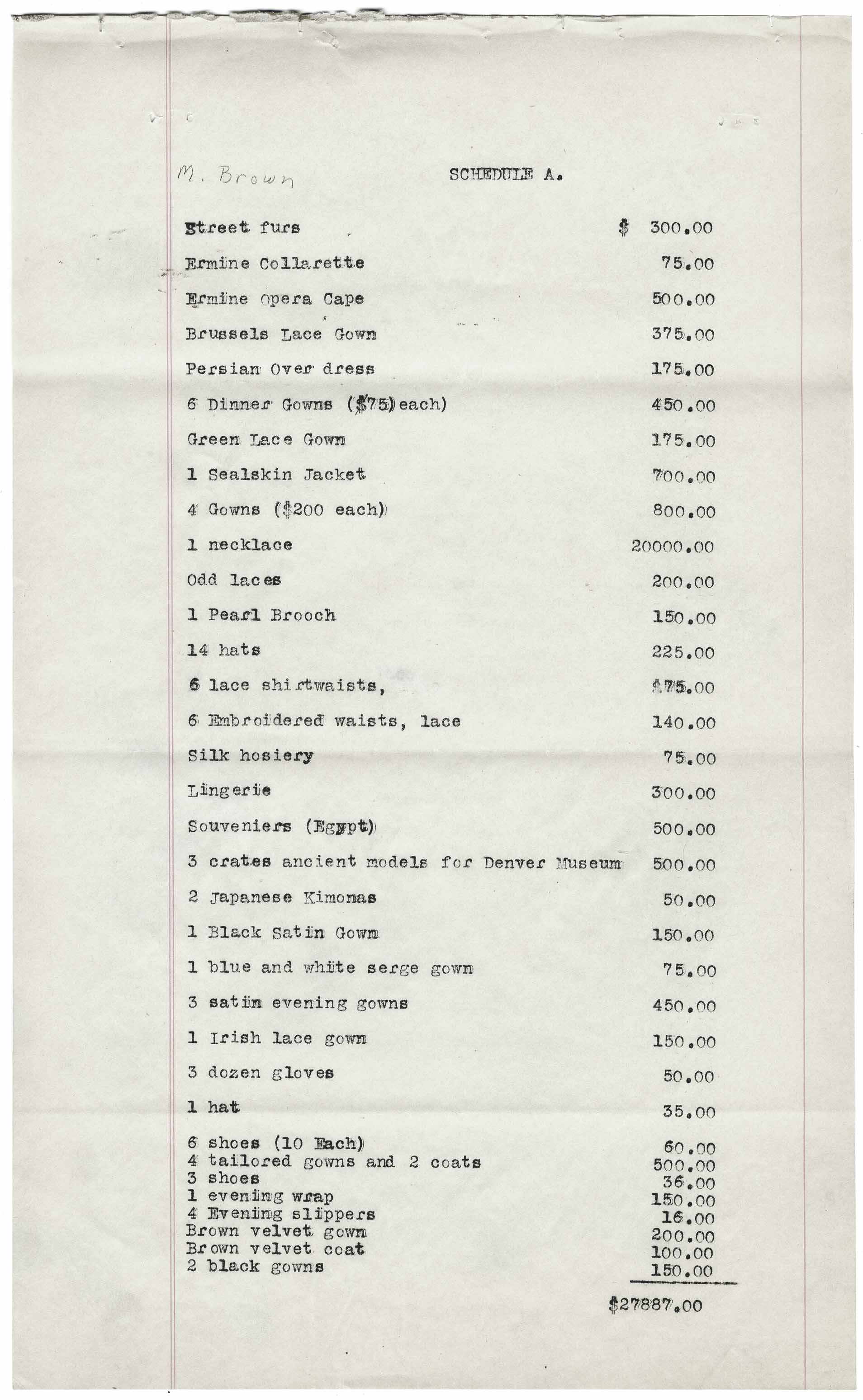
  • How many hats did Molly Brown pack in her luggage for her trip to New York, and what was their total cash value?

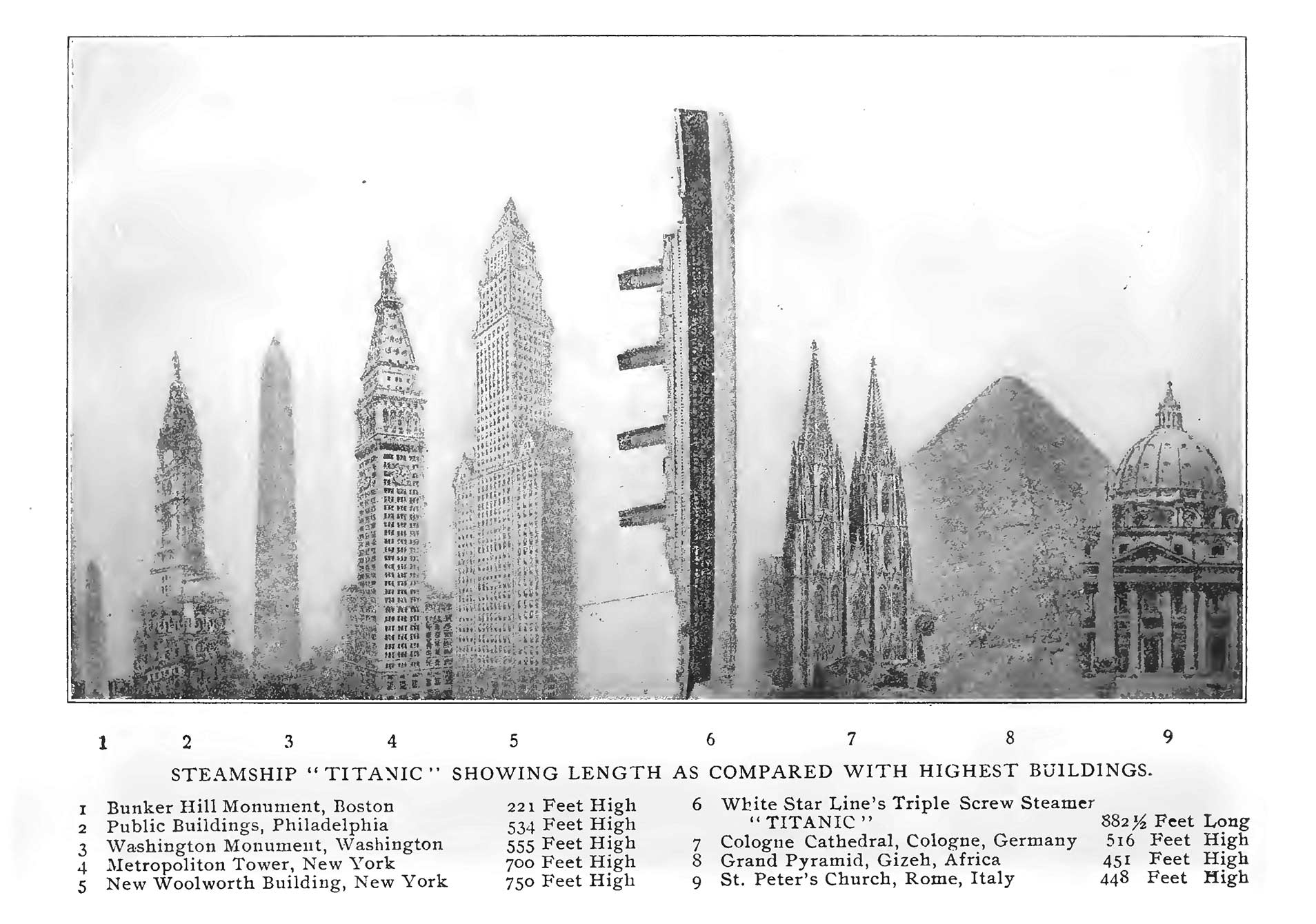
  • Was the Titanic’s length greater than the height of the pyramids?

Directions

1. To find the answer, examine each image in this activity. 2. Then answer the questions that accompany it.

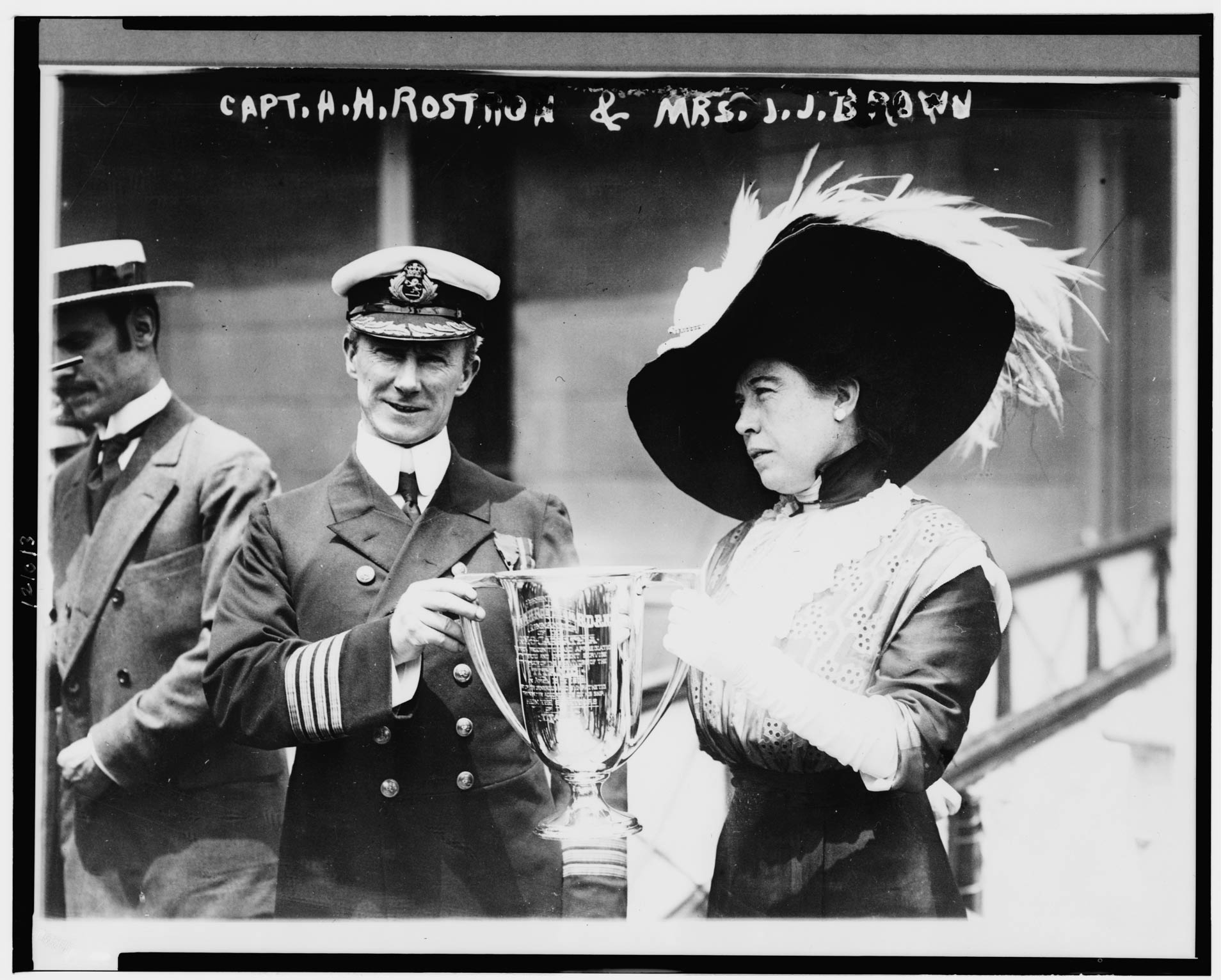
Margaret Brown and Captain Rostron (1913) Known as “The Unsinkable Molly Brown,” Margaret Brown was one of the passengers rescued by the Carpathia. After the disaster, Brown became active in efforts to raise money for impoverished survivors of the Titanic. She is pictured here presenting the Carpathia’s Captain Rostron with a trophy for his work in rescuing Titanic’s passengers.

Obavezno
1
Pitanje 2
2.

Look closely at Molly Brown’s attire. Describe her outfit.

Obavezno
1
Pitanje 3
3.

Captain Rostron was also awarded a Congressional Medal of Honor by President Taft for his role in rescuing Titanic survivors. Do you think he deserved these honors? Why or why not?

Molly Brown’s Claim for Property Lost Aboard the Titanic (1913)

Obavezno
3
Pitanje 4
4.

Name three things this list tells you about Molly Brown.

Obavezno
1
Pitanje 5
5.

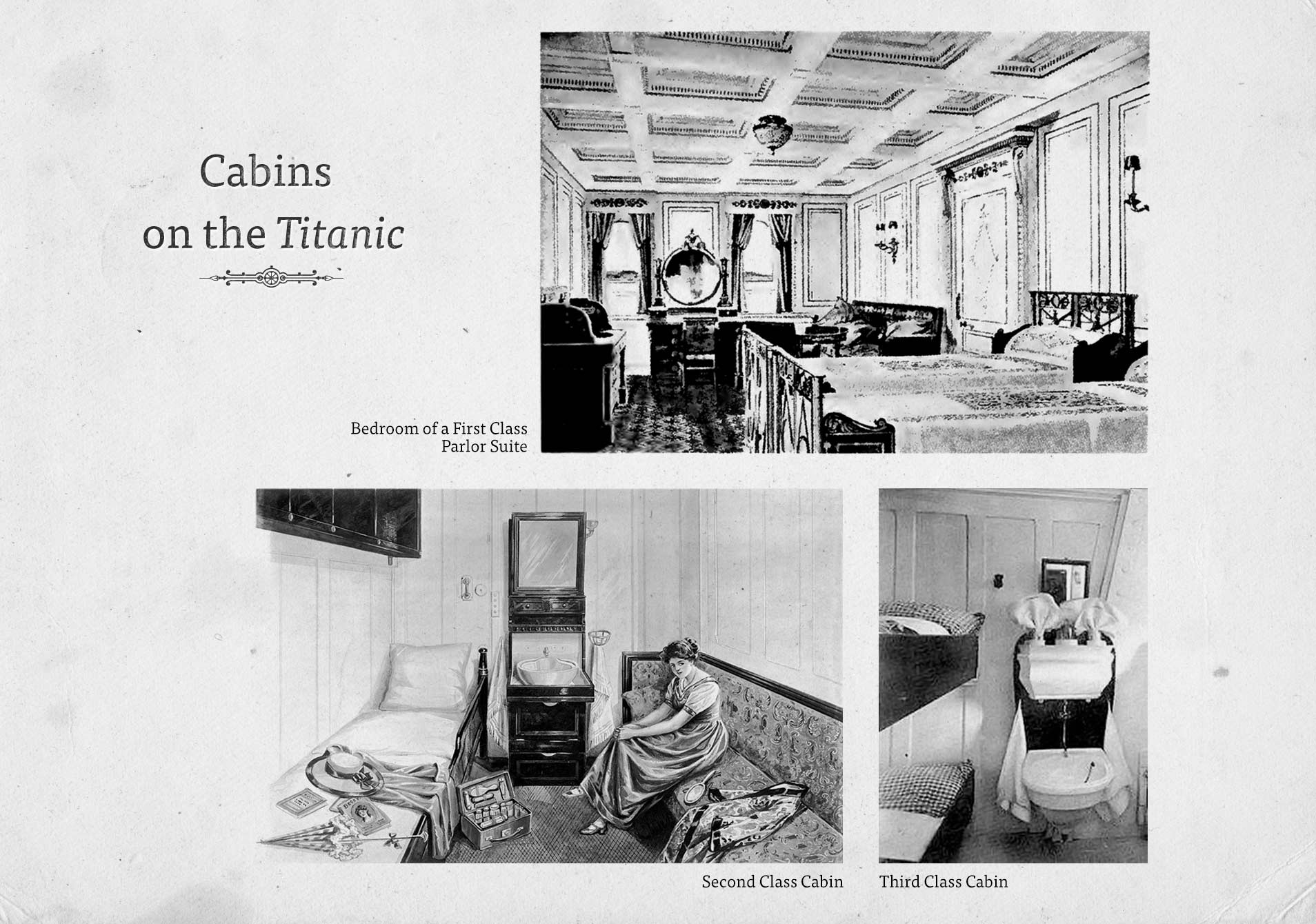
What class is Molly Brown: first, second, or third?

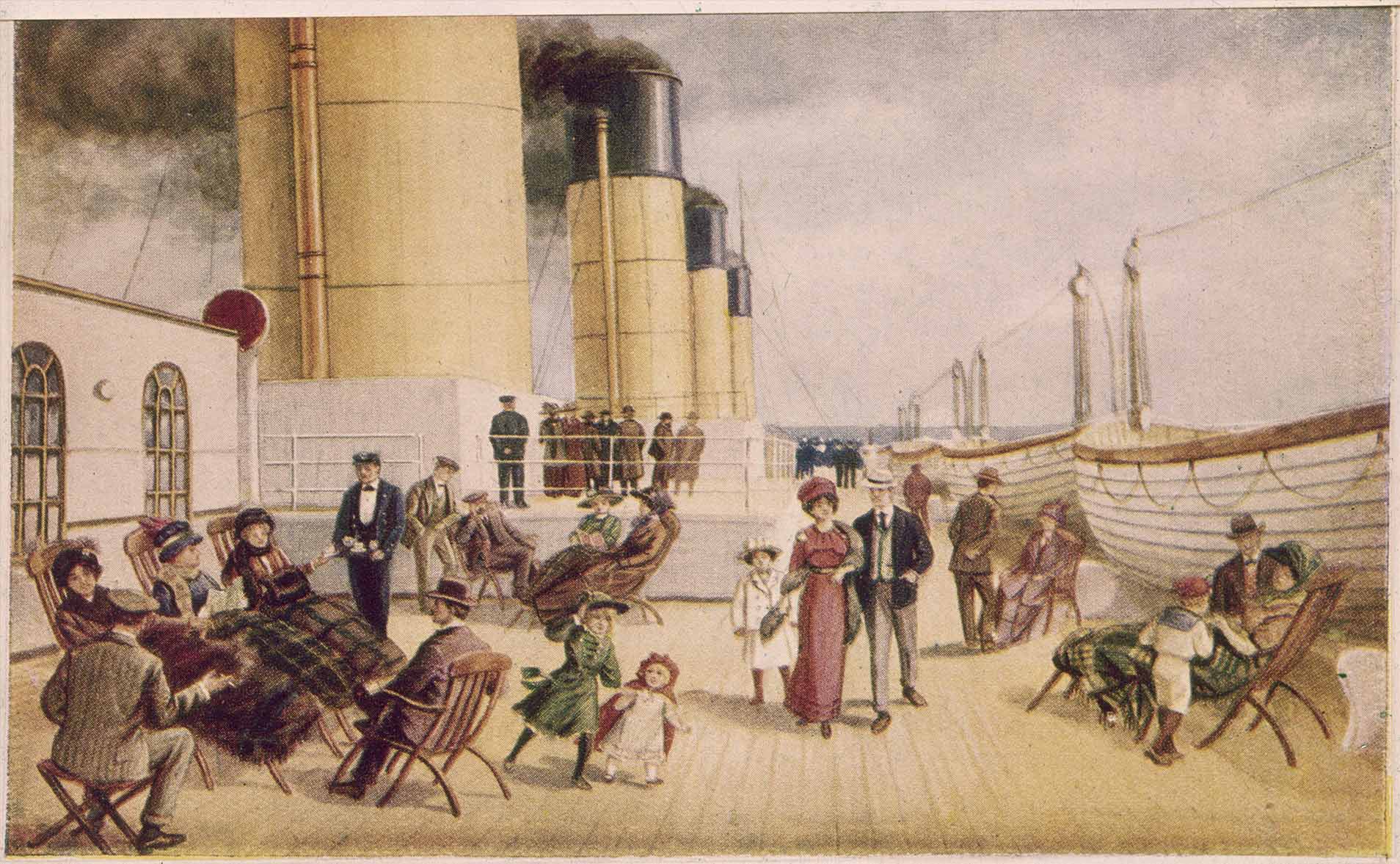
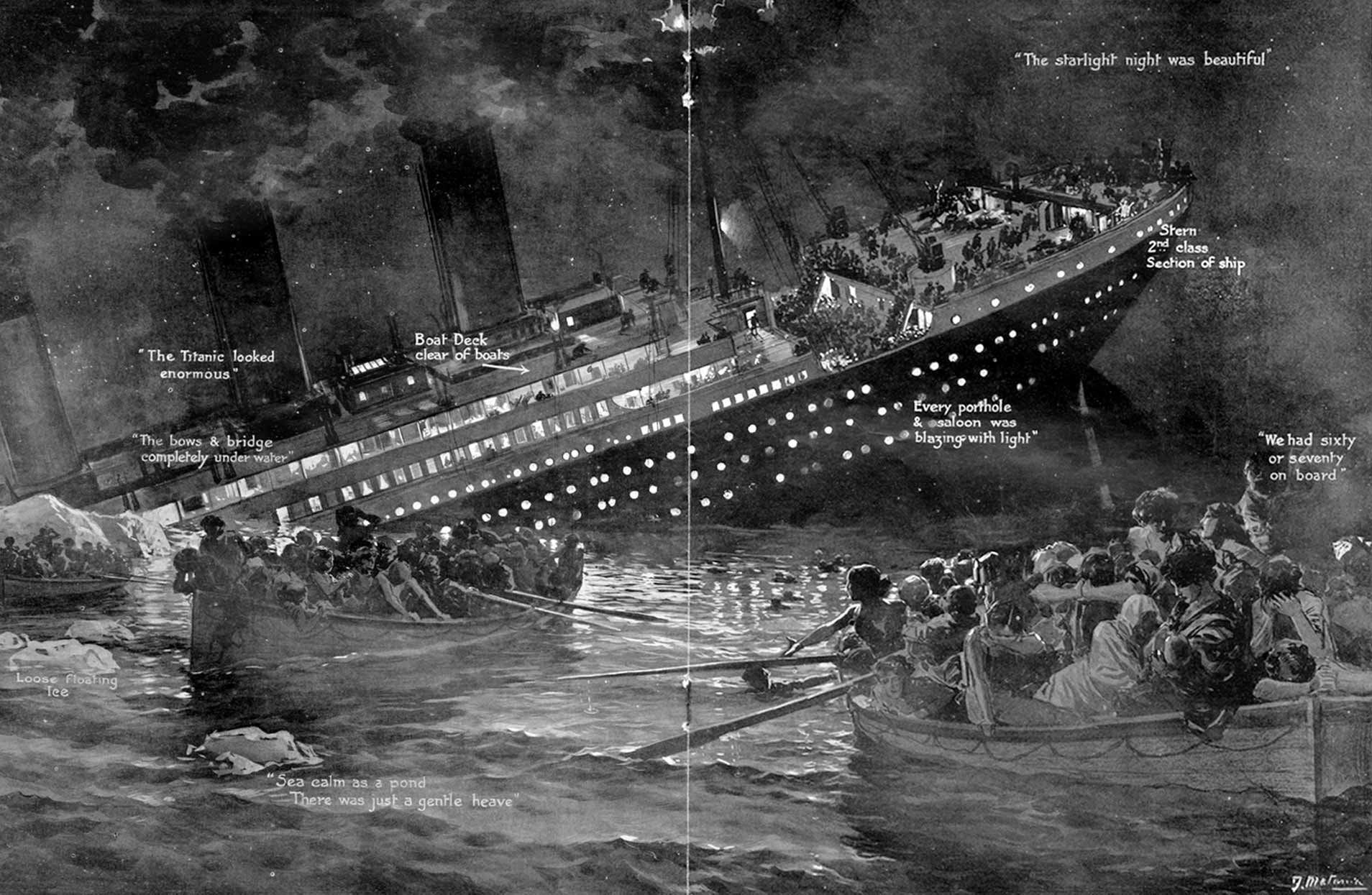
In this passage from a book about the sinking of the Titanic, the author describes the ship’s amenities and safety precautions—and why so many people couldn’t escape on lifeboats. Introduction from Sinking of the “Titanic” Most Appalling Ocean Horror Author: Jay Henry Mowbray, Ph.D., LL.D Publisher: The Minter Company, Harrisburg, PA Published: 1912 1 The human imagination is unequal to the reconstruction of the appalling scene of the disaster in the North Atlantic. No picture of the pen or of the painter’s brush can adequately represent the magnitude of the calamity that has made the whole world kin. 2 How trivial in such an hour seem the ordinary affairs of civilized mankind—the minor ramifications of politics, the frenetic rivalry of candidates, the haggle of stock speculators. We are suddenly, by an awful visitation, made to see our human transactions in their true perspective, as small as they really are. 3 Man’s pride is profoundly humbled: he must confess that the victory this time has gone to the blind, inexorable forces of nature, except in so far as the manifestation of the heroic virtues is concerned. 4 The ship that went to her final resting place two miles below the placid, unconfessing level of the sea represented all that science and art knew how to contribute to the expedition of traffic, to the comfort and enjoyment of voyagers. 5 She had 15 watertight steel compartments supposed to render her unsinkable. She was possessed of submarine signals with microphones, to tell the bridge by means of wires when shore or ship or any other object was at hand. 6 There was a collision bulkhead to safeguard the ship against the invasion of water amidships should the bow be torn away. In a word, the boat was as safe and sound as the shipbuilder could make it. 7 It was the pride of the owners and the commander that what has happened could not possibly occur. And yet the Titanic went down, and carried to their doom hundreds of passengers and men who intimately knew the sea and had faced every peril that the navigator meets. 8 In the hours between half-past 10 on Sunday night and half-past 2 Monday morning, while the ship still floated, what did the luxuries of their $10,000,000 castle on the ocean avail those who trod the eight steel decks, not knowing at what moment the whole glittering fabric might plunge with them—as it did plunge—to the unplumbed abyss below? 9 What was it, in those agonizing hours, to the men who remained aboard, or to the women and children placed in the boats, that there were three electric elevators, squash courts and Turkish baths, a hospital with an operating room, private promenade decks and Renaissance cabins? What is it to a man about to die to know that there is at hand a palm garden or a darkroom for photography, or the tapestry of an English castle or a dinner service of 10,000 pieces of silver and gold?

10 In that midnight crisis the one thing needful was not provided, where everything was supplied. The one inadequacy was—the lack of lifeboats. 11 In the supreme confidence of the tacit assumption that they never would be needed, the means of rescue—except in a pitiably meagre insufficiency—was not at hand. There were apparently but 20 boats and rafts available, each capable of sustaining at most 60 persons. 12 Yet the ship was built to carry 2435 passengers and 860 in the crew—a total of 3295 persons. 13 Whatever the luxuriousness of the appointments, the magnificence of the carvings and the paintings that surfeited the eye, the amplitude of the space allotted for the promenade, it seems incredible no calculation was made for the rescue of at least 2000 of the possible floating population of the Titanic. 14 The result of the tragedy must be that aroused public opinion will compel the formulation of new and drastic regulations, alike by the British Board of Trade and by the Federal authorities, providing not merely for the adequate equipment of every ship with salvatory apparatus but for rigorous periodical inspection of the appliances and a constant drill of the crew. 15 Let there be an end of boasting about the supremacy of man to the immitigable laws and forces of nature. Let the grief of mankind be assuaged not in idle lamentation but in amelioration of the conditions that brought about the saddest episode in the history of ships at sea. 16 The particular line that owned and sent forth the vessel that has perished has been no more to blame than others that similarly ignored elemental precautions in favor of superfluous comforts, in a false sense of security. 17 When the last boatload of priceless human life swung away from the davits of the Titanic, it left behind on the decks of the doomed ship hundreds of men who knew that the vessel’s mortal wound spelt Death for them also. But no cravens these men who went to their nameless graves, nor scourged as the galley slave to his dungeon. 18 Called suddenly from the ordinary pleasure of ship life and fancied security, they were in a moment confronted With the direct peril of the sea, and the absolute certainty that, while some could go to safety, many must remain. 19 It was the supreme test, for if a man lose his life he loses all. But, had the grim alternative thought to mock the cowardice of the breed, it was doomed to disappointment. 20 Silently these men stood aside. “Women first,” the inexorable law of the sea, which one disobeys only to court everlasting ignominy, undoubtedly had no place in their minds. “Women first,” the common law of humanity, born of chivalry and the nobler spirit of self-sacrifice, prevailed. 21 They simply stood aside. 22 The first blush of poignant grief will pass from those who survive and were bereft. But always will they sense in its fullest meaning this greatest of all sacrifice. Ever must it remain as a reassuring knowledge of the love, and faithfulness, and courage, of the Man, and of his care for the weak. 23 “Greater love hath no man than this that a man lay down his life for his friend.”
This passage is from a book of true stories from the Titanic, published just after the ship sank in 1912. This is the story of a man who survived the disaster by changing his clothes. Excerpt: Chapter 6—“Women and Children First!” from Sinking of the Titanic and Great Sea Disasters Editor: Logan Marshall Publisher: L.T. Myers, Philadelphia, PA Published: 1912 (public domain) 1 . . . THE COWARD 2 Somewhere in the shadow of the appalling Titanic disaster slinks—still living by the inexplicable grace of God—a cur in human shape, to-day the most despicable human being in all the world. 3 In that grim midnight hour, already great in history, he found himself hemmed in by the band of heroes whose watchword and countersign rang out across the deep—”Women and children first!” 4 What did he do? He scuttled to the stateroom deck, put on a woman’s skirt, a woman’s hat and a woman’s veil, and picking his crafty way back among the brave and chivalric men who guarded the rail of the doomed ship, he filched a seat in one of the life-boats and saved his skin. 5 His name is on that list of branded rescued men who were neither picked up from the sea when the ship went down nor were in the boats under orders to help get them safe away. His identity is not yet known, though it will be in good time. So foul an act as that will out like murder. 6 The eyes of strong men who have read this crowded record of golden deeds, who have read and re-read that deathless roll of honor of the dead, are still wet with tears of pity and of pride. This man still lives. Surely he was born and saved to set for men a new standard by which to measure infamy and shame.

7 It is well that there was sufficient heroism on board the Titanic to neutralize the horrors of the cowardice. When the first order was given for the men to stand back, there were a dozen or more who pushed forward and said that men would be needed to row the life-boats and that they would volunteer for the work. 8 The officers tried to pick out the ones that volunteered merely for service and to eliminate those who volunteered merely to save their own lives. This elimination process however, was not wholly successful . . .

Text Overview: The public’s desire for the details surrounding the Titanic disaster led many publishing houses to rush books into print based on so-called eyewitness accounts—some appeared on shelves mere weeks after the sinking. This account of an unnamed man who refused to be deterred by the order of “women and children first” is an example of one of the more sensational, and possibly unfounded, stories that surfaced after the disaster.

Pitanje 23
23.

What selection process did the officers use to determine which men should row the lifeboats? Would you have used the same process? Explain your response.

Pitanje 24
24.

Explain what the author means in the last paragraph when he writes about the two kinds of volunteers.

Pitanje 25
25.

Who is the subject of this article? What claim does the author make about this man, and what kind of evidence does the author use to support his claim?

Pitanje 26
26.

What was “the cur in human shape” (2) hoping to achieve by changing clothing as the Titanic sank?

Pitanje 27
27.

Which words describe the coward and which words describe the heroes?

Describes the "coward"

Describes the "heroes"

Brave

Chivalric

Crafty

Despicable

Excellent

Helpful

Nameless

Selfish

Pitanje 28
28.

Part 1: What selection process did the officers use to determine which men should row the lifeboats?

Pitanje 29
29.

Part 2: How would you have chosen men to row? Explain your response.

Pitanje 30
30.

The subtitle, “The Coward,” makes clear from the start

Pitanje 31
31.

Why might the author have chosen the word “scuttled” instead of “ran” to describe the movement of the coward? Say the word “scuttled” out loud. What kind of creature do you picture when you hear it?

Pitanje 40
40.

How might Halomonas titanicae be useful in recycling? Explain your answer, including two quotes from the article.

Pitanje 41
41.

Indicate whether the following statements are true or false, according to the text.

True

False

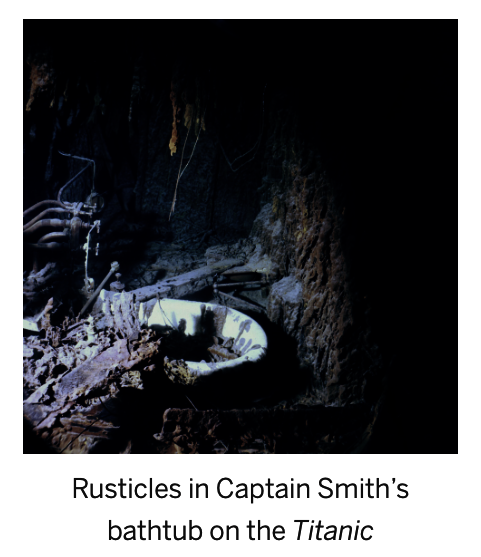
The wreckage of the Titanic is being destroyed by metal-eating bacteria known as "rusticles."

So far, the wreckage has not significantly deteriorated.

Experts describe the process of deterioration via rusticles as a kind of "recycling."