1
Mmuae Afoforo a Wobɛpaw:
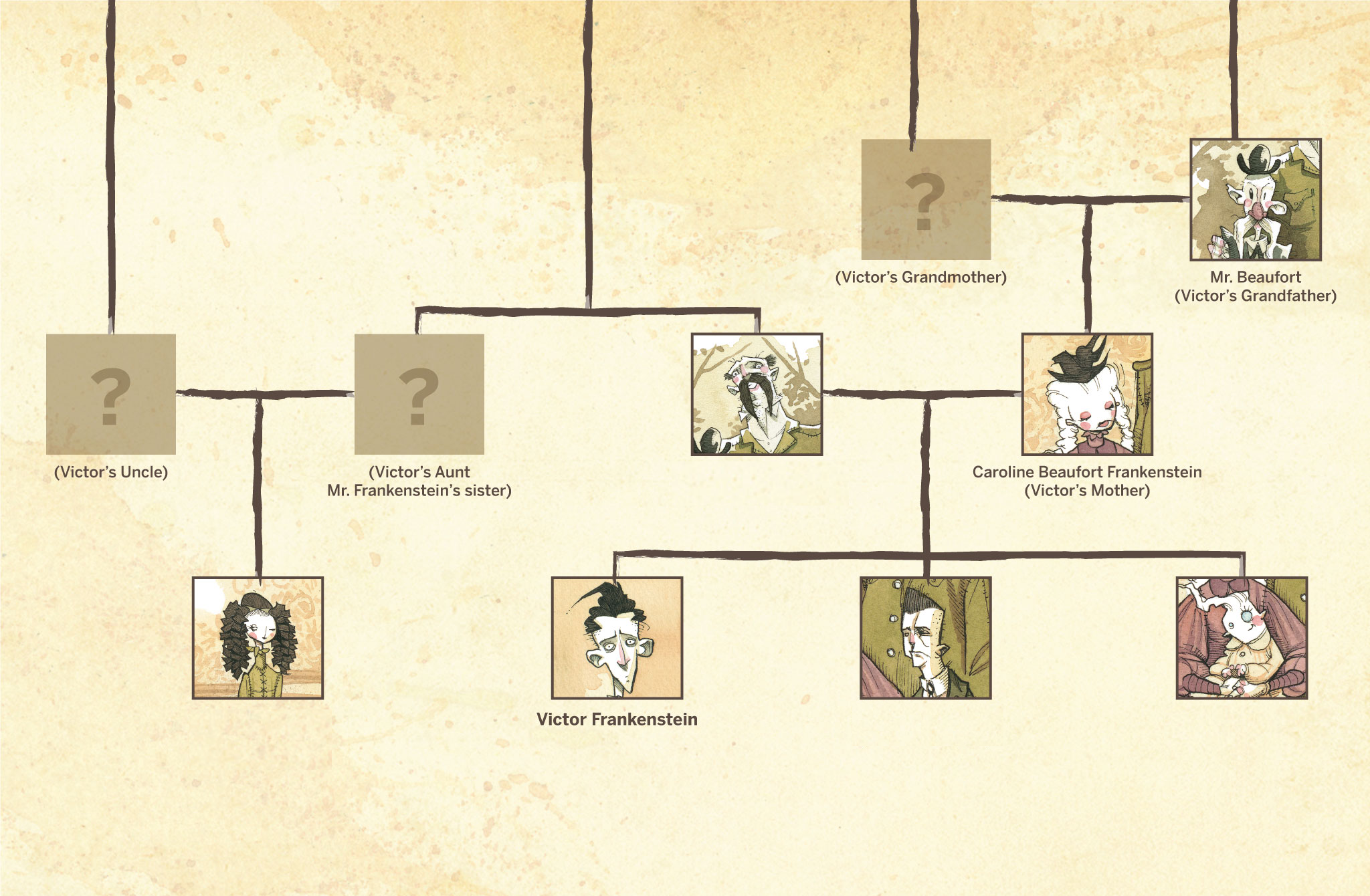
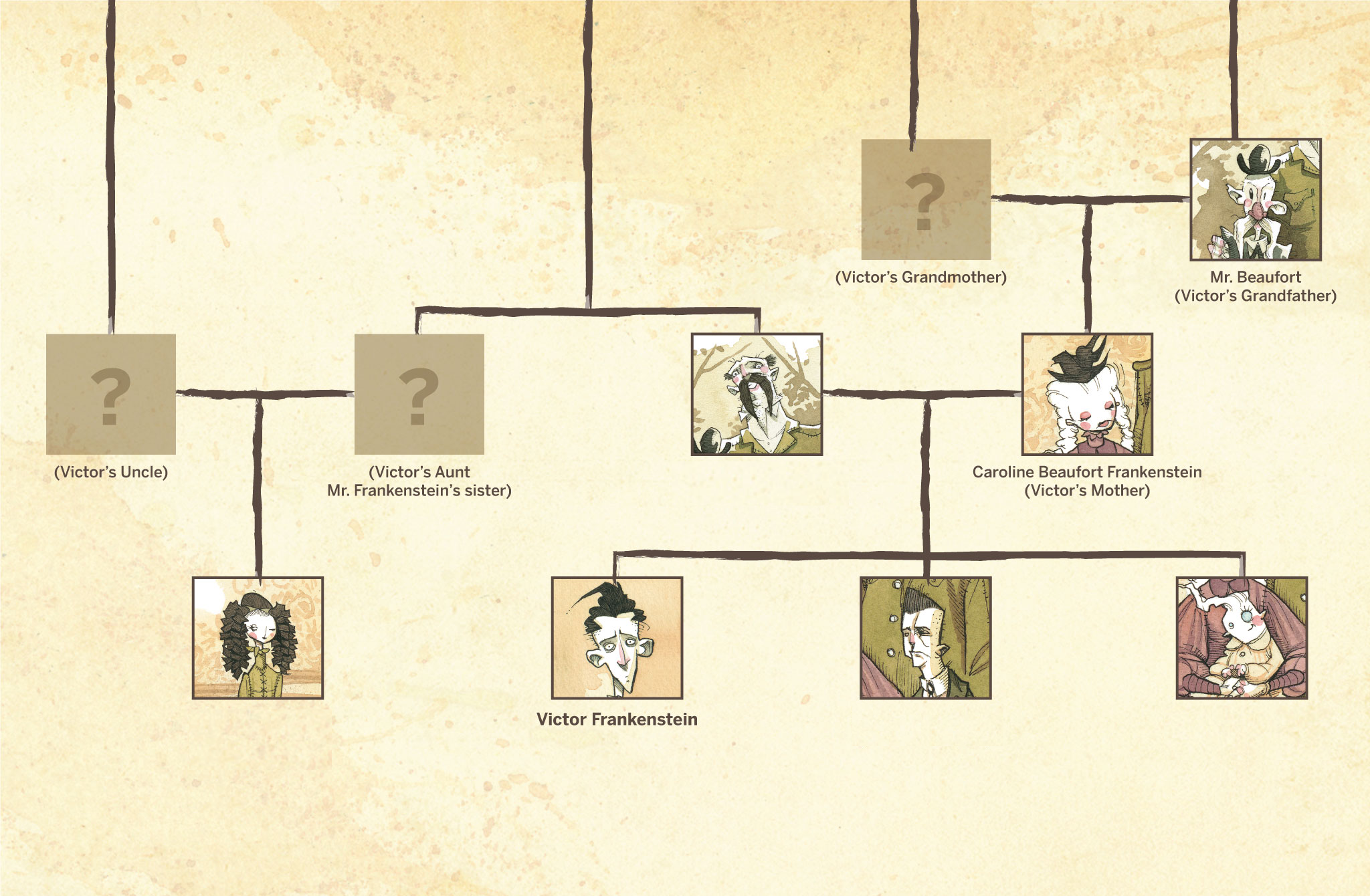
Elizabeth Lavenza
William Frankenstein
Ernest Frankenstein
Mr. Frankenstein
Epigraph
1 DID I REQUEST THEE,
2 MAKER, FROM MY CLAY
3 TO MOULD ME MAN?
4 DID I SOLICIT THEE
5 FROM DARKNESS TO
6 PROMOTE ME?
7 ---PARADISE LOST
Paraphrase the speaker's question by selecting the best replacement words:
"Did I you to turn me from into a ?"
Who is the speaker most likely talking to in these lines of poetry?
Which of the following best summarizes what the speaker is saying?
Look at the details from the text and from the illustration. What does this make you think the story is going to be about?
Volume I, Chapter 1, Pages 14–17
1 I am by birth a Genevese; and my family is one of the most distinguished of that republic. My ancestors had been for many years counsellors and syndics; and my father had filled several public situations with honour and reputation. He was respected by all who knew him for his integrity and indefatigable attention to public business.
2 One of his most intimate friends was a merchant, who, from a flourishing state, fell into poverty. This man, whose name was Beaufort, was of a proud and unbending disposition, and could not bear to live in poverty and oblivion in the same country where he had formerly been distinguished for his rank and magnificence. Having paid his debts, therefore, in the most honourable manner, he retreated with his daughter to the town of Lucerne, where he lived unknown and in wretchedness.
3 My father loved Beaufort with the truest friendship, and resolved to seek him out and endeavour to persuade him to begin the world again through his credit and assistance. 4 Beaufort lay on a bed of sickness, incapable of any exertion. His daughter attended him with the greatest tenderness. Several months passed in this manner. Her father grew worse, and in the tenth month died in her arms, leaving her an orphan and a beggar. This last blow overcame her; and she knelt by Beaufort’s coffin, weeping bitterly, when my father entered the chamber. He came like a protecting spirit to the poor girl, and after the interment of his friend he conducted her to Geneva. Two years after this event Caroline became his wife.
5 When my father became a husband and a parent, he found his time so occupied by the duties of his new situation, that he relinquished many of his public employments, and devoted himself to the education of his children. Of these I was the eldest, and the destined successor to all his labours and utility. But before I continue my narrative, I must record an incident which took place when I was four years of age.
Volume I, Chapter 1, Pages 18–19
2 I have often heard my mother say that she was at that time the most beautiful child she had ever seen, and shewed signs even then of a gentle and affectionate disposition. These indications, and a desire to bind as closely as possible the ties of domestic love, determined my mother to consider Elizabeth as my future wife.
3 From this time Elizabeth Lavenza became my playfellow, and, as we grew older, my friend. Although there was a great dissimilitude in our characters, there was an harmony in that very dissimilitude. I delighted in investigating the facts relative to the actual world; she busied herself in following the aërial creations of the poets. The world was to me a secret, which I desired to discover; to her it was a vacancy, which she sought to people with imaginations of her own.
Drag each answer option to the correct box to show what the characters liked.
Elizabeth
Victor
Victor is more interested in discovering and .
In contrast to Elizabeth, what seems to motivate Victor the most?
Volume I, Chapter 1, Pages 20–23 1 I feel pleasure in dwelling on the recollections of childhood, before misfortune had tainted my mind, and changed its bright visions of extensive usefulness into gloomy and narrow reflections upon self. But, in drawing the picture of my early days, I must not omit to record those events which led, by insensible steps to my after tale of misery. 2 When I was thirteen years of age, I chanced to find a volume of the works of Cornelius Agrippa. I opened it with apathy; the theory which he attempts to demonstrate, and the wonderful facts which he relates, soon changed this feeling into enthusiasm. A new light seemed to dawn upon my mind; and, bounding with joy, I communicated my discovery to my father. 3 “Ah! Cornelius Agrippa! My dear Victor, do not waste your time upon this; it is sad trash.”
4 If, instead of this remark, my father had taken the pains to explain to me that the principles of Agrippa had been entirely exploded, and that a modern system of science had been introduced, I should certainly have thrown Agrippa aside, but the cursory glance my father had taken of my volume by no means assured me that he was acquainted with its contents; and I continued to read with the greatest avidity. 5 My first care was to procure the whole works of this author, and afterwards of Paracelsus and Albertus Magnus. I read and studied the wild fancies of these writers with delight; they appeared to me treasures known to few beside myself.
6 It may appear very strange, that a disciple of Albertus Magnus should arise in the eighteenth century; but our family was not scientifical, and I had not attended any of the lectures given at the schools of Geneva. My dreams were therefore undisturbed by reality; and I entered with the greatest diligence into the search of the philosopher’s stone and the elixir of life. But the latter obtained my undivided attention: wealth was an inferior object; but what glory would attend the discovery, if I could banish disease from the human frame, and render man invulnerable to any but a violent death! 7 Nor were these my only visions. The raising of ghosts or devils was a promise liberally accorded by my favourite authors, the fulfilment of which I most eagerly sought; and if my incantations were always unsuccessful, I attributed the failure rather to my own inexperience and mistake, than to a want of skill or fidelity in my instructors.
8 When I was about fifteen years old, we witnessed a most violent and terrible thunderstorm. It advanced from behind the mountains of Jura; and the thunder burst at once with frightful loudness from various quarters of the heavens. I remained, while the storm lasted, watching its progress with curiosity and delight. As I stood at the door, on a sudden I beheld a stream of fire issue from an old and beautiful oak, which stood about twenty yards from our house; and so soon as the dazzling light vanished, the oak had disappeared, and nothing remained but a blasted stump. I never beheld anything so utterly destroyed. 9 The catastrophe of this tree excited my extreme astonishment; and I eagerly inquired of my father the nature and origin of thunder and lightning. 10 “Electricity.”
Which of the following statements best summarizes these paragraphs?
Based on the information in paragraph 6, what is the purpose of each of these items?
The philosopher's stone
The elixir of life
In addition to the philosopher's stone and the elixir of life, what did Victor's readings describe?
Victor tried to follow the methods described in these books, but he said his attempts because
Everyone has experienced a thunderstorm, but for Victor this was a major life event. Why do you think this experience affected Victor so much? What do you predict that this experience has to do with the rest of the story?