Log in
Sign up for FREE
arrow_back
Library

Magnetic Forces

star
star
star
star
star
Last updated about 2 hours ago
21 questions
Untitled Section 1
Magnetic Forces and Magnetic Fields

Wooden trains like the one pictured below use magnets to link the cars together. Because of magnets, the wooden engine in the front can pull several cars behind it.


However, if you were to separate the wooden engine from the rest of the train and turn it around, it would not connect to the other cars. Instead, it would push them away.

Can you think of a model you could use to explain how magnets can be used to either push or pull the train?

Previously, you read about forces that are transferred during collisions between objects.


Some objects can exert forces over a distance even when objects are not in contact! If you’ve ever played with wooden trains that connect with magnets or hung a paper on your fridge at home using a magnet, you’ve experienced one of these forces.

The force that a magnet exerts on certain materials, including other magnets, is called magnetic force.

You probably have lots of experience with the phenomena of magnetism if you have ever used refrigerator magnets or magnetic toys like those pictured below.


1
1
1

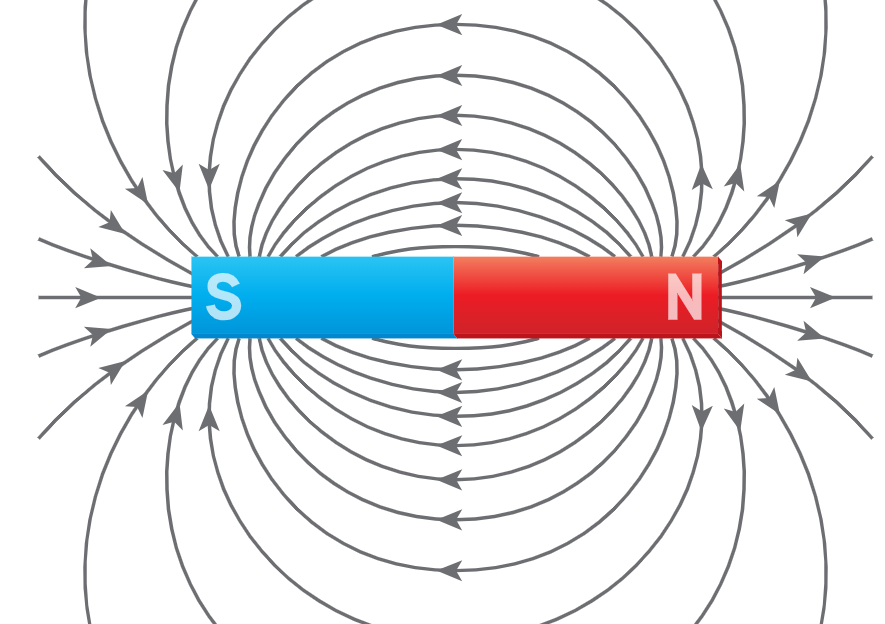
Magnets exert a magnetic force because they are surrounded by a magnetic field.


This field is the area surrounding a magnet where the attractive (pull force) can be detected. At one end of the field is the north and the other the south pole.


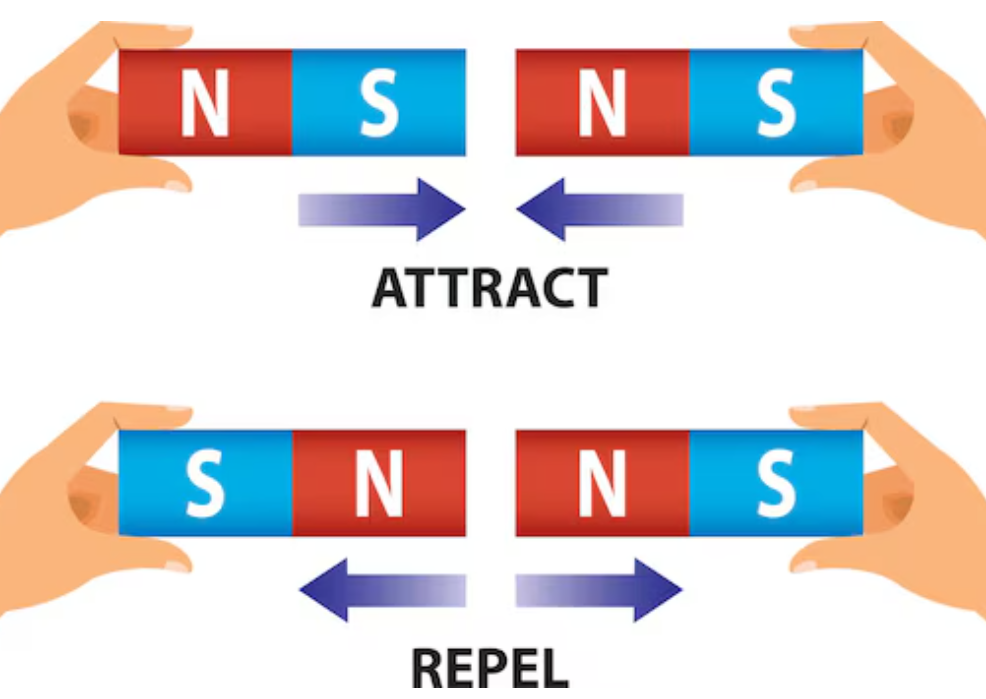
If you’ve played around with magnets before, you’ve probably noticed that sometimes magnets pull toward each other and other times they push each other away. This is because opposite poles (north and south) attract each other, but like poles, such as north and north or south and south, repel or push each other away.


1
1
1
1

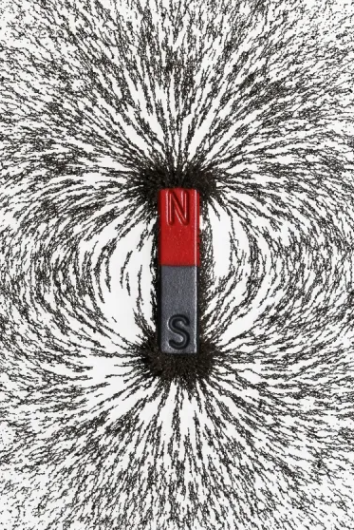
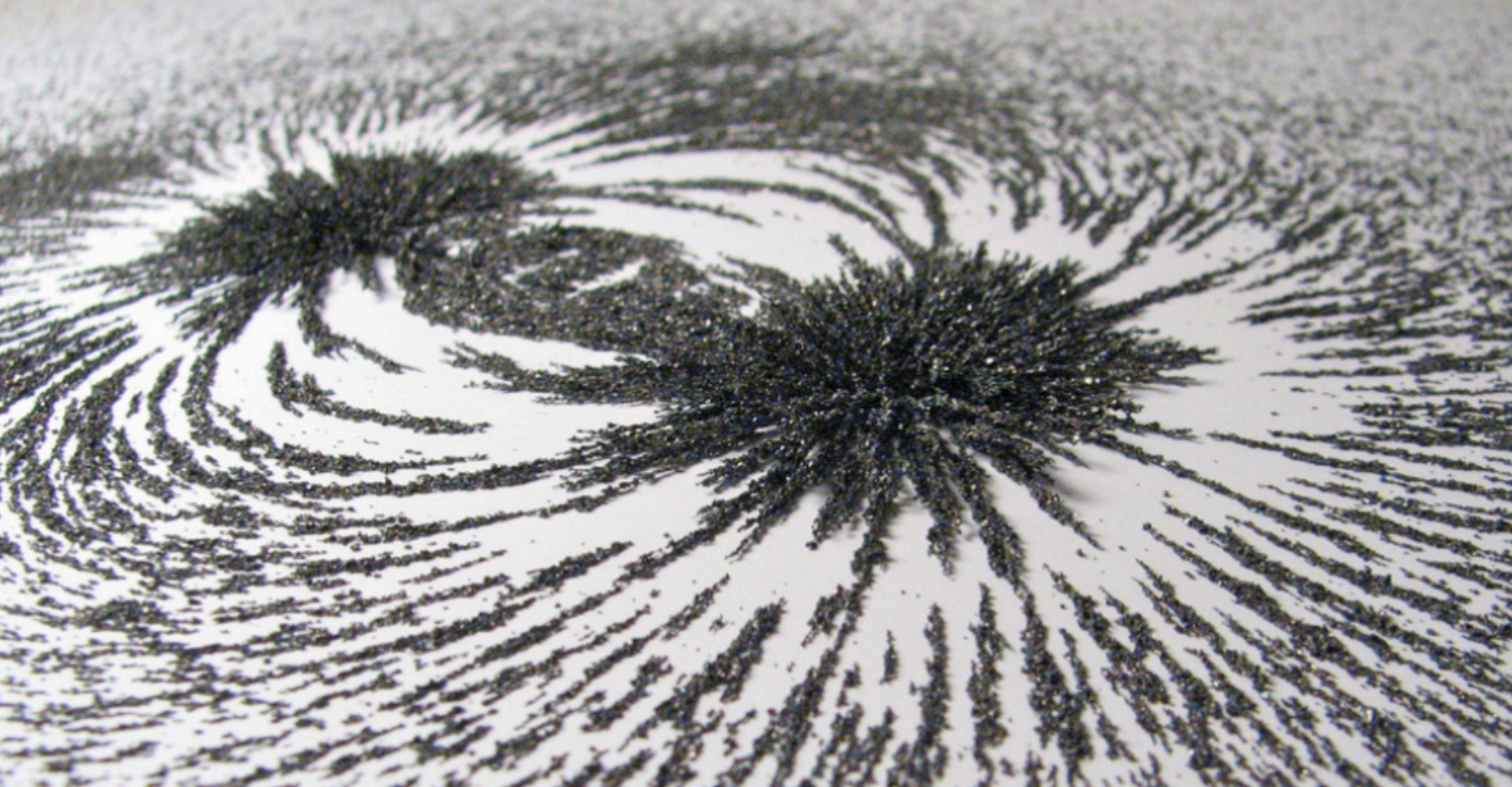
In the figure below, you can see the magnetic field surrounding a bar magnet. Tiny bits of iron, called iron filings, were placed on a sheet of paper. When a magnet was placed under the paper, it attracted the iron filings.


The pattern of the iron filings shows the lines of force that make up the magnetic field of the magnet.

Notice the larger concentration of iron filings at two distinct locations in the photograph. These piles of iron filings are located at either end of the bar magnet. This concentration is the location of the magnetic poles and indicates the areas that exert the strongest force.

Notice that the magnetic field lines move from north to south and south to north.


1
1
1
1

Magnets can either attract matter or repel matter.

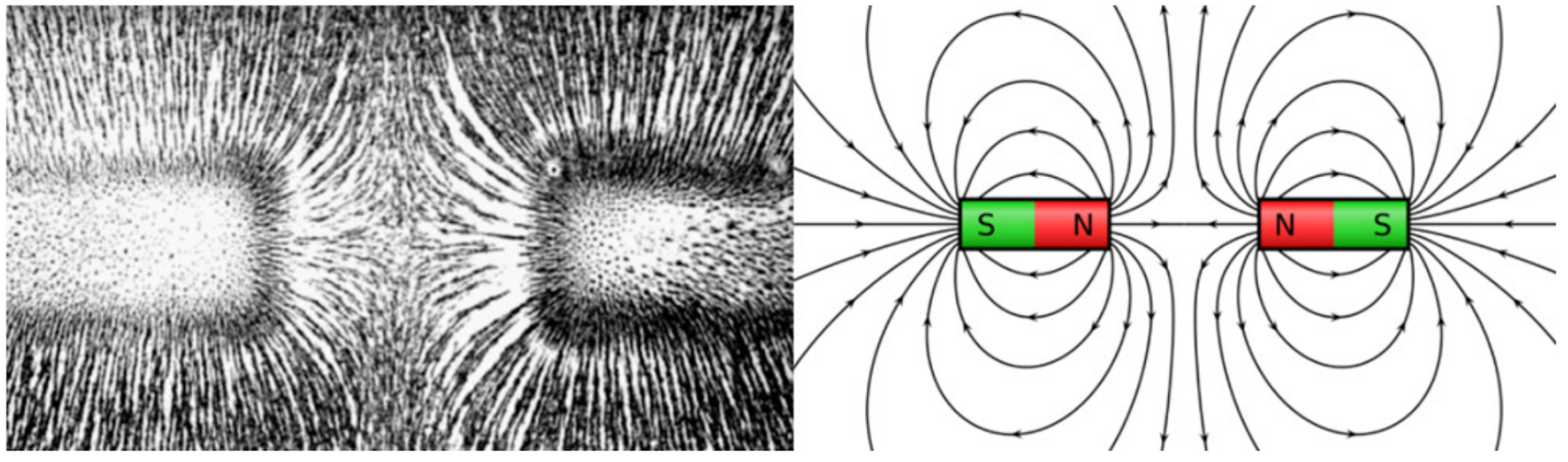
If you put two magnets close with the same poles facing each other, they will repel each other.

The pictures below show magnetic field lines between two magnets that are repelling each other.

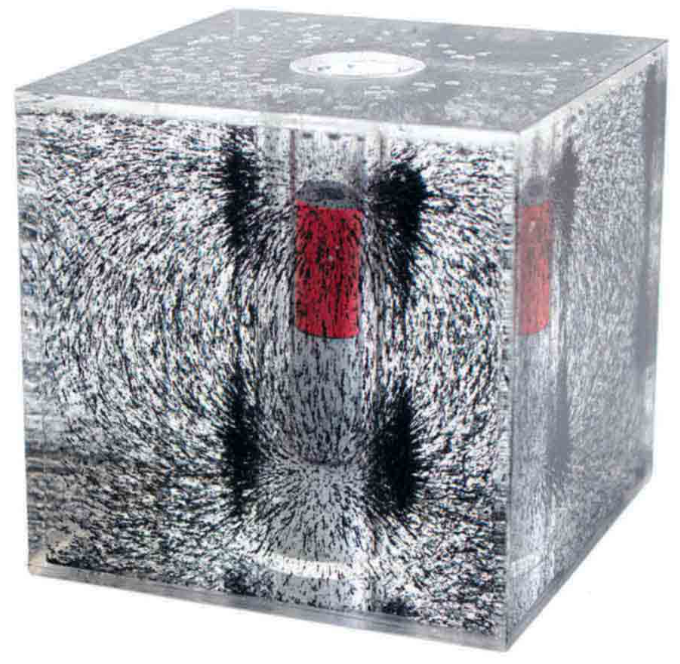
In the diagrams we are seeing the magnetic field lines in a two- dimensional space, however, an important thing to note about magnetic fields is that they are three dimensional and surround the magnet.


1
1
1

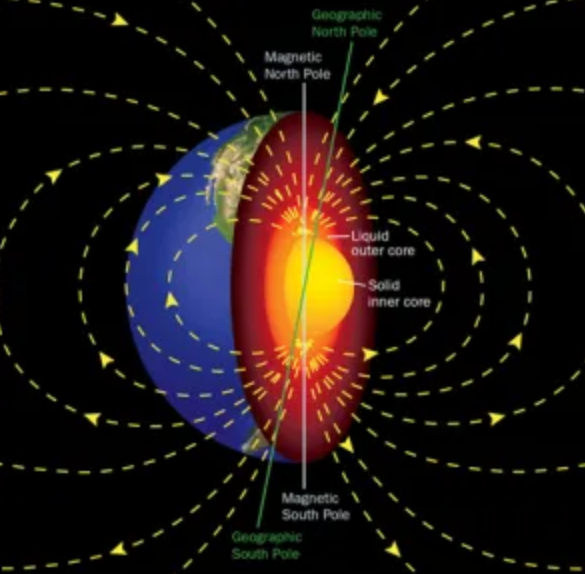
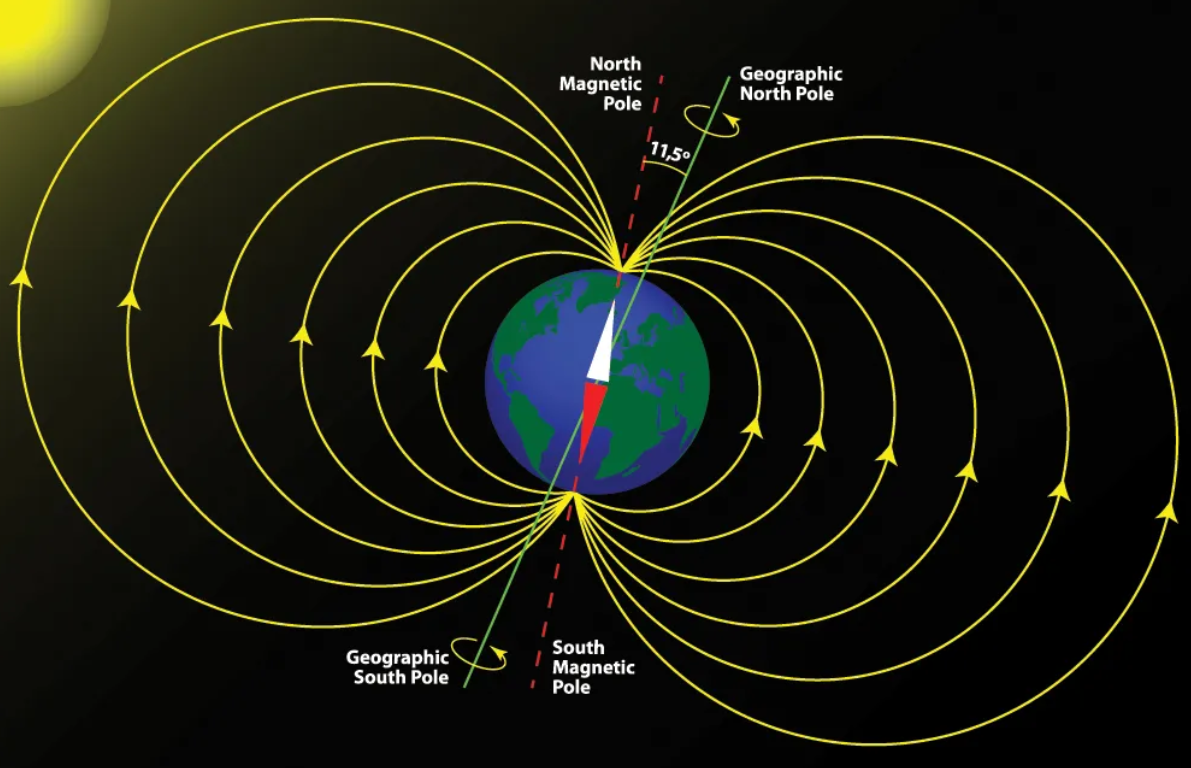
Surrounding our planet is a massive magnetic field that reaches all the way out into space


This is why we know north from south. When you use a compass, the tool is picking up that magnetic field and pointing the needle North.

Why do we have a magnetic field? Inside the Earth we have two cores: a solid metal inner core of mostly iron, and a liquid outer core mostly composed of iron and nickel. As the Earth spins the liquid outer core moves around the inner core creating a magnetic field.


Materials that are attracted by magnetic fields are called ferromagnetic.

Some people think that all metals are magnetic or are ferromagnetic, but this is not true. Most materials, even most metals, are not ferromagnetic.

However, iron, nickel and cobalt are some examples that are ferromagnetic. Steel, which is made from iron, is also ferromagnetic.

1
1
1
1

Magnetic forces can pass through materials whether they are ferromagnetic or not.

For example, the magnet that will hold your next science test to your fridge door has a magnetic field that passes through the paper (which is not ferromagnetic) and attracts the ferromagnetic steel in your fridge door.

1
1
1

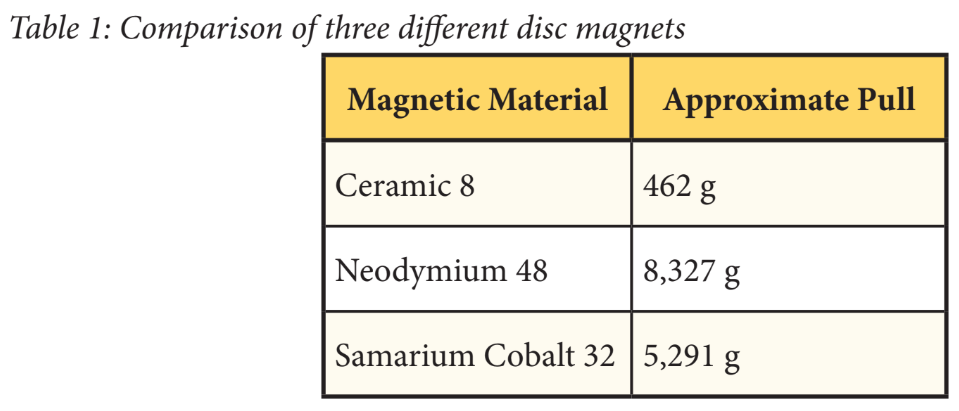
The strength of a magnet depends in part on the materials that make up the magnet.

Look at the data table below. The table is comparing three different disc magnets all of which have the same diameter and thickness.

Using this data, which material makes the better magnet? Write a claim and use the evidence to write a supporting statement.

Magnetic force is also affected by distance.

You can test this out. All you need is a compass and a magnet or just two magnets.

As with all experiments, make a prediction of what will happen, identify your variables (independent variable what you are changing; dependent variable, what you are measuring; and control variables), figure out how you will measure your results, and run your experiment.

Creating Diagrams

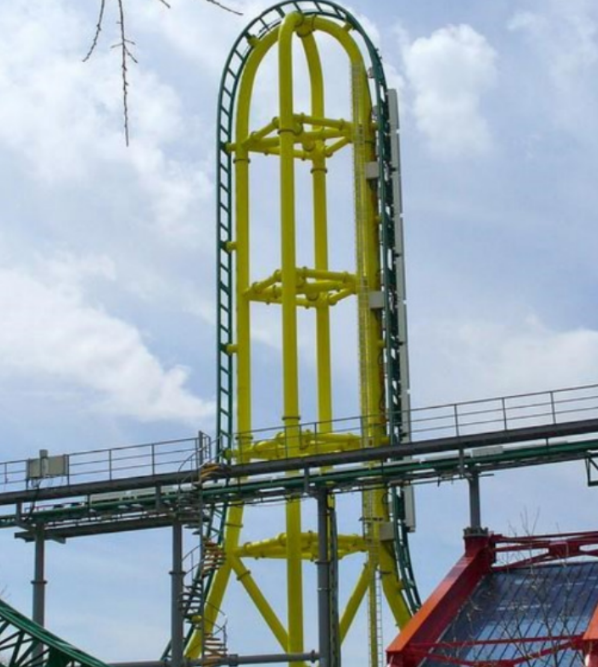
An amusement park in Farmington, Utah doesn’t use chains to pull the cars up this steep incline. Instead it uses magnets to make the roller coaster move! Create a diagram to show how the roller coaster can move on this track.


Question 1
1.

What is the force that magnets use to attract objects?
Question 2
2.

Which of these objects uses magnetic force to stick?

Question 3
3.

Can magnets exert force without touching objects?

Question 4
4.

What happens when north and south poles face each other?
Question 5
5.

What does it mean when magnets repel?

Question 6
6.

What direction do the arrows in a magnetic field point?

Question 7
7.

How do opposite poles of magnets interact?

Question 8
8.

What does the 'N' stand for on the magnet?
Question 9
9.

Where are the strongest magnetic forces located?

Question 10
10.

What do the iron filings represent in the image?

Question 11
11.

What direction do magnetic field lines flow?

Question 12
12.

What do the lines around the magnet represent?
Question 13
13.

What happens when like poles of magnets come close?

Question 14
14.

In what shape are magnetic field lines typically shown?

Question 15
15.

What are materials attracted by magnetic fields called?

Question 16
16.

Which of the following is NOT a ferromagnetic material?

Question 17
17.

Which metal is known to be ferromagnetic?

Question 18
18.

Is steel a ferromagnetic material?

Question 19
19.

Can magnetic forces pass through non-ferromagnetic materials?
Question 20
20.

What material does the fridge door contain that is ferromagnetic?

Question 21
21.

What does the magnetic field attract in the fridge door?