Log in
Sign up for FREE
arrow_back
Library

Rocks and the Rock Cycle

star
star
star
star
star
Last updated about 4 hours ago
56 questions

So Earth is geologically active. Okay, how does that relate to rocks? All rock material originally comes from within the Earth. The heat energy left over from formation creates volcanoes and other formations. This renews Earth materials allowing atoms to be rearranged, forming and reforming the minerals that make up rocks. Rocks that form directly from liquid rock called lava or magma, are called igneous rocks.

1
1
1
1

Igneous rocks can form either on or very near the surface, rapidly cooling and solidifying (extrusive igneous rock), or cooling very slowly within the Earth’s crust (intrusive igneous rock). All igneous rocks form from liquid rock.

1
1
1
1
1

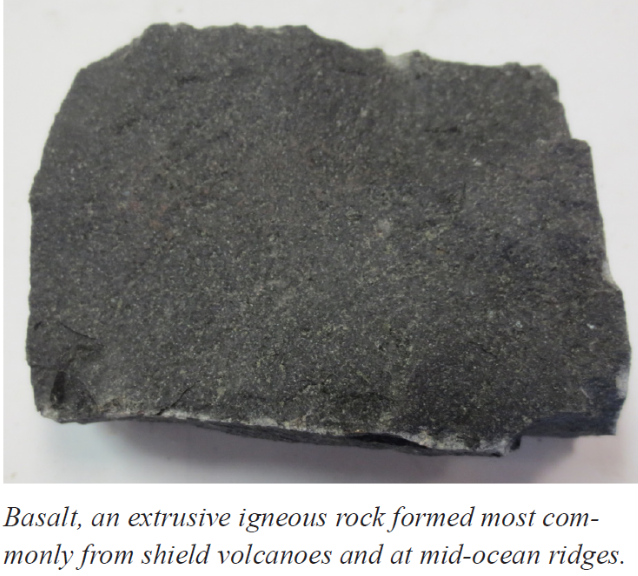
Minerals are crystals that make up rocks and in the case of igneous rocks, the rate of cooling will determine what crystals will form and how large they will be. In an extrusive rock, the mineral crystals will be very small. Most of the time you need a microscope to really be able to see them very well. This is because the lava will be erupted onto the surface and cool very rapidly. This doesn’t allow for large crystal formation. An example of an extrusive rock is the rock below called basalt.

1
1
1
1

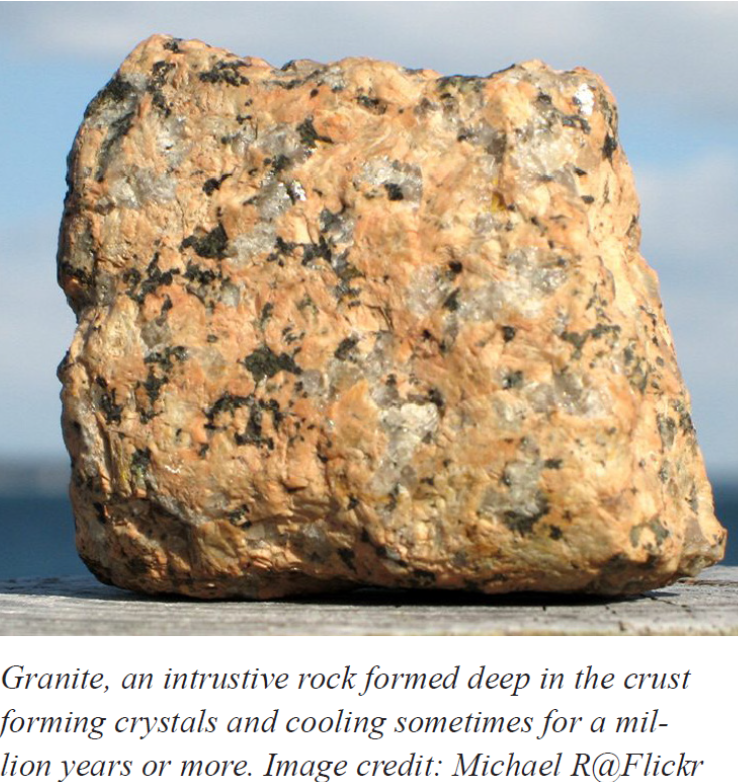
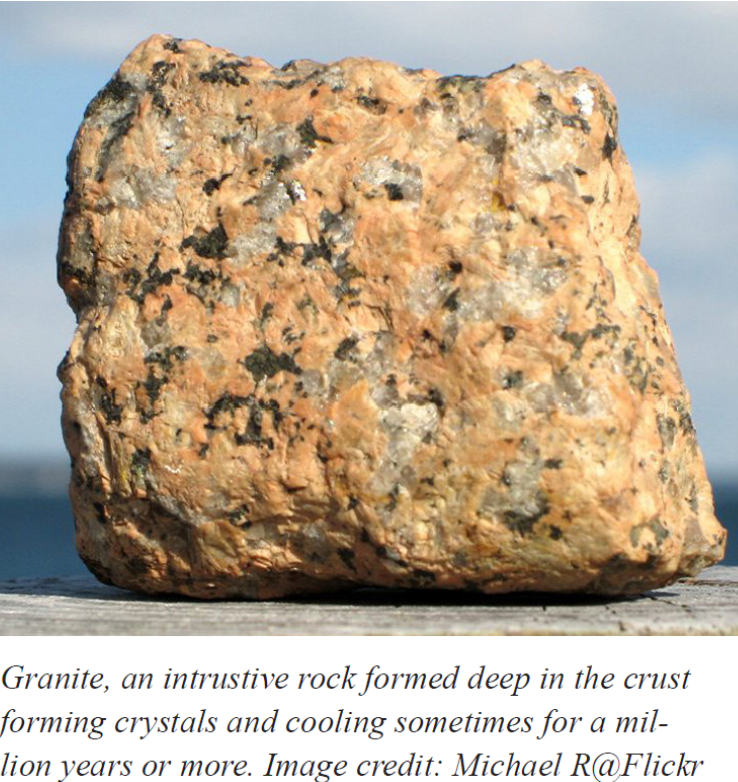
In an intrusive rock, mineral crystals are easily seen. Take the example of an intrusive rock called granite in the picture below. There are large chunks or patches of colors. These are mineral crystals easily seen by the naked eye. This occurs because magma that is cooling deep in the crust will cool for very long periods of time. A granite rock like this one may have taken more than a million years to Cool.


1
1
1
1
1

So how do these crystals form in the rock like this? Different materials are liquid at different temperatures. Some materials must be very hot to be liquid, while others need less heat. While the magma cools, some atoms will begin to be attracted to other specific atoms and form molecules in a definite shape. They will begin to form solid crystals in the liquid magma. The first minerals to form in a piece of rock like the granite pictured on the right will be two black minerals called augite and biotite (seen in the picture as dark specks). Next the pinkish chunks, the mineral orthoclase, will form. Last to form is the whitish/clear mineral named quartz. This process is called crystallization.


1
1
1

Sedimentary Rocks

Most of the rocks on the planet are igneous rocks. They make up the majority of crustal rock (the outermost layer of the Earth). After the rock becomes exposed at the surface, the process of weathering will begin. Weathering is the altering or breaking down of materials. Weathering can be mechanical or chemical.

1
1
1

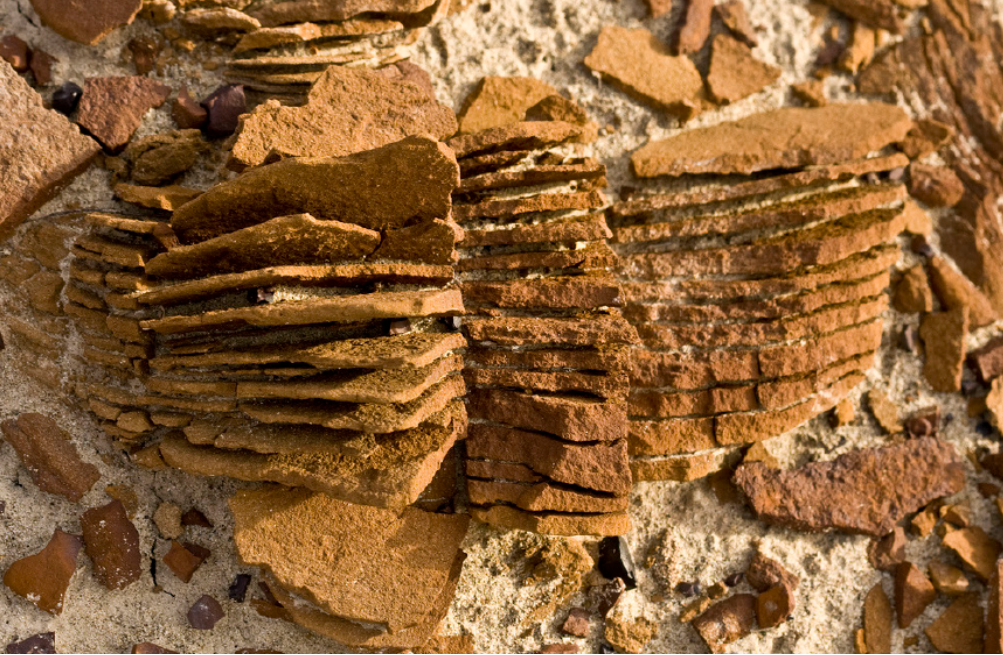
In mechanical weathering (also known as physical weathering), rock bits are broken apart without a change in what they are made of. This can happen as plants burrow their roots into the rock, through freeze and thaw cycles (see image below), by salt crystal growth in crevices, by simple impacts of another rock, the repeated motion of animals, or through heat.


1
1
1

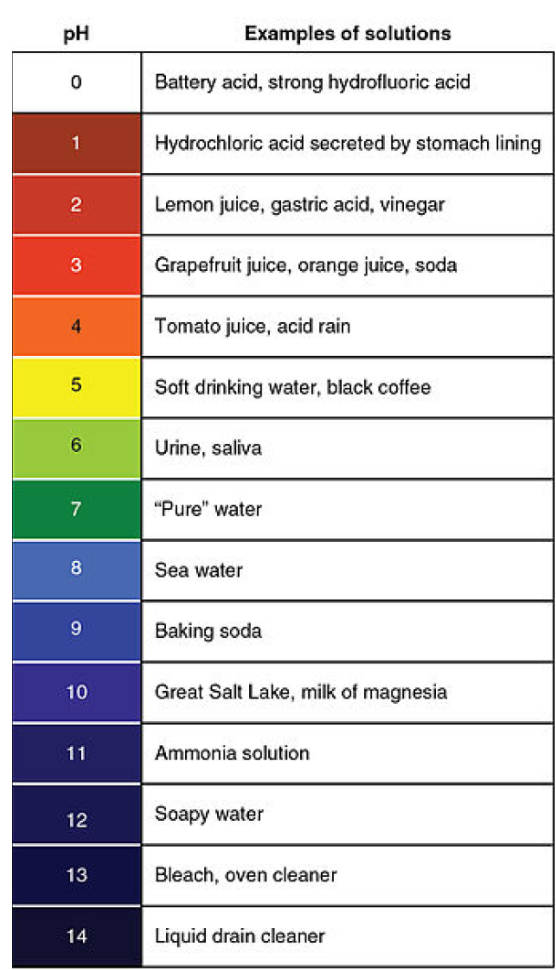
In chemical weathering, the rock is chemically altered. Molecules that make up the rock can be dissolved and altered. How does this happen? As rainwater falls from the sky it is naturally slightly acidic, a pH of about 5.6. Now, this is not acid rain. Acid rain must have a pH of 4.0 or lower. Even though it is not acid rain, it is acidic enough to chemically alter the rock (According to the chart on the right, any pH rating lower than 7 is considered acidic).


1
1

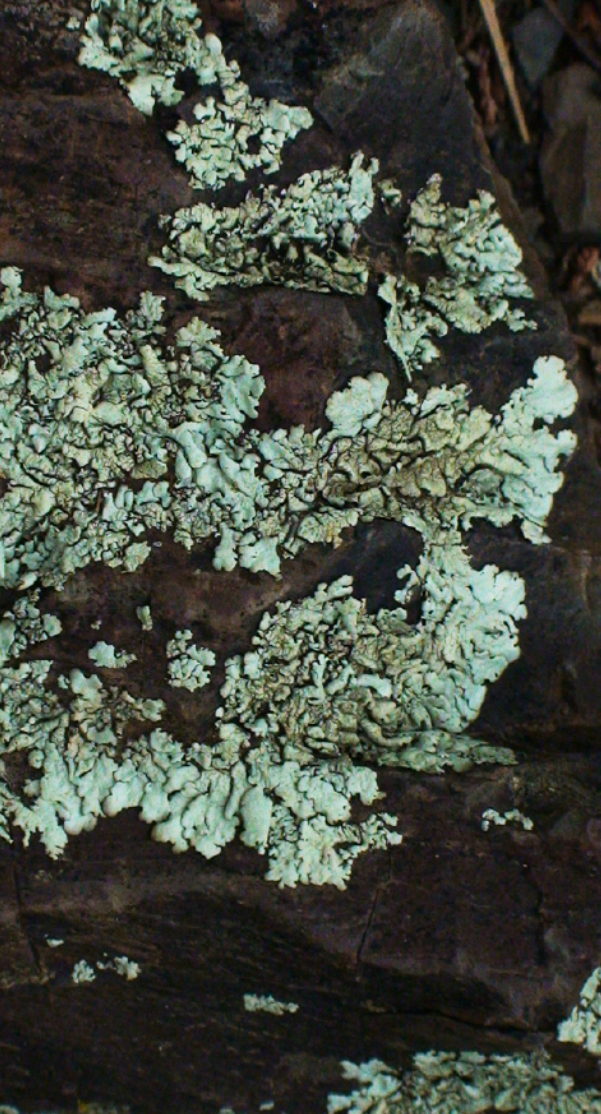
Life can also chemically break down rocks. There aren’t very many, but some species of fungi, plants, and protists can excrete acids onto rocks in order to extract minerals and nutrients needed by the organism. An example of this is a lichen pictured below.


1
1

Mechanical and chemical weathering over time wear down rocks and produce soil by breaking down rock material to produce sediments. Sediments are small particles categorized by size. The largest sediment size is gravel, followed by sand, silt, and the smallest particles are clay.

1
1
1

Fun Fact!

It can take up to 400 years to form soil from newly formed rock. However, it can take up to 3,000 years before that soil is Fertile.

1
Question 35
35.

Which process can take a long time according to the passage?

These particles can be transported either by water or wind in a process called erosion. Eventually these materials will settle, called deposition, in a location. During sedimentation, sediments are deposited on beaches and deserts, at the bottom of oceans, and in lakes, ponds, rivers, marshes, and swamps. Landslides drop large piles of sediment at the base of mountains most often in a horizontal position. Glaciers leave large piles of sediments, too. Wind can erode sand and smaller particles.

1
1
1

If these sediments become compacted and cemented together they will form sedimentary rocks. The type of sediment that is deposited will determine the type of sedimentary rock that is formed.

1
1
1

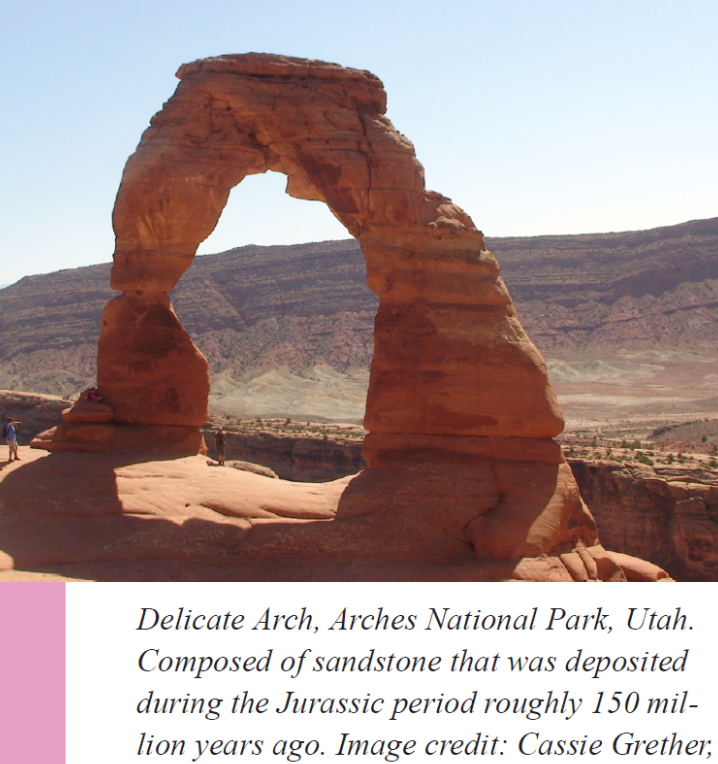
The Delicate Arch inside Arches National Park in Southeastern Utah (pictured below) brings people from all over the world to explore the amazing sedimentary rock formation. The sedimentary rock that makes up the arch is more than a hundred million years old, but the arch itself isn’t as old as that. Slowly the land above the arch was eroded away leaving rock fins (rock formation seen on the right). More rock was eroded and wind and rain created a cavity, eventually creating the arch.


1
1
1
1

Metamorphic Rocks

The prefix meta, in this case, means change while morph means form. The term Metamorphic then means to change form. Metamorphic rocks are rocks that are changed by pressure and heat inside the crust. The heat is not hot enough to melt the rock material. Instead, the heat and pressure sometimes rearrange the molecules that are in the rock into different minerals. The heat and pressure can also cause folding in the rock, and change its texture. These processes are known as deformation.

1
1
1

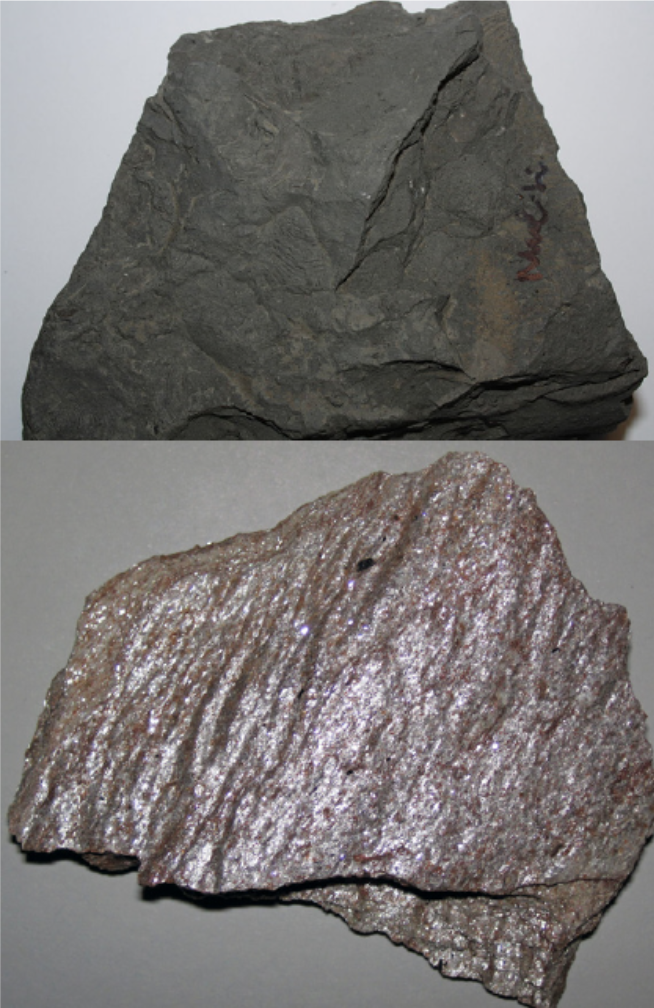
The image below is a sedimentary rock, shale, formed from muds. After shale is put under pressure and heat it can change to the sparkly metamorphic rock, schist.


1
Question 49
49.

1

The Rock Cycle


Energy flows and matter cycles in and out of Earth’s systems through many different processes. In the rock cycle, gravity, weathering and erosion, and heat and pressure all play a huge role in recycling atoms, creating soils, and releasing minerals to be used by organisms. These processes don’t destroy or create new matter, but instead rearrange atoms as they move through Earth’s systems.

1
Question 51
51.

1

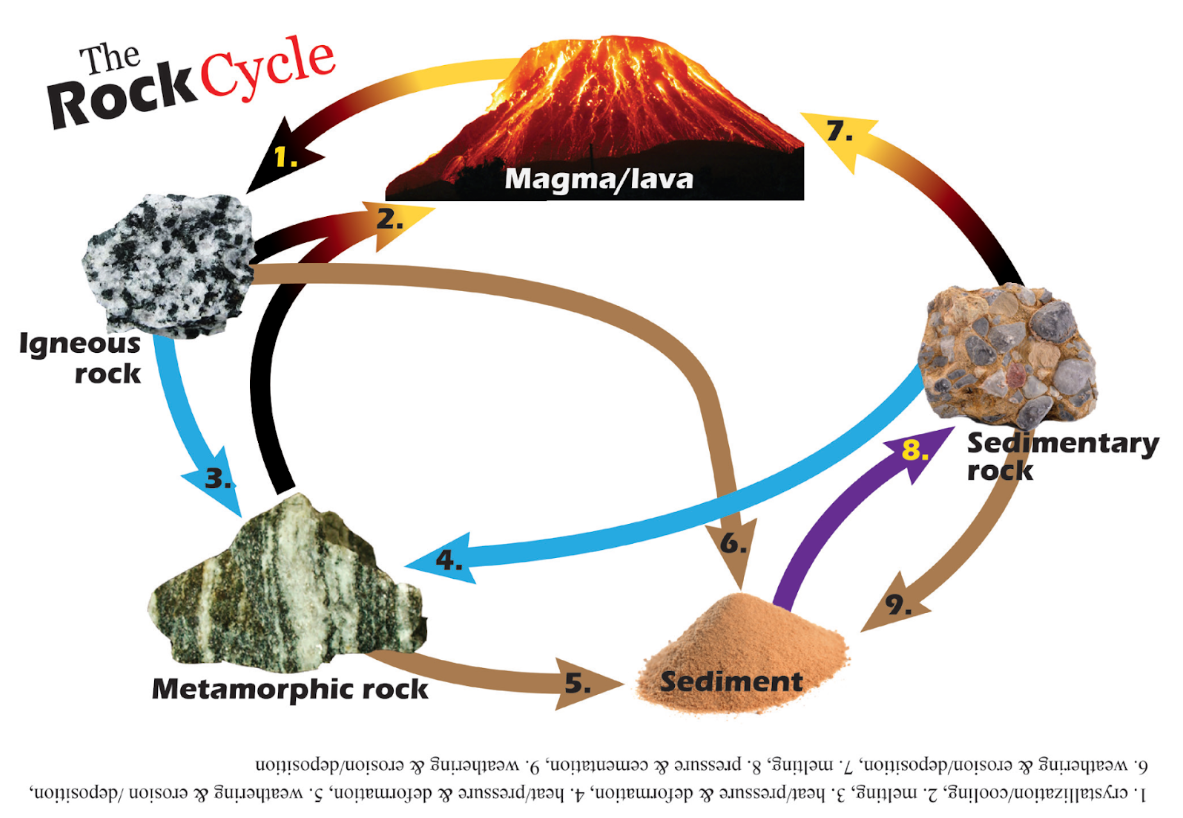
In the rock cycle, rocks can change to any other rock type. Melting can turn any rock back into magma that will eventually crystallize into an igneous rock. Weathering and erosion can turn any rock type into sediment which through deposition, pressure, and cementation, can turn into a sedimentary rock. Burial, heat and pressure can turn any rock type into a metamorphic rock.

1
1
1
1

Below is a diagram of the rock cycle. Notice that the terms have been left blank. Do your best to label the arrows in the diagram with the following terms: melting, crystallization/cooling, weathering & erosion/deposition, pressure & cementation, heat/pressure & deformation.


Question 1
1.

What is the source of all rock material on Earth?

Question 2
2.

What term describes rocks formed from lava or magma?

Question 3
3.

What geological activity creates volcanoes?

Question 4
4.

What do minerals in rocks come from?

Question 5
5.

What is an extrusive igneous rock?

Question 6
6.

How do igneous rocks form?

Question 7
7.

Where do intrusive igneous rocks cool?

Question 8
8.

What happens to liquid rock to form igneous rocks?

Question 9
9.

What is a characteristic of intrusive igneous rocks?

Question 10
10.

What type of rock is basalt?

Question 11
11.

How are the crystals in basalt formed?

Question 12
12.

What primarily influences crystal size in basalt?

Question 13
13.

What happens to lava that forms basalt?

Question 14
14.

What type of rock is granite?

Question 15
15.

What is a visible feature of granite?

Question 16
16.

How long can granite take to cool?

Question 17
17.

Where does granite form?

Question 18
18.

What causes mineral crystals in granite?

Question 19
19.

Where does granite form?

Question 20
20.

Which mineral forms last in granite?

Question 21
21.

What is the process of crystal formation called?

Question 22
22.

What type of rock makes up most of the Earth's crust?

Question 23
23.

What does weathering do to rocks?

Question 24
24.

What happens to rocks after they are exposed at the surface?

Question 25
25.

What is *mechanical weathering*?

Question 26
26.

What role do plant roots play in mechanical weathering?

Question 27
27.

How do impacts from other rocks contribute to weathering?

Question 28
28.

What process alters rocks using acidic rainwater?

Question 29
29.

What pH indicates acidic solutions?

Question 30
30.

What do lichens excrete onto rocks?

Question 31
31.

Why do some species excrete acids onto rocks?

Question 32
32.

What process wears down rocks to produce soil?

Question 33
33.

Sediments are categorized mainly by what?

Question 34
34.

What is formed when rock material breaks down?

Erosion
Soil formation
Rock melting
Question 36
36.

What process transports particles by water or wind?

Question 37
37.

What happens when materials settle in a new location?

Question 38
38.

What do glaciers leave behind?

Question 39
39.

What process forms sedimentary rocks from sediments?

Question 40
40.

What determines the type of sedimentary rock formed?

Question 41
41.

Which rocks form from compacted and cemented sediments?

Question 42
42.

What type of rock is Delicate Arch made of?

Question 43
43.

When was the sandstone deposited?

Question 44
44.

What natural processes created the arch?

Question 45
45.

Where is Delicate Arch located?

Question 46
46.

What causes metamorphic rocks to change?

Question 47
47.

What type of change occurs in metamorphic rocks?

Question 48
48.

Are metamorphic rocks formed from molten rock?

What happens to shale under heat and pressure?
It becomes schist
It turns into granite
It remains unchanged
It melts completely
Question 50
50.

What is schist?

What happens to atoms in the rock cycle?
They are rearranged through processes.
They remain unchanged.
They are destroyed completely.
They are created as new matter.
Question 52
52.

What is one outcome of the rock cycle for organisms?

Question 53
53.

What process turns any rock back into magma?

Question 54
54.

What can change sediment into sedimentary rock?

Question 55
55.

What do heat and pressure create in the rock cycle?

Question 56
56.

What is required for sedimentary rocks formation from sediment?