Log in
Sign up for FREE
arrow_back
Library

Layers of the Earth

star
star
star
star
star
Last updated about 4 hours ago
38 questions

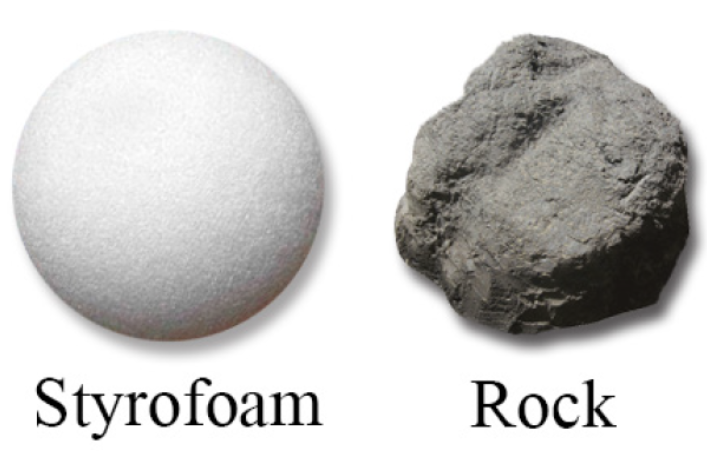
What is density? Take two objects of the same size: a styrofoam ball and a rock. Which one weighs more? The rock, right? It’s kind of a no brainer, but why does a styrofoam ball weigh so much less if both objects are the same size?
1
Question 1
1.

1

to measure how close the atoms are to one another in an object. The closer the atoms are, the more compact the object is. Also, the more dense an object is, the heavier it will feel for its size. In other words, density is how compact an object is, not how much the object weighs.

1
1

Density has two factors, mass and volume. We can calculate density by identifying an object's mass and measuring the object’s volume.

1
Question 5
5.

What two factors are involved in calculating density?

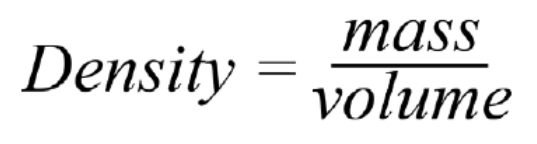
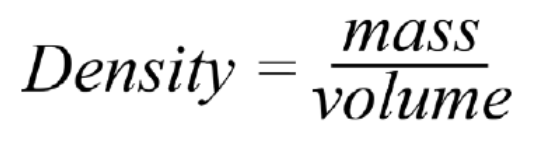
Mathematically stated, density equals mass divided by volume, or the amount of mass per unit of space. See the equation above.


1
Question 6
6.

How is density calculated?

Density determines many things in the natural world. It is part of the reason each of the inner planets is made of rocky materials, while the outer planets are made up of gases. It is why the air is thick near the ground, but very thin at the top of the atmosphere. Density of building materials and boats is also a useful application of density.

1
Question 7
7.

1

Earth’s Layers

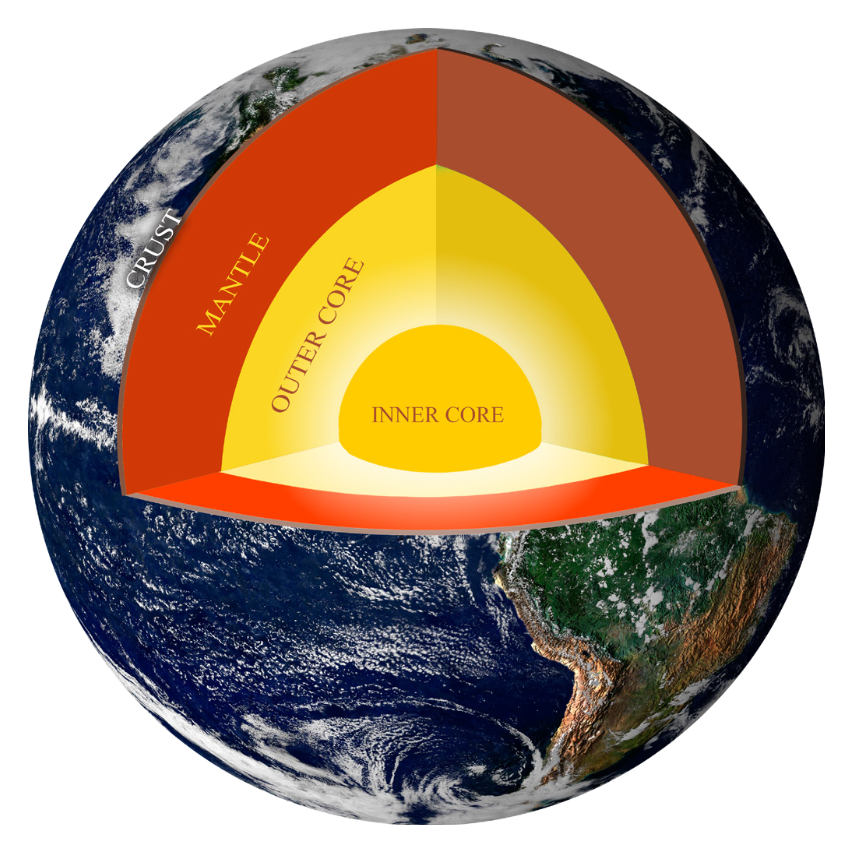
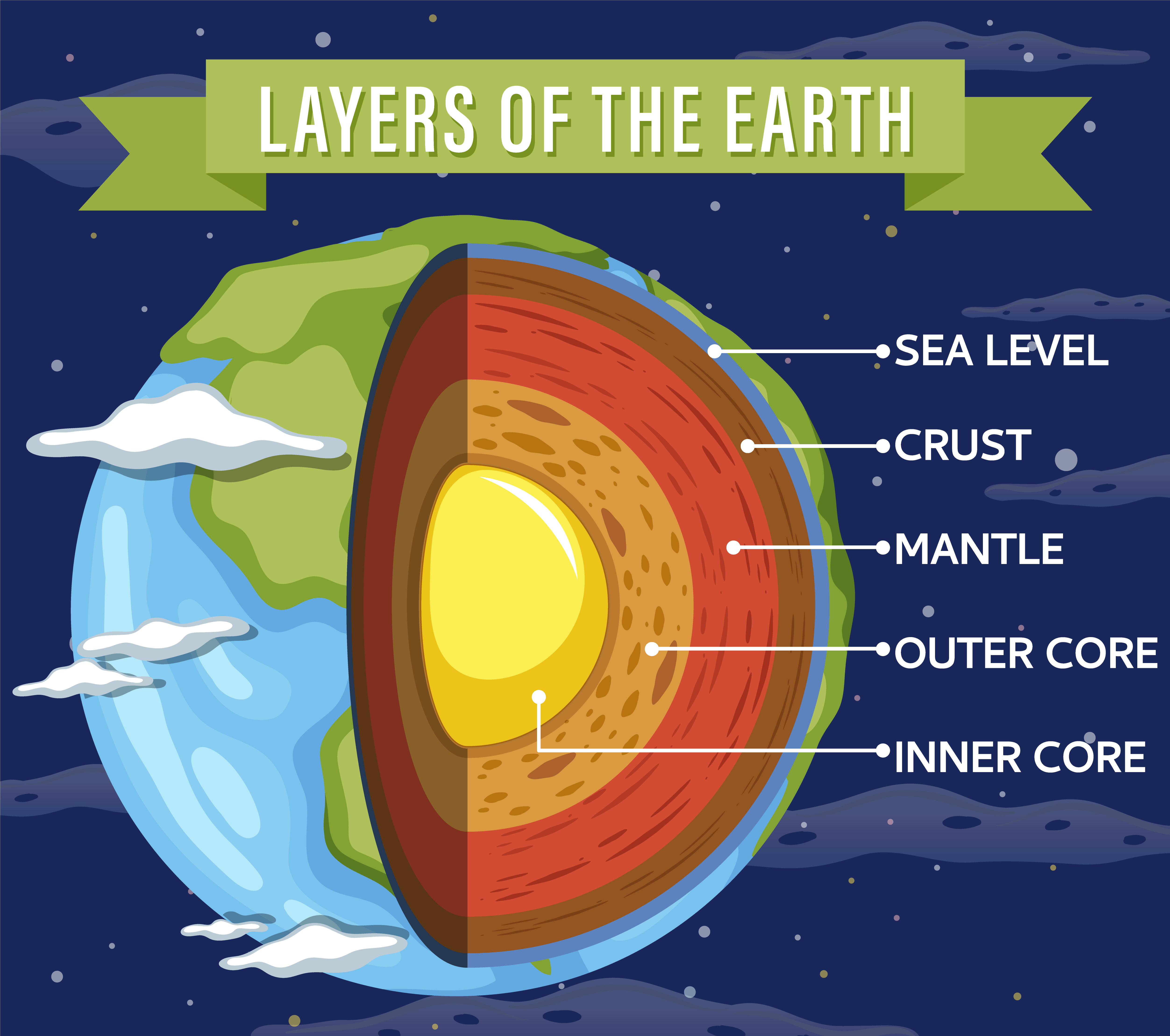
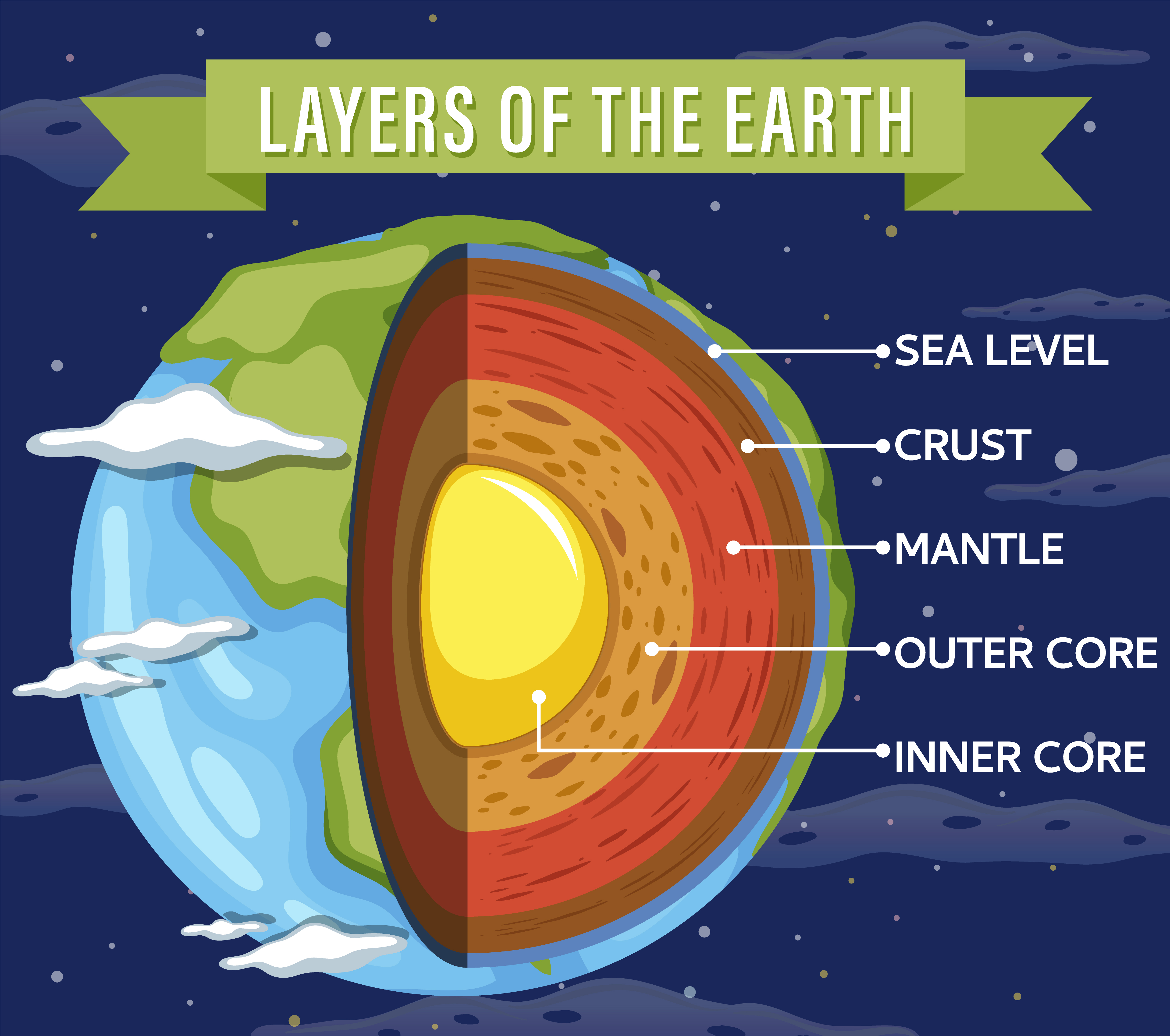
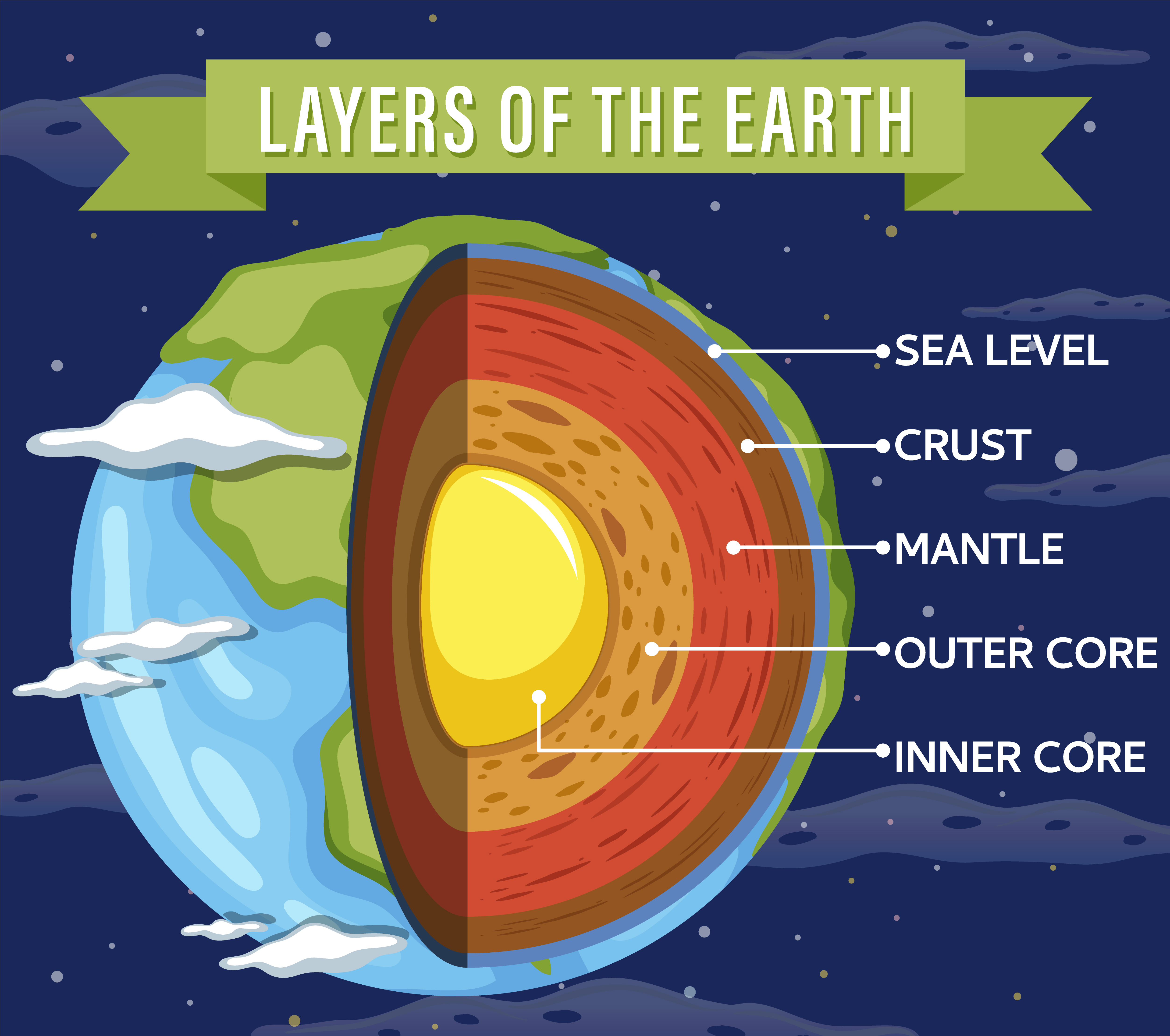
You probably heard in elementary school that the Earth is made up of layers. The outermost layer is the crust. The next layer is the mantle, while the inner layers are the outer and inner cores. Each layer has a slightly different composition than the layer above it.

At the crust are high levels of silicon and oxygen. As you go deeper into the Earth there is more and more magnesium, and iron. These materials didn’t just collect in certain places because they wanted to. It all has to do with density.


1
1

Some molecules and single atoms naturally have a lower or higher density than others. In fact on average, as you go deeper into the Earth, materials get more and more dense. It seems strange to think of this happening by accident.

When we look to other solar system bodies, the same thing is true there too. There is an emerging pattern. The outer layers are the least dense, while the inner layers are more dense.


1
1
1

Millions of collisions from comets and asteroids worked together to create the planet. There was heat energy in the Earth that is still left over from those violent beginnings. This heat energy doesn’t just make rock hot, it also moves it!

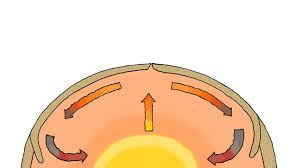
Before we explain exactly how this happens, think about when you have a campfire. The heat from the fire warms the air around it. This makes the air less dense and causes it to rise. You can observe flames and embers rising to the sky. Later, as the air moves away from the fire, it cools, becomes less dense, and sinks back towards the ground. Convection is the transfer of heat caused by the movement of the heated parts of a liquid or gas.


1
1
1

The Earth, in its early beginnings, was entirely molten, meaning in a liquid state. As convection currents carried heat from the center outward, it brought along matter with it as well. This churning motion cycling through the Earth brought dense materials (like iron) from the surface to the core and allowed less dense materials (like silicon and oxygen) to settle at the surface.

1
1
1
1

The inner core is the most dense layer of the Earth. It is a solid, mostly iron core with lesser amounts of nickel, gold, platinum, uranium, and lead. All of these materials are naturally very dense materials. This layer is also the hottest layer in the Earth.


1
1
1
1
1
1

The next layer of the Earth is the outer core. This layer is the only fully liquid layer inside of the Earth. It is very hot and dense. Just like the inner core, it is primarily made up of dense metals with the largest percentage of materials being nickel and iron.


1
1
1
1
1

The mantle, the layer between the core and the crust, is a very hot, moderately dense layer made more out of rocky materials than metals. This layer is primarily made up of magnesium, iron, and very little to no silicon and oxygen.


1
1
1

The crust, which is the outer rock layer of Earth, is made up primarily of rocks that have a much higher silicon and oxygen content. The crust is the layer that is directly in contact with the mantle, and the surface is where we walk.

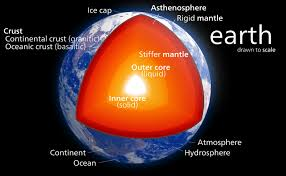
Earth’s hydrosphere (rivers, lakes, and ocean) sit on top of the crust, while the least dense layer, the atmosphere, sits on top of all other layers.


1
1
1
1

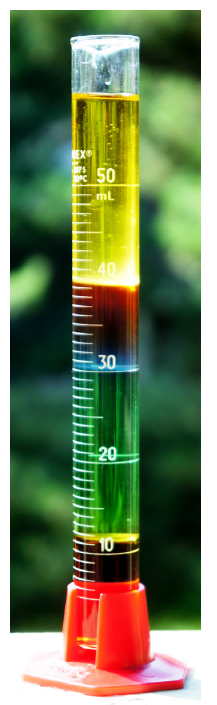
You can see this density sorting in real time. This is full of different fluids all of different densities. We can show this density sorting with lava lamps, and through experimental design as well. Take a look at the experiment below and try it out for yourself.


Which of the following is likely to weigh more?
The rock
The styrofoam ball
They are too close to tell
Both weigh the same
Question 2
2.

What happens if two objects have the same size?

Question 3
3.

What does density measure in an object?

Question 4
4.

If atoms are closer together, what happens?

Weight and height
Length and width
Mass and volume
Temperature and pressure
Mass divided by volume.
Mass multiplied by volume.
Mass added to volume.
Volume divided by mass.
Why is air thicker near the ground?
Due to density
It has more water
It has more pollution
It is colder
Question 8
8.

Why do boats float?

Question 9
9.

What is the outermost layer of the Earth?

Question 10
10.

What determines the arrangement of Earth's layers?

Question 11
11.

What happens to density as you go deeper into the Earth?

Question 12
12.

Which layers of the Earth are least dense?

Question 13
13.

What pattern do we see in other solar system bodies regarding density?

Question 14
14.

What does the heat energy in the Earth do?

Question 15
15.

What is convection?

Question 16
16.

Why does warm air rise?

Question 17
17.

What state was the Earth in its early beginnings?

Question 18
18.

What materials were dense and moved to the core?

Question 19
19.

What caused heat to move from the center outward?

Question 20
20.

Which elements settled at the Earth's surface?

Question 21
21.

What is the composition of the inner core primarily made of?

Question 22
22.

Which layer of the Earth is the hottest?

Question 23
23.

What state of matter is the inner core?

Question 24
24.

What makes the inner core the most dense layer?

Question 25
25.

Which element is not found in the inner core?

Question 26
26.

What is one of the lesser amounts of elements found in the inner core?

Question 27
27.

What is the outer core made primarily of?

Question 28
28.

What state is the outer core in?

Question 29
29.

What is the temperature of the outer core?

Question 30
30.

How dense is the outer core?

Question 31
31.

Which of these is a characteristic of the outer core?

Question 32
32.

What layer is between the core and the crust?

Question 33
33.

What is the primary composition of the mantle?

Question 34
34.

How would you describe the density of the mantle?

Question 35
35.

What layer of Earth is made mainly of silicon and oxygen?

Question 36
36.

Which layer is in direct contact with the Earth's mantle?

Question 37
37.

Which layer is the least dense in Earth's structure?

Question 38
38.

What do we walk on when we are on Earth?

How compact the atoms are in an object
The color of an object
The object is more compact and denser
The object floats easier