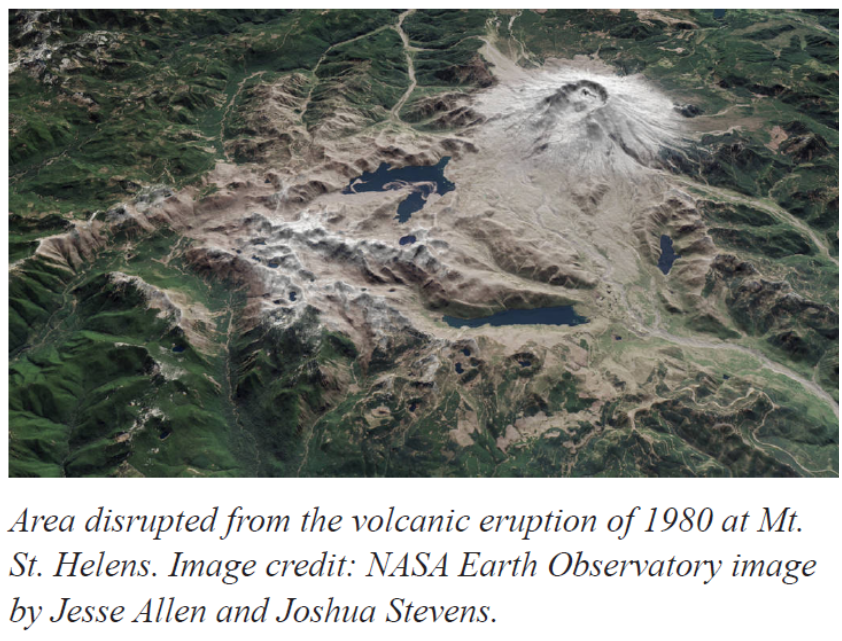
Matter flows within the Earth due to heat energy. That flowing energy can create volcanic eruptions as well as small and large earthquakes. These movements aren’t the only ways that change the Earth’s surface. Energy from the sun gives the power necessary to run the water cycle (which causes weathering and erosion) and produce winds. It also gives energy for the living organisms which helps to alter soil chemistry. With these two energy sources, Earth’s surface is dynamic, always changing.
1
1
1
Mountain building processes through volcano activity and the folding of the Earth’s crust, work to build up the Earth’s surfaces. Sometimes layers of rock can become warped, folded, titled or even flipped upside down. The constant weathering of rock slowly works to break mountains down, create canyons, and even create underground caverns.
1
1
1
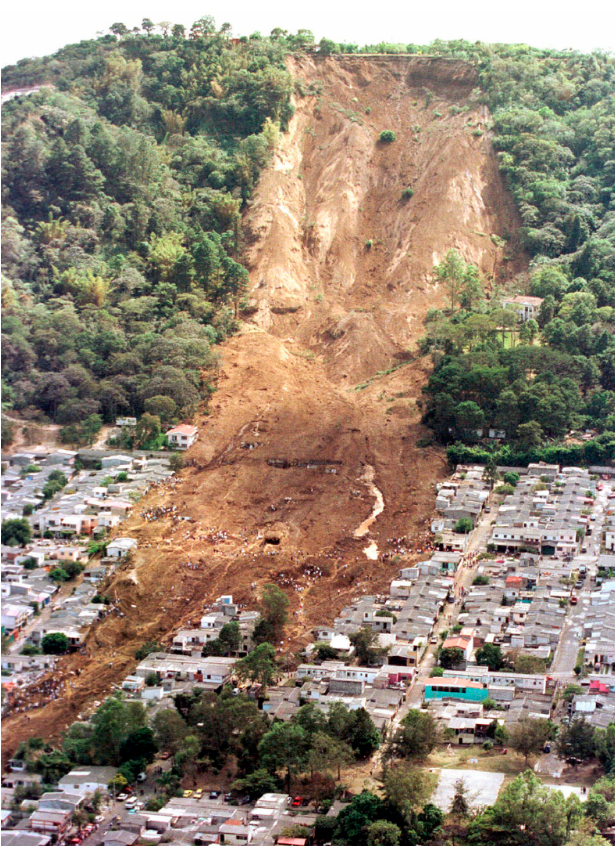
Sometimes there are catastrophic changes to Earth’s surface features like landslides (see image of the 2001 El Salvador landslide above), tsunamis, volcanic eruptions, tornadoes or hurricanes. These phenomena possibly alter Earth’s surface extensively in very short periods of time, but most processes that make up Earth’s land formations are very, very slow.
1
1
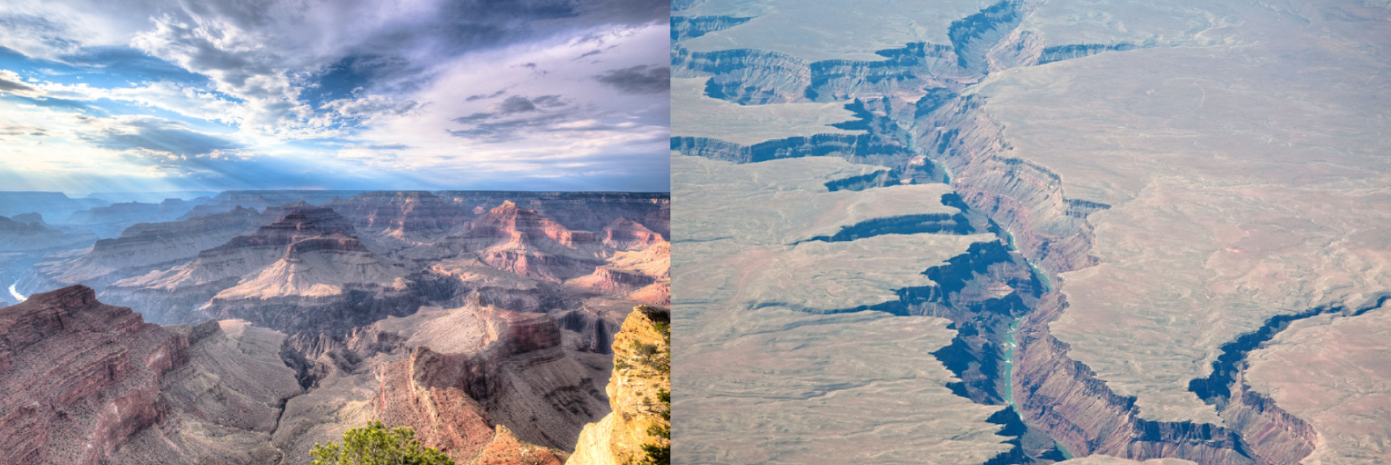
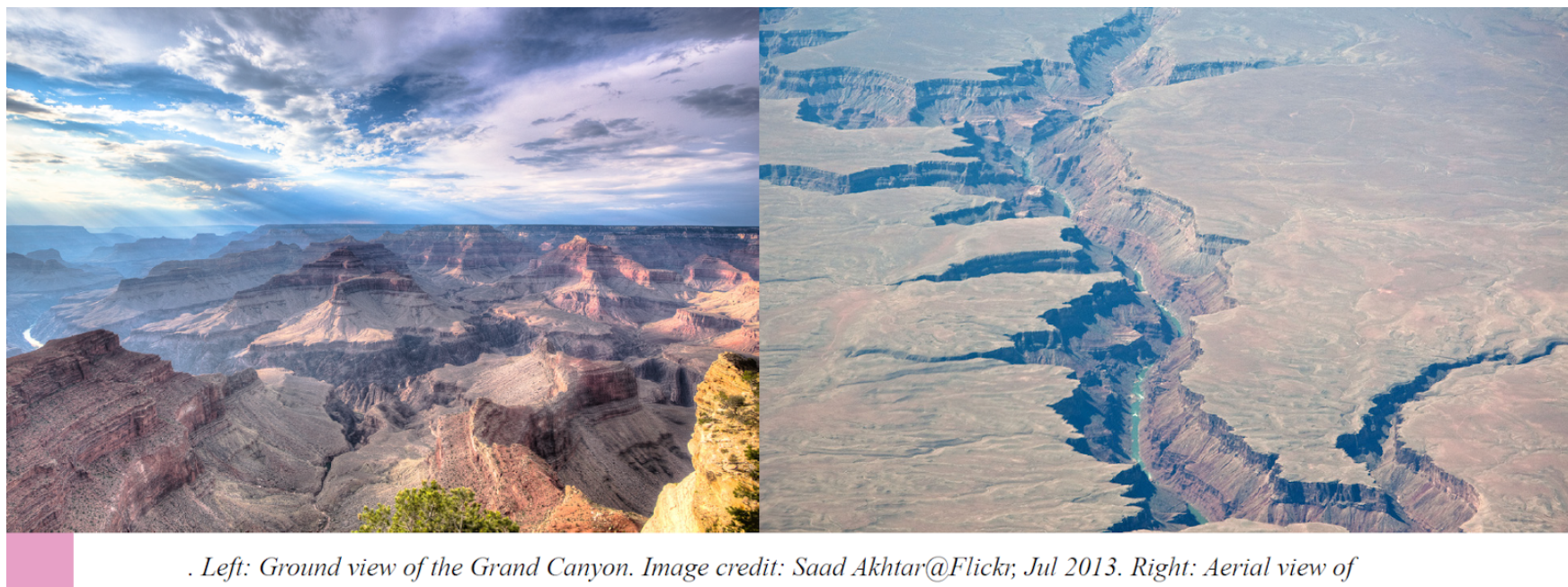
Take a look at the photos below of the Grand Canyon, Arizona. Grain by grain the Colorado river cut through what was once a flat plain. Slowly over the span of about 17 million years the Grand Canyon became the deep gorge it is today. As the river continues to flow, the canyon becomes deeper.
1
1
1
If you look closely, you might notice that this isn’t all it took to create the Grand Canyon. In the photo below, you can see layers upon layers of rock. What you are seeing are sedimentary rock strata (layers) that formed horizontally at the bottom of a large ancient sea that is now long gone from this region. Nearly all of the layers of rock in the Grand Canyon are sedimentary rock strata that were deposited grain by grain, and then compacted and cemented over time dating back anywhere from 200 hundred million (top layers) to nearly 2 billion years ago (bottom layers).
1
1
1
1
The Highest Mountain in the World
We once thought that the Earth was static, unchanging. We believed that mountains as they are, are as they were when the Earth formed. However, people began to notice little things like meandering rivers changing their course overtime. People thought about how much the land changed during an earthquake or landslide. After many observations and wondrous discoveries, we now know that the Earth is not static, but dynamic.
1
1
1
You have probably noticed that mountains don’t just suddenly sprout out of the ground. Mountains seem so stable during a human lifespan, but mountains are a dynamic geologic feature that take about 100 million years to form, on average.
1
Question 19
19.
How long does it take for mountains to form, on average?
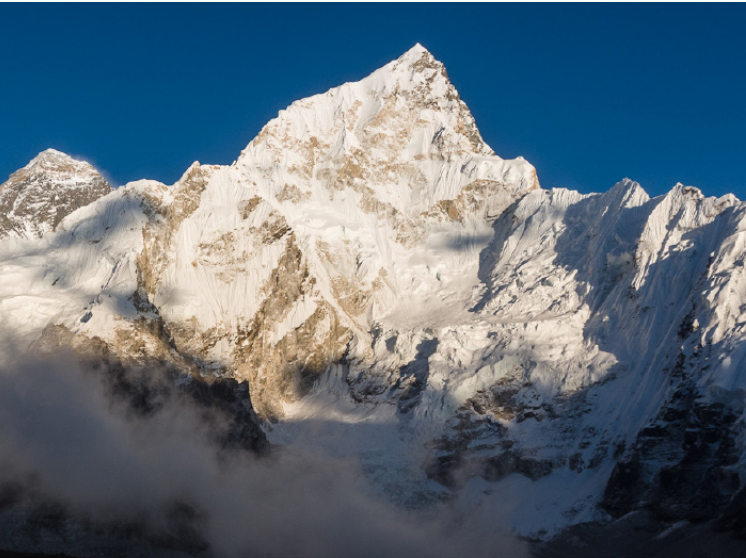
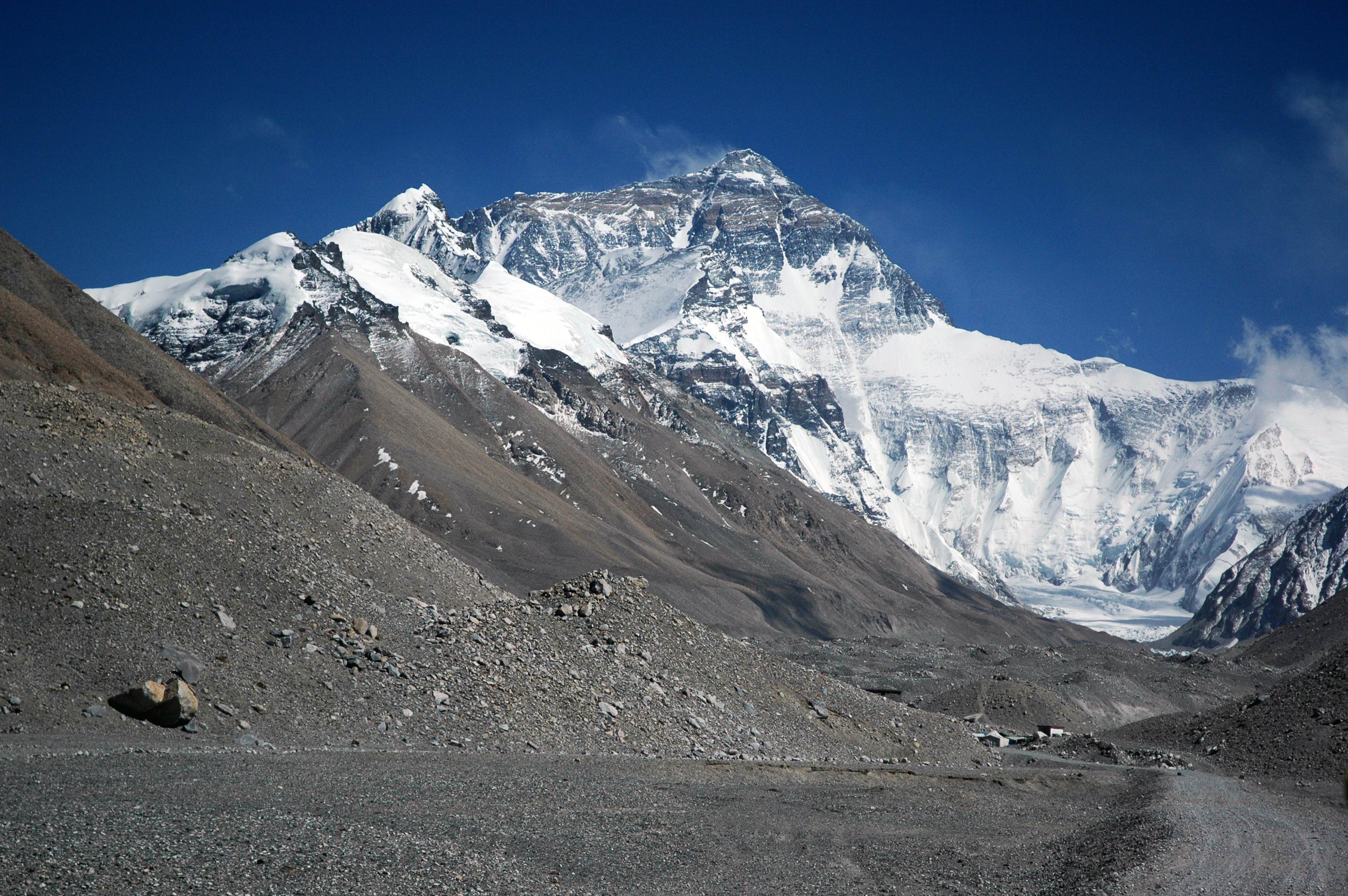
Take Mount Everest for example. It is the highest mountain in the world at 8.85 km (29,029 feet) in elevation. So high in fact that climbers intending to get to the top need to have oxygen tanks just to stay conscious.
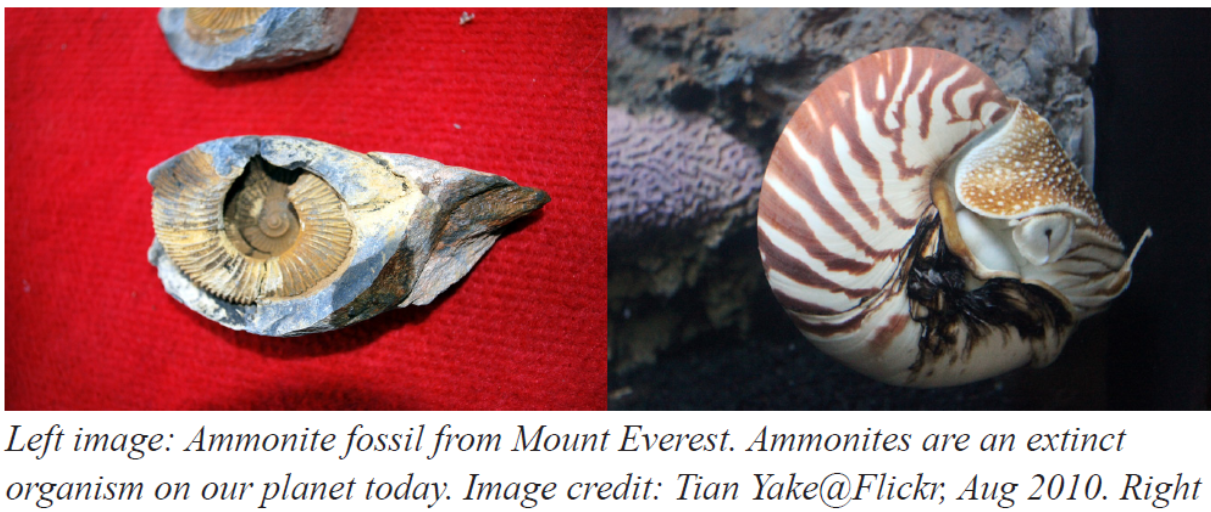
But did you know that at the top of many of the frozen peaks of the Himalayan Mountain range are fossils from an ancient sea? High up on the top of Mount Everest is a sedimentary rock that was laid down in the Ordovician age nearly 400 million years ago in the shallow Tethys Sea, which has long since dried up. The left photograph below is an image of an ammonite that lived in that sea. So how does a fossil like this one get to the highest point on the top of the tallest Mountain in the world? Very, very slowly.
1
1
1
Earlier, we covered how the Earth was formed, and that there was heat energy in the Earth that is still left over from those violent beginnings. This heat energy doesn’t just make rock hot, it also moves it.
1
1
As heat rises up inside the Earth it contacts the surface layer, and moves the surface in all sorts of directions. At some locations, the outer layer of Earth is moving in one direction while another part wants to push off in another. Since the outer layer of Earth is made of rock, it doesn’t bend and stretch very well. Pressures build up and then eventually the rocks fracture and you have an earthquake.
1
1
1
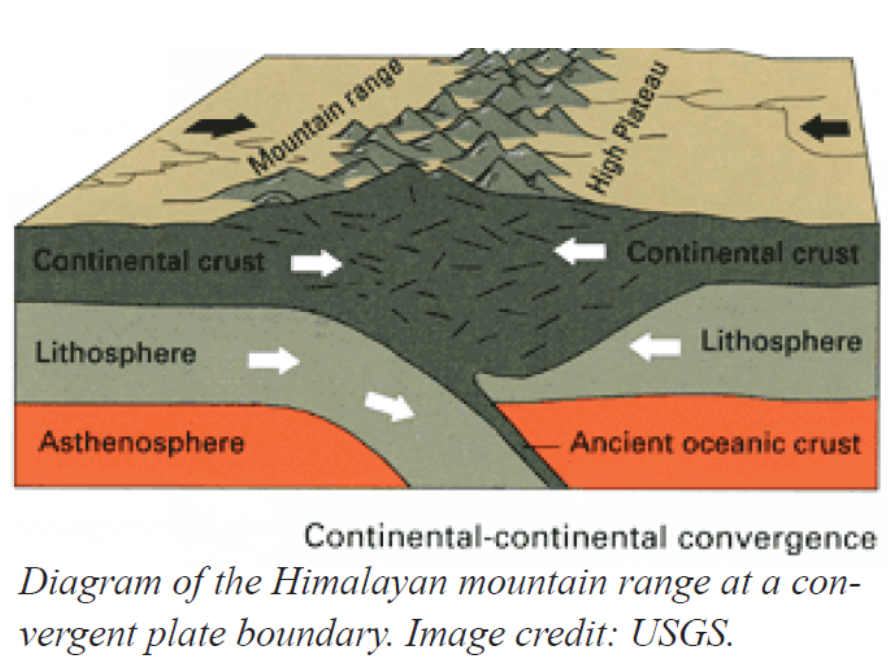
The Himalayan mountains are similar to this example except the ground on either side of the mountain range is compressing into each other (see image below). These forces push rock up as the two sides collide, crumpling and folding rock. Eventually, these forces build a mountain between them (see diagram on the previous page). These compressional forces can be intense and sometimes cause violent earthquakes in the Himalayan range
1
1
The Himalayas have been forming for about 50 million years and are still forming today. Compressional forces keep the ground on either side of the mountain range pushing into one another. When forces build up enough pressure to cause the rock to fracture, the mountaintop gets just a little bit higher. Small earthquakes might raise a mountain just an inch or two, but large earthquakes have been known to rupture and raise the ground surface 9 meters (29.5 feet) or more. With an elevation of 8.85 km or 8,850 meters, you can image that it has taken a very long time to build Everest into the peak it is today.
1
1
1
So how did those fossils get there? Well, sedimentary rocks like limestone and sandstone aren’t very dense when compared to the more dense igneous rocks of the crust, and when two rock layers are pushed together, the denser rock layer will subduct (or go underneath the top layer). When the land masses were being pushed toward one another, sedimentary rocks like limestone and sandstone were already formed in the shallow sea basin. The land masses slowly moved in toward one another closing up the sea and eventually turning the low sea into a highland. Over a long period of time, the rocks that were formed at the bottom of the sea rose higher and higher until they made up the Himalayan mountain range.
1
1
1
Mt. St. Helens 1980 Eruption
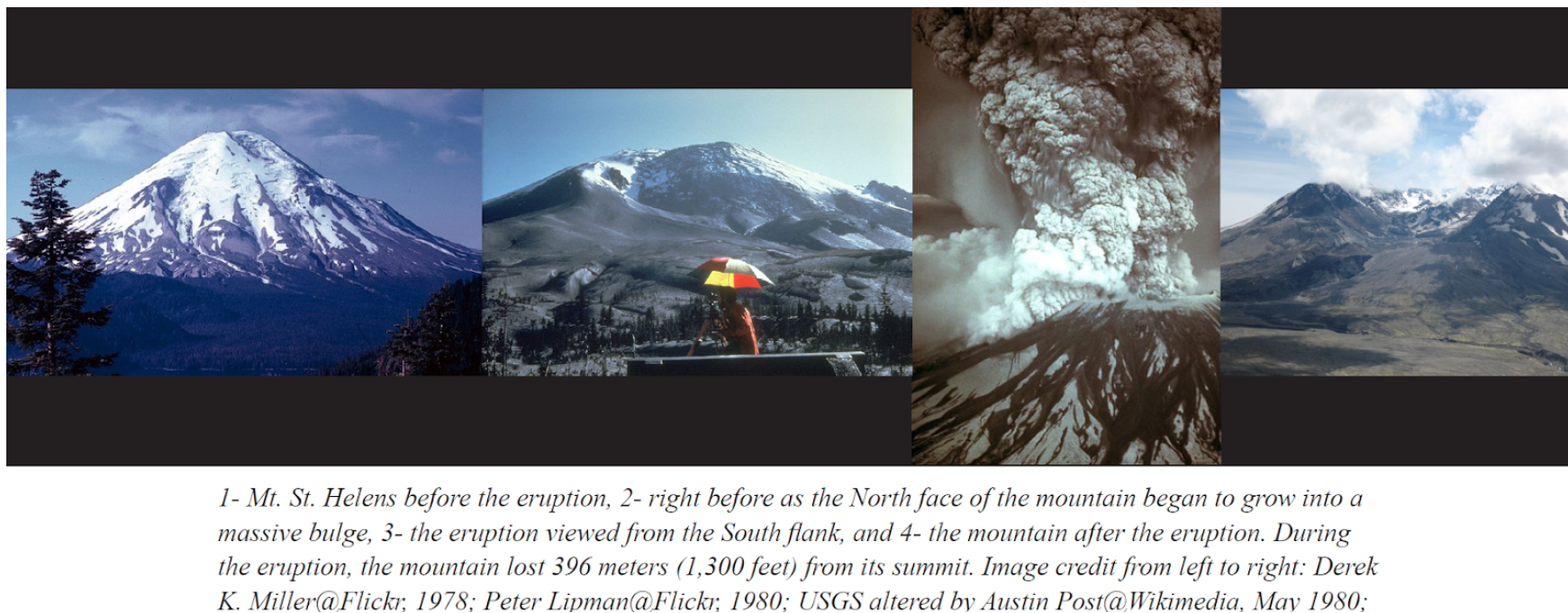
Landforms like mountain ranges and canyons take millions of years to drastically alter the landscape. That isn’t the case for volcanoes. The above figure shows a series of photographs of Mount St. Helens, located in Washington state. At the time of the first photograph, the active volcano had been rumbling for months. The North flank of the volcano (seen in the second image in the figure above) was swelling due to a shifting magma chamber. On the morning of May 18, 1980 a quake with magnitude 5.1 was detected coming from the volcano. In an unexpected turn, the North Flank of the volcano sloughed off the side of the mountain in just under 12 seconds becoming the largest landslide ever recorded.
1
1
1
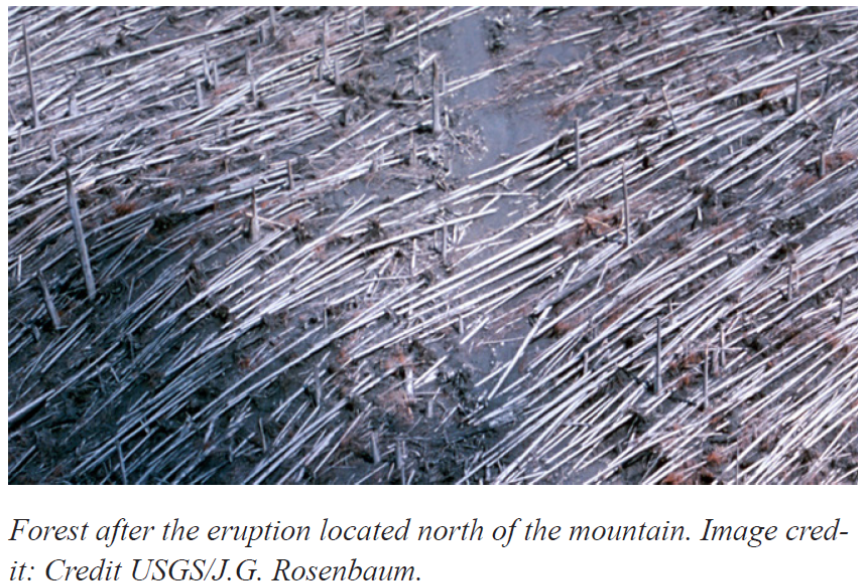
The grey eruption explosion soon followed, sending flows of hot gas and rock down the mountain with enough speed to uproot trees and strip them of their bark and branches. A huge plume of ash (pulverized rock) and gas shot kilometers into the sky. The animals and plants living there were killed in an instant. Fifty-seven people were killed in the blast as well.
1
1
Eruptions like this one transfer a tremendous amount of energy from inside the Earth. This eruption was so powerful that it was equivalent to 1600 times the strength of the atomic bomb that was dropped on Hiroshima in the second World War. Nearly 40 years later, the forest closest to the volcano is still a barren landscape of bare trees lying where they fell. Further away from the base, life is returning to the region. Lupines, a type of flowering plant, bring color to the landscape and provide food for gophers. Elk and deer have returned to the land. Eventually, more life will return and trees will grow again, slowly returning the forest to its previous state until the next eruption.
1
1
1
1
Question 1
1.
What energy source results in weathering and erosion?
Question 2
2.
What causes movement beneath Earth's surface?
Question 3
3.
What happens to Earth's surface over time?
Question 4
4.
What process builds up the Earth's surfaces ?
Question 5
5.
What happens to rock layers during Earth’s crust folding?
Question 6
6.
What effect does weathering have on mountains?
Question 7
7.
What are some examples of catastrophic changes to Earth's surface?
Question 8
8.
What natural event can cause a landslide?
Question 9
9.
What caused the Grand Canyon to deepen over time?
Question 10
10.
What river carved out the Grand Canyon?
Question 11
11.
What is the Grand Canyon primarily made of?
Question 12
12.
What type of rock layers are found in the Grand Canyon?
Question 13
13.
How were the sedimentary rock layers formed?
Question 14
14.
Where were the sedimentary layers deposited?
Question 15
15.
What process helped form the sedimentary layers over time?
Question 16
16.
What natural events can change landscapes?
Question 17
17.
How do rivers illustrate changes in the Earth?
Question 18
18.
What does dynamic mean in relation to Earth?
Question 20
20.
What type of fossil is shown in the left image?
Question 21
21.
How old is the sedimentary rock containing the ammonite?
Question 22
22.
What did the ammonite live in?
Question 23
23.
What is still present in the Earth from its formation?
Question 24
24.
What is a consequence of heat energy in the Earth?
Question 25
25.
Why does the outer layer of Earth not bend easily?
Question 26
26.
What can happen to different parts of the Earth's surface?
Question 27
27.
How does heat affect the outer layer of the Earth?
Question 28
28.
What process creates mountains in this region?
Question 29
29.
What is likely to happen due to compressional forces?
Question 30
30.
How long have the Himalayas been forming?
Question 31
31.
What happens when pressure builds up in mountain rocks?
Question 32
32.
Why does it take time to build Mount Everest?
Question 33
33.
What type of rocks are less dense than igneous rocks?
Question 34
34.
What happens to the denser rock layer during subduction?
Question 35
35.
What happens to rocks formed at the bottom of the sea over time?
Question 36
36.
What was detected before the eruption occurred?
Question 37
37.
What visual change was noticed on the North flank before the eruption?
Question 38
38.
What activity at the volcano preceded the climax eruption?
Question 39
39.
How did the volcanic eruption affect local wildlife?
Question 40
40.
What is a significant feature of the eruption described?
Question 41
41.
What caused the disruption in the area shown?
Question 42
42.
What is the landscape like closest to the volcano?
Question 43
43.
Which type of plant helps return life to the area?
Question 44
44.
What animal has returned to the land after the eruption?