Log in
Sign up for FREE
arrow_back
Library

Relative Dating Using Rock Strata

star
star
star
star
star
Last updated about 1 month ago
53 questions

Everything has a beginning, and everything has its end. In the beginning, Earth was a molten ball of magma spinning through space orbiting our star. Over time, that magma ball gave off enough heat to form the outer layer of the Earth, the crust. Over time, the atmosphere cooled enough to allow water vapor to form droplets and the rains fell. As the water moved over the land surface for millions of years the newly formed rocks began to chemically and physically weather. This was the early beginnings of sediment and soil which would eventually lead to sedimentary rocks.


1
1
1

Why do geologists study rocks? They don’t move. They don’t seem to have too many interesting qualities. But, if you know what you are looking for, you will start to see patterns and you’ll realize that sealed within the rocks are the tombs and secrets of the past.

1
1

Sedimentary rocks are fascinating things. They really don’t look like much, especially when compared with igneous rocks, but the way they form tells us a lot of what the world was like many millions to billions of years ago. To understand how this works we need to understand a bit about sedimentary rock formation and some basic principles and laws of geology.


1
1

Sedimentary rocks, remember, are formed from sediments. Any type of rock is weathered and then eroded. Erosion occurs primarily from water, but also from wind. When these sediments become deposited, usually at the base of a mountain, in a river, lake or ocean, they can be compacted, cemented under pressure and become rock. Because of how they are deposited, sedimentary rocks will generally form large, horizontal strata (horizontal meaning parallel with the horizon, and strata meaning layer) that can stretch on for miles. This is what we call the Principle of Original Horizontality, the idea that most sedimentary deposits are laid down flat on the land surface. This understanding was first proposed by Danish geologist Nicholas Steno who lived in the mid-1600’s.

1
1
1
1

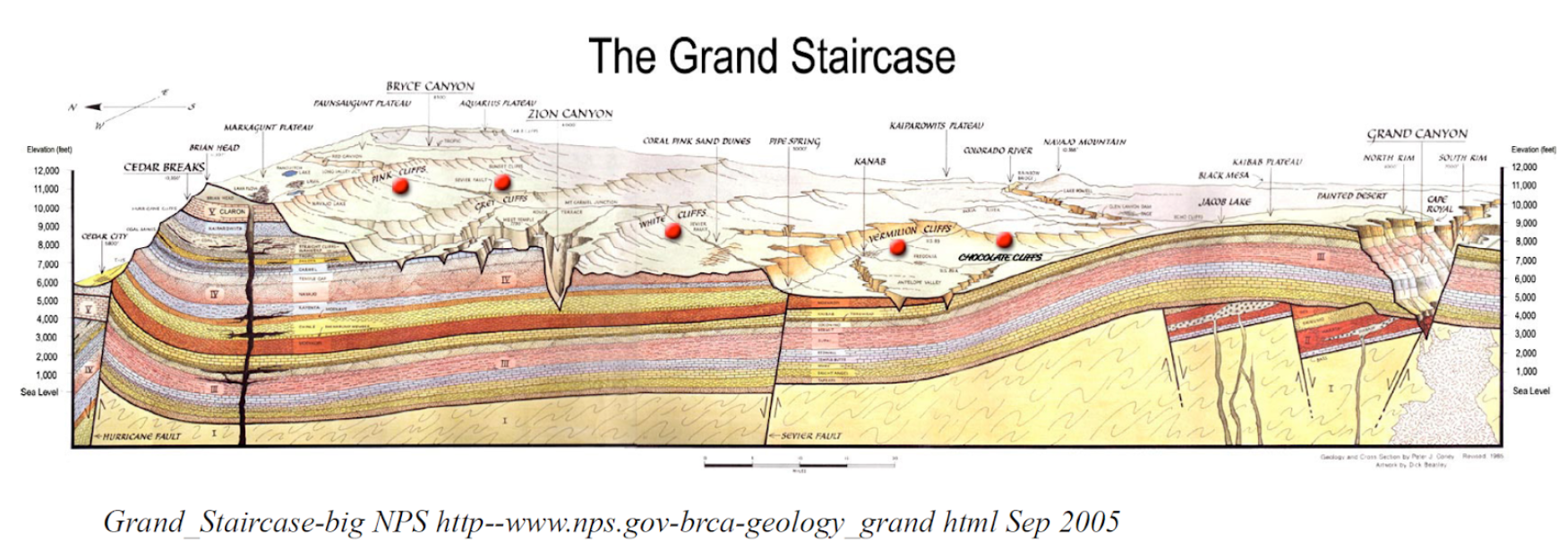
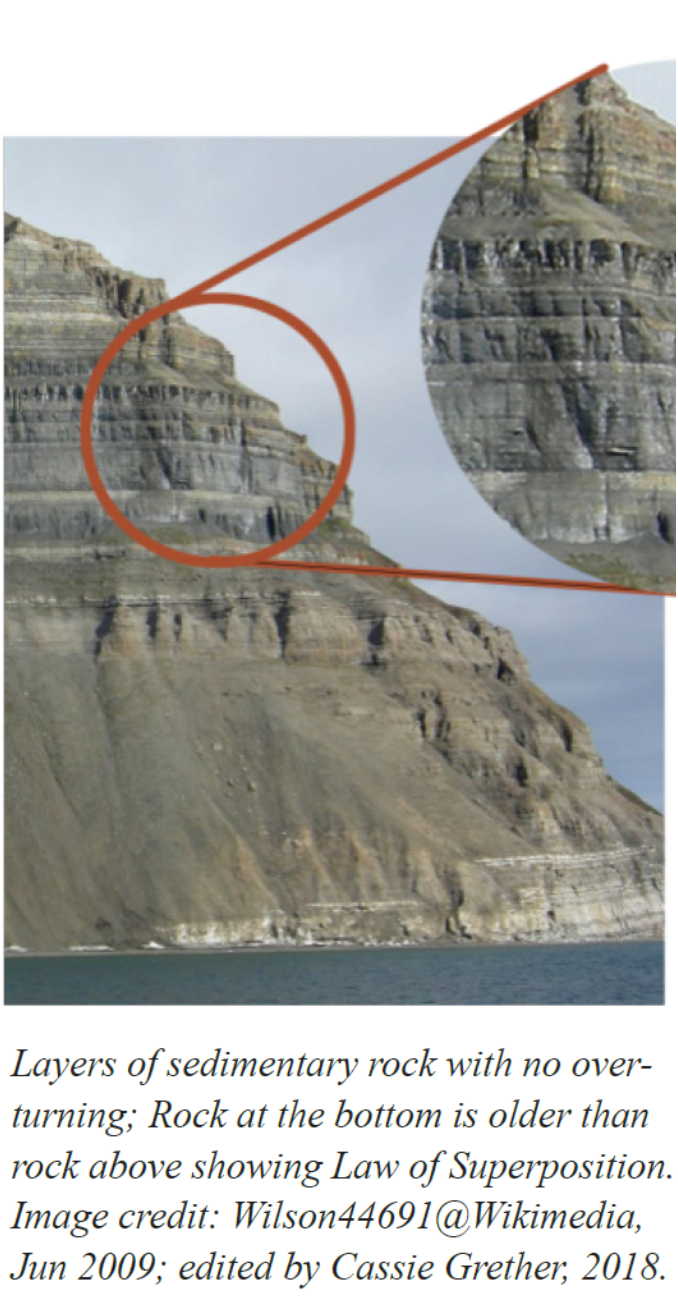
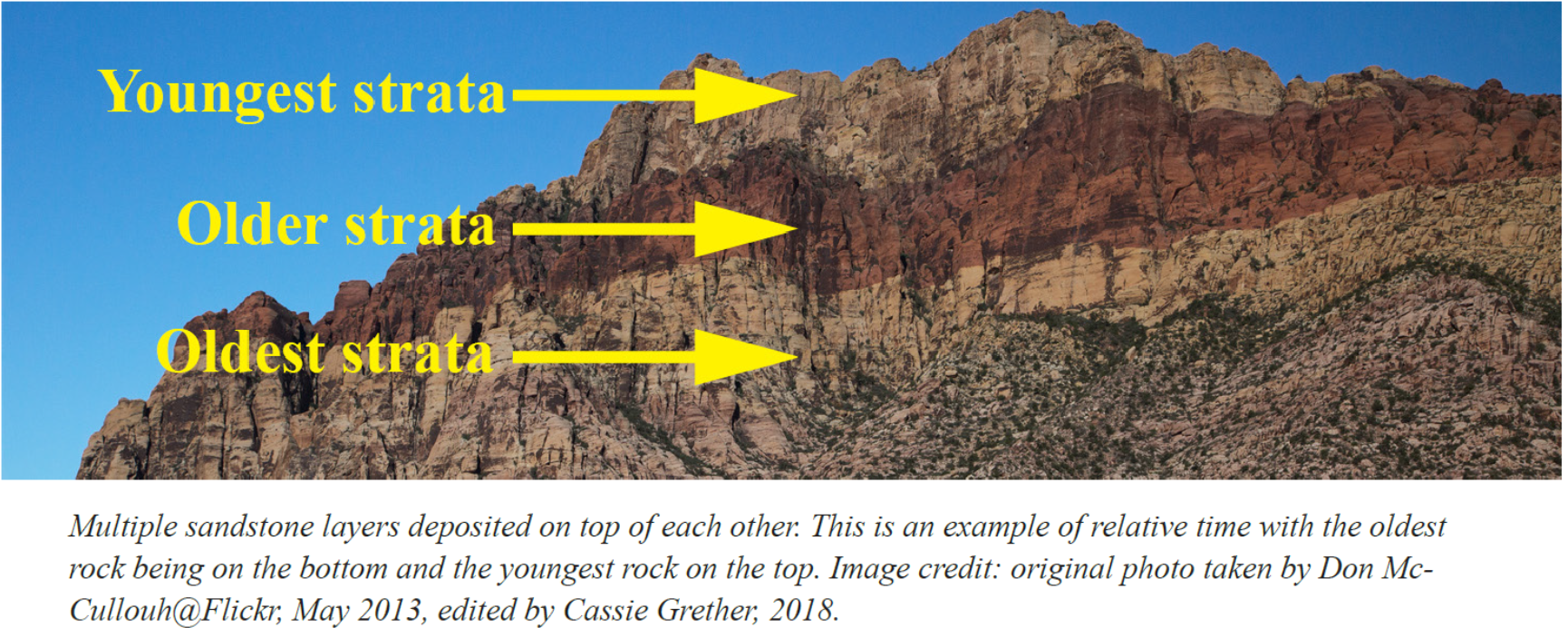
The Law of Superposition, also discovered by Steno, is related to the formation of sedimentary rocks as well. This law states that if strata (rock layers) have not been otherwise altered from their original position, then you can tell the relative age of the rocks. For example, if two sedimentary rock strata formed in the same region, the rock on the bottom must be older, because the new sedimentary rock could not have been deposited underneath the original rock. This is shown in the blown up image on the left where you can see several different layers of sedimentary rock.

1
1

Think about it this way using a thought model. Say you are in your messy bedroom (if you happen to be the kind of teen that doesn’t do messy, then think of your brother’s or sister’s room). The room becomes messier and messier as each day passes. Clothing is piled on the floor in a corner. Let’s say you need to find a couple of dollars in a pair of pants that you wore two weeks ago. Are you going to look on the top layer or closer towards the bottom layer? Odds are if you are thinking about it, you will search the bottom layer first since the top layer of clothing is stuff you just wore. This is a good example of relative age. The clothing on the top was deposited recently, later than the bottom layers. So relative to the top layer, the layer below is older. You dive deep searching for the correct layer because you know it is older than what’s just on the surface.

1
1

Before we move on to how all of this ties in with our material, we have one more geological concept to cover- uniformitarianism. Did you get that? Let’s break it down, Uni-formi-tari-an-ism. It’s a really big word that basically translates to, geologic processes that occurred in the past are still occurring today and at similar rates to how they did in the past. So for example, we make the assumption that rocks are weathered and eroded, deposited, and formed into rock at similar time scales as they are today.

1
1
1

Practice With Rock Strata

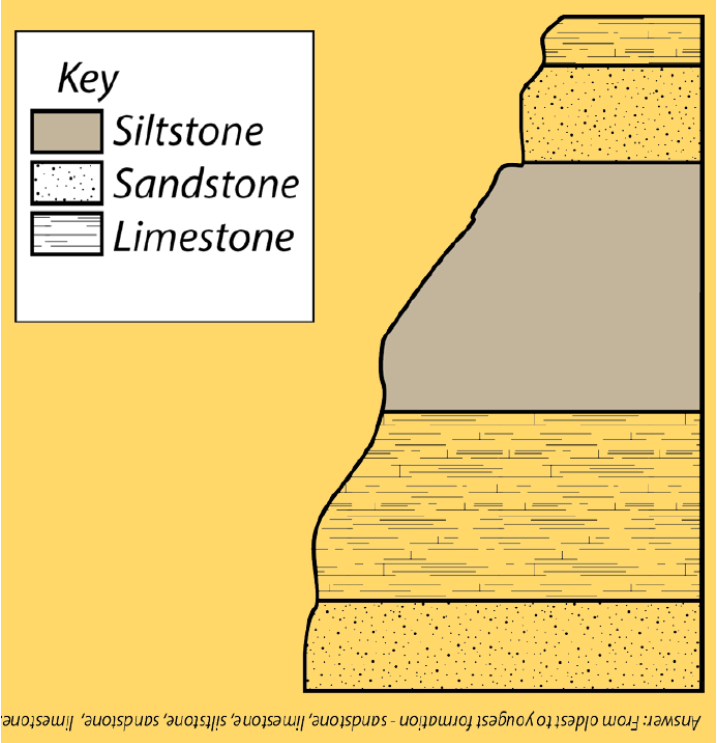
Now that you are armed with a slew of information, it is time to try your hand at some stratigraphy practice. On the bottom is a diagram of rock layers on a cliff side. We are viewing the diagram as if we vertically cut a slice through the cliff face. We’ll start off easy and then get harder as we do more practice in this section.

Identify the rock layers by age. List the rock layers in order from oldest to youngest. Use the key as your guide.

1
Question 19
19.

Order the layers from oldest to youngest

  1. sandstone
  2. siltstone
  3. sandstone
  4. limestone
  5. limestone

Now that we have practiced the easy case, it’s time to talk about unconformities. Get ready, some of this is rough. Being able to identify the rock on bottom as older than the rock that was deposited on top isn’t too hard. It makes sense that layers of sediment continually are deposited down on the surface of the Earth. Geologic processes, however, can make this identification a bit trickier.

1
1
1
1

Unconformities represent gaps in the geologic record. When we say the geologic record we mean the history of Earth recorded in the rock. So an unconformity is a location where the rock record has been altered in some way leading to missing information.

1
1
1
1

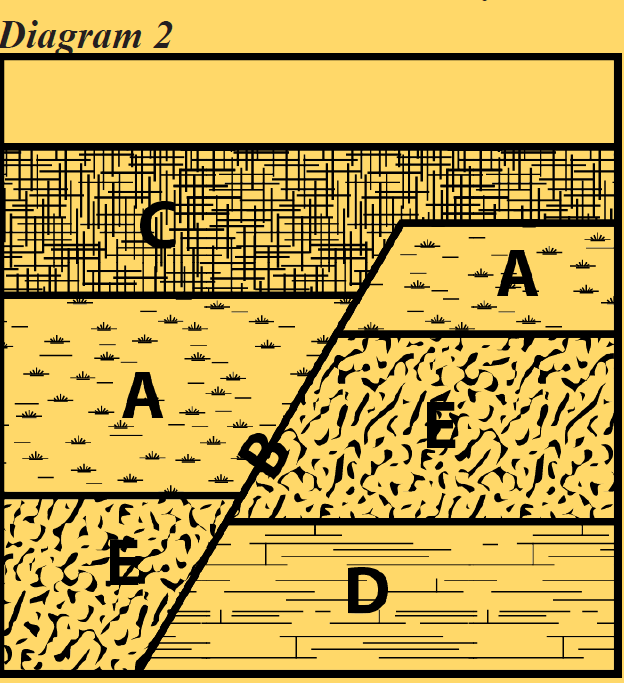
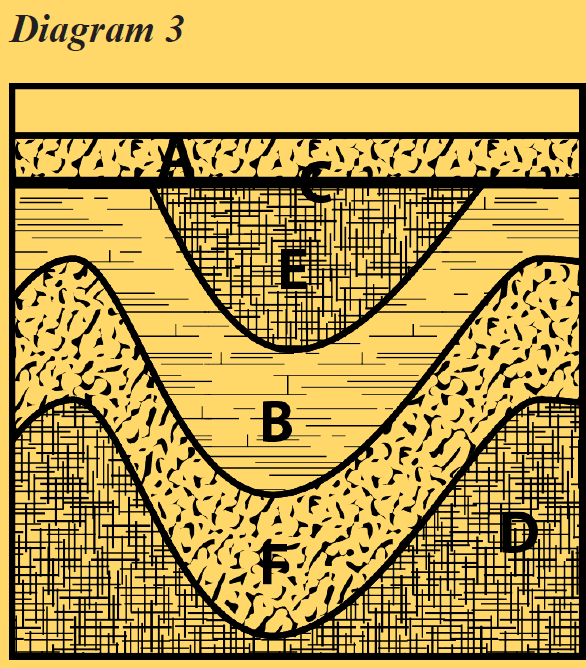
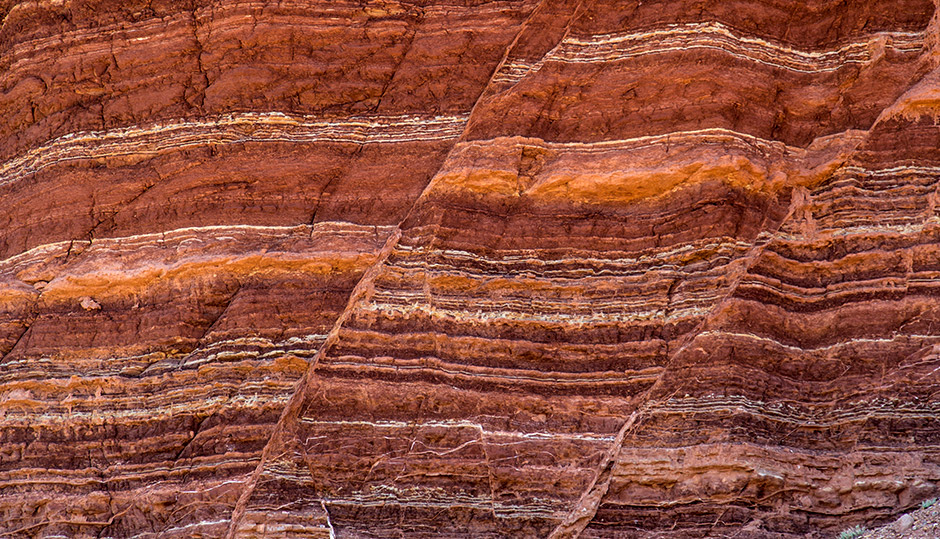
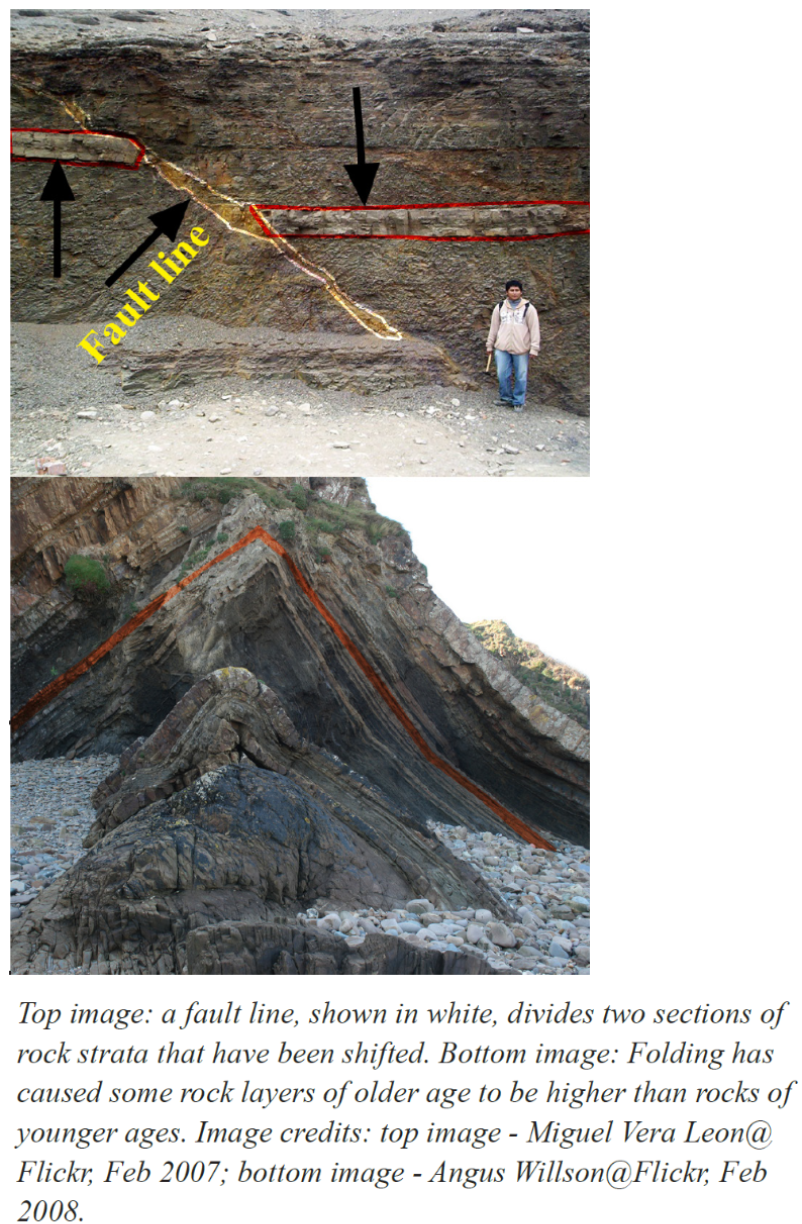
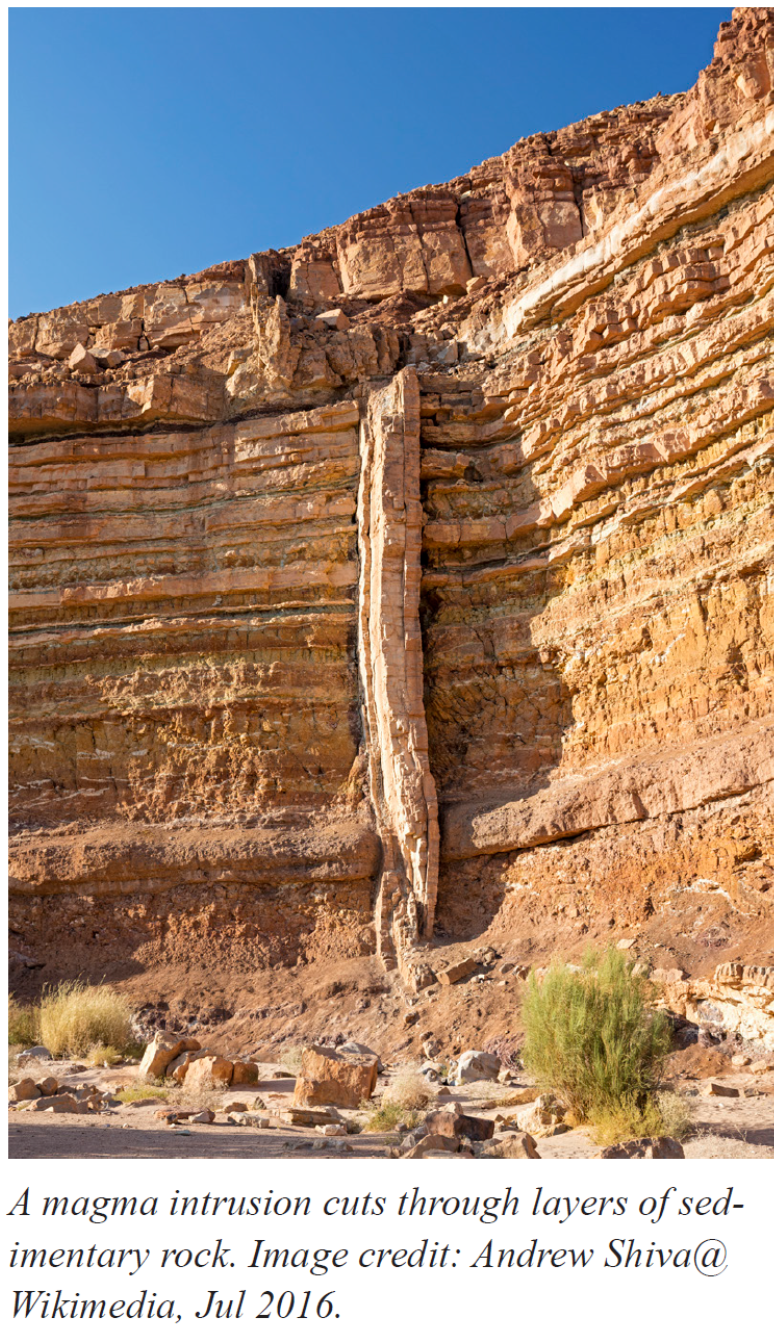
This can happen in a few ways. Because the Earth’s crust is dynamic (moving and changing), parts of the crust can get stretched, broken, crumpled, and even have lava or magma ooze into it. Faulting (seen in the image in the middle of the previous page) is a process that occurs during an earthquake. It can break the rock layers and move them relative to one another. Folding (seen in the image on the bottom on the previous page) is an action that can occur to rock layers as the crustal rocks are compressed toward one another. This happens often in mountain building processes. Both of these processes can move rock from its original position and make figuring out relative age more difficult. Sometimes a rock layer can even be flipped completely upside down. The image on the right on the previous page shows both of these types of unconformities. In these types of cases, geologists keep in mind the principle of original horizontality (the idea that all sedimentary rocks were laid down on a horizontal plane). Once they can figure out what has occured to the rock strata then they can reimagine the rocks in those positions to figure out which rock strata is older.


1
1
1
1

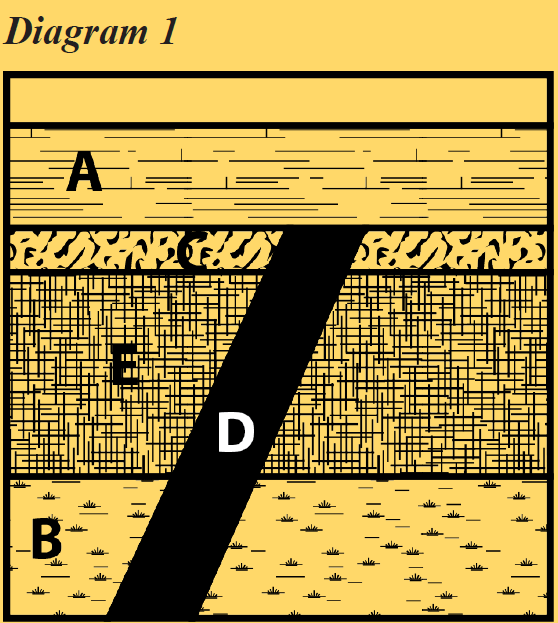
When magma intrudes into the rock it can cut rock layers and form igneous rock in a dike as seen in the image to the left. Magma can also intrude horizontally between sedimentary rock layers. Lastly, lava can move up through the rock and deposit on the surface as a layer as well. Several unconformities can be seen below.


1
1
1
1

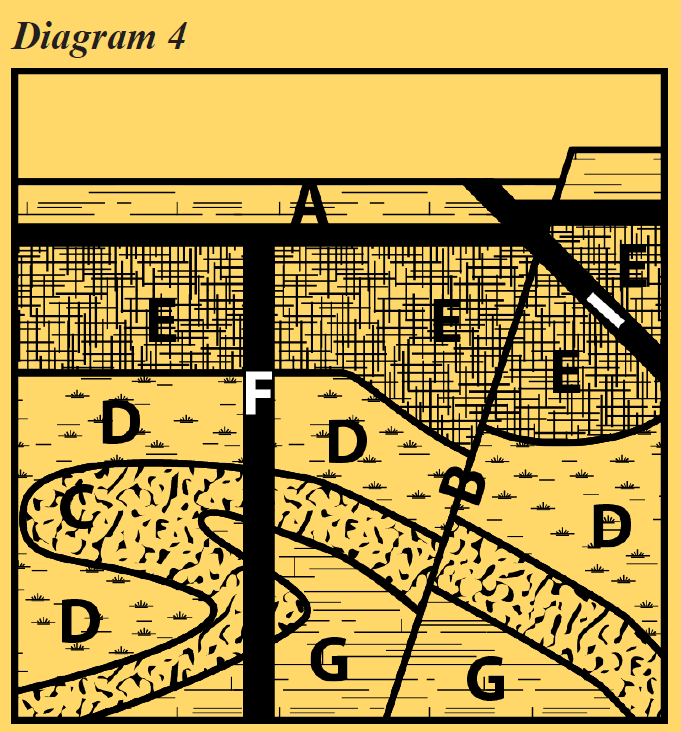
Below is a diagrams of unconformities. We’ll start out simple and move to the more complex. Check your understanding as you go to make sure you are practicing these problems right.


1
1
Question 37
37.

Which is older, layer D or layer B?

1
1
1
1
1
1
Question 43
43.

List the layers and events (include
B) in order from oldest to youngest.

  1. C
  2. E
  3. D
  4. B
  5. A
1
1
Question 45
45.

What has occured to make rocks E, B, F and D be in the shape that they are?

1
1
1
1
1
1
1
1
Question 1
1.

What was Earth like in the beginning?

Question 2
2.

What did Earth initially form after the magma cooled?

Question 3
3.

Sedimentary rocks are formed from which materials?

Question 4
4.

What do geologists specifically look for in rocks?
Question 5
5.

What is an essential skill for studying geology?

Question 6
6.

What type of rocks form from sediment accumulation over time?

Question 7
7.

What do sedimentary rocks reveal about Earth's history?

Question 8
8.

What is the primary cause of erosion in sedimentary rock formation?
Question 9
9.

What principle states that sedimentary layers are normally deposited flat?

Question 10
10.

What does sediment become when it is compacted and cemented?

Question 11
11.

Who proposed the idea that sedimentary rocks are laid horizontally?

Question 12
12.

What does the Law of Superposition state?
Question 13
13.

What type of rocks does the Law of Superposition apply to?

Question 14
14.

What does the term "relative age" mean in this context?

Question 15
15.

Where is the youngest rock layer located?

Question 16
16.

What does uniformitarianism suggest about geological processes?
Question 17
17.

How does uniformitarianism relate to rock formation?

Question 18
18.

Why is understanding uniformitarianism important?

Question 20
20.

What do you identify as older in rock layers?

Question 21
21.

What is the main topic discussed?

Question 22
22.

How are sediment layers deposited?

Question 23
23.

What complicates rock layer identification?

Question 24
24.

What do unconformities represent in the geologic record?
Question 25
25.

What does the geologic record refer to?

Question 26
26.

What happens to the rock record at an unconformity?

Question 27
27.

Why is understanding unconformities important?

Question 28
28.

What feature is shown in the top image of the rock strata?
Question 29
29.

What geological process is illustrated in the bottom image?

Question 30
30.

What does a fault line indicate about rock movement?

Question 31
31.

What does folding in geology cause to rock layers?

Question 32
32.

What geological feature is formed by magma intruding into rock layers?
Question 33
33.

What happens when magma intrudes horizontally between sedimentary layers?

Question 34
34.

What is a key process depicted in the image?

Question 35
35.

How can lava reach the surface according to the passage?

Question 36
36.

What does layer D represent?

Question 38
38.

Which is the youngest rock layer?

Question 39
39.

List each of the rock layers from oldest to youngest.

  1. D
  2. A
  3. B
  4. E
  5. C
Question 40
40.

What does B represent?

Question 41
41.

Which layer is the youngest layer?

Question 42
42.

Which layer is the oldest layer?

Question 44
44.

Remember, the location of an unconformity is where there can be gaps in the geologic record. Which letter represents the location of the unconformity?
Question 46
46.

List the rock layers and events (2) in order of oldest to youngest.

  1. D
  2. F
  3. B
  4. E
  5. Erosion (C)
  6. A
  7. Folding
Question 47
47.

Which 3 layers have been folded due to
compressional forces?

Question 48
48.

An unconformity exists between layer E and layer D. What is the general cause of this unconformity?

Question 49
49.

Which layer is older, layer D or layer C?

Question 50
50.

Which two layer represent intrusions or extrusions of magma/lava?

Question 51
51.

B represents faulting. What occurred first, the formation of the lava extrusion (F) or the faulting (B)?

Question 52
52.

Of all the layers and events, which occurred most recently?

Question 53
53.

List each layer and event (erosion, folding, faulting, and intrusion/extrusion) in order from oldest to youngest.

  1. D
  2. Folding
  3. erosion
  4. F (extrusion)
  5. C
  6. E
  7. Faulting
  8. I (intrusion)
  9. A
  10. G