Log in
Sign up for FREE
arrow_back
Library

Plate Tectonics

star
star
star
star
star
Last updated about 4 hours ago
58 questions

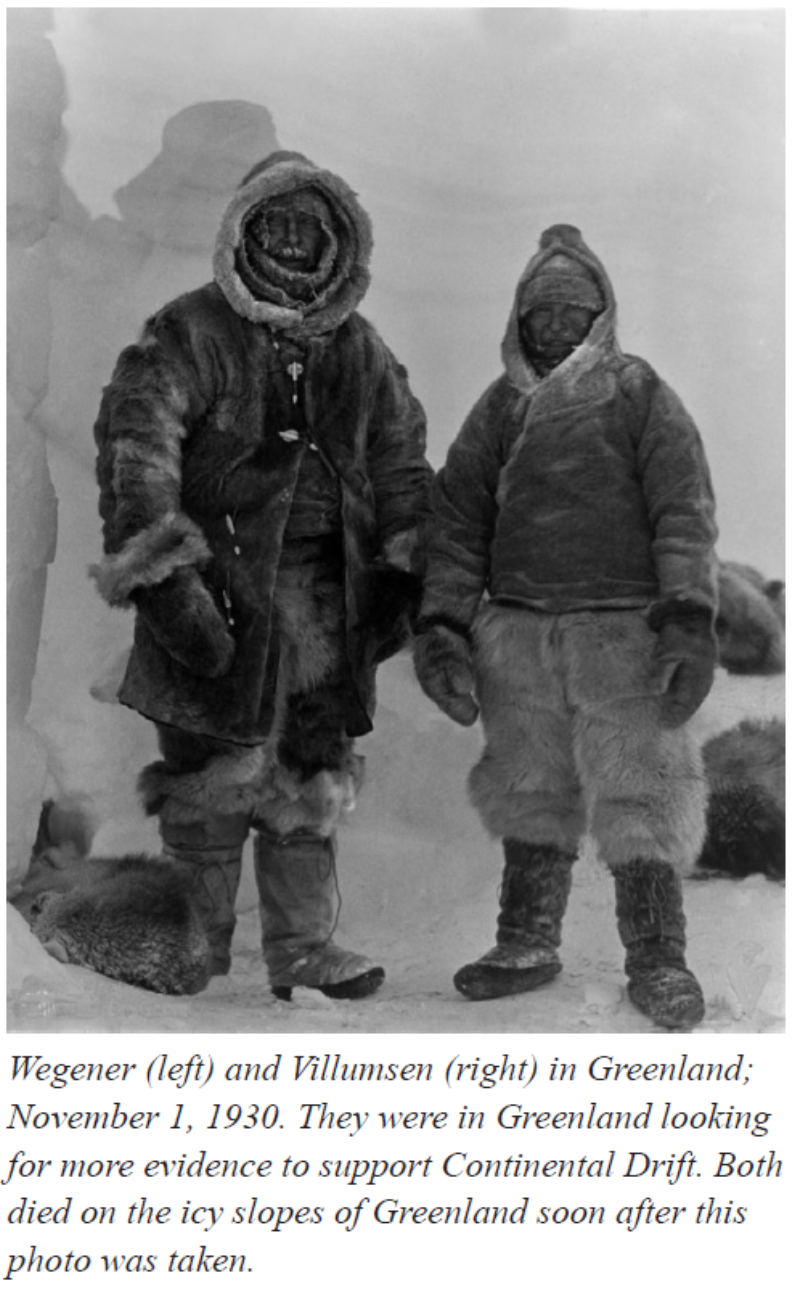
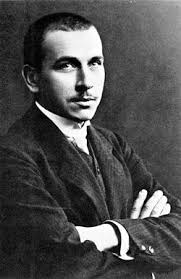
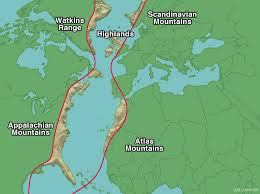
It was around the year 1900, when a man by the name of Alfred Wegener (pictured below) was coming up with evidence to support a theory that would change the way we thought of the world. Alfred Wegener was a meteorologist with a fancy for geology. He was especially keen on recognizing patterns. Looking at land formations across the world, he couldn’t help but notice how the mountain ranges of Northern Europe and the mountain ranges of the East Coast of the United States seemed very similar.

1
1
1

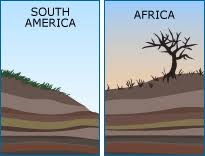
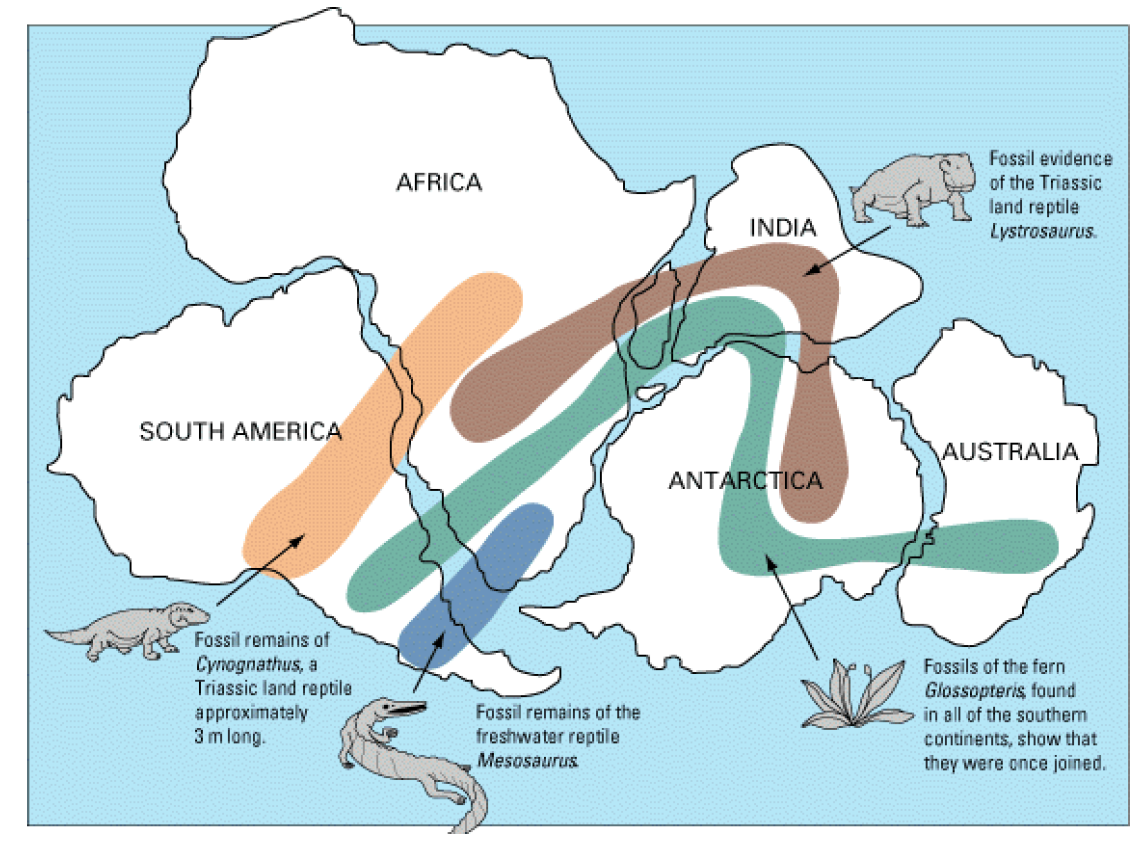
There were other rock formations too. Rock strata in Africa seemed to match up with rock strata in South America. When he took a look at the fossils in those rocks, an amazing thing happened. The rock strata held the same species of plants and animals from the same time period. Today it is common knowledge that every continent has its own special variety of species. It was a common understanding in the 1900’s as well, so why would the same species of plants and animals be found fossilized in rock split by the ocean?


1
1
1
1

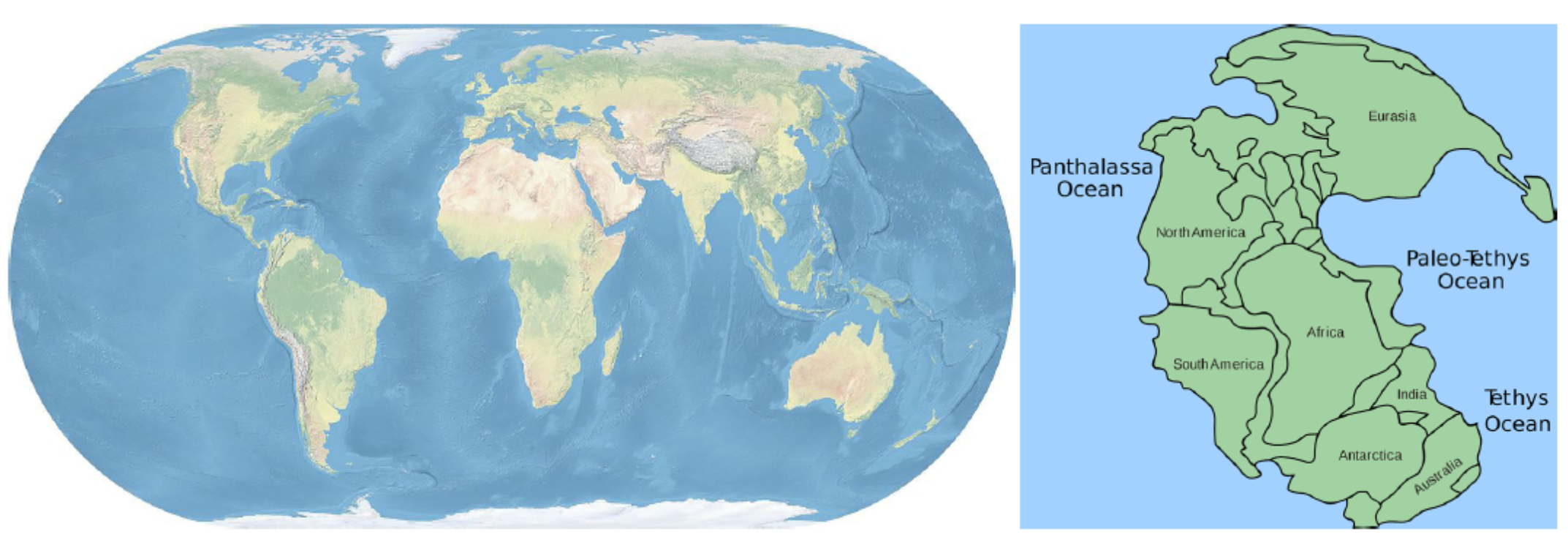
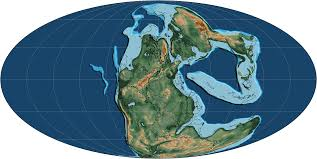
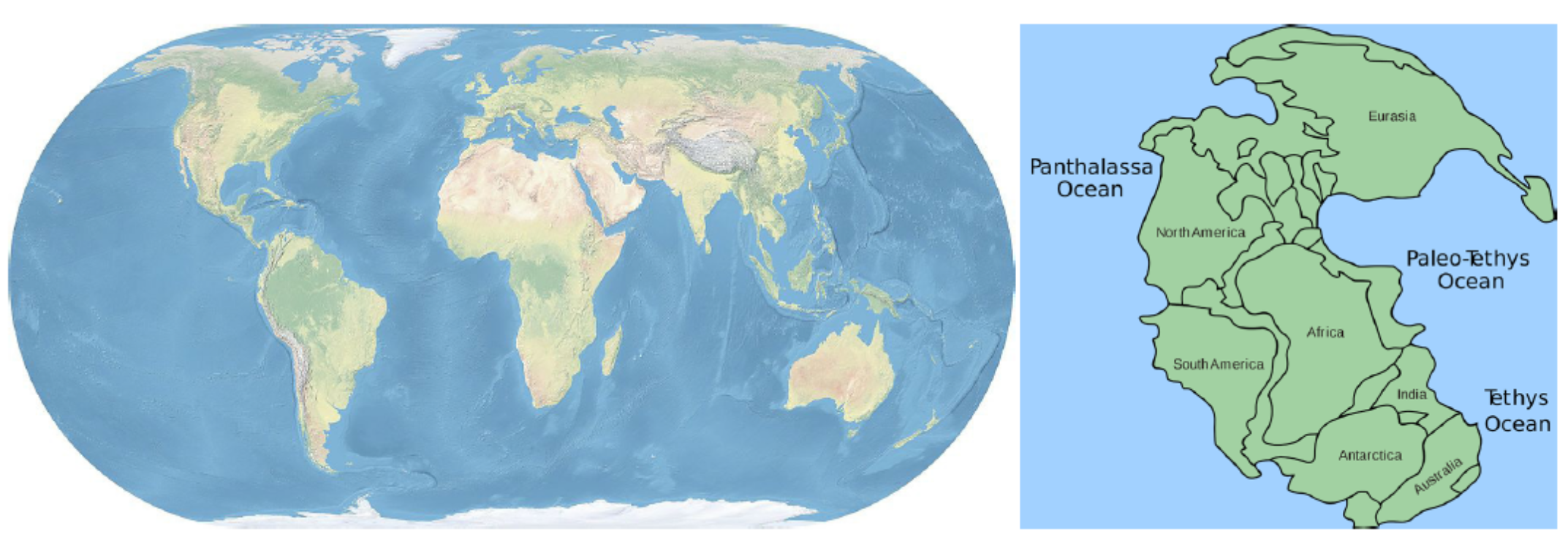
Take a look at the world map of today (pictured below). Wegener was looking at this same thing. Take a look at the shape of the continents. Do you see any matching patterns? Take a closer look at Africa and South America. It’s almost a perfect match. With all of his evidence, Wegener published his Theory of Continental Drift. Basing his theory on evidence of matching rock strata, same species of plant and animal fossils on different continents, and the shape of the continents, Wegener confidently stated that the continents had once been combined into a supercontinent he named Pangea.


1
1
1
1

Although Wegener didn’t have everything quite right, his theory did pave the way for the theory we hold to today. That theory is the Theory of Plate Tectonics.


1
Question 12
12.

Plate Tectonics


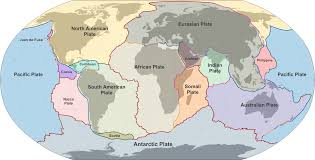
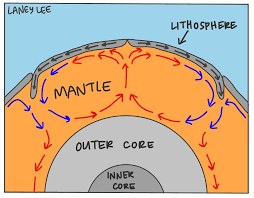
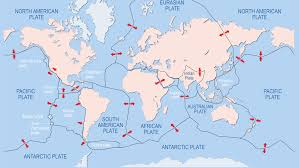
In the theory of Plate Tectonics, the outer layer of the Earth is not one continuous slab of rock, but instead it is made up of at least 15 different sections we call tectonic plates. Tectonic plates are made up of the cooler, breakable part of the upper mantle and the crust. Tectonic plates move, and this movement is caused by the internal heat that flows in convection currents through the mantle transferring heat energy from the core up to the crust. This theory is explained by the evidence and patterns we see around the world.


1
1
1

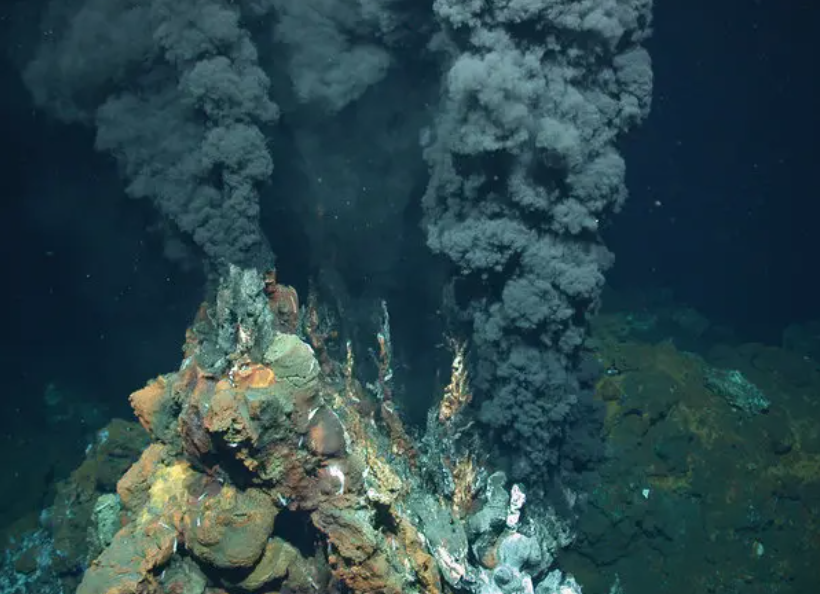
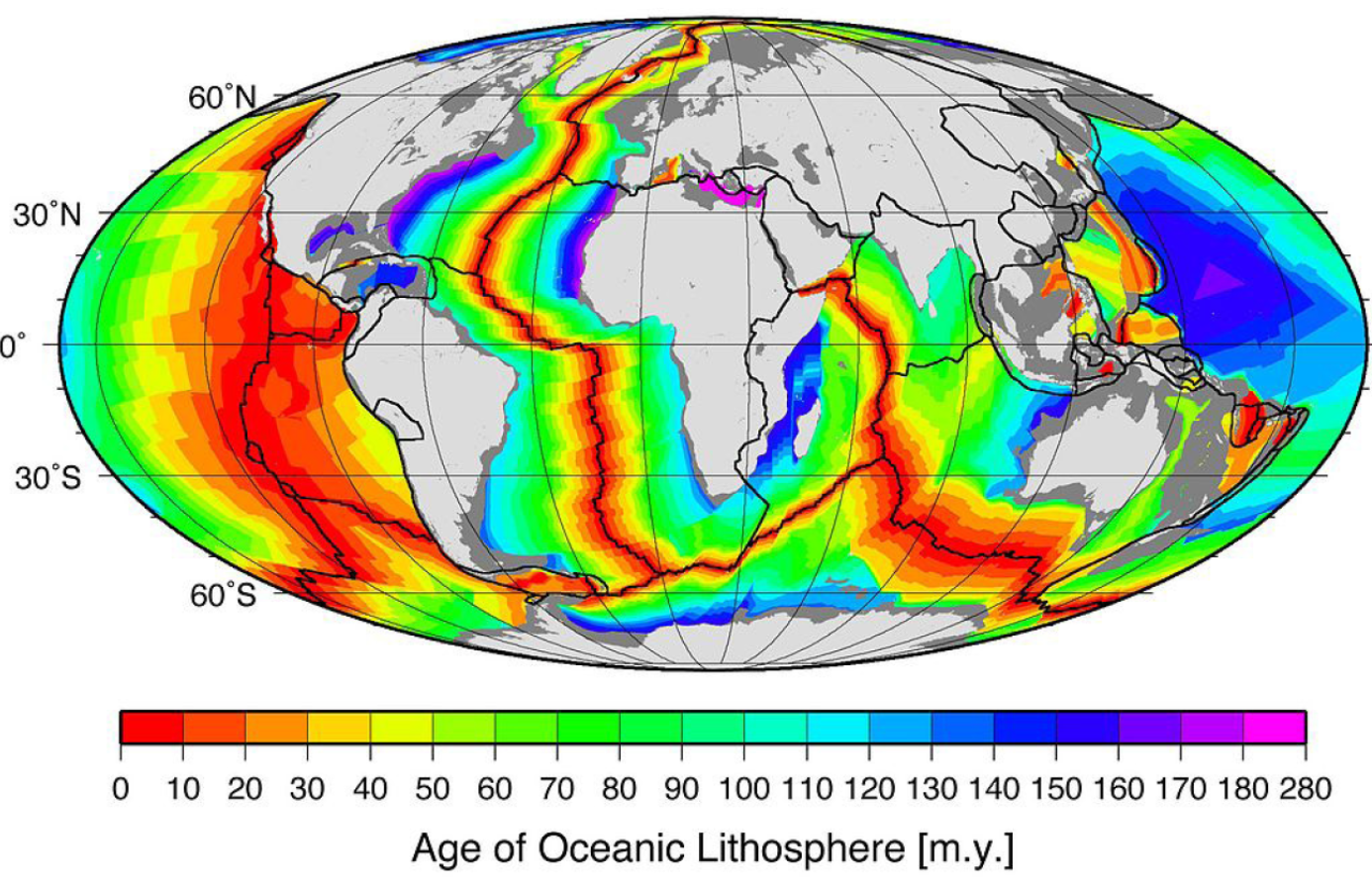
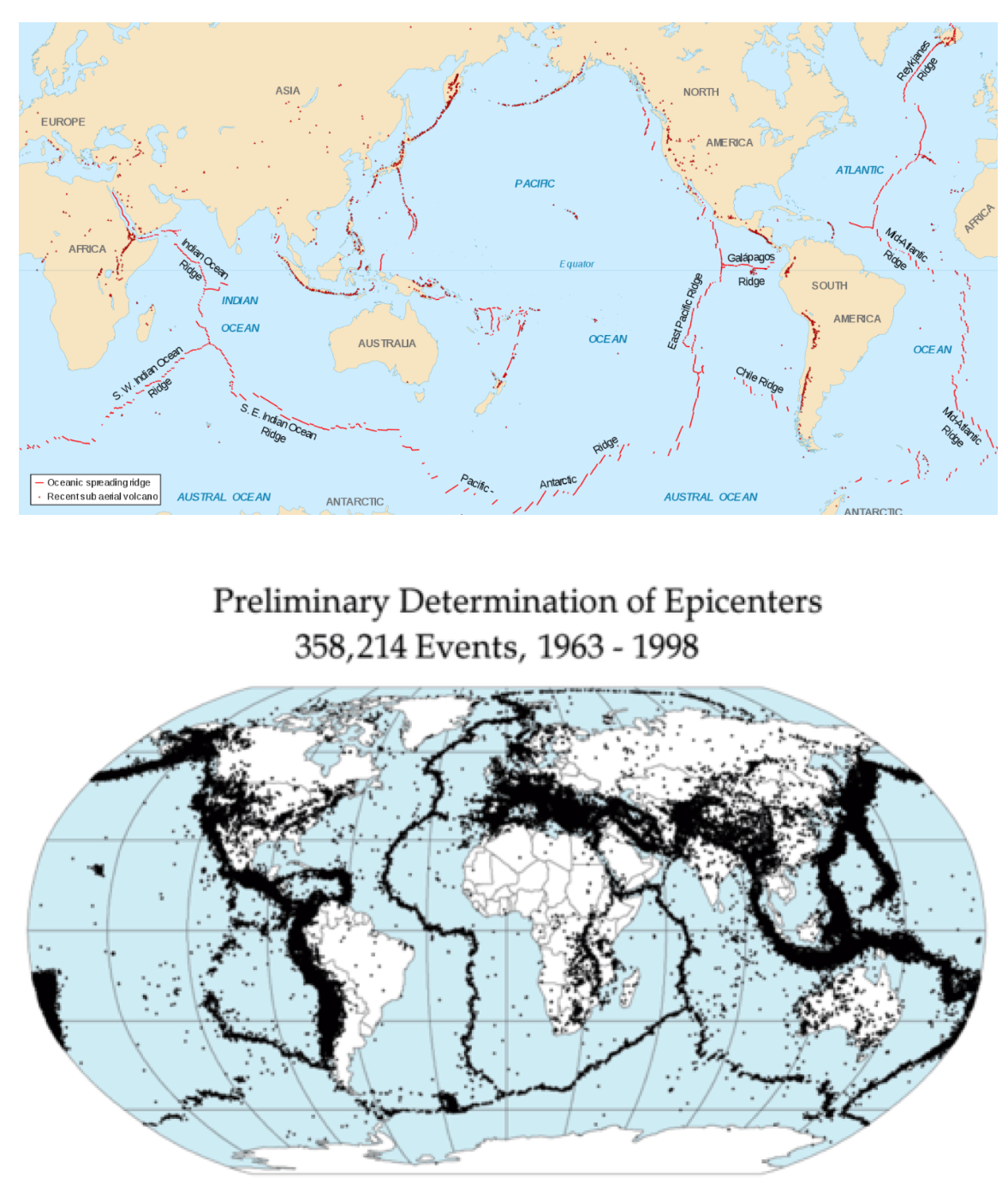
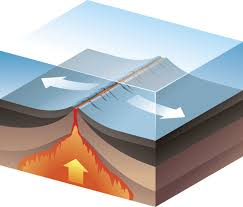
Let’s take a look at some of the evidence for this theory. The image below shows an underwater, volcanic mountain range running through the center of the Atlantic Ocean. There are several of these throughout the world. Many of them run through all of the world’s oceans.

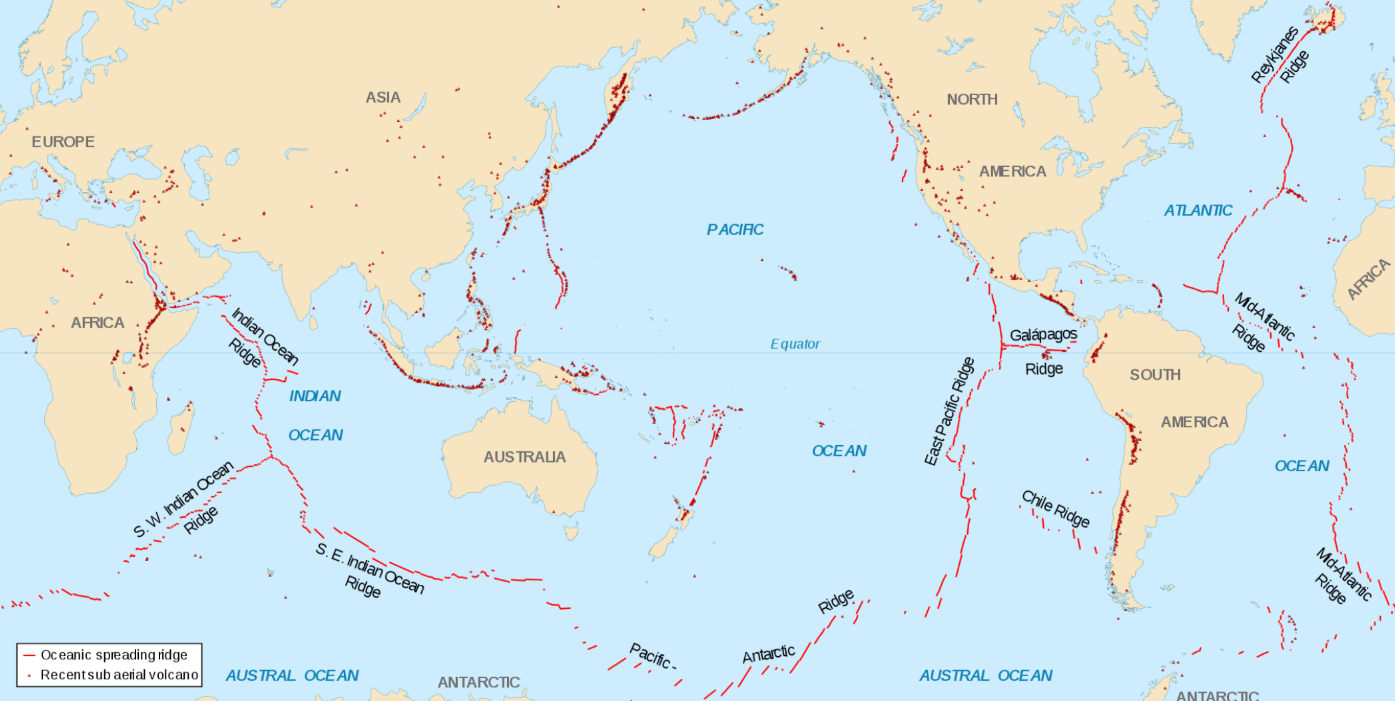
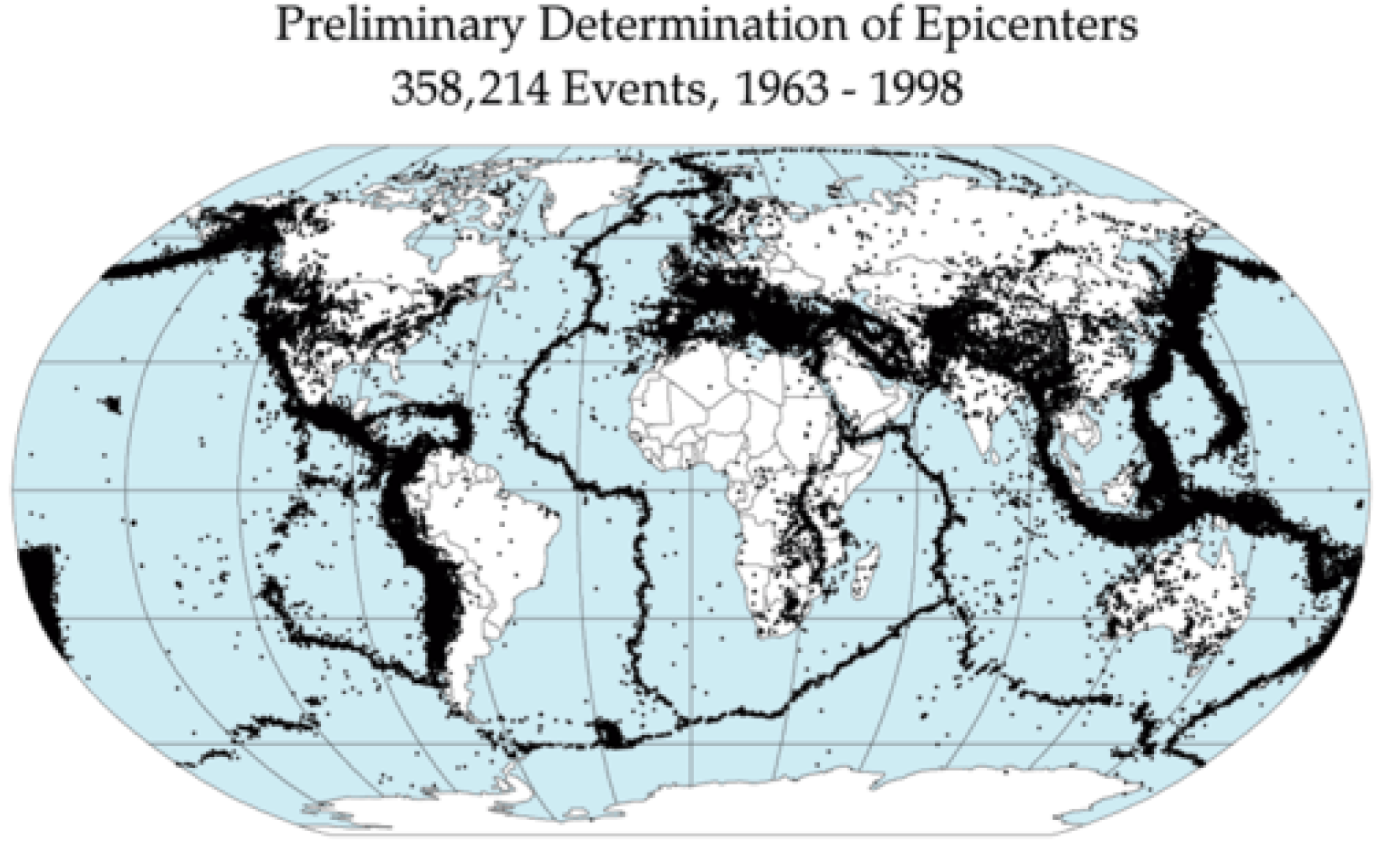
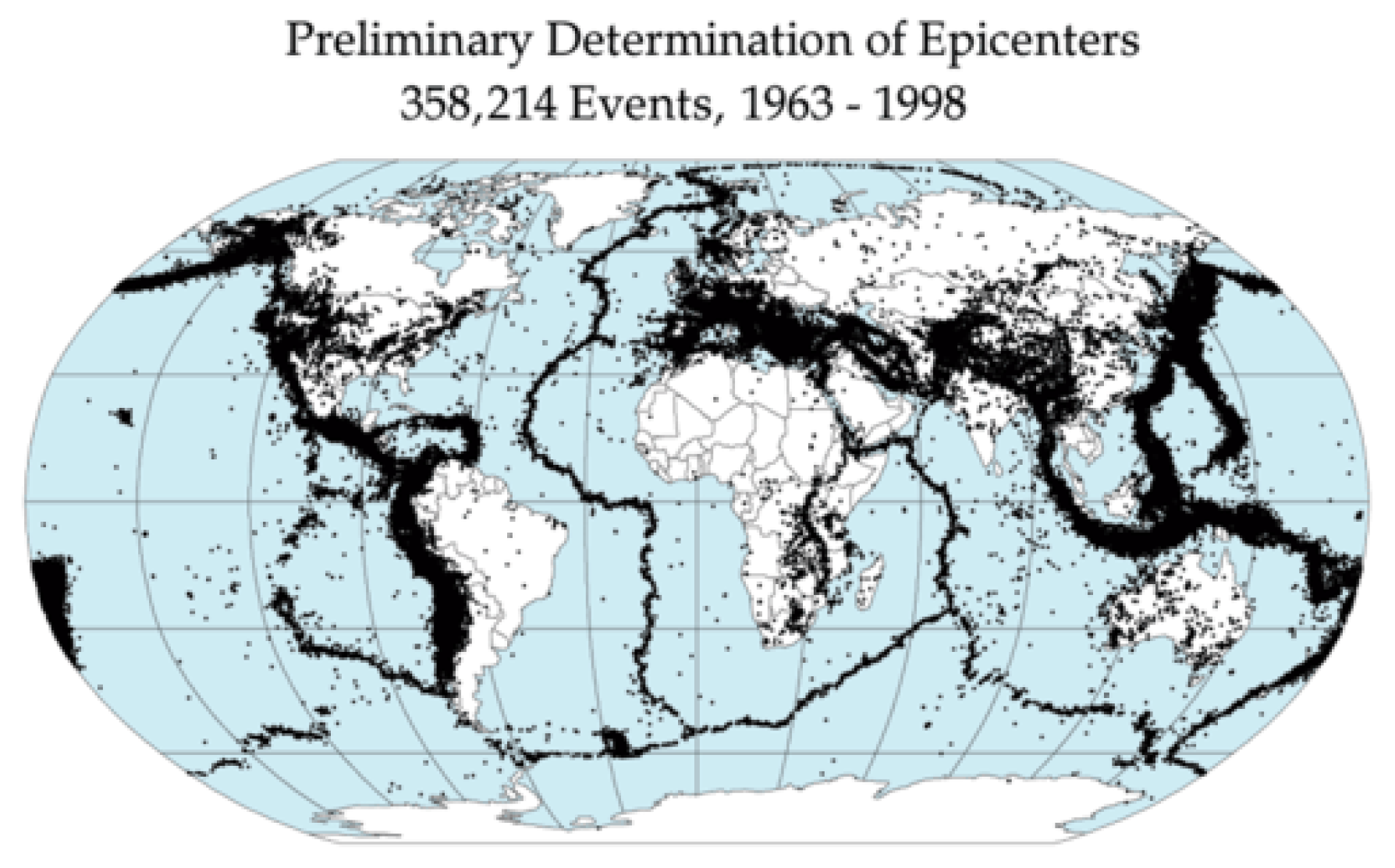
The following map that follows shows the age of the igneous rocks on the seafloor. The next image is of volcanic activity. The last map is of earthquake activity where each black dot shows the location of past earthquakes.


The Plates

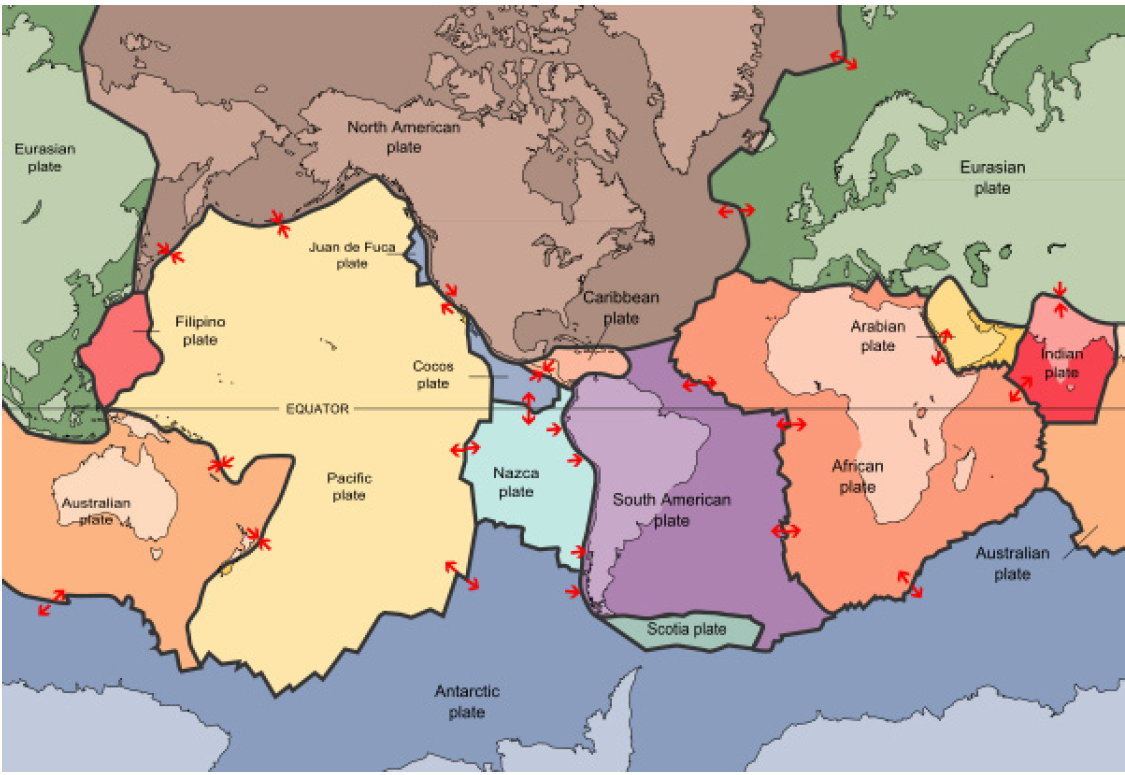
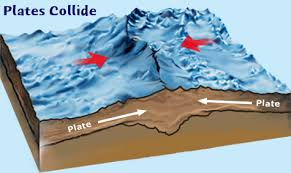
The crust of the Earth is split into several large chunks called plates. These plates sit on top of the mantle and are able to move. Where two plates meet, it is called a plate boundary. There are three ways that plates can move so there are three types of plate boundaries. Plates move away from each other at a divergent plate boundary. At a convergent plate boundary they move toward each other. In a transform plate boundary they slide past each other.

1
1

As you may have noticed while examining the volcanic and earthquake activity maps, most geological activity takes place at plate boundaries. At divergent boundaries new crust is created and these actions push plates apart. This is the main driving force that took the planet from the one continent of Pangea to what it is today, and guess what? The plates are still moving today.


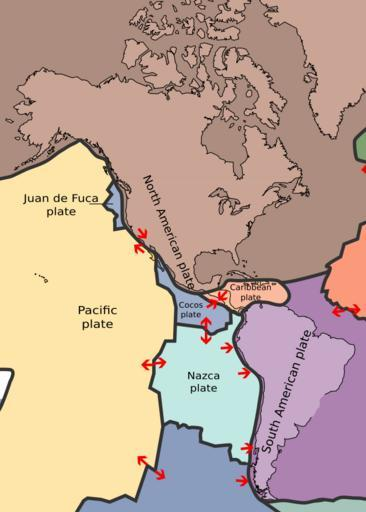
Although the plates are moving very, very slowly, we can measure this using satellite data. Typical plate movement is only about 2-3 cm per year. The fastest moving plates in the world are the Nazca and Cocos plates located under the Pacific ocean off the west coast of Central and South America (seen in the tectonic plate map at the top of the page). These plates move at a rate of about 10 cm per year.


1
1
1
1

Plate boundaries determine what type of landforms are created; what types of new rocks are produced, if any; and what kind of earthquake and volcanic activity there is. Mount Everest is forming from a convergent plate boundary where two continental plates are pushing into one another. This range is not built up due to volcanic activity, but instead created due to rock folding actions.


1
1
1

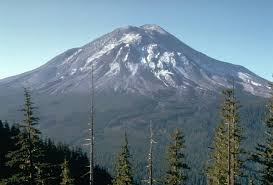
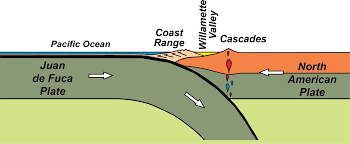
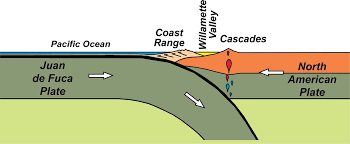
On the other hand, Mount St. Helens, located in the Northwestern US, is being created by the Juan de Fuca plate as it subducts (moves under the neighboring North American Plate). Even though they are both convergent boundaries, very different landforms are formed at these locations.


1
1
1
1
1
1

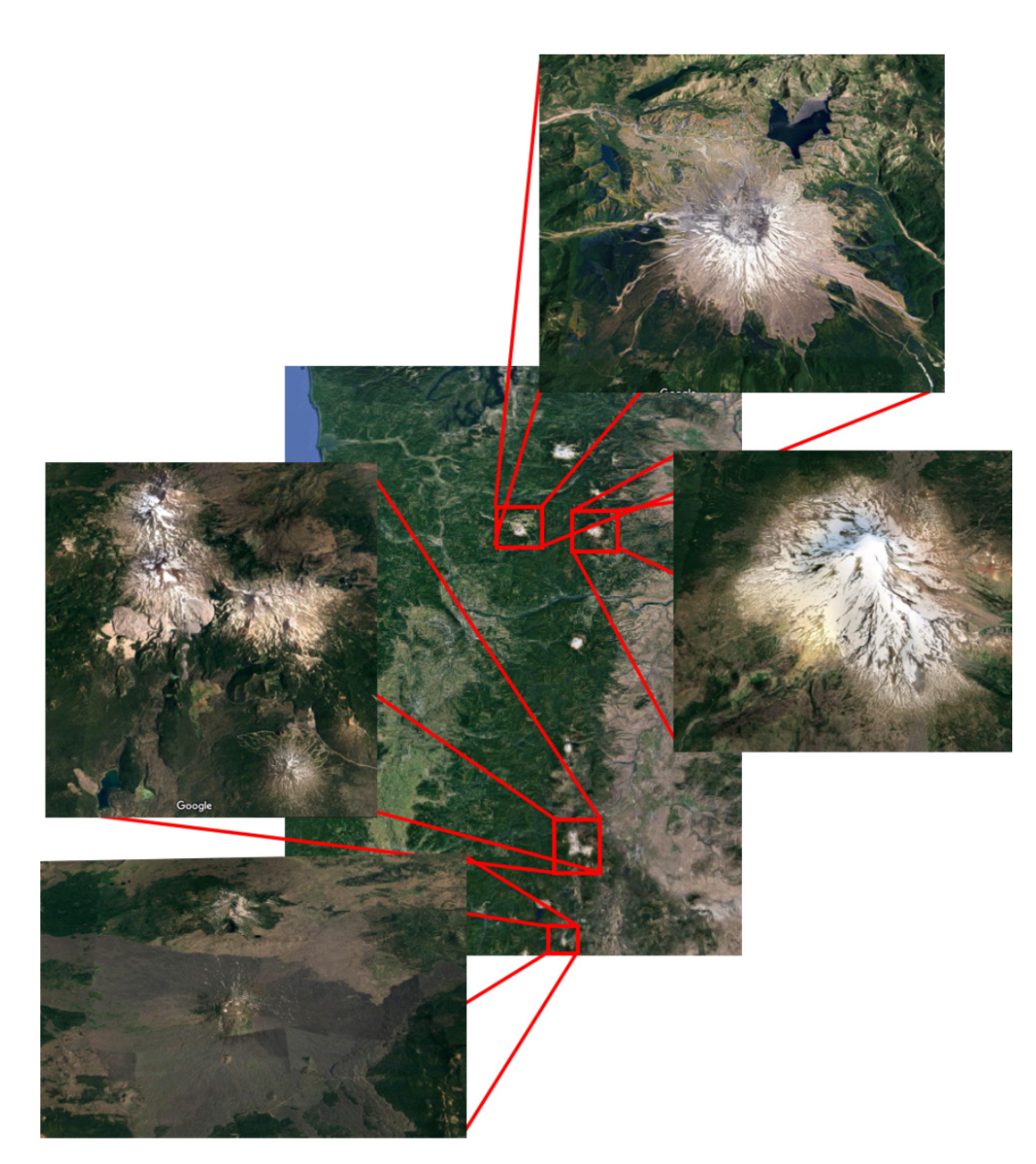
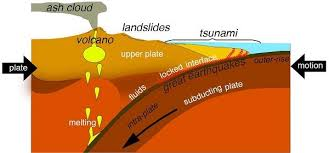
At the boundary where the Juan de Fuca plate runs into the North American Plate, the Juan de Fuca plate subducts under the continent and its matter is recycled back into the Earth. This process causes melting of the mantle above this plate. This melting rises to the surface and creates the range of volcanic mountains (including Mount St. Helens) that make up the Cascade Range. These can be seen in the images generated by Google earth located below. You can see in the center image, dots of high peaks covered in snow. These are all volcanoes that follow a pattern in the Cascade range. What is not as obvious in the photo is that smaller volcanoes also dot the landscape between these larger ones in a nearly straight line.


1
1
1
1

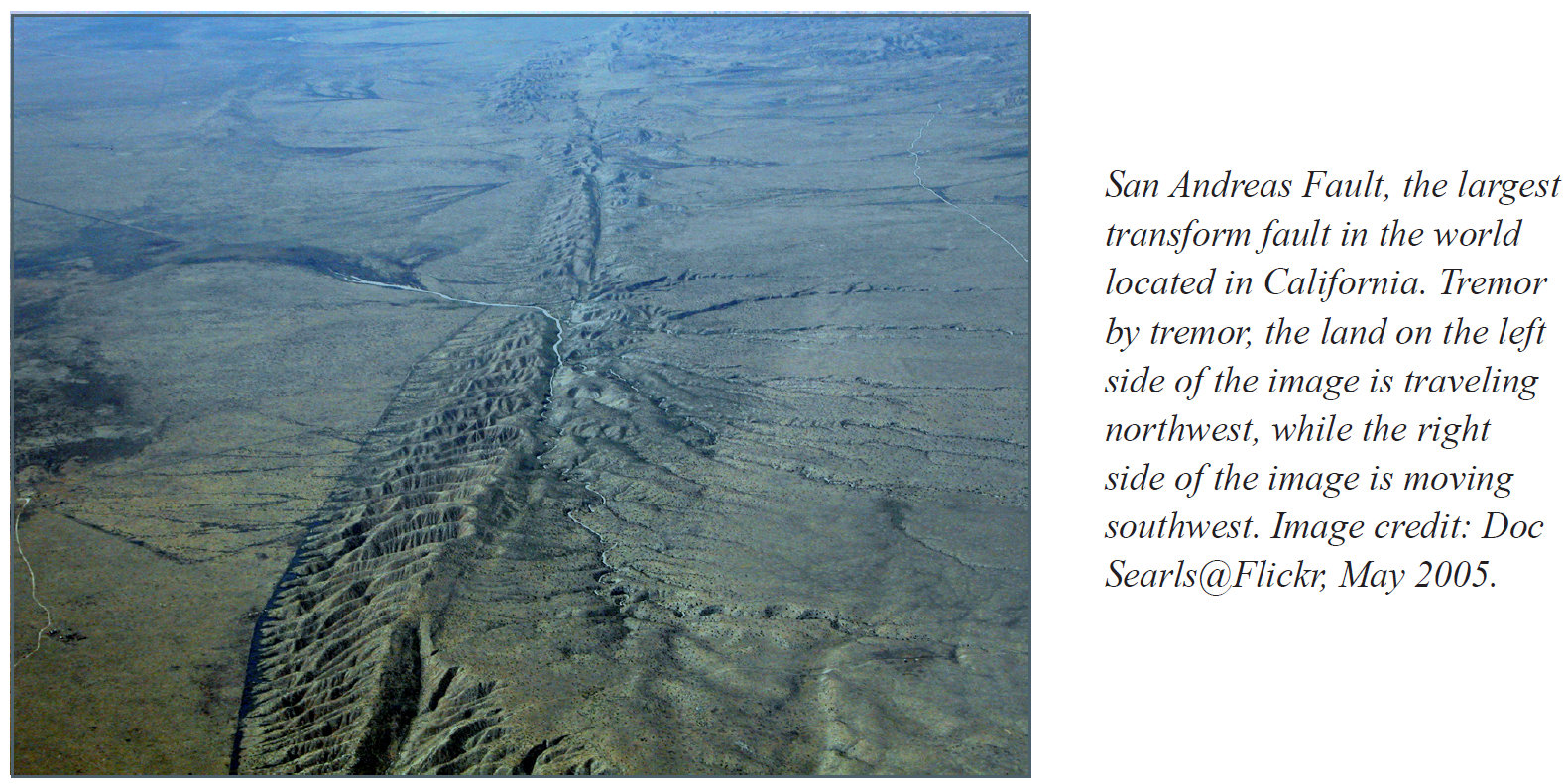
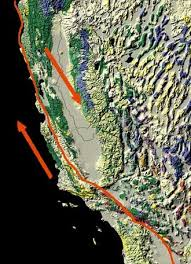
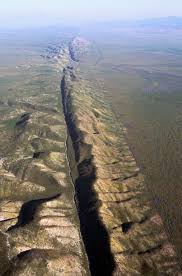
By contrast, a transform fault will never have volcanoes. Volcanoes that form on plate boundaries form because plates move/push apart from one another or because subduction and melting is occuring in an area. A transform fault has neither of these conditions. The landform created here is a fault scarp (an area where land is pushed up slightly and appears as a raised scar on the land surface). The image to the right shows an example of the most famous fault scarp in the world, the San Andreas Fault, California.


1
1
1
1

Volcanoes and the Pacific Rim

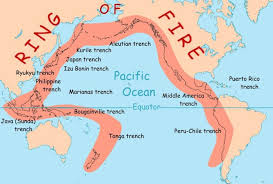
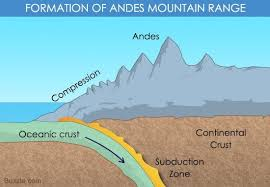
Many volcanoes are found along the Pacific Rim (the edges of the Pacific Ocean). Because of this display of volcanic activity, this is often referred to as the Ring of Fire. This occurs due to many different subduction zones-areas where one tectonic plate moves under another at plate boundaries. These types of boundaries are convergent boundaries where the plates are pushing into one another, but not crumpling up into folded mountains.


1
1
1

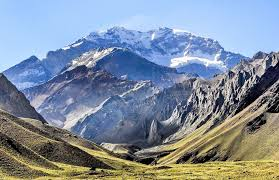
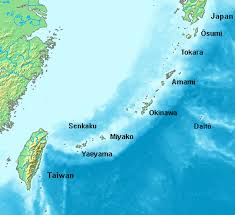
This type of motion creates vast volcanic mountain ranges on land like the Andes Mountains of South America, and the Cascade Range talked about in the previous section. It also creates volcanic islands called island arcs. Some examples of island arcs are Japan, Singapore (a section of Singapore is imaged at the right showing locations of volcanoes on the island), Papua New Guinea, Philippines, and many other island structures like these all around the world.


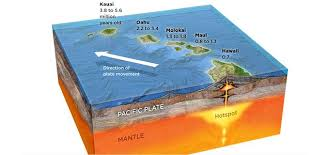
There are a few cases where volcanoes exist outside of plate boundaries. These are not caused by the boundaries themselves, but an entirely different phenomenon called a hot spot. These volcanoes are caused by intense heat from the core that makes its way the way to the crust in a long stream of heat. Examples of these would be Hawaii, Yellowstone, and Iceland.


1
1
1
1

Earthquake Zones

Although earthquakes can happen anywhere in the world, nearly 95% of all earthquakes take place along one of the three types of plate boundaries. About 80% of all earthquakes strike around the Pacific Ocean basin because it is lined with plates moving toward or sliding past each other. About 15% take place in the Mediterranean Asiatic Belt, where the Indian Plate runs into the Eurasian Plate (The Himalayan Mountain Range). The remaining 5% are scattered around other plate boundaries or are intraplate (not at plate boundaries) earthquakes.

1
1
1

Fossil Evidence Supports Plate Tectonic Theory

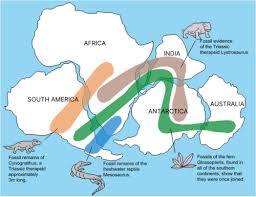
Fossil evidence for plate movement includes the presence of similar or identical species on continents that are now great distances apart. For example, fossils of the therapsid Lystrosaurus have been found in South Africa, India, and Antarctica, alongside members of the Glossopteris flora, whose distribution would have ranged from the polar circle to the equator if the continents had been in their present position; similarly, the freshwater reptile Mesosaurus has been found only in localized regions of the coasts of Brazil and West Africa.

1
1
1
1

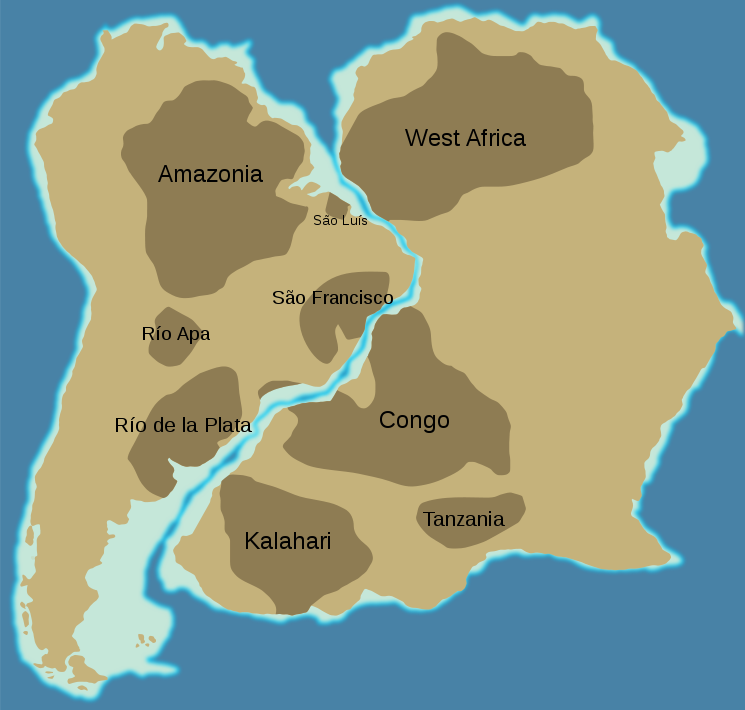
Additional evidence for plate movement is found in the similar geology of formerly adjacent continents, such as the eastern coast of South America and the western coast of Africa. The polar ice cap of the Carboniferous Period covered the southern end of Pangaea (when all the continents were one large landmass). Glacial deposits of the same age and structure are found on many separate continents which would have been together in the supercontinent of Pangaea.

1
1
1

Why does all of this evidence point to moving continents? Today, if you look at the world’s fauna and flora (animals and plants) you’ll be able to note that each continent has its own variety or species of these organisms. Not only that, specific regions and isolated islands have their own species. This is because as populations become isolated from other members in their species, they will change and adapt just slightly over time until they become different species. We’ll cover this in more detail in Chapter 27. When organisms are in contact with one another they mix their genes through reproduction and stay one species. If the same species from an ancient organism is found in one location and then in another thousands of miles apart, it is assumed that these land masses were once in contact.

1
1
1
Question 1
1.

What did Wegener observe about mountain ranges in different continents?

Question 2
2.

Where did Wegener find similarities in mountain ranges?

Question 3
3.

What profession did Alfred Wegener have besides geology?

Question 4
4.

What do the fossil lines suggest about the continents?

Question 5
5.

What does the image show about ancient species?

Question 6
6.

What can we learn from the fossil evidence?

Question 7
7.

What do similar fossils indicate about Earth's past?

Question 8
8.

What supercontinent is shown in the image below?

Question 9
9.

Which continents were likely once connected in Pangea?

Question 10
10.

What is one piece of evidence Wegener used to support his theory?

Question 11
11.

How did Wegener describe the shape of the continents?

What major theory did Wegener contribute to?
Theory of Evolution
Gravity Theory
Theory of Plate Tectonics
Continental Drift
Question 13
13.

What causes tectonic plates to move?

Question 14
14.

Which part of the Earth consists of tectonic plates?

Question 15
15.

What does the mantle transfer to the crust?

Question 16
16.

What are large chunks of Earth's crust called?

Question 17
17.

What do we call where two plates meet?

Question 18
18.

How fast do the Nazca and Cocos plates move?

Question 19
19.

Where are the Nazca and Cocos plates located?

Question 20
20.

What type of data is used to measure plate movement?

Question 21
21.

How fast do most tectonic plates typically move?

Question 22
22.

What is one type of plate boundary that forms mountains?

Question 23
23.

What is formed by the collision of plates?

Question 24
24.

What process primarily forms Mount Everest?

Question 25
25.

What type of boundary is formed by the Juan de Fuca plate?

Question 26
26.

What landform is created by the Juan de Fuca plate?

Question 27
27.

Which plate is being subducted under the North American Plate?

Question 28
28.

What type of geological event does subduction typically cause?

Question 29
29.

Which mountain range is associated with the Juan de Fuca plate?

Question 30
30.

What happens to the Juan de Fuca plate during subduction?

Question 31
31.

What causes the melting of the mantle in the Cascade Range?

Question 32
32.

What geographic feature is created by the melting mantle?

Question 33
33.

Where do smaller volcanoes appear in the Cascade Range?

Question 34
34.

What happens to the matter from the Juan de Fuca Plate?

Question 35
35.

What type of fault is shown in the image?

Question 36
36.

What landform is created by a transform fault?

Question 37
37.

In which direction do the plates move at a transform fault?

Question 38
38.

Where is the San Andreas Fault located?

Question 39
39.

What causes the formation of volcanoes in the Ring of Fire?

Question 40
40.

What term describes areas where tectonic plates collide?

Question 41
41.

What type of plate is shown moving downward in the image?

Question 42
42.

What is a hot spot?

Question 43
43.

Which island is formed by a hot spot?

Question 44
44.

What causes volcanoes at hot spots?

Question 45
45.

How are hot spot volcanoes different?

Question 46
46.

Where do most earthquakes occur globally?

Question 47
47.

What percentage of earthquakes happen along plate boundaries?

Question 48
48.

Which region has the highest earthquake frequency?

Question 49
49.

Which fossil was found in South Africa, India, and Antarctica?

Question 50
50.

Where have Glossopteris fossils been found?

Question 51
51.

Which two continents have Mesosaurus fossils?

Question 52
52.

What does Lystrosaurus evidence suggest?

Question 53
53.

Which continents show similar geology supporting plate movement?

Question 54
54.

What do glacial deposits from the Carboniferous Period indicate?

Question 55
55.

What is the significance of similar geology in continents?

Question 56
56.

Why do continents have unique species of plants and animals?

Question 57
57.

What happens when species are isolated from each other?

Question 58
58.

What does it indicate if the same ancient species is found in different locations?

In the middle of continents
Near plate boundaries, especially Pacific Ocean area.
About 95% of all earthquakes occur there.
Almost 80%
The Arctic Ocean
The Indian Ocean