What’s It Like to Be a Chef?
November is one of my favorite times of the year. It seems that everyone spends a lot more time in the kitchen getting ready for Thanksgiving! Pumpkin pie, turkey, sweet potatoes—yum! Have you ever wondered what it’s like to be a chef and to cook for lots and lots of people? Bill Justus is the Executive Chef at Hershey Lodge in Hershey, Pennsylvania. He comes up with recipes to go on the menus of the resort’s restaurants, and he loves to cook with chocolate. And not just desserts! At Hershey, the home of the famous Hershey chocolate bar, they use chocolate in all different types of recipes! I was lucky to meet with Chef Justus and get his story about what it’s like to be a chef.
TRUMAN: What does it take to become a chef?
CHEF JUSTUS: First of all, it takes a little bit of schooling. Whether you go through an apprenticeship, or there’s a lot of really good culinary schools in the United States now. If you are in an area that is fortunate to have a good vocational technical school, that’s a good way for you to get in and see if it’s really something you’d like to pursue as a profession.
TRUMAN: When did you know that this was something you wanted to do for a living?

CHEF JUSTUS: Well, I’d always kind of kicked the idea around a little bit, helping my aunt and uncle who had some restaurants. Probably when I went into vocational school is when I really started taking it seriously as a profession. I went to vocational school during my junior and senior years of high school.
TRUMAN: Did you always like to help out in the kitchen when you were young?
CHEF JUSTUS: I always helped out somewhat. My mother is a really, really good cook, and she can make pretty much anything. My grandmother was a really good baker, and she liked to make candies. I have two brothers, so when my mom was at work, I would help her out a little bit in the kitchen.
TRUMAN: What exactly do you do as an executive chef?
CHEF JUSTUS: As an executive chef, you have a lot of responsibilities, not only with cooking, but with scheduling, menu planning, organizing, hiring, training. Budgets and numbers, things of that nature. Not only is it being a good cook, but you also have to communicate with people—like we’re doing here today. With the Food Network and things like that, people are a little more aware of what’s going on and a little more educated about cooking.
TRUMAN: What is a typical day like?
CHEF JUSTUS: A typical day is coming in, going over financial reports from the previous day, meeting with your staff and going over menu development. We have menu tastings, too. The property is pretty big, so we have really big groups that come in. We have one coming up soon for 1,300 people. It’s a lot of planning—planning ahead. You have to figure out how much lettuce to order, how many vegetables to order, things of that nature. We try to use seasonal products on the menu and change them for spring, fall, and special holidays.
TRUMAN: So when do you actually cook?

CHEF JUSTUS: I cook as much as I can. I’m fortunate enough that when we do the specialty functions, I try to get a hand in that. A lot of times, my sous chefs—the assistants—they are the ones that are on the floor throughout the day supervising the line-level staff and making sure that everything is going according to plan.
TRUMAN: So, what’s the best part of your job?
CHEF JUSTUS: I think the creativity. It changes daily. Dealing with different groups and the diversity of what we do—one day you might be doing a basic box lunch, and the next day you’re doing a seven-course dinner. It changes—every day it’s something different. It’s exciting.
TRUMAN: What’s the worst part of your job?
CHEF JUSTUS: I don’t consider anything bad. I think the one thing people would have to realize is that the hours are different than most people have. You work the weekends, the holidays; it’s not a bad thing, just something you should be aware of. My first chef told me, “Always remember, when everybody is playing, you’re working.”
TRUMAN: I hear you do some interesting things with chocolate. What’s your favorite kind of chocolate?
CHEF JUSTUS: My favorite is the Hershey Special Dark. They’ve also come out with some new products, the extra dark. I like the dark chocolates. We use the chocolates as much as we can. Not only for desserts, but we try to use it in the center-of-plate items. We use the Hershey cocoas, spice it up with different spices and seasonings and use it as a rub for meats, fish, and chicken. We try to use chocolate not only for dessert, but other applications. We do a chocolate-barbecued chicken wing that is pretty good.
TRUMAN: What’s your favorite dessert?
CHEF JUSTUS: My favorite dessert—hmm, I like desserts! My favorite dessert is probably pumpkin pie.
TRUMAN: And what’s your favorite meal?
CHEF JUSTUS: I like to make soups when I’m at home. I like a nice homemade soup or stew. I like the one-dish meals.
TRUMAN: What are you serving for Thanksgiving dinner at Hershey Lodge?
CHEF JUSTUS: We’re going to have a wide variety of things, a little bit of an international flair this year. We’ll be using local ingredients as well as recipes and items from around the world. We’re calling it a world of thanks.
TRUMAN: What kind of advice would you give to kids who are interested in becoming a chef?
CHEF JUSTUS: Be open-minded. Study. Math, science, all the classes, take all that to heart and make sure to get a good education. The opportunities are wide open in the culinary and hospitality field. You can be adventurous and travel. Be open-minded.
TRUMAN: Thanks for talking to me! And these cookies are delicious—this really is the sweetest place on Earth!


 Sleep has puzzled people for a long time. Why do we lie down and zone out for hours every night? Isn’t sleep just a giant waste of time? Could we learn to do without it?
  Now scientists are beginning to answer some of those questions. They’ve discovered that brains and bodies don’t just shut down at night. Quite the contrary! At night, your body repairs itself and grows strong. Your brain is busy making memories and learning. Sleep is so useful that all animals do it. And without it, waking life would be impossible.
  After lying down, most people take about 20 minutes to fall asleep. In the twilight zone between asleep and awake, your brain begins to drift. It muffles signals from the muscles and senses, ignoring information from the outside world. That can give you the odd sensation of falling. You aren’t really—you’re just falling asleep. . . .
  As you slip into sleep, your heart slows down and you breathe more slowly. Your eyes shut, and your brain ignores ordinary sounds. That’s why when you’re sound asleep, you don’t hear small noises or other things that might wake you up. The part of the brain that keeps you aware of time passing also switches off, so in the morning it feels like the night takes no time at all.
  But your brain does not shut down at night. In fact, it gets quite active. It’s got important jobs to do.
 You might think sleep is just . . . sleep. But in fact, you do several different kinds of sleeping, cycling through them several times through the night.
  First is a light sleep. After about half an hour, your brain sinks into a deep sleep. During deep sleep, long, slow waves of electrical impulses move through the brain. These slow waves move all the important things you learned and did today from short-term memory into long-term memory. At the same time, you forget unimportant details like putting on your socks. That frees up space to learn new things tomorrow.
  After about 20 minutes or so of slow-wave sleep, your sleeping brain shifts gears. It starts to look more awake—though it isn’t. In the next stage of sleep, your muscles go completely slack. Your body doesn’t move at all. But your eyes dart back and forth behind closed eyelids. This motion gives this kind of sleep its name—REM, for “rapid eye movement.”
  During REM sleep, the brain is making connections. It links new experiences to old memories. It also bundles together actions you’ve been practicing, such as the motions of riding a bike, into a new, single muscle memory: ride bike. All this connecting triggers dreams—which can get pretty weird.
  You cycle through stages of light, deep, and REM sleep every 90 minutes, over and over, all night long. At the beginning of the night, you do more slow-wave sleeping, while the brain cleans house. Toward morning, you get more REM sleep, as it builds new knowledge. That’s when the most vivid dreams happen.
  Why do we dream? Scientists aren’t completely sure, but they have some ideas.
 Dreams might be a side-effect of memory making. While you sleep, your brain sorts through everything that happened during the day. It tries to link new experiences to old memories that are similar in some way. As it connects things, the “story-making” part of your brain turns them into a story, and you get a dream. . . .
  When it’s sorting through the day’s memories, your brain pays special attention to anything that made you feel extra happy or scared or excited. In dreams, the brain can try out solutions to problems that are bothering you. Finding even a weird dream solution can make you feel more in control the next day.
  Dreams can even help you learn. In one test, volunteers learned how to play a new game. That night, some of them were awakened whenever they entered REM sleep. The others were awakened the same number of times, but only during non-REM sleep. The next day, the people who got their REM sleep did much better at the game. The players who started out being worst at the game had the most dreams about it—and they improved the most.
  So if you want to do well on that test, don’t stay up all night studying. Instead, get a good night’s sleep. That’s when your brain learns best.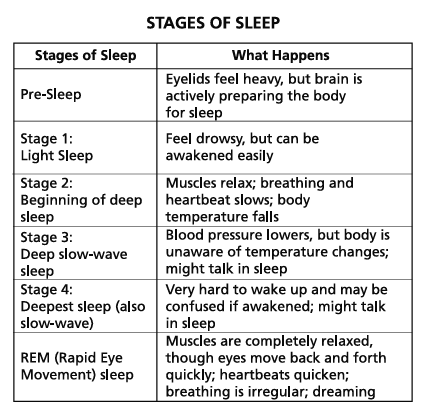
 It was spring break for Dustin and a good day for an adventure. The railroad tracks looked endless so he decided to follow them. The sky was Easter egg blue. The fluffy clouds reminded Dustin of his favorite frosting, vanilla. The shiny, golden sun bounced happily in the sky.
  “What is that in the grass?” he wondered. Was it a gigantic rock, or maybe a big, brown, sleeping turtle? He bent down to investigate!
  “A wallet!” he exclaimed as he picked it up and peeked inside. It was full of all kinds of stuff! And a tiny photo of twin boys.
  “Somebody lost this, I’ll bet! Mom will know what to do!” Off Dustin ran to their apartment.
  “Well, let’s just look inside and see who owns this wallet,” Dustin’s mom, Marisa, said cheerfully. They emptied it onto their kitchen table and searched for a clue. There it was, a note written in crayon!
  “We love you, Dad!—Carlos and Hugo.”
  “This must be a wonderful man. His boys love him very much,” remarked Dustin’s mom.
  “Look, mom, this picture must be of them and they look like they are my age. I wonder if they live around here,” Dustin said aloud as his excitement grew. Then they saw another clue, a driver’s license and now they knew the owner of that old, brown wallet was named Salvador!
  “This card says their address is far away in a different city,” said his mom sadly. Now what would they do?
 Finally they found the best clue of all; a phone number on the back of Salvador’s shiny, silver credit card.
  "I will contact Salvador for you with the good news,” said the kind lady who answered the phone.
  The very next day Dustin’s doorbell rang and when Dustin and Marisa answered the door, there stood a smiling man who introduced himself as Salvador!
  “Thank you, Dustin. You are a fine young man,” he said as he shook Dustin’s hand, “I rode the train to my job here in your city and my wallet fell out of my pocket. I thought I would never see it again! My sons will be happy to meet you. We are coming here to spend the day at Rocket Land tomorrow, and I would like you and your mom to come with us if you can.”
  “That will be just fine,” smiled Dustin’s proud mother.
  “Yeah, that sounds great! I can’t wait to meet Carlos and Hugo,” grinned Dustin as he said good-bye to Salvador.
  “You did the right thing, sweetheart,” his mom said softly as he ran into the kitchen just in time to see her putting the last bit of his favorite vanilla frosting on a big, chocolate cake and reaching out to give him a “proud mom” hug.
  “Thanks mom! This has been the best adventure ever!”
  The very next day Dustin and his mom heard their doorbell chiming loudly.
  Dustin peeked through his living room window and there stood four smiling people and one tiny, excited Chihuahua dog.
  “I’ll get it,” exclaimed Dustin as he ran and opened their front door.
  “Hello, my friend,” Salvador said to Dustin, “I would like you to meet my wife, Emerita, and my sons, Carlos and Hugo, and our dog, Chica. She’s also excited to go to Rocket Land. We take her with us every year.” Chica yipped loudly and jumped into the air when she heard her name.
 “Please come in,” said Dustin’s mom. “We are ready to leave and I have packed us all snacks to eat on the way there. Now, what should I put in for Chica?”
  “Don’t worry, we have plenty of doggie snacks for her in our van,” laughed Salvador.
  “I baked cochinos and churros, and biscochitos for us too,” said Emerita. “They are delicious cookies and they are loved by everyone in our country.”
  “I want to sit in the back seat with Hugo and Carlos,” said Dustin as he grabbed his jacket. Emerita and Marisa nodded their approval and the group climbed into the blue van headed for Rocket Land.
  “Salvador’s wallet sure seems to be a magic friend maker,” smiled Marisa as they happily drove away.