Henri de Toulouse-Lautrec
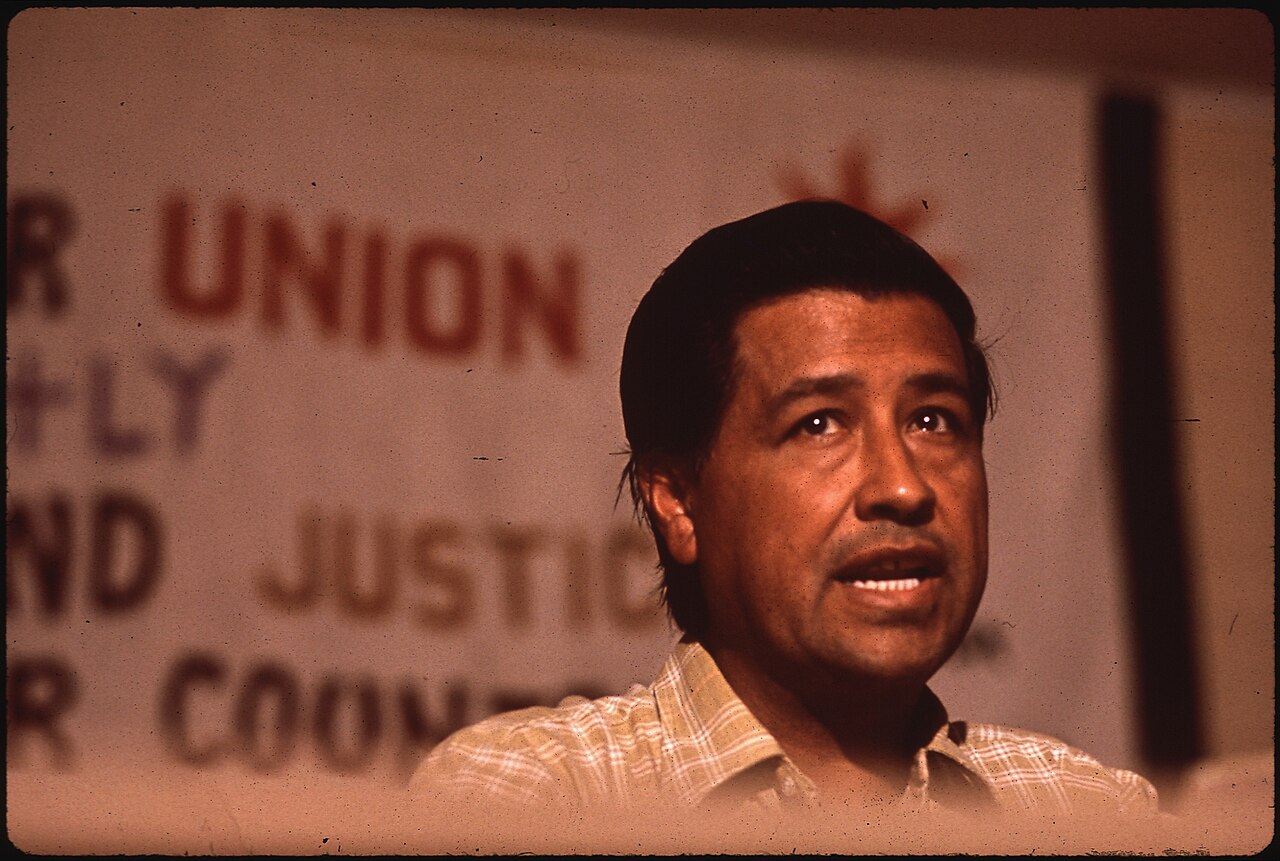
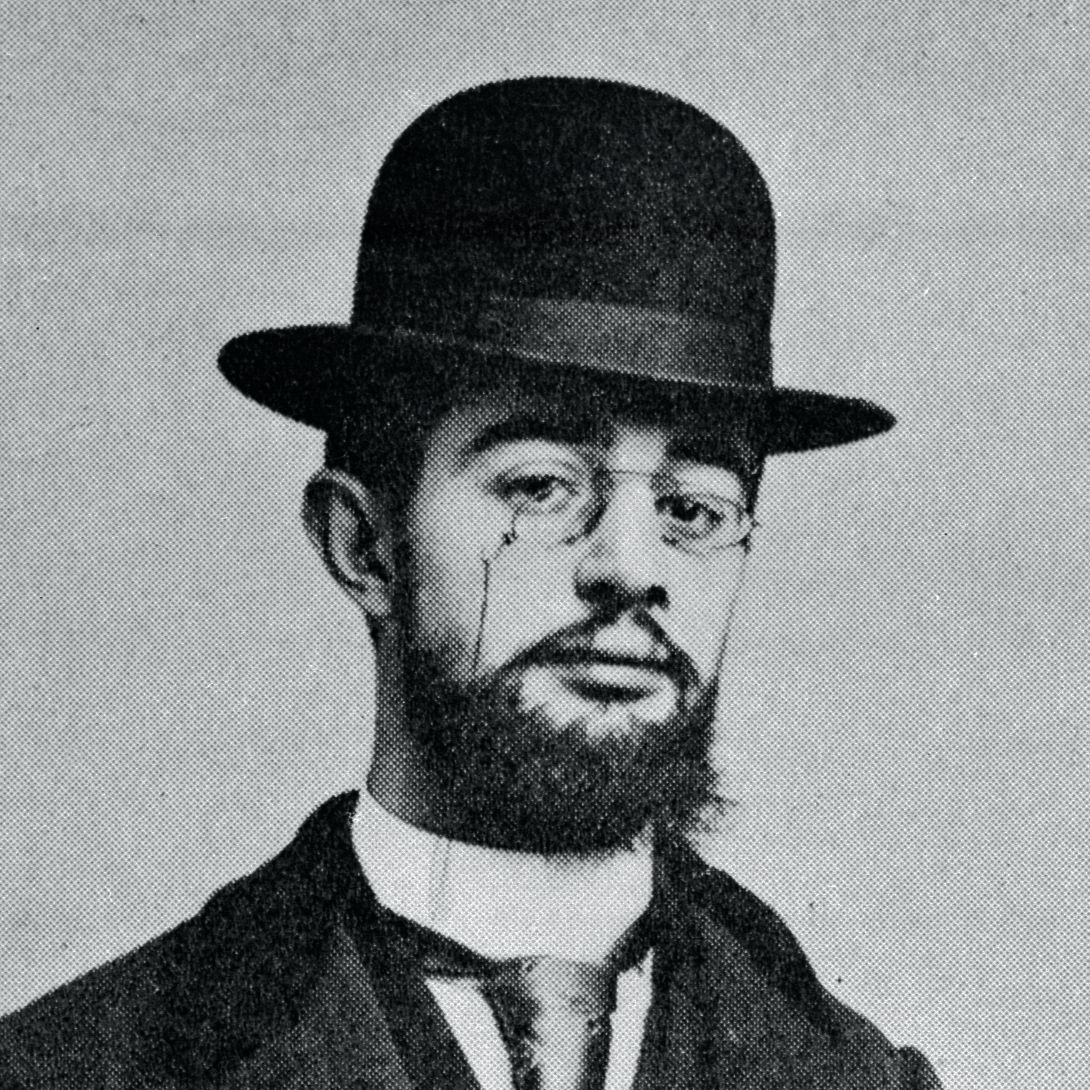
Henri de Toulouse-Lautrec (1864-1901) was a famous French painter. Unlike many artists of his ear, he came from a wealthy family and did not have to rely on his art to make a living. This freedom allowed him to paint whatever he wanted. Fascinated by the world of nightclubs, cafes, and dance halls in Paris, he enjoyed observing and sketching the dramatic lives of these people. Toulouse-Lautrec also created many advertising posters about the people he found interesting. He captured the atmosphere and drama that surrounded him by using simple lines and flat colors. L Because his images could stir great feeling, posters soon became a new art form.
Although Toulouse-Lautrec was a talented artist who created over 1,000 paintings, 5,000 drawings, and 350 posters, his life was not easy. Before the age of fifteen, Henri had broken both of his femurs in two separate accidents. Henri’s legs never healed properly, possibly owing to a genetic defect, and they stopped growing, which left him deformed. His normal torso sat atop his unusually short, underdeveloped legs. Toulouse-Lautrec sometimes perceived that people were laughing at his misproportioned body, and he felt the disability prevented him from fitting in with those of his aristocratic class, so he turned to the cabaret scene of Montmartre in Paris. His desire to belong and his intuitive art allowed him to develop a great sympathy for the lives and struggles of others. Settling into the nightclub scene, however, Henri de Toulouse-Lautrec became an alcoholic and died from a mental and physical collapse when he was only thirty-seven. He is now one of the world’s most popular artists, and his works are on exhibit in almost every major museum in France and the United States.
Which of the following would be the best title for this passage?
Which of the following best states the author's purpose?
As used in the passage, the word atmosphere most nearly means
Which of the following statements best describes the reason for the second paragraph?
What effect did Henri's disability have on his life?
All Hail the Queen
Queen Latifah, whose birth name is Dana Elaine Owens, has been called hip-hop’s first lady because of her empowering song lyrics. She was born in Newark, New Jersey, on March 18, 1970. Her mother was a teacher, and her father and brother were both police officers.
Latifah began her working career as a Burger King employee but soon got into the music industry by being a human beatbox, or imitating the sound of a drum, in the rap group Ladies Fresh. At the age of eighteen, Latifah released her first album, Wrath of My Madness. Queen Latifah was unhappy with the misogynistic lyrics produced by the popular male performers at the time, so she decided to create lyrics that appeal to both genders.
Queen Latifah has been one of the greatest hip-hop artists of the decade, but this has not been her only focus. Her career spans the entertainment industry. Queen Latifah has performed in numerous films and appeared on television shows. She also manages her own company, Flavor Unit. Her experience has led to wide recognition. She was the first female rapper to be nominated for an Academy Award, she was ranked number 72 on VH1’s 100 Greatest Women of Rock-N-Roll, and in January of 2006, she was the first hip-hop artist to be given a star on the Hollywood Walk of Fame. These are just some of her awards. While her nickname “Latifah” is Arabic for delicate and sensitive, her music and her manner are strong, empowered, and wise.
Which of the following statements is a fact?
Which of the following best states the author's purpose?
As used in the passage, the word misogynistic most nearly means
Which of the following statements best describes Queen Latifah's career?
Which of the following best describes the reason for the second paragraph?
To what might the author be alluding in the final sentence of the passage?
Cesar Chavez: Heroic Figure
At the age of ten, Cesar Chavez quit school to become a migrant farm worker. His parents had lost their farm during the Great Depression, and he worked to help support his family. His experiences in vineyards opened his eyes to the numerous problems faced by farm workers. Eventually, he became a leader in the fight against the low wages and poor working conditions that fellow workers were facing. In 1962, Chavez formed the National Farm Workers Association (now known as the United Farm Workers). This group worked towards improving the treatment of farm workers. A firm believer in nonviolent protest, Chavez practiced the principles of Gandhi and Dr. Martin Luther King, Jr., to achieve his goals. During the 1970s, the UFW held strikes and boycotted grapes and lettuce to get better wages for the growers. In the 1980s, Chavez fasted to protest the use of dangerous pesticides on grapes. Such movements were highly effective in drawing national attention, and the hard work resulted in industry-wide contracts and new legislation.
Through numerous efforts and achievements. Cesar Chavez led the first successful farm workers union in American history. His brave efforts provided thousands of farmers with fair wages, medical coverage, benefits, and legal protections that they did not have before.
Although Chavez did not have a formal education past the eighth grade and never made more than $6,000 a year, he was a widely respected man. Chavez’s dedication to social justice has been celebrated in various ways: buildings have been named after him, his birthday is celebrated as a holiday, scholarships have been established in his name, and a foundation was created to carry out his legacy. In fact, Senator Kennedy called him “one of the heroic figures of our time.”
Why was Cesar Chavez important?
How did Cesar Chavez mimic Gandhi and Dr. King?
The author most likely chose to write about Cesar Chavez in order to
What impact did Cesar Chavez have on America?
As used in the passage, the word pesticides most nearly means
First Female in Flight
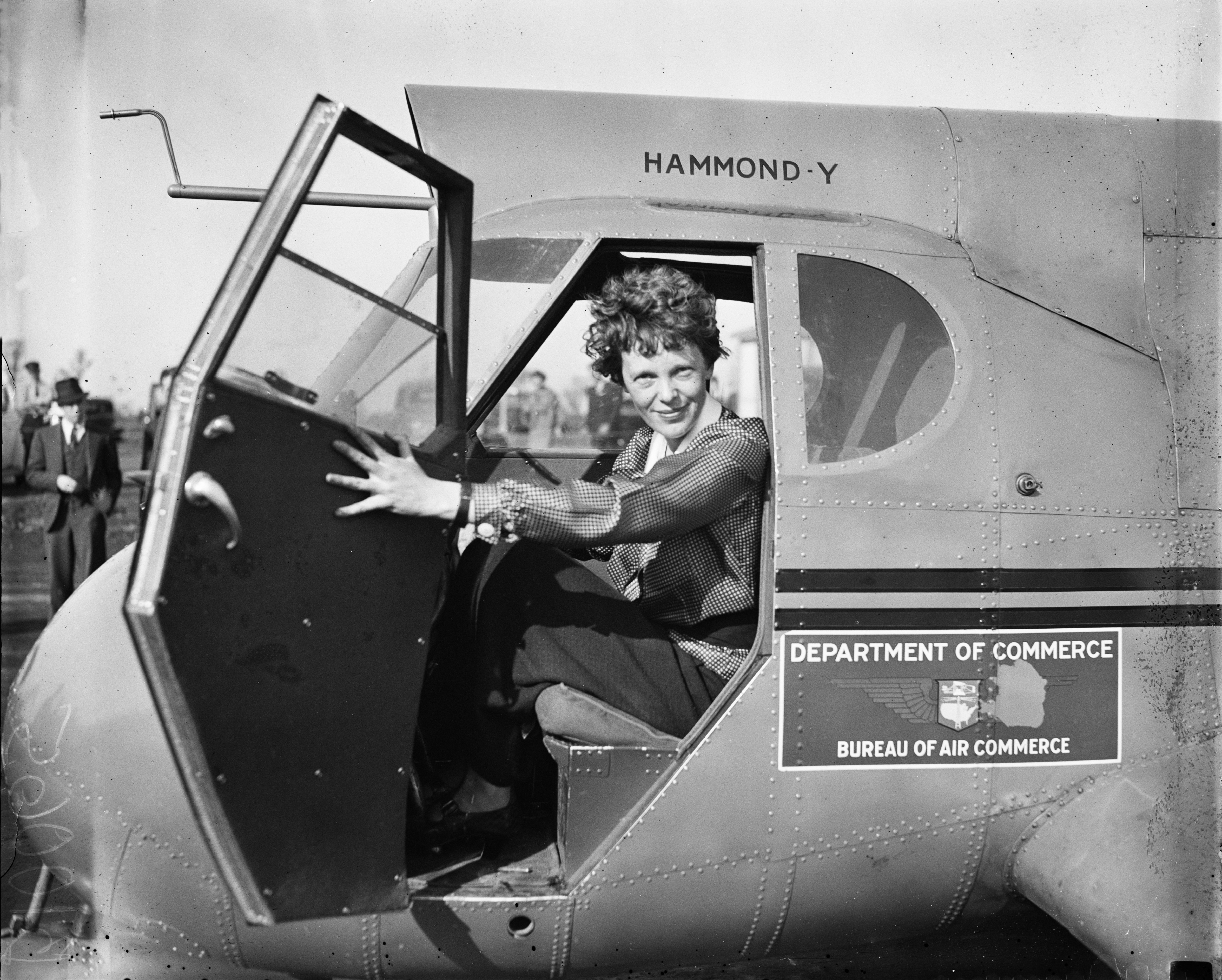
During the 1920s and 1930s, America was captivated by airplanes and the concept of flying. As in many other professions, men dominated the field of aviation during this era. This changed, however, when Amelia Earhart became the first woman to set aviation records.
Amelia Earhart was born in Atchison, Kansas, in 1897. Fascinated by women who worked in difficult professions, Earhart would keep articles about successful women. In 1928, a New York publisher named George Putnam asked Earhart if she wanted to fly with him. Their journey from Newfoundland to Wales made Earhart the first woman to fly in an airplane over the Atlantic Ocean. Later, in 1932, Earhart made the journey by herself, setting another record for women. Amelia Earhart wrote two books about these flights: 20 Hours, 40 Minutes (1928) and The Fun of It (1932). Earnhart set many other aviation records in her time, but she is best remembered for attempting to fly around the world. During this trip in 1937, she and her navigator, Frederick Noonan, disappeared somewhere between New Guinea and Howland Island in the Pacific Ocean. Neither their plane nor their bodies have ever been found.
Amelia Earhart had used her career as a famous pilot to advance the causes she believed in: establishing commercial airlines and improving the status of women. Earhart served as the president of an organization of women pilots called the Ninety-Nines. She used her aviation records and literature to spread the message that flying would soon be a part of daily life. To the public, she identified herself as a feminist. In 1931, Earhart married Putnam, but she planned never to have children. Earhart’s legacy, however, lives on through her contributions to women’s history and aviation.
With which of the following statements would Amelia Earhart most likely agree?
As used in the passage, the word aviation most nearly means
Which of the following best states the author's purpose?
Which of the following statements best describes the reason for the second paragraph?
According to the passage, how did Earhart use her fame?
Which of the following statements is true?
Crazy Horse, a Man of Principle
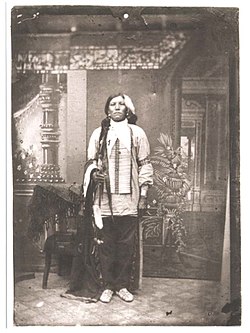
Crazy Horse, known for his leadership and bravery, was a famous Native American war chief of the Sioux tribe. Born around 1840 in South Dakota, he was given his name by his father, a medicine man, after proving his skill and bravery in combat.
During the 1800s, the U.S. Army conducted military operations to drive the Native Americans off the land and onto reservations. Crazy Horse firmly believed that the settlers were a threat to the Native Americans’ way of life, and in his early twenties, he began combating U.S. soldiers in an effort to preserve Native American culture. During many battles, Crazy Horse acted as a decoy to draw soldiers away from their defense. Crazy Horse joined with Sitting Bull in the late 1870s to defend their land in the Black Hills. The Army had a three-pronged plan to defeat the Sioux. Crazy Horse and his men confronted the troops led by Gen. George Crook at Rosebud Creek on June 17, 1876, and emerged victorious. After this battle, the Sioux rode to Little Bighorn and joined forces with Sitting Bull’s men. Eight days later, Gen. George Custer and his men attacked the camp. Although Crazy Horse and Sitting Bull were victorious in this battle also, the military continued to fight for the land.
With the continuing wars, Sitting Bull fled to Canada. Crazy Horse tried to hold areas of Yellowstone but also grew tired of fighting. He decided to move to the reservation he was promised and turned himself in on May 6, 1877, near Fort Robinson. While he spent the summer waiting to be transferred to the reservation, many rumors about him spread. Because one rumor claimed that Crazy Horse was planning to escape, he was arrested on the fifth of September. Realizing that the captors were also going to lock him into a guardhouse, Crazy Horse struggled against them, but was tragically stabbed to death.
Crazy Horse was a great hero who fought bravely out of loyalty to his people and love of his culture. His spirit is honored in the Black Hills of South Dakota at the Crazy Horse Memorial, a grand sculpture that has been under construction for well over half a century.
Which of the following best states the author's purpose?
With which of the following statements would Crazy Horse most likely agree?
As used in the passage, the word conducted most nearly means
Which of the following statements best describes the reason for the second paragraph?
According to the passage, how did Crazy Horse die?
According to the passage, why did so many battles occur between the U.S. Army and the Sioux?