Hurricane: The Cyclonic Storm

A hurricane is a powerful tropical storm with strong winds, high waves, and heavy rains. In various parts of the world, hurricanes have different names: around the Pacific Ocean, they are called typhoons; and around the Indian Ocean, they are called cyclones. The powerful wins and the heavy rainfalls of hurricanes often cause destruction when the immense storms reach land. Winds can destroy lives and property; heavy rains can generate floods. A hurricane’s strength is measured by its intensity, which is determined by the wind speed. The Saffir-Simpson scale rates the severity from category one to five, with five being the strongest. Because hurricanes can be so deadly and destructive, warnings are now issued within twenty-four to thirty-six hours of the storm’s arrival in a coastal area.
Hurricanes form in areas near the equator where the air is warm and moist. Thunderstorms and tropical depressions (areas of low pressure) help start the formation of hurricanes. The moisture in the extremely humid air around these storms condenses into rain and gives off heat. This heat warms the air and begins to rise. As the warm air rises, it begins to spin and form tight curls. (In the Northern Hemisphere, the air spins counterclockwise; in the Southern Hemisphere, the air spins clockwise.) This mass of whirling air can gow for several days. As it grows, it can range from about 20 to 1,000 miles in diameter. The curls form a circle around the center of the hurricane, which is called the eye. In the eye, the weather is calm. Around the eye, however, heavy rains and high clouds form. As the storm grows and strengthens, the air begins to move forward at speeds around ten miles an hour. When the storm moves away from the equator, it speeds up to thirty or forty miles an hour. The winds within a hurricane can range between 74 and 200 miles per hour, but as the hurricane comes closer to land, it becomes weaker because it moves away from its energy source: the warm water. Then, land and wind cause friction, and this slows down and breaks apart the hurricane. Even when this happens, however, it is important to remember that the remaining winds and rains are still extremely powerful and destructive forces of nature.
Which of the following is not a risk associated with a hurricane?
Which of the following best states the author's purpose?
As used in the passage, the word diameter most nearly means
Which of the following statements best describes the reason for the last paragraph?
How are hurricanes measured?
What is the difference between Northern and Southern Hemisphere hurricanes?
Droughts
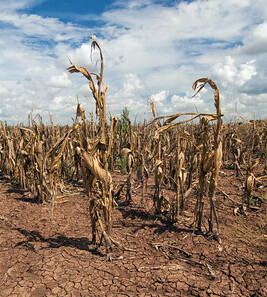
A drought is characterized by a long period of little or no rainfall, which results in quantities of water insufficient to meet the demands of a region. Droughts occur in two forms: seasonal and contingent. Seasonal droughts are normal annual occurrences in tropical countries in regions of Southeast Asia, Latin America, and Africa. These areas have both a rainy and a dry season each year. Usually, the residents of these regions build dams to hold water during the rainy season. During the dry season, this collected water is used to irrigate crops and water livestock. Contingent droughts happen when rainfall averages drop for long periods of time. Certain areas, like the northeastern part of the U.S., experience these droughts frequently, but the cause of reduced rainfall remains unknown.
The word “drought” has three different categorical meanings: meteorological, agricultural, and hydrological. Meteorological drought refers to low levels of rainfall. When most people use the word “drought,” they are speaking about this type. Agricultural drought refers to an insufficient supply of water for crops. This can happen even when average rainfall occurs because some soil conditions or farming techniques require more water than others. Hydrological drought happens when the water levels in reservoirs and natural bodies of water fall below average.
Droughts can cause environmental, economic, and social problems. Without rain, crops can wither, and livestock can die from dehydration. Without water and food, people starve or have to move to new areas. This can, and has, led to wars and other social problems. After long periods, the land becomes so dry that dust storms form and wildfires spread over the area. One of the most devastating droughts for the U.S. occurred in the 1930s in the Midwest. During this time, the land was so dry that crops could no longer grow and huge dust storms formed, earning the area the nickname “Dustbowl.”
Which of the following would be the best title for this passage?
Which of the following best states the author's purpose?
As used in the passage, the word devastating most nearly means
What is the purpose of the second paragraph?
What is the purpose of the last paragraph?
According to the passage, why does a contingent drought happen?
Tornadoes
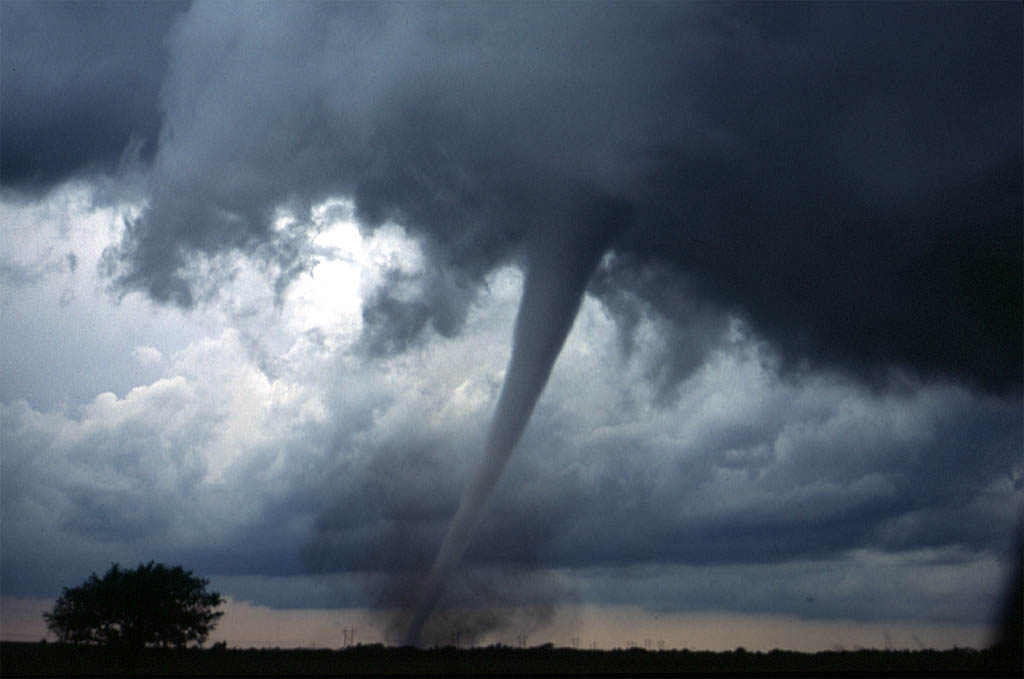
In the classic movie The Wizard of Oz, Dorothy and her dog, Toto, are swallowed by a tornado, taken far from their home in Kansas, and dropped in Oz. While Oz and Dorothy’s story are fictional, the power of a tornado is not. Tornadoes are violent windstorms that can destroy homes, move heavy objects, and cause death or serious injuries. The winds made by a tornado are the most powerful on Earth. Tornadoes can whirl at speeds over 300 miles an hour. They can be several feet to over a mile wide and move forward at speeds around fifty miles an hour.
Tornadoes usually form in the late spring and summer. In thunderstorm-like weather, hot, moist air will rise quickly from the ground to the sky. The weather conditions above the ground cause this rising air to spin. The whirling air forms long, funnel-shaped wind storms that stretch from the clouds to the ground. The rising air inside the funnel moves very quickly and picks up dust. The water inside the tornado mixes with the dust and makes the tornado look dark. People often say that when a tornado approaches, it sounds like a roaring train.
The U.S. has approximately 700 tornadoes every year; most happen in a Midwest region nicknamed “tornado Alley.” States in the alley include Texas, Oklahoma, Kansas, and Nebraska. Because the area has so many tornadoes, storm chasers often visit there. While some storm chasers are scientists and researchers, others are just people who enjoy seeing intense weather up close. This activity is not safe, however. It is best to leave the area during a tornado, if possible, to avoid being seriously injured or killed. Tornadoes may be fascinating, but they are indeed among the fiercest forces of nature.
Which of the following would be the best title for this passage?
Which of the following best states the author's purpose?
As used in the passage, the word intense most nearly means
Which of the following statements best describes the reason for the last paragraph?
According to the passage, how are tornadoes formed?
Which statement best describes a tornado?
Earthquakes
As I turned the corner, around a frame house, there was a great rattle and jar, and it occurred to me that here was an item! --no doubt a fight in that house. Before I could turn and seek the door, there came a terrific shock: the ground seemed to roll under me in waves, interrupted by a violent joggling up and down, and there was a heavy grinding noise as a brick houses rubbing together. I fell up against the frame house and hurt my elbow. I knew what it was now. . . a third and still severer shock came, and as I reeled about on the pavement trying to keep my footing, I saw a sight! The entire front of a tall four-story brick building on Third Street sprung outward like a door and fell sprawling across the street, reading a great dust-like volume of smoke!
-Mark Twain
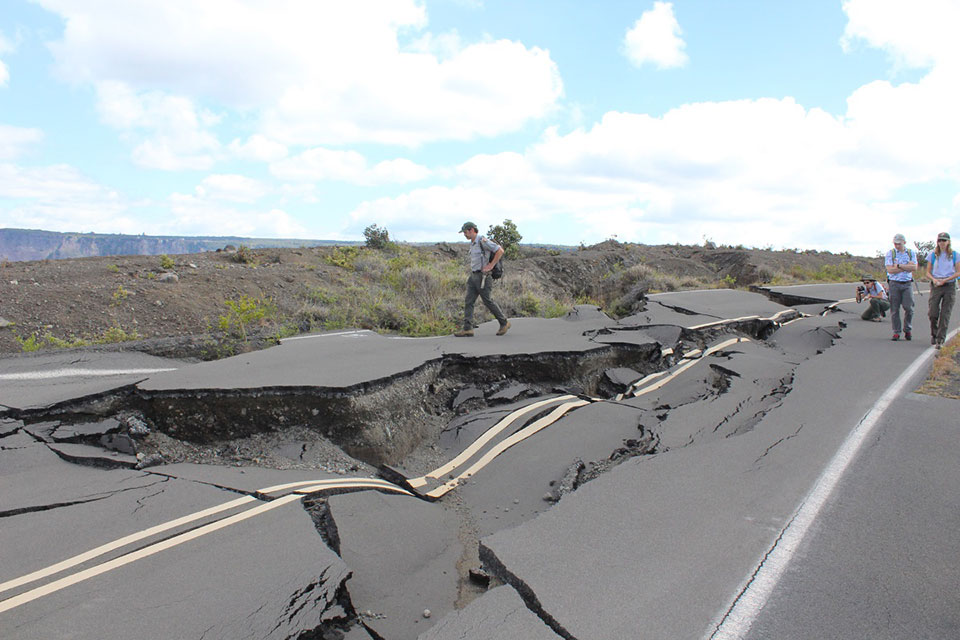
The story excerpt above is from Roughing It, a novel Mark Twain wrote in 1865 while he lived in San Francisco. Twain describes his experience with an earthquake, or the violent movement in the Earth’s crust that results from pressure building underground. Earthquakes are the result of movement among the tectonic plates in the Earth’s crust. If these plates collide, slide past, or move away from each other, pressure builds. This pressure can develop over a period of many years, becoming stronger as time passes. When the pressure becomes too strong for the plates to handle, the rock breaks, and the Earth shakes. Earthquakes that occur under the ocean can cause dangerous tsunamis to engulf the shore and areas inland.
There are approximately 150,000 earthquakes each year, but only about 100 actually cause damage to human made structures. Most earthquakes are so mild that people do not even notice them; they are detected only with a seismograph, a scientific instrument that measures movement in the Earth’s crust. Some areas are more susceptible to earthquakes than others because they are located near fault tines, areas where the tectonic plates meet. Because of San Andreas Fault, Twain’s experience there is not an uncommon one, quakes having been experienced by millions of people in and around that particular fault for centuries.
Which of the following would be the best title for this passage?
As used in the passage, the word tsunamis most nearly means
Which of the following best states the author's purpose?
Which group of adjectives best describes Twain's observations and emotions during the earthquake?
Which of the following best describes the reason for the last paragraph?
According to the passage, how do earthquakes happen?
Volcanoes
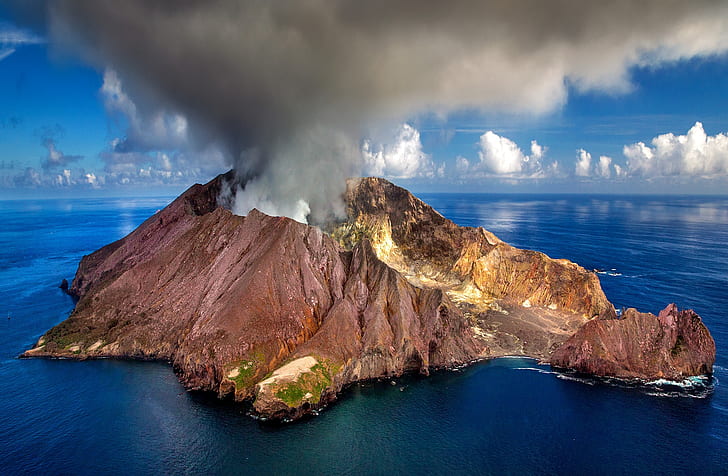
Volcanoes are perfect examples of nature’s awesome power. A volcano is a mountain with an open summit with vents that extend down to molten rock beneath the earth’s surface. Through this vent, gases, ash, and molten rock are expelled. Molten rock, or magma, is made of large amounts of gases and water vapor. When the magma pours onto the earth’s surface as hot, red, oozing liquid, it is called lava.
As the magma rises to the earth’s surface, the gases it contains try to escape. This causes great pressure that eventually forces the ground to rupture. Then, the magma’s gases push massive amounts of dust and ash into the air. Tons of ash form a tall cone around the volcano’s vent, and lava pours out. The build-up of ahs and lava over the course of many years forms the volcano. In this way, a volcano is different from other mountains because it is not formed by the upward motion of the earth’s crust.
Most volcanoes were formed millions of years ago, but some have formed recently. They are usually found in areas called volcanic belts. One large belt of active volcanoes in the Pacific Ocean is called the Ring of Fire. This area is home to seventy-five percent of the world’s active and dormant volcanoes. The Ring of Fire supports so many volcanoes because it borders the interaction of several of Earth’s plates. These plates are like rafts of rock beneath the earth’s surface that slide along, bump into, and cross over other plates. Beneath these plates, magma pushes upwards and forms new crust. When the magma tries to escape, volcanoes begin to form.ce and the United States.
What would be the best title for this passage?
As used in the passage, the word molten most nearly means
Which best describes the reason for the last paragraph?
Which of the following best states the author's purpose?
According to the passage, what is the first step of volcano formation?
Which word might best describe the actions of a volcano?
Floods
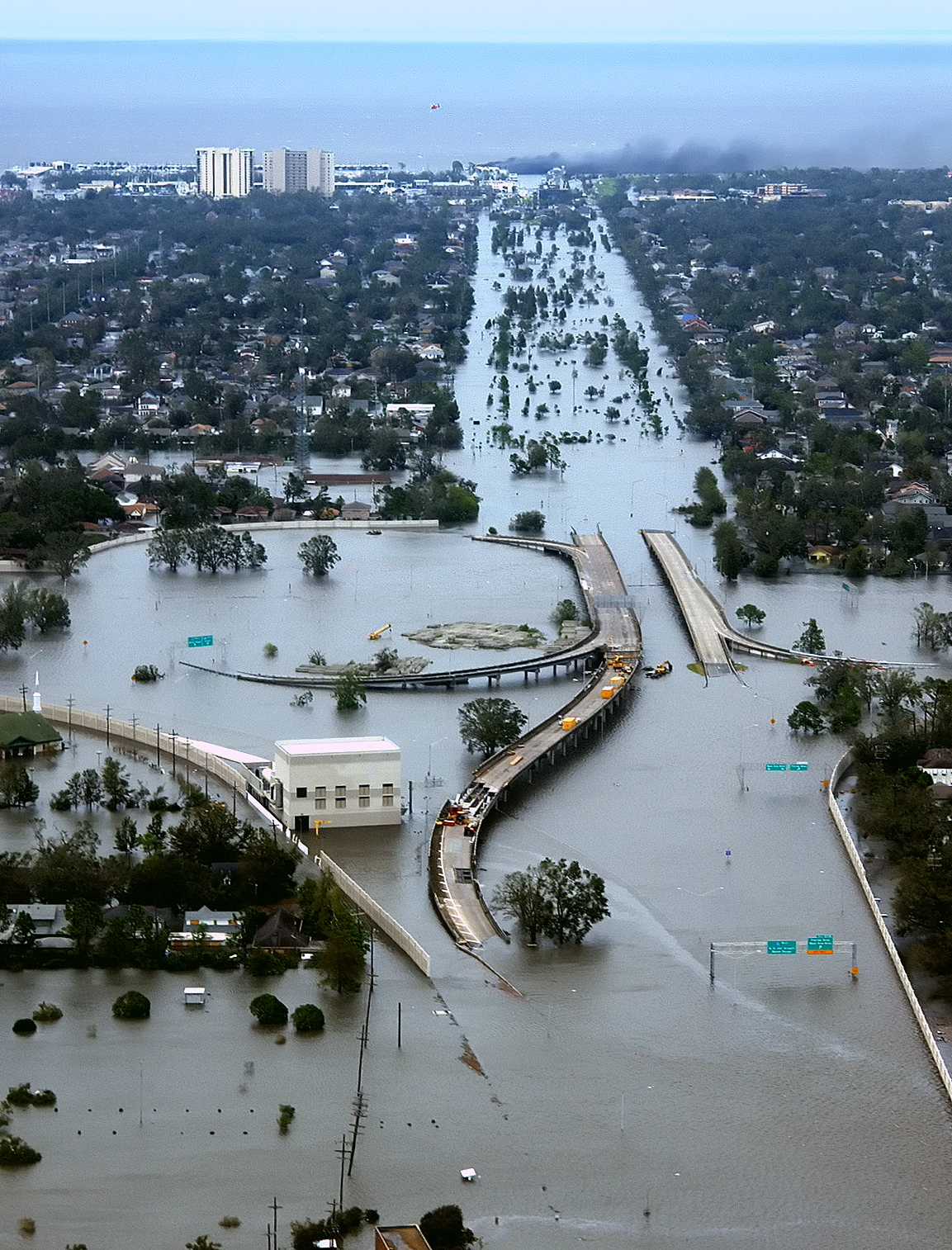
Rivers are often appreciated for their beauty and the benefits they offer to humans and wildlife; however, rivers can also be deadly and destructive in the event of a flood. Floods are violent forces of nature that can destroy homes, buildings, roads, and crops. They can also kill animals and people. While most floods are harmful, it is important to point out that some are beneficial. While the Nile floods, for example, fertile soil is washed ashore. This soil contains essential nutrients that help crops grow.
When heavy rains occur, sometimes too much water runs into a river. This causes the river to rise over its banks and flood. River floods usually happen in the spring when heavy rains melt snow. The rain and snow together are often too much for the river to handle. Heavy rainstorms, like those that occur during hurricanes and typhoons, also cause flooding. These storms, which originate over the ocean, can bring massive quantities of water to the land very quickly. When the rivers cannot carry the rains away fast enough, the land floods. Other rainstorms, such as cloudburst, also cause floods. A cloudburst is a heavy rainstorm that lasts only an hour or two. Because a large amount of water falls in a short time, the ground does not have enough time to absorb it. The water then flows into creeks, streams, and rivers downstream. This is called a flash flood because the flood happens and disappears quickly. These floods are especially dangerous because people have no chance to prepare or escape.
Rivers are not the only cause of floods. Ocean floods can happen when winds blow large waves toward the land. These massive waves bring a large volume of water to the shore and cause flooding. Volcanoes can also cause flooding when an eruption melts ice and snow. Regardless of their causes, floods are truly powerful forces that can bring both devastation and rebirth to the land.
Which of the following would be the best title for this passage?
Which of the following best states the author's purpose?
Which of the following statements best describes the reason for the second paragraph?
As used in the passage, the word fertile most nearly means
According to the passage, how does a flood form?
According to the passage, which of the following statements is true?