Log in
Sign up for FREE
arrow_back
Library

Unit 2 Test on Energy, Characteristics of Life, & Scientific Method

star
star
star
star
star
Last updated 1 day ago
59 questions
Required
1
Required
1
Required
1
Required
1
Required
1
Required
1
Required
1
Required
1
Required
1
Required
1
Required
1
Required
1
Required
1
Required
1
Required
1
Required
1
Required
1
Required
1
Required
1
Required
1
Required
1
Required
1
Required
1
Required
1
Required
1
Required
1
Required
1
Required
1
Required
1
Required
1
Required
1
Required
1
Required
1
Required
1
Required
1
Required
1
Required
1
Required
1
Required
1
Required
1
Required
1
Required
1
Required
1
Required
1
Required
1
Required
1
Required
1
Required
1
Required
1
Required
1
Required
1
Required
1
Required
1
Required
1
Required
1
Required
1
Required
1
Required
1
Required
1
Question 1
1.

Which of the following lists include only biotic parts of an ecosystem?

Question 2
2.

A(n) _____________ is all the living and nonliving things in a particular area that interact with one another.

Question 3
3.

In an ecosystem, a group of birds eat fruit from a tree. When the birds drop the fruit on the ground, the mice eat the fruit. Seeds are spread around the area by both the birds and mice and new trees grow. What level of organization is this an example of?

Question 4
4.

Which of the following correctly shows the organization in an ecosystem, from the smallest to the largest level?

Question 5
5.

Which of the following is NOT a characteristic of all living things?

Question 6
6.

Both a fast-moving stream and a dog respond to the environment and grow and develop, but this characteristic of life is why a dog is considered alive and a stream isn’t.

Question 7
7.

Animals in the highest trophic level of a food chain will often be the largest in body size but will be few in numbers. What accounts for the small numbers?

Question 8
8.

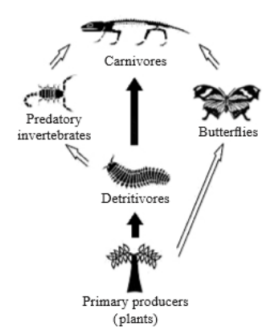
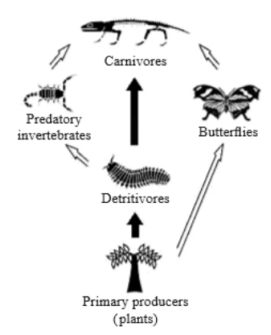
The energy passing from the detritivores to the predatory invertebrates in this food web is 14,000 kJ m/year. Approximately how much energy (in kJ m/year) passes from the predatory invertebrates to the carnivores?
Question 9
9.

The energy passing from the detritivores to the predatory invertebrates in this food web is 14,000 kJ m/year. Approximately how much energy (in kJ m year) passes from the primary producers to the detritivores?

Question 10
10.

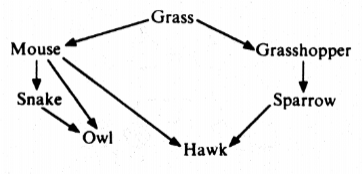
Which represents a correct food chain from this web?

Question 11
11.

Which term best defines a group of populations living and interacting with each other in an area?

Question 12
12.

Which of the following ecological units includes abiotic factors?

Question 13
13.

Which of the following is true about secondary consumers in an ecosystem?

Question 14
14.

Which of the following organisms is most likely to be located at the apex of the pyramid of biomass?

Question 15
15.

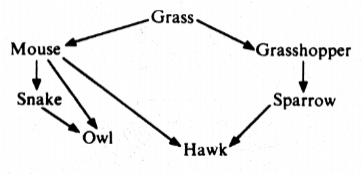
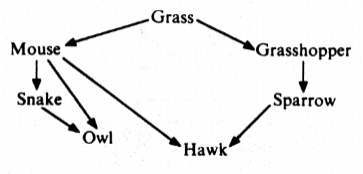
All of the following statements about the diagram below are correct EXCEPT:


Question 16
16.

Which of the following organisms in the diagram above most likely has the largest biomass?

Question 17
17.

Which law of thermodynamics explains why energy is lost to the environment at each trophic level?

Question 18
18.

Which law of thermodynamics explains why the amount of energy is the same at each trophic level but it may be in different forms.

Question 19
19.

Which law of thermodynamics explains that energy cannot be created or destroyed, but converted from one form to another?

Question 20
20.

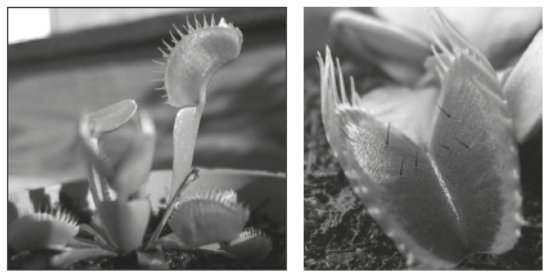
The Venus flytrap (Dionaea muscipula) is a photosynthetic plant. It obtains nitrogen but not energy by digesting captured insects. Which term describes this plant?

Question 21
21.

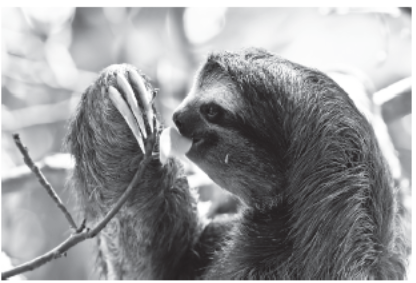
The three-toed sloth, Bradypus variegatus, lives in tree tops where it feeds on leaves. It also feeds on algae and fungi which live in its fur. In which trophic group should the three-toed sloth be classified?

Question 22
22.

Over time, the hull of a sunken ship may become colonized by a wide range of marine organisms. What term is used to describe all of the organisms living in and on a sunken ship?

Question 23
23.

Which level(s) of ecological complexity involve(s) biotic factors but not abiotic factors?
I. Community
II. Ecosystem
III. Population

Question 24
24.

Which of the following molecules do plants need to carry out photosynthesis?
I. H2O
II.CO2
III. C6H12O6

Question 25
25.

Where does chemosynthesis primarily occur?

Question 26
26.

Which organisms typically perform chemosynthesis?

Question 27
27.

What do chemosynthetic organisms use to produce food?

Question 28
28.

What is the primary purpose of photosynthesis in plants?

Question 29
29.

What role do herbivores play in the food web?

Question 30
30.

Which statement best describes a trophic level in an ecosystem?

Question 31
31.

What do arrows in a food web represent?

Question 32
32.

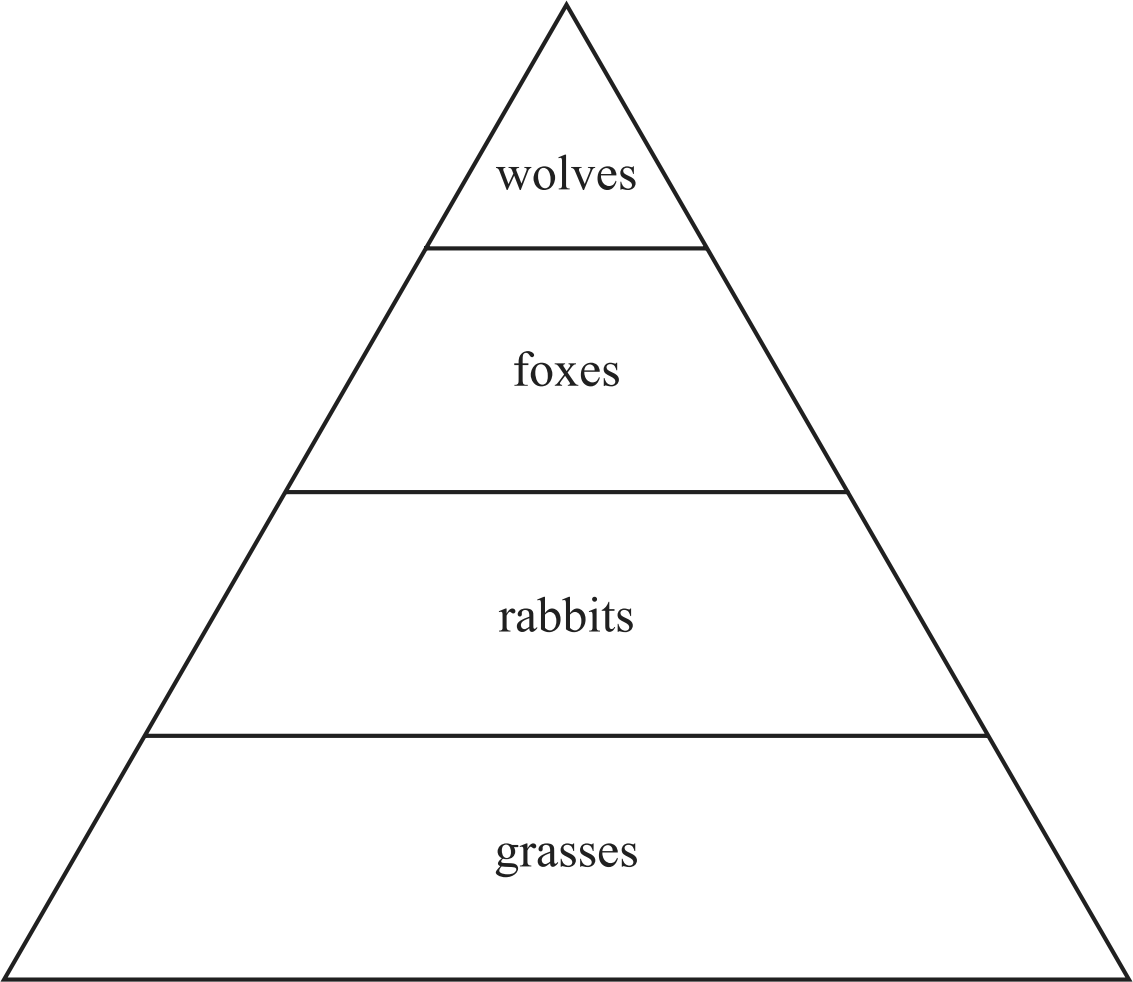
The picture below shows an energy pyramid.


What will most likely happen to the foxes and the wolves if the rabbits are removed?

Question 33
33.

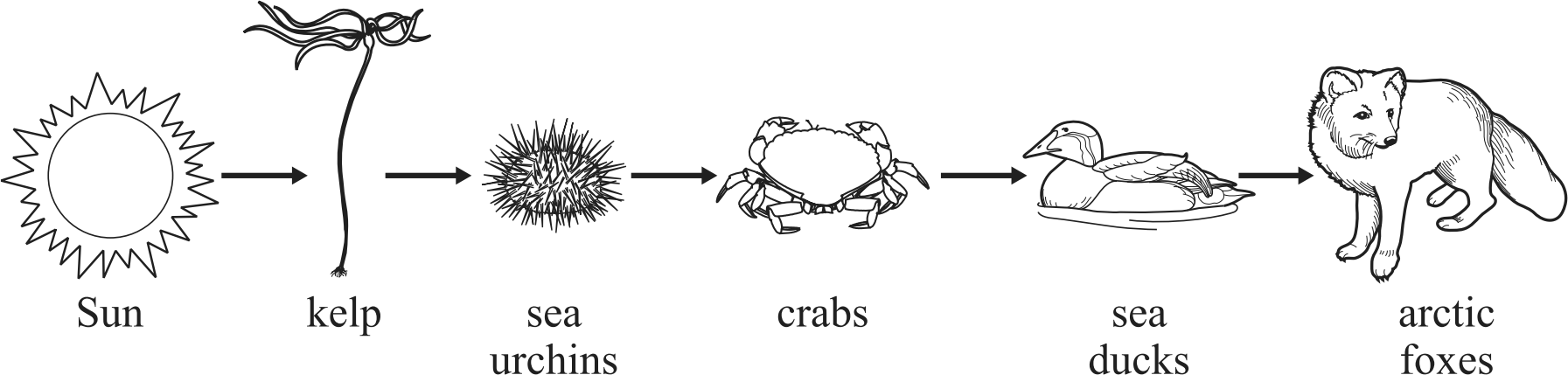
The picture below shows an ocean bay food chain.


Sea otters move into the ocean bay. They eat all the sea urchins. This change will cause the

Question 34
34.

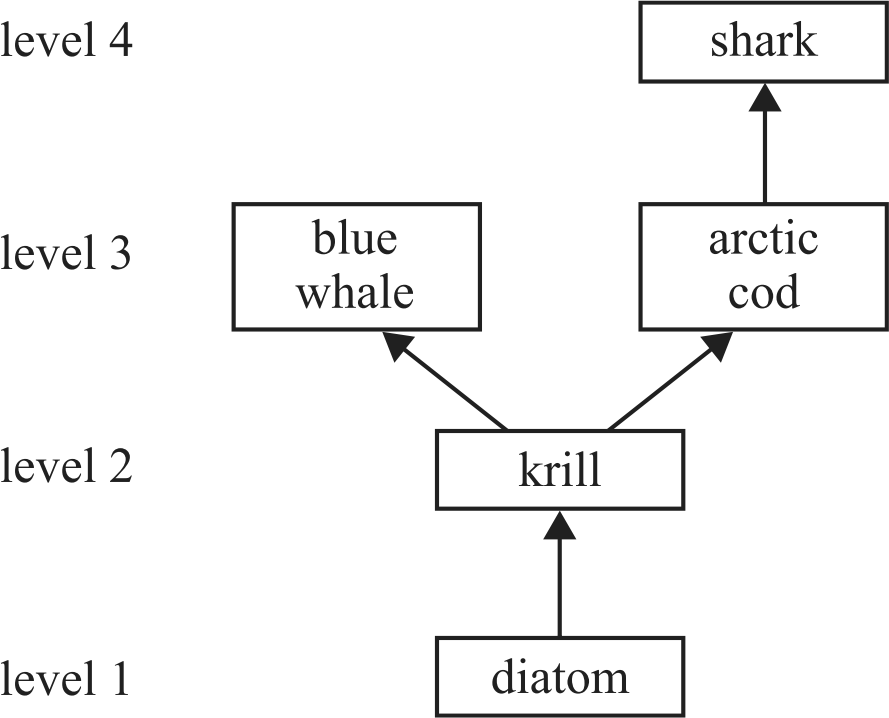
A marine food web is shown in the diagram below.


Which organism below belongs in level 3 of this marine food web?

Question 35
35.

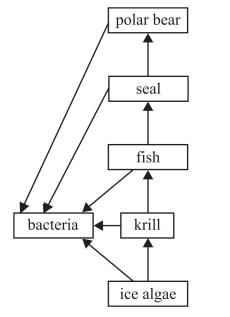
A marine food web is shown below.


Which chart correctly shows three of the organisms according to their roles in cycling matter in the marine food web?

Question 36
36.

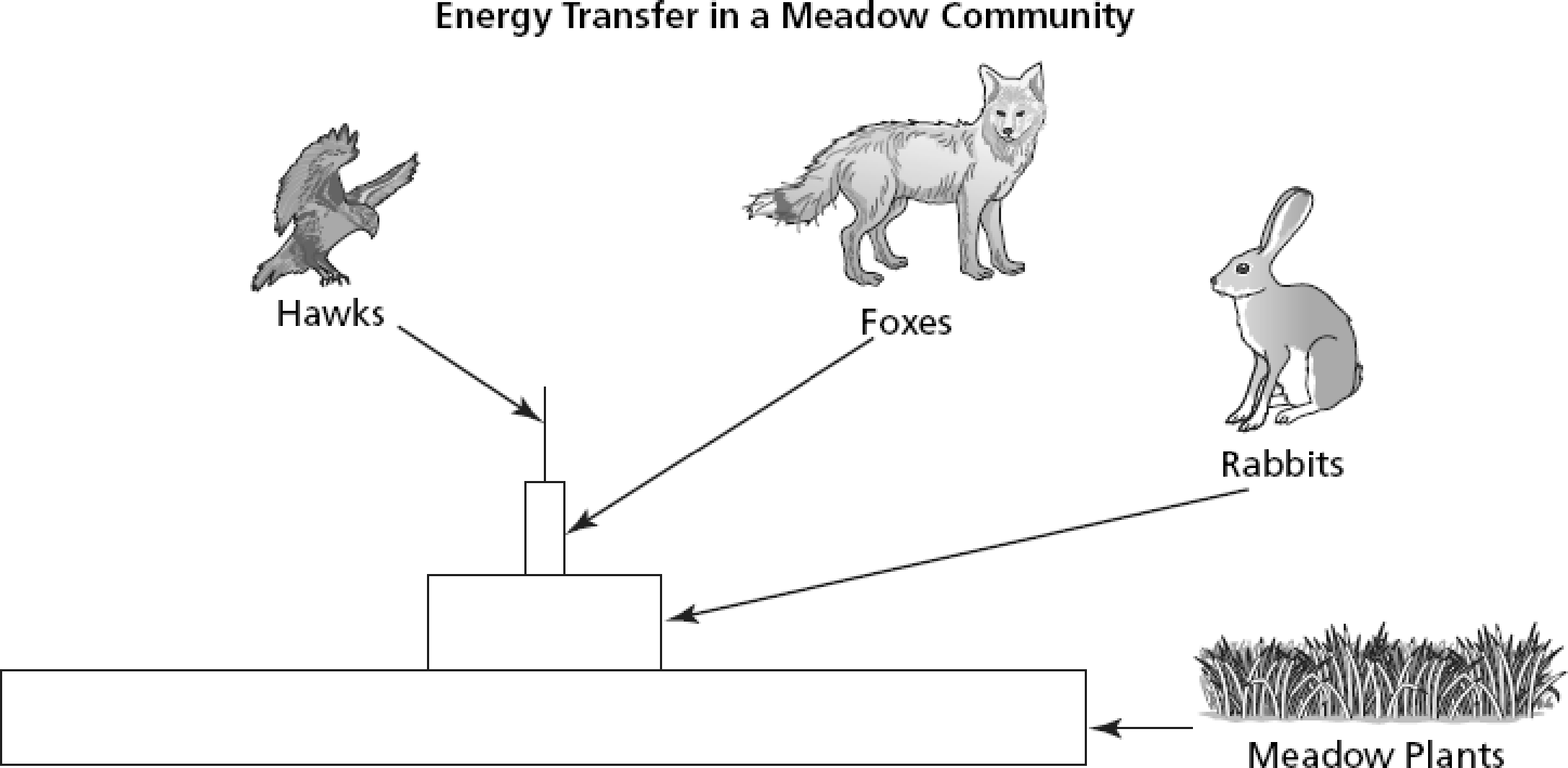
The picture below shows the energy flow through a meadow community.


Which of the following would most likely occur to the populations within the community of organisms immediately after a wildfire burns the environment?

Question 37
37.

Which statement best describes what will happen if the population of herbivores in the community decreases?

Question 38
38.

Which statement best describes the flow of energy as it passes through the organisms in the pyramid?

Question 39
39.

The diagram below shows a simple food web.


Which animal is classified as an omnivore?

Question 40
40.

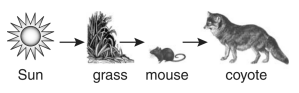
Which of the following animals might compete with the coyote in this food chain?

Question 41
41.

Decomposers are important in the food chain because they

Question 42
42.

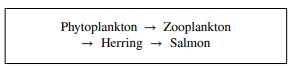
The diagram below shows a marine food chain.


The zooplankton in this food chain are

Question 43
43.

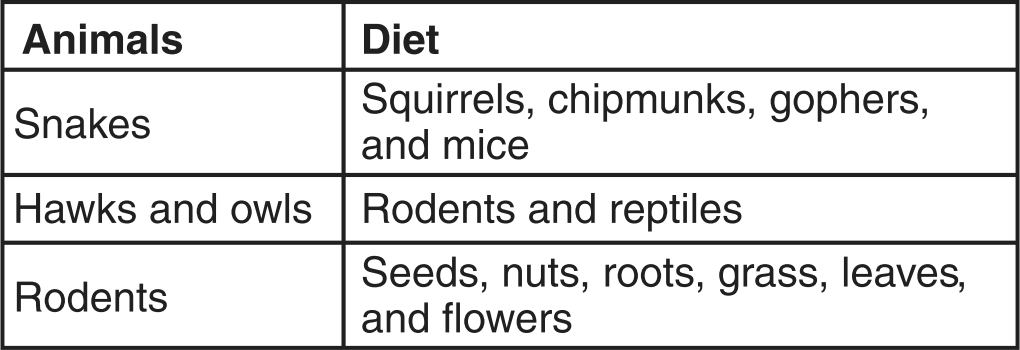
The table below contains information about animal diets.


Which energy pyramid best represents the data in the table?

Question 44
44.

A forest-ecosystem food web is shown below.


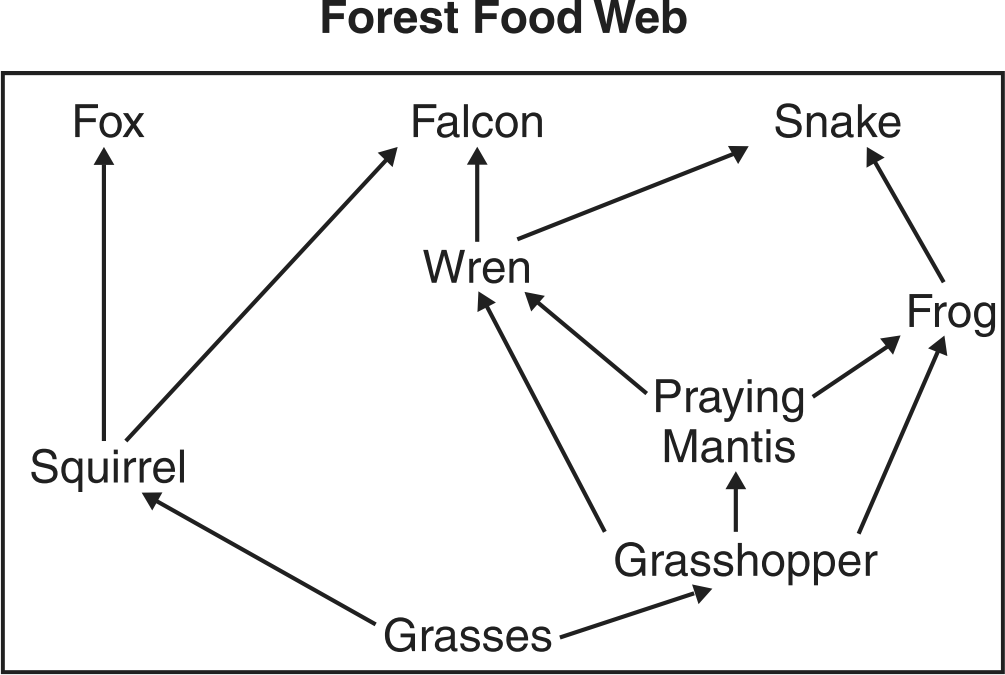
If additional wrens are introduced into this ecosystem, there will most likely be an immediate decrease in the

Question 45
45.

A food chain is shown below.

Grasses → Crickets → Field Mice → Hawks

For the food chain shown, which of the following changes would have the most severe consequences?

Question 46
46.

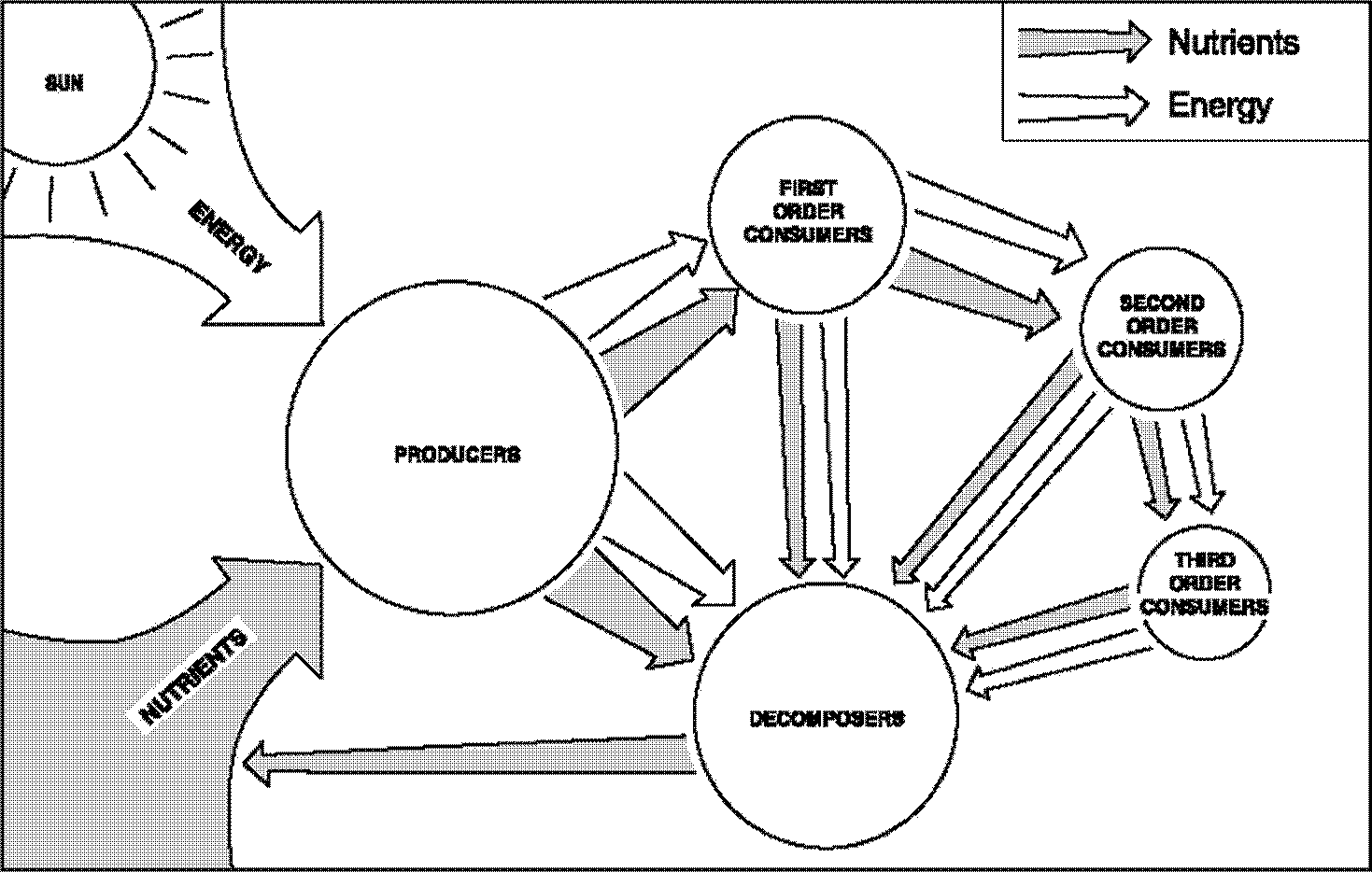
A group of organisms that interact with and depend upon one another is called a community. The movement of matter and energy through a community can be studied by examining its food web. As organisms eat other organisms, energy and nutrients pass through various feeding levels. These feeding levels are called trophic levels. The following is a diagram of the energy and nutrient flow through a simple community.


Which group would most likely contain living algae?

Question 47
47.

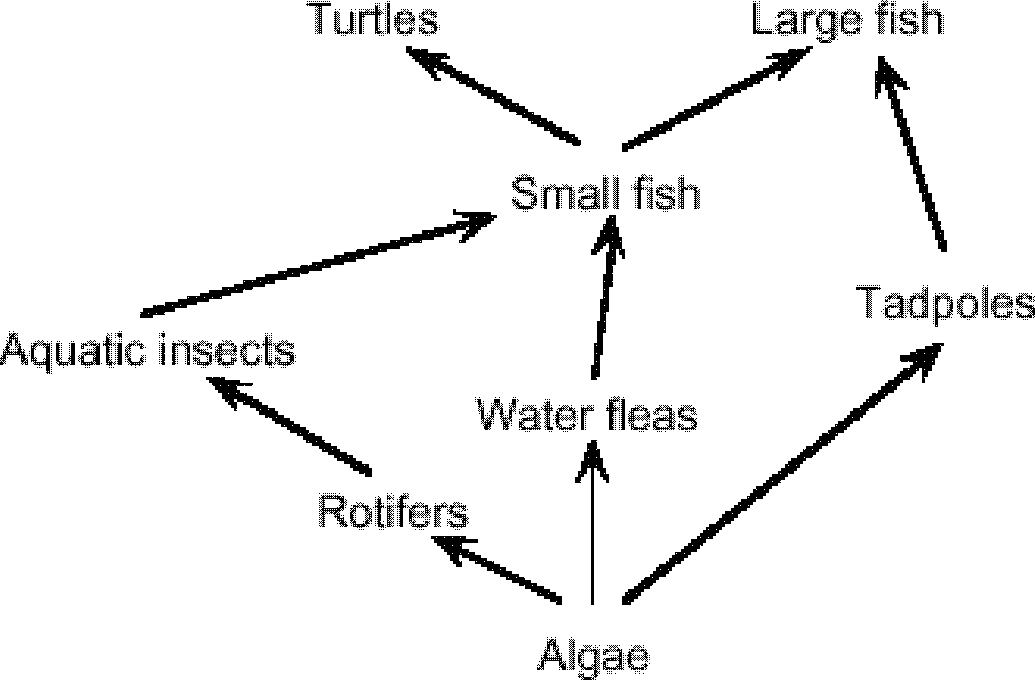
What is the source of energy for the algae?

Question 48
48.

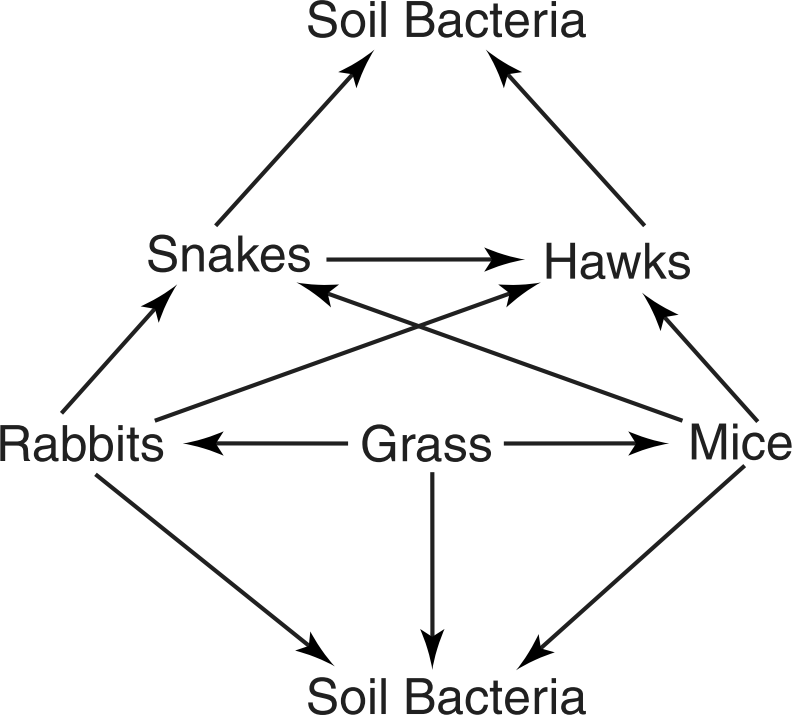
Ecosystems are composed of all living and nonliving components in an area. Food webs show the flow of nutrients and energy within an ecosystem.
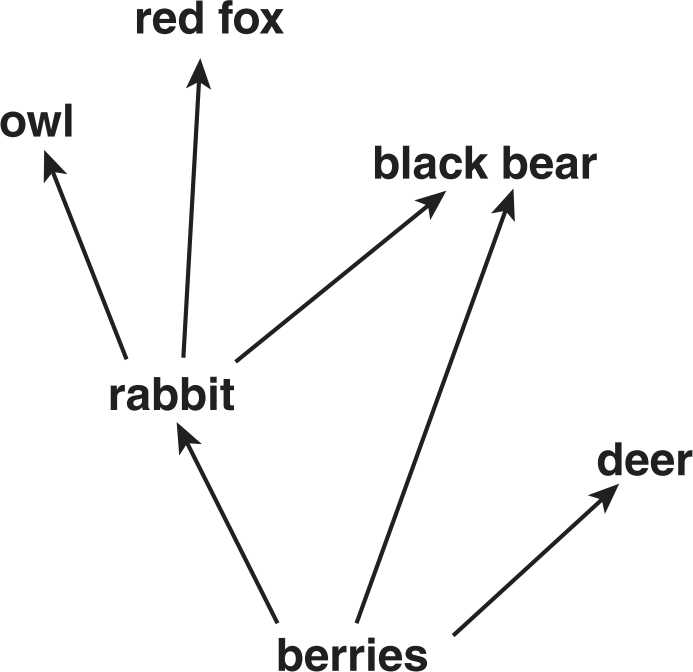
Use the food web to answer the following questions.


Suppose that a new predator of the rabbit migrated to this ecosystem. What is the most likely initial effect on the other organisms?

Question 49
49.

Which one of the following is true of grass in an ecosystem?

Question 50
50.

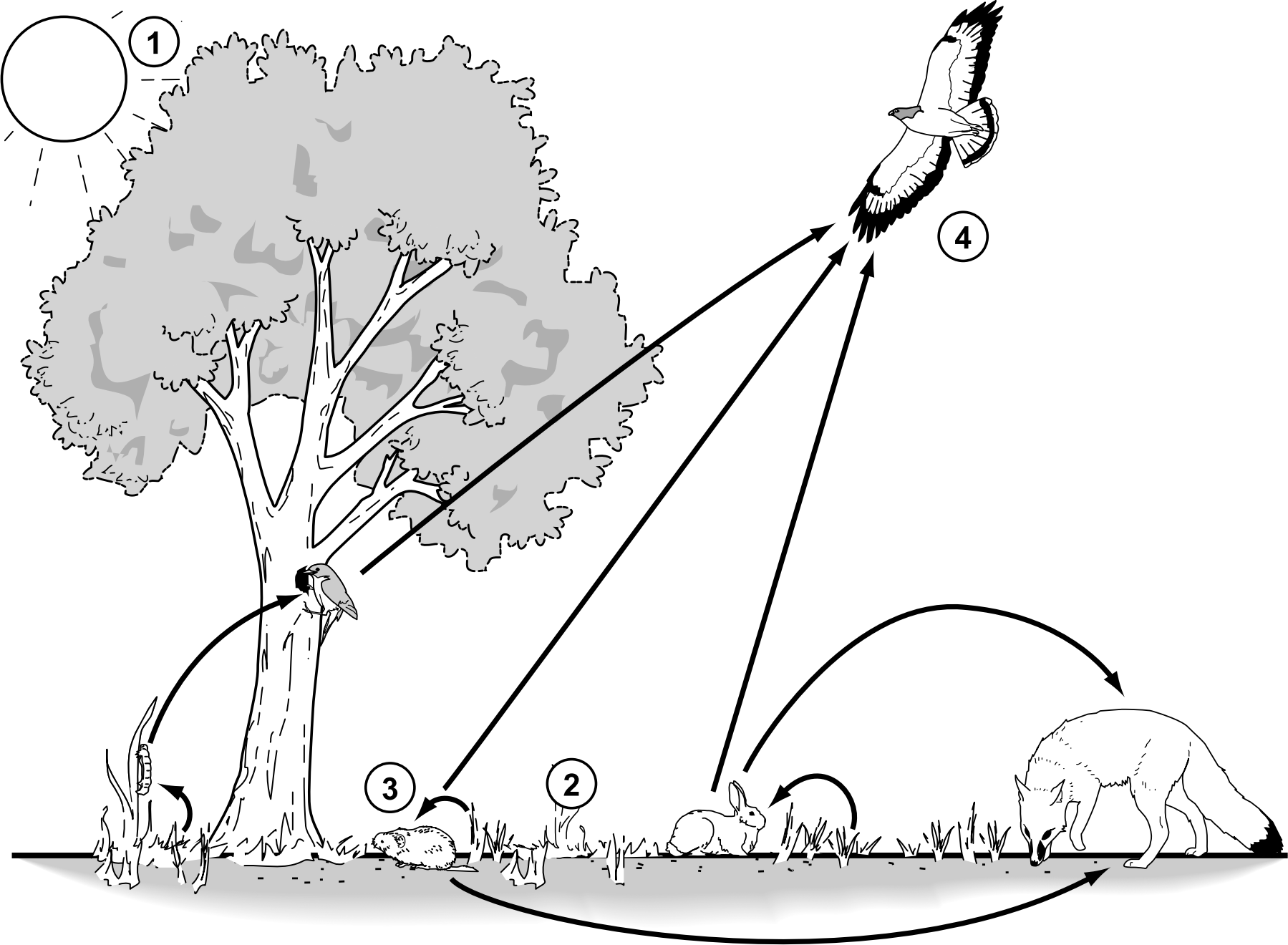
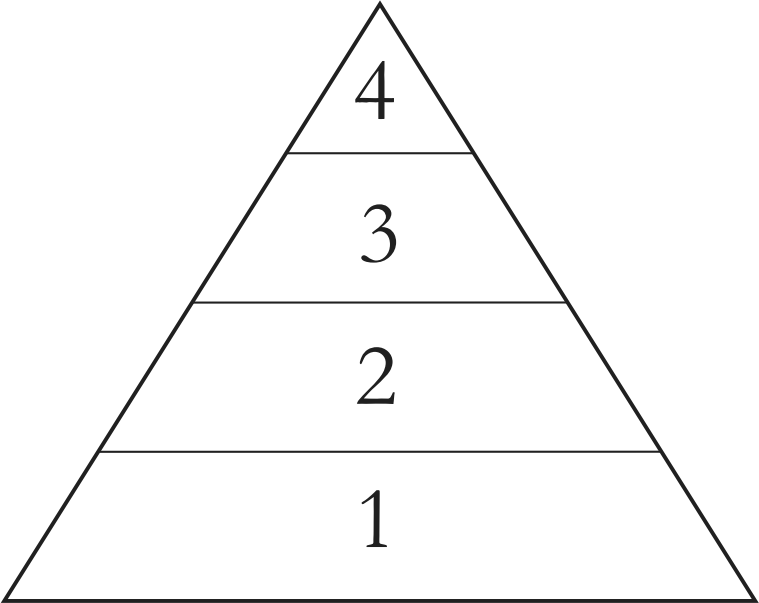
Interactions in an ecosystem result from the transfer of matter and energy from producers to consumers and eventually to decomposers. What are the forms of energy transfer from #1 → #4?

Question 51
51.

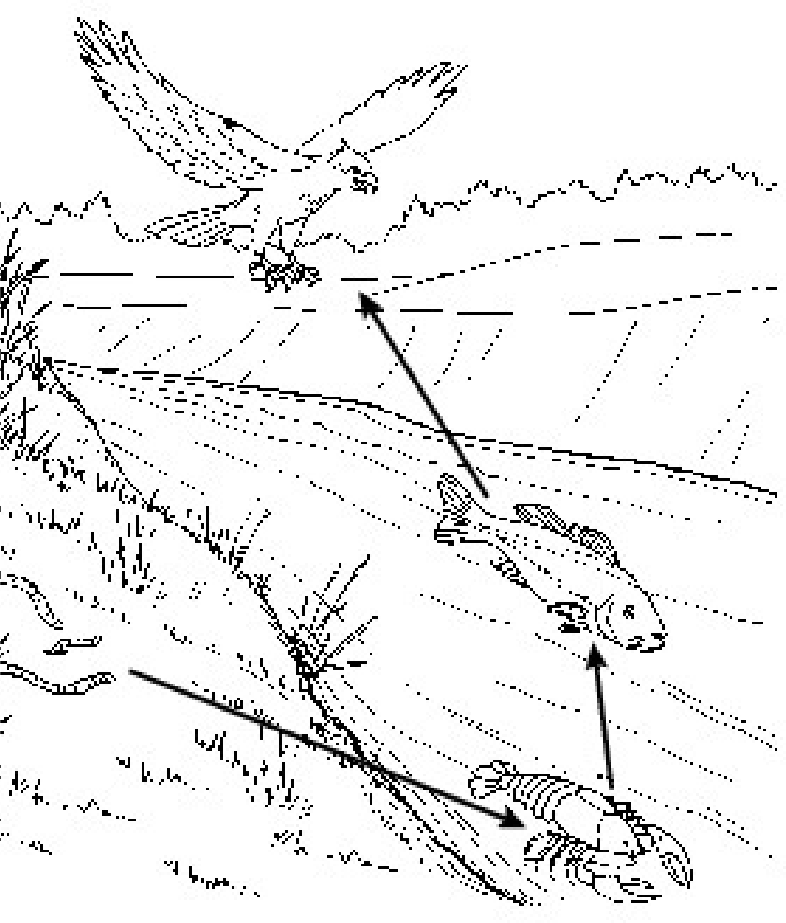
How would the removal of earthworms from the food chain affect the other organisms?

Question 52
52.

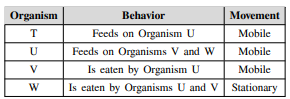
A student examines the information in the table. The student concludes that Organism W should be placed at the base of the food web, to represent the feeding relationships in the marine ecosystem. However, the student later learns that Organism W’s cells do not contain chloroplasts.


Which conclusion would be appropriate, based on the new information?

Question 53
53.


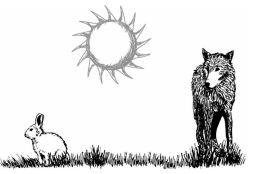
Wolves get energy from eating rabbits. Rabbits get energy from eating grass. The grass makes its own food energy. If lots of the wolves were killed, then

Question 54
54.

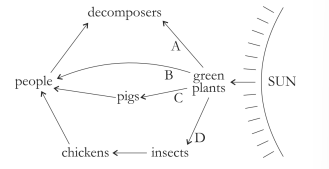
In ecosystems, the sun’s energy is transferred through food webs as shown below.


The sun’s energy is most directly available to people through

Question 55
55.

We get energy from the food we eat. The energy in the food first comes from the

Question 56
56.

Use the diagram below to answer the question.


In this energy pyramid, which organism would most likely be in level 2?

Question 57
57.

Use the diagram below to answer the question.


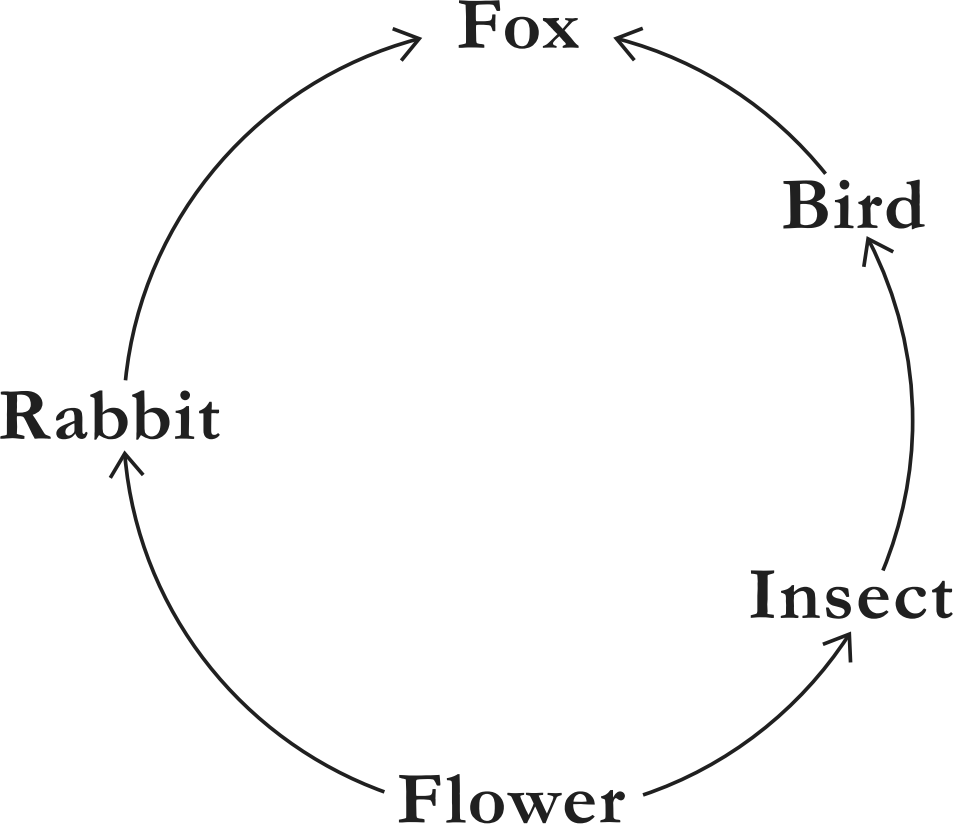
Which group of organisms is not represented in the diagram above of a simple food web?

Question 58
58.

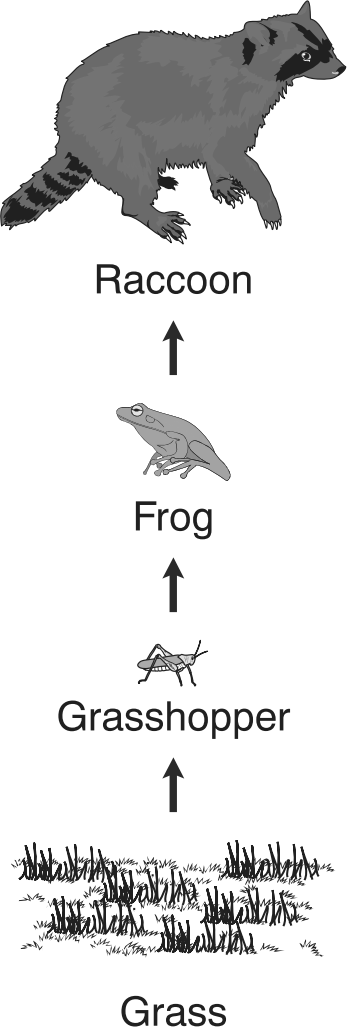
Use the food chain below to answer the following question.


What do the arrows in the food chain indicate about the flow of energy in an ecosystem?

Question 59
59.

In testing the effect of light on plant growth, what variable is controlled?

They are fewer in number than are primary consumers.
They are smaller and weaker than are primary consumers.
They eat only plants.
mouse
grass
grasshopper
snake
The mouse and grasshopper are at the same trophic level.
The grasshopper is an herbivore.
The grass is a producer.
Only two trophic levels are depicted.
grasshopper
hawk
snake
mouse
Autotroph
Consumer
I and III only
I and II only
The foxes will eat fewer wolves.
There will be more foxes and wolves.
crabs to have more food.
zooplankton
Primary Consumer: ice algae Secondary Consumer: krill Decomposer: fish
Primary Consumer: krill Secondary Consumer: fish Decomposer: bacteria
Hawks would decrease and foxes would increase.
Meadow plants would increase and rabbits would decrease.
The population of meadow plants will increase.
Energy flows through the organisms from bottom to top and decreases at each level.
red fox
primary producers.
grasshopper population.
the introduction of a second predator that eats field mice
Second order consumers
First order consumers
Less grass available for food
More competition among the hawks for food
Chemical energy to chemical energy
The number of bass and ospreys will increase.
Organism W is a secondary consumer in the marine ecosystem.
The role of Organism T in the marine ecosystem changes during its life.
less grass would be eaten.
path A.
tree
producers
More of the available energy in an ecosystem is given to large animals than to small animals.