Log in
Sign up for FREE
arrow_back
Library

Unit 2 Test on Stability

star
star
star
star
star
Last updated 1 day ago
57 questions
Required
1
Required
1
Required
1
Required
1
Required
1
Required
1
Required
1
Required
1
Required
1
Required
1
Required
1
Required
1
Required
1
Required
1
Required
1
Required
1
Required
1
Required
1
Required
1
Required
1
Required
1
Required
1
Required
1
Required
1
Required
1
Required
1
Required
1
Required
1
Required
1
Required
1
Required
1
Required
1
Required
1
Required
1
Required
1
Required
1
Required
1
Required
1
Required
1
Required
1
Required
1
Required
1
Required
1
Required
1
Required
1
Required
1
Required
1
Required
1
Required
1
Required
1
Required
1
Required
1
Required
1
Required
1
Required
1
Required
1
Required
1
Question 1
1.

A moth and a beetle both lay eggs on the same species of plant and the larvae of both develop on the plant. Removal experiments show that the moth and the beetle each perform less well on the plant when the other species is removed. The relationship between the moth and the beetle is best described as

Question 2
2.

The fecal matter from giraffes helps fertilize a particular species of plant, thus increasing the plant’s ability to grow in a particular area. The plant has no effect on giraffes. The relationship between the giraffes and the plants is best described as

Question 3
3.

A cow’s rumen, or first stomach, provides the ideal environment for a variety of microbes. When a cow consumes grass, these microbes digest the grass, releasing nutrients both for their own and for the cow’s use. While most of the microbes continue to live in the rumen, some of them are killed during the digestive process and provide additional nutrition for the cow. This complex relationship between the cow and her microbes has features of which two categories of interactions?

Question 4
4.

Which of the following provides the most accurate example of primary succession?

Question 5
5.

Which of the following are least likely to be present during primary succession?

Question 6
6.

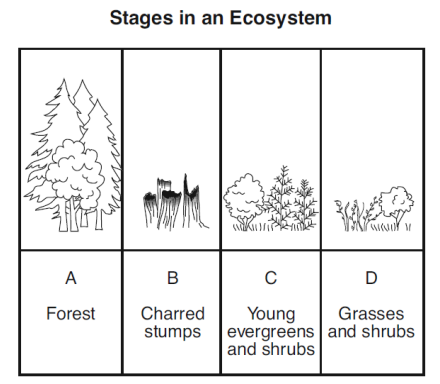
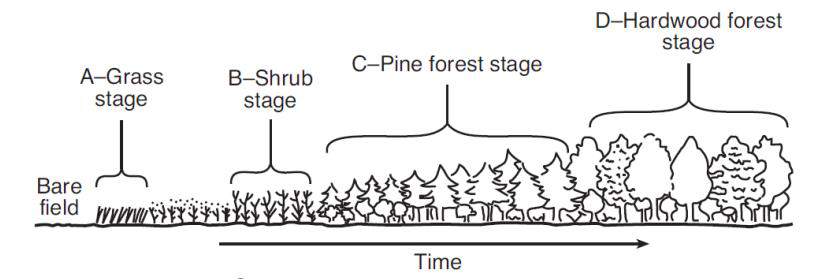
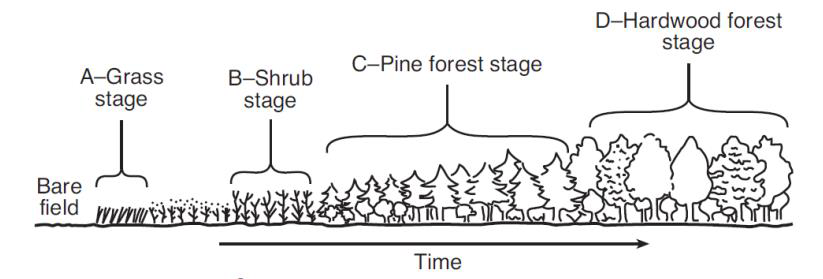
The diagram below represents different stages of an ecosystem over a period of time. Which stage of the ecosystem has the greatest long-term stability?

Question 7
7.

Refer to the diagram. During which stage would you find a climax community represented?

Question 8
8.

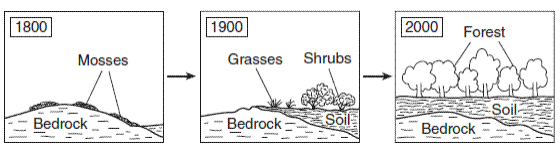
Over a long period of time, the stages represented in the diagram on the right were each present in a particular ecosystem.


After a forest fire, what is the most likely order in which these stages appeared?

Question 9
9.

The diagram below represents a process that occurs in nature.


This diagram can be used to illustrate the

Question 10
10.

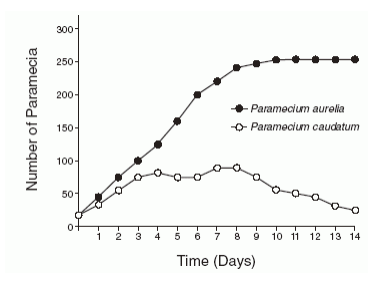
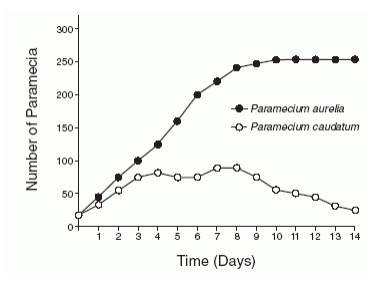
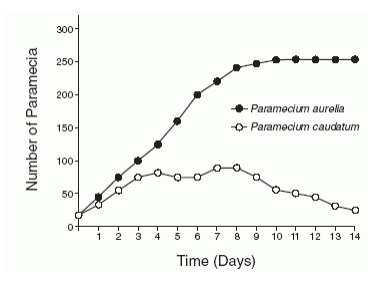
The graph below shows the growth of two populations of paramecia grown in the same culture dish for 14 days. Which ecological concept is best represented by the graph?

Question 11
11.

Using the graph, what is the dependent variable?

Question 12
12.

Using the graph, which organism was better fit for the environment?

Question 13
13.

In December 2004, a tsunami (giant wave) destroyed many of the marine organisms along the coast of the Indian Ocean. What can be expected to happen to the ecosystem that was most severely hit by the tsunami?

Question 14
14.

What will most likely occur if two different plant species compete for the same requirements in an ecosystem?

Question 15
15.

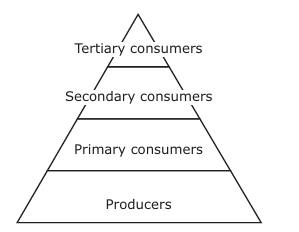
The amount of energy the producers in this energy pyramid provide the primary consumers is 54,000 joules. From this amount, 540 joules are provided to the tertiary consumers.


Based on this model, how much of the energy was provided to secondary consumers?

Question 16
16.

During ecological succession, how does the growth of young hardwoods affect the organisms living in an ecosystem?

Question 17
17.

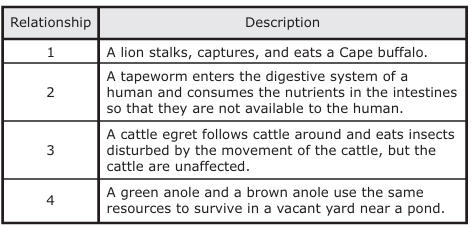
Some relationships between different organisms are shown in the table.


Which table correctly identifies each type of interaction described?

Question 18
18.

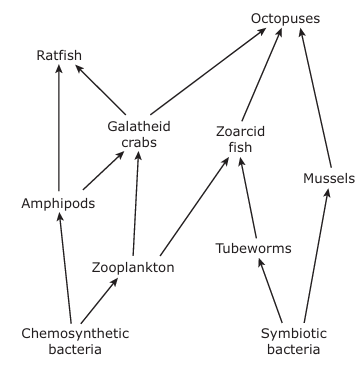
Part of a hydrothermal vent food web is represented in the diagram.


Which organisms are both secondary and tertiary consumers in this food web?

Question 19
19.

Which statement best describes the differences in species diversity between an ecosystem beginning the process of primary succession and one beginning the process of secondary succession?

Question 20
20.

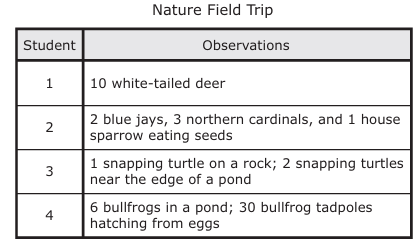
The table shows some observations made by four students during a field trip to a nature area.


Which student made observations of a community of organisms?

Question 21
21.

Atmospheric nitrogen has to be combined with other elements, or fixed, in order to be used by plants. Lightning is one way that nitrogen is fixed. When lightning occurs, the extreme heat breaks the bonds in nitrogen molecules, allowing nitrogen to combine with oxygen and form nitrogen oxides. In what way is most of the nitrogen fixed by lightning made available for use by plants?

Question 22
22.

A student performed an investigation in which two ivy plants were planted in two separate containers. One of the containers had earthworms mixed in with the soil, and the other container had soil and no earthworms. The plants were given the same amount of water and exposed to the same amount of sunlight. The student observed that after several weeks of growth, the plant exposed to earthworms appeared to be healthier and exhibited more growth. To conclude that the relationship between the plant and the earthworm is an example of mutualism, the student must perform follow-up investigations that do which of the following?

Question 23
23.

Hydrothermal vents form deep in the ocean when iron-rich magma is released from openings on the seafloor. These vents spew extremely hot water (400°C) mixed with methane and sulfur. Bacteria that thrive in this hostile environment form the base of a food chain that leads to colonization by tube worms, mussels, and many other life-forms. When a hydrothermal vent becomes inactive and cold, the bacterial community that lives in the hot fluid methane and sulfur dies out. Which organisms most likely succeed the original community in this ecosystem?

Question 24
24.

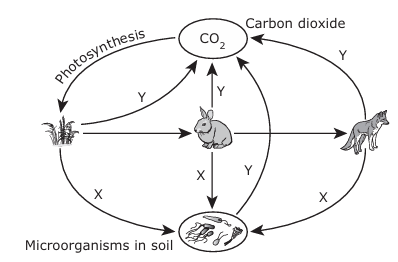
The diagram shows the flow of organic molecules through an ecosystem. One process that occurs in this ecosystem is labeled X, and another process that occurs is labeled Y


Which two processes are identified by the labels X and Y?

Question 25
25.

How do an increase in the organic matter in soil and an increase in soil depth affect the population of plants in an area?

Question 26
26.

Bats eat insects that damage crops and mosquitoes that are vectors for disease. One million bats can eat several tons of insects per night, saving billions of dollars in pesticides yearly. Agricultural and public health scientists are concerned about the spread of white-nose syndrome (WNS). WNS is a result of a fungus that can infect cave-dwelling bats. While bats hibernate during winter months, the fungus covers the bats’ face and wings. WNS has a near 100% mortality rate, and 5.7 million bats have died since the discovery of the fungus in 2006. Many scientists are searching for ways to protect these bats. The relationship between this fungus and bats can best be defined as —

Question 27
27.

As ecosystems move through the stages of succession, the populations of organisms in them change. Which of the following describes the stage of succession likely to have the most species diversity?

Question 28
28.

Parrotfish are herbivores that are found in coral reefs. To escape predation, a parrotfish will graze with a rabbitfish, which has venomous spines at the end of its pelvic fins. The rabbitfish does not benefit from this relationship. Which type of relationship do the parrotfish and the rabbitfish have in the coral-reef environment?

Question 29
29.

Dead zones are low-oxygen areas that develop on the seafloor. Scientists hypothesize that phytoplankton blooms cause these dead zones. Phytoplankton blooms occur when excess nutrients are introduced by pollution from fertilizers, sewage plants, and the burning of fossil fuels. Which of the following would most likely cause an increase in these contributors to dead zones?

Question 30
30.

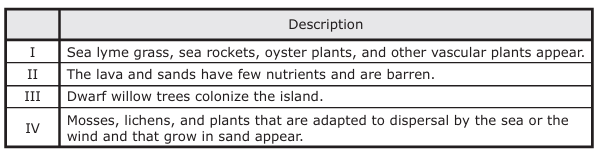
Surtsey is an island located south of Iceland. The island was formed by a volcanic eruption and first appeared in 1963. The table below contains descriptions of changes in the population and diversity of species on Surtsey.


Which of these lists the descriptions in the correct order of ecological succession on Surtsey?

Question 31
31.

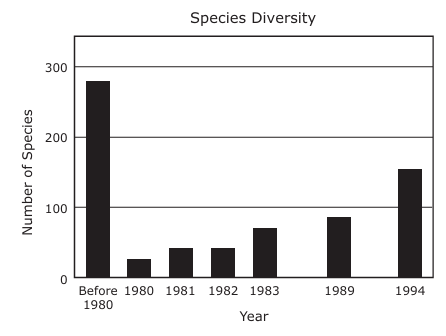
The graph below shows the changes in the number of species in an ecosystem.


Which event was most likely the cause of the changes in species diversity in this ecosystem?

Question 32
32.

The picture shows a pika, a small mammal found in grassland ecosystems. The vast grasslands of the Tibetan plateau are home to the plateau pika. The numerous pikas are prey for many predators of the grasslands, which serve as a major watershed for much of the area. The watershed drains large quantities of groundwater during the rainy season, or the monsoon season. Pikas have extensive burrows that help drain groundwater rapidly and are used as nesting sites by many bird species. However, many people advocate the eradication of the plateau pikas because they compete with livestock for grass.
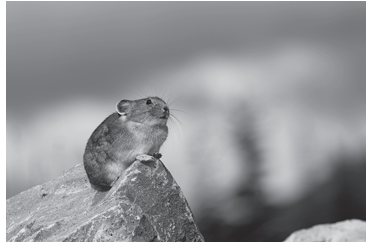

Which of these will most likely happen if the plateau pikas are completely removed from the Tibetan plateau grasslands?
Question 33
33.

An estuary collects sediments from the ocean and rivers that feed into it. The sediments swirl around and then settle to form a mudflat. Eel grass is then established on the mudflat. The ecosystem changes over time and ultimately develops into a salt marsh that contains mangrove trees. Which of the following is likely NOT involved in this example of ecological succession?

Question 34
34.

The rocky material left behind by a retreating glacier forms what is called a moraine. When primary succession occurs on a moraine, which life-forms will help create the soil by breaking down bare rock?

Question 35
35.

What describes a pioneer species in an ecosystem?

Question 36
36.

Which is a common example of a pioneer species?

Question 37
37.

What is a primary role of pioneer species?

Question 38
38.

Which habitat is likely to first see pioneer species?

Question 39
39.

Which characteristic do pioneer species often have?

Question 40
40.

How do pioneer species affect biodiversity?

Question 41
41.

What happens to pioneer species as succession progresses?

Question 42
42.

During primary succession, what is the initial substrate or substance?

Question 43
43.

What role do lichens play in relation to pioneer species?

Question 44
44.

Question 45
45.

What is primary succession?

Question 46
46.

Which is an example of primary succession?

Question 47
47.

What event can trigger primary succession?

Question 48
48.

After a glacier melts, what changes occur?

Question 49
49.

Why are intermediate stages important in succession?

Question 50
50.

What can inhibit/prevent secondary succession?

Question 51
51.

What environmental conditions favor secondary succession?

Question 52
52.

During succession, what happens to biodiversity?

Question 53
53.

What is the climax community?

Question 54
54.

In which environments is primary succession most likely?

Question 55
55.

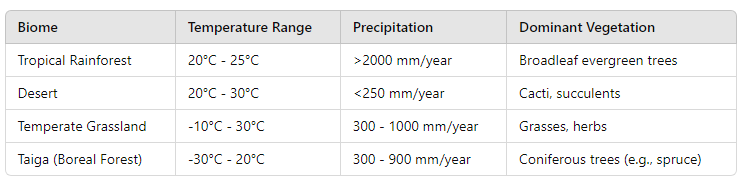
The table below summarizes key characteristics of four different biomes. Based on the information provided, which biome is correctly matched with its description?

Question 56
56.

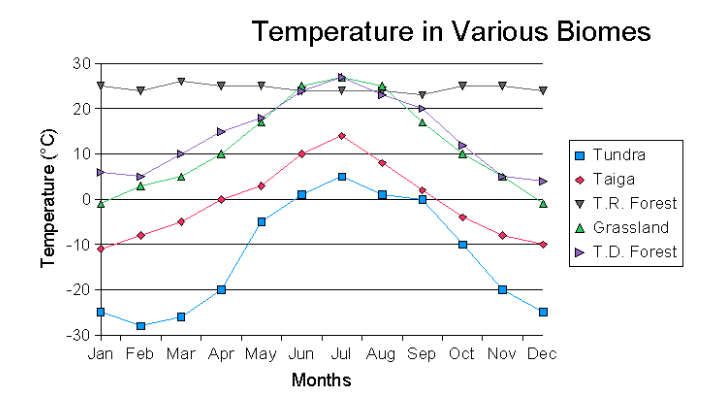
Using the graph below, which biome has relatively the same temperature each month?

Question 57
57.

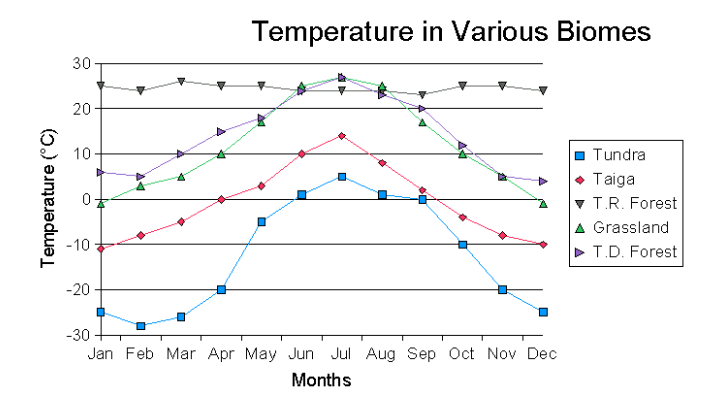
Using the graph below, which biome has the highest temperature in July?

D → C → A → B
effects of reduced competition between different types of plant life
recycling
5,400 J
Galatheid crabs and zoarcid fish
Student 1
X: Respiration Y: Predation
II, IV, I, III
A migration of locusts
The ecosystem will become more stable because the pika will no longer be there to eat the grasses, the birds will migrate to other ecosystems during nesting season, and the soils will be able to absorb more of the monsoon rains without the pika burrows.
The ecosystem will become more stable because the pika will be replaced by other species of small mammals that can fill the niche, bird species will adapt to nesting aboveground, and the soils will become compacted without the burrows.
Identify the pioneer species below
lichen
algae
grasses
bacteria
rose bush
flowers
evergreen trees
mosses
fungi
apple tree
Temperate Grassland
Tundra