Log in
Sign up for FREE
arrow_back
Library

Unit 2 Test on Greenhouse effect and aquatic ecosystems

star
star
star
star
star
Last updated 1 day ago
53 questions
Required
1
Required
1
Required
1
Required
1
Required
1
Required
1
Required
1
Required
1
Required
1
Required
1
Required
1
Required
1
Required
1
Required
1
Required
1
Required
1
Required
1
Required
1
Required
1
Required
1
Required
1
Required
1
Required
1
Required
1
Required
1
Required
1
Required
1
Required
1
Required
1
Required
1
Required
1
Required
1
Required
1
Required
1
Required
1
Required
1
Required
1
Required
1
Required
1
Required
1
Required
1
Required
1
Required
1
Required
1
Required
1
Required
1
Required
1
Required
1
Required
1
Required
1
Required
1
Required
1
Required
1
Question 1
1.

A terrestrial food web is shown below.
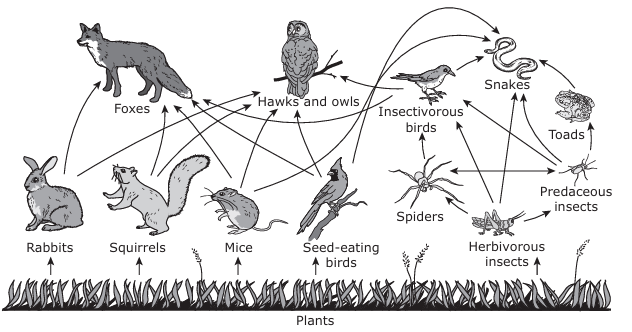

Which of the following lists only organisms that are secondary consumers in this food web?
Question 2
2.

Which of the following molecules typically contains both nitrogen and phosphate?

Question 3
3.

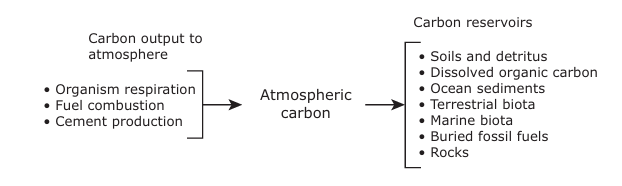
The carbon cycle includes processes that release carbon into the atmosphere and places that act as carbon reservoirs. The diagram below shows both major processes that release carbon and major carbon reservoirs.


Which of these disruptions would cause an excess output in the carbon cycle?

Question 4
4.

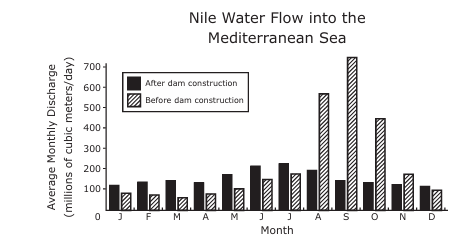
The Nile River flows into the Mediterranean Sea. The Aswan High Dam contains the flow of water from the river and reduces the annual fall flooding. The floodwater is trapped behind the huge dam, allowing irrigation for agriculture. Sediments that would be washed away by the annual floods are also trapped behind the dam. The graph shows the water flow from the Nile that enters the Mediterranean Sea.


How has this dam most likely affected the Mediterranean Sea ecosystem?

Question 5
5.

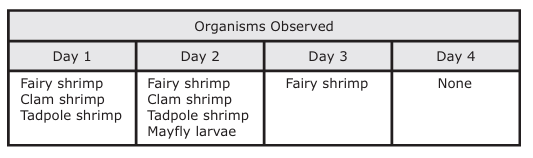
A student is studying the ecology of a playa lake, which forms after a rainfall in a dry lake bed. The table lists the organisms that the student observed.


Which level of biological organization has the student described in the table?

Question 6
6.

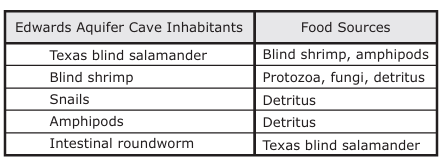
The Texas blind salamander (Eurycea rathbuni) lives in the Edwards Aquifer region around San Marcos. Along with other species the salamander lives in total darkness in the underground crevices and caves of the aquifer region. The table lists some of the organisms that live in this environment and their food sources.


In an energy pyramid for these aquifer cave dwellers, which of the following would be placed at the bottom?

Question 7
7.

A student sets up a compost bin outdoors. Inside the bin microorganisms convert the student’s vegetable and paper scraps into rich fertilizer. Which of the following best describes the role that these microorganisms play in natural habitats?

Question 8
8.

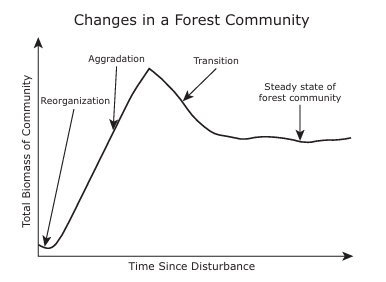
The graph shows the basic changes in a forest community after a disturbance occurred.


The information shown in the graph suggests that the changes in the forest community were caused by —

Question 9
9.

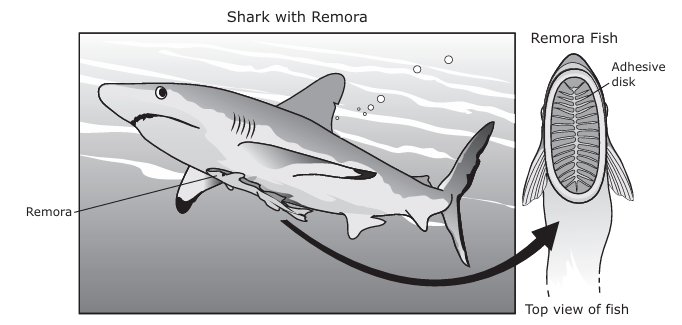
A remora is a fish that has an adhesive disk on the back of its head that it uses to attach itself to a large shark. When food floats away from the shark’s mouth as it feeds, the remora collects the scraps. Drawings of a shark with a remora attached and a remora’s adhesive disk are shown below.


The relationship between the remora and the shark is an example of —

Question 10
10.

An estuary collects sediments from the ocean and rivers that feed into it. The sediments swirl around and then settle to form a mudflat. Eel grass is then established on the mudflat. The ecosystem changes over time and ultimately develops into a salt marsh that contains mangrove trees. Which of the following is likely NOT involved in this example of ecological succession?

Question 11
11.

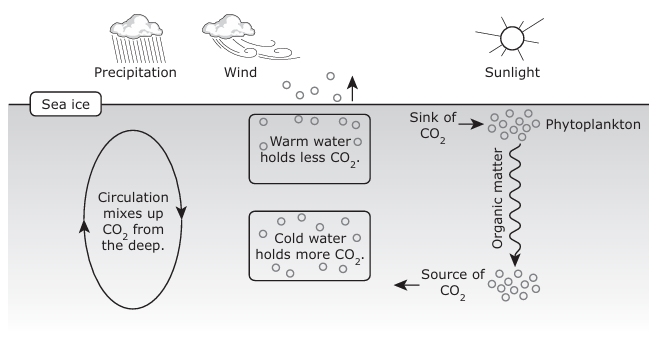
This diagram demonstrates why the ocean is a large carbon sink.


An increase in the amount of carbon dioxide in the atmosphere can cause atmospheric temperatures to increase. Which statement explains how this could affect the ocean as a carbon sink?

Question 12
12.

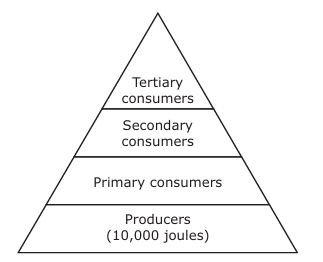
The energy pyramid below shows the energy made available by producers.


Based on the energy flow between trophic levels in an energy pyramid, how much energy would be expected to be found at the secondary consumer level in this pyramid?

Question 13
13.

Roads are often built through forests for industrial purposes or as land is developed for residential and commercial needs. How would road construction through a forest most likely affect the ecosystem?

Question 14
14.

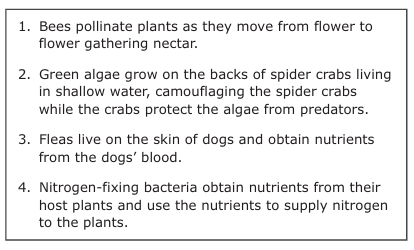
37 Four common relationships between organisms are listed in the box.

Which statements best describe these relationships?

Question 15
15.

Photosynthesis and cellular respiration both involve the use and release of gases. Which statement correctly identifies the role of gases in the two processes?

Question 16
16.

Which of the following gases is NOT considered a greenhouse gas?

Question 17
17.

What is a possible consequence of an enhanced greenhouse effect?

Question 18
18.

How does deforestation contribute to the greenhouse effect?

Question 19
19.

What is the greenhouse effect?

Question 20
20.

Which of the following statements best explains why Earth's average temperature would be much colder without the natural greenhouse effect?

Question 21
21.

Which of the following is not a direct consequence of the enhanced greenhouse effect?

Question 22
22.

What role does the ocean play in moderating the greenhouse effect?

Question 23
23.

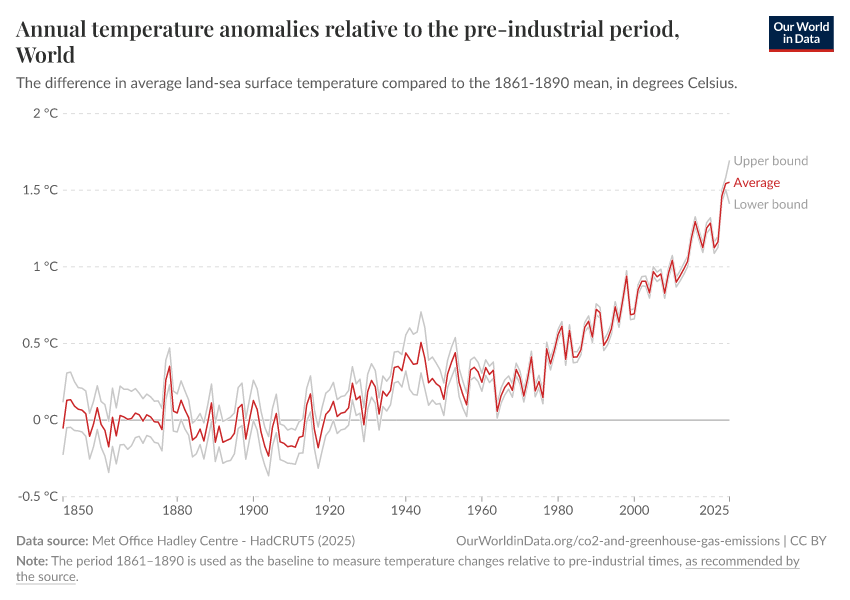
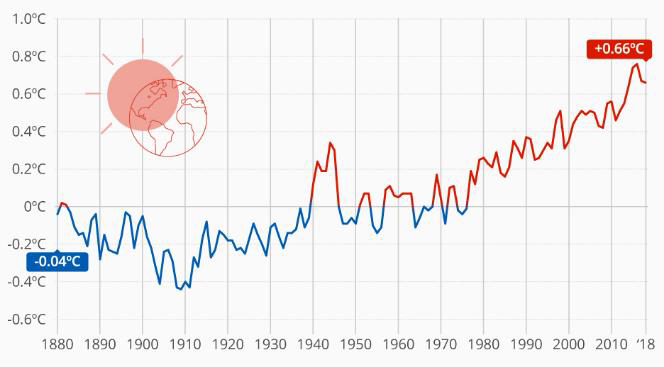
Examine the graph below


What is the dependent variable?

Question 24
24.

Examine the graph below


Which of these statements about the last 10 years (2015–2024) is correct?

Question 25
25.

Examine the graph below


What is the approximate global temperature anomaly in 2024 relative to the 1850–1900 pre‑industrial period?

Question 26
26.

Examine the graph below


What conclusion can be deduced from this graph?

Question 27
27.

What is the main difference between freshwater and marine ecosystems?

Question 28
28.

What causes ocean acidification?

Question 29
29.

How does CO₂ lower the pH of ocean water?

Question 30
30.

What happens to the pH level of the ocean during acidification?

Question 31
31.

Which marine organisms are most directly affected by ocean acidification?

Question 32
32.

Which chemical compound is essential for shell-building marine life and is affected by acidification?

Question 33
33.

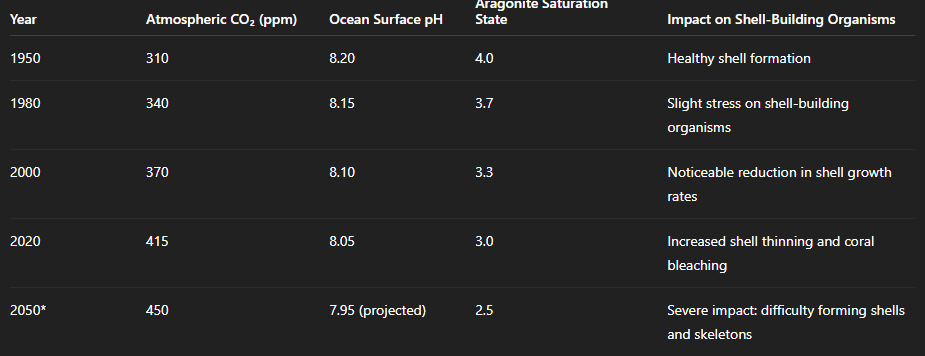
Examine the data table below.


How has atmospheric CO₂ changed from 1950 to 2020?

Question 34
34.

Examine the data table below.


What trend is shown by ocean surface pH between 1950 and 2020?

Question 35
35.

Examine the data table below.


What is the projected ocean surface pH for 2060?

Question 36
36.

Examine the data table below.


What happens to shell-building organisms as aragonite saturation decreases?

Question 37
37.

What role do zooxanthellae play in coral reefs?

Question 38
38.

What happens to corals when they lose their zooxanthellae?

Question 39
39.

How does ocean acidification contribute to coral bleaching?

Question 40
40.

What kind of organisms are found at the base of aquatic food chains?

Question 41
41.

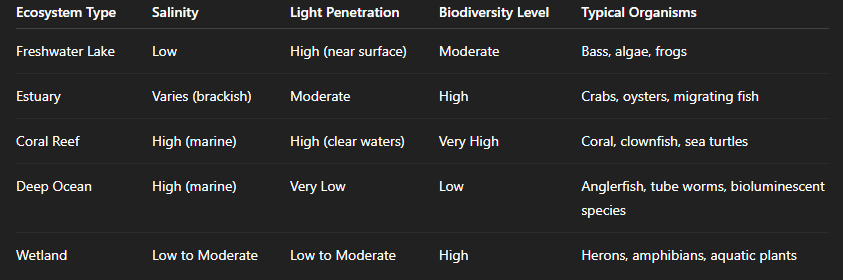
Examine the data table below.


Which aquatic ecosystem has the highest biodiversity according to the table?

Question 42
42.

Examine the data table below.


What is the effect of salinity on the biodiversity level?

Question 43
43.

What is the primary cause of coral bleaching?

Question 44
44.

Coral bleaching occurs when corals expel which essential organism?

Question 45
45.

Which gases contribute most to the greenhouse effect on Earth?

Question 46
46.

Which human activities contribute to an increase in greenhouse gases?

Question 47
47.

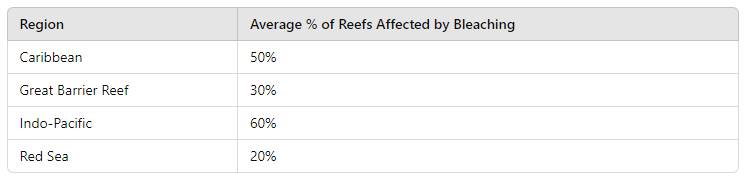
The table below shows the percentage of coral reefs affected by bleaching events in different regions over the past decade. Based on the data, which region experienced the highest average percentage of coral bleaching events?

Question 48
48.

The graph below shows the sea surface temperatures (SST) in a coral reef ecosystem over the past decade.


Based on the graph, which conclusion about coral bleaching events is supported?

Question 49
49.

The relationship between coral and the essential organism, is an example of which symbiotic relationship?

Question 50
50.

In aquatic ecosystems, the photic zone is characterized by:

Question 51
51.

In the aphotic zone of the ocean, autotrophs obtain energy to produce sugars from

Question 52
52.

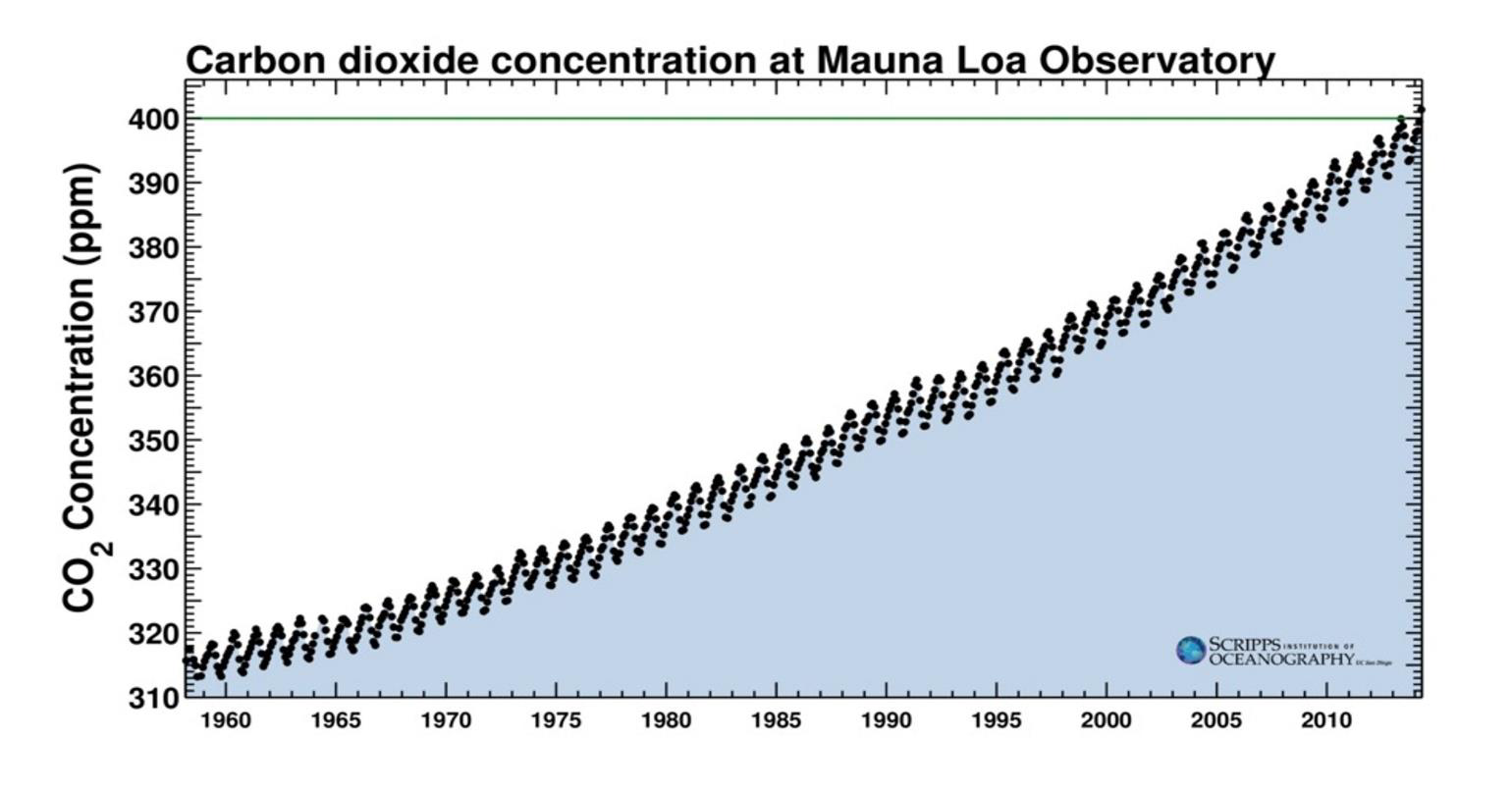
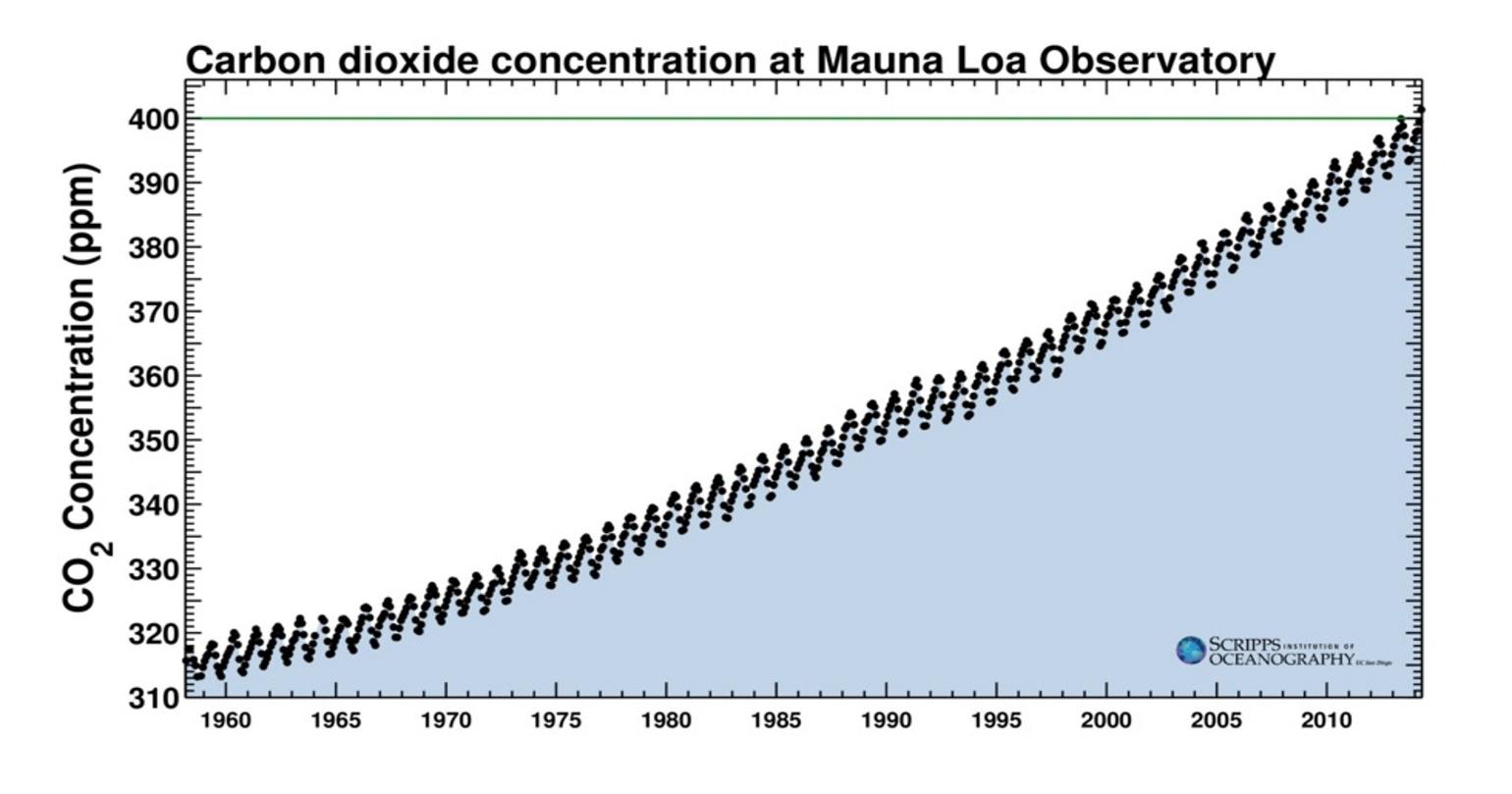
The graph below shows the trend of atmospheric carbon dioxide levels over the past century. Based on the graph, which statement about carbon dioxide levels is most accurate?

Question 53
53.

Using the graph below, what is the dependent variable?

Predaceous insects, toads, spiders, and foxes
A thickening of ocean sediments
Reduced nutrients from the land support fewer producers in the sea.
Water trapped behind the dam causes the marine ecosystem to move inland.
Ecosystem
Blind Shrimp
repeated habitat destruction
predation
Dissolved carbon dioxide gas in the ocean would increase because surface winds would cause a deeper circulation pattern, making more room for the gas.
Less atmospheric carbon dioxide would be available to phytoplankton.
500 joules
Relationships 1 and 4 are examples of mutualism. Relationship 2 is an example of commensalism. Relationship 3 is an example of parasitism.
land and sea surface
They have annual anomalies below 1.0 °C
+1.5–1.6 °C
A decrease in human emissions is the reason we have an increase in global temperatures
Increased from 310 to 415 ppm
Decreasing pH
7.75
They are unaffected
Deep ocean
There is no relationship
A decrease in salinity results in a decrease in biodiversity
An increase in salinity results in a decrease in biodiversity
A decrease in salinity results in an increase in biodiversity
Great Barrier Reef
Coral bleaching events are more frequent when sea surface temperatures decrease.
Coral bleaching events are more frequent when sea surface temperatures exceed a certain threshold.
CO2 levels have decreased steadily over the past century.
CO2 levels have increased steadily over the past century.