Log in
Sign up for FREE
arrow_back
Library

Reading - Practice ACT (25-26)

star
star
star
star
star
Last updated 3 months ago
36 questions
Note from the author:
Literary Narrative - Passage 1
Informational - Passage 2-4
0
0
0
0
0
0
0
0
0
1
CS
1
KID
1
KID
1
CS
1
CS
1
KID
1
KID
1
CS
1
CS
1
KID
1
CS
1
KID
1
KID
1
KID
1
KID
1
IKI
1
IKI
1
IKI
1
IKI
1
KID
1
CS
1
KID
1
CS
1
KID
1
IKI
1
KID
1
CS
Question 1
1.

Question 2
2.

Question 3
3.

Question 4
4.

Question 5
5.

Question 6
6.

Question 7
7.

Question 8
8.

Question 9
9.

Question 10
10.

Question 11
11.

Question 12
12.

Question 13
13.

Question 14
14.

Question 15
15.

Question 16
16.

Question 17
17.

Question 18
18.

Question 19
19.

Question 20
20.

Question 21
21.

Question 22
22.

Question 23
23.

Question 24
24.

Question 25
25.

Question 26
26.

Question 27
27.

Question 28
28.

Question 29
29.

Question 30
30.

Question 31
31.

Question 32
32.

Question 33
33.

Question 34
34.

Question 35
35.

Question 36
36.

first person narrator, not present in the action, who relates events that happened in the past.
first person narrator, present in the action, who relates events as they happen.
special glaze on a bowl and why the glaze makes the bowl both subtle and noticeable.
perceived perfection of an object and that object’s effect on people.
The passage most strongly suggests that a useful characteristic of the bowl, in terms of Andrea’s purpose for the object, is the bowl’s:
commercial availability.
ostentatious look.
universal appeal.
famous designer.
In lines 53-75, Andrea responds to an inquiry about her bowl and explains why her bowl was placed in a client’s home with statements that can best be described as:
half-truths.
absolute truths.
lies.
vague generalizations.
In the passage, Andrea is characterized as believing that compared to most tricks used by real estate agents to impress potential buyers, her trick of placing the bowl in a home is:
less familiar to potential buyers.
less enticing to potential buyers.
more obvious to potential buyers.
more humorous to potential buyers.
According to the passage, the random placement of colors in the bowl’s glaze creates a surface that:
seems to move.
acts as a mirror.
scatters prisms on the walls of a room.
appears cracked in the sunlight.
One main point of the fifth paragraph (lines 53-62) is that:
Andrea’s bowl does not actually belong to her, but she hopes to find its owner.
Andrea sometimes forgets where in a house she has placed the bowl.
Andrea is often asked about the bowl when a client puts in an offer on a house.
Andrea’s bowl sometimes attracts more interest than does the house itself.
In the passage, the admiration the bowl receives is directly compared to the admiration received by:
the aroma of spring.
a plastic frog.
a mutt.
a cherry table.
The passage suggests that one reason prospective home buyers have difficulty sharing their thoughts about the bowl is that they realize:
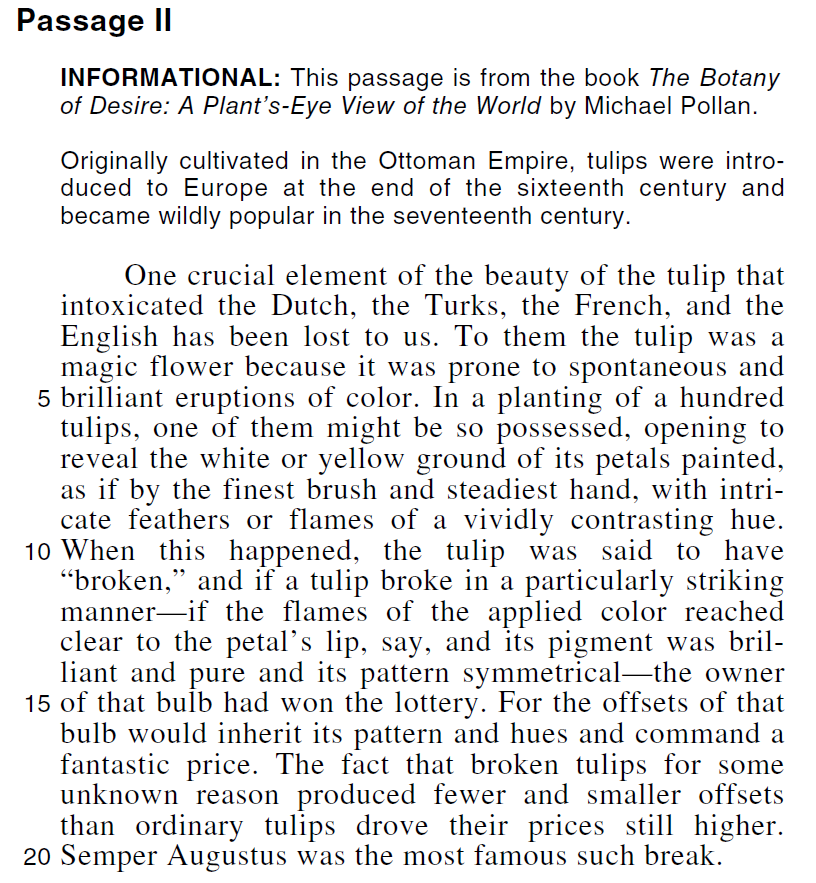
they do not want to reveal that they have the financial means to buy the bowl.
Andrea might start talking about the bowl instead of discussing the home that is for sale.
they are not visiting the home for the purpose of noticing decorative objects.
Andrea might find the bowl even more intriguing than they do.
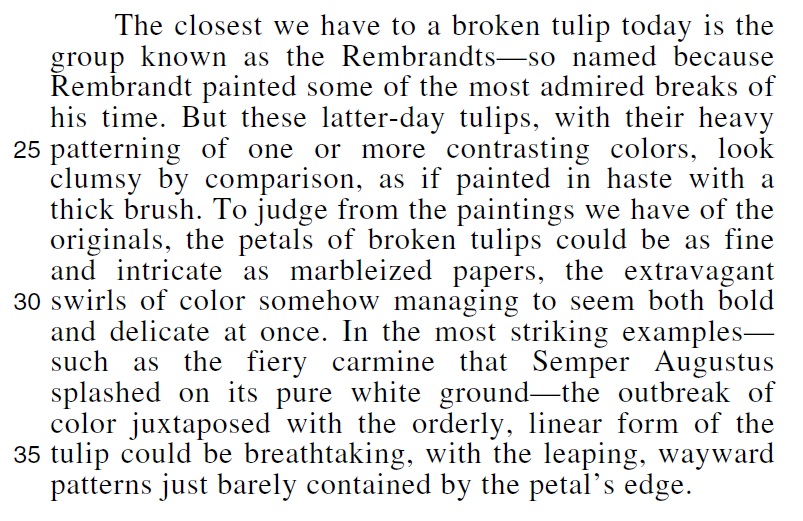
The main point of the second paragraph (lines 21–36) is that:
modern Rembrandt tulips have been painted by many of today’s most famous artists.
compared to seventeenth-century broken tulips, today’s multicolored tulips are less visually appealing.
the tulip break known as Semper Augustus was a striking example of the seventeenth-century broken tulip.
Rembrandt was responsible for painting the most famous tulip breaks of his time.
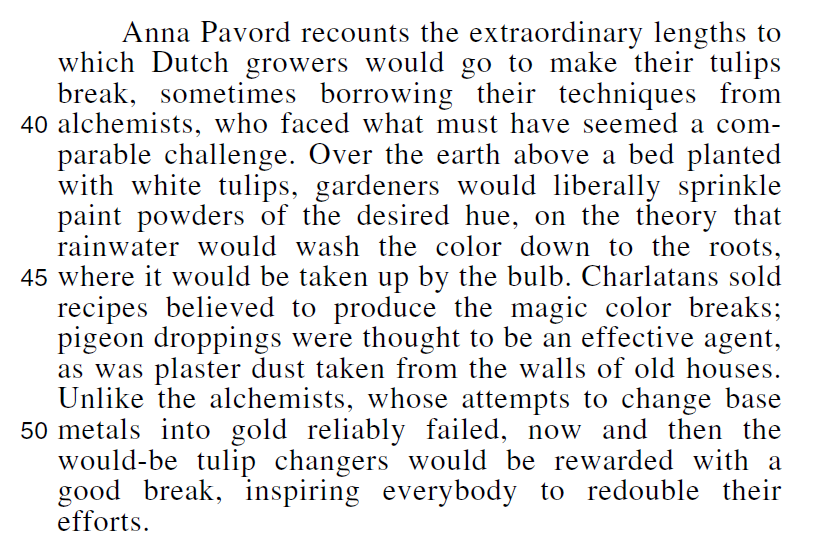
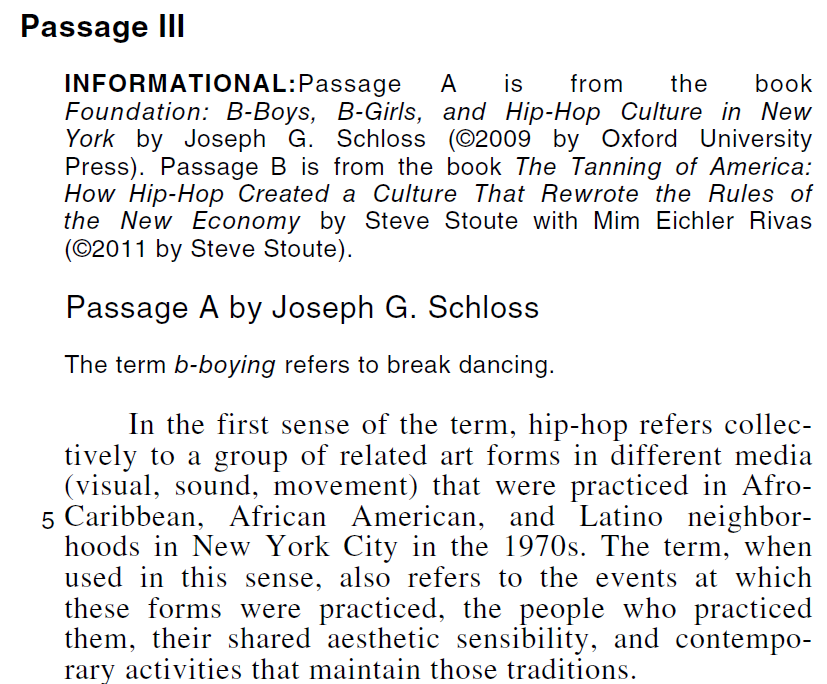
It can reasonably be inferred from the passage that some seventeenth-century tulip growers believed tulip breaks were mainly caused by:
certain growing techniques.
diseased tulip bulbs.
suppliers’ storage conditions.
certain weather patterns.
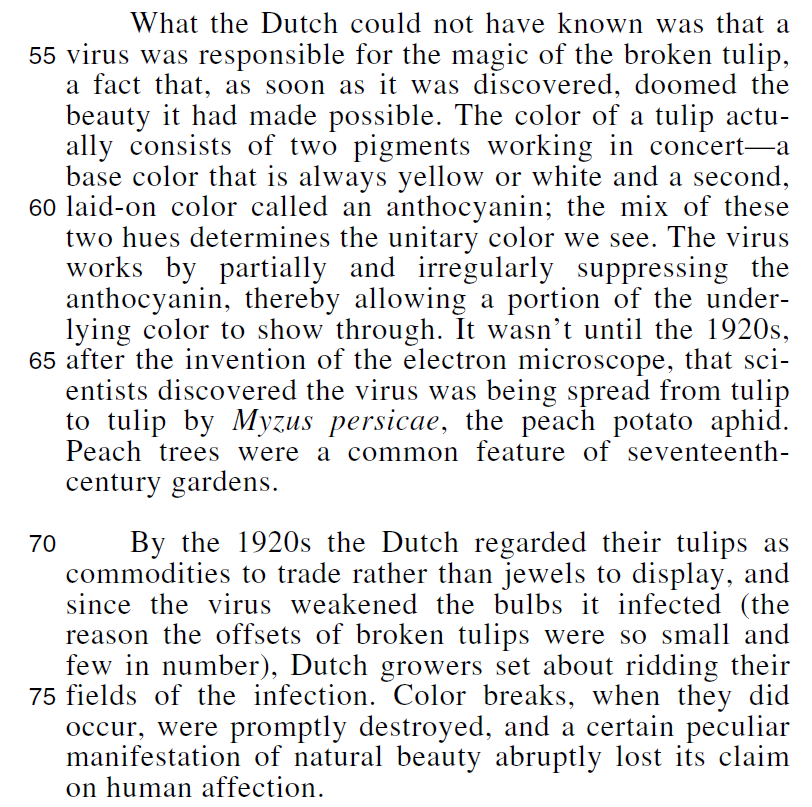
The information in lines 57–64 primarily functions to:
indicate why broken tulips contain no anthocyanin.
argue that yellow and white are the only natural tulip colors.
explain how the color variation in a broken tulip occurs.
describe the range of potential tulip colors.
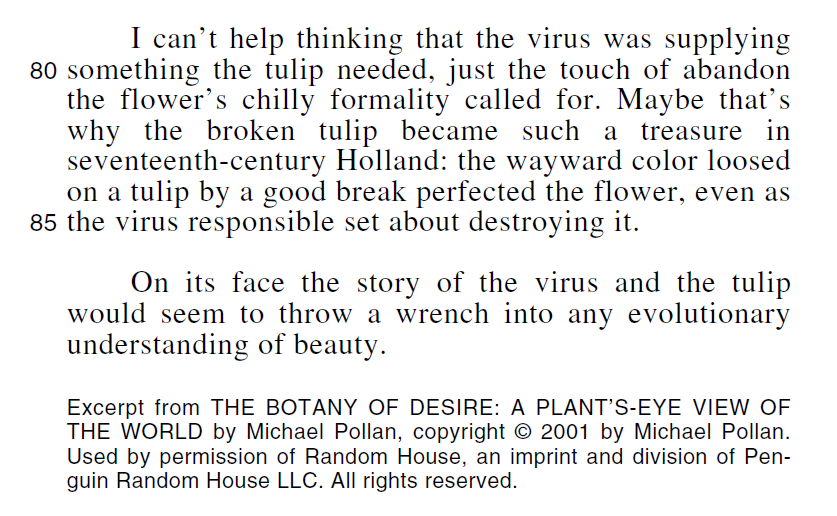
The sixth paragraph (lines 79–85) differs from the rest of the passage in that it:
argues that growers should have dealt with broken tulips differently.
questions whether the virus that caused broken tulips was harmful to bulbs.
challenges the idea that broken tulips were beautiful.
presents a personal meditation on broken tulips.
According to the passage, in the seventeenth century, the fact that broken tulip bulbs tended to produce fewer and smaller offsets compared to typical tulip bulbs resulted in:
an increase in prices for broken tulips.
a desire among growers to plant a wider variety of crops.
a fear among growers that broken tulips were diseased.
a decrease in the demand for broken tulips.
In the passage, the author compares broken tulips as they are represented in Rembrandt’s paintings to:
paint powders sprinkled on the ground.
intricately marbelized papers.
a painting hastily done with a thick brush.
peach-tree blossoms.
The passage author most likely mentions that peach trees were a staple of seventeenth-century gardens to:
explain how peach potato aphids spread the tulip virus.
highlight a crop favored by growers who did not cultivate tulips.
emphasize that peach trees are not as popular in gardens today.
compare tulips to another popular seventeenth-century crop.
As it is used in line 80, the word abandon most nearly means:
uninhibitedness.
relinquishment.
denial.
retreat.
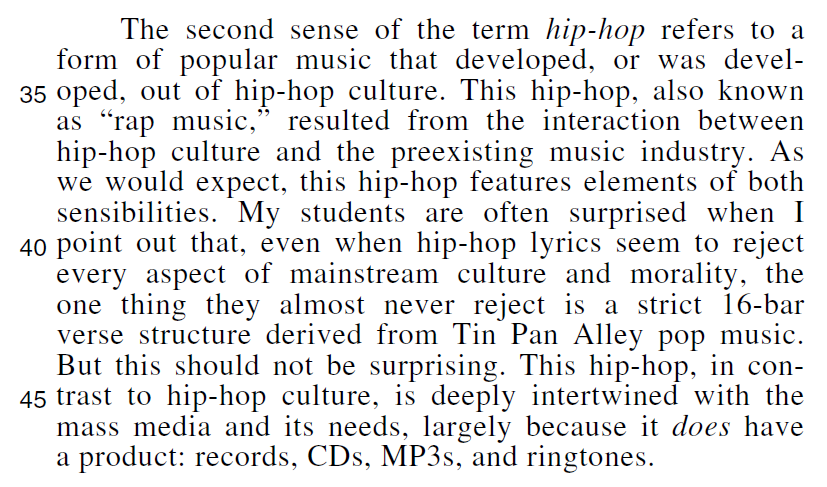
As it is used in line 38, the word sensibilities most nearly means:
perspectives.
feelings of gratitude.
emotions.
sensitivities.
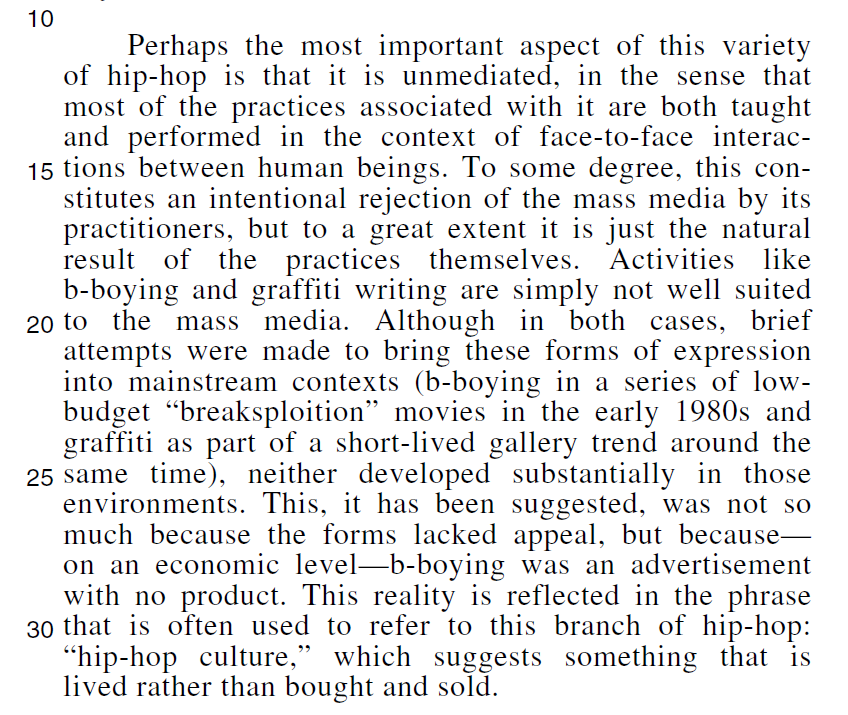
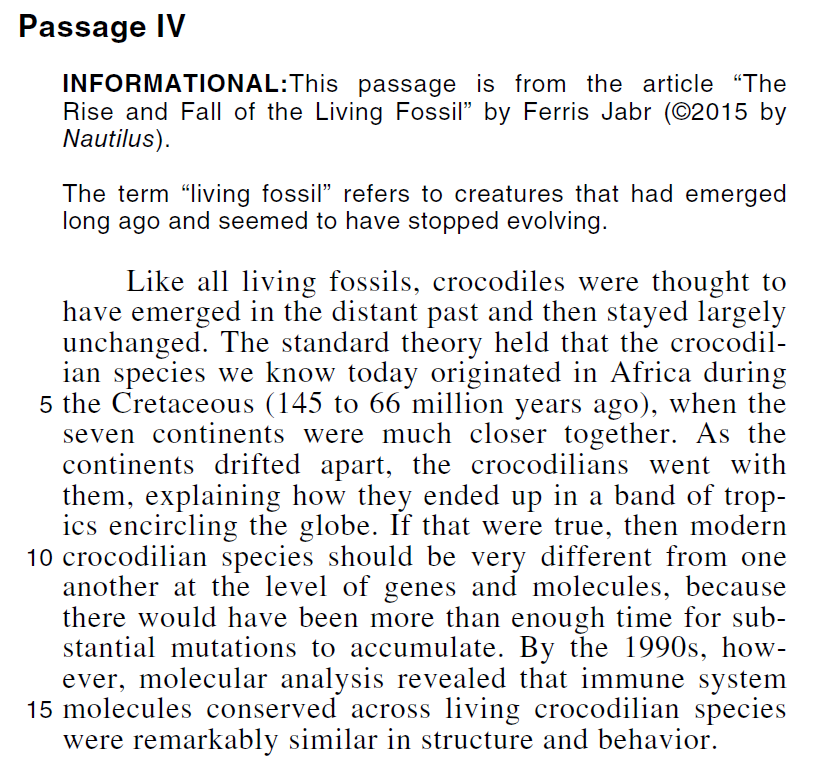
Based on Passage A, which statement best captures the relationship between Tin Pan Alley pop music and rap music?
Tin Pan Alley pop developed at the same time as rap.
Rap artists have been aware of Tin Pan Alley pop but not influenced by it.
Rap artists have rejected every aspect of Tin Pan Alley pop.
Tin Pan Alley pop has influenced many rap artists.
Which of the following details does the author of Passage B highlight as one that caused “Rapper’s Delight” to stand out as different compared to other songs he knew?
The length of the song
The female vocals
The song’s intro
The fact that the song was on a vinyl record
In the context of Passage B, the main point of the third paragraph (lines 62–76) is that the author was:
uncomfortable with what he viewed as an unwelcome change to a favorite song.
more interested in an unfamiliar album label than in the new music that was playing.
struck by the combination of new and established musical elements in the music he was hearing.
convinced that the new form of music he was hearing would become more popular than disco.
Based on Passage B, it can reasonably be inferred that the author views his first exposure to rap music as:
significant for his childhood but less so for his adulthood.
a disappointing experience.
a transformative experience.
memorable but ultimately not very important.
Compared to Passage A, Passage B focuses more on:
attempts to move hip-hop art into galleries.
early hip-hop’s interaction with the marketplace.
the mass media.
the author’s personal experience.
Which of the following elements of Passage B is not included in Passage A?
A story involving a particular rap song
An acknowledgment of rap’s interaction with other musical forms
A discussion of the early days of hip-hop
A mention of the New York City area in the context of hip-hop
The authors of both passages would most likely agree with the idea that early rap music:
represented artists’ rejection of the music industry and its practices.
was slow to find an audience.
represented a significant development in American popular culture.
was more popular than today’s rap music.
The main purpose of the fifth paragraph (lines 58–73) is to:
explain how Heikkala revolutionized DNA analysis by comparing the DNA of 123 different African crocodiles.
describe the DNA analysis that confirmed Crocodylus niloticus and Crocodylus suchus were two distinct species.
provide information on the mummification of crocodiles that was pertinent to Heikkala’s analysis.
introduce the behavioral differences between Crocodylus niloticus and Crocodylus suchus.
According to the passage, molecular analysis revealed that immune system molecules from living crocodilian species were similar in:
color and size.
density and age.
shape and weight.
structure and behavior.
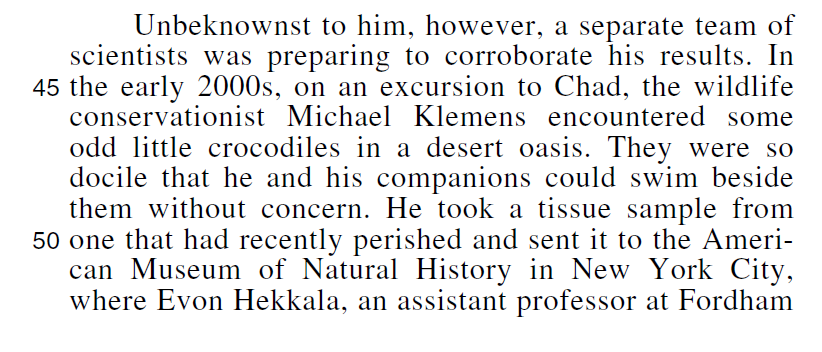
In the context of the passage, the statement in lines 47–49 mainly serves to:
indicate that Klemens and his companions believed that the crocodiles were diseased.
establish the tameness of the crocodiles in the desert oasis.
suggest that Klemens and his companions suspected they were swimming with Crocodylus niloticus.
indicate that the crocodiles in the desert oasis had not yet fully matured.
According to the passage, after Klemens sent a tissue sample of a perished crocodile to Heikkala, Heikkala then:
estimated the crocodile’s age.
sequenced the crocodile’s genome.
studied the crocodile’s immune system.
identified mutations in the crocodile’s molecular structure.
In the context of the passage, the detail that Crocodylus niloticus and Crocodylus suchus have different numbers of chromosomes provides support for the claim that the two species:
were not mixing their DNA.
had similar diets.
diverged during the Cretaceous.
did not evolve from the same ancestor.
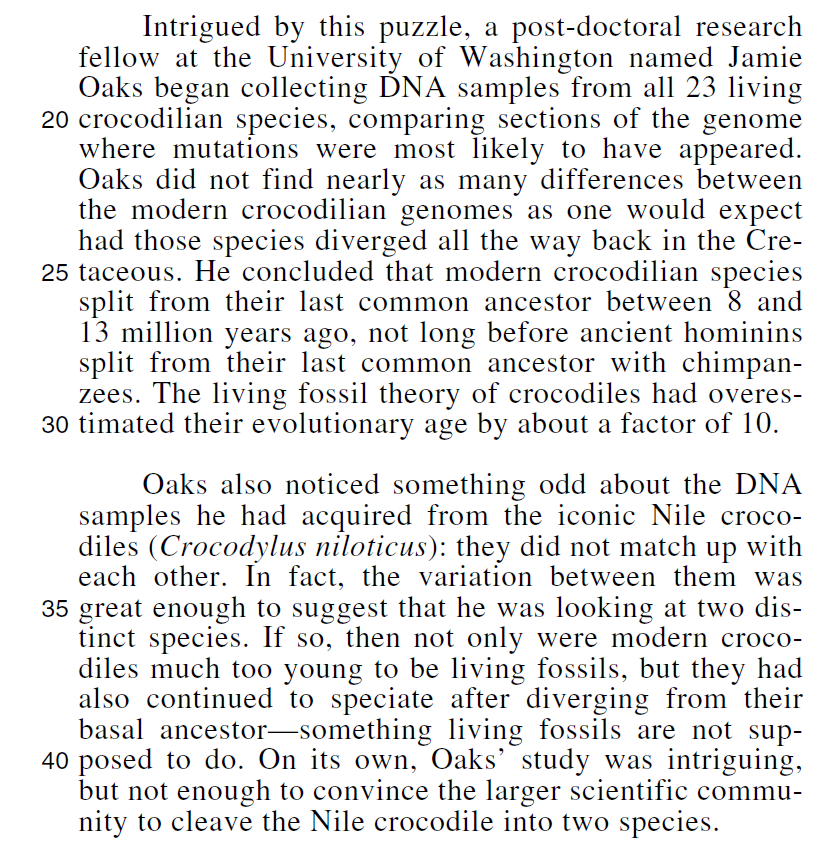
According to the passage, Crocodylus niloticus and Crocodylus suchus diverged between:
66 and 145 million years ago.
1 and 2 million years ago.
3 and 6 million years ago.
8 and 13 million years ago.
Based on the passage, the phrase “redraw the map” (line 75) is most likely meant to be read:
figuratively; scientists amended the narrative of the natural history of crocodiles.
figuratively; scientists believed their findings would have broader implications on archaeology.
literally; scientists no longer believed crocodiles originated in Africa.
literally; scientists no longer believed crocodiles once lived in a band of tropics.