Log in
Sign up for FREE
arrow_back
Library

Year 9 reactivity series

star
star
star
star
star
Last updated about 4 hours ago
29 questions
2
1
4
1
4
1
1
1
1
3
5
1
1
1
1
1
1
1
1
1
4
1
1
1
1
1
1
3
4
Question 1
1.

Question 2
2.

Question 3
3.

Draggable itemarrow_right_altCorresponding Item
arrow_right_alt
arrow_right_alt
arrow_right_alt
arrow_right_alt
Question 4
4.
Other Answer Choices:
Ti
Cu
Na
C as graphite
Question 5
5.
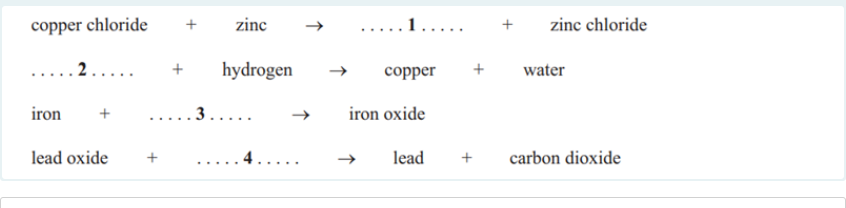
1 = ___________
2= _________________
3 = ___________
4 = ___________
Other Answer Choices:
copper
carbon
oxygen
copper oxide
Question 6
6.

Question 7
7.

Question 8
8.

Question 9
9.

Question 10
10.

Question 11
11.
_______________ metals are found in the Earth’s crust as the uncombined elements.
_____________ metals are found in the earths crust as compounds.
_________ would be found as the uncombined element
______________ would be found as the compound ____________________
Other Answer Choices:
reactive
aluminium
unreactive
gold
aluminium oxide
Question 12
12.

Question 13
13.

Question 14
14.

Question 15
15.

Question 16
16.

Question 17
17.

Question 18
18.

Question 19
19.

Question 20
20.

Question 21
21.
Other Answer Choices:
Fe
Au
Al
Hg
Question 22
22.

Question 23
23.

Question 24
24.

Question 25
25.

Question 26
26.
More reactive metals __________ resistant to corrosion than less reactive metals?
Question 27
27.
Less reactive metals __________ resistant to corrosion than less reactive metals?
Question 28
28.

Question 29
29.

Which two of the following are properties of iron (steel), that make it suitable for building bridges?
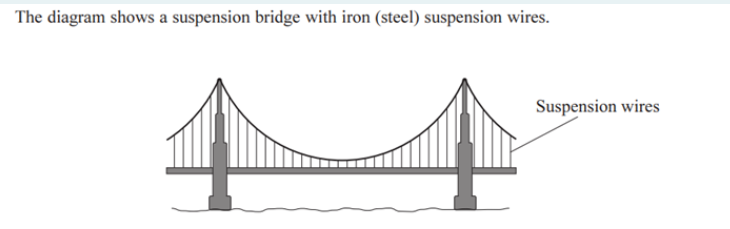

  • it can be bent and shaped
  • it does not corrode
  • it has a low melting point
  • it is a good conductor of heat
  • it is a strong metal
1
2
3
4
4
Au (gold)
1
Ca (calcium)
2
Cu (copper)
3
Ti (titanium)
Sodium + water produces:
Sodium hydroxide + hydrogen
Sodium oxide + hydrogen
Sodium chloride + water
Sodium hydroxide + carbon dioxide + water
Sodium + hydrochloric acid produces:
Sodium hydroxide + hydrogen
Sodium oxide + hydrogen
Sodium chloride + water
Sodium hydroxide + carbon dioxide + water
Sodium chloride + hydrogen
The reaction of sodium with water is:
More vigorous than the reaction of zinc with water
Less vigorous than the reaction of zinc with water
The reaction of sodium with water is:
More vigorous than the reaction of potassium with water
Less vigorous than the reaction of potassium with water
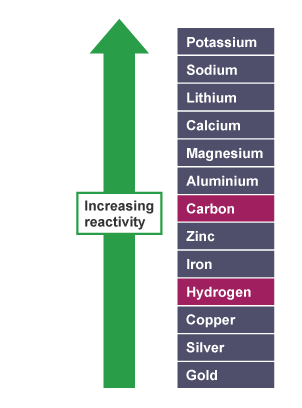
Based on the answer to the last two questions place the following in order of reactivity from most reactive to least reactive
Sodium
Zinc
Potassium
Oxidation is the ____________ of oxygen.
Gain
Loss
Reduction is the _____________ of oxygen.
loss
gain
Extraction of gold metal from an ore involves:
Electrolysis
Reduction with carbon
No extraction is needed as the metal is found uncombined
Extraction of aluminium metal from an ore involves:
Electrolysis
Reduction with carbon
No extraction is needed as the metal is found uncombined
Extraction of iron metal from an ore involves:
Electrolysis
Reduction with carbon
No extraction is needed as the metal is found uncombined
Metals above carbon in the reactivity series are extracted using:

Electrolysis
Reduction with carbon
No extraction is needed as the metal is found uncombined
Metals below carbon in the reactivity series are extracted using:

Electrolysis
Reduction with carbon
No extraction is needed as the metal is found uncombined
The method used to extract a metal from its compounds depends on ......
the colour of the metal.
the density of the metal.
the hardness of the metal.
the reactivity of the metal.
Aluminium is extracted from bauxite using:
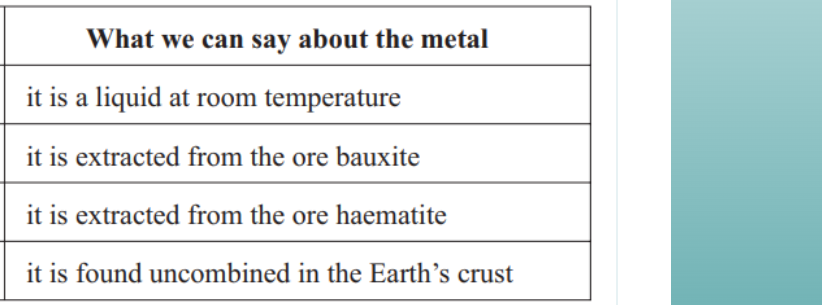
Electrolysis
Reduction with carbon
No extraction is needed as the metal is found uncombined
Hint you saw a demonstration of this in Year 8
a
b
c
d
Iron is extracted from haematite using:
Electrolysis
Reduction with carbon
No extraction is needed as the metal is found uncombined
Using plants to extract copper from low-grade ore is called:
Bioleaching
Phytoextraction
Using bacteria to extract copper from low-grade ore is called:
Bioleaching
Phytoextraction
Which of the following are advantages of recycling metals?

Hint use the mark allocation to guide you.
Recycling is cheaper
Recycling preserves the environment
Recycling preserves the finite raw materials
Which of the following are part of a life cycle assessment?

Hint use the marks to guide you!
Obtaining the raw materials
Manufacturing the product
Using the product
Disposing of the product