Log in
Sign up for FREE
arrow_back
Library

1.06 Dark Universe

star
star
star
star
star
Last updated about 3 hours ago
13 questions
Required
0
Required
4
HS-ESS1-2
Required
0
Required
1
HS-ESS1-2

There’s something strange happening in the universe.

Scientists have discovered mysterious forces that seem to be pushing the universe apart and pulling things together in surprising ways, but we can’t see or touch these forces.

They call these forces dark energy and dark matter.

Required
0

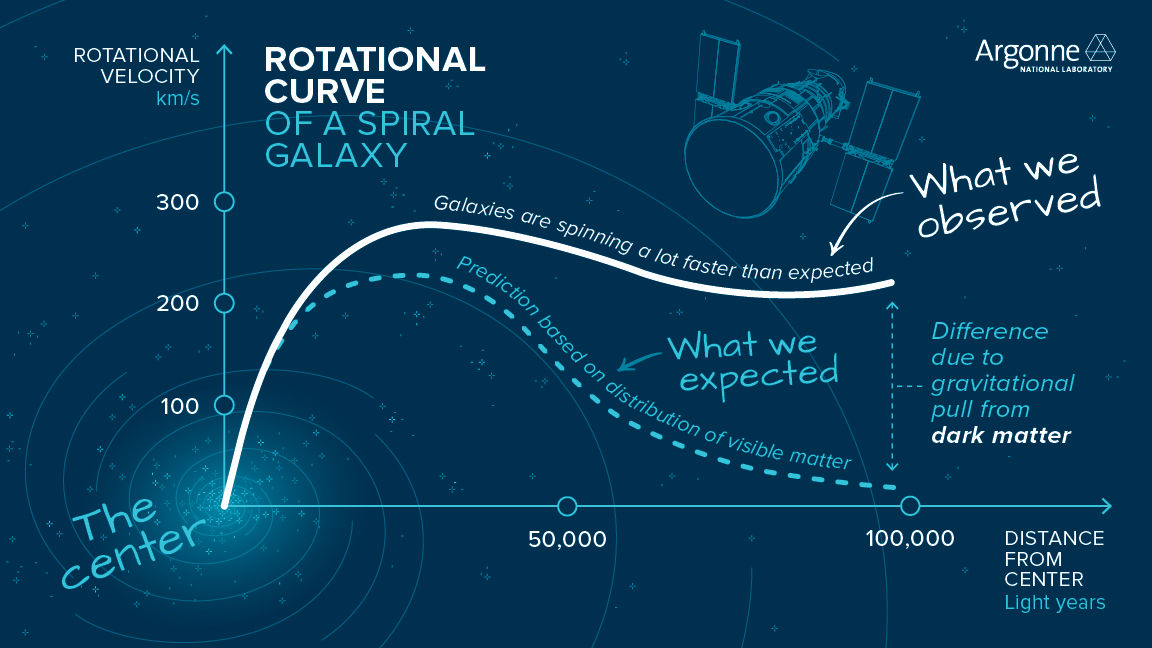
Scientists have found that many galaxy behaviors wouldn’t make sense without a large amount of invisible matter, or dark matter.

This dark matter has an extra gravitational pull.

Without it, some galaxies would break apart, and others wouldn't even exist.

Required
1.5

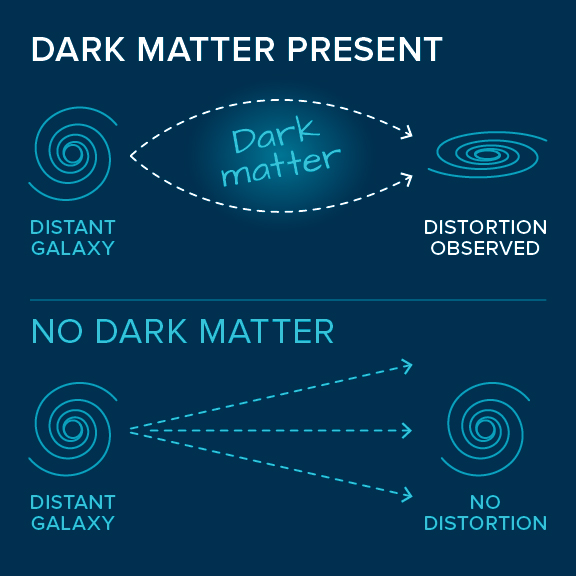
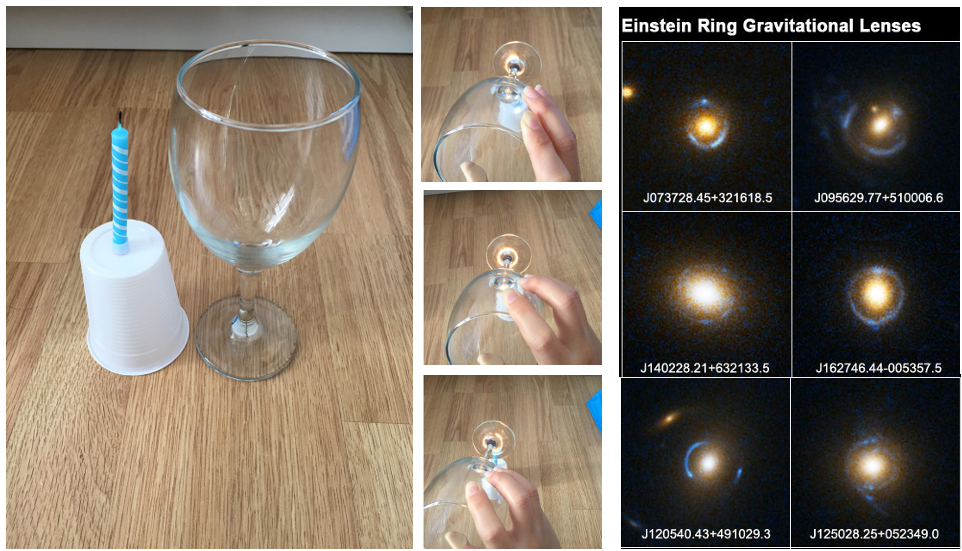
Dark matter can also bend light from faraway galaxies, making their images look distorted when they reach our telescopes.

This effect is called gravitational lensing, and it helps scientists know dark matter is there, even though we can’t see it directly.

We call it "dark" because it doesn’t emit or absorb light, and it only interacts with regular matter through gravity.

Required
1.5

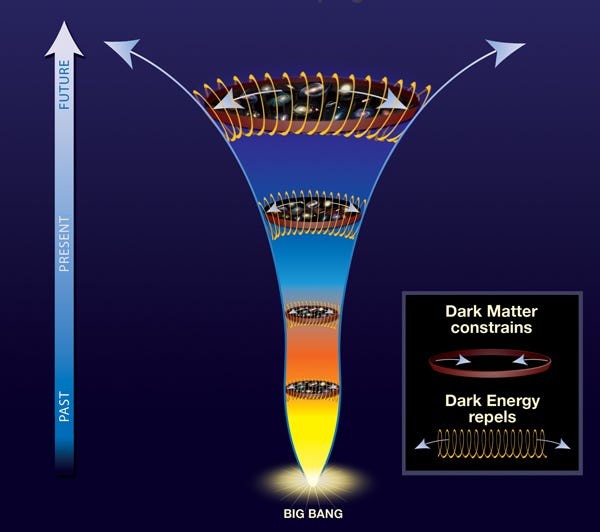
At the same time, something else is making the universe expand faster and faster. Since the universe began 13.8 billion years ago, it has been getting bigger.

Scientists thought this expansion would slow down over time, but instead, it has sped up since about five billion years ago. This mysterious force is called dark energy.


Required
1
HS-ESS1-2

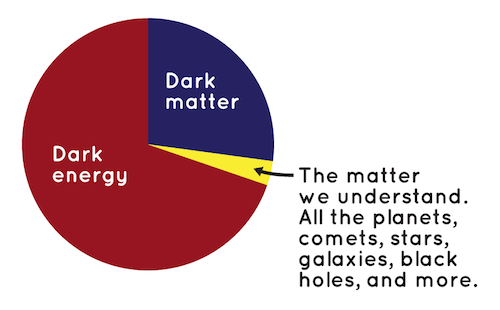
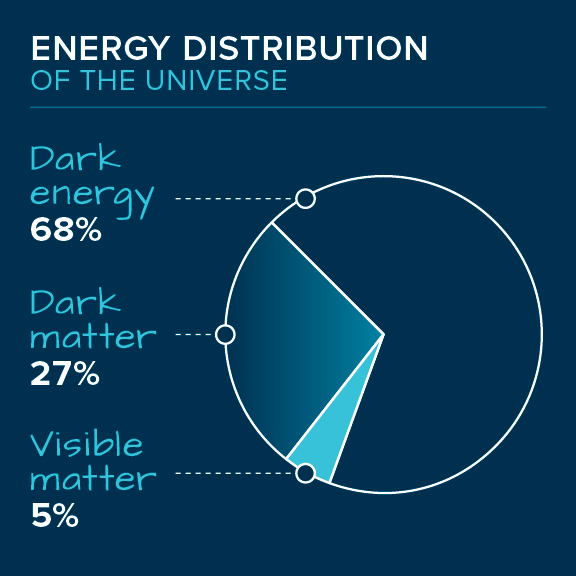
Visible matter, which includes everything we can see like stars and planets, makes up only about 5% of the universe. Dark matter and dark energy are believed to make up the other 27% and 68%, respectively.

This means that what we can see doesn’t even begin to explain most of the universe.

1
Question 7
00:21
keyboard_arrow_down
Required
1
Question 8
00:47
keyboard_arrow_down
Required
1
Question 9
01:19
keyboard_arrow_down
Required
1
Required
2
HS-ESS1-2
Question 11
11.


What do you think will happen to the universe in the future?

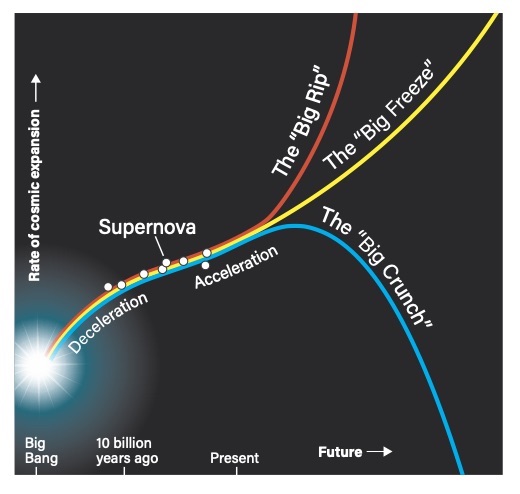
Scientists have proposed several theories about the ultimate fate of the universe.


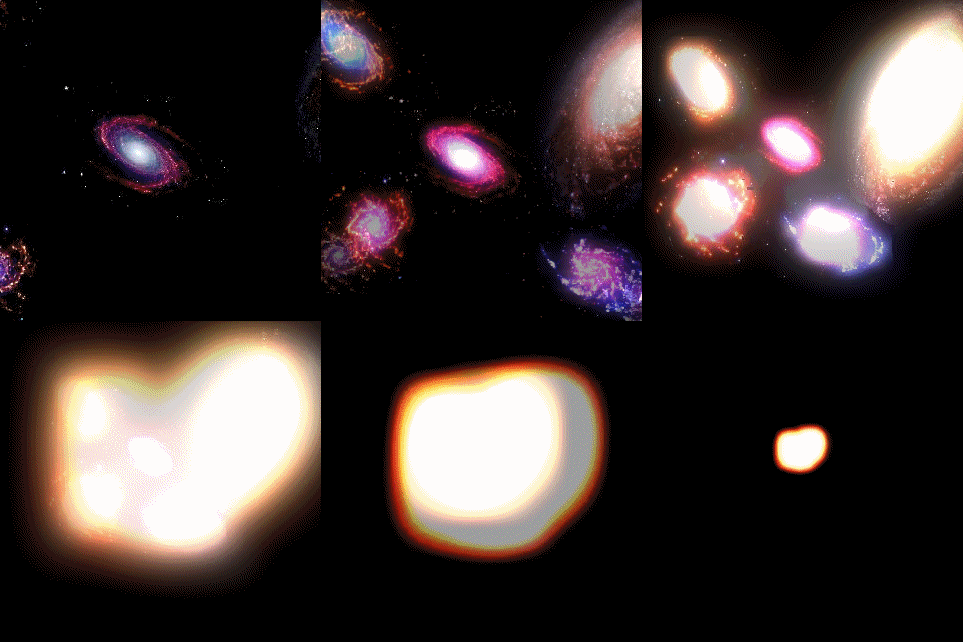
The Big Rip suggests that the universe's expansion will continue to accelerate, eventually tearing apart galaxies, stars, and even atoms.

The Big Freeze hypothesizes that the universe will keep expanding, leading to a gradual cooling and dimming as stars burn out, resulting in a dark, empty cosmos.

The Big Crunch presents a different scenario where the expansion of the universe slows down and reverses, causing everything to collapse back into a singularity, much like the conditions at the universe's beginning.

Lastly, the Big Bounce theory proposes that after the Big Crunch, the universe might not end but instead rebound, leading to a new cycle of expansion and contraction.

Question 12
12.

Draggable itemarrow_right_altCorresponding Item
arrow_right_alt
arrow_right_alt
arrow_right_alt
arrow_right_alt
Question 13
13.

Question 1
1.

Question 2
2.

Have you ever heard of dark matter or dark energy before? What do you think it is?

Question 3
3.

How is dark matter different from regular matter?

Question 4
4.

Why is it called "dark" matter?

Question 5
5.
Scientists suggest that dark energy is causing the universe to __________.
Question 6
6.

Question 7
7.

Draggable itemarrow_right_altCorresponding Item
arrow_right_alt
arrow_right_alt
arrow_right_alt
Question 8
8.

Question 9
9.

Question 10
10.

Draggable itemarrow_right_altCorresponding Item
arrow_right_alt
arrow_right_alt
arrow_right_alt
Match the theory to its description.
Big Crunch
Universe's expansion accelerates so reapidly that even atoms are torn apart
Big Rip
Universe will continue to expand forever, eventually becoming too cold to support life
Big Bounce
Universe will stop expanding and collapse back on itself due to gravity
Big Freeze
Combines elements of the Big Crunch and Big Bang, suggesting a cyclical universe
Make a prediction: which "end of the universe" theory do you think is most likely?
Big Rip
Big Freeze
Big Crunch
Big Bounce
no idea!
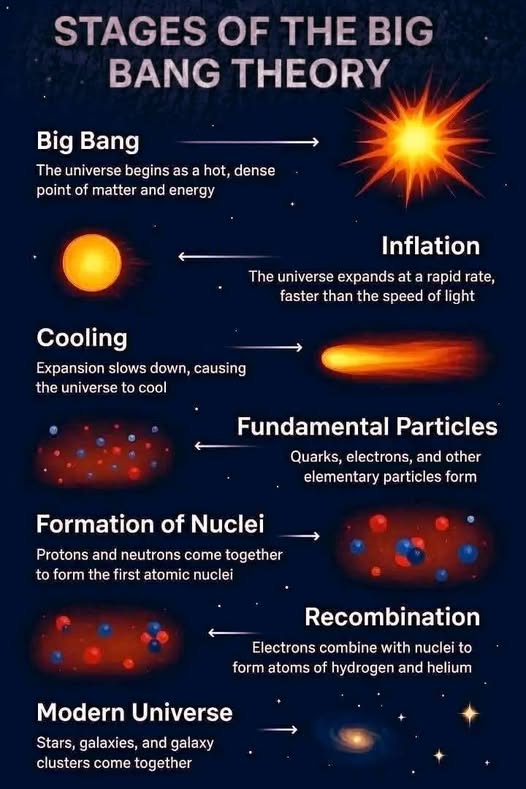
Place the stages of the Big Bang Theory in order starting from the beginning
First elements form (hydrogen & helium)
Fundamental (subatomic) particles form
Inflation & rapid expansion
Cooling & slowing expansion
Explosion or "big bang"
Subatomic particles form atomic nuclei
Modern universe
The photo shows two clear identical bottles containing the same number of beads.

How could you prove they are different without opening the bottles?
By comparing how they look
Weigh each bottle to see if there is any difference
Count the number of beads of each color
What do the bottles and the things inside the bottles represent?
Space inside the bottle
Visible matter
Beads
Boundary of the universe
Bottle
Non-visible matter
Describe the movement of the beads in the 2 bottles.
The beads move the same inside both bottles
The beads move differently in each bottle.
Why are the bottles masses different?
Each bottle contains different types of non-visible matter
One bottle has more visible matter
One bottle is bigger than the other
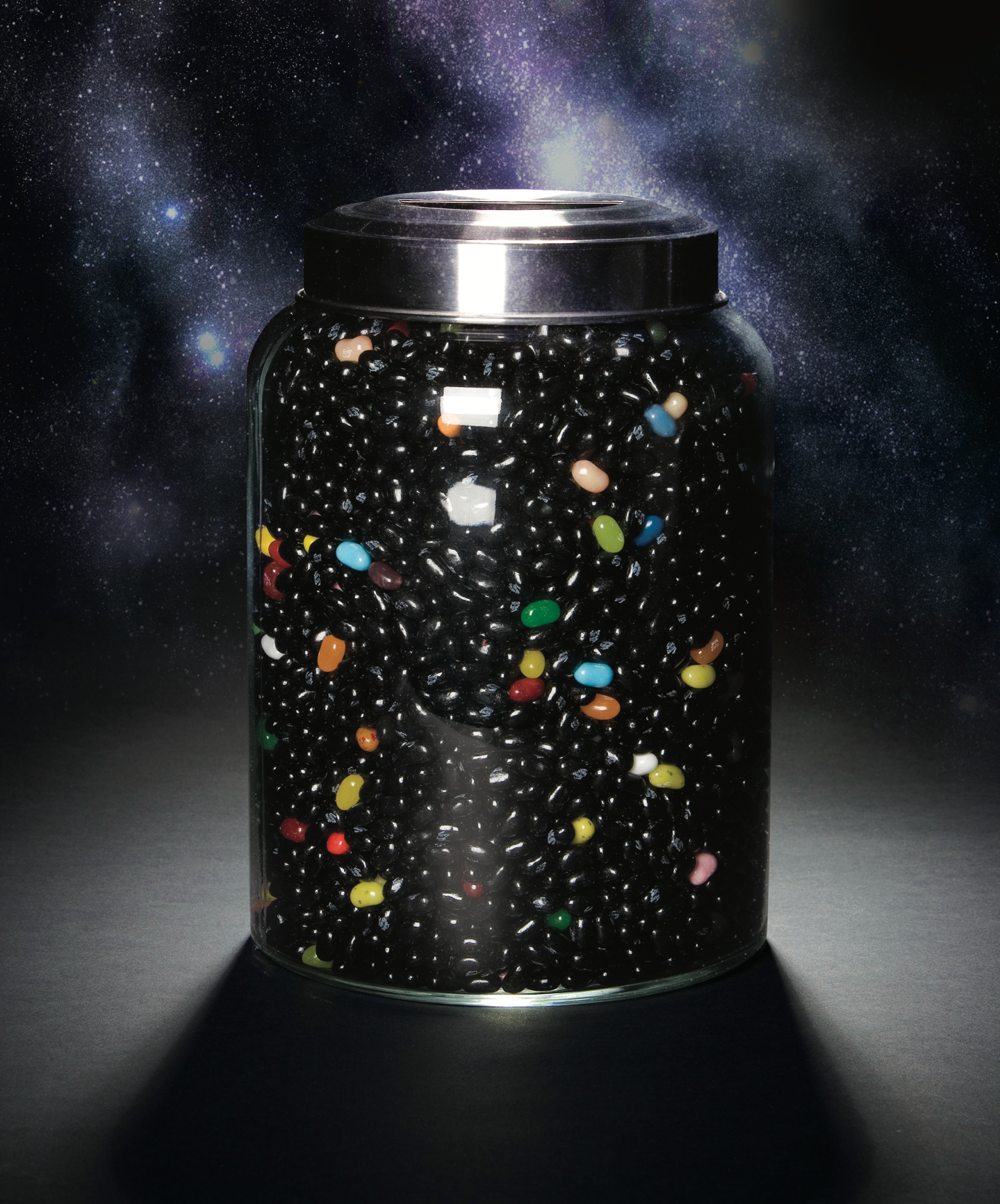
The image shows a jar containing jellybeans. How could this represent the makeup of the universe?
Colored jelly beans
Boundary of the universe
Black jelly beans
Visible matter (galaxies, stars, etc)
Jar
Non-visible matter (dark matter)