Twa kɔ nsɛm atitiriw so
Log in
Sign up for FREE
arrow_back
Laabri

2.03 Star Spectra Lab MOD

star
star
star
star
star
Last updated about 1 month ago
8 Nsɛmmisa
Hyɛ no nsow a efi ɔkyerɛwfo no hɔ:

If you need help, please watch the class recording (10/6/25). **The recording shows the regular version of this assignment

If you need help, please watch the class recording (10/6/25). **The recording shows the regular version of this assignment

Ɛhia
1
Ɛhia
4
HS-ESS1-3
Ɛhia
0
HS-ESS1-3
Ɛhia
4
HS-ESS1-3
Ɛhia
0
HS-ESS1-3
Ɛhia
4
HS-ESS1-3
Ɛhia
1
Ɛhia
6
HS-ESS1-3
Asemmisa {{asɛmmisaAhyɛnsode}}
1.

When light goes through a prism, it separates into many colors. This band of colors is called a spectrum. A rainbow is an example of a spectrum: red, orange, yellow, green, blue, violet.

The interior of a star produces a continuous spectrum of light, like a rainbow. Cooler gases in the outer layers of the star absorb certain wavelengths of light, causing dark lines to appear in the spectrum.

The resulting absorption spectrum can tell astronomers a great deal about the star. It's like a finger print or bar code that tells information about the star's color, composition, and surface temperature.

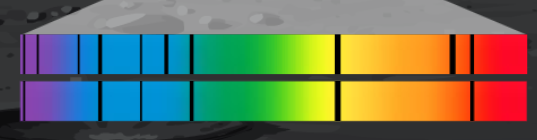
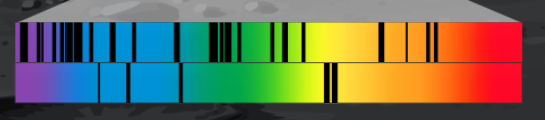
Look at Star 1's absorption spectrum:
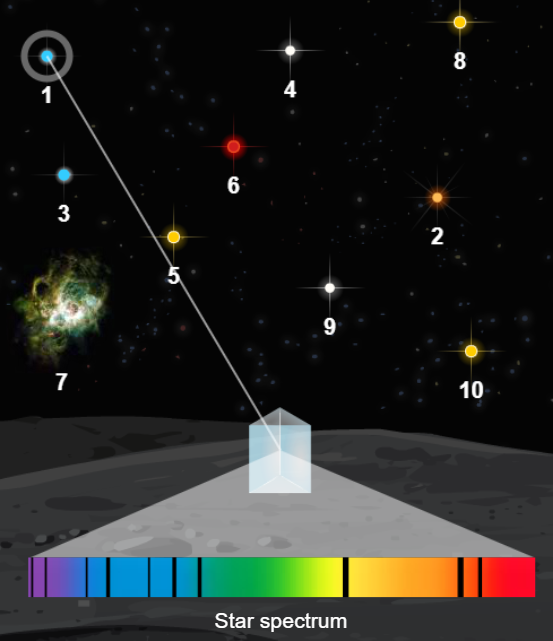
How many lines do you see in the spectrum?
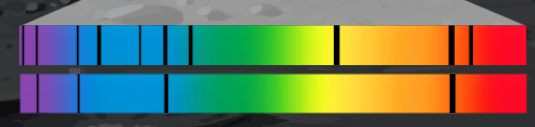
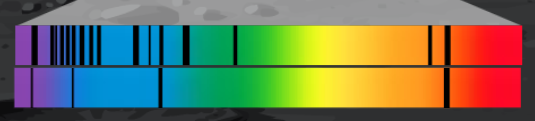
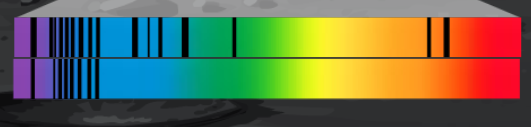
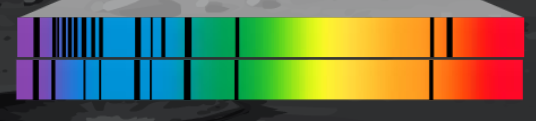
Compare the neutral Helium spectrum (bottom) to the Star spectrum. Do some lines match?

Late in the 19th century, Harvard astronomer Edward Pickering wanted to sort and catalog the thousands of star spectra that had been collected by the Harvard Observatory. He hired several women to do the work, paying them 25 cents a day. The most prominent of these women was Annie Jump Cannon, who devised a classification system still used today.

Watch the video to learn more about Jump Cannon's work and how star spectra is used to classify stars.

Asemmisa {{asɛmmisaAhyɛnsode}}
2.

Question: How are stars classified?

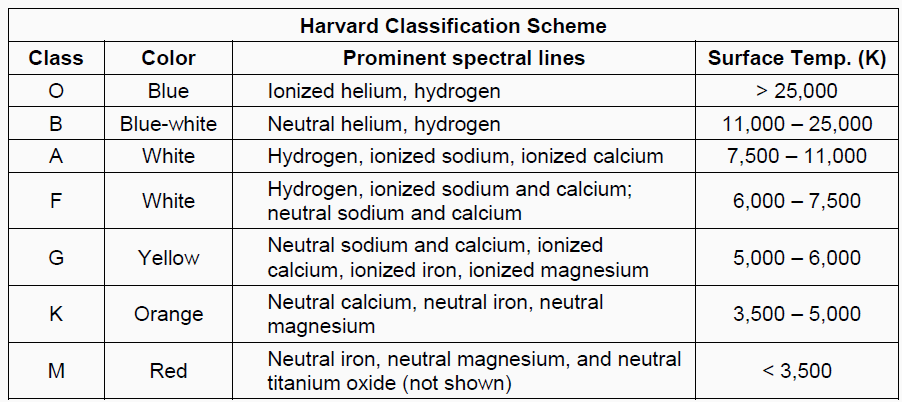
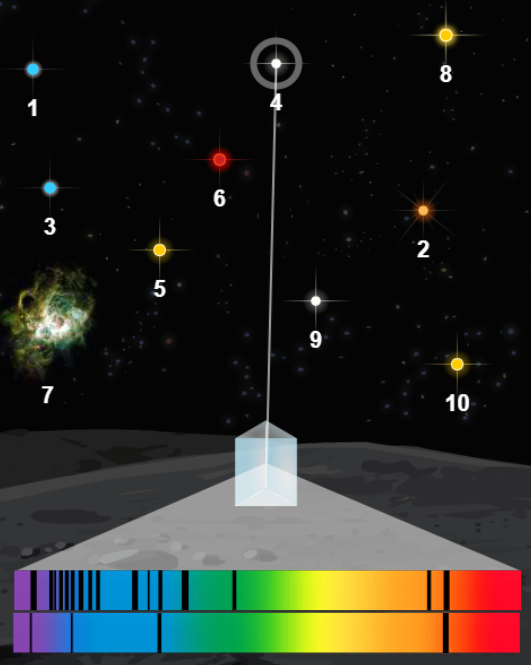
Use the elements you determined in Star 1's spectrum to classify it.

Hint: Look at the color of the star in the gizmo to help narrow down the possibilities so you know which spectra to test. For example, if a star appears white, look for whether the spectral lines match Class A or Class F.

Color:

Class:

Asemmisa {{asɛmmisaAhyɛnsode}}
4.

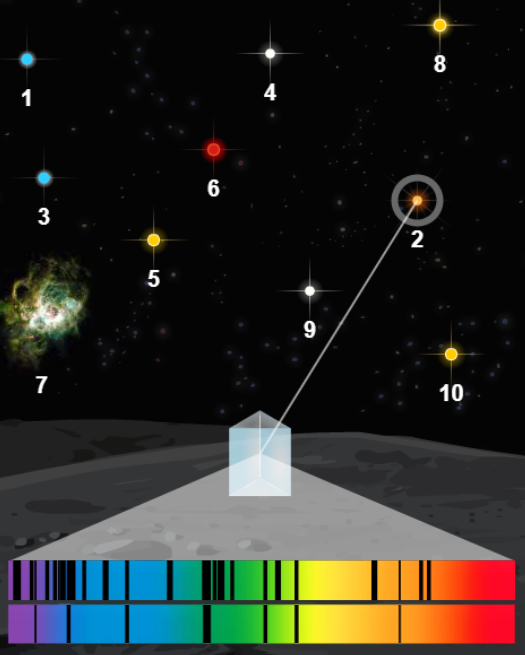
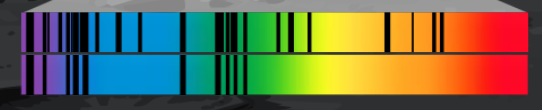
Use the elements you determined in Star 2's spectrum to classify it.

Color:

Class:

Asemmisa {{asɛmmisaAhyɛnsode}}
6.

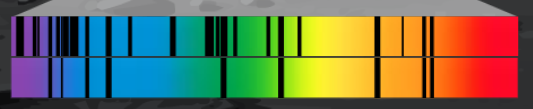
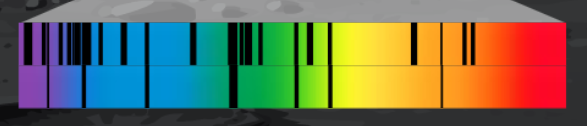
Use the elements you determined in Star 4's spectrum to classify it.

Color:

Class:

Asemmisa {{asɛmmisaAhyɛnsode}}
8.

A star's color is determined by its

What color stars are the coolest?