Twa kɔ nsɛm atitiriw so
Log in
Sign up for FREE
arrow_back
Laabri

3.04 Galactic Neighbors

star
star
star
star
star
Last updated about 1 month ago
19 Nsɛmmisa
Ɛhia
0
Ɛhia
1
Ɛhia
1
Ɛhia
1
Ɛhia
1
Ɛhia
1
Ɛhia
0
Asemmisa {{asɛmmisaAhyɛnsode}}
1.

Think about it: If the universe is expanding, all galaxies must be moving away from one another.

Asemmisa {{asɛmmisaAhyɛnsode}}
2.

Galaxy groups and clusters are groups of galaxies that stick together because their gravitational attraction outweighs the expansion of the universe on a "small" scale. A galaxy group has a few to dozens of galaxies that move slowly around each other over many millions of years.

Bigger than groups, galaxy clusters have hundreds or even thousands of galaxies packed closer together. Learning about these groups and clusters helps us understand how galaxies move, grow, and change in space.

We are in "the Local Group," a small group of galaxies that includes around 50 galaxies, many of them small "dwarf" galaxies. They are all held together by gravity and slowly move around each other. The Local Group is part of a much larger universe full of galaxy groups and clusters.
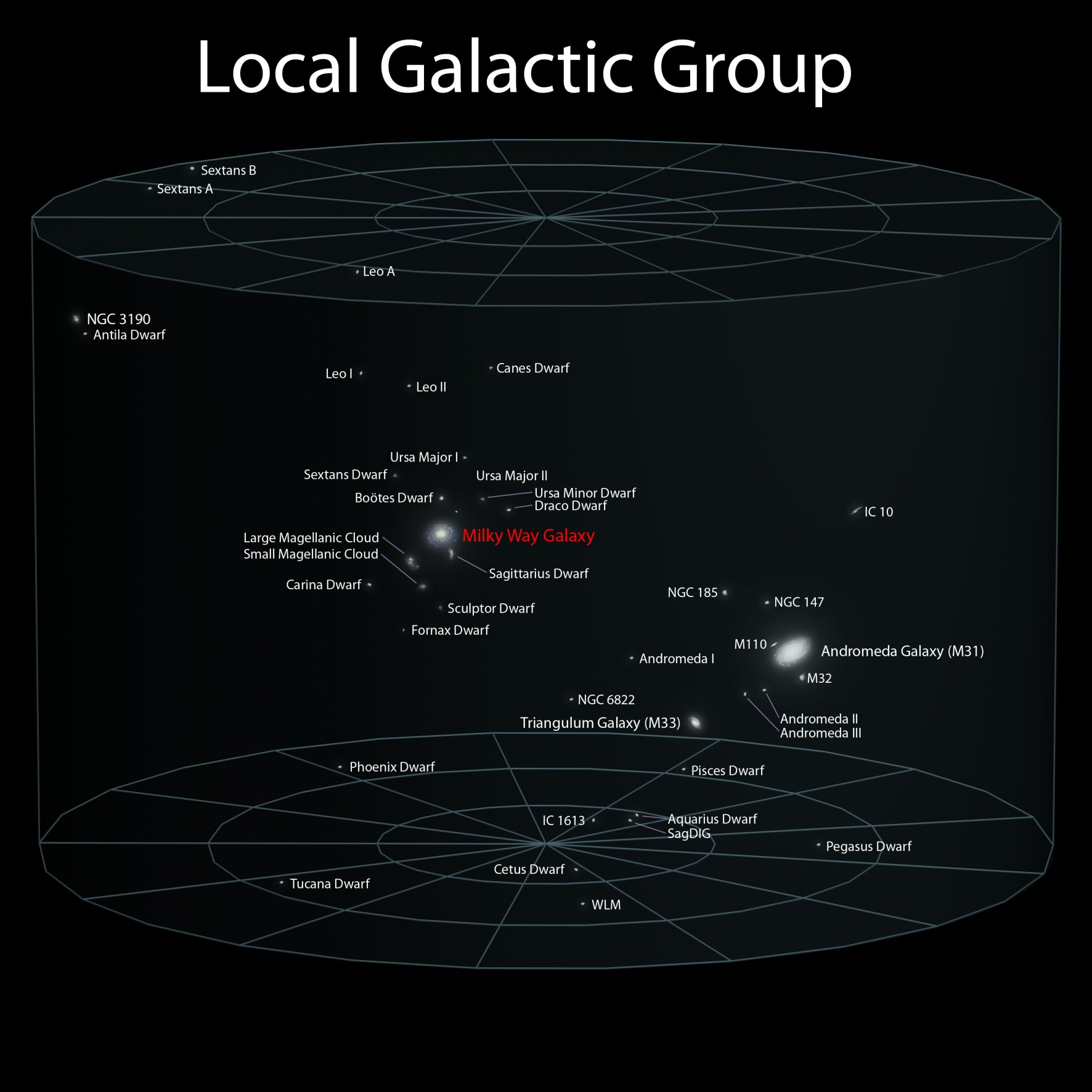
What are the 2 largest galaxies in the Local Group?
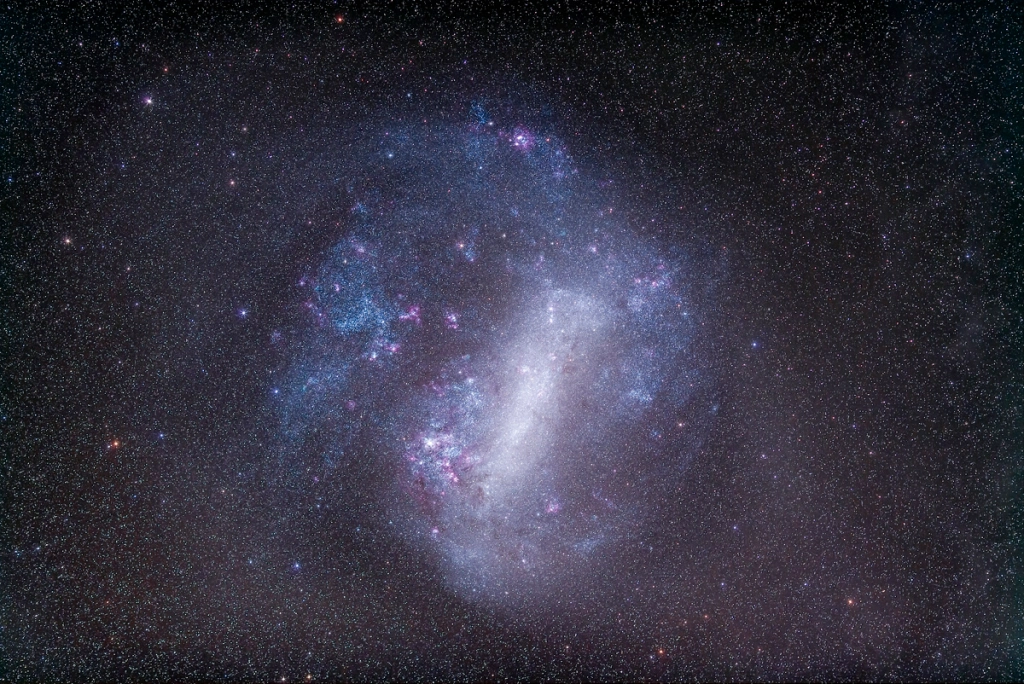
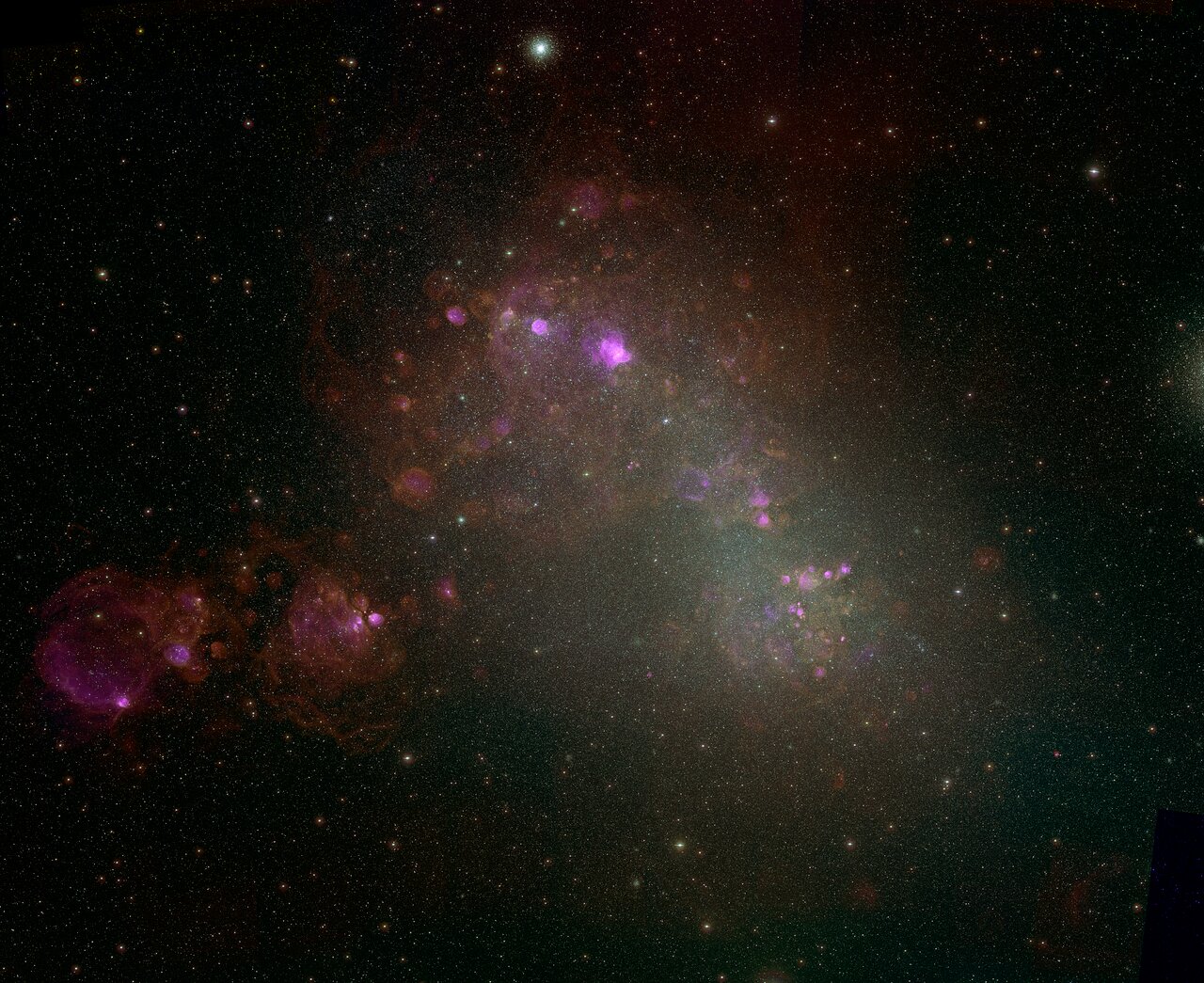
The Milky Way's closest neighbors are the Large and Small Magellanic Clouds. They are slowly orbiting the Milky Way and may be "sucked up" into our galaxy eventually.

Large Magellanic Cloud

Small Magellanic Cloud

Ɛhia
1
Asemmisa {{asɛmmisaAhyɛnsode}}
3.

How would you classify the Magellanic Clouds?

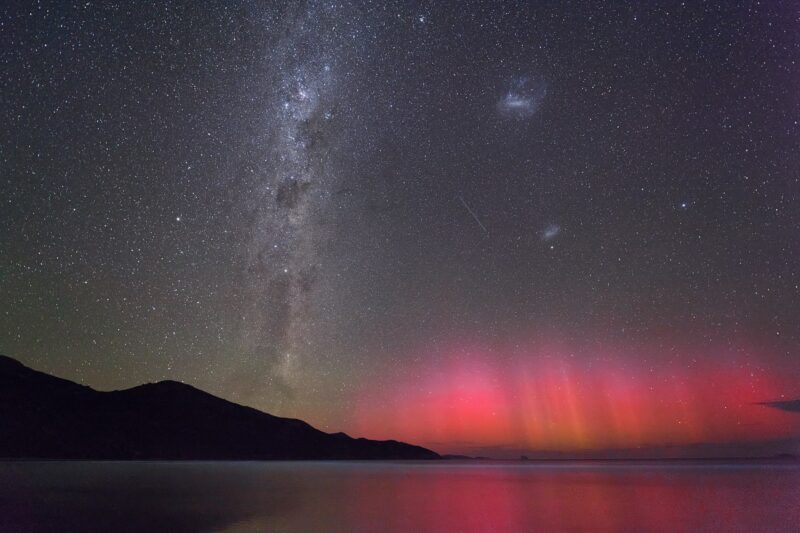
The Large and Small Magellanic Clouds are visible to the unaided eye, and both have been known for centuries by viewers of the Southern Hemisphere sky.

This image shows the aurora australis (southern lights), the Orion arm of the Milky Way Galaxy, and the Large and Small Magellanic Arms.
Their names come from the explorer Ferdinand Magellan, a colonizer and perpertrator of violence against indigenous peoples. A coalition of astronomers are calling for the scientific community to rename these galaxies

Ɛhia
0
Asemmisa {{asɛmmisaAhyɛnsode}}
4.

What would you re-name the Magellanic Clouds?

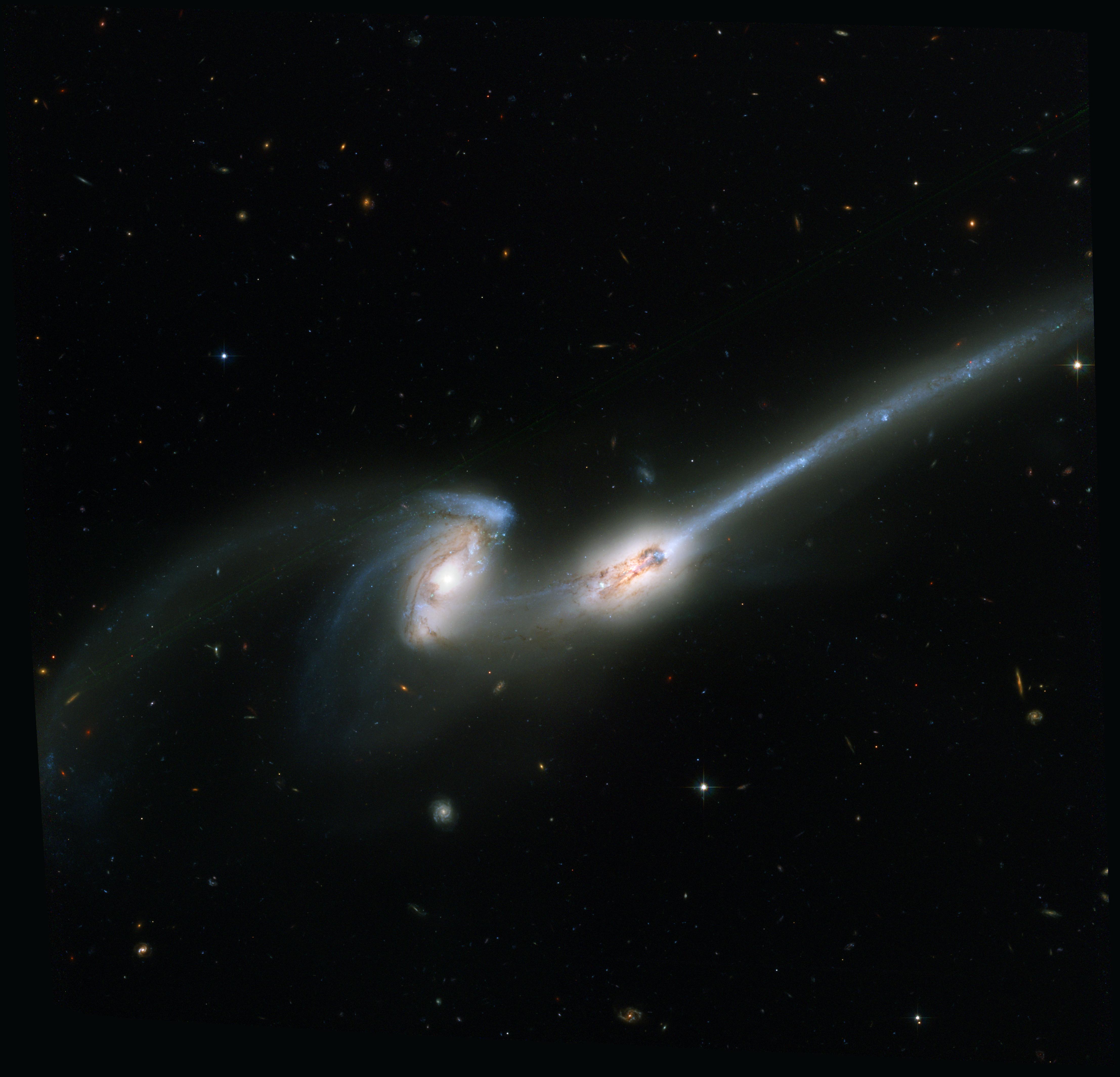
This colliding pair of spiral galaxies is known as "The Mice" because of the long tails of stars and gas coming off them. Otherwise known as NGC 4676, they will eventually merge into a single giant galaxy.

Ɛhia
0
Asemmisa {{asɛmmisaAhyɛnsode}}
5.

What do you think happens when two galaxies collide?

Question 6
00:31
keyboard_arrow_down
Ɛhia
1
Question 7
00:52
keyboard_arrow_down
Ɛhia
1
Question 8
02:47
keyboard_arrow_down
Ɛhia
1
Question 9
03:19
keyboard_arrow_down
Ɛhia
1

These images show 6 different snapshots of galaxies at different stages of merging. It takes hundreds of millions of years for one merger to complete, so the individual stages are illustrated with different images. Click on the buttons to learn about each stage.

Asemmisa {{asɛmmisaAhyɛnsode}}
10.

What do tidal tails indicate about galaxies?

Asemmisa {{asɛmmisaAhyɛnsode}}
11.

How can astronomers tell where new star formation is happening in interacting galaxies?

Asemmisa {{asɛmmisaAhyɛnsode}}
12.

What is a visible effect of massive galaxy interactions?

Asemmisa {{asɛmmisaAhyɛnsode}}
13.

Which of the following is going through "galactic cannibalism" or galaxy mergers?

Use the website Interacting Galaxies: Future of the Milky Way to help answer these questions. Use the timeline scroll bar to see the changes.

Ɛhia
1
Asemmisa {{asɛmmisaAhyɛnsode}}
14.

Which galaxy is moving towards the Milky Way?

HS-ESS1-2
Ɛhia
1
HS-ESS1-2
Question 16
00:27
keyboard_arrow_down
Ɛhia
1
Question 17
00:37
keyboard_arrow_down
Ɛhia
1
Question 18
00:59
keyboard_arrow_down
Ɛhia
1
Asemmisa {{asɛmmisaAhyɛnsode}}
19.

Optional: Use the Hearing Hubble app to represent galaxies' brightness and color using sound.

Through a process called sonification, scientists assign sounds to different elements of an image – like color and brightness. While this isn’t what space actually sounds like, a musical representation of an image’s information offers a new way to understand and interpret data.

Click the "Share" button and copy and paste the link to your creation here:

Asemmisa {{asɛmmisaAhyɛnsode}}
6.

What surprising finding did the Hubble Space Telescope reveal about galaxies?

Asemmisa {{asɛmmisaAhyɛnsode}}
7.

How are galaxies able to merge despite the expanding universe?

Asemmisa {{asɛmmisaAhyɛnsode}}
8.

What are signs of galaxies merging?

Asemmisa {{asɛmmisaAhyɛnsode}}
9.

How long can galaxy mergers take?

Asemmisa {{asɛmmisaAhyɛnsode}}
15.

What will be formed once the 2 galaxies merge?

Asemmisa {{asɛmmisaAhyɛnsode}}
16.

When are the Milky Way and Andromeda galaxies expected to collide?

Asemmisa {{asɛmmisaAhyɛnsode}}
17.

What will be produced by the Milky Way-Andromeda collision?

Asemmisa {{asɛmmisaAhyɛnsode}}
18.

Why won't stars collide during the merger?