Twa kɔ nsɛm atitiriw so
Log in
Sign up for FREE
arrow_back
Laabri

Interstellar Inquiry #07: Solar System Kaylen 25-26

star
star
star
star
star
Last updated about 1 month ago
13 Nsɛmmisa
Hyɛ no nsow a efi ɔkyerɛwfo no hɔ:

If you need help with this assignment, please watch the class recording

If you need help with this assignment, please watch the class recording

Ɛhia
0
Ɛhia
0.5
Ɛhia
0.5
Ɛhia
1
Ɛhia
1.5
Ɛhia
1
Ɛhia
0.5
Ɛhia
1
Ɛhia
1
Ɛhia
0.5
Ɛhia
0.5
Ɛhia
1

Just for fun!

Asemmisa {{asɛmmisaAhyɛnsode}}
1.

Before we jump into Unit 4, please rate yourself on the Unit 4 objectives from 1 (just starting) to 5 (mastered it!)

You may need to scroll horizontally to see all options

1 - getting started

2

3

4

5 - mastered it

Analyze the components of the solar system, exploring their formation processes and interrelationships.

Evaluate and compare the historical theories of geocentrism and heliocentrism, assessing their impact on our understanding of the universe.

Apply and interpret Kepler's three laws of planetary motion in real-world scenarios.

Differentiate between asteroids, meteroids, meteors, meteorites, and comets.

Investigate the Earth and Moon's formation and early history

Asemmisa {{asɛmmisaAhyɛnsode}}
2.

We will be using the Solar System Explorer website.

Notice the zoom (scroll in or out) and pan (click & drag) controls. You may need to adjust your view at times.

You will be the following data: size (radius), mass, structure, average orbital distance from the Sun, and length of year.

You may want to click on an object and complete #1, 2, 4, & 6 for that planet before continuing on to the next planet.

Average orbital distance from the Sun (AU)

Mercury

Venus

Earth

Mars

Jupiter

Saturn

Uranus

Neptune

Asemmisa {{asɛmmisaAhyɛnsode}}
3.

Size (Earth radii)

Mercury

Venus

Earth

Mars

Jupiter

Saturn

Uranus

Neptune

Asemmisa {{asɛmmisaAhyɛnsode}}
4.

What is the relationship between a planet’s distance from the Sun and the size of that planet? Support your answer with evidence.

Asemmisa {{asɛmmisaAhyɛnsode}}
5.

Structure (rocky or gaseous)

Mercury

Venus

Earth

Mars

Jupiter

Saturn

Uranus

Neptune

Asemmisa {{asɛmmisaAhyɛnsode}}
6.

What is the relationship between an object’s size and whether its composition is gaseous? Support your answer with evidence.

Asemmisa {{asɛmmisaAhyɛnsode}}
7.

Length of year (Earth years)

Mercury

Venus

Earth

Mars

Jupiter

Saturn

Uranus

Neptune

Asemmisa {{asɛmmisaAhyɛnsode}}
8.

What is the relationship between a planet’s distance from the Sun and the length of a year (the orbital period) on that planet? Support your answer with evidence.

Asemmisa {{asɛmmisaAhyɛnsode}}
9.

Use the controls to increase the time rate.
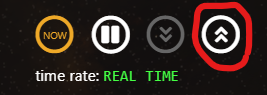
What patterns do you notice about the orbits and rotation of the planets? Support your answer with evidence.

Asemmisa {{asɛmmisaAhyɛnsode}}
10.

Match the planet to its unique characteristic

Draggable itemarrow_right_altCorresponding Item

Venus

arrow_right_alt

One day lasts almost 2 Earth months

Earth

arrow_right_alt

Spins in opposite direction from other planets

Mars

arrow_right_alt

Only planet to have confirmed plate tectonics

Mercury

arrow_right_alt

Home of Olympus Mons, the largest volcano in the solar system

Asemmisa {{asɛmmisaAhyɛnsode}}
11.

Match the planet to its unique characteristic

Draggable itemarrow_right_altCorresponding Item

Uranus

arrow_right_alt

Great Red Spot is a huge storm that has lasted over 100 years

Neptune

arrow_right_alt

Rings are 400,000 km wide but as thin as a few meters in some places

Saturn

arrow_right_alt

Rotates on its side

Jupiter

arrow_right_alt

Sometimes Pluto is closer to the Sun than this planet

Asemmisa {{asɛmmisaAhyɛnsode}}
12.

Choose any object in the solar system and share a cool fact about it (that hasn't been shared above).

Question 13
08:30
keyboard_arrow_down
1
Asemmisa {{asɛmmisaAhyɛnsode}}
13.

Should Pluto be considered a planet? Why or why not?