
How did the Earth get its moon?
There are no right or wrong answers-- I just want to know what you think!
How did the Earth get its moon?
There are no right or wrong answers-- I just want to know what you think!
How did the Earth get its moon?
There are no right or wrong answers-- I just want to know what you think!
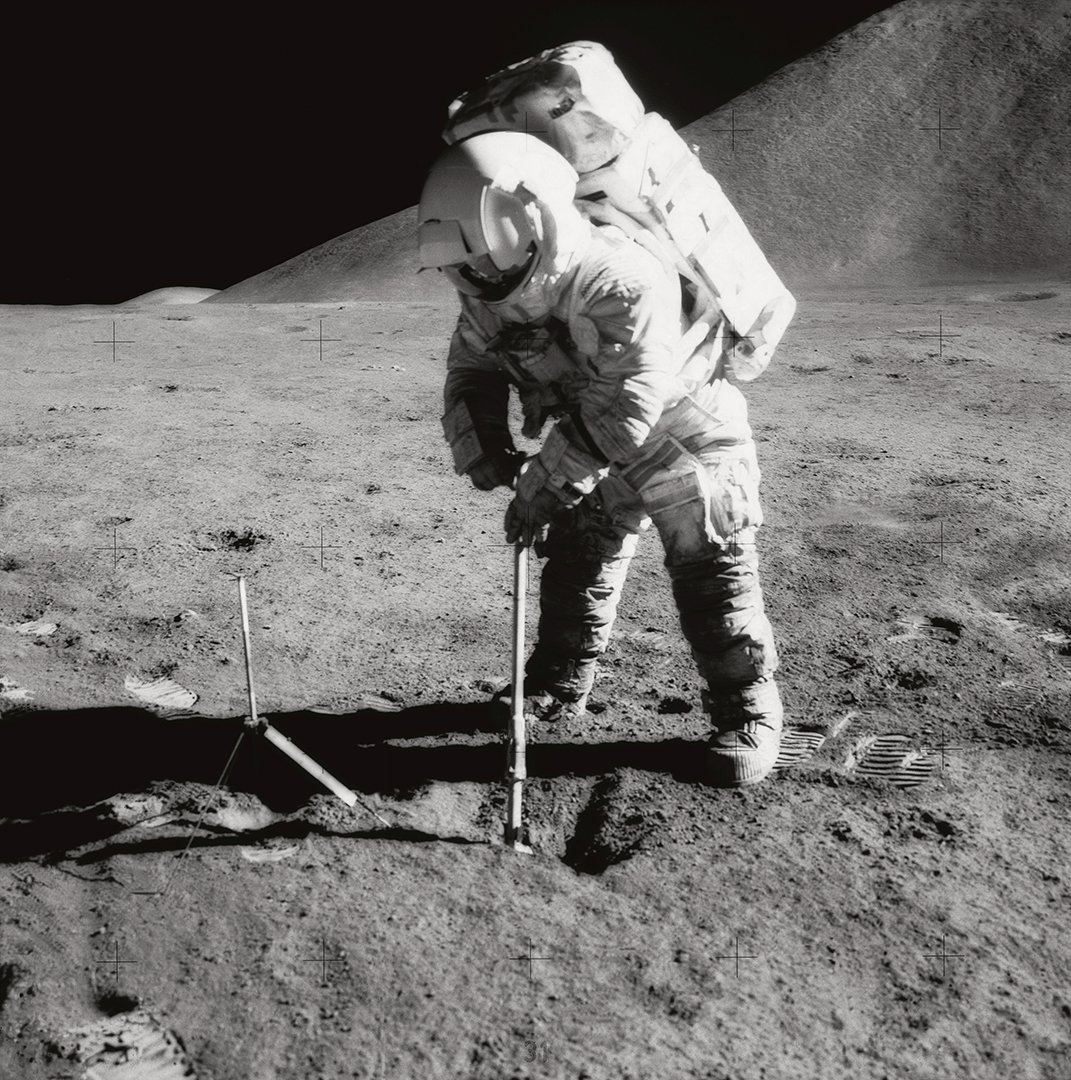
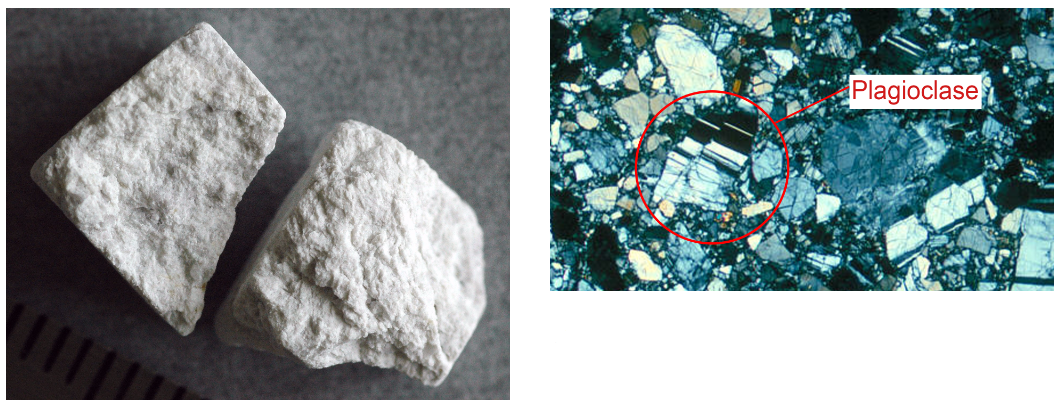
During the Apollo missions, astronauts gathered rock samples from different places on the Moon's surface, especially from the lunar highlands, which are the lighter areas visible from Earth. Anorthosite, the rock that makes up these highlands, is an igneous rock primarily made of plagioclase, a mineral formed from light elements.
Research on Earth shows that plagioclase crystals rise through magma as it cools, creating the crust, suggesting the Moon had a "global magma ocean" shortly after it was formed.
The images provided show a sample of anorthosite from the lunar highlands and a thin section of this sample under polarized light, where the distinctive striping of the plagioclase crystal can be observed.
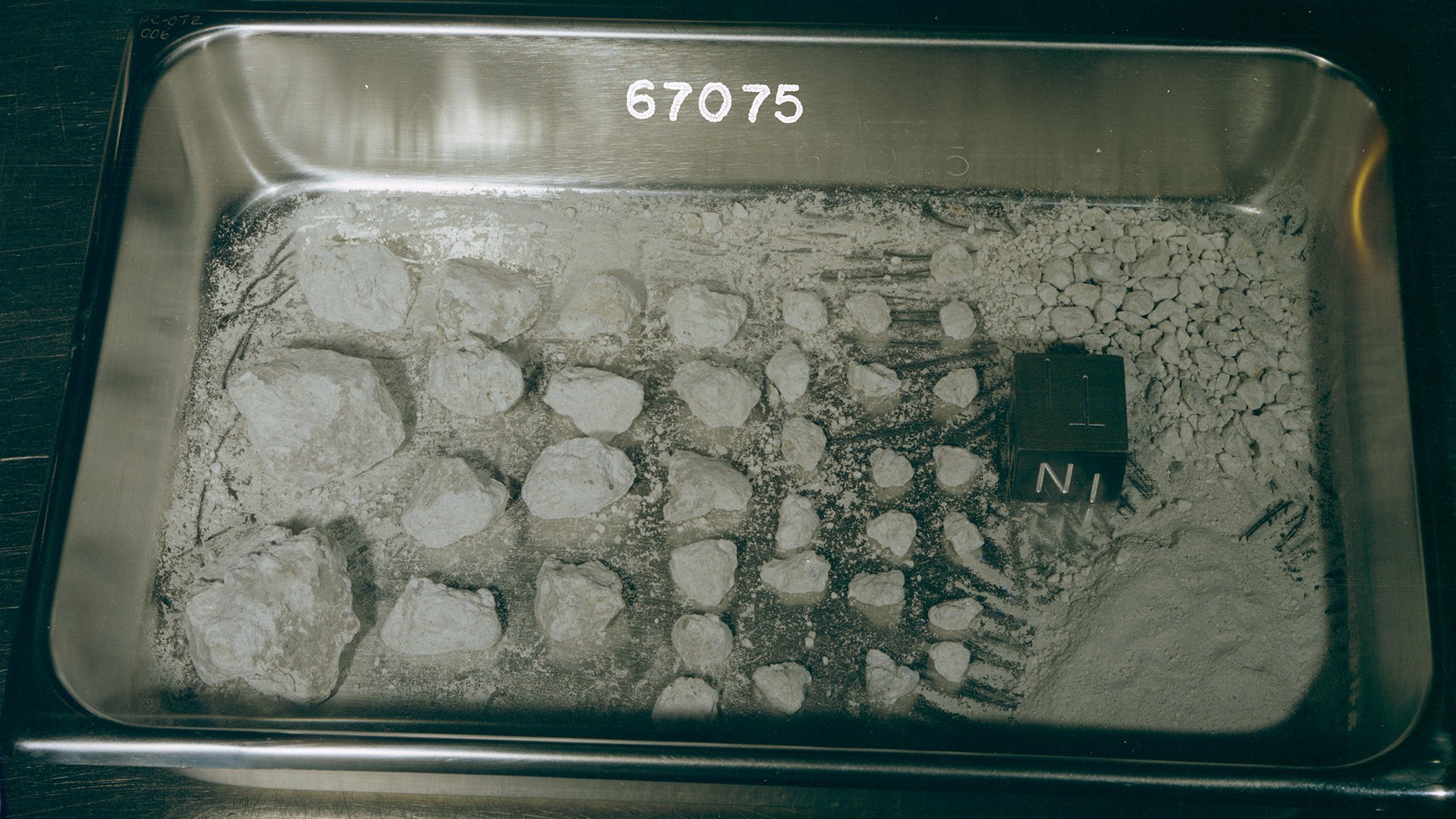
Radiometric dating of Apollo rock samples has yielded ages of up to about 4.5 billion years old. For example, the anorthosite sample shown here was determined to be 4.47±0.07 billion years old, based on the radioactive decay of samarium into neodymium (both rare earth elements).
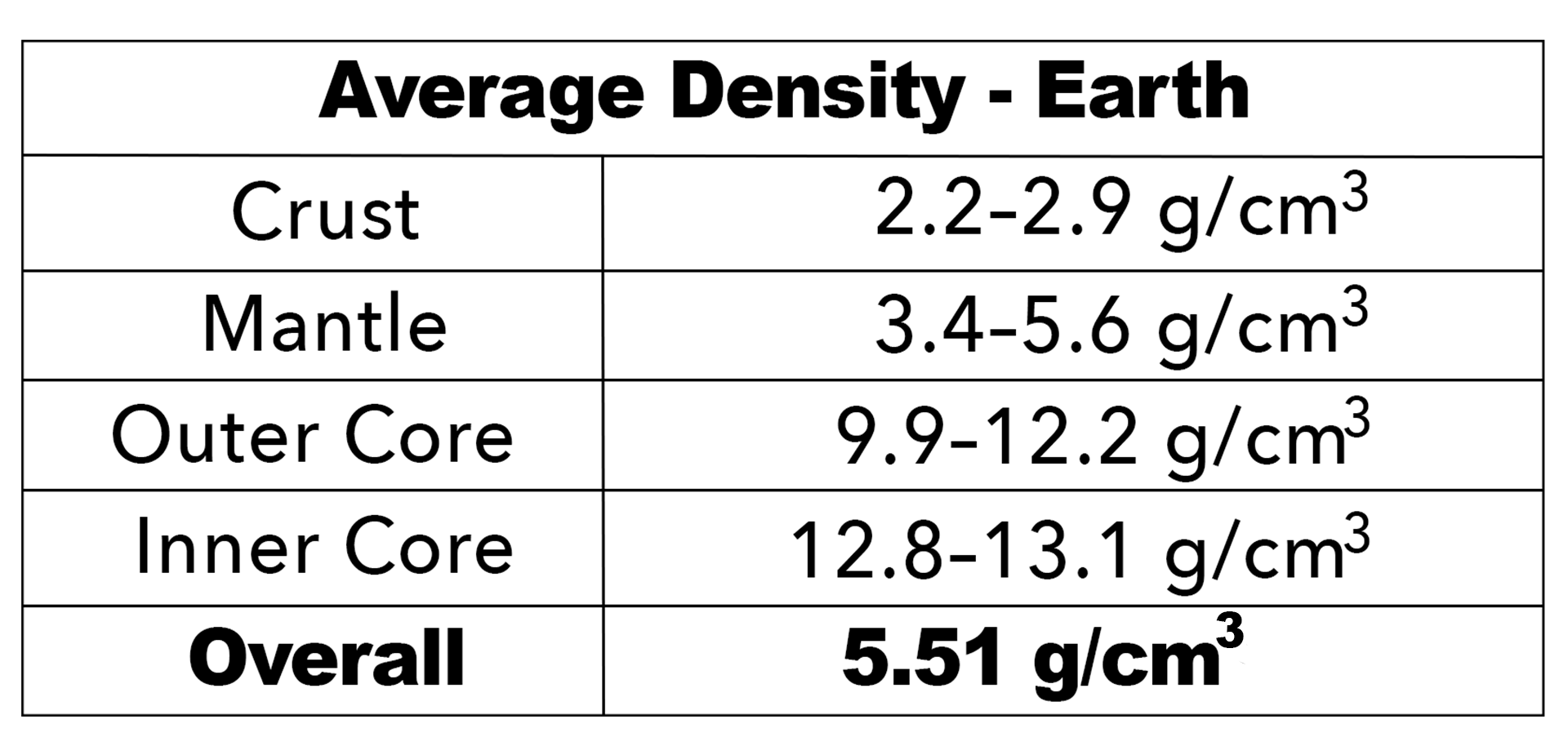
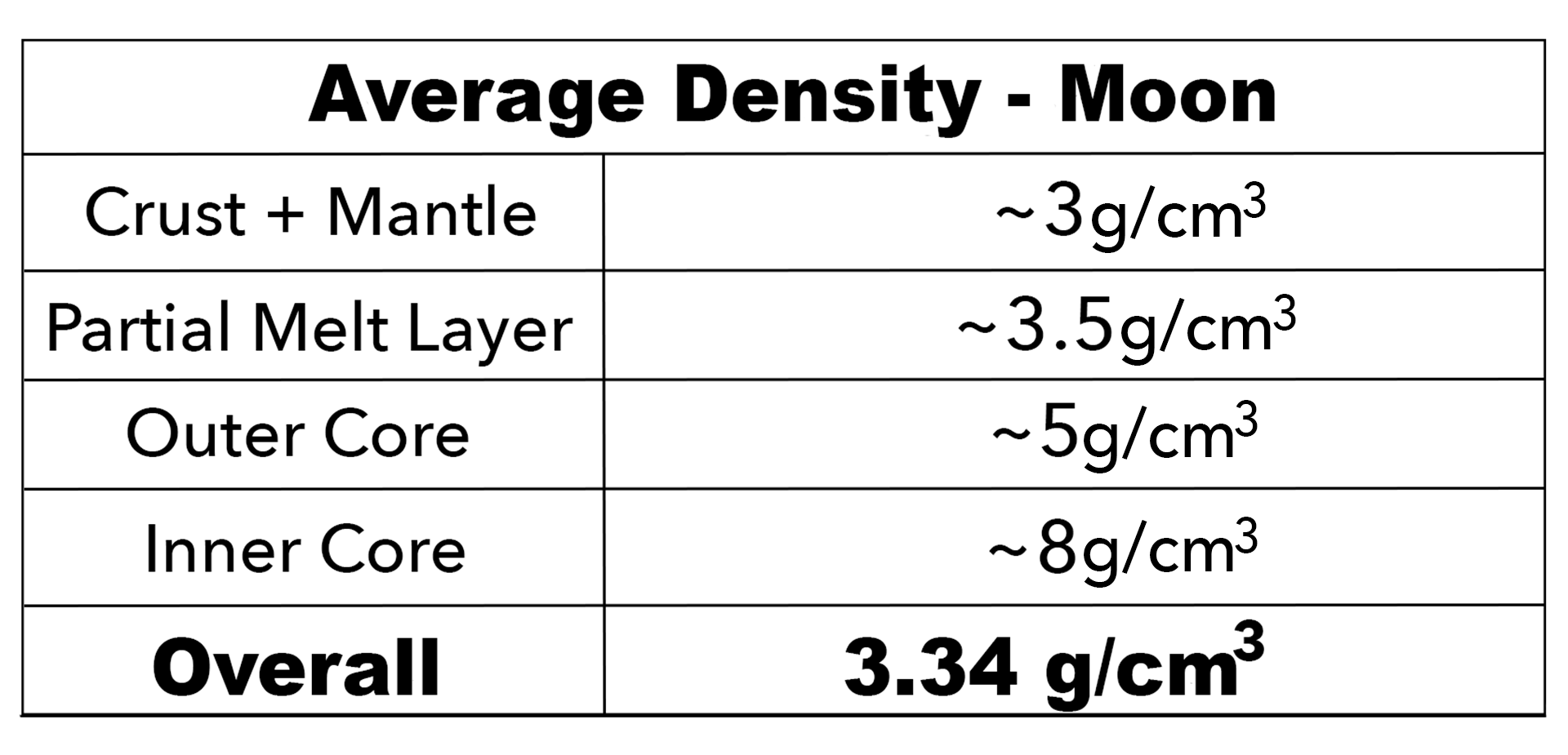
The figures show the internal structures of the Earth and the Moon today. Earth’s core is about 30 percent of its mass, while the Moon’s core is only about 1 to 2 percent of its mass.
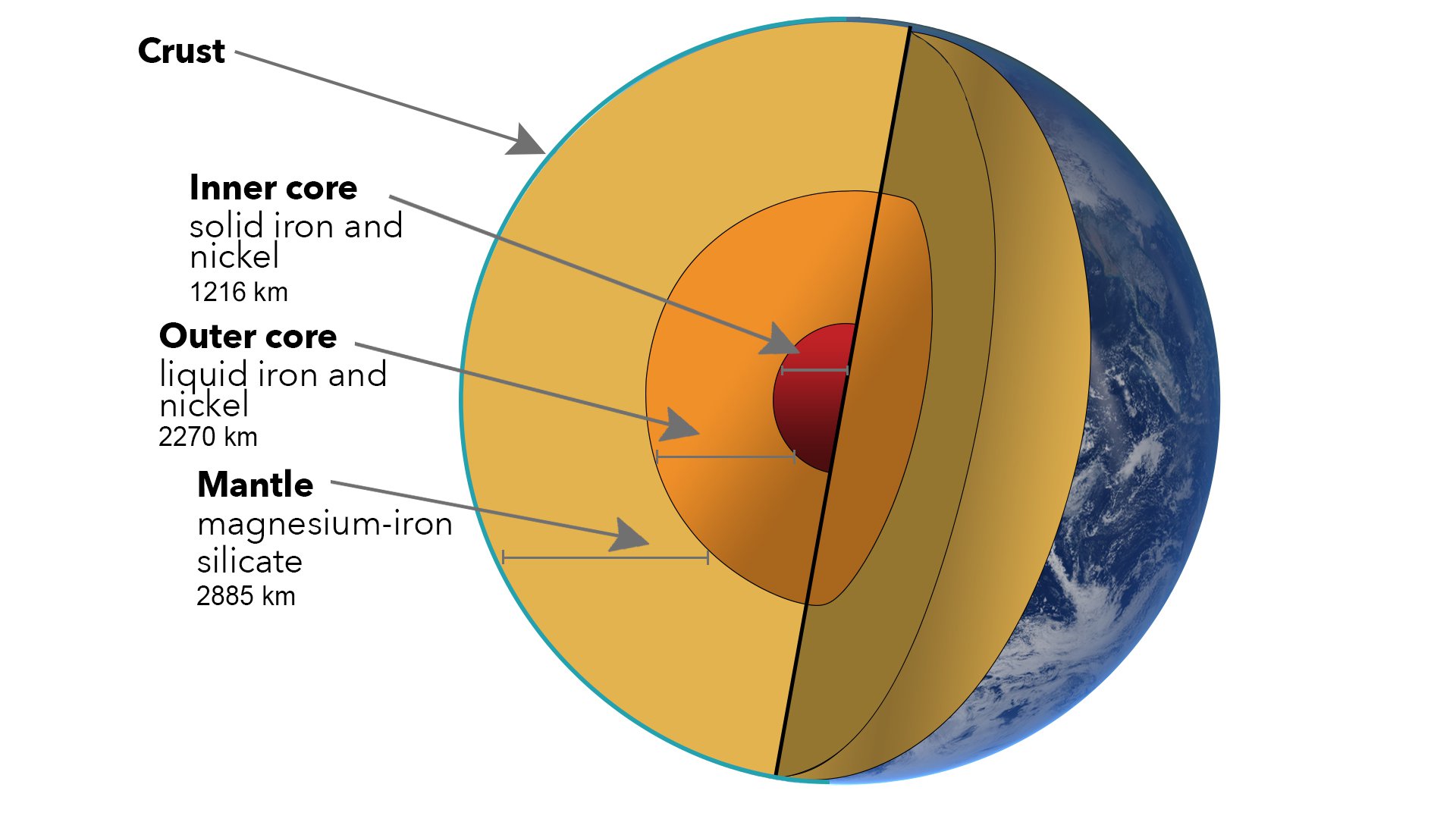
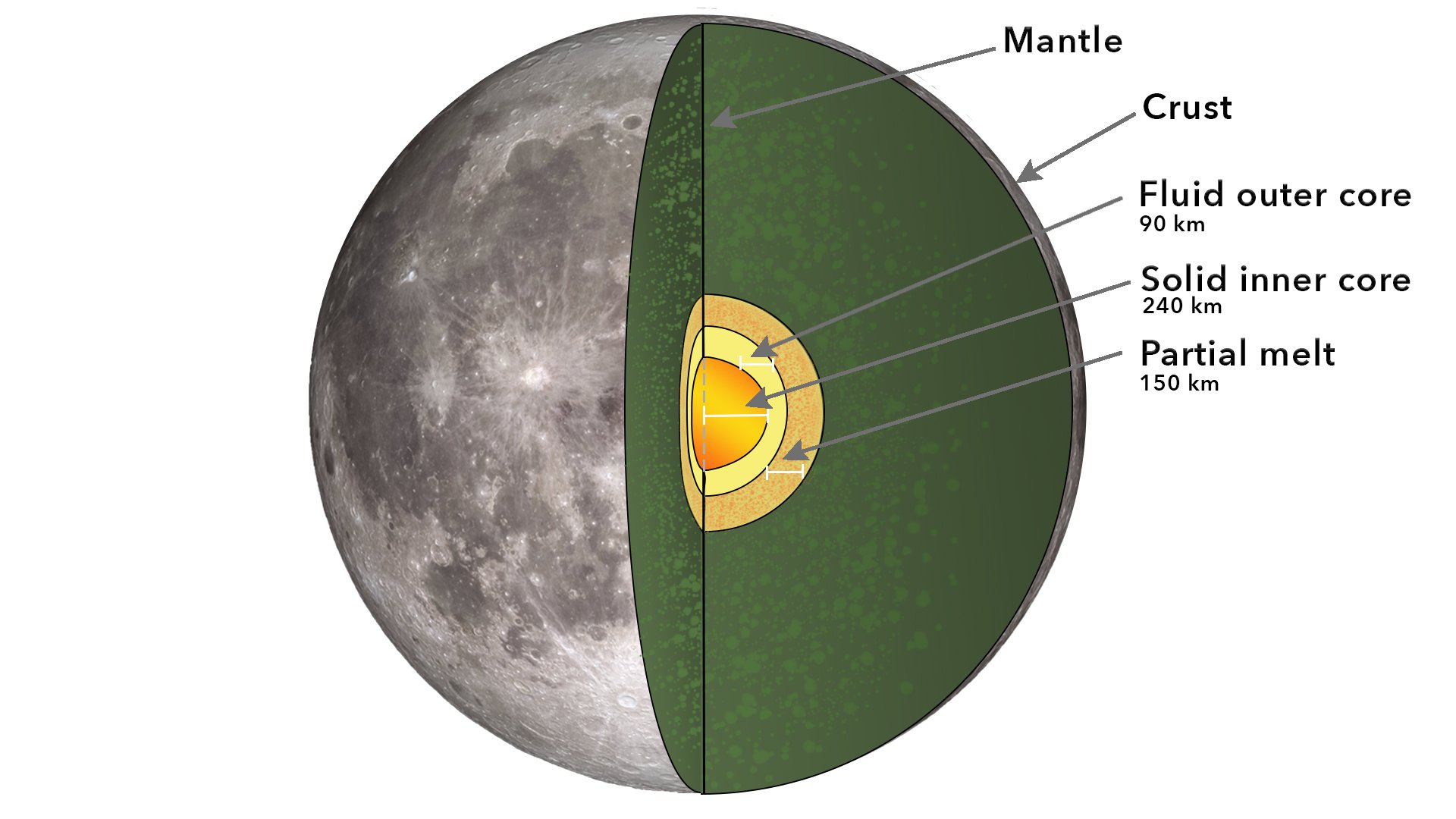
The figures show the best estimates of their average densities, inferred and calculated from rock samples and seismic data (measurements of ground vibrations). Note that density data for the Moon is more uncertain than that for Earth.
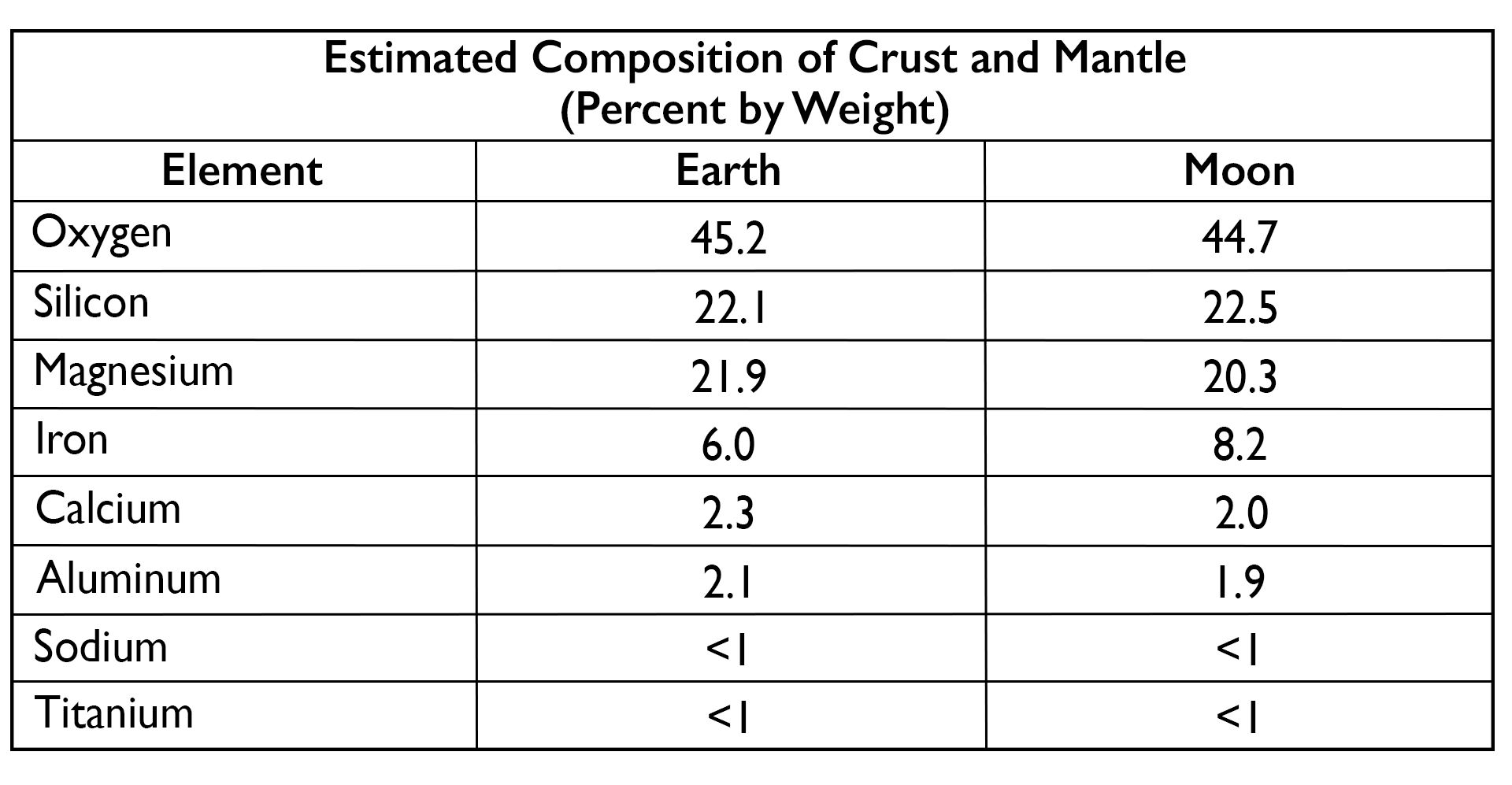
The Moon’s composition has been estimated based on analyses of numerous lunar rock and soil samples collected from the Apollo missions. However, samples were collected at a limited number of places on the Moon, with none from the mantle. Therefore, the data for the Moon is not as accurate as it is for Earth. The table compares the amount of the top few elements in the crust and mantle of the Earth and Moon.
Knowing the amounts of different isotopes of an element can help scientists figure out where a sample came from.
Oxygen atoms have 8 protons and 8 electrons. There are three main types of oxygen isotopes, which have different numbers of neutrons: 16O (which has 8 neutrons), 17O (with 9 neutrons), and 18O (with 10 neutrons). Scientists can compare how much of each isotope is present using ratios. For example, the ratio of 17O to 16O shows how much 17O there is compared to 16O. This comparison is done using a known standard and is multiplied by 1000 because the differences are very small. The same goes for the ratio of 18O to 16O.
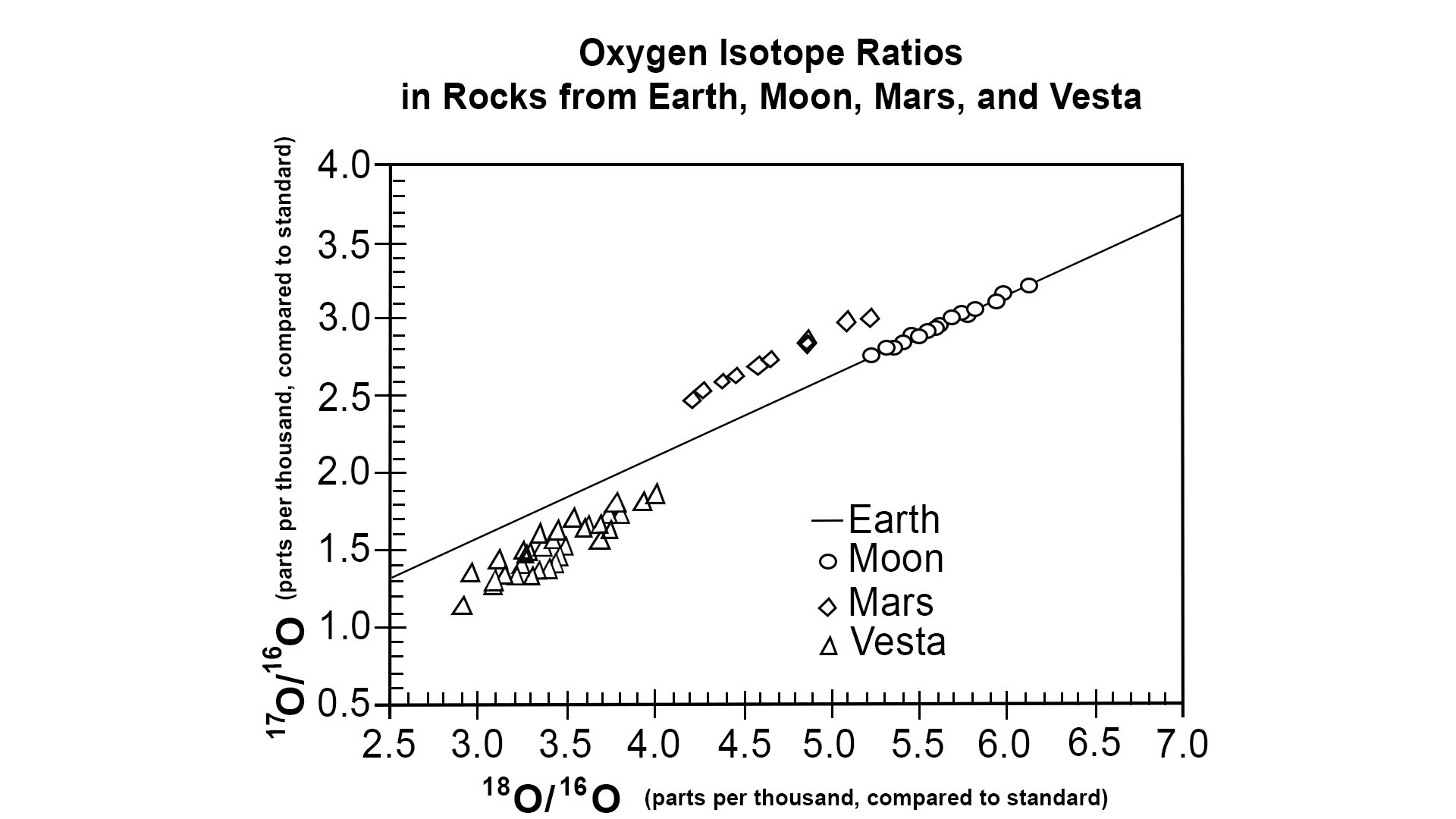
On Earth, natural processes can separate these isotopes based on their weight. In different places, the amounts of these isotopes can vary, but their ratios stay the same. When scientists plot these ratios on a graph, they form a line with a slope of 0.5.
Rocks from different parts of the solar system have different amounts of 16O, 17O, and 18O, which means they appear on different lines in the graph. This graph also shows the oxygen isotope ratios for rock samples from the Moon, meteorites from Mars, and meteorites from asteroid Vesta, compared to Earth rocks. Studies of other isotopes like silicon, chromium, titanium, and tungsten in Moon samples also show they are similar to Earth samples.
Does the isotopic ratios support the giant impact hypothesis? Explain your answer.
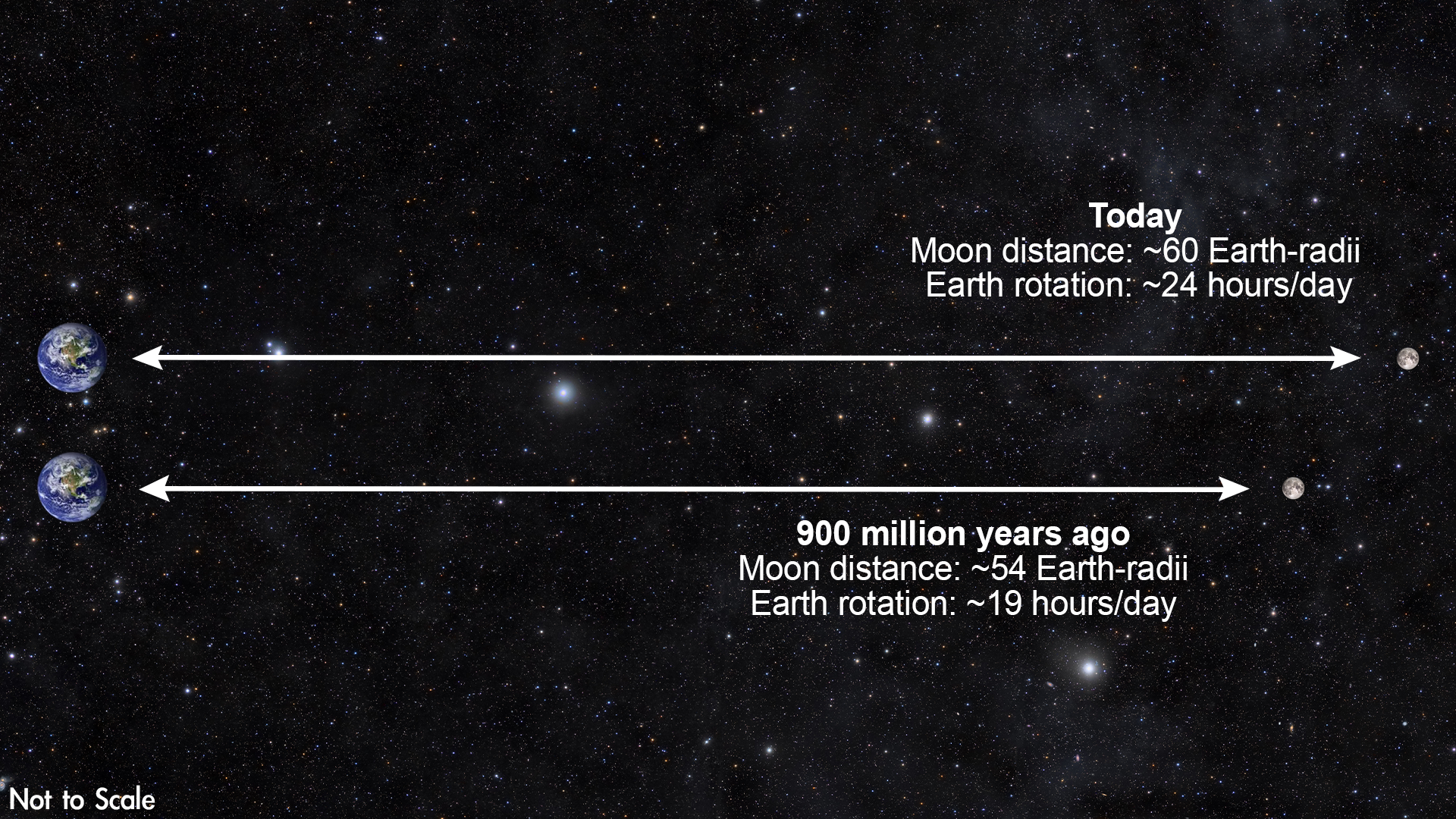
By measuring the time it takes for a laser beam to reach reflectors on the Moon and return to Earth, scientists have found that the Moon is slowly moving away from Earth at a rate of about 3.8 cm per year, while Earth's rotation is slowing down over time. The total energy of the Earth-Moon system is conserved, so as Earth loses energy and slows down, the Moon gains energy, increasing its orbital period and distance from Earth. Scientists can calculate what these values were long ago, such as 900 million years ago when the Moon was about 54 Earth-radii away and Earth's day was about 19 hours long.
Does the evidence support the giant impact hypothesis?
Use 2 lines of evidence to support your answer. Make sure to explain how they do or do not support the giant impact hypothesis.
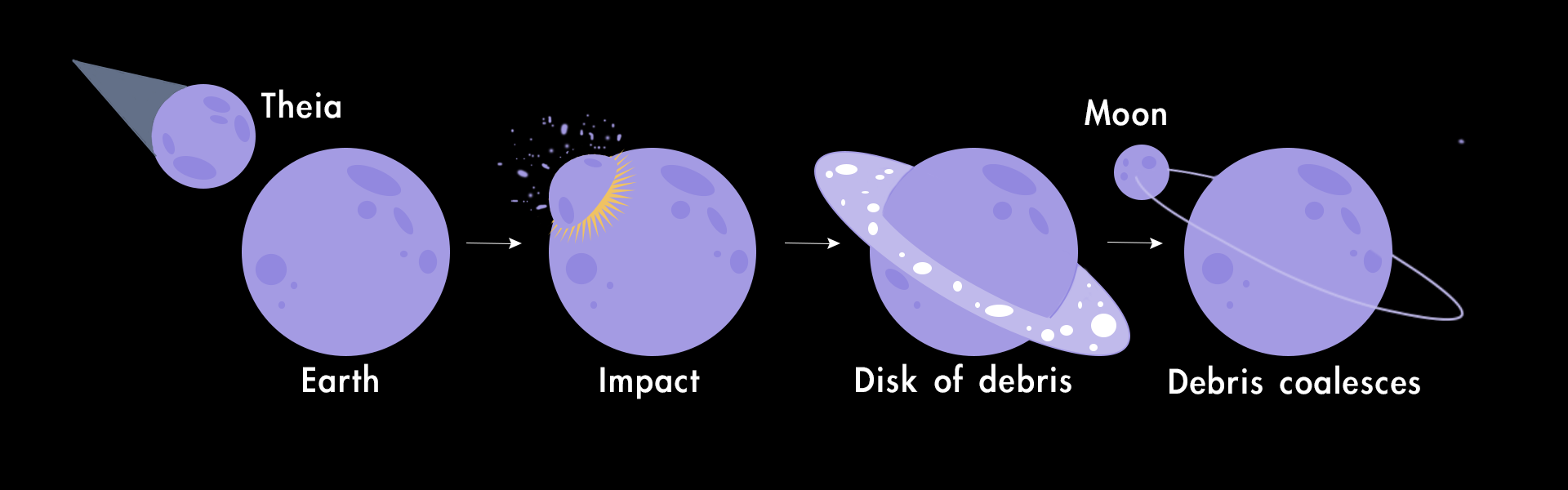
Place the events that formed the Earth and Moon in order.
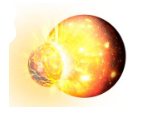
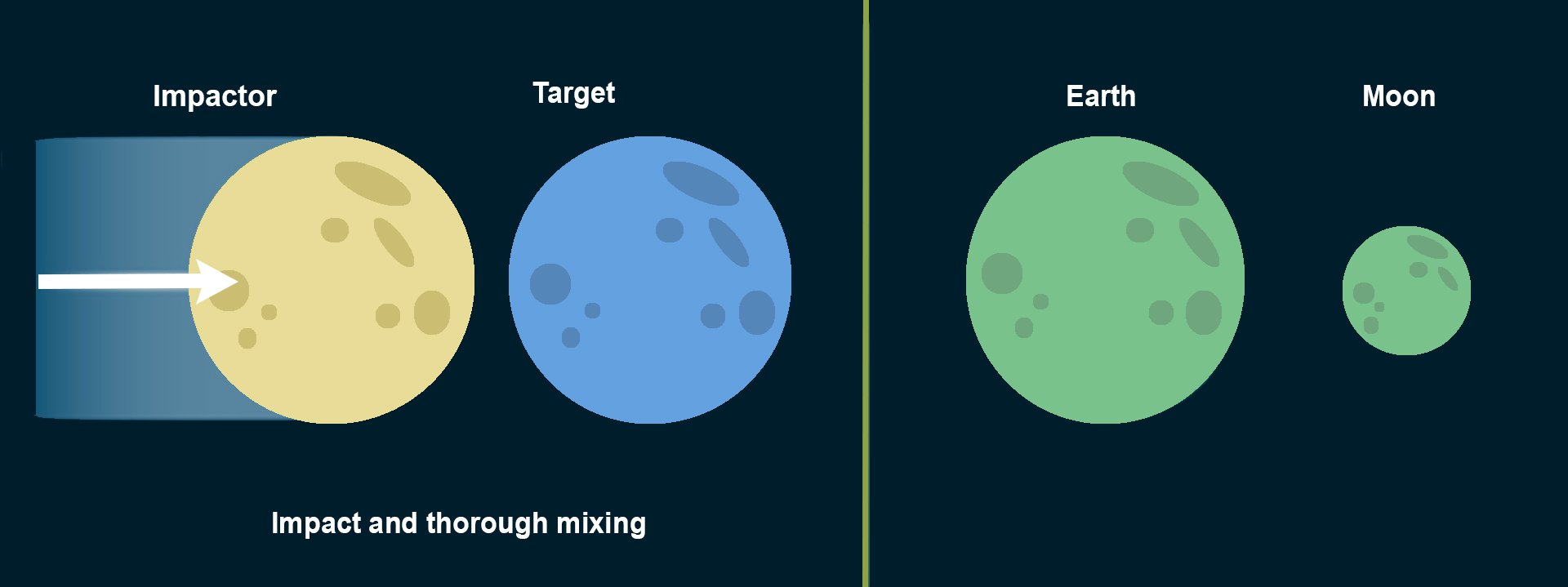
These are a few of the proposed variations to the giant impact model:
Twins By Coincidence: Theia and Earth accreted from the same pool of materials in the solar nebula and therefore had the same isotopic composition.
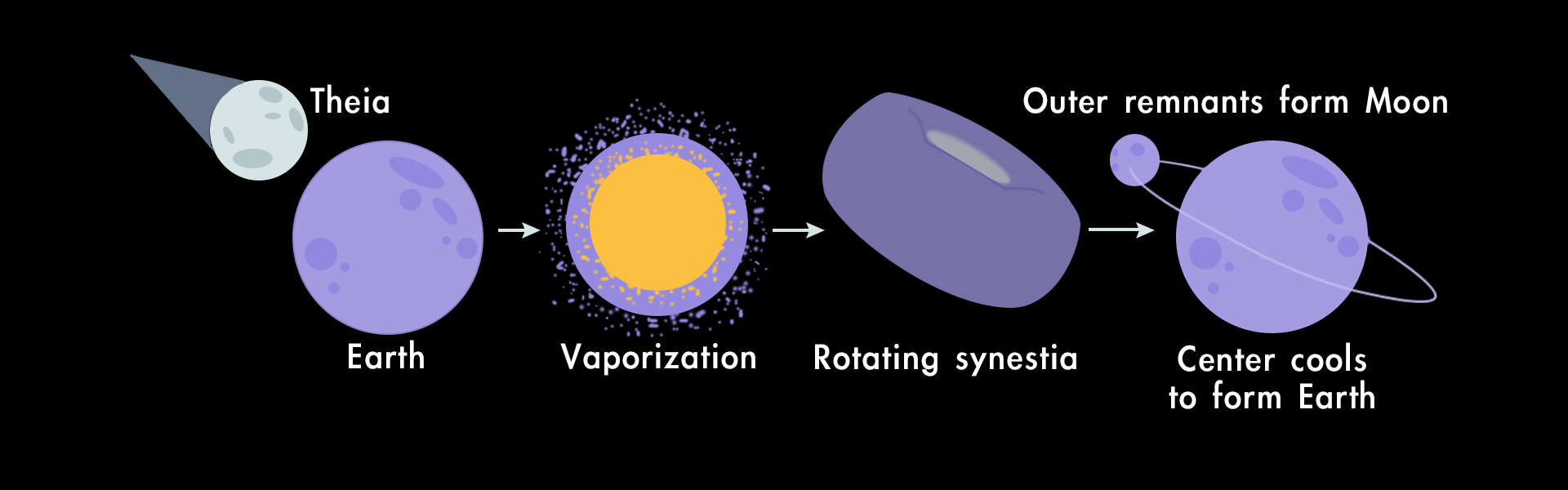
Synestia: The impact between Theia and Earth vaporized both bodies and formed a structure named a synestia—a rotating, donut-shaped cloud of hot debris. The materials in the synestia mixed thoroughly, resulting in an Earth and Moon with identical isotopic composition.
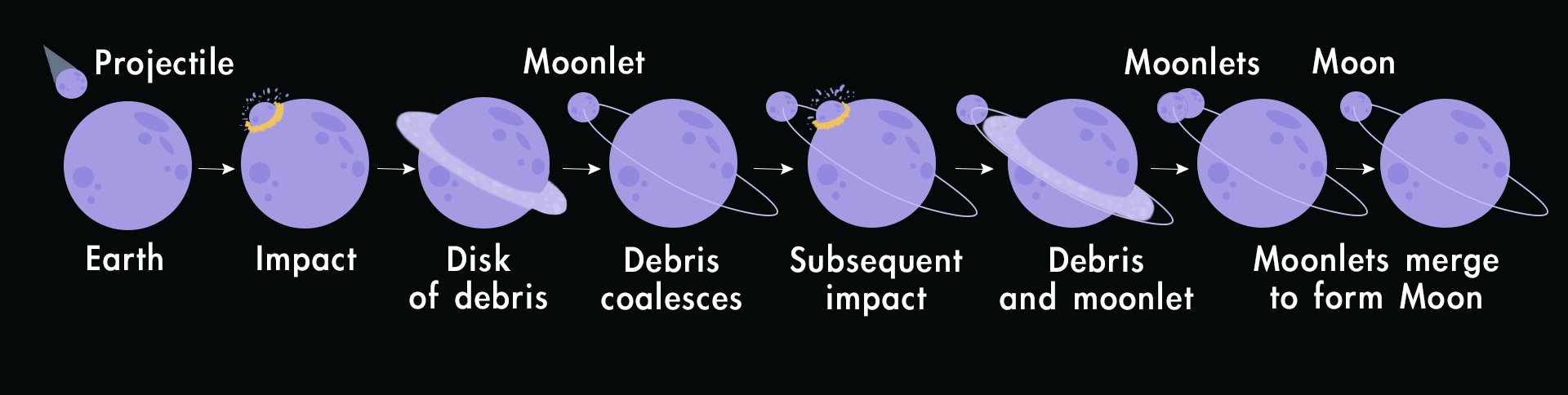
Multiple Impacts & Moonlets: Several smaller objects collided successively with Earth. Each impact result in a disk of debris around Earth that coalesced to form a moonlet. Over time, the moonlets eventually combined into the single Moon we have today.
Half-Earths: A collision occurred between two similar-sized bodies, each about half of Earth’s current mass. The low velocity impact thoroughly mixed the materials from both bodies, resulting in a Moon with a composition derived approximately half from Earth and half from the impactor.
Which of these variations (if any) do you think should be included in the giant impact hypothesis? Explain your reasoning.