Ɛhia
0
What are stars?
There is no right or wrong answer, I want to know what you think.
What are stars?
There is no right or wrong answer, I want to know what you think.
Before we jump into Unit 2, please rate yourself on the Unit 2 objectives from 1 (just starting) to 5 (mastered it!)
You may need to scroll horizontally to see all options
1 - getting started | 2 | 3 | 4 | 5 - mastered it | |
|---|---|---|---|---|---|
Describe how stars are powered by nuclear fusion | |||||
Analyze and characterize stars by their physical and chemical properties | |||||
Compare the life cycles of low mass and high mass stars | |||||
Explain how stars produce the elements that make up everything |
What are stars?
There is no right or wrong answer, I want to know what you think.
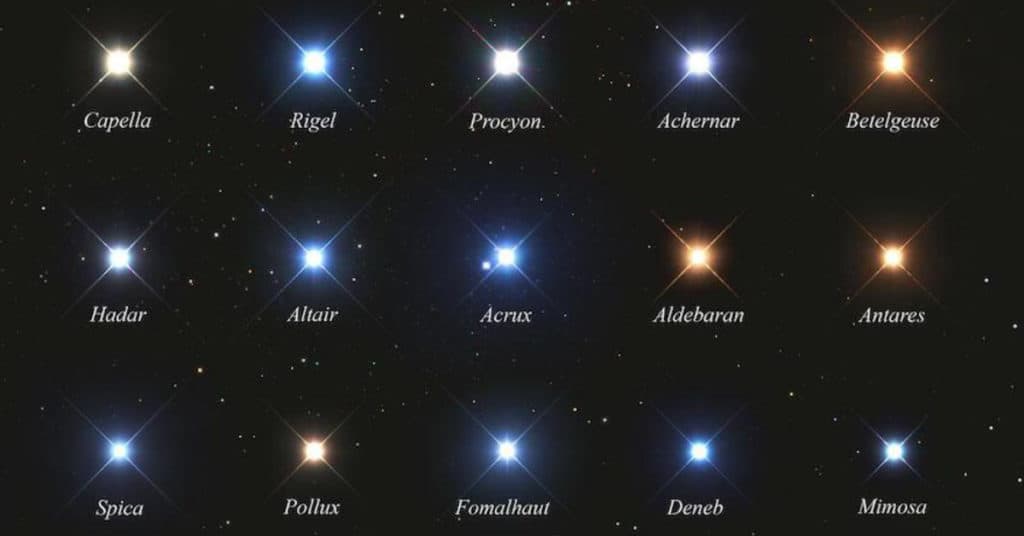
Stars can be different colors!
What color stars do you think are the hottest?
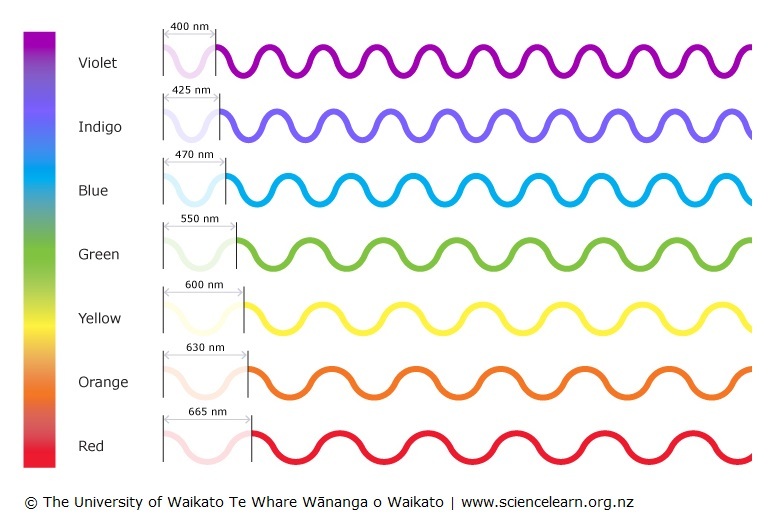
The temperature of a star is related to its color.
Blue light waves have a high frequency and transmit the most energy, which is why blue stars are .
Red light waves have a low frequency and transmit the least energy, which is why red star are
Luminosity is a measurement of the total energy a star radiates, or how "bright" it is. The luminosity of a star is dependent on its size (radius) and color (temperature).
Most stars follow this pattern:
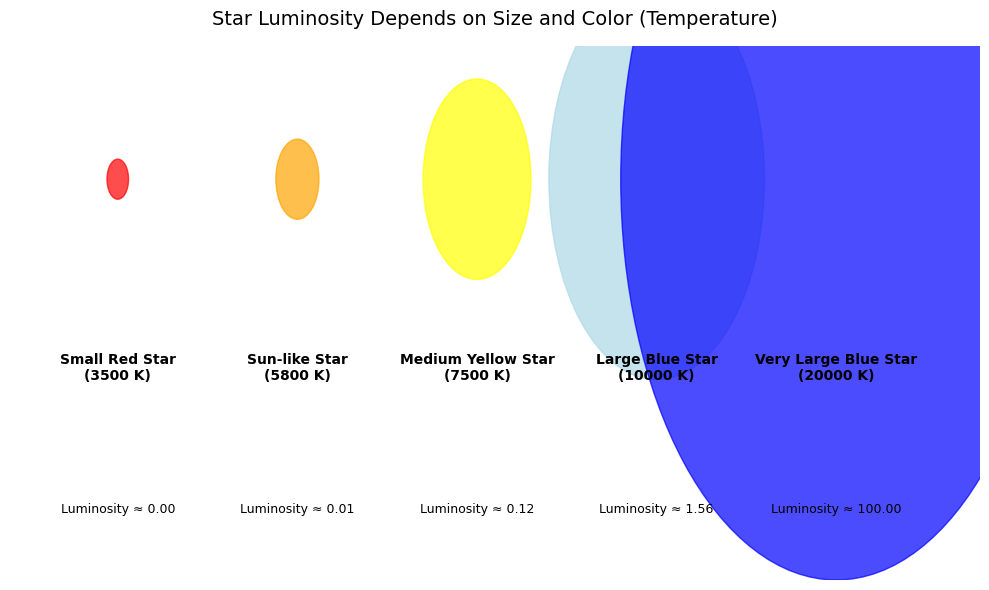
How does a star's size and color usually relate to its luminosity?
| Draggable item | arrow_right_alt | Corresponding Item |
|---|---|---|
Large Blue Star (10000 K) | arrow_right_alt | Least luminosity (dimmest) |
Medium Yellow Star (7500 K) | arrow_right_alt | Most luminosity (brightest) |
Small Red Star (3500 K) | arrow_right_alt | Medium luminosity (the Sun) |
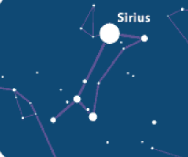
This image represents the brightness of the stars in the constellation Sirius as seen from Earth.
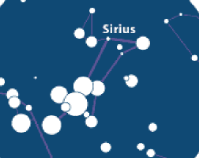
This image represents the actual brightness of each individual star in the constellation Sirius.
How could you explain the difference between the brightness of stars we see on Earth versus the actual brightness of stars?
A small red star appears brighter than a large blue star to an observer on Earth. Which star is closer to the Earth?
A large blue star and small red star are the same distance from the Earth. Which one would appear brighter in the night sky?
Why do stars shine?
There is no right or wrong answer, I want to know what you think.
Chemistry Review!
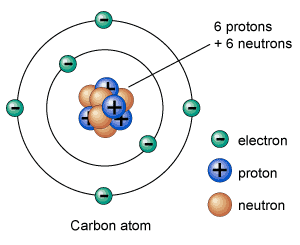
Atoms are made of protons and neutrons in the nucleus surrounded by electrons.
Match the subatomic particle to its charge.
| Draggable item | arrow_right_alt | Corresponding Item |
|---|---|---|
electron | arrow_right_alt | positive |
proton | arrow_right_alt | no charge |
neutron | arrow_right_alt | negative |
Which 2 subatomic particles are found in the nucleus of an atom and contain the majority of the atom's mass?
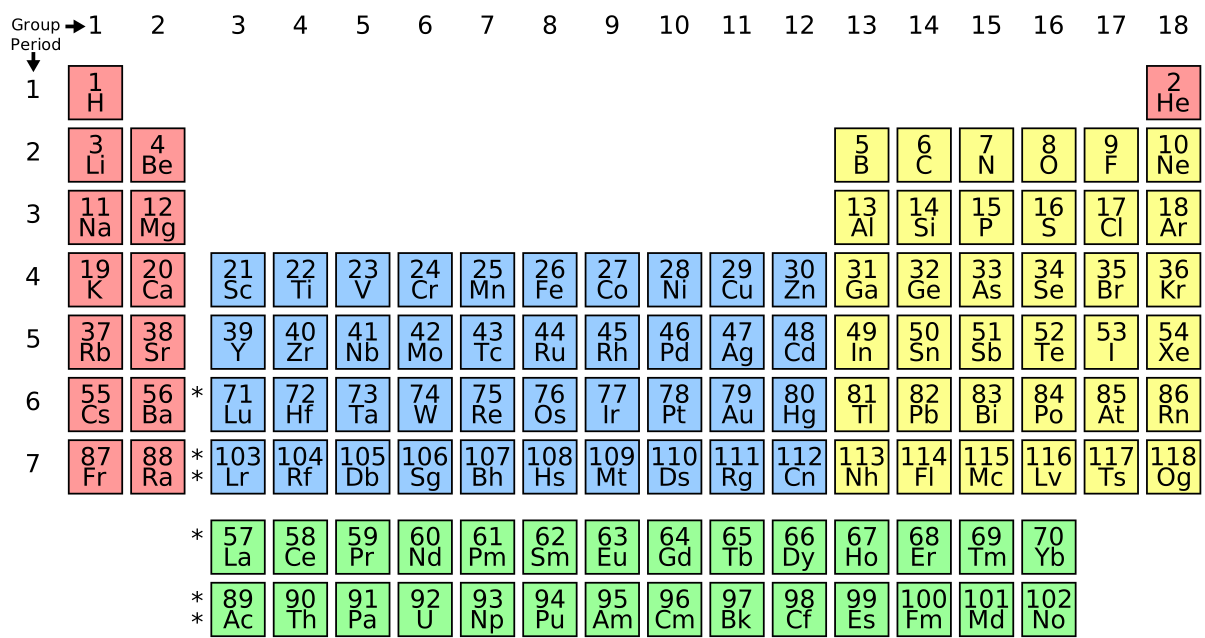
Each element is defined by the number of protons in the nucleus. The numbers you see on the periodic table are called atomic numbers.
The atomic number of an element on the periodic table represents the number of in its nucleus.
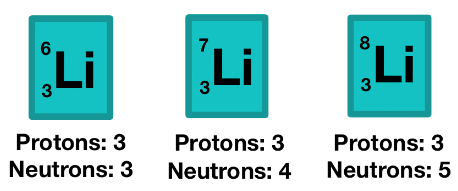
Elements are defined by their number of protons, but can have different numbers of neutrons. Each version of that element is called an isotope.
This is how isotopes are written:
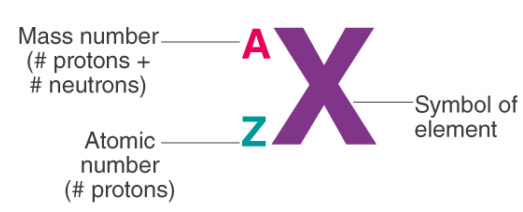
Sometimes the atomic number is not included because it is difficult to type a superscript and a subscript.
Consider these isotopes of the element Lithium:
This is an isotope of Carbon:
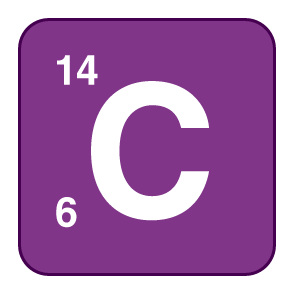
What is its atomic mass?
How many protons does it have?
How many neutrons does it have?
Watch the animation above or click here to view in a new tab.
Stars are powered by nuclear fusion, the process of joining (fusing) the nuclei of two atoms to form a single heavier atom.
The animation above shows how tritium (hydrogen with 2 neutrons written as 3H) and deuterium (hydrogen with 1 neutron written as 2H) fuse together to produce helium (He) and a free neutron. During the fusion process, energy is released.
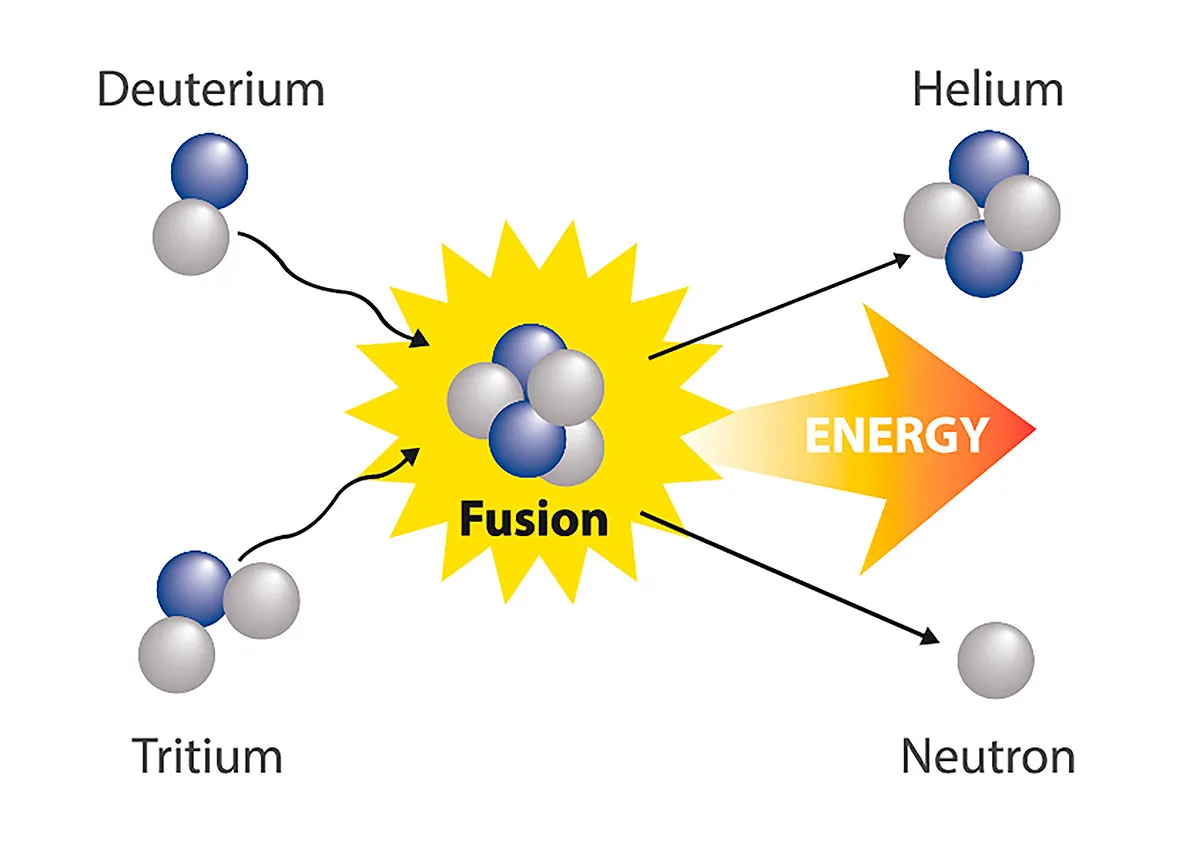
Model this process with a chemical equation:
+ --> + +
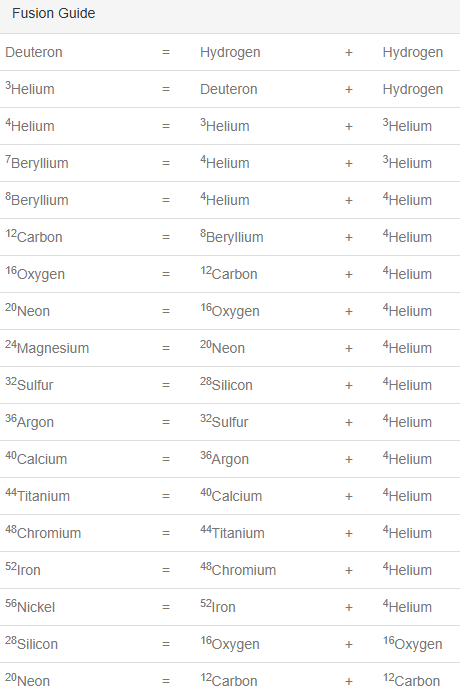
This process demonstrates how each additional helium collision leads to the creation of elements.
Play the Fe[26] game or watch this video to observe how stars can produce heavier and heavier elements.
It doesn't look like a star, but watch how new elements are produced as deuterons and tritium (Hydrogen) boxes move next to ("collide") with other atoms. This game simulates gravity how gravity pushes Hydrogen elements together so close and with such a force that sometimes these elements fuse into heavier elements.
What happens when there is no more hydrogen or helium to collide with?
Stars can be different colors!
What color stars do you think are the least hot?