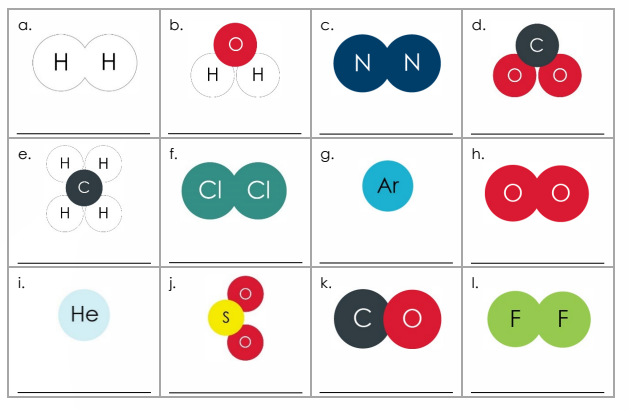
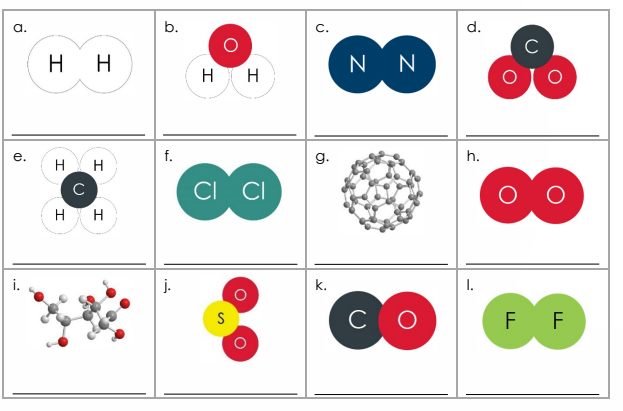
Give the element symbol for the following elements.
Required
1 point
1
Question 3
3.
Copper
Required
1 point
1
Question 4
4.
Fluorine
Required
1 point
1
Question 5
5.
Gallium
1 point
1
Question 6
6.
Hydrogen
Required
1 point
1
Question 7
7.
Indium
Give the element name that matches the symbol below.
Required
1 point
1
Question 8
8.
Au
Required
1 point
1
Question 9
9.
Ge
Required
1 point
1
Question 10
10.
I (This is a capital "i")
Required
1 point
1
Question 11
11.
He
Required
1 point
1
Question 12
12.
W
1 point
1
Question 13
13.
What do we call a substance that cannot be broken down into simpler substances by chemical means?
1 point
1
Question 14
14.
Which term describes a substance composed of two or more elements that are chemically combined?
Required
1 point
1
Question 15
15.
Made up of 2 or more different atoms bonded together.
Required
1 point
1
Question 16
16.
Two or more atoms bonded together.
Required
1 point
1
Question 17
17.
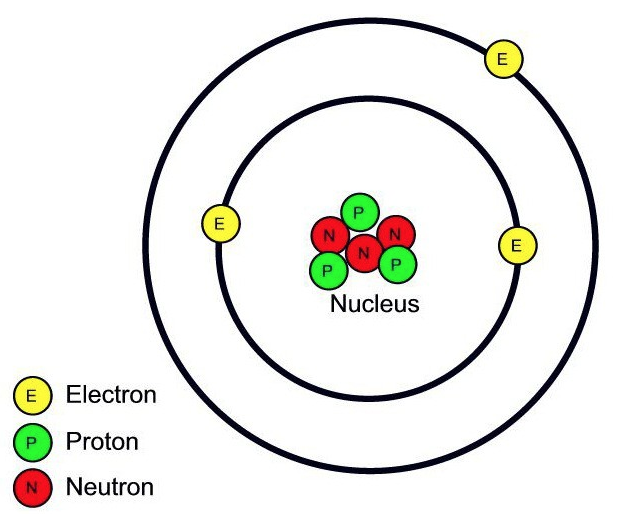
How many atoms make up this compound?
Required
1 point
1
Question 18
18.
How many atoms of oxygen are there in Hâ‚‚Oâ‚‚
Required
1 point
1
Question 19
19.
What is the correct name for NaCl?
Required
1 point
1
Question 20
20.
What is the chemical name for the compound CaO?
Required
1 point
1
Question 21
21.
The correct name for the compound KBr is?
Required
1 point
1
Question 22
22.
What is the correct name for the compound MgBr2?
Required
1 point
1
Question 23
23.
What is the correct name for the compound Al2S3?
1 point
1
Question 24
24.
Other Answer Choices:
molecule
atom
1 point
1
Question 25
25.
Other Answer Choices:
Not an element
Element
1 point
1
Question 26
26.
Other Answer Choices:
Molecule
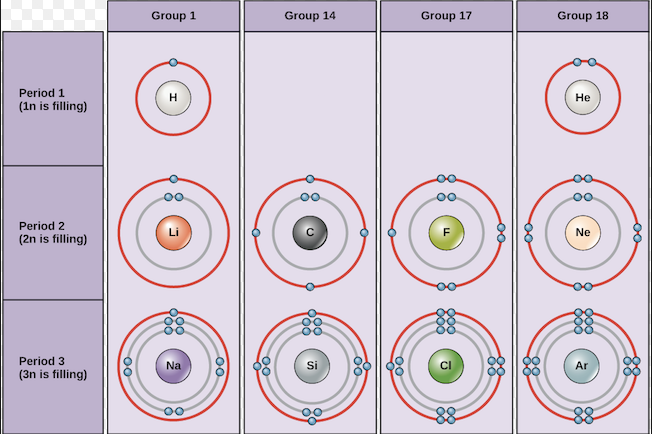
Element
Both!
1 point
1
Question 27
27.
Other Answer Choices:
Both!
Compound
Molecule
4.1.1.2 Mixtures
1 point
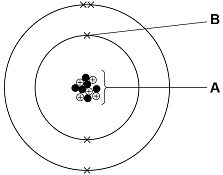
1
Question 28
28.
Tom mixed sand and water together for a science experiment. What is this combination called?
1 point
1
Question 29
29.
Which method is used to separate based on boiling point?
1 point
1
Question 30
30.
What is the process used to separate crystals?
1 point
1
Question 31
31.
Which technique is best for separating colored pigments in a substance?
1 point
1
Question 32
32.
What method is utilized to remove insoluble particles (solids) from a liquid?
1 point
1
Question 33
33.
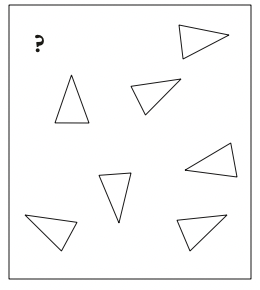
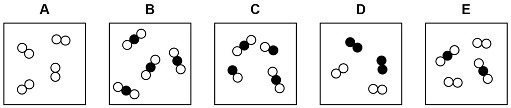
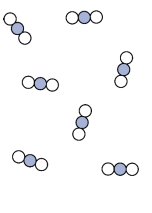
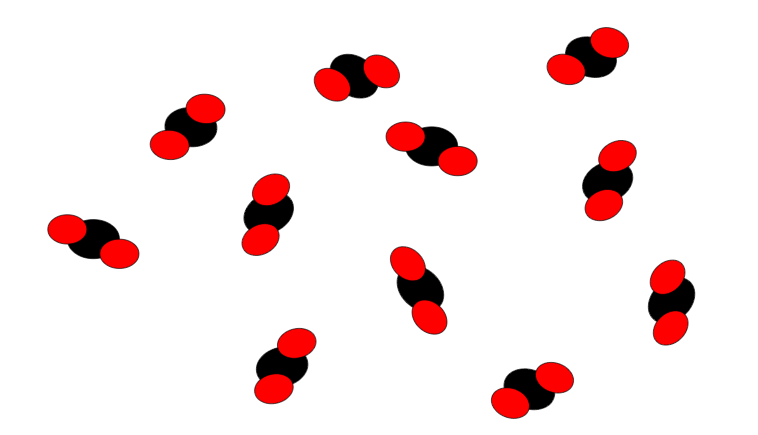
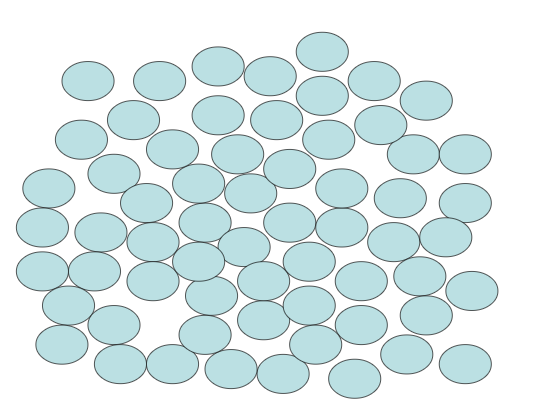
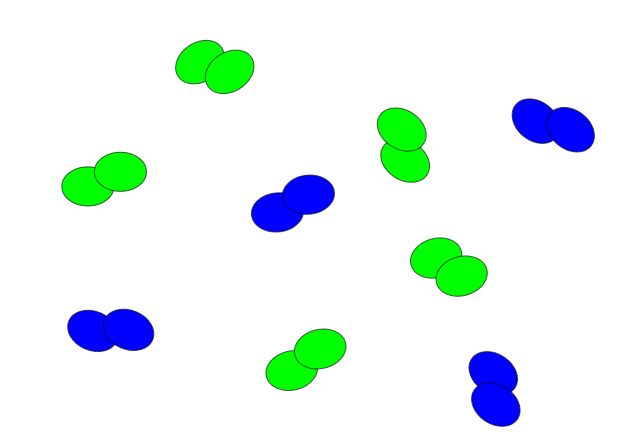
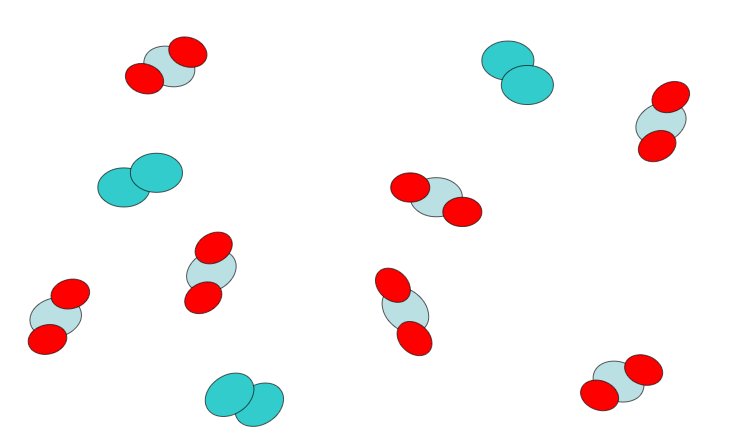
Is the image above an image of an element, compound or mixture?
1 point
1
Question 34
34.
Is the image above an image of an element, compound or mixture?
1 point
1
Question 35
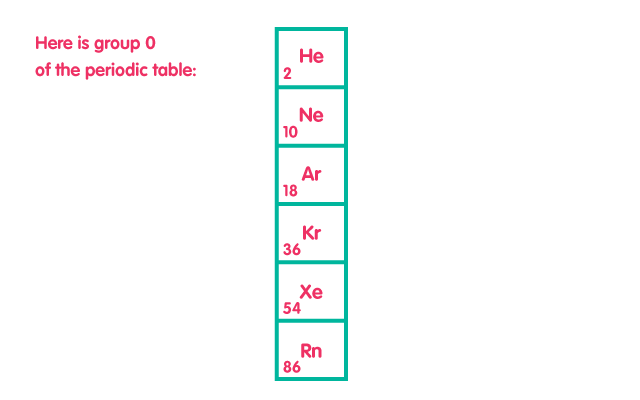
35.
Is the image above an image of an element, compound or mixture?
1 point
1
Question 36
36.
What is the main difference between a compound and a mixture?
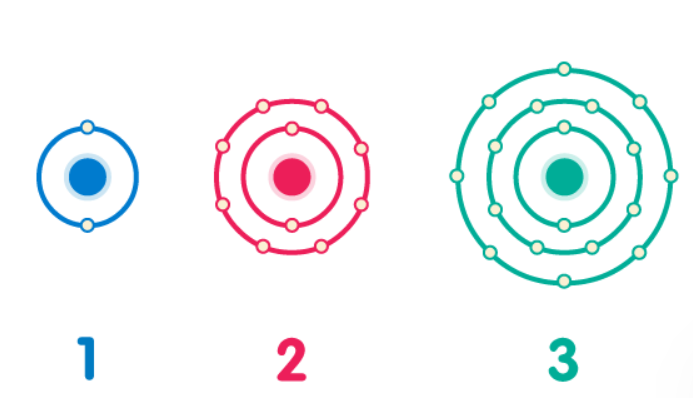
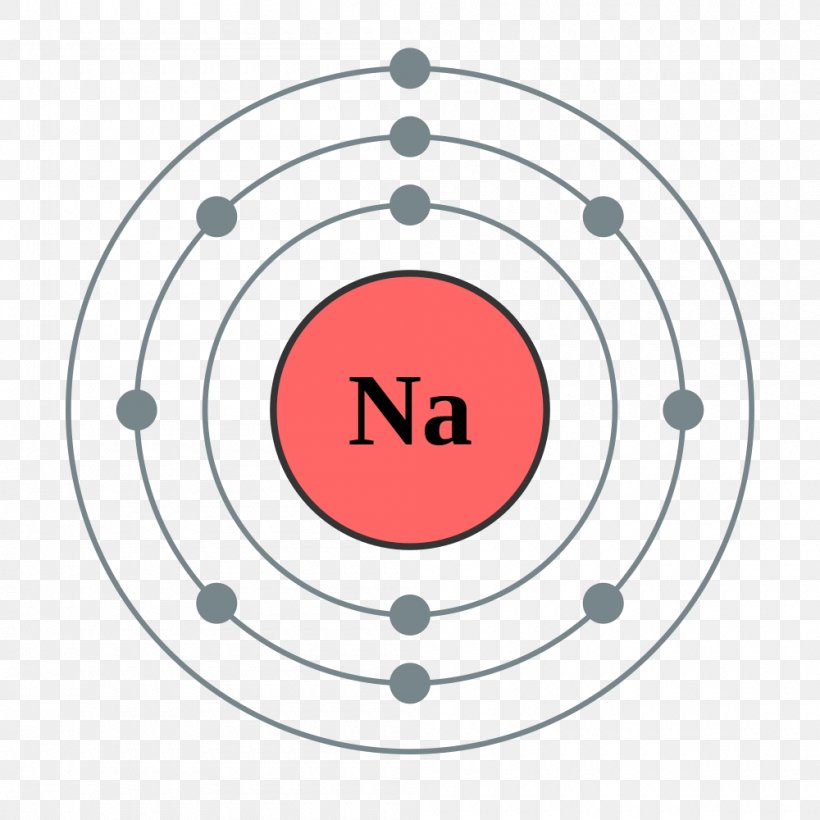
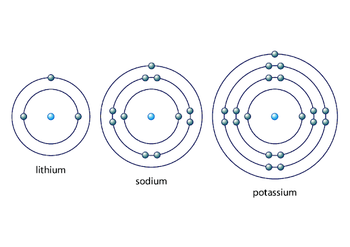
1 point
1
Question 37
37.
What method of separation separates colours?
Required
1 point
1
Question 38
38.
Required
1 point
1
Question 39
39.
Required
1 point
1
Question 40
40.
Required
1 point
1
Question 41
41.
Required
1 point
1
Question 42
42.
Required
1 point
1
Question 43
43.
Required
1 point
1
Question 44
44.
Required
1 point
1
Question 45
45.
Required
1 point
1
Question 46
46.
Required
1 point
1
Question 47
47.
1 point
1
Question 48
48.
1 point
1
Question 49
49.
1 point
1
Question 50
50.
1 point
1
Question 51
51.
Required
1 point
1
Question 52
52.
Required
1 point
1
Question 53
53.
Draggable item
arrow_right_alt
Corresponding Item
arrow_right_alt
arrow_right_alt
arrow_right_alt
1 point
1
Question 54
54.
4.1.1.3 The Development of the model of the atom
3 points
3
Question 55
55.
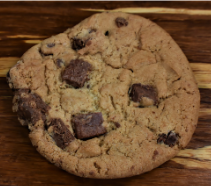
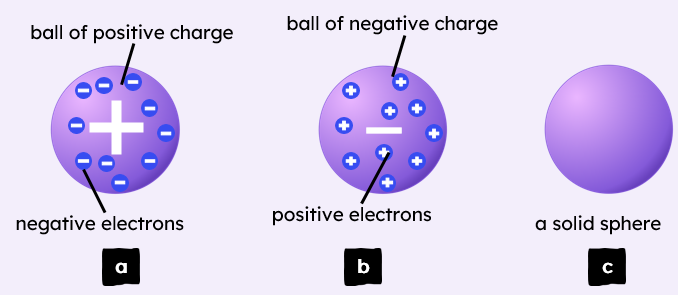
A chocolate chip cookie could be used as a model for JJ Thomson's theory of the structure of an atom.
Assess the model and write:
a) Two reasons it was a good model for JJ Thomson's theory
b) One reason why it is not a good model.
1 point
1
Question 56
56.
Draw and label a diagram for
a) John Dalton's model
b) JJ Thomson's model
4 points
4
Question 57
57.
Just like Rutherford, Jun is writing a conclusion from Geiger and Marsden's gold foil experiment. Help him write to explain the findings to show how the atomic model looked.
Jun needs to write:
a) The 3 different things that positive alpha particles did when fired at the gold foil
b) A conclusion for each of these findings
c) A description of the model of the atom that this new evidence provided
1 point
1
Question 58
58.
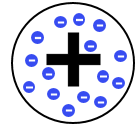
Which of these belong to the Plum Pudding Model and the Nuclear Model?
Electrons embedded - not moving
Electrons moving
Positive nucleus
Contains electrons
Contains only negative charges
Contains protons
Negative nucleus
Made up of mostly empty space
Contains only positive charges
No nucleus
Ball of negative charge
Ball of Positive charge
Contains opposite charges
Plum Pudding
Nuclear Model
Both
Neither
Required
1 point
1
Question 59
59.
5 points
5
Question 60
60.
Draggable item
arrow_right_alt
Corresponding Item
arrow_right_alt
JJ Thomson
arrow_right_alt
Bohr
arrow_right_alt
Rutherford
arrow_right_alt
Dalton
arrow_right_alt
Chadwick
6 points
6
Question 61
61.
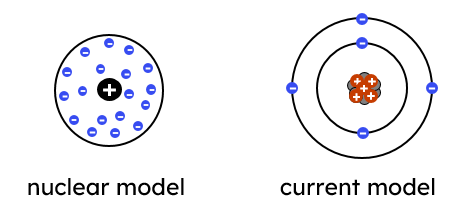
Compare the nuclear model to the current model, giving both similarities and differences.
1 point
1
Question 62
62.
Select two correct statements about Dalton’s model of atoms.
1 point
1
Question 63
63.
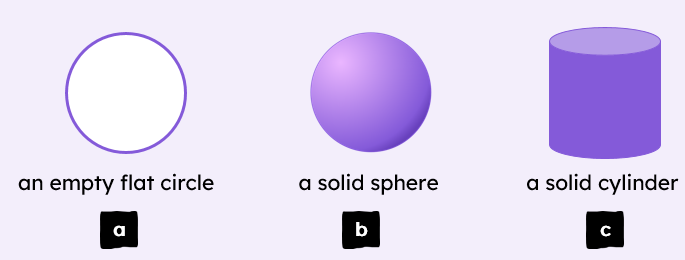
Which is the best representation of Dalton's model?
1 point
1
Question 64
64.
JJ Thomson said that there must be something smaller than an atom.
1 point
1
Question 65
65.
True! He said there was something smaller - what are they called?
1 point
1
Question 66
66.
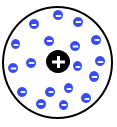
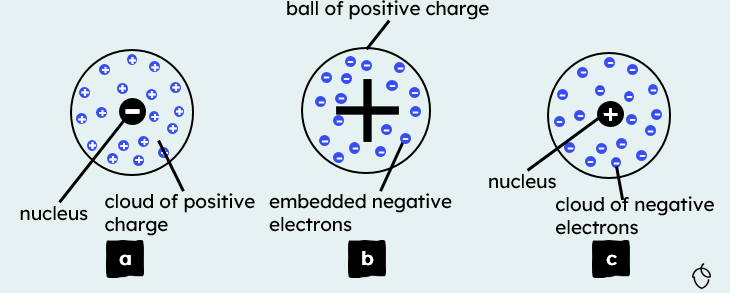
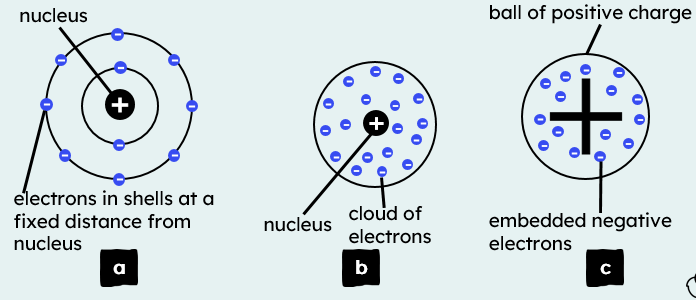
Which image shows JJ Thomson’s model?
1 point
1
Question 67
67.
JJ Thomson’s model was called the currant bun model.
1 point
1
Question 68
68.
It was called the Plum Pudding model - why?
1 point
1
Question 69
69.
What happened to the alpha particles in Rutherford's gold foil experiment?
1 point
1
Question 70
70.
Which image shows Rutherford’s nuclear model?
1 point
1
Question 71
71.
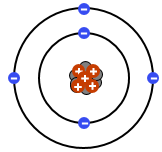
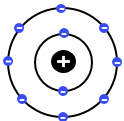
Which image shows Bohr’s model?
1 point
1
Question 72
72.
What did later experiments show about the nucleus?
1 point
1
Question 73
73.
What subatomic particle did James Chadwick suggest existed?
1 point
1
Question 74
74.
Scientists noticed a difference in the atomic number and mass of an atom.
4.1.1.4 Relative electrical charges of subatomic particles
1 point
1
Question 75
75.
What is the charge of a proton?
1 point
1
Question 76
76.
1 point
1
Question 77
77.
1 point
1
Question 78
78.
What is the relative size of an electron?
1 point
1
Question 79
79.
What is the charge of a proton?
1 point
1
Question 80
80.
Why are atoms neutral? (hand mark)
1 point
1
Question 81
81.
What is the charge of a proton?
1 point
1
Question 82
82.
What is the relative size of an electron?
1 point
1
Question 83
83.
What is the relative size of an electron?
1 point
1
Question 84
84.
What is the charge of an ion formed when calcium loses 2 electrons?
4.1.1.5 Size and mass of atoms
1 point
1
Question 85
85.
1 point
1
Question 86
86.
1 point
1
Question 87
87.
Required
1 point
1
Question 88
88.
What is the atomic number of carbon?
Required
1 point
1
Question 89
89.
Which element has an atomic number of 11?
1 point
1
Question 90
90.
How many protons does Hydrogen (H) have in its nucleus?
1 point
1
Question 91
91.
What element in the periodic table has 8 protons?
1 point
1
Question 92
92.
What is the proton number of Helium (He)?
1 point
1
Question 93
93.
How many protons are in the nucleus of Carbon (C)?
1 point
1
Question 94
94.
Correct the information so that Lucas can submit his homework:
The atomic number tells you how many __________ are in the nucleus of an atom. Each element has a unique __________ number. The atomic number is always the __________ of the two numbers found for each element on a periodic table. For an atom, the number of protons is __________ the number of electrons.
1 point
1
Question 95
95.
How can the neutron number of an element be calculated?
1 point
1
Question 96
96.
What is the neutron number of an Oxygen atom whose atomic number is 8 and mass number is 16?
1 point
1
Question 97
97.
If an element has an atomic number of 6 and a mass number of 12, what is the number of neutrons?
Challenge: Atoms are very small, and their nucleus is even smaller. Research and explain the size of atoms and their nucleus.
3 points
3
Question 111
111.
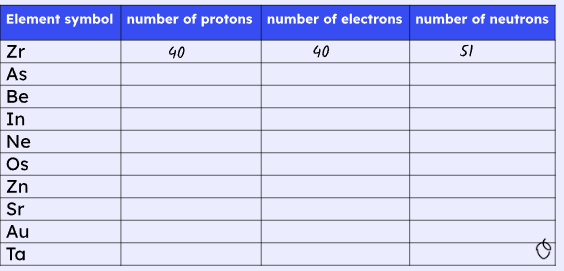
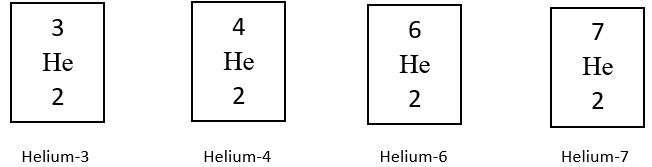
What are the protons, electrons and neutrons of Helium-3?
P: _______
E: _______
N: _______
3 points
3
Question 112
112.
What are the protons, electrons and neutrons of Helium-4?
P: _______
E: _______
N: _______
3 points
3
Question 113
113.
What are the protons, electrons and neutrons of Helium-6?
P: _______
E: _______
N: _______
3 points
3
Question 114
114.
What are the protons, electrons and neutrons of Helium-7?
P: _______
E: _______
N: _______
1 point
1
Question 115
115.
Find the symbol for helium on your Periodic Table.
Which of the isotopes has the mass number closest to the mass number given on the Periodic Table?
2 points
2
Question 116
116.
Would the chemical properties of the isotopes of helium be the same or different?
Explain your answer. (hand mark)
1 point
1
Question 117
117.
Give the symbol of the isotope described.
An isotope with 29 protons and 34 neutrons.
1 point
1
Question 118
118.
Give the symbol of the isotope described.
An isotope with 13 protons and 13 neutrons.
1 point
1
Question 119
119.
Give the symbol of the isotope described.
An isotope with 56 protons and 81 neutrons.
1 point
1
Question 120
120.
Give the symbol of the isotope described.
An isotope with 3 protons and 6 neutrons.
1 point
1
Question 121
121.
Give the symbol of the isotope described.
An isotope with 14 protons and 19 neutrons.
3 points
3
Question 122
122.
What are the protons, electrons, and neutrons of the element Potassium? P: _______ E: _______ N: _______
1 point
1
Question 123
123.
What element in the periodic table has 8 protons?
1 point
1
Question 124
124.
This is Scandium.
What is its atomic number?
1 point
1
Question 125
125.
How many protons does it have?
1 point
1
Question 126
126.
What is its atomic mass?
1 point
1
Question 127
127.
How many neutrons does it have?
1 point
1
Question 128
128.
What is an isotope?
Required
1 point
1
Question 129
129.
They have a very _____ mass.
Required
1 point
1
Question 130
130.
Electrons are a ________ particle.
Required
1 point
1
Question 131
131.
They are located in ______ around the outside of an atom.
Required
1 point
1
Question 132
132.
Which element has an atomic number of 11?
4.1.1.6 Relative Atomic Mass
1 point
1
Question 133
133.
1 point
1
Question 134
134.
1 point
1
Question 135
135.
Calculate the relative atomic mass (Ar) of gallium to 3sf given that it consists of two isotopes with these abundances: Ga-69 = 60.1%, Ga -71 = 39.9%.
1 point
1
Question 136
136.
The data shows the mass numbers and abundances of naturally-occurring copper isotopes.
Cu-63 = 69%
Cu-65 = 31%
Calculate the relative atomic mass of copper. Give your answer to 1 decimal place.
1 point
1
Question 137
137.
1 point
1
Question 138
138.
What is the relative atomic mass of element X with isotopes 20 (80%) and 22 (20%)?
1 point
1
Question 139
139.
Calculate the relative atomic mass of isotope A (10, 50%) and isotope B (12, 50%).
1 point
1
Question 140
140.
If 70% of isotope 35 and 30% of isotope 37, what is the relative atomic mass?
1 point
1
Question 141
141.
Calculate the relative atomic mass of magnesium if Mg-24 has 78% abundance and Mg-26 has 22% abundance.
1 point
1
Question 142
142.
Given Cl-35 at 75% and Cl-37 at 25%, find the relative atomic mass of chlorine.
4.1.1.7 Electronic Structure
1 point
1
Question 143
143.
1 point
1
Question 144
144.
Match these elements to the correct electron configuration.
Draggable item
arrow_right_alt
Corresponding Item
Carbon (C)
arrow_right_alt
2,8
Magnesium (Mg)
arrow_right_alt
2,8,1
Neon (Ne)
arrow_right_alt
2,8,2
Fluorine
arrow_right_alt
2,4
Sodium (Na)
arrow_right_alt
2,7
Required
1 point
1
Question 145
145.
How many valence electrons does neon have?
Required
1 point
1
Question 146
146.
How many valence electrons does neon have?
1 point
1
Question 147
147.
Match these elements to the correct electron configuration.
Draggable item
arrow_right_alt
Corresponding Item
Neon (Ne)
arrow_right_alt
2,8
Carbon (C)
arrow_right_alt
2,8,1
Fluorine
arrow_right_alt
2,8,2
Sodium (Na)
arrow_right_alt
2,4
Magnesium (Mg)
arrow_right_alt
2,7
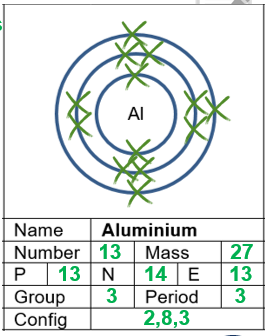
Instructions: fill in the boxes below to show the electron configuration of these atoms. Use your periodic table to help you. The example above shows you how.
Required
1 point
1
Question 148
148.
Draw the electrons of Nitrogen
Required
1 point
1
Question 149
149.
Draw the electrons of Lithium
Required
1 point
1
Question 150
150.
Draw the electrons of Neon
Required
1 point
1
Question 151
151.
Draw the electrons of Magnesium
1 point
1
Question 152
152.
Explain how electrons are arranged in electron shells
1 point
1
Question 153
153.
Fluorine has 9 electrons. How are they arranged?
1 point
1
Question 154
154.
Match the atom to its electron configuration
Draggable item
arrow_right_alt
Corresponding Item
Potassium (19)
arrow_right_alt
2,1
Lithium (3)
arrow_right_alt
2,8,1
Sodium (11)
arrow_right_alt
2,8,8,1
1 point
1
Question 155
155.
Chlorine ion (Cl-) has fewer electrons than a chlorine atom (Cl).
1 point
1
Question 156
156.
Atoms that lose electrons form positive ions.
Required
1 point
1
Question 157
157.
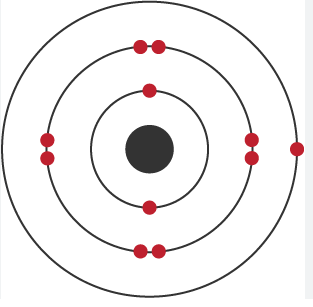
How many electrons does this have?
Required
1 point
1
Question 158
158.
What is the electron structure?
Required
1 point
1
Question 159
159.
How many electrons does this atom LOSE?
Required
1 point
1
Question 160
160.
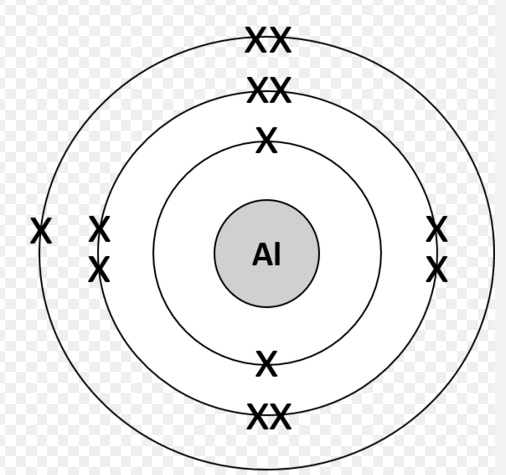
How many electrons does this have?
Required
1 point
1
Question 161
161.
What is the electron structure?
Required
1 point
1
Question 162
162.
How many electrons does this atom LOSE?
Required
1 point
1
Question 163
163.
Required
1 point
1
Question 164
164.
Required
1 point
1
Question 165
165.
Required
1 point
1
Question 166
166.
Required
1 point
1
Question 167
167.
1 point
1
Question 168
168.
Draw the electron configuration for Sodium
1 point
1
Question 169
169.
Draw the electronic structure of Chlorine
1 point
1
Question 170
170.
Draw the electronic structure of Potassium
4.1.2.1 The Periodic Table
1 point
1
Question 171
171.
1 point
1
Question 172
172.
1 point
1
Question 173
173.
1 point
1
Question 174
174.
1 point
1
Question 175
175.
1 point
1
Question 176
176.
1 point
1
Question 177
177.
1 point
1
Question 178
178.
1 point
1
Question 179
179.
1 point
1
Question 180
180.
1 point
1
Question 181
181.
1 point
1
Question 182
182.
1 point
1
Question 183
183.
1 point
1
Question 184
184.
1 point
1
Question 185
185.
4.1.2.2 Development of the Periodic Table
1 point
1
Question 186
186.
Who is the creator of the Modern periodic table?
1 point
1
Question 187
187.
What distinguished Mendeleev's Periodic Table?
1 point
1
Question 188
188.
Why are elements in the same group in Mendeleev's periodic table?
1 point
1
Question 189
189.
How did Mendeleev organise the elements in his periodic table?
4.1.2.3 Metals and non-metals
1 point
1
Question 190
190.
Are most metals at room temperature solid, liquid, or gas?
1 point
1
Question 191
191.
Dull
Gas or liquid at room temperature
Poor conductor of electricity and heat
Solid at room temperature
Brittle
Good conductor of electricity and Heat
Malleable (able to be hammered)
Lustrous (shiny)
High density
Low density
Ductile (can be made into wires)
Metal
Non-Metal
4.1.2.4 Group 0
Required
1 point
1
Question 192
192.
Required
1 point
1
Question 193
193.
Required
1 point
1
Question 194
194.
Describe the pattern of reactivity of these elements and others in their group
1 point
1
Question 195
195.
1 point
1
Question 196
196.
1 point
1
Question 197
197.
1 point
1
Question 198
198.
1 point
1
Question 199
199.
4.1.2.5 Group 1
1 point
1
Question 200
200.
List the names of the 6 elements that are known as the Alkali Metals
1 point
1
Question 201
201.
For the first 3 elements draw the electron shell configurations
1 point
1
Question 202
202.
How many electrons do they have on their outer shell?
Required
1 point
1
Question 203
203.
Draw the ion formed from the Li atom
Required
1 point
1
Question 204
204.
Draw the ion formed from the Na atom
Required
1 point
1
Question 205
205.
Draw the ion formed from the K atom
Required
1 point
1
Question 206
206.
Describe the pattern of reactivity of these elements.
Required
2 points
2
Question 207
207.
4.1.2.6 Group 7
Required
1 point
1
Question 208
208.
Draw the ion formed from the F atom
Required
1 point
1
Question 209
209.
Draw the ion formed from the Cl atom
Required
1 point
1
Question 210
210.
Describe the pattern of reactivity of these elements and others in their group
Required
1 point
1
Question 211
211.
Required
1 point
1
Question 212
212.
Required
1 point
1
Question 213
213.
Required
1 point
1
Question 214
214.
Required
1 point
1
Question 215
215.
Required
1 point
1
Question 216
216.
Required
1 point
1
Question 217
217.
1 point
1
Question 218
218.
1 point
1
Question 219
219.
4 points
4
Question 220
220.
Other Answer Choices:
1 point
1
Question 221
221.
Other Answer Choices:
1 point
1
Question 222
222.
Other Answer Choices:
4.1.3 Properties of Transition Metals
1 point
1
Question 223
223.
Required
1 point
1
Question 224
224.
Sort out the following elements whether they belong to Group 1 metals or Transition metals.