1. Melting points and boiling points _____________
2. Volatility ______________
3. Flammability ______________
4. Viscosity ______________
5. Intermolecular forces _____________
Other Answer Choices:
increase
increases
decreases
CnH2n+2
CH2
1 point
1
Question 4
4.
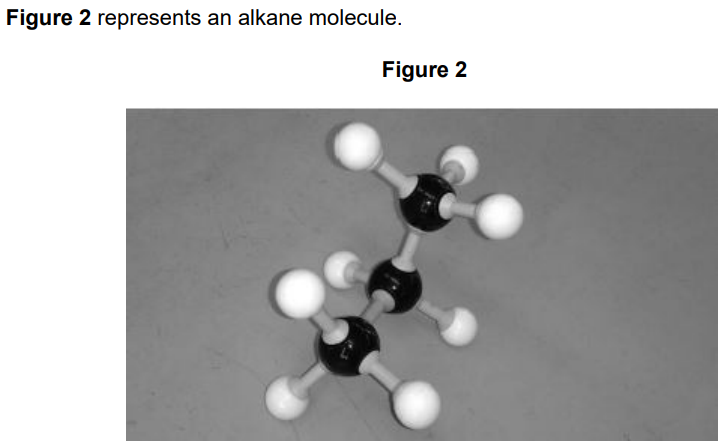
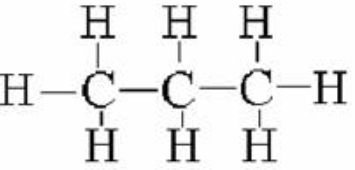
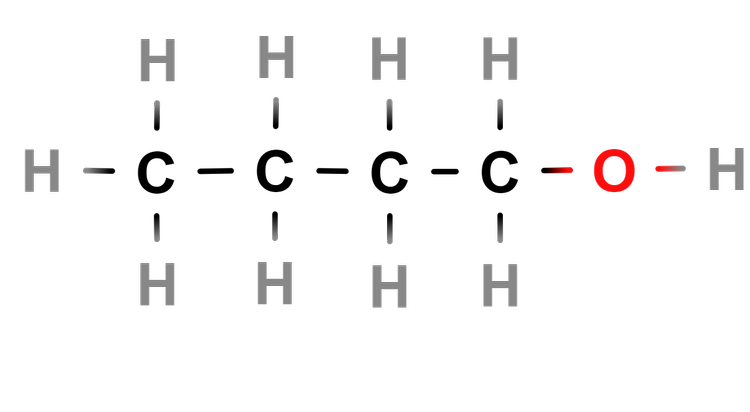
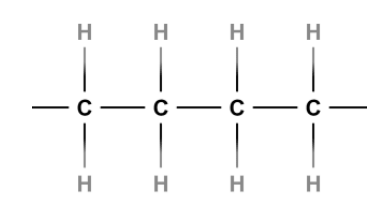
Name the alkane
1 point
1
Question 5
5.
Crude oil is a mixture of hydrocarbons. Most of these hydrocarbons are alkanes.
The general formula of an alkane is CnH2n+2
Complete the structural formula for the alkane that has six carbon atoms in its molecules.
(This question will not return an answer until it is looked at by Miss Bryant)
1 point
1
Question 6
6.
Crude oil contains a large number of hydrocarbons.
Crude oil is a finite resource.
What is a finite resource?
Tick (✓) one box.
1 point
1
Question 7
7.
What is crude oil formed from?
Tick (✓) one box.
1 point
1
Question 8
8.
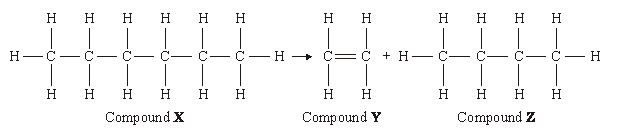
This diagram shows a reaction which takes place in an oil refinery.
X, Y and Z are all examples of which type of compound?
1 point
1
Question 9
9.
Suggest one use for compound Z.
5 points
5
Question 10
10.
Match the alkane name to its molecular formula
Draggable item
arrow_right_alt
Corresponding Item
Butane
arrow_right_alt
CH4
Pentane
arrow_right_alt
C2H6
Propane
arrow_right_alt
C3H8
Methane
arrow_right_alt
C4H10
Ethane
arrow_right_alt
C5H12
1 point
1
Question 11
11.
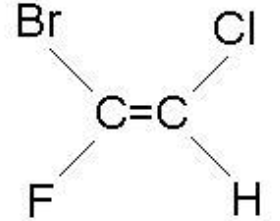
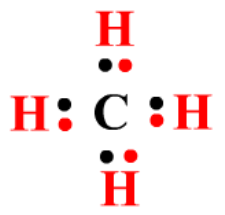
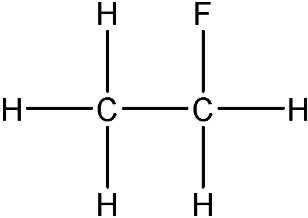
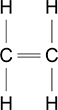
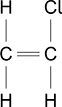
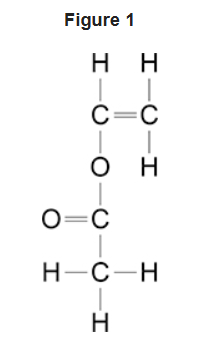
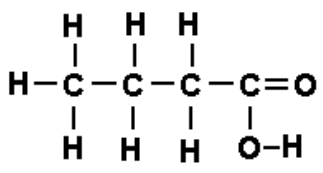
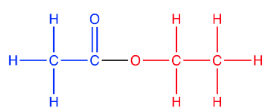
This is a hydrocarbon
1 point
1
Question 12
12.
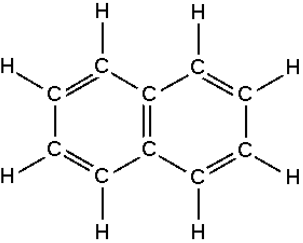
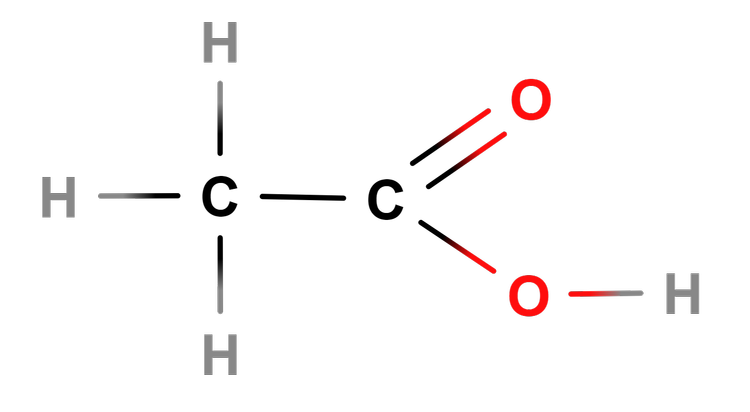
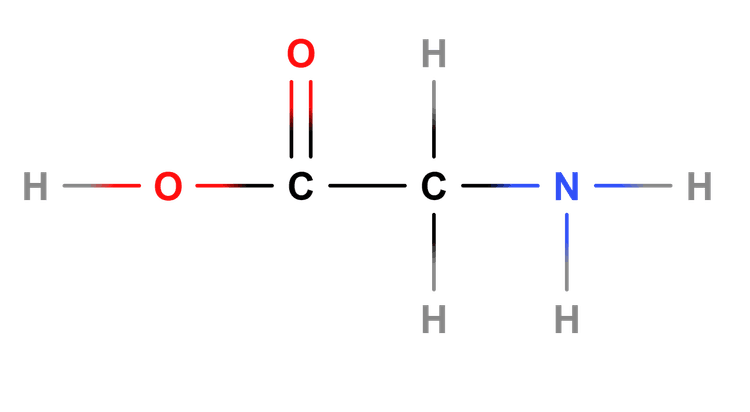
This is a hydrocarbon
1 point
1
Question 13
13.
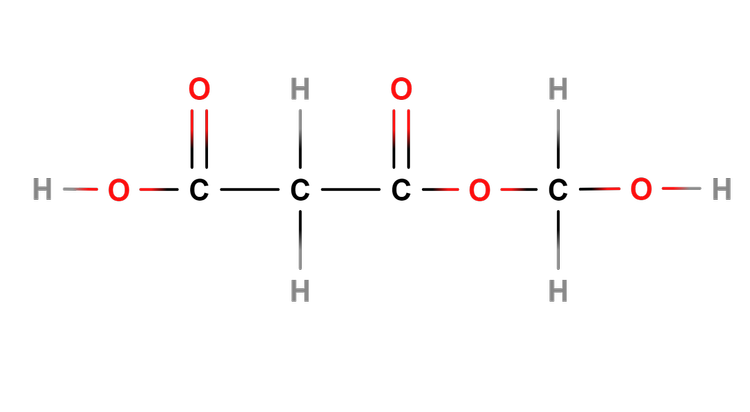
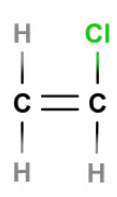
This is a hydrocarbon
1 point
1
Question 14
14.
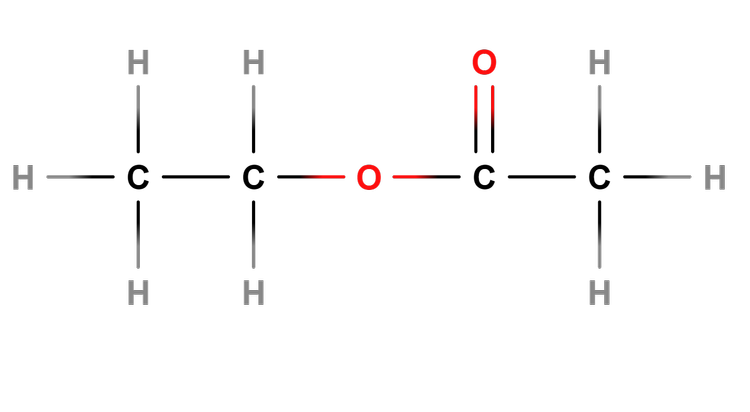
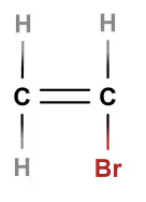
This is a hydrocarbon
1 point
1
Question 15
15.
This is a hydrocarbon
1 point
1
Question 16
16.
The molecule in the previous question is...
1 point
1
Question 17
17.
A hexane molecule has 6 carbon atoms in the chain. How many hydrogen atoms are there?
1 point
1
Question 18
18.
The chemical formulae for ethane is...
1 point
1
Question 19
19.
Fossil fuels are a renewable resource
1 point
1
Question 20
20.
Crude oil is formed when...
2 points
2
Question 21
21.
Hydrocarbons are compounds made of...
4.7.1.2 Fractional distillation and petrochemicals
1 point
1
Question 22
22.
What is fractional distillation?
2 points
2
Question 23
23.
Which of the following are examples of components that can be separated using fractional distillation?
1 point
1
Question 24
24.
Fractional distillation is an example of a physical separation technique.
1 point
1
Question 25
25.
The alkanes from crude oil are separated into fractions by fractional distillation.
Explain how this is done and why it separates the alkanes into fractions.
1 point
1
Question 26
26.
Fractions are mixtures of substances with similar boiling points – they are not pure substances. How can you tell that they are mixtures and not pure substances.
3 points
3
Question 27
27.
5.20 kg of crude oil contains 1.53 kg of LPG (Liquefied Petroleum Gas).
Calculate the percentage (%) of LPG in 5.20 kg of crude oil.
Give your answer to 3 significant figures.
4 points
4
Question 28
28.
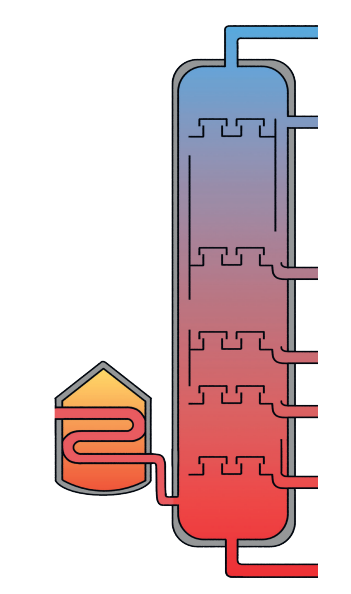
Describe how a fractioning column separates crude oil.
1 point
1
Question 29
29.
In a fractioning column, compounds are separated by...
1 point
1
Question 30
30.
Where would the least flammable compounds be found?
1 point
1
Question 31
31.
Where would would the most volatile compounds be found?
1 point
1
Question 32
32.
Where would the smallest and shortest alkanes be found?
1 point
1
Question 33
33.
What is fractional distillation?
1 point
1
Question 34
34.
Fractional distillation is an example of a physical separation technique.
4.7.1.3 Properties of hydrocarbons
8 points
8
Question 35
35.
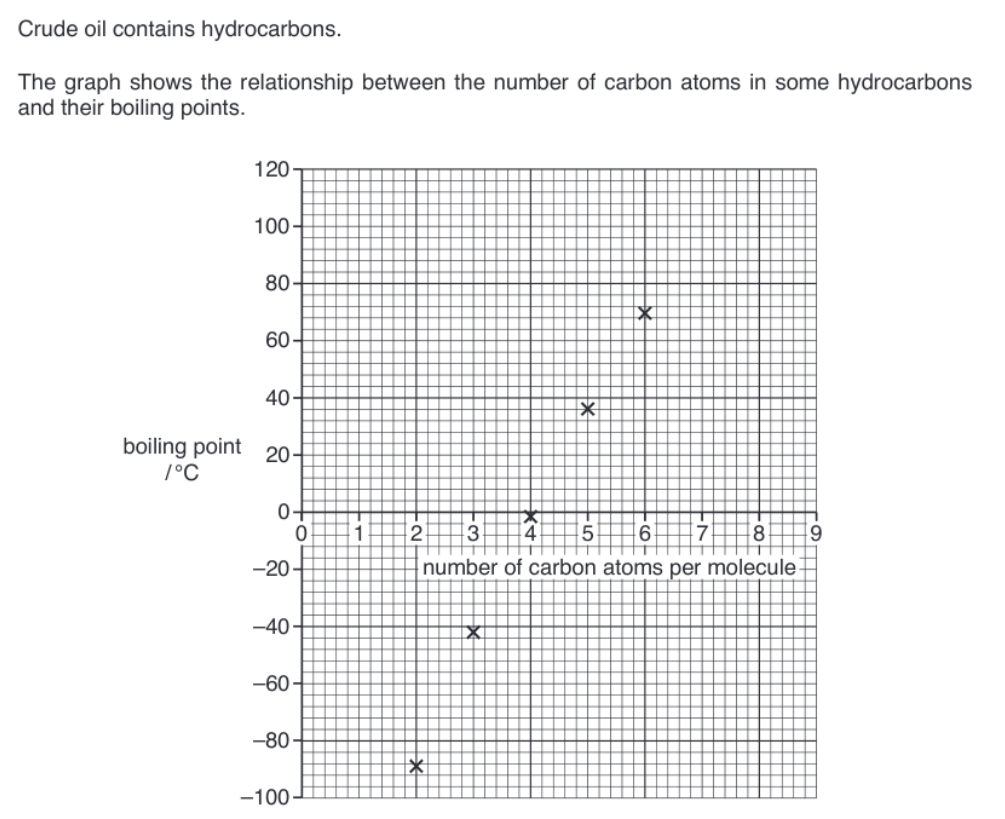
Describe the relationship shown by the graph and use ideas about forces between molecules to explain this relationship.
1. The more carbons the higher the ____________ point.
2. The _________ carbons the larger the molecules.
3. Larger molecules have ___________ boiling points
4. Larger molecules have larger forces ____________ them
5. The larger the forces between the molecules the more ___________ is required for them to break out of a liquid and become a ________
6. The more energy needed to _____________ the molecules, the higher the boiling point of the hydrocarbon
7. The larger / more the forces between the ______________, the higher the boiling point.
Other Answer Choices:
higher
between
gas
molecules
more
separate
energy
boiling
4 points
4
Question 36
36.
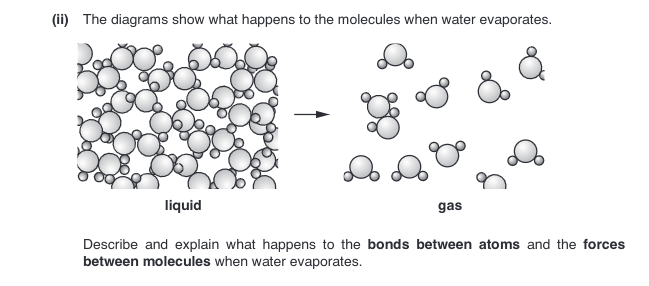
1. Bonds between __________ do not break ;
2. Forces between ______________ (intermolecular forces) are overcome
3. Bonds between atoms are ___________
4. Forces between molecules are _________ ;
Other Answer Choices:
atoms
weak
molecules
strong
9 points
9
Question 37
37.
All alkanes are:
1. _________________ (contain carbon and hydrogen _________
2. ______________ (contain all ___________ bonds)
3. ______________(can be combusted.)
4. have strong _____________ bonds between the __________
5. have weak ___________________ forces between ______________
Other Answer Choices:
atoms
covalent
molecules
hydrocarbons
saturated
single
flammable
ONLY
intermolecular
6 points
6
Question 38
38.
Trends for alkanes as the carbon chain gets longer
Volatility
Melting and boiling points
Height of point of condensation in fractional distillation column
strength of intermolecular forces
Viscosity
Flammability
Increase
Decreases
1 point
1
Question 39
39.
Alkanes burn in oxygen. Balance the equation for methane burning.