Preskoči na glavni sadržaj
Prijava
Sign up for FREE
arrow_back
Biblioteka

C9 Chemistry of the Atmosphere

star
star
star
star
star
Posljednje ažuriranje 4 days ago
94 questions
4.9.1.1 The proportions of different gases in the atmosphere
1
4.9.1.1
1
4.9.1.1
1
4.9.1.1
1
4.9.1.1
1
4.9.1.1
1
4.9.1.1
1
4.9.1.1
1
4.9.1.1
1
4.9.1.1
1
4.9.1.1
4.9.1.2 The Earth's early atmosphere
1
4.9.1.2
1
4.9.1.2
1
4.9.1.2
1
4.9.1.2
1
4.9.1.2
1
4.9.1.2
1
4.9.1.2
3
4.9.1.2
1
4.9.1.2
1
4.9.1.2
6
4.9.1.1
4.9.1.2
1
4.9.1.2
1
1
4.9.1.2
4.9.1.3 How oxygen increased
1
4.9.1.3
1
4.9.1.3
1
4.9.1.3
1
4.9.1.3
1
4.9.1.3
1
4.9.1.3
1
4.9.1.3
4.9.1.4 How carbon dioxide decreased
1
4.9.1.4
1
4.9.1.4
1
4.9.1.4
1
4.9.1.4
1
4.9.1.4
4.9.2.1 Greenhouse gases
1
4.9.2.1
1
4.9.2.1
1
4.9.2.1
1
4.9.2.1
1
4.9.2.1
1
4.9.2.1
1
4.9.2.1
MS-ESS3-5
1
4.9.2.1
1
4.9.2.1
1
4.9.2.1
1
4.9.2.1
1
4.9.2.1
1
4.9.2.1
4.9.2.2 Human activities which contribute to an increase in greenhouse gases in the atmosphere
1
4.9.2.2
1
4.9.2.2
1
4.9.2.2
1
4.9.2.2
1
4.9.2.2
4.9.2.3 Global climate change

The following graph shows the average "Temperature Anomaly" (temperature difference) from 1880-Present. This graph was taken from climate.nasa.gov.

2
8.ESS.1
2
8.ESS.1
2
8.ESS.1
2
8.ESS.1
4
8.ESS.1
1
10
10
1
4.9.2.3
3
4.9.2.1
4.9.2.2
4.9.2.3
1
4.9.2.2
4.9.2.3
1
4.9.2.3
1
4.9.2.2
4.9.2.3
1
4.9.2.3
4.9.2.4 The carbon footprint and its reduction
1
4.9.2.4

Click here to view a video on carbon footprint

4.9.3 Common atmospheric pollutants and their sources
3
4.9.3.1
4.9.3.2
5
4.9.3.1
4.9.3.2
1
4.9.3.1
1
4.9.3.1
1
4.9.3.1
0
0
0
0

Earth and Space Science Website

0

Watch the video on How Sunscreen Hurts Coral

Watch the video on Is it OK to be Smart?

7
7
1
4.9.3.2
1
4.9.3.1
3
4.9.3.1
4.9.3.2
Pitanje 1
1.

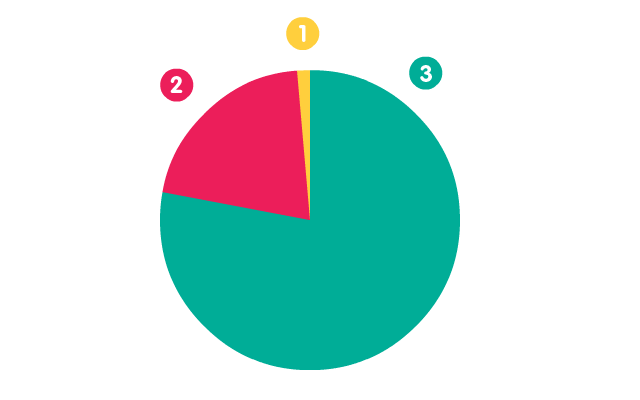
Look at the diagram of the gases in Earth's atmosphere. Name the gas shown by label 3.

Pitanje 2
2.

Look at the picture. It shows the gases in the atmosphere. Which label, 1, 2 or 3, shows gases including carbon dioxide and noble gases?

Pitanje 3
3.

In what form (solid, liquid or gas) is the carbon dioxide in the atmosphere?

Pitanje 4
4.

Coal and oil are two examples of fossil fuels. What is a third?

Pitanje 5
5.

What sedimentary rock is made up of mainly calcium carbonate?

1
Pitanje 6
6.

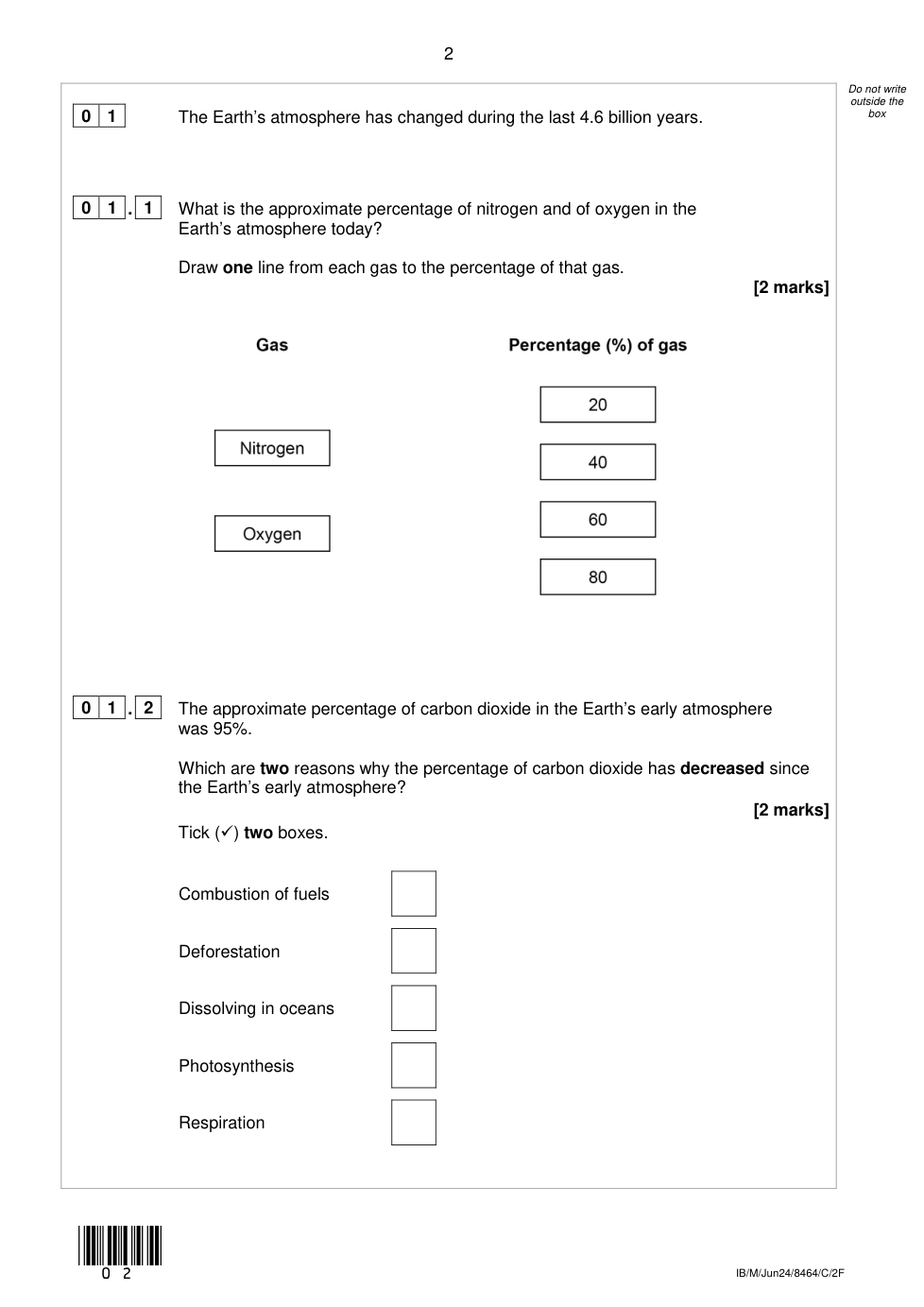
The Earth's atmosphere has changed during the last 4.6 billion years. What is the approximate percentage of nitrogen and of oxygen in the Earth's atmosphere today?

4.9.1.1
4.9.1.2
1
Pitanje 7
7.

The approximate percentage of carbon dioxide in the Earth's early atmosphere was 95%. Which are two reasons why the percentage of carbon dioxide has decreased since the Earth's early atmosphere?

4.9.1.4
Pitanje 8
8.

What is the most abundant gas in the atmosphere?

Pitanje 9
9.

The atmosphere is composed of mainly

Pitanje 10
10.

What is the most abundant gas in the atmosphere?

Pitanje 11
11.

The atmosphere is composed of mainly

Pitanje 12
12.

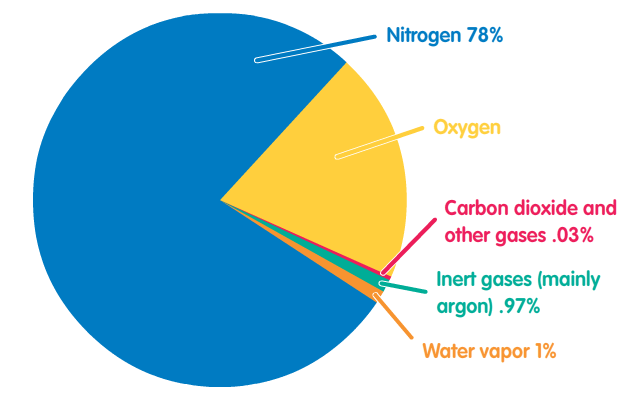
Look at the pie chart showing the composition of the Earth's present day atmosphere. From the information in the graph, what is the percentage of oxygen in the atmosphere?

Pitanje 13
13.

There is limited evidence of the early atmosphere because the time scale is very long, covering __________ years. Which number completes the sentence?

Pitanje 14
14.

Less than 10% of the Earth's early atmosphere was made up of the present day's most abundant atmospheric gas. What is the name of that gas? Give your answer as a word, not symbols.

Pitanje 15
15.

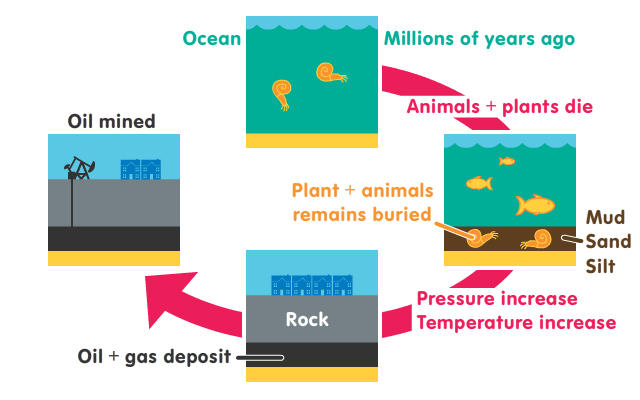
Look at the picture below. As well as sand and silt, what else buried the dead animals and plants?

Pitanje 16
16.

What sedimentary rock is made from the shells and skeletons of dead marine animals?

Pitanje 17
17.
Pitanje 18
18.

Earth's atmosphere was formed billions of years ago. What released the gases into the atmosphere?

Pitanje 19
19.

Earth's atmosphere was formed billions of years ago. What gas is thought to have formed most of the atmosphere at first? Give the name, not the formula.

Pitanje 20
20.
Drugi mogući odgovor:
theories
millions
evidence
Pitanje 21
21.
Drugi mogući odgovor:
evidence can be used from layers of rock and ice cores
carbon dioxide, water vapour, and ammonia
there is limited evidence from so long ago
volcanoes
new theories, backed by evidence, are developed
Pitanje 22
22.

In the Early Atmosphere, what caused the increase in carbon dioxide?

Pitanje 23
23.

Describe and explain how the surface and atmosphere of the Early Earth have changed and evolved to form the present day Earth

2
Pitanje 24
24.

Draw your matching here

4.1.1.2
Pitanje 25
25.

Which gas made up most of the Earth's early atmosphere? Give your answer in words not symbols.

Pitanje 26
26.
Pitanje 27
27.

For 200 million years, the Earth's atmosphere has contained about four-fifths nitrogen, one-fifth oxygen, and small proportions of various other gases. Which of the following is not one of these other gases?

Pitanje 28
28.

Algae first produced gas X about 2.7 billion years ago. Soon after that, gas X started appearing in the atmosphere. What is gas X? Give the full name, not the symbols.

Pitanje 29
29.

What gas that is important for life today was NOT present in the early atmosphere? Give the full name, not the symbol.

Pitanje 30
30.

What biological process led to a fall in carbon dioxide and rise in oxygen levels of the early atmosphere?

Pitanje 31
31.

What gas that is important for life today was NOT present in the early atmosphere? Give the full name, not the symbol.

Pitanje 32
32.

 What gas in our atmosphere is thought to have come from plants and algae alone? Give the name, not the symbols.

Pitanje 33
33.

Which gas is released into the atmosphere by plants as they photosynthesise?

Pitanje 34
34.

The equation below shows a common reaction.

carbon dioxide + water --> glucose + oxygen

What is the name of the reaction?

Pitanje 35
35.

What organisms removed carbon dioxide from the early atmosphere?

Pitanje 36
36.

What process do plants and animals perform that adds carbon dioxide to the atmosphere?

Pitanje 37
37.

The __________ is a natural 'reservoir' for dissolved carbon dioxide. What one word completes the sentence?

Pitanje 38
38.

Did carbon dioxide levels in the atmosphere increase or decrease when sedimentary rocks and fossil fuels that contain carbon were formed?

Pitanje 39
39.

What biological process led to a fall in carbon dioxide and rise in oxygen levels of the early atmosphere?

Pitanje 40
40.

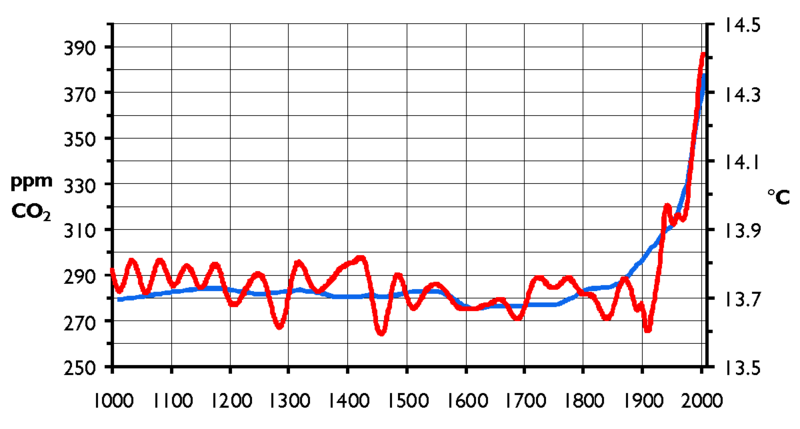
What is the relationship between CO2 level (blue) and average temperature (red)?

Pitanje 41
41.

What was the average temperature in celsius in 2000?

Pitanje 42
42.

Why is the earth getting warmer?

Extra greenhouse gases in our atmosphere are the main reason that Earth is getting warmer. Greenhouse gases, such as carbon dioxide (CO2) and methane, trap the Sun's heat in Earth's atmosphere.

It's normal for there to be some greenhouse gases in our atmosphere. They help keep Earth warm enough to live on. But too many greenhouse gases can cause too much warming.

Which of the following is TRUE?

Pitanje 43
43.

What are greenhouse gases?

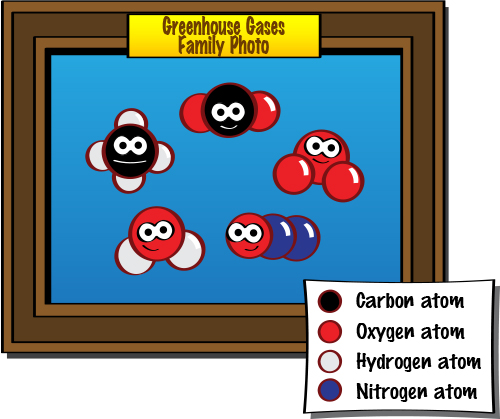
Greenhouse gases are gases in Earth’s atmosphere that trap heat. They let sunlight pass through the atmosphere, but they prevent the heat that the sunlight brings from leaving the atmosphere. The main greenhouse gases are:

  • Water vapor (H20)

  • Carbon dioxide (CO2)

  • Methane (CH4)

  • Ozone (O3)

  • Nitrous oxide (N2O)

  • Chlorofluorocarbons (CFCs)

Which of the following is true about greenhouse gases?

Pitanje 44
44.

Overall, greenhouse gases are a good thing. Without them, our planet would be too cold, and life as we know it would not exist. But there can be too much of a good thing. Scientists are worried that human activities are adding too much of these gases to the atmosphere.

If there were not greenhouse gases in the atmosphere, why would that be a problem?

Pitanje 45
45.

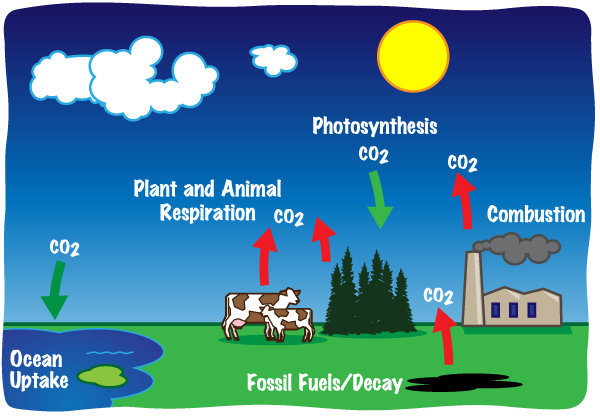
Over the last century, humans have burned coal, oil, and gasoline in our cars, trucks, planes, trains, power plants, and factories. Burning such fossil fuels, known as combustion, produces CO2 as a waste product.

What human activity is causes the biggest increase in the amount of greenhouse gases?

Pitanje 46
46.

Which gas molecules are the best at absorbing infrared radiation (heat energy)

Pitanje 47
47.

What might happen if the greenhouse effect didn't exist?

Pitanje 48
48.

Why does too much carbon dioxide in the atmosphere cause climate change?

Pitanje 49
49.

Which type of wave is sunlight?

Pitanje 50
50.

Which type of wave is infrared?

1
4.9.2.1
1
4.9.2.1
1
4.9.2.1
1
4.9.2.1
1
4.9.2.1
1
4.9.2.1
1
4.9.2.1
Pitanje 58
58.

Which of these is a greenhouse gas?

Pitanje 59
59.

Which of these gases below is not a greenhouse gas?

Pitanje 60
60.

Global warming – an increase in the temperature of the Earth – will result in climate change.

What is one possible human cause of global warming and climate change?

Pitanje 61
61.

Raising large-scale livestock leads to large releases of methane into the environment.

Pitanje 62
62.

Which of these is NOT an effect of global warming?

Pitanje 63
63.

When humans burn fossil fuels, most of the carbon quickly enters the ____ as carbon dioxide.

Pitanje 64
64.

Which of these does NOT add carbon dioxide to the atmosphere?

Pitanje 65
65.

The average global temperature has been on a rising trend since the 1960s.

Pitanje 66
66.

In the last 100 years, about how much has the average global temperature changed? (To the nearest tenth)

Pitanje 67
67.

What do you suppose might be the cause of this change in the average global temperature?

Pitanje 68
68.

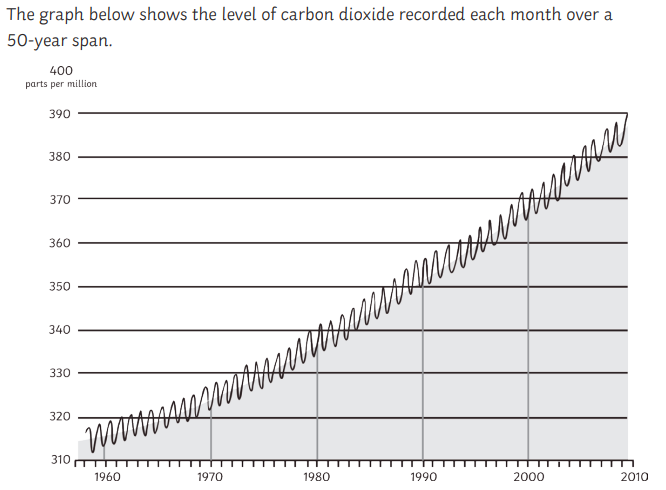
How much more carbon dioxide was in our atmosphere in 2017 than in 2006 (answer in ppm)?

Pitanje 69
69.

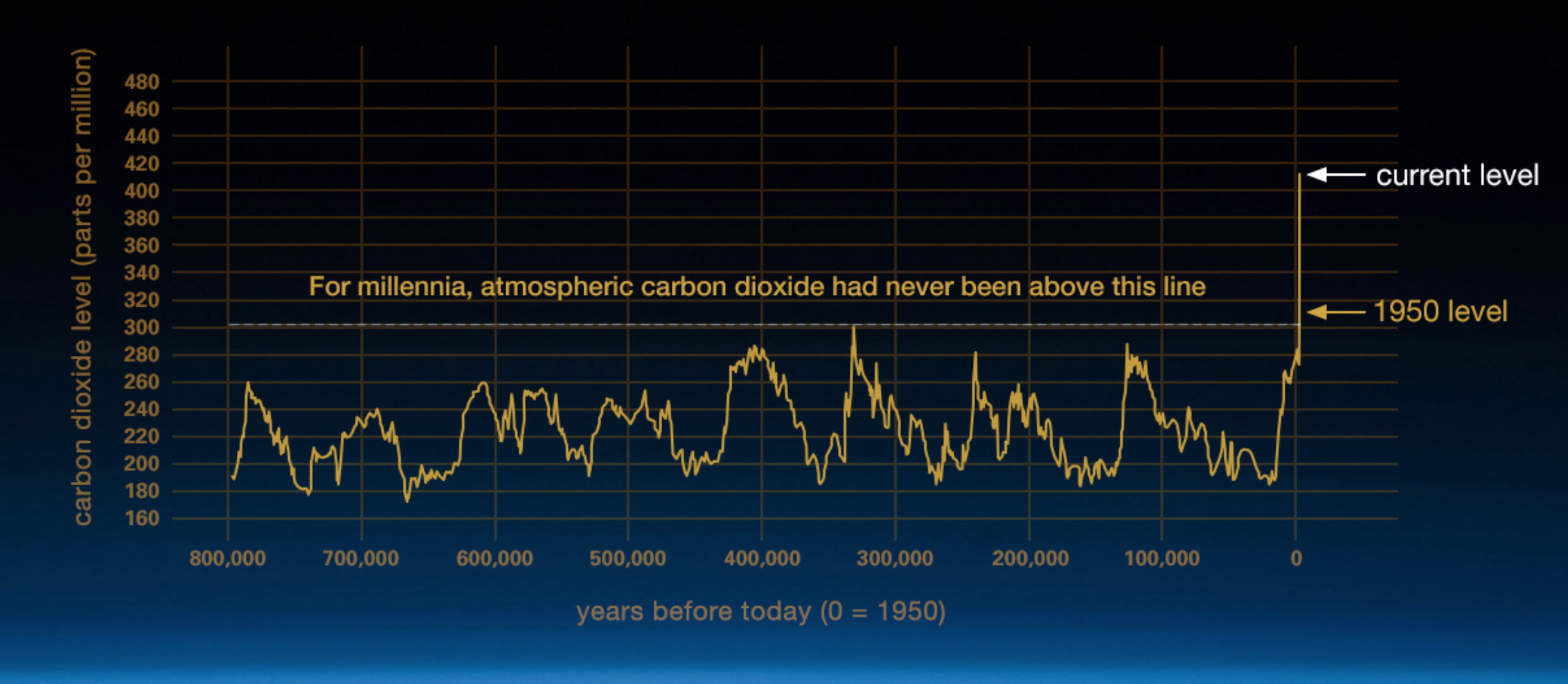
What was the highest historical carbon dioxide level (2nd graph)? What is our carbon dioxide level now (1st graph)? Why is this information useful to us?

Pitanje 70
70.

What trend does the NASA graph above show?

Pitanje 71
71.

"So if you’ve heard that the world’s weather has been getting more extreme, it’s not just a lot of hot air. It’s also a bunch of warm water".

Explain why an average temperature increase of 0.8 degrees celcius over the past century causes such crazy changes in our weather. (10)

Pitanje 72
72.

"Climate change might be the biggest threat facing humanity. Just about everyone has heard that the end of the world is coming if we don't drastically change our system. So why is there no panic? Why don't you care? We see celebrities and politicians warning us about our impending doom but the plain fact is the average everyday person does not concern themselves with climate change".

Fully explain why the average person does not care about climate change.

Pitanje 73
73.

What is global warming?

Pitanje 74
74.

Explain, in as much detail as you can, why the results shown in the graph could cause widespread concern

Pitanje 75
75.

What is one possible effect of global warming and climate change.

Pitanje 76
76.

What is global warming?

Pitanje 77
77.

Global warming – an increase in the temperature of the Earth – will result in climate change.

What is one possible human cause of global warming and climate change?

Pitanje 78
78.

What is one possible effect of global warming and climate change.

Pitanje 79
79.

What is the name of one of the measures that we looked at that measures how much carbon dioxide we impact on the environment?

Pitanje 80
80.

When coal is burned as a fuel the emissions released include carbon dioxide, water and sulphur dioxide.

Match the product with the type of pollution is causes by drawing one line from each product

Pitanje 81
81.

Match each pollution to its cause

Stavka koja se može prevućiarrow_right_altOdgovarajuća stavka

Soot / Particulates

arrow_right_alt

Acid rain

Carbon Dioxide

arrow_right_alt

No harm

Sulfur dioxide

arrow_right_alt

Global warming

Water

arrow_right_alt

Toxic

Carbon monoxide

arrow_right_alt

Global Dimming

Pitanje 82
82.

Sulfur + oxygen -->

Pitanje 83
83.

Hydrogen + oxygen -->

Pitanje 84
84.

Butane + oxygen -->

Pitanje 85
85.

Pitanje 86
86.

Pitanje 87
87.

Pitanje 88
88.

Pitanje 89
89.

Pitanje 90
90.

Watch the video on How Trees clean the air (above) and the video on Are Trees Renewable Resources?

Comprehension Questions

1) Why are trees categorized as a renewable fuel source?

2) Describe the financial incentives for burning wood for energy.

3) Describe how burning wood for energy harms the environment.

3) Dscribe how burning wood for energy harms the environment.

4) Why is Oregon particularly motivated to use wood for biofuel?

5) Describe the event that Margie Hoffman related to her support of using wood as a biofuel.

6) How has fire suppression made wildfires more dangerous?

7) Identify at least two ways that fire helps living organisms.

Pitanje 91
91.

Watch the video on Are Trees Renewable Resources?

Critical Thinking Questions​

8) How could you explain why using wood should not be eligible to receive financial incentives as a renewable resource?

9) Compare and contrast wood and coal as fuel sources. Are there factors beyond carbon dioxide emissions that might make wood a better fuel source than coal?

10) Why might Oregon consider using wood for biofuel one of the best options for maintaining a healthy forest? 11) How might it benefit the state more than alternative methods for removing wood waste?

12) Brainstorm alternative wood uses rather than biofuel that could still help Oregon prevent wildfires.

13) If sequoias need fire to regenerate, how has a century of fire suppression most likely affected sequoia forests?

14) How might the increasing number of fires due to climate change affect the natural fire linked to the sequoia regeneration cycle?

Pitanje 92
92.

Carbon monoxide is also produce in car engines.

Name the process that produces carbon monoxide

Pitanje 93
93.

Which pollutant is formed in car engines from the reaction between two gases that occur naturally in the atmosphere?

Tick one box

Pitanje 94
94.

When coal is burned as a fuel the emissions released include carbon dioxide, water and sulphur dioxide.

Match the product with the type of pollution is causes by drawing one line from each product

Pitanje 51
51.

What wave is coming down?

Pitanje 52
52.

What wave is being reflected down?

Pitanje 53
53.

What is happening to temperature as the simulation runs?

Pitanje 54
54.

What happens to surface temperature if you turn down the greenhouse gases?

Pitanje 55
55.

And what about cranking them up?

Pitanje 56
56.

Swap to the calendar - which time period was the coldest due to lack of greenhouse gases?

Pitanje 57
57.

Which is the warmest, due to greenhouse gases?