C1 Atomic Structure and Periodic Table

Last updated about 1 month ago
226 questions
4.1.1.1 Atoms, Elements, and compounds
1

1

Give the element symbol for the following elements.
Required
1

Copper

Required
1

Fluorine

Required
1

Gallium

1

Hydrogen

Required
1

Indium

Give the element name that matches the symbol below.
Required
1

Au

Required
1

Ge

Required
1

I (This is a capital "i")

Required
1

He

Required
1

W

1

What do we call a substance that cannot be broken down into simpler substances by chemical means?

1

Which term describes a substance composed of two or more elements that are chemically combined?

Required
1

Made up of 2 or more different atoms bonded together.

Required
1

Two or more atoms bonded together.

Required
1

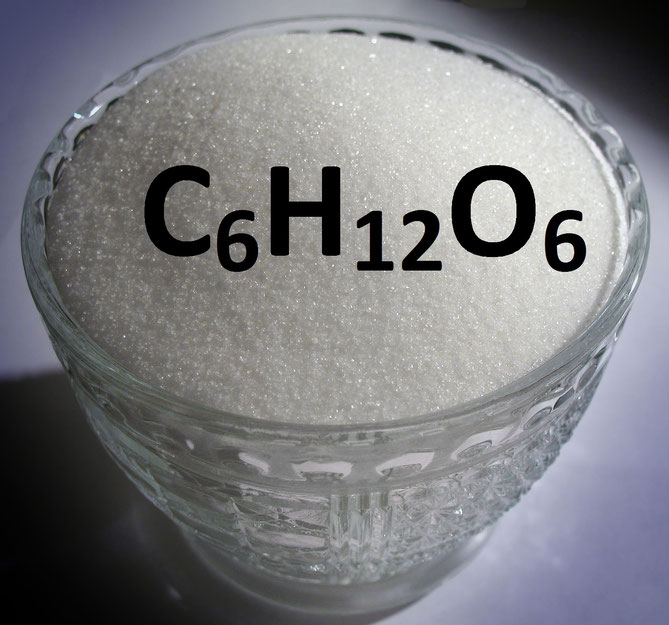
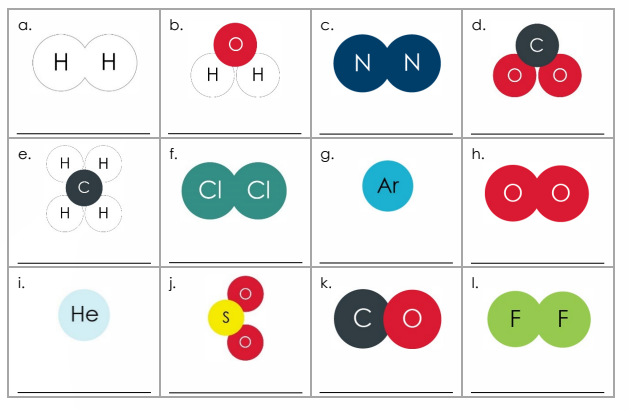
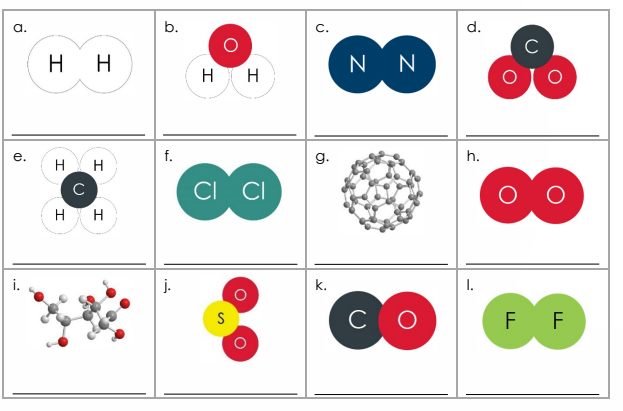
How many atoms make up this compound?

Required
1

How many atoms of oxygen are there in Hâ‚‚Oâ‚‚

Required
1

What is the correct name for NaCl?

Required
1

What is the chemical name for the compound CaO?

Required
1

The correct name for the compound KBr is?

Required
1

What is the correct name for the compound MgBr2?

Required
1

What is the correct name for the compound Al2S3?

1
Other Answer Choices:
molecule
atom
1
Other Answer Choices:
Not an element
Element
1
Other Answer Choices:
Molecule
Element
Both!
1
Other Answer Choices:
Both!
Compound
Molecule
4.1.1.2 Mixtures
1

Tom mixed sand and water together for a science experiment. What is this combination called?

1

Which method is used to separate based on boiling point?

1

What is the process used to separate crystals?

1

Which technique is best for separating colored pigments in a substance?

1

What method is utilized to remove insoluble particles (solids) from a liquid?

1


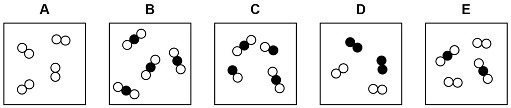
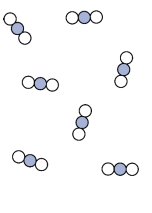
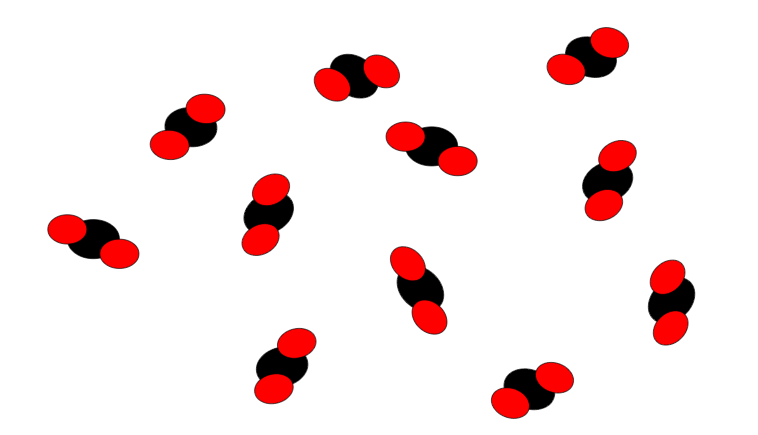
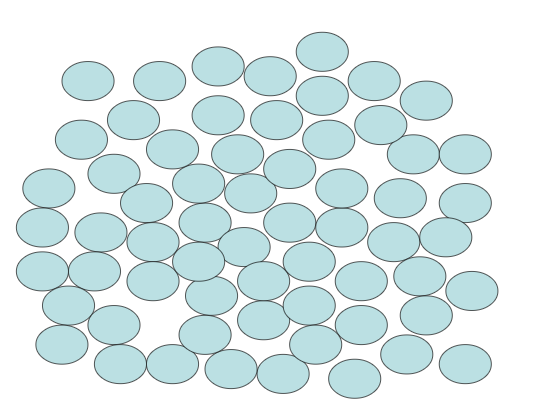
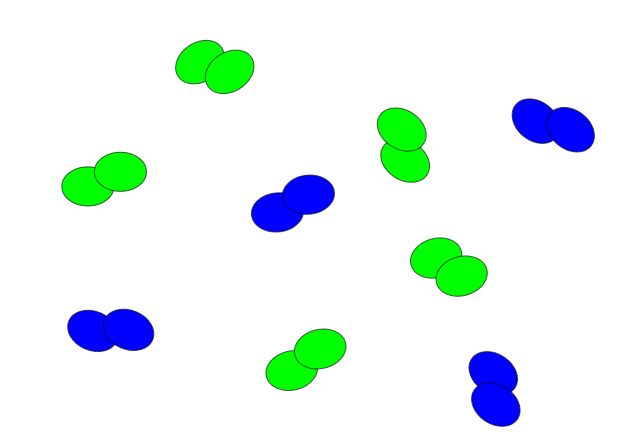
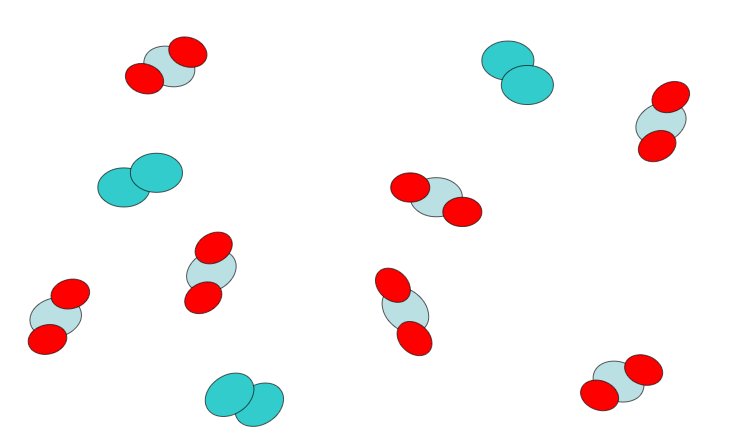
Is the image above an image of an element, compound or mixture?

1

Is the image above an image of an element, compound or mixture?

1

Is the image above an image of an element, compound or mixture?

1

What is the main difference between a compound and a mixture?

1

What method of separation separates colours?

Required
1
Required
1
Required
1
Required
1
Required
1
Required
1
Required
1
Required
1
Required
1
Required
1
1

1

1

1

Required
1

Required
1

Draggable itemCorresponding Item
1

4.1.1.3 The Development of the model of the atom
3

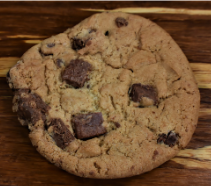
A chocolate chip cookie could be used as a model for JJ Thomson's theory of the structure of an atom.

Assess the model and write:

a) Two reasons it was a good model for JJ Thomson's theory
b) One reason why it is not a good model.

1

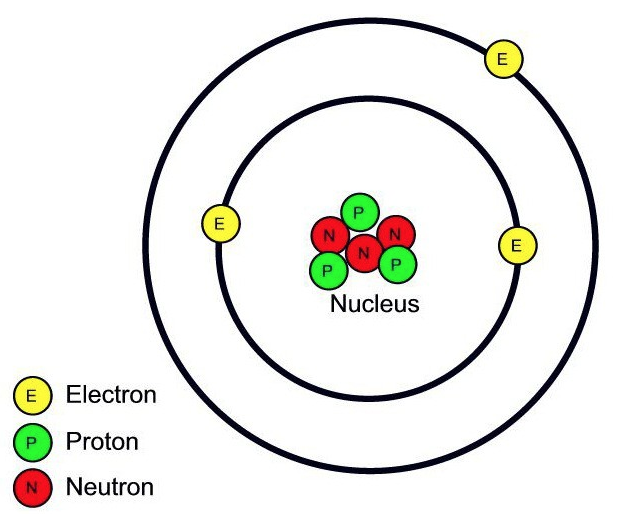
Draw and label a diagram for

a) John Dalton's model
b) JJ Thomson's model

4

Just like Rutherford, Jun is writing a conclusion from Geiger and Marsden's gold foil experiment. Help him write to explain the findings to show how the atomic model looked.

Jun needs to write:
a) The 3 different things that positive alpha particles did when fired at the gold foil
b) A conclusion for each of these findings
c) A description of the model of the atom that this new evidence provided

1

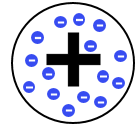
Which of these belong to the Plum Pudding Model and the Nuclear Model?

  • Negative nucleus
  • Contains opposite charges
  • Made up of mostly empty space
  • No nucleus
  • Ball of negative charge
  • Ball of Positive charge
  • Contains protons
  • Contains only positive charges
  • Electrons moving
  • Contains electrons
  • Contains only negative charges
  • Electrons embedded - not moving
  • Positive nucleus
  • Plum Pudding
  • Nuclear Model
  • Both
  • Neither
Required
1

5

Draggable itemCorresponding Item
JJ Thomson
Bohr
Rutherford
Dalton
Chadwick
6

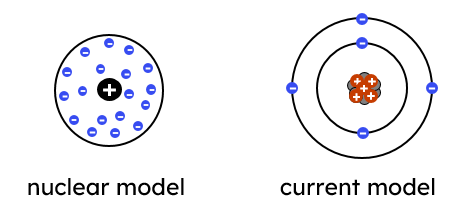
Compare the nuclear model to the current model, giving both similarities and differences.

1

Select two correct statements about Dalton’s model of atoms.

1

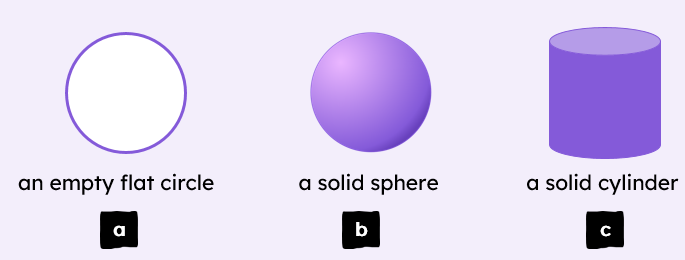
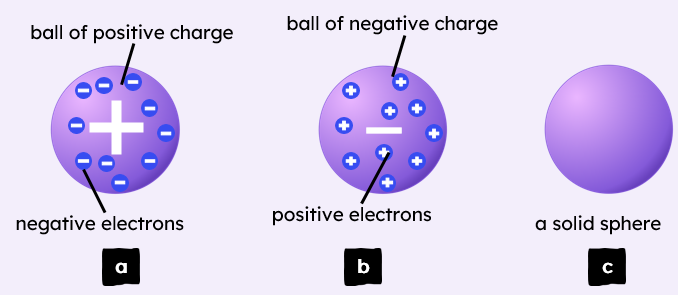
Which is the best representation of Dalton's model?

1

JJ Thomson said that there must be something smaller than an atom.

1

True! He said there was something smaller - what are they called?

1

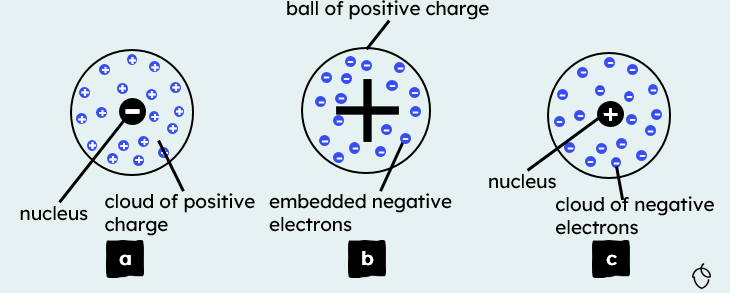
Which image shows JJ Thomson’s model?

1

JJ Thomson’s model was called the currant bun model.

1

It was called the Plum Pudding model - why?

1

What happened to the alpha particles in Rutherford's gold foil experiment?

1

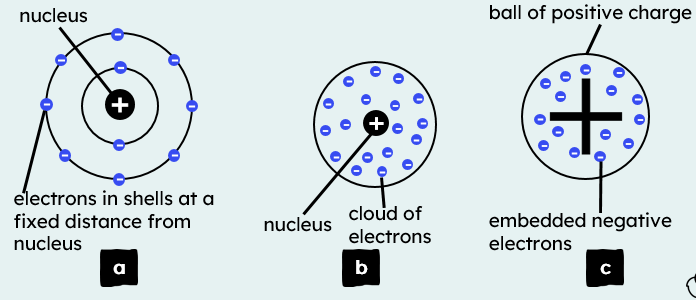
Which image shows Rutherford’s nuclear model?

1

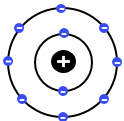
Which image shows Bohr’s model?

1

What did later experiments show about the nucleus?

1

What subatomic particle did James Chadwick suggest existed?

1

Scientists noticed a difference in the atomic number and mass of an atom.

4.1.1.4 Relative electrical charges of subatomic particles
1

What is the charge of a proton?

1

1

1

What is the relative size of an electron?

1

What is the charge of a proton?

1

Why are atoms neutral? (hand mark)

1

What is the charge of a proton?

1

What is the relative size of an electron?

1

What is the relative size of an electron?

1

What is the charge of an ion formed when calcium loses 2 electrons?

4.1.1.5 Size and mass of atoms
1

1

1

Required
1

What is the atomic number of carbon?

Required
1

Which element has an atomic number of 11?

1

How many protons does Hydrogen (H) have in its nucleus?

1

What element in the periodic table has 8 protons?

1

What is the proton number of Helium (He)?

1

How many protons are in the nucleus of Carbon (C)?

1
Correct the information so that Lucas can submit his homework:

The atomic number tells you how many __________ are in the nucleus of an atom. Each element has a unique __________ number. The atomic number is always the __________ of the two numbers found for each element on a periodic table. For an atom, the number of protons is __________ the number of electrons.
1

How can the neutron number of an element be calculated?

1

What is the neutron number of an Oxygen atom whose atomic number is 8 and mass number is 16?

1

If an element has an atomic number of 6 and a mass number of 12, what is the number of neutrons?

1
Li: Protons_______ Neutrons_______ Electrons_______ Atomic Number_______ Atomic Mass_______
1
C: Protons_______ Neutrons_______ Electrons_______ Atomic Number_______ Atomic Mass_______
1
Xe: Protons_______ Neutrons_______ Electrons_______ Atomic Number_______ Atomic Mass_______
1
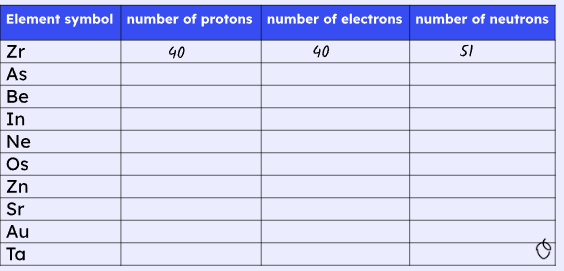
As Protons:_______ Electrons: _______
Neutrons: _______
1
Be Protons:_______ Electrons: _______
Neutrons: _______
1
In Protons:_______ Electrons: _______
Neutrons: _______
1
Ne Protons:_______ Electrons: _______
Neutrons: _______
1
Os Protons:_______ Electrons: _______
Neutrons: _______
1
Zn Protons:_______ Electrons: _______
Neutrons: _______
1
Sr Protons:_______ Electrons: _______
Neutrons: _______
1
Au Protons:_______ Electrons: _______
Neutrons: _______
1
Ta Protons:_______ Electrons: _______
Neutrons: _______
1

Challenge: Atoms are very small, and their nucleus is even smaller. Research and explain the size of atoms and their nucleus.

3
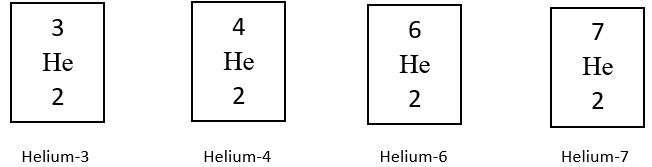
What are the protons, electrons and neutrons of Helium-3?
P: _______
E: _______
N: _______
3
What are the protons, electrons and neutrons of Helium-4?
P: _______
E: _______
N: _______
3
What are the protons, electrons and neutrons of Helium-6?
P: _______
E: _______
N: _______
3
What are the protons, electrons and neutrons of Helium-7?
P: _______
E: _______
N: _______
1

Find the symbol for helium on your Periodic Table.

Which of the isotopes has the mass number closest to the mass number given on the Periodic Table?

2

Would the chemical properties of the isotopes of helium be the same or different?
Explain your answer. (hand mark)

1

Give the symbol of the isotope described.

An isotope with 29 protons and 34 neutrons.

1

Give the symbol of the isotope described.

An isotope with 13 protons and 13 neutrons.

1

Give the symbol of the isotope described.

An isotope with 56 protons and 81 neutrons.

1

Give the symbol of the isotope described.

An isotope with 3 protons and 6 neutrons.

1

Give the symbol of the isotope described.

An isotope with 14 protons and 19 neutrons.

3
What are the protons, electrons, and neutrons of the element Potassium? P: _______ E: _______ N: _______
1

What element in the periodic table has 8 protons?

1

This is Scandium.

What is its atomic number?

1

How many protons does it have?

1

What is its atomic mass?

1

How many neutrons does it have?

1

What is an isotope?

Required
1

They have a very _____ mass.

Required
1

Electrons are a ________ particle.

Required
1

They are located in ______ around the outside of an atom.

Required
1

Which element has an atomic number of 11?

4.1.1.6 Relative Atomic Mass
1

1

1

Calculate the relative atomic mass (Ar) of gallium to 3sf given that it consists of two isotopes with these abundances: Ga-69 = 60.1%, Ga -71 = 39.9%.

1

The data shows the mass numbers and abundances of naturally-occurring copper isotopes.

Cu-63 = 69%
Cu-65 = 31%

Calculate the relative atomic mass of copper. Give your answer to 1 decimal place.

1

1

What is the relative atomic mass of element X with isotopes 20 (80%) and 22 (20%)?

1

Calculate the relative atomic mass of isotope A (10, 50%) and isotope B (12, 50%).

1

If 70% of isotope 35 and 30% of isotope 37, what is the relative atomic mass?

1

Calculate the relative atomic mass of magnesium if Mg-24 has 78% abundance and Mg-26 has 22% abundance.

1

Given Cl-35 at 75% and Cl-37 at 25%, find the relative atomic mass of chlorine.

4.1.1.7 Electronic Structure
1

1

Match these elements to the correct electron configuration.

Draggable itemCorresponding Item
Carbon (C)
2,8
Sodium (Na)
2,8,1
Magnesium (Mg)
2,8,2
Fluorine
2,4
Neon (Ne)
2,7
Required
1

How many valence electrons does neon have?

Required
1

How many valence electrons does neon have?

1

Match these elements to the correct electron configuration.

Draggable itemCorresponding Item
Fluorine
2,8
Sodium (Na)
2,8,1
Neon (Ne)
2,8,2
Carbon (C)
2,4
Magnesium (Mg)
2,7
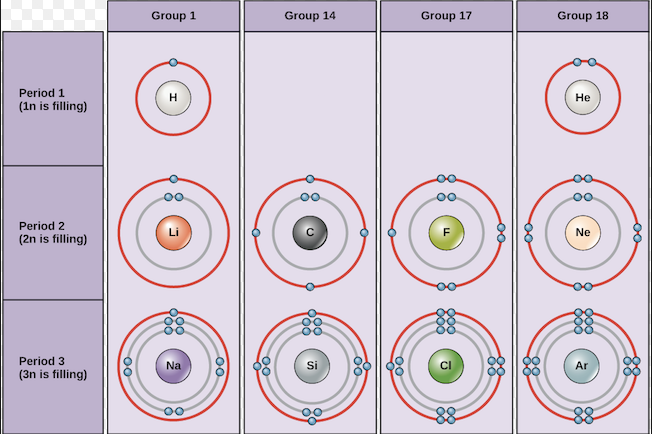
Instructions: fill in the boxes below to show the electron configuration of these atoms. Use your periodic table to help you. The example above shows you how.
Required
1

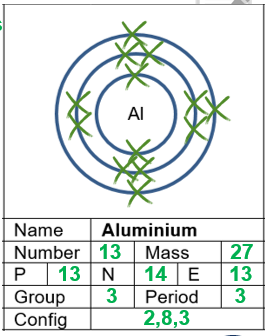
Draw the electrons of Nitrogen

Required
1

Draw the electrons of Lithium

Required
1

Draw the electrons of Neon

Required
1

Draw the electrons of Magnesium

1

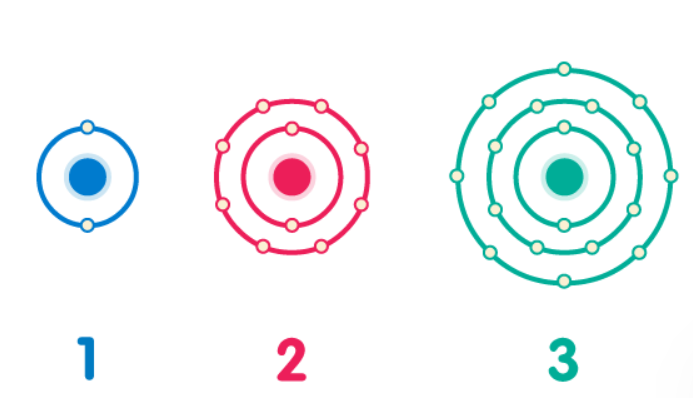
Explain how electrons are arranged in electron shells

1

Fluorine has 9 electrons. How are they arranged?

1

Match the atom to its electron configuration

Draggable itemCorresponding Item
Potassium (19)
2,1
Lithium (3)
2,8,1
Sodium (11)
2,8,8,1
1

Chlorine ion (Cl-) has fewer electrons than a chlorine atom (Cl).

1

Atoms that lose electrons form positive ions.

Required
1

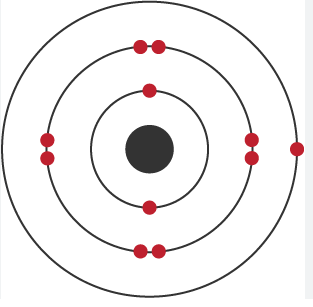
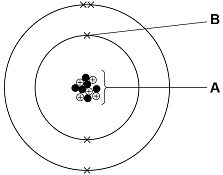
How many electrons does this have?

Required
1

What is the electron structure?

Required
1

How many electrons does this atom LOSE?

Required
1

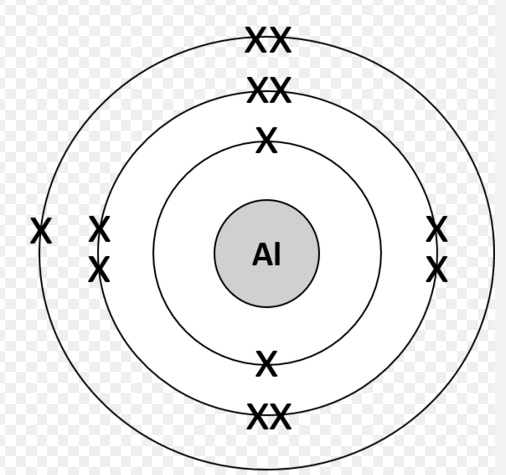
How many electrons does this have?

Required
1

What is the electron structure?

Required
1

How many electrons does this atom LOSE?

Required
1
Required
1
Required
1
Required
1
Required
1
1

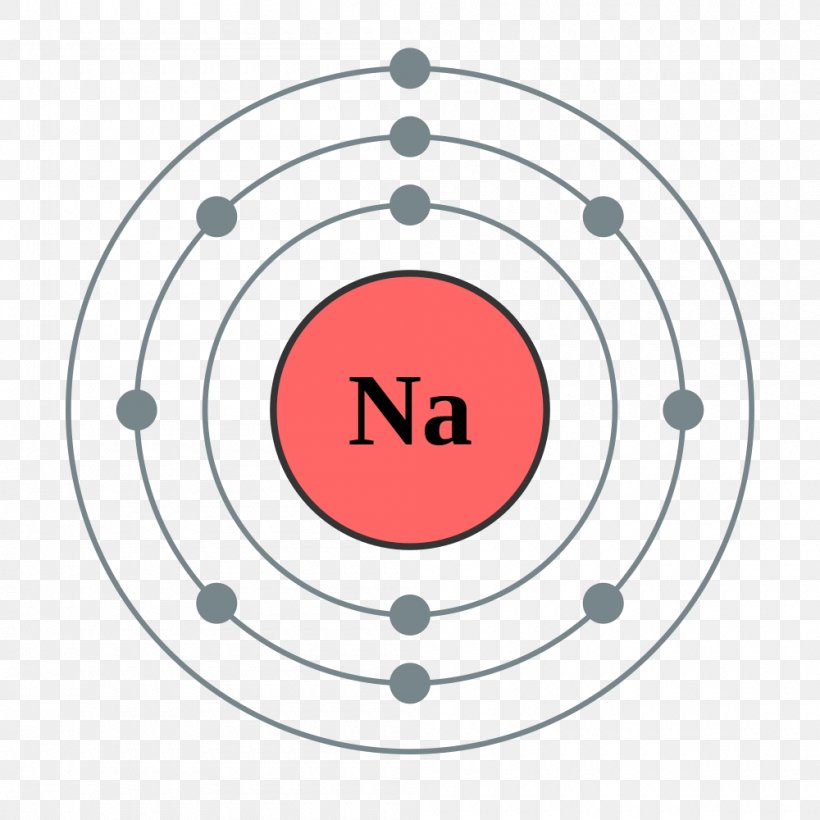
Draw the electron configuration for Sodium

1

Draw the electronic structure of Chlorine

1

Draw the electronic structure of Potassium

4.1.2.1 The Periodic Table
1

1

1

1

1

1

1
1
1
1
1
1
1
1
1
4.1.2.2 Development of the Periodic Table
1

Who is the creator of the Modern periodic table?

1

What distinguished Mendeleev's Periodic Table?

1

Why are elements in the same group in Mendeleev's periodic table?

1

How did Mendeleev organise the elements in his periodic table?

4.1.2.3 Metals and non-metals
1

Are most metals at room temperature solid, liquid, or gas?

1
  • High density
  • Ductile (can be made into wires)
  • Lustrous (shiny)
  • Dull
  • Solid at room temperature
  • Gas or liquid at room temperature
  • Good conductor of electricity and Heat
  • Low density
  • Malleable (able to be hammered)
  • Poor conductor of electricity and heat
  • Brittle
  • Metal
  • Non-Metal
4.1.2.4 Group 0
Required
1

Required
1

Required
1

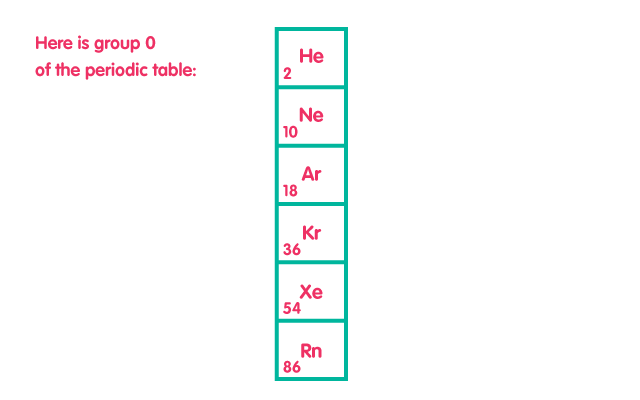
Describe the pattern of reactivity of these elements and others in their group

1

1

1

1

1
4.1.2.5 Group 1
1

List the names of the 6 elements that are known as the Alkali Metals

1

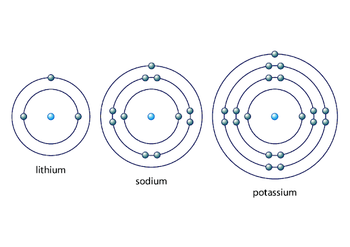
For the first 3 elements draw the electron shell configurations

1

How many electrons do they have on their outer shell?

Required
1

Draw the ion formed from the Li atom

Required
1

Draw the ion formed from the Na atom

Required
1

Draw the ion formed from the K atom

Required
1

Describe the pattern of reactivity of these elements.

Required
2
4.1.2.6 Group 7
Required
1

Draw the ion formed from the F atom

Required
1

Draw the ion formed from the Cl atom

Required
1

Describe the pattern of reactivity of these elements and others in their group

Required
1

Required
1

Required
1

Required
1

Required
1

Required
1

Required
1

1

1

4
Other Answer Choices:
1
Other Answer Choices:
1
Other Answer Choices:
4.1.3 Properties of Transition Metals
1

Required
1

Sort out the following elements whether they belong to Group 1 metals or Transition metals.

  • Copper
  • Iron
  • Sodium
  • Lithium
  • Transition Metal
  • Group 1 Metal
1

Identify the property from the provided options:

  • Soft and can be cut with a knife
  • Dense
  • Low density
  • High melting point
  • React slowly with water
  • React vigorously with water
  • Produce alkaline solutions when react with water
  • Form coloured compounds
  • Group 1 Metals
  • Transition Metals
1

Identify the property from the provided options:

  • Soft and can be cut with a knife
  • Dense
  • Low density
  • High melting point
  • React slowly with water
  • React vigorously with water
  • Produce alkaline solutions when react with water
  • Form coloured compounds
  • Group 1 Metals
  • Transition Metals