What type of bonding is shown in the video below? ALSO, explain how you know.

What type of bonding is shown in the video below? ALSO, explain how you know.
Sort the type of bonding with its description
| Draggable item | arrow_right_alt | Corresponding Item |
|---|---|---|
Alloy | arrow_right_alt | Transferring electrons |
Metallic bonding | arrow_right_alt | Sharing electrons |
Ionic bonding | arrow_right_alt | Delocalised electrons through structure |
Covalent bonding | arrow_right_alt | Mixture of a metal and another element |
Draw the ion formed from the Li atom
Draw the ion formed from the Na atom
Draw the ion formed from the K atom
Draw the ion formed from the F atom
Draw the ion formed from the Cl atom
What type of bonding is shown in the video below? ALSO, explain how you know.
What is the ion formed when Magnesium (Atomic Number: 12) loses two electrons?
Draw dot and cross diagram - Calcium sulfide
Draw electron configuration diagrams to show how an atom of lithium becomes an ion
Potassium is in Group 1. How many electrons does it lose when it becomes an ion?
What kind of bonding is this?
What is the ion formed by Sodium (Na)?
What is the ion formed by Oxygen (O)?
What ion does Calcium (Ca) form?
What ion does Fluorine (F) form?
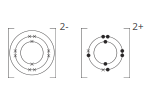
Which ion has a 2+ charge?
What is the ion formed when Magnesium (Atomic Number: 12) loses two electrons?
Draw the ion formed from the Li atom
Draw the ion formed from the Na atom
Draw the ion formed from the K atom
Draw the ion formed from the F atom
Draw the ion formed from the Cl atom
Lithium LOSES an electron (electrons are negative). What charge does it have?
Beryllium LOSES two electrons (electrons are negative). What charge does it have?
Magnesium LOSES two electron (electrons are negative). What charge does it have?
Fluorine GAINS an electron - what charge does it have?
Draw dot and cross diagram - Lithium fluoride
Draw dot and cross diagram - Magnesium chloride
Draw dot and cross diagram - Lithium Oxide
Draw dot and cross diagram - Calcium sulfide
Why do metals form positive ions, while non-metals form negative ions?
Use dot and cross diagram to show the electronic changes that occur during the reaction between calcium and fluorine.
Match the formulas of the following ionic compounds to their names.
| Draggable item | arrow_right_alt | Corresponding Item |
|---|---|---|
Mg3N2 | arrow_right_alt | Sodium sulfide |
MgO | arrow_right_alt | Potassium chloride |
Li2S | arrow_right_alt | Magnesium oxide |
Na2S | arrow_right_alt | Lithium sulfide |
KCl | arrow_right_alt | Magnesium nitride |
Match the names of the following ionic compounds to their formulas.
| Draggable item | arrow_right_alt | Corresponding Item |
|---|---|---|
Potassium nitride | arrow_right_alt | Be3P2 |
Beryllium phosphide | arrow_right_alt | RbBr |
Rubidium bromide | arrow_right_alt | Na2O |
Sodium oxide | arrow_right_alt | AlCl3 |
Aluminum chloride | arrow_right_alt | K3N |
What is the formula for lithium sulfide?
What is the formula for potassium bromide?
What is the formula for beryllium nitride?
What is the formula for aluminum sulfide?
What is the formula for sodium phosphide?
When atoms gain or lose electrons, they do not form ions
When Li loses an electron, it becomes Li+1
Draw electron configuration diagrams to show how an atom of lithium becomes an ion
Draw electron configuration diagrams to show how an atom of fluorine becomes an ion
Potassium - Use your periodic table to find the number of electrons
Draw the atom Boron and how it becomes the ion B+3
In a giant ionic structure, there are strong electrostatic forces in all directions between
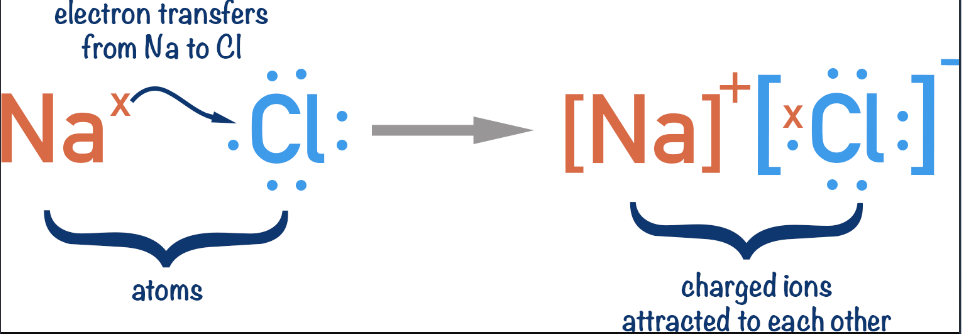
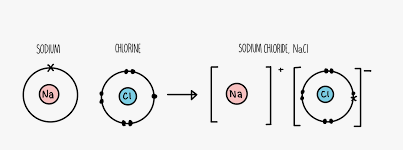
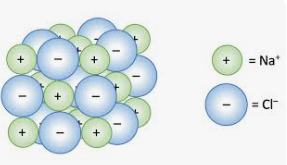
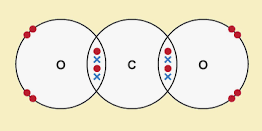
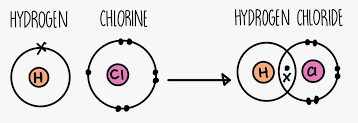
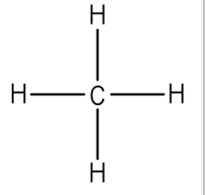
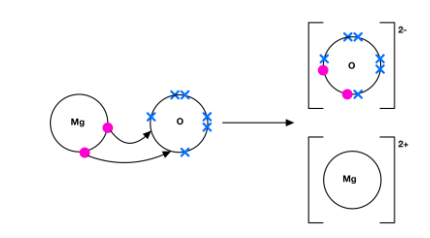
Ionic Compounds
Simple Molecules
How are these compounds classified?
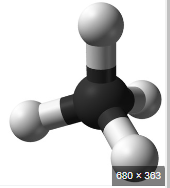
Methane
Magnesium Oxide
Sodium Chloride
Carbon Dioxide
Small Covalent Compounds
Ionic Compounds
Describe the difference between an ionic and covalent bond.
Complete the figure below to show the outer shell electrons in a molecule of Si2H6
Give one limitation of using a dot and cross diagram to represent a molecule.
What kind of chemical bonding is taking place with Bromine?

This is Hydrogen Cyanide and it follows all the rules of covalent bonding. Use your knowledge of covalent bonding to complete the diagram. (Grade 7/8 Bonding Question)
How are these compounds classified?
Methane
Magnesium Oxide
Sodium Chloride
Carbon Dioxide
Small Covalent Compounds
Ionic Compounds
Describe the difference between an ionic and covalent bond.
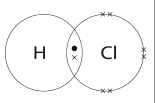
The chlorine molecule forms a single bond. Please complete the diagram
A chemical bond formed when two atoms share one or more pairs of valence electrons.
Which one has the stronger bond?
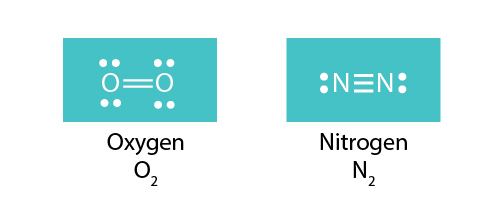
Which of the following is a covalent compound?
How many valence electrons are shared in each covalent bond?
What kind of bonding is this?
In a metallic bond, where are the electrons located?
Give the definition of metallic bonding ( 1 mark)

Which friend is most correct?

These particles are most likely in what state?
Gas particles have the least amount of kinetic energy, particles are slow, and particles virbrate.
Solid has defintie shape and does not change volume
Liquid does....
The element chlorine is a
Draw the particles in a solid
Draw the particles in a liquid
Draw the particles in a gas
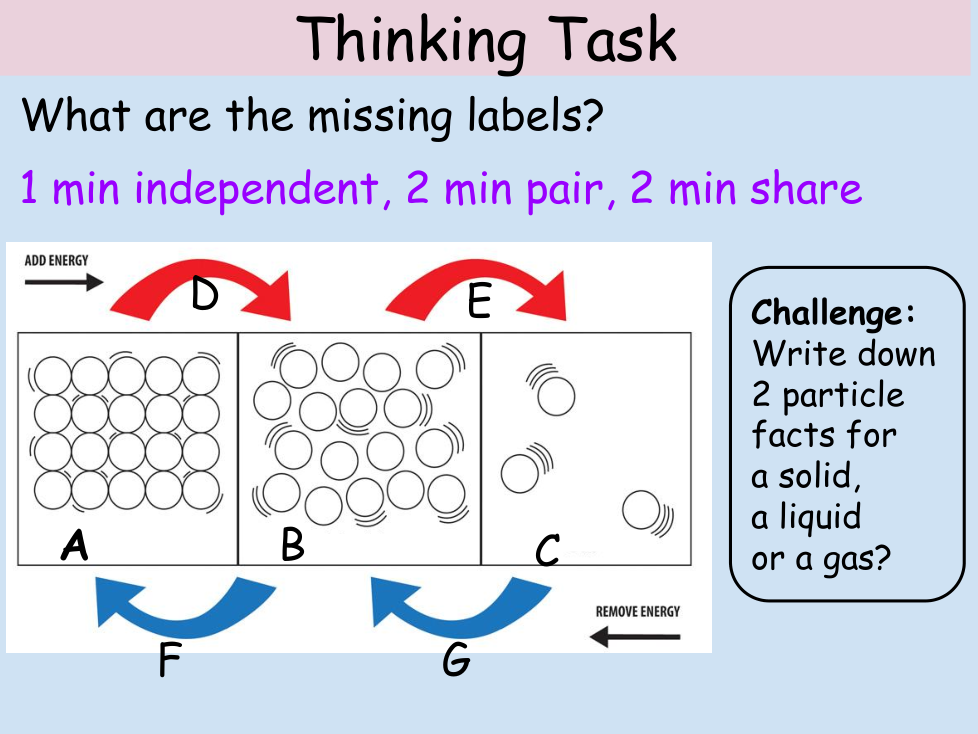
Name the process for changing a solid into a liquid.
Name the process for changing a gas into a liquid.
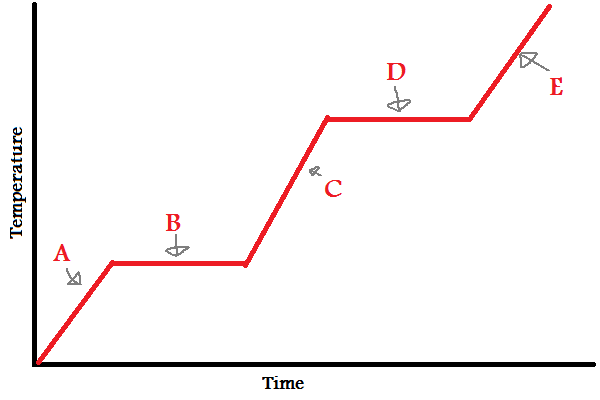
This graph shows a cooling curve?
Which section of the graph represents melting?
What is the state of matter that has a definite shape and volume?
Which of the following are states of matter?
Water can exist in all three states of matter (solid, liquid, gas).
Can you give an example of a gas that you breathe in?
Ice is the solid state of water.
Drag the characteristics or details to the correct state of matter.
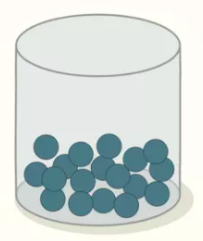
are somewhat close together but can move freely
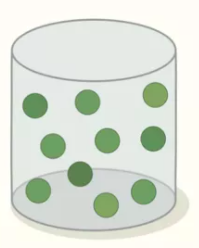
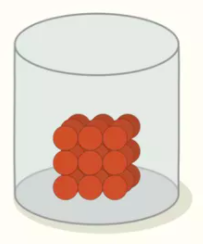
particles vibrate in a fixed position
has a definite volume but no defined shape
has a volume that can change
has a defined shape and volume
particles collide and move everywhere
Solid
Liquid
Gas
What is matter with a definite shape and definite volume?
What is matter that has a definite volume, but NOT a definite shape.
Type the name for each change of state next to the letter that represents this change on the diagram below
Substances are usually the most dense when they are in the solid state.
Which of the following is NOT true? As thermal energy is added to a substance...
If a substance cools down, its molecules
If a substance heats up, its molecules
In the reaction, we made Hydrogen gas. How should we represent that in a chemical equation?
In the reaction 2H₂(g) + O₂(g) → 2 H₂O(l), which substance is a liquid?
In the displacement reaction of Halogens,
Cl2(g) + 2NaBr(aq) → 2NaCl(aq) + Br(l)
which is a liquid?
This question is about how Group 1 metals react in water
In the equation
2Na(s) + 2H2O(l) → 2NaOH(aq) + H2(g)
what is NaOH?
Why don’t covalent compounds conduct electricity?
Why are ionic substances soluble in water?
Why don’t covalent compounds conduct electricity?
Why do ionic compounds have high melting and boiling points?
Why are most ionic compounds soluble in water?
In our practical, did ionic compounds dissolve in water and become soluble?
Did the ionic compounds conduct electricity?
Did the ionic compounds have high or low melting points?
Match keyword to definition
| Draggable item | arrow_right_alt | Corresponding Item |
|---|---|---|
Solubility | arrow_right_alt | A measure of how well a material conducts electricity. |
charge carrier | arrow_right_alt | A measure of how well a material transfers energy when heated. |
electrical conductivity | arrow_right_alt | Temperature at which a substance changes from solid to a liquid state. |
melting point | arrow_right_alt | A particle that enables electrical conductivity. |
thermal conductivity | arrow_right_alt | How well a solute dissolves in a solvent |
Which of the following ionic substances is not a good electrical conductor?
Why do ionic compounds have high melting and boiling points?
Why are most ionic compounds soluble in water?
Why is the melting point of magnesium oxide, MgO, higher than sodium chloride, NaCl?
Why don’t covalent compounds conduct electricity?
Why are ionic substances soluble in water?
What are the properties of ionic substances?
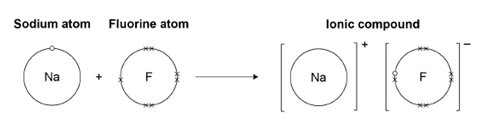
What is the name of this compound?
This interactive let's you change the intermolecular attractions between particles at the same temperature. While you can't actually do this in real life, this simulation will help you explore how the strength of intermolecular attractions determine if a substance is a solid, liquid, or gas at a given temperature.
Use this interactive to answer questions 1-4
Which statement best describes a substance that has weak intermolecular attractive forces between particles?
Which statement best describes a substance that has strong intermolecular attractive forces between particles?
Identify the state of matter for the substance with weak intermolecular attractions.
Identify the state of matter for the substance with strong intermolecular attractions.
The boiling point of a substance is the temperature at which the substance changes states from liquid to gas. Boiling point is a physical property that is determined by intermolecular attractions. In the interactive below, there are two tiny drops of liquid, one polar and the other non-polar. Use the interactive to answer questions 5-8
How do intermolecular attractions affect the boiling point of a substance?
Why do ionic compounds have higher melting points than simple covalent compounds?
Which of these is the property of ionic and small covalent molecules?
Does Not Conduct Electricity
Conducts Electricity when Dissolved
Forms Giant Ionic Lattice
High Melting Point
Low Melting Point
Usually Gas or Liquid
Small Covalent Molecule Properties
Ionic Properties
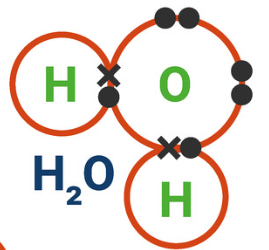
Giant structure or simple molecule?
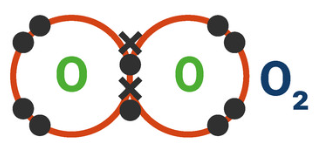
Giant structure or simple molecule?
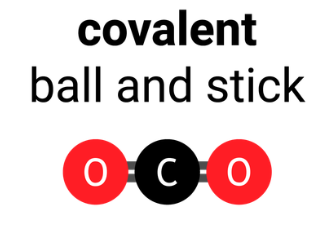
Giant structure or simple molecule?
Why do ionic compounds have higher melting points than simple covalent compounds?
Which of these is the property of ionic and small covalent molecules?
Does Not Conduct Electricity
Conducts Electricity when Dissolved
Forms Giant Ionic Lattice
High Melting Point
Low Melting Point
Usually Gas or Liquid
Small Covalent Molecule Properties
Ionic Properties
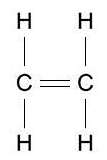
Poly(ethene) is produced from ethene.
The structure of ethene is:
Complete the structure of poly(ethene)
Complete the missing parts of the sentence
Polymers are
Which state of matter are most polymers at room temperature
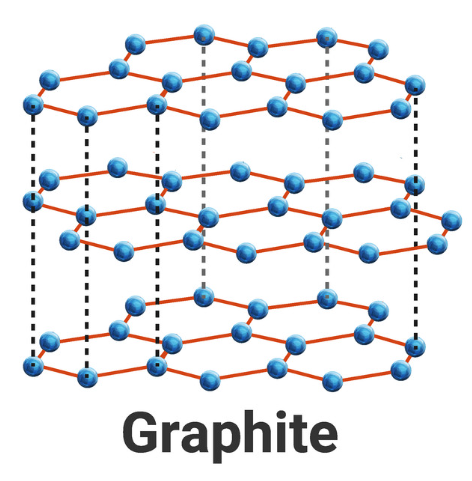
Giant structure or simple molecule?
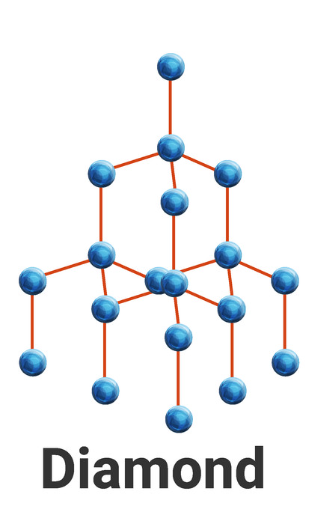
Giant structure or simple molecule?
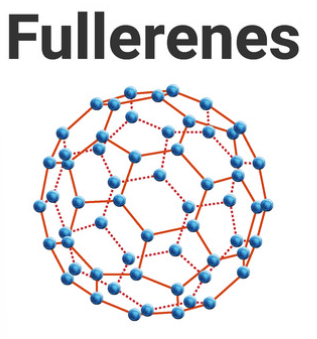
Giant structure or simple molecule?
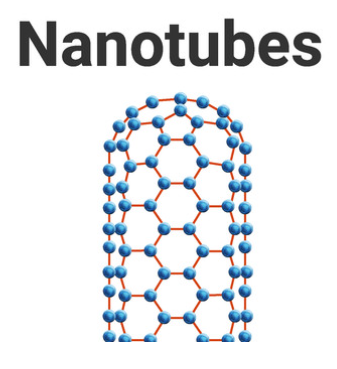
Giant structure or simple molecule?
Properties
Solids
Never conduct electricity
Low melting and boiling points
Very high melting points
Gases or liquids
Almost never conduct electricity
Giant Covalent Structures
Small Covalent Molecules

(a)Explain why silicon dioxide has a high melting point. (2 marks)
(a)Suggest why the melting point of silicon dioxide is higher than the melting point of sodium chloride. (1 mark)
(a)State why sodium chloride conducts electricity when molten. (1 mark)
Sort the covalent compounds
Silicon Dioxide
Water
Hydrogen
Graphite
Diamond
Oxygen
Giant Covalent Structure
Small Covalent Molecules
Which of these are giant covalent structures?
Giant covalent structures are not as strong as small covalent molecules due to their smaller size.
Giant covalent structures like diamond, graphite, and silicon dioxide generally have high melting and boiling points.
All giant covalent structures are insulators, as they cannot conduct electricity.
Which is NOT a common property of alloys?
Match the vocabulary terms to their definitions
| Draggable item | arrow_right_alt | Corresponding Item |
|---|---|---|
Ductility/Ductile | arrow_right_alt | Means a substance can be pounded or hammered into thin sheets. (can bend) |
Physical State | arrow_right_alt | means if an object can transfer heat or electricity |
Texture | arrow_right_alt | How an object reflects light |
Malleabitilty | arrow_right_alt | How the surface of an object looks or feels |
Conductivity | arrow_right_alt | if a substance can be made in to thin wire |
Luster | arrow_right_alt | Refers to if an object is a solid, liquid or gas |
Explain why metals can conduct electricity and are malleable? (2 marks)
What is the primary reason metals are good conductors of electricity?
What is an alloy?
Why do alloys typically have more advantageous properties than pure metals?
Match the property to the right type of covalent structure.
| Draggable item | arrow_right_alt | Corresponding Item |
|---|---|---|
Does not conduct electricity | arrow_right_alt | Giant covalent structures |
Low melting and boiling points | arrow_right_alt | Diamond |
High melting and boiling points | arrow_right_alt | Small covalent molecules |
Which of the following properties do these structures hold in terms of their hardness?
Diamond
Graphite
Methane
Silicon dioxide
Hard
Soft
Match the property to the appropriate covalent form.
| Draggable item | arrow_right_alt | Corresponding Item |
|---|---|---|
Extremely hard and strong | arrow_right_alt | Graphite |
Conducts electricity | arrow_right_alt | Small covalent molecules |
Low hardness | arrow_right_alt | Diamond |
Match the covalent structure with the correct description about structure.
| Draggable item | arrow_right_alt | Corresponding Item |
|---|---|---|
Layers can slide over each other | arrow_right_alt | Carbon nanotube |
Form three-dimensional network | arrow_right_alt | Graphite |
Regular network of carbon atoms in a hexagonal pattern | arrow_right_alt | Diamond and silicon dioxide |
Match each statement with the right covalent structure(s).
| Draggable item | arrow_right_alt | Corresponding Item |
|---|---|---|
Hard, lustrous and have high thermal conductivity | arrow_right_alt | Small covalent molecules |
Usually gases or liquids at room temperature | arrow_right_alt | Giant covalent structures |
Not soluble in water | arrow_right_alt | Diamond |
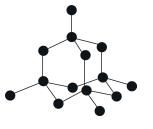
What is a distinctive feature of the structure of diamond?
Why can graphite conduct electricity?
Graphite and other giant covalent structures are easily dissolved in water.
What is this?
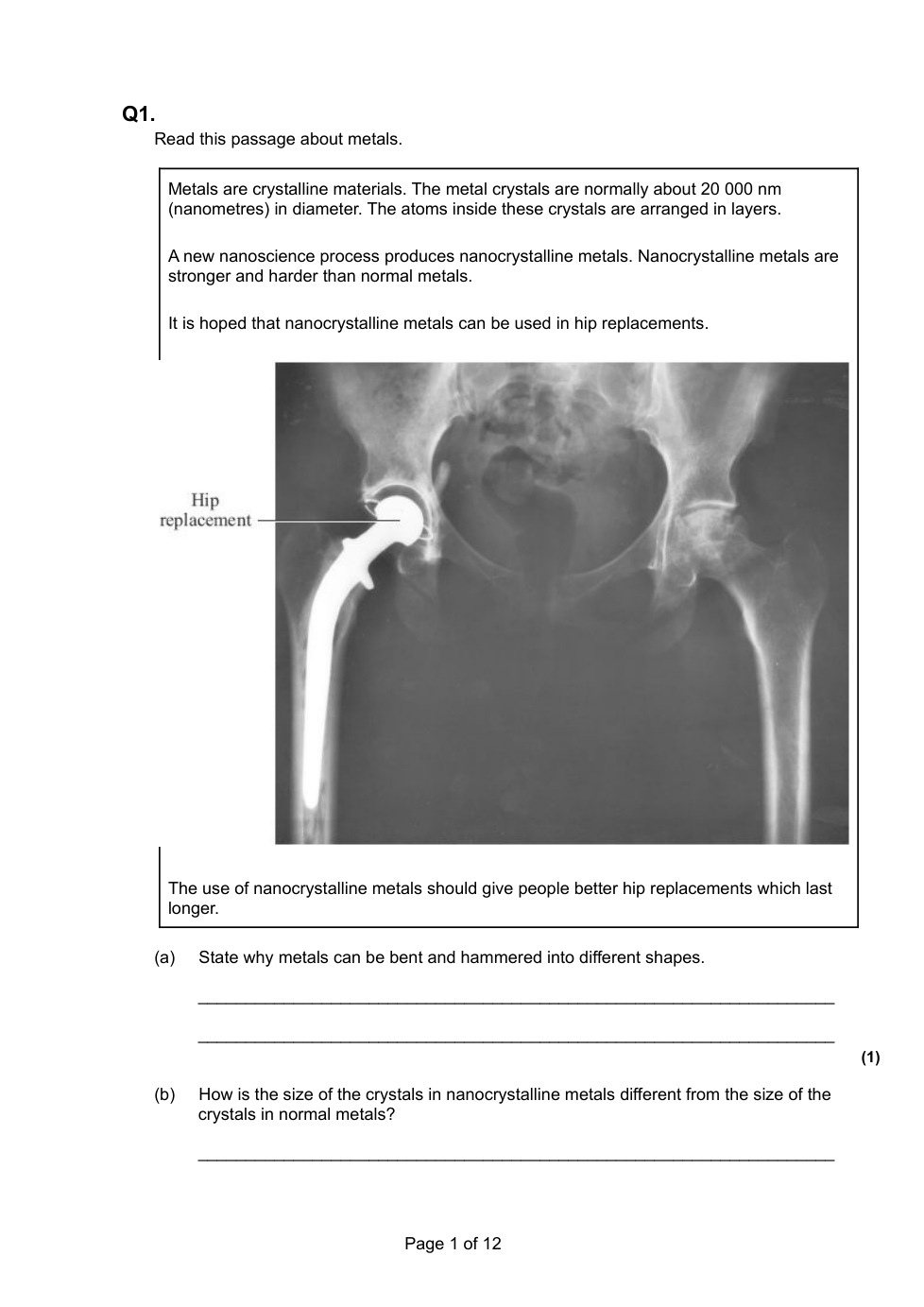
1a:
1b:
Which of the following is a correct conversion in the metric
system?
Which of the following values could describe the size of a
nanoparticle?
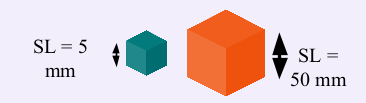
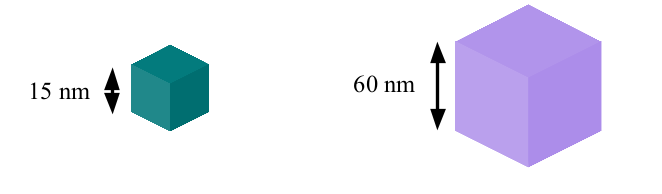
What is the surface area for the first cube?
How does the surface area to volume ratio change when a bulk
material is split into smaller nanoparticles?
Calculate the surface area to volume ratio for a nanoparticle that is a
cube with a side length of 15 nm, and one of 60 nm. No units are required
Surface area 1 =
Volume 1 =
SA:V 1 =
Surface area 2 =
Volume 2 =
SA:V 2 =
The properties of nanoparticles are identical to those of the same materials in
bulk form.
Justify your above answer
Titanium dioxide nanoparticles are used in sunscreen,
and silver nanoparticles are used in socks. Explain how the properties of these
nanoparticles makes them suitable for each application.
Consider the potential risks associated with the inhalation of nanoparticles.
Describe and explain what those risks could be.
Describe how society might address the use of nanoparticles in industry.
Explain how a high surface area to volume ratio of a substance used
as a catalyst affects the reactivity of particles.
What happens to particles in a solid when energy is added?
How do particles behave in a gas compared to a liquid?
Section C represents
What change of state is happening at D?
What type of forces acts between the ions in an ionic compound?
What are two properties of ionic compounds?
What is the volume for the first cube?
What is the SA:V for the first cube?
What is the surface area for the second cube?
What is the volume for the second cube?
What is the SA:V for the second cube?