4.9.1.1 The proportions of different gases in the atmosphere
1 point
1
Question 1
1.
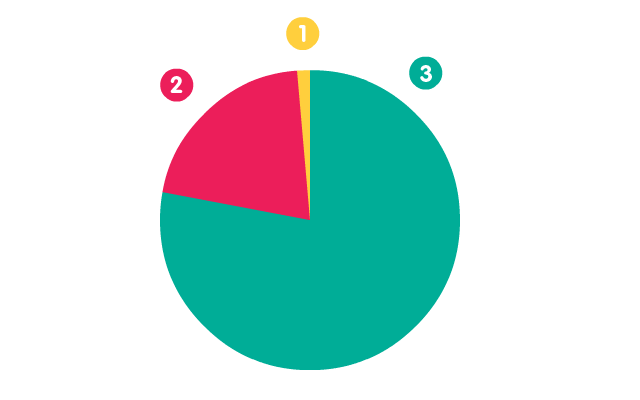
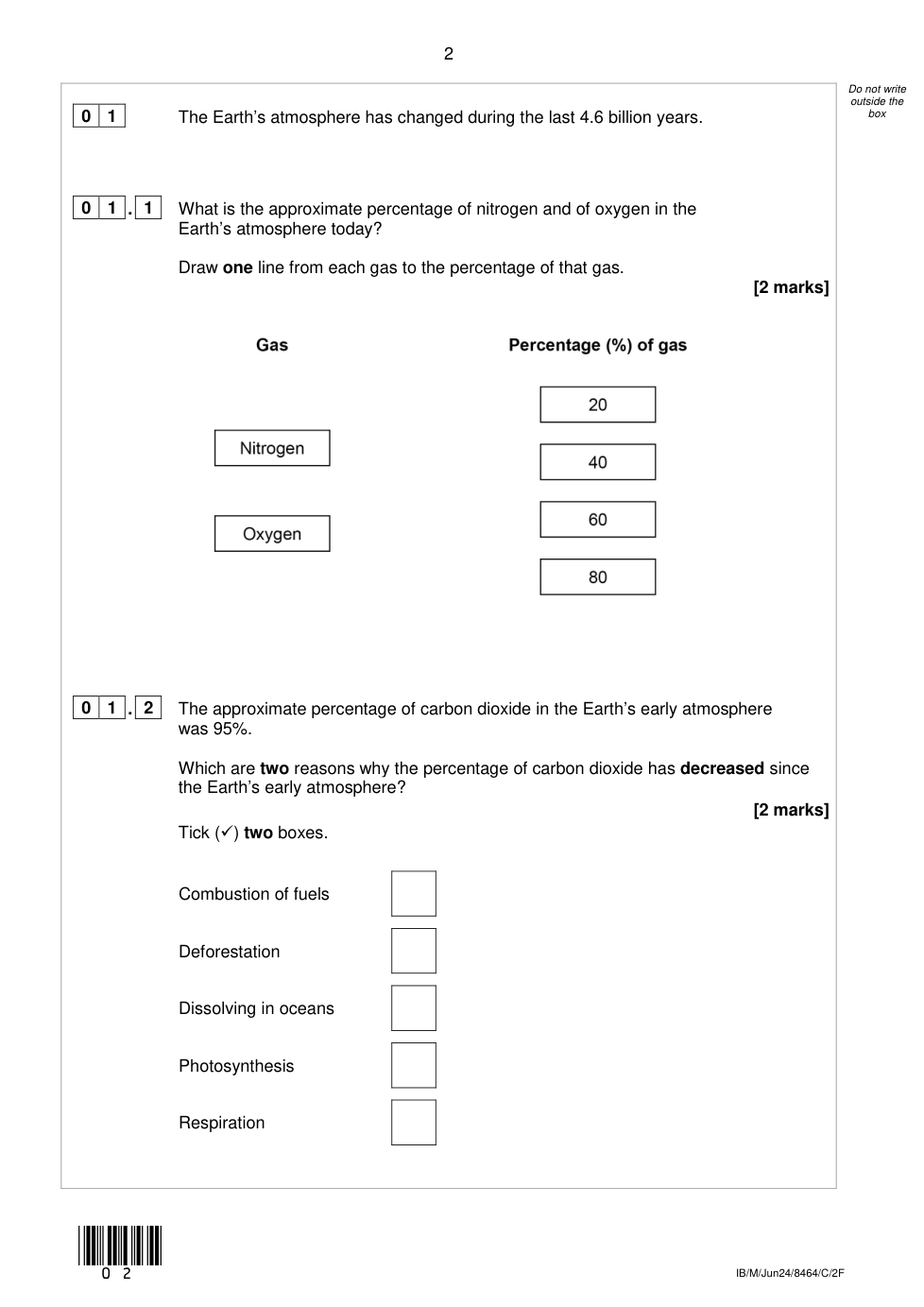
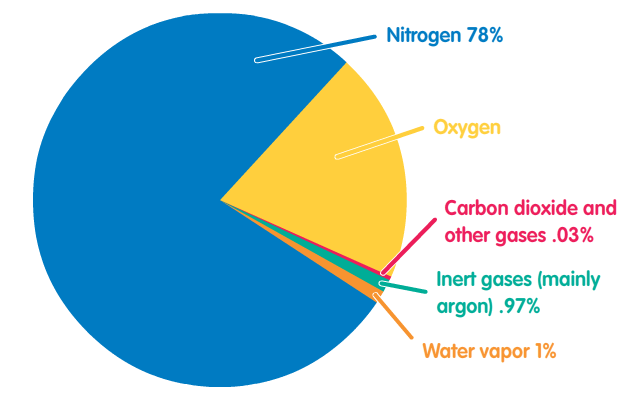
The Earth's atmosphere has changed during the last 4.6 billion years. What is the approximate percentage of nitrogen and of oxygen in the Earth's atmosphere today?
1 point
1
Question 2
2.
The approximate percentage of carbon dioxide in the Earth's early atmosphere was 95%. Which are two reasons why the percentage of carbon dioxide has decreased since the Earth's early atmosphere?
1 point
1
Question 3
3.
What is the most abundant gas in the atmosphere?
1 point
1
Question 4
4.
The atmosphere is composed of mainly
1 point
1
Question 5
5.
What is the most abundant gas in the atmosphere?
1 point
1
Question 6
6.
The atmosphere is composed of mainly
4.9.1.2 The Earth's early atmosphere
3 points
3
Question 7
7.
Because the Earth was formed _____________ of years ago, it is difficult for scientists to know what it was like then. This is why we often use the phrase “scientists believe”; scientists have _____________ based on _____________ , but at this point in time they cannot be sure.
Other Answer Choices:
theories
millions
evidence
1 point
1
Question 8
8.
The Earth’s early atmosphere was formed by ______________
The Earth’s early atmosphere consisted of ______________________________________________
Scientists cannot know for sure what the early atmosphere was like because _______________________________________________
Scientists cannot know for sure what the early atmosphere was like but ___________________________________________________________
Scientists cannot know for sure what the early atmosphere was like therefore ____________________________________________________
Other Answer Choices:
there is limited evidence from so long ago
volcanoes
evidence can be used from layers of rock and ice cores
carbon dioxide, water vapour, and ammonia
new theories, backed by evidence, are developed
1 point
1
Question 9
9.
In the Early Atmosphere, what caused the increase in carbon dioxide?
6 points
6
Question 10
10.
Describe and explain how the surface and atmosphere of the Early Earth have changed and evolved to form the present day Earth
2 points
2
Question 11
11.
Draw your matching here
4.9.1.3 How oxygen increased
1 point
1
Question 12
12.
Which gas is released into the atmosphere by plants as they photosynthesise?
1 point
1
Question 13
13.
The equation below shows a common reaction.
carbon dioxide + water --> glucose + oxygen
What is the name of the reaction?
4.9.1.4 How carbon dioxide decreased
4.9.2.1 Greenhouse gases
1 point
1
Question 14
14.
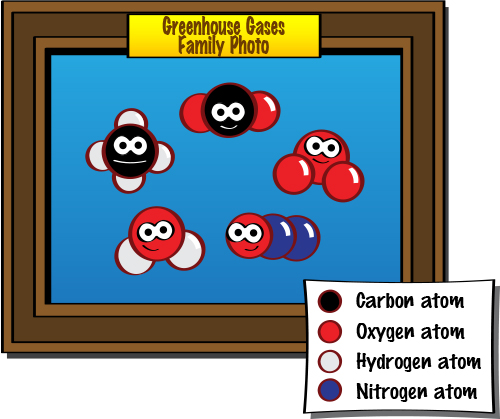
Which of these is a greenhouse gas?
1 point
1
Question 15
15.
Which of these gases below is not a greenhouse gas?
4.9.2.2 Human activities which contribute to an increase in greenhouse gases in the atmosphere
1 point
1
Question 16
16.
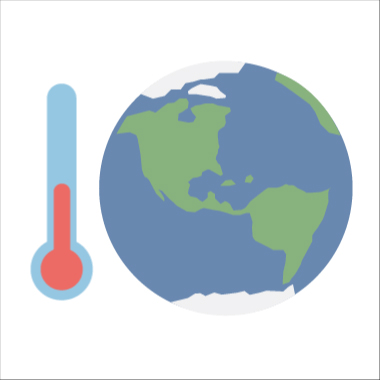
Global warming – an increase in the temperature of the Earth – will result in climate change.
What is one possible human cause of global warming and climate change?
4.9.2.3 Global climate change
1 point
1
Question 17
17.
What is global warming?
3 points
3
Question 18
18.
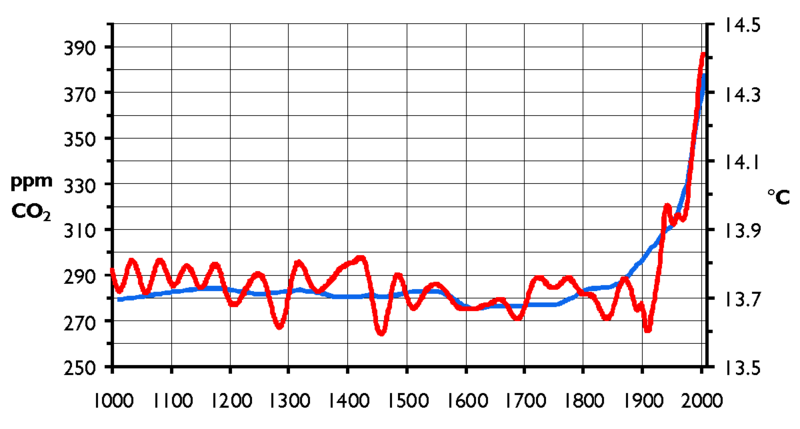
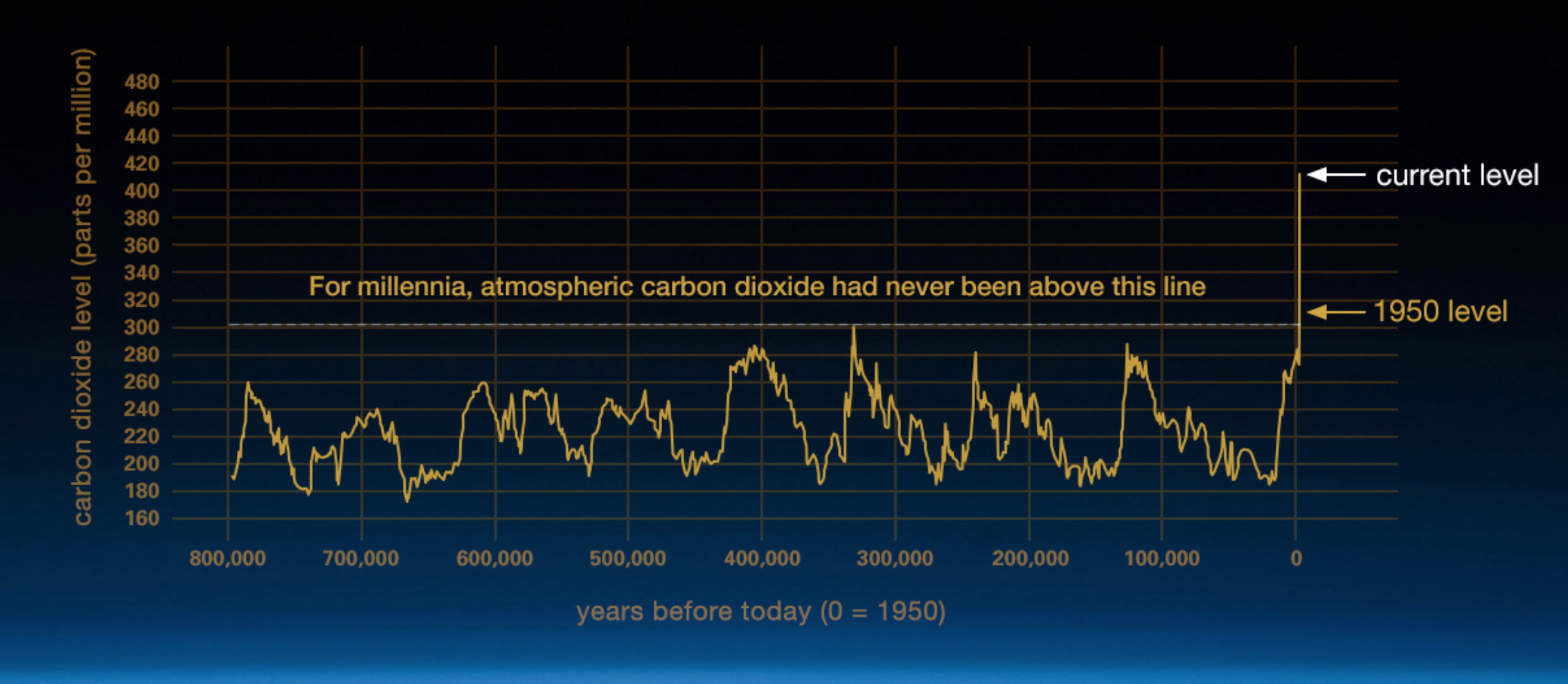
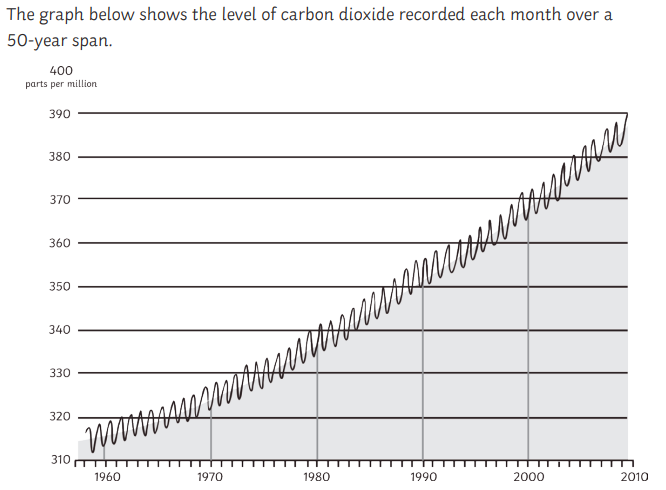
Explain, in as much detail as you can, why the results shown in the graph could cause widespread concern
1 point
1
Question 19
19.
What is one possible effect of global warming and climate change.
1 point
1
Question 20
20.
What is global warming?
1 point
1
Question 21
21.
Global warming – an increase in the temperature of the Earth – will result in climate change.
What is one possible human cause of global warming and climate change?
1 point
1
Question 22
22.
What is one possible effect of global warming and climate change.
4.9.2.4 The carbon footprint and its reduction
4.9.3 Common atmospheric pollutants and their sources
3 points
3
Question 23
23.
When coal is burned as a fuel the emissions released include carbon dioxide, water and sulphur dioxide.
Match the product with the type of pollution is causes by drawing one line from each product
5 points
5
Question 24
24.
Match each pollution to its cause
Draggable item
arrow_right_alt
Corresponding Item
Sulfur dioxide
arrow_right_alt
Acid rain
Water
arrow_right_alt
No harm
Carbon Dioxide
arrow_right_alt
Global warming
Carbon monoxide
arrow_right_alt
Toxic
Soot / Particulates
arrow_right_alt
Global Dimming
1 point
1
Question 25
25.
Sulfur + oxygen -->
1 point
1
Question 26
26.
Hydrogen + oxygen -->
1 point
1
Question 27
27.
Butane + oxygen -->
0 points
0
Question 28
28.
0 points
0
Question 29
29.
0 points
0
Question 30
30.
0 points
0
Question 31
31.
Click here to view a video on carbon footprint
Earth and Space Science Website
0 points
0
Question 32
32.
Watch the video onHow Sunscreen Hurts Coral
Watch the video on Is it OK to be Smart?
7 points
7
Question 33
33.
Watch the video on How Trees clean the air (above) and the video on Are Trees Renewable Resources?
Comprehension Questions
1) Why are trees categorized as a renewable fuel source?
2) Describe the financial incentives for burning wood for energy.
3) Describe how burning wood for energy harms the environment.
3) Dscribe how burning wood for energy harms the environment.
4) Why is Oregon particularly motivated to use wood for biofuel?
5) Describe the event that Margie Hoffman related to her support of using wood as a biofuel.
6) How has fire suppression made wildfires more dangerous?
7) Identify at least two ways that fire helps living organisms.
7 points
7
Question 34
34.
Watch the video on Are Trees Renewable Resources?
Critical Thinking Questions
8) How could you explain why using wood should not be eligible to receive financial incentives as a renewable resource?
9) Compare and contrast wood and coal as fuel sources. Are there factors beyond carbon dioxide emissions that might make wood a better fuel source than coal?
10) Why might Oregon consider using wood for biofuel one of the best options for maintaining a healthy forest? 11) How might it benefit the state more than alternative methods for removing wood waste?
12) Brainstorm alternative wood uses rather than biofuel that could still help Oregon prevent wildfires.
13) If sequoias need fire to regenerate, how has a century of fire suppression most likely affected sequoia forests?
14) How might the increasing number of fires due to climate change affect the natural fire linked to the sequoia regeneration cycle?
1 point
1
Question 35
35.
Carbon monoxide is also produce in car engines.
Name the process that produces carbon monoxide
1 point
1
Question 36
36.
Which pollutant is formed in car engines from the reaction between two gases that occur naturally in the atmosphere?
Tick one box
3 points
3
Question 37
37.
When coal is burned as a fuel the emissions released include carbon dioxide, water and sulphur dioxide.
Match the product with the type of pollution is causes by drawing one line from each product