Log in
Sign up for FREE
arrow_back
Library
JA Student Workbook-Unit 1
By Alexander Roth
star
star
star
star
star
Share
share
Last updated 6 months ago
60 questions
Add this activity
zoom_in
1
1
1
1
zoom_in
1
1
1
1
1
1
1
1
zoom_in
1
1
1
1
zoom_in
1
1
1
1
zoom_in
1
1
1
1
zoom_in
1
1
1
1
zoom_in
1
1
1
1
zoom_in
1
1
1
1
zoom_in
1
1
1
1
zoom_in
1
1
1
1
zoom_in
1
1
1
1
zoom_in
1
1
1
1
zoom_in
1
1
1
1
zoom_in
zoom_in
zoom_in
zoom_in
zoom_in
zoom_in
zoom_in
zoom_in
zoom_in
zoom_in
zoom_in
zoom_in
zoom_in
zoom_in
zoom_in
zoom_in
zoom_in
zoom_in
zoom_in
1
1
1
1
Question 1
1.
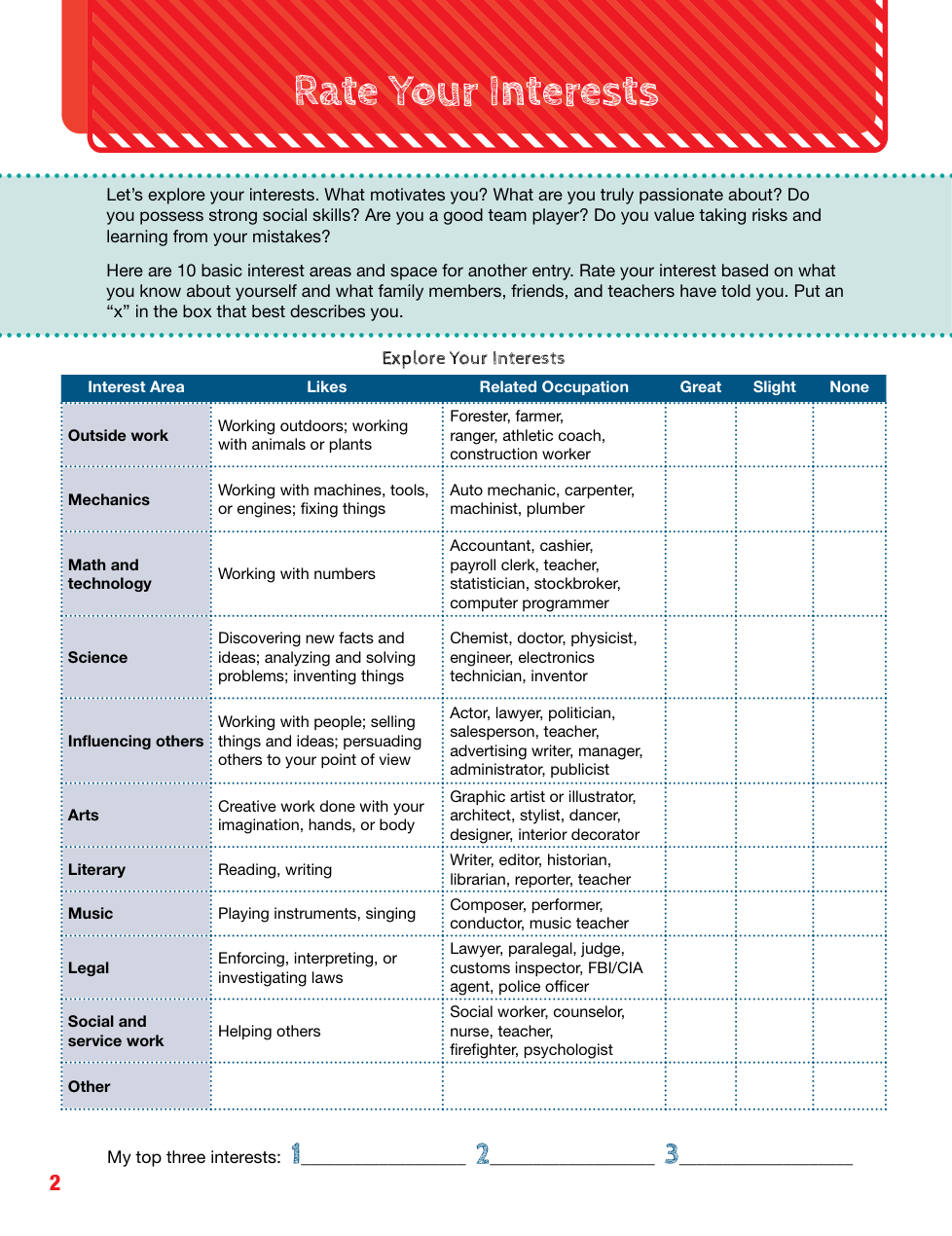
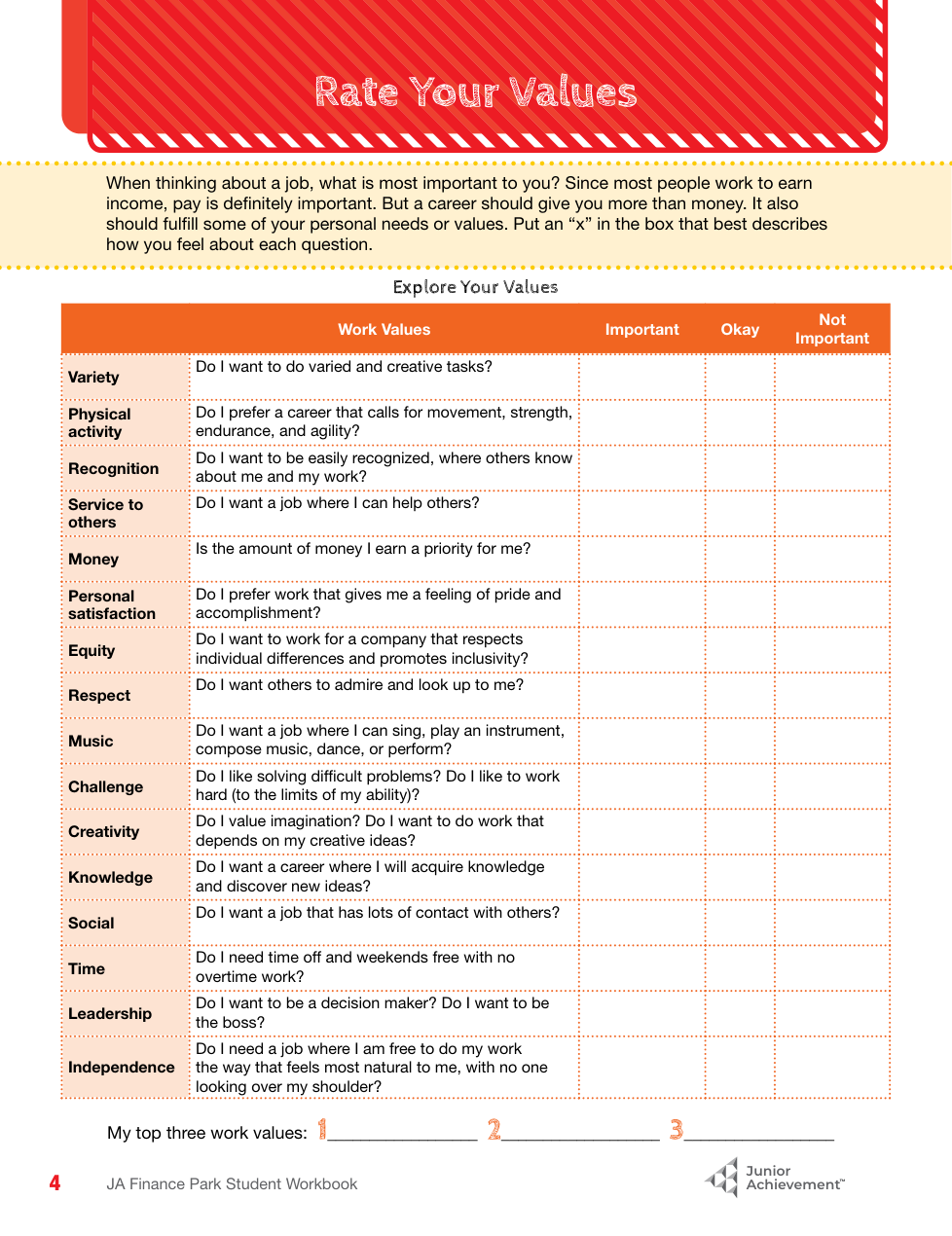
What are aptitudes?
Preferred career choices of individuals.
Financial benefits of jobs.
Natural talents and abilities in various areas.
Hobbies or interests people have.
Question 2
2.
Why are interests important in choosing a career?
They help you enjoy your work and stay motivated.
They determine your salary level.
They're not as important as values.
They help you find friends in a job.
Question 3
3.
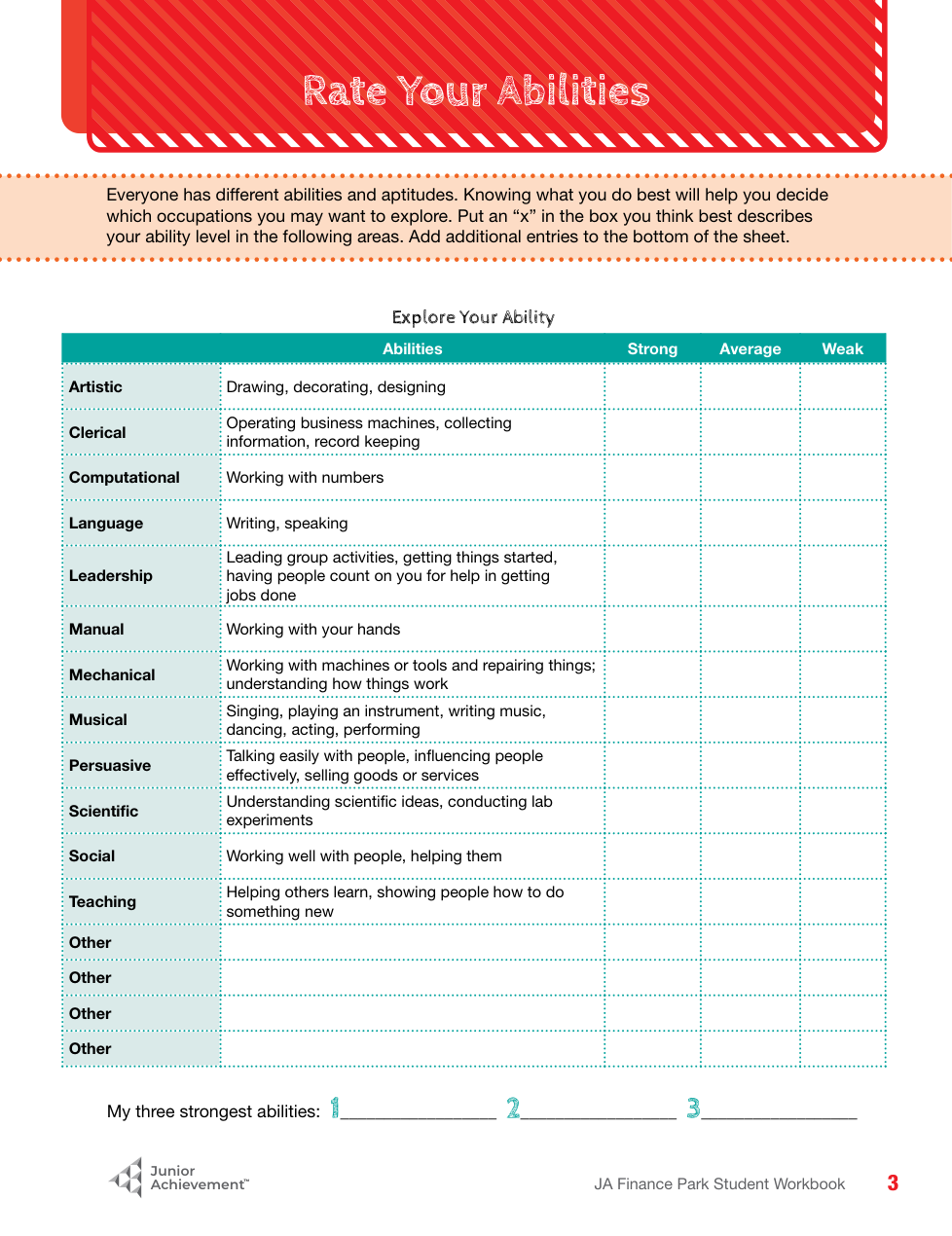
What are abilities?
Skills you haven’t yet developed.
What you want to be in the future.
Your hobbies and pastimes.
Things you do well, like playing an instrument.
Question 4
4.
What are values in relation to work?
The hours you plan to work.
Skills learned in school classes.
The amount of money you can earn.
Ideals that influence your career choices.
Question 5
5.
Which of the following occupations involves working outdoors?
Auto mechanic, plumber, carpenter
Teacher, lawyer, doctor
Forester, farmer, ranger, athletic coach
Computer programmer, accountant
Question 6
6.
What interest area focuses on analyzing and solving problems?
Social and service work
Science
Math and technology
Arts
Question 7
7.
Which occupation is related to working with numbers?
Accountant, cashier
Actor, lawyer
Composer, performer
Forester, farmer
Question 8
8.
What interest area involves helping others?
Influencing others
Mechanics
Social and service work
Math and technology
Question 9
9.
Which occupation is related to outdoor work?
Lawyer
Accountant
Forester
Teacher
Question 10
10.
What interest area involves working with numbers?
Science
Math and technology
Legal
Arts
Question 11
11.
Which field focuses on persuading others?
Influencing others
Arts
Social work
Mechanics
Question 12
12.
What career matches working with people and helping?
Social work
Scientist
Mechanic
Musician
Question 13
13.
What does 'artistic ability' include?
Collecting information
Operating machines
Drawing, decorating, designing
Mathematical calculations
Question 14
14.
Which of the following is a clerical skill?
Record keeping
Working with numbers
Singing and dancing
Conducting experiments
Question 15
15.
What does 'leadership ability' involve?
Working well with hands
Playing a musical instrument
Understanding scientific concepts
Getting people to work together
Question 16
16.
Which area focuses on helping others learn?
Mechanical skills
Writing and speaking
Teaching
Artistic design
Question 17
17.
What is often considered the most important job aspect?
Amount of money earned
Job satisfaction and personal values
Type of job title
Job location
Question 18
18.
Why might recognition in a job matter?
Everyone should want recognition
It's only important for managers
It can boost one's self-esteem
It leads to more money
Question 19
19.
What value might relate to helping others at work?
Independence
Physical activity
Service to others
Variety in tasks
Question 20
20.
What career aspect can relate to solving problems?
Recognition
Work independence
Challenge in tasks
High salary
Question 21
21.
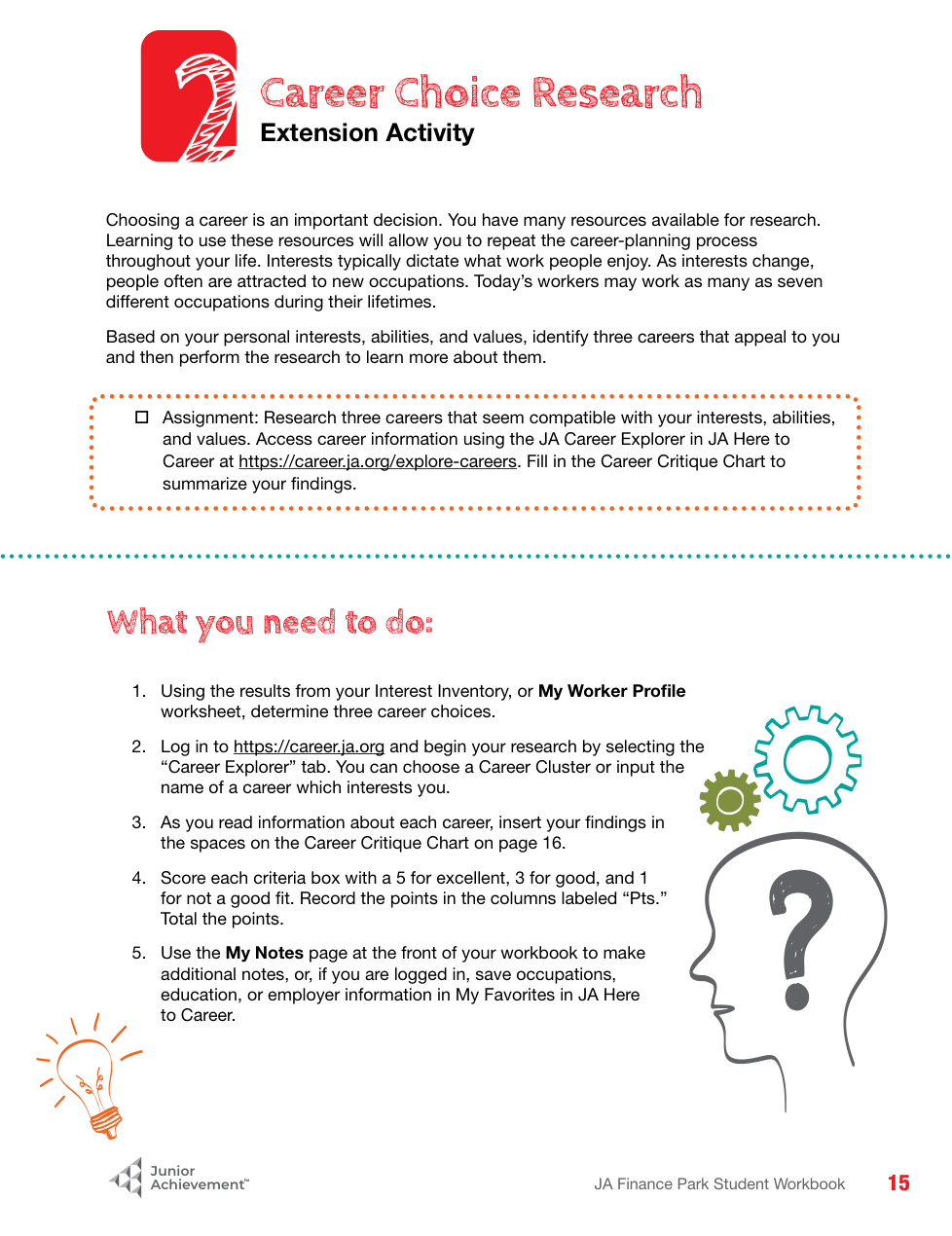
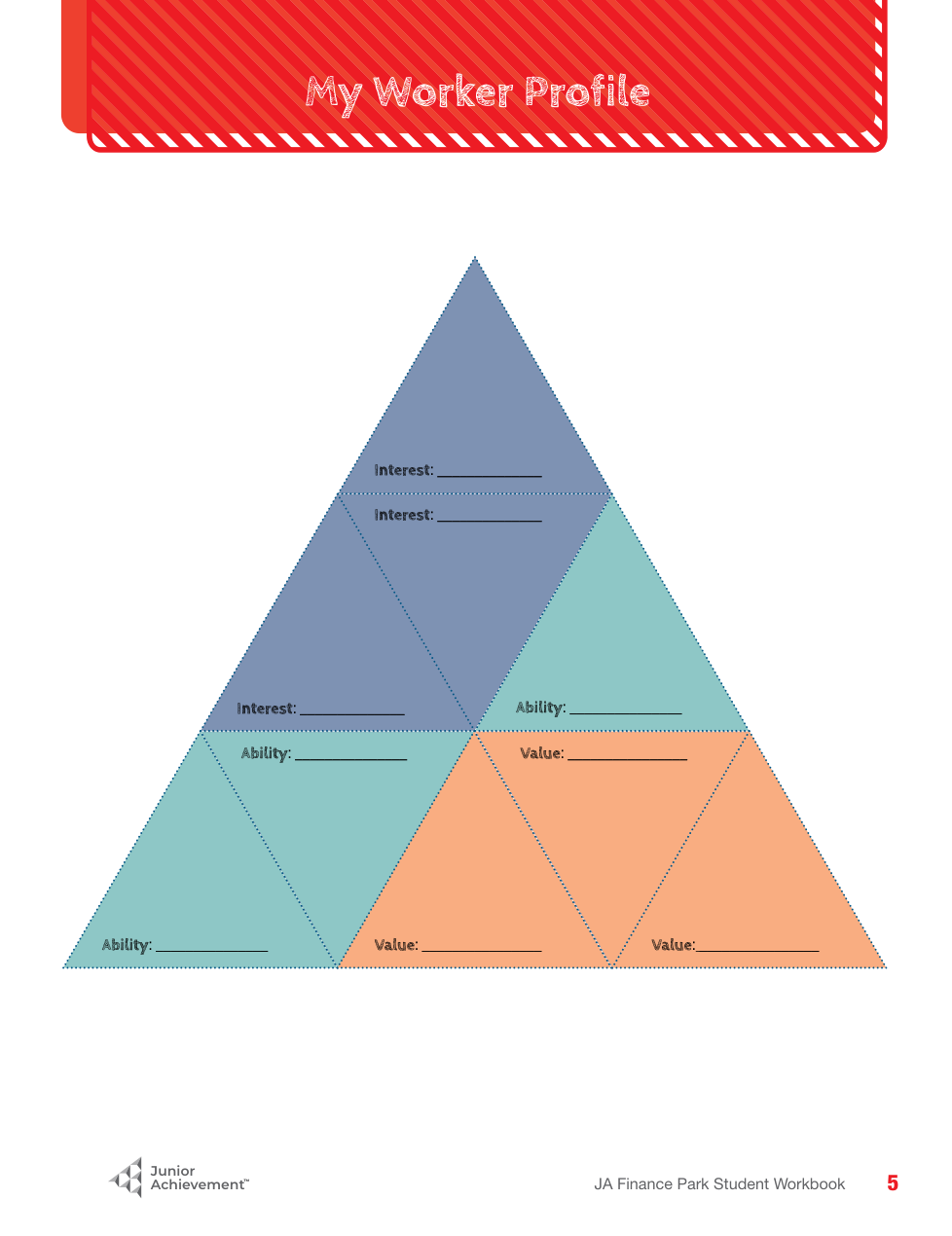
What is the primary focus of a worker profile?
Listing all job experiences.
Focusing on salary requirements.
Identifying interests, abilities, and values.
Describing favorite hobbies.
Question 22
22.
Why are abilities important in a worker profile?
Abilities don't matter for job applications.
They help determine job suitability and skills.
They are less important than interests.
Only interests should be included.
Question 23
23.
What can values in a worker profile indicate?
How much money you will earn.
Only your educational qualifications.
Personal priorities and what is important to you.
What jobs are available.
Question 24
24.
How does an interest affect career choices?
Career choice is unrelated to personal interests.
It guides the selection of satisfying jobs.
Only abilities determine career paths.
Interests only distract from job performance.
Question 25
25.
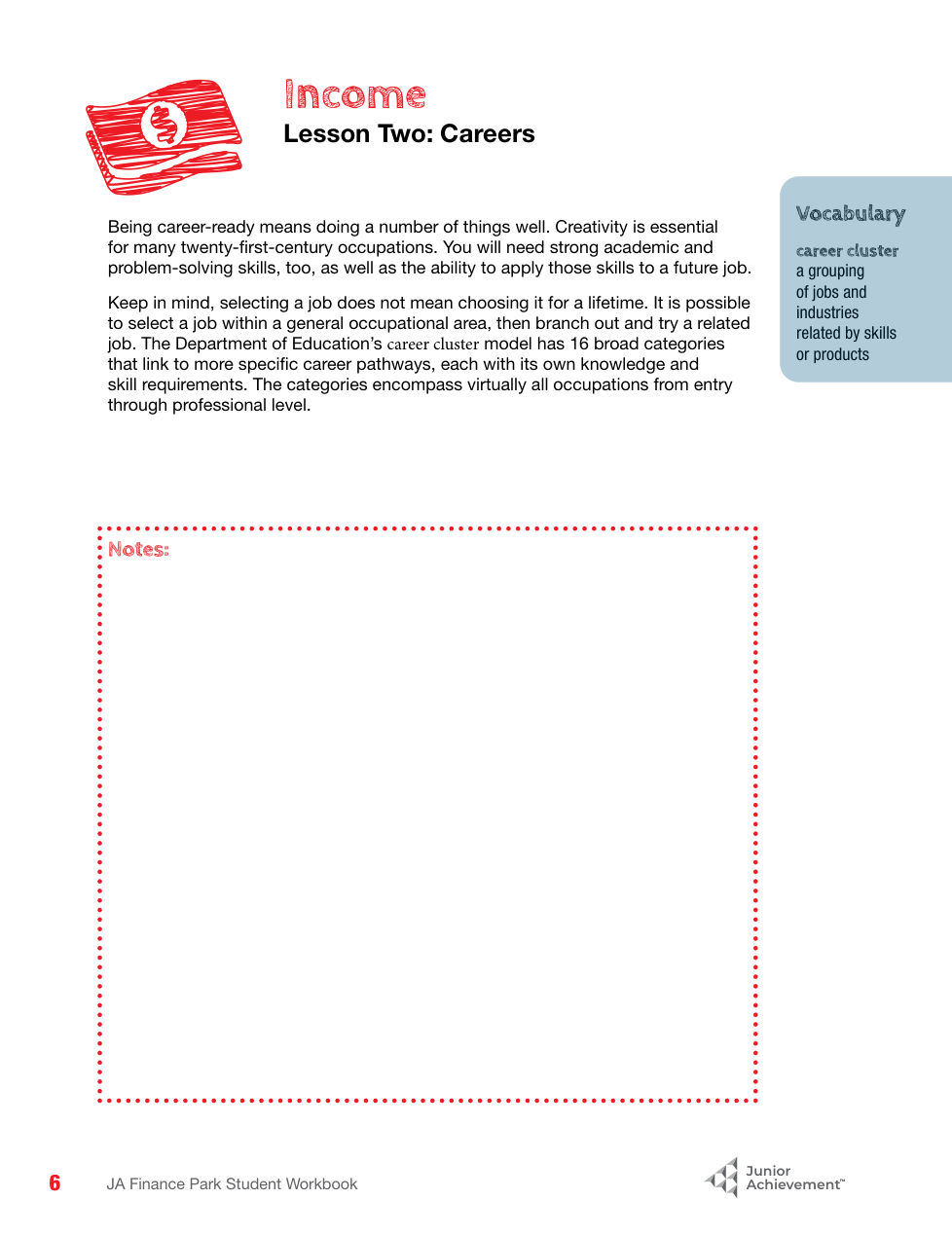
What does it mean to be career-ready?
Choosing a job for life.
Only having technical skills.
Avoiding all job-related risks.
Having the skills for a future job.
Question 26
26.
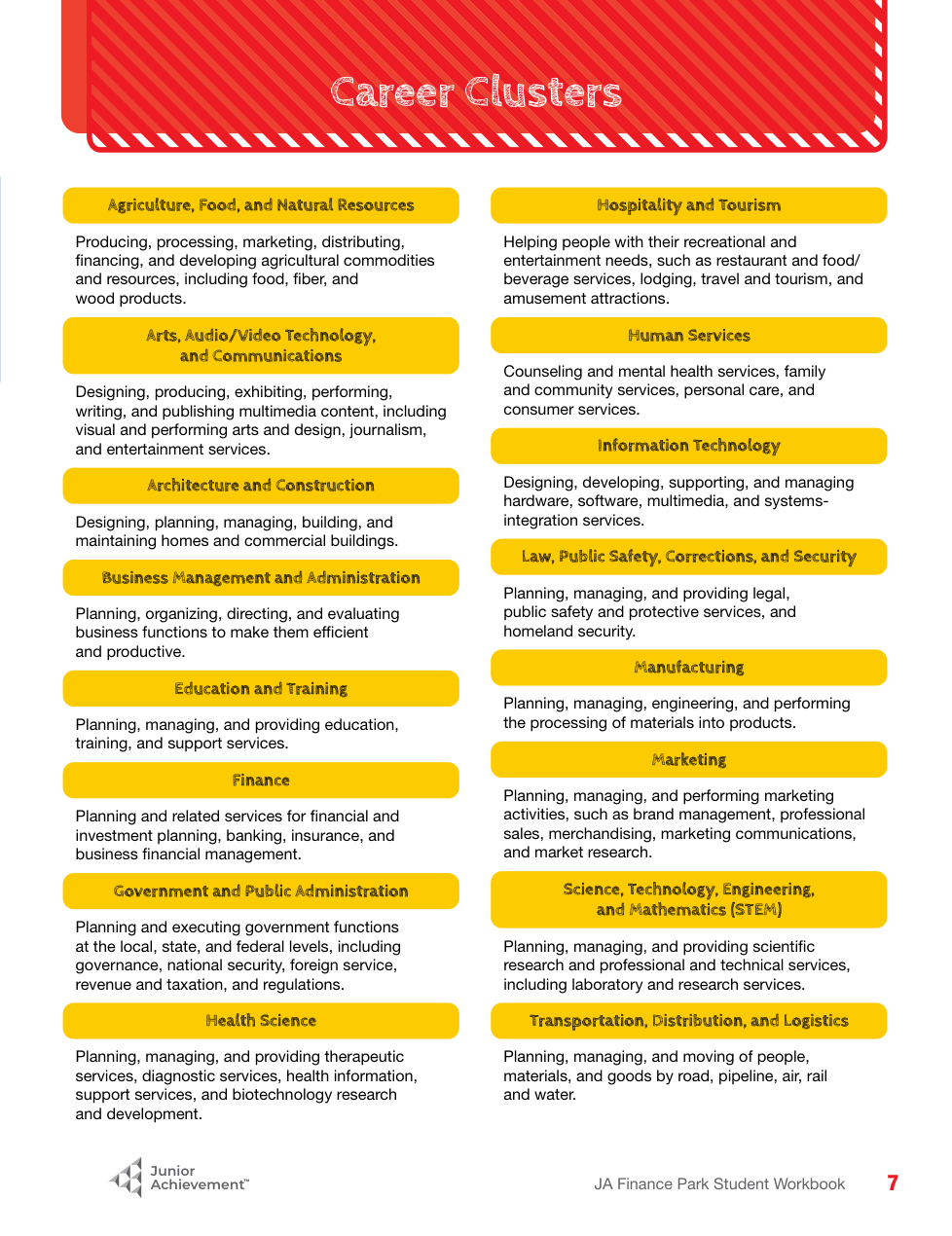
How many broad categories are in the career cluster model?
Sixteen broad categories.
Five broad categories.
Ten broad categories.
Twenty broad categories.
Question 27
27.
What do career clusters help people do?
Avoid education altogether.
Identify related career pathways.
Stick to one job only.
Choose any job instantly.
Question 28
28.
Is selecting a job for a lifetime essential?
No, it can change over time.
No, jobs are unchangeable.
Yes, it should be predetermined.
Yes, it must be forever.
Question 29
29.
Which career cluster includes planning and managing food services?
Human Services
Hospitality and Tourism
Agriculture, Food, and Natural Resources
Arts, Audio/Video Technology, and Communications
Question 30
30.
Which cluster focuses on developing software and hardware?
Marketing
Information Technology
Law, Public Safety, Corrections, and Security
Business Management and Administration
Question 31
31.
What does the Health Science cluster emphasize?
Planning events and activities
Designing buildings and structures
Managing technology and systems
Therapeutic and diagnostic services
Question 32
32.
In which cluster would you find agricultural job roles?
Agriculture, Food, and Natural Resources
Transportation, Distribution, and Logistics
Education and Training
Science, Technology, Engineering, and Mathematics (STEM)
Question 33
33.
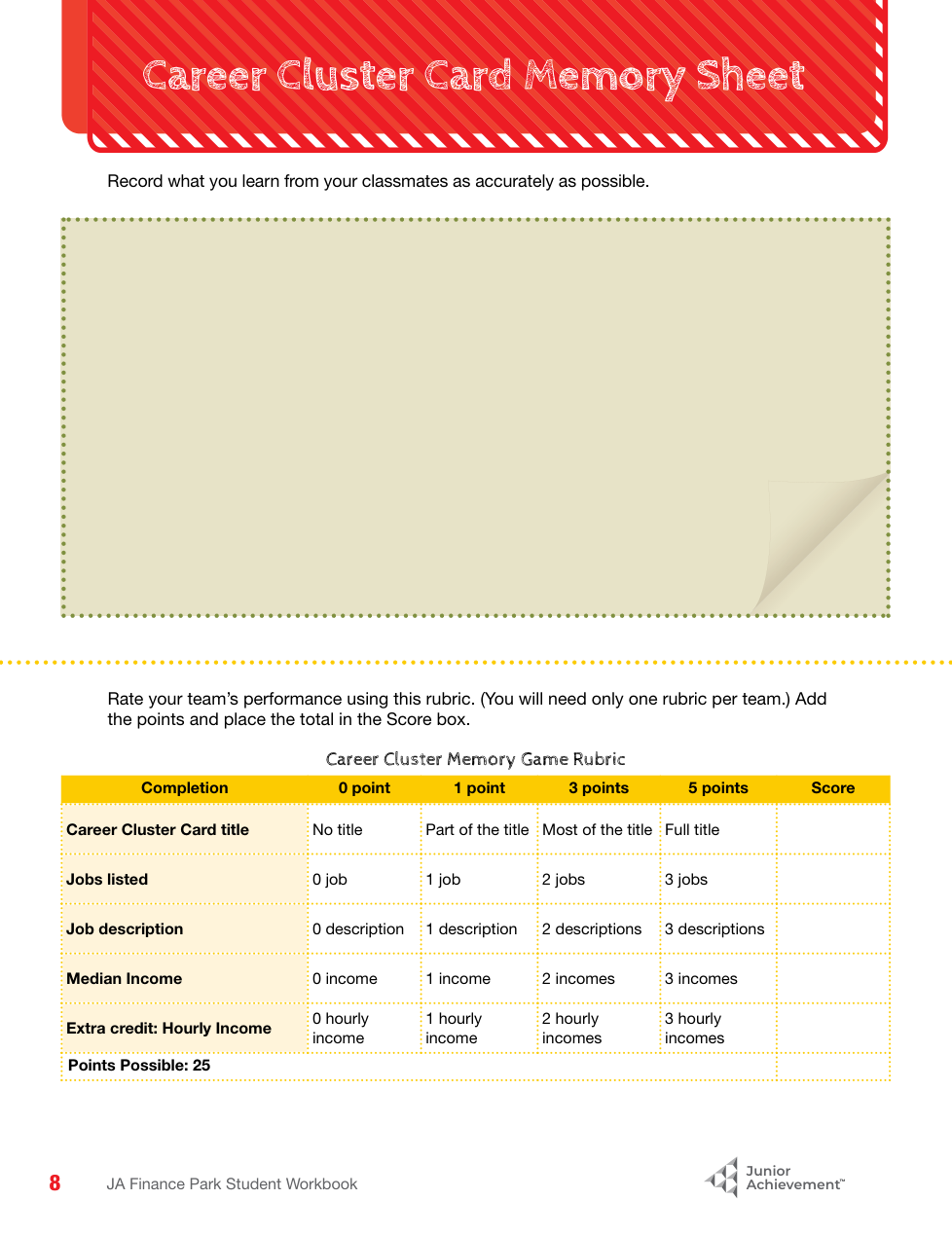
What is the purpose of the Career Cluster Card Memory Sheet?
To score sports competitions.
To record and learn about careers from classmates.
To create job applications.
To assess teachers' performance.
Question 34
34.
How many points are possible in the career cluster game rubric?
10 points for participation only.
30 points if completed.
25 points total can be earned.
20 points maximum possible.
Question 35
35.
What is one way to earn extra credit in the rubric?
By listing hourly incomes for jobs.
By providing job titles only.
By writing essays on jobs.
By conducting interviews with adults.
Question 36
36.
What criteria is used for scoring job descriptions?
Only consider job titles listed.
Use personal opinions about the jobs.
Evaluate the formatting of titles.
Number of descriptions provided for jobs.
Question 37
37.
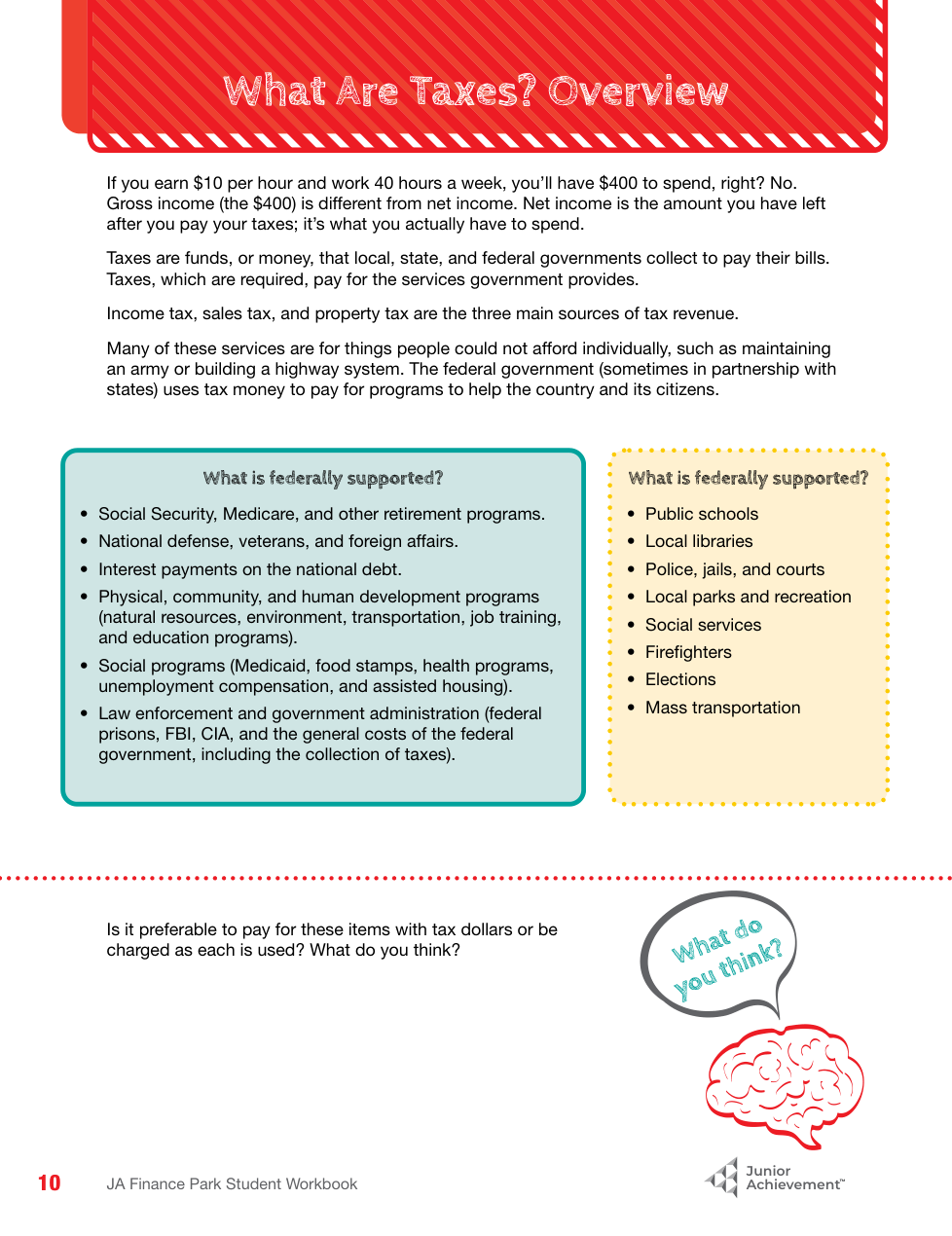
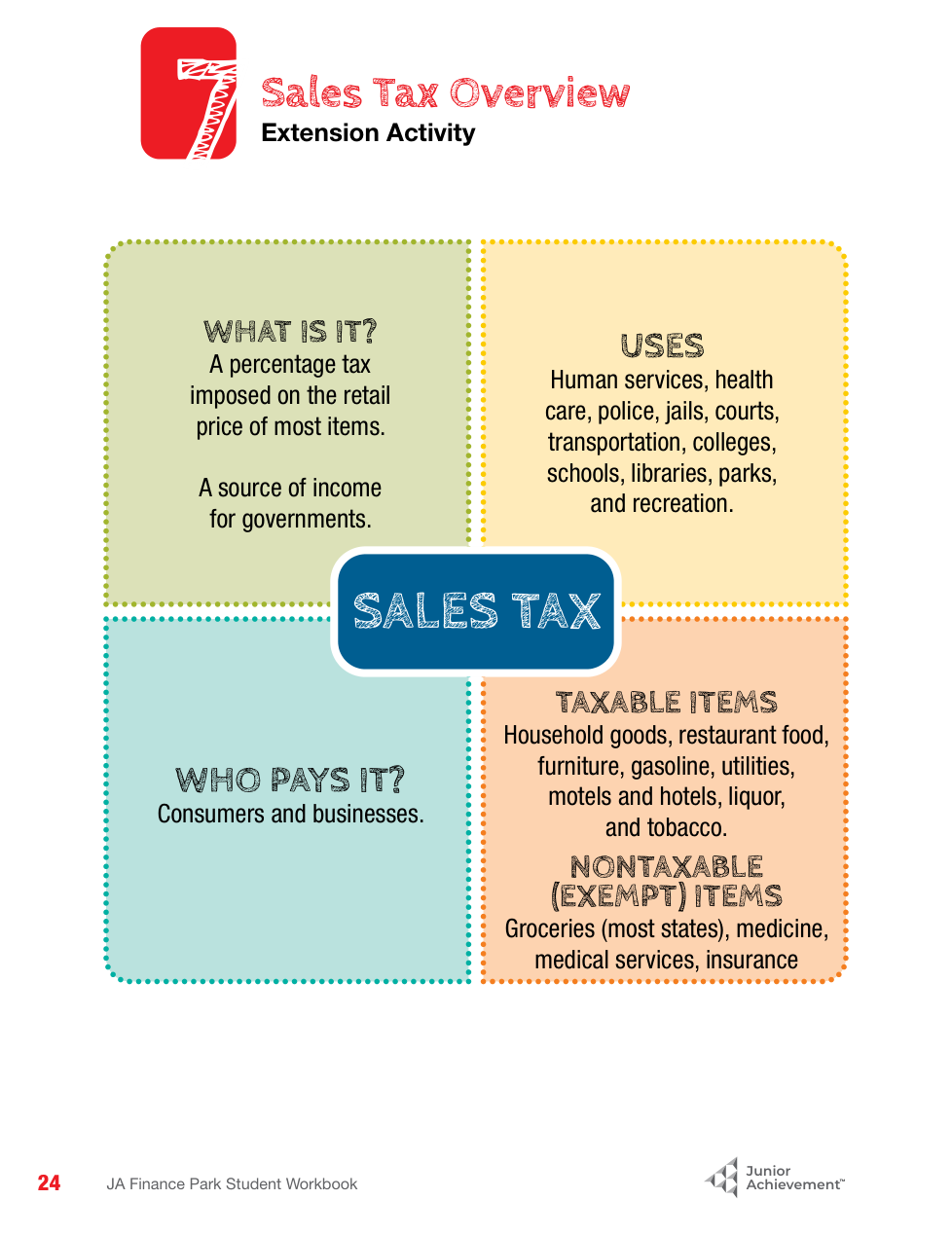
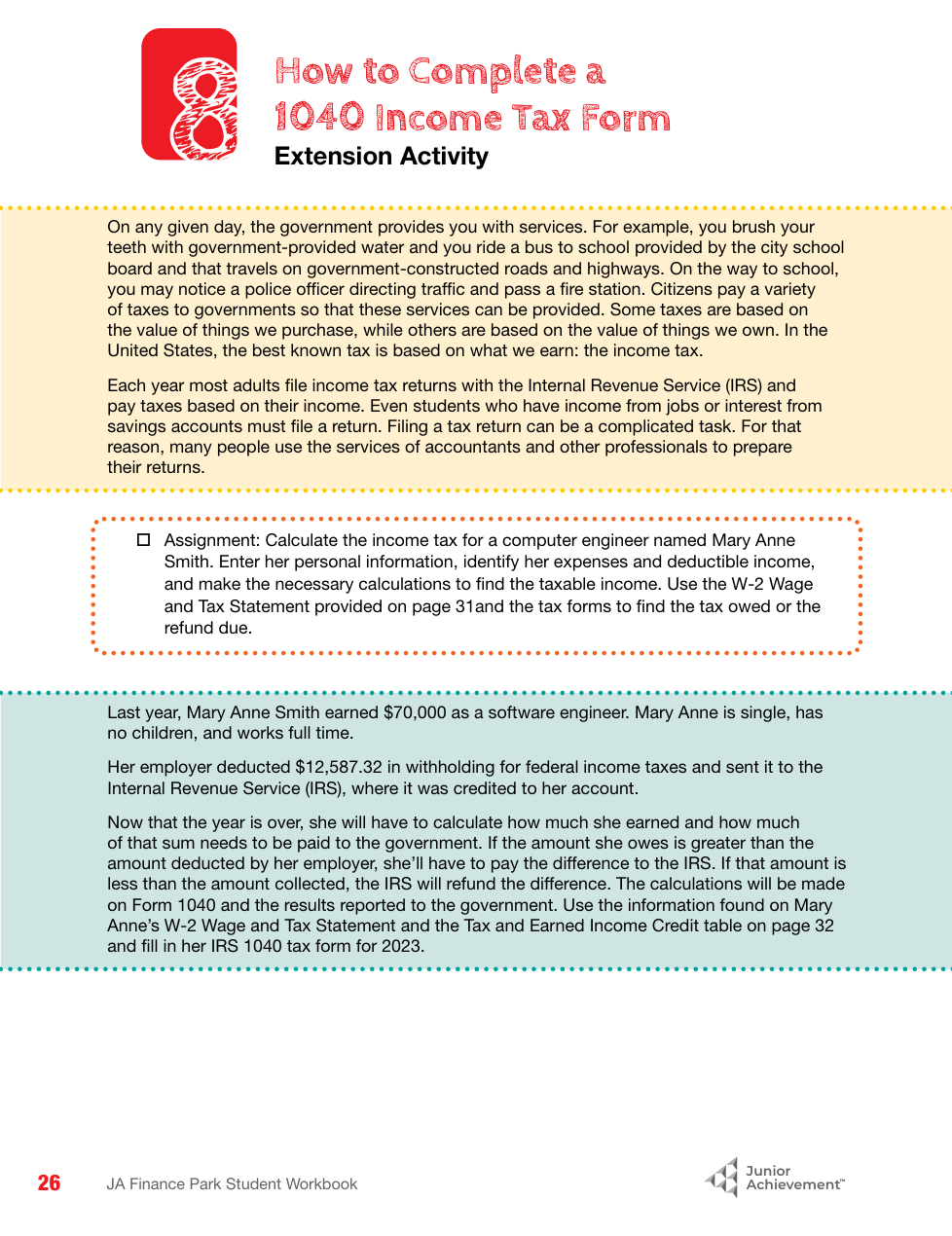
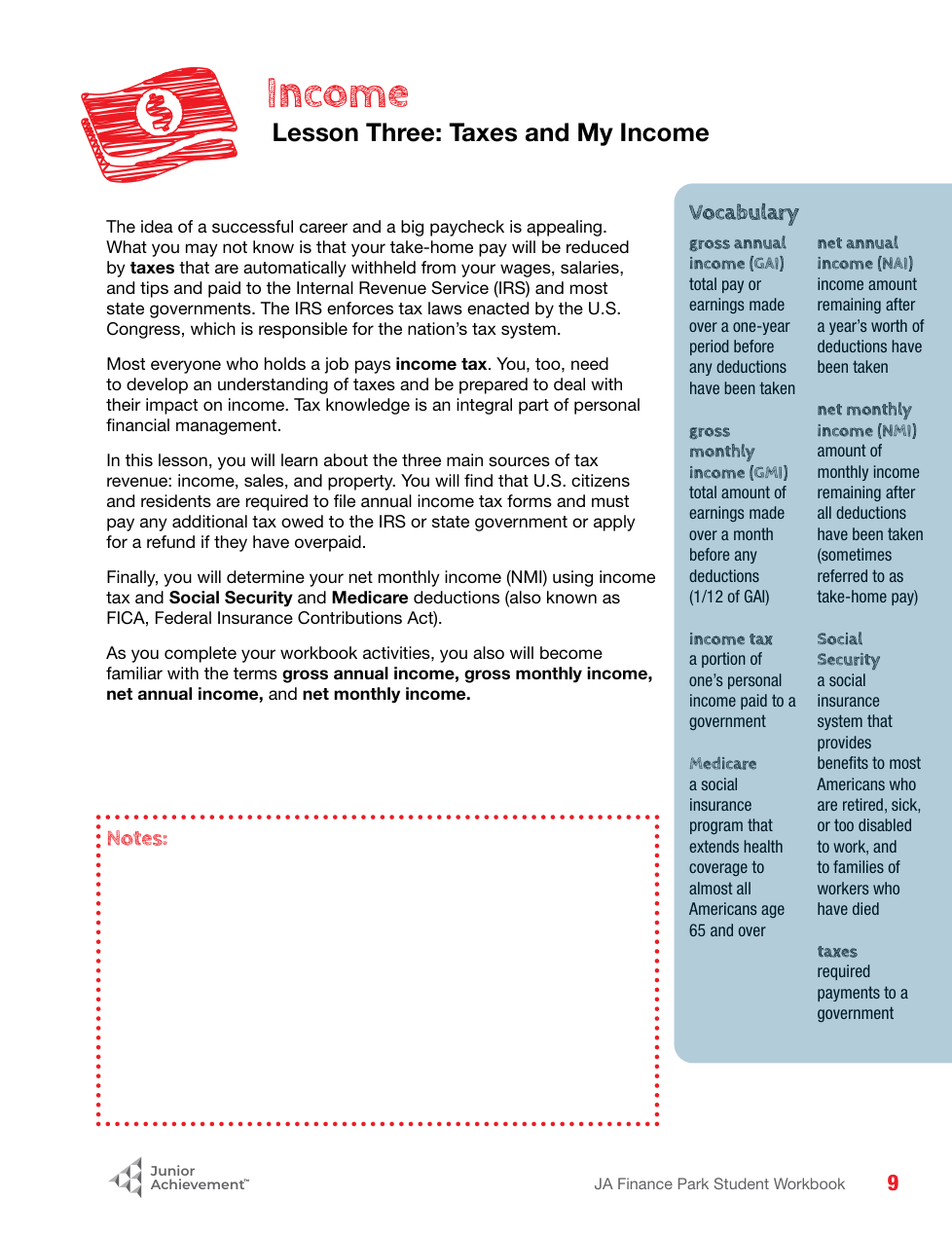
What is income tax based on?
Amount saved in a bank
Personal expenses and gifts
Wages, salaries, and business income
Total annual profit
Question 38
38.
What does NMI stand for?
Non-monthly income
No monthly interest
Net monthly income after deductions
Net make income
Question 39
39.
Which government body collects income taxes?
State police departments
Federal Reserve
Department of Labor
Internal Revenue Service (IRS)
Question 40
40.
What is deducted to find take-home pay?
Home value appreciation
Taxes and other deductions from gross pay
Net worth and savings
Credit card debt
Question 41
41.
What is the main source of tax revenue for governments?
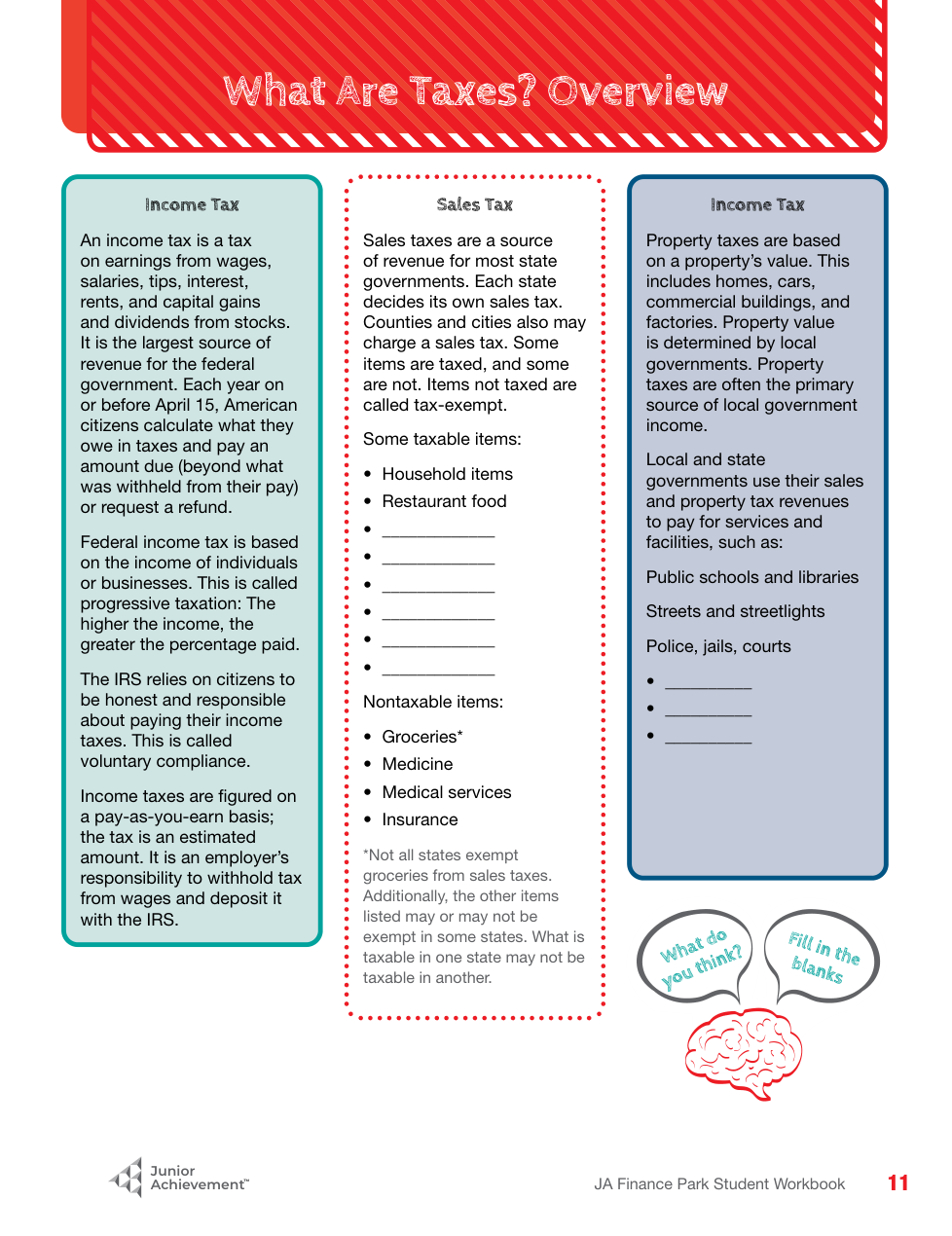
Income tax, sales tax, and property tax.
Sales tax only
Property tax only
Sales tax and sales fees
Question 42
42.
What do taxes fund for citizens?
Luxury expenses
Private events for citizens
Services like schools, defense, and healthcare.
Individual hobbies
Question 43
43.
Which tax reduces the amount of money available to spend?
Income tax reduces net income.
Sales tax on basic needs
Property tax only
Excise tax on purchases
Question 44
44.
What type of services do taxes support?
Public services like education and safety.
Private businesses
Entertainment services
Luxury items for citizens
Question 45
45.
What is an income tax primarily based on?
Earnings from wages and other income sources.
Sales of household goods
Rates decided by the government
The value of property owned
Question 46
46.
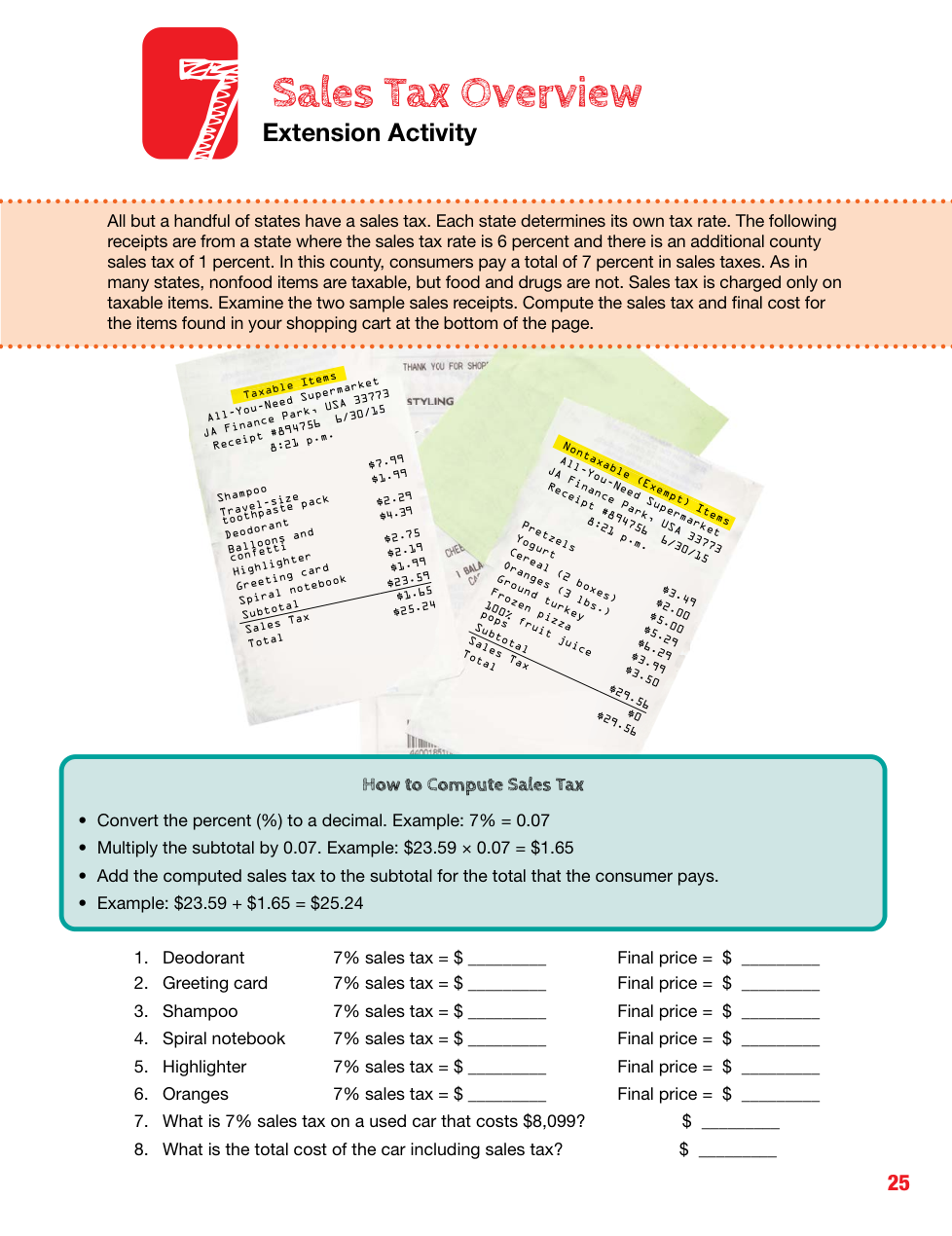
Which of the following is typically exempt from sales tax?
Household items
Groceries in some states.
Medicine
Restaurant food
Question 47
47.
What do local governments use property taxes for?
Personal expenses for citizens
Paying income taxes
Funding federal agencies
Public services like schools and libraries.
Question 48
48.
Who is responsible for withholding income tax from wages?
The employee themselves
The IRS directly
State government officials
The employer of the worker.
Question 49
49.
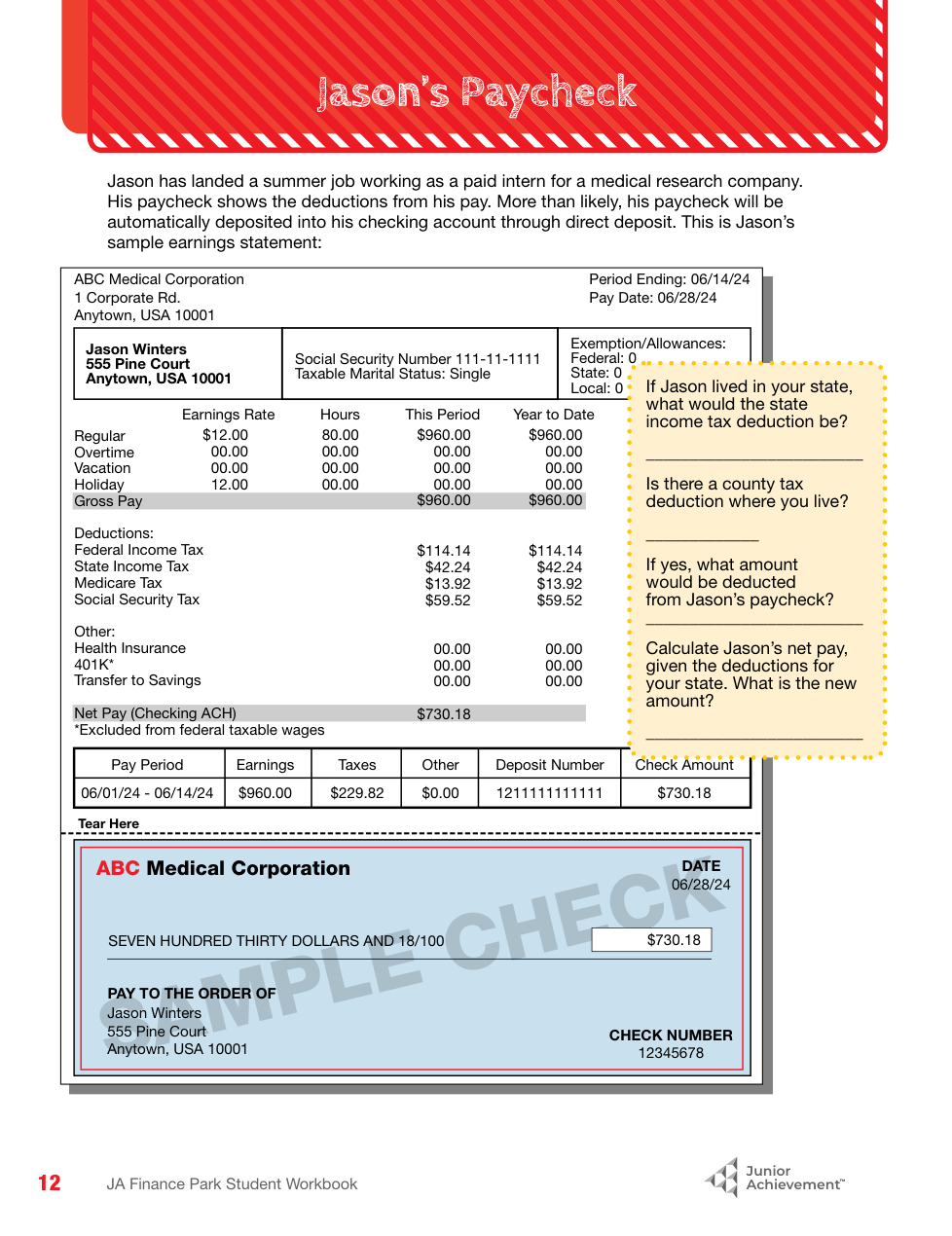
What is Jason's gross pay this period?
$960.00
$114.14
$730.18
$229.82
Question 50
50.
How much federal income tax was deducted from Jason's paycheck?
$13.92
$42.24
$229.82
$114.14
Question 51
51.
What is the net pay listed on Jason's paycheck?
$42.24
$730.18
$114.14
$960.00
Question 52
52.
What type of tax is included in Jason's paycheck deductions?
Sales Tax
County Tax
Property Tax
Federal Income Tax
Question 53
53.
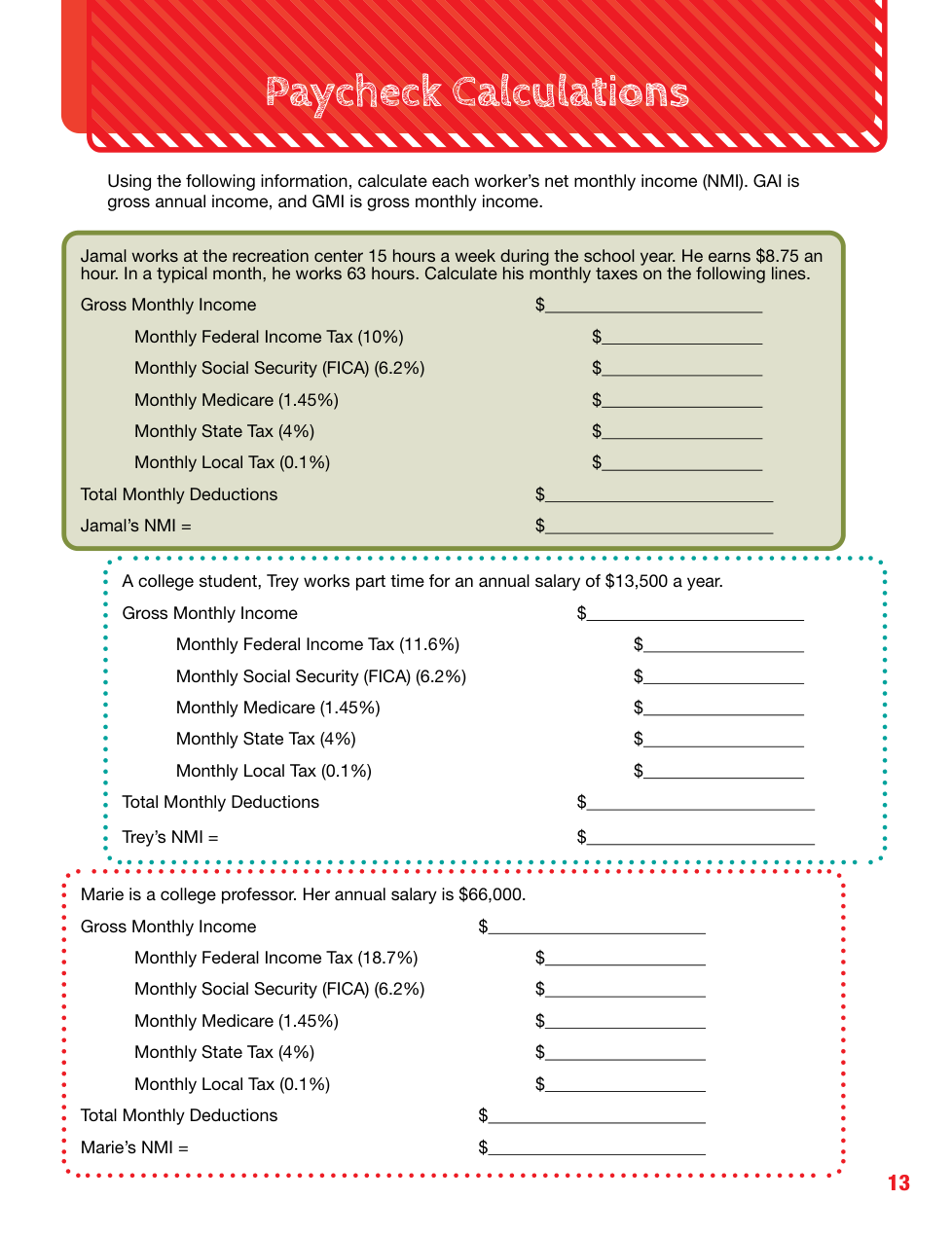
What does NMI stand for in paycheck calculations?

New Monthly Income
Net Monthly Income
Net Monetary Income
National Monthly Income
Question 54
54.
Which tax is not included in monthly deductions?
Federal Income Tax
Social Security (FICA)
Local Tax (0.1%)
Medicare
Question 55
55.
How often does Jamal work during the school year?
15 hours a week
20 hours a week
10 hours a week
63 hours a week
Question 56
56.
What percentage is the Monthly Medicare tax?
2.5%
6.2%
4%
1.45%
Question 57
57.
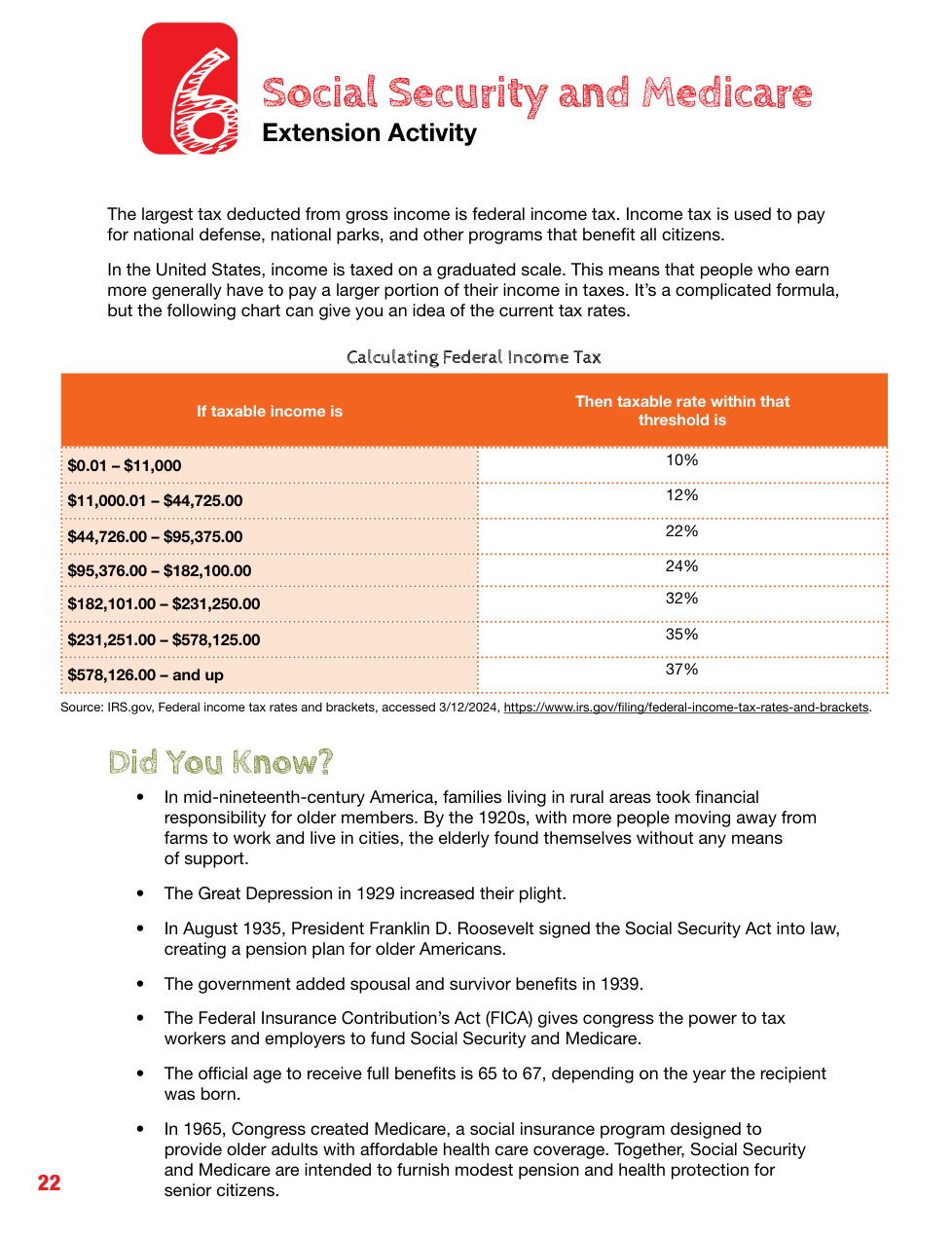
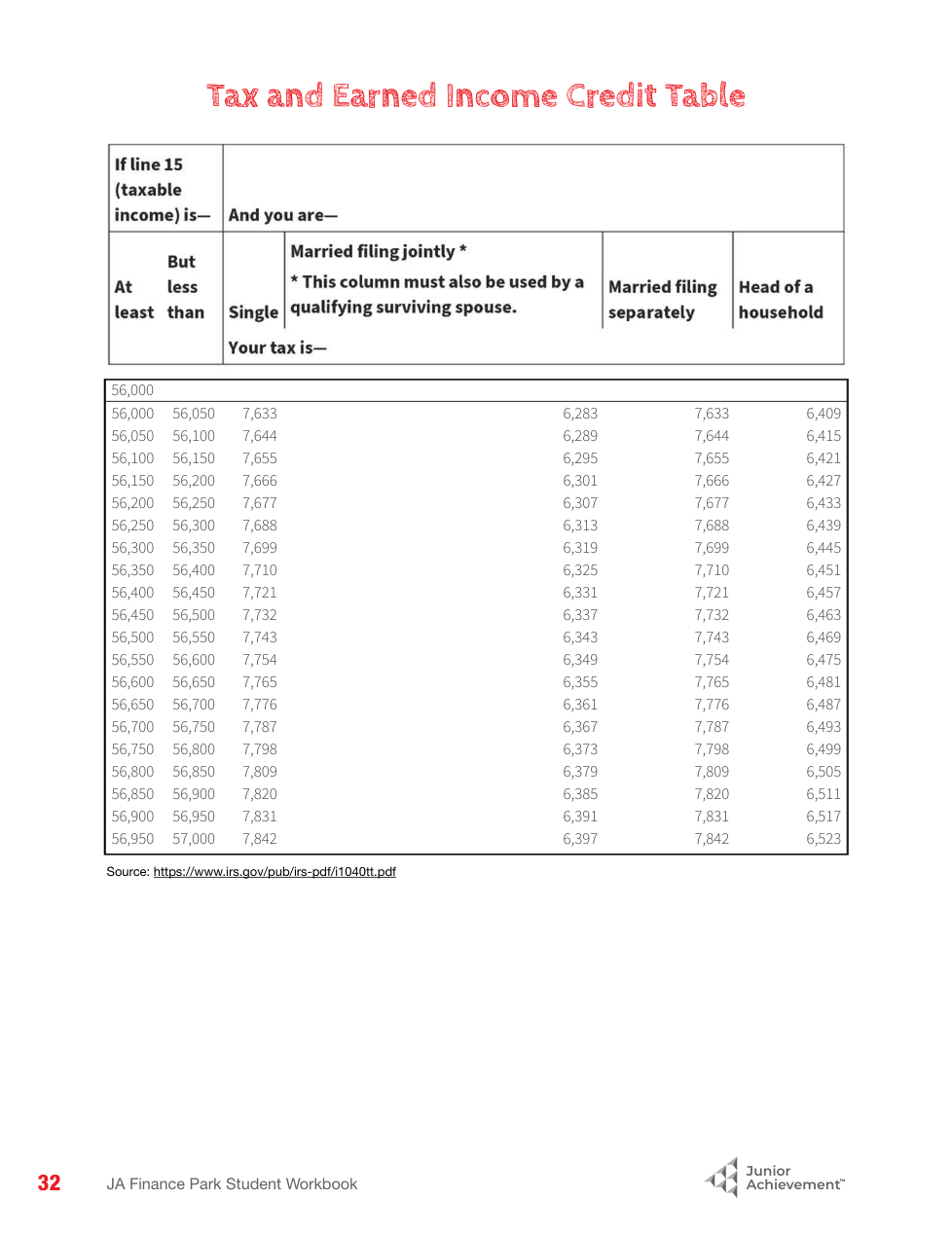
What does the table primarily illustrate?
Gross income thresholds
Federal tax rates
Tax filing statuses
Tax amounts based on income levels
Question 58
58.
Who benefits from the "Married filing jointly" column?
Single taxpayers
Dependent children
Married filing separately
Married couples filing together
Question 59
59.
What is EITC based on?
Earned income levels
Total income and investments
Property values
Filing status only
Question 60
60.
What does a higher taxable income generally mean?
Increased refund
Higher tax liability
Lower tax credit
No change in tax rates